David and Michal
As many who have followed me for a bit, I have fallen into the Psalms, and I can’t get up! (As if I would want to.) The Psalms are a majestic collection of poetry, of heart felt human experiences that constantly challenge me in my own frail attempt to follow the true King. As many of the Psalms are written by David, my study on the Psalms has spurred me on to looking at the life of David, is the main contributor to this book, and to follow the victories and tragedies of the shepherd King of Israel.
Many times in the narrative, we will see the Lord Jesus, imperfectly, yet a reflection of His spirit in a man with weaknesses.
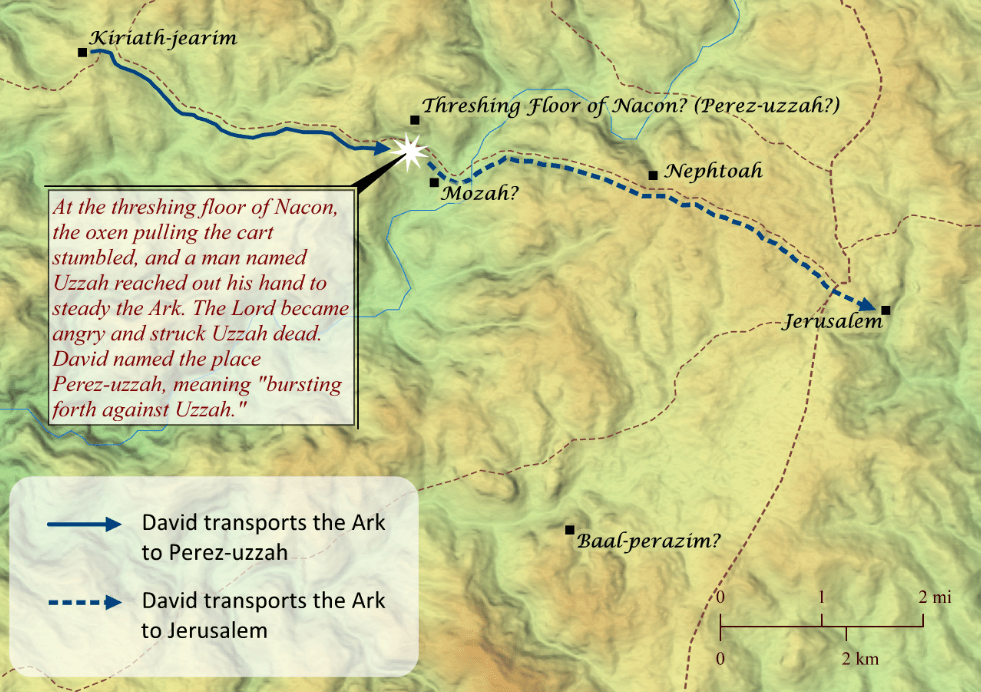
2 Samuel 6:16-23
16 As the ark of the LORD came into the city of David, Michal the daughter of Saul looked out of the window and saw King David leaping and dancing before the LORD, and she despised him in her heart.
17 And they brought in the ark of the LORD and set it in its place, inside the tent that David had pitched for it. And David offered burnt offerings and peace offerings before the LORD.
18 And when David had finished offering the burnt offerings and the peace offerings, he blessed the people in the name of the LORD of hosts
19 and distributed among all the people, the whole multitude of Israel, both men and women, a cake of bread, a portion of meat, and a cake of raisins to each one. Then all the people departed, each to his house.
Michal, David’s first wife, the youngest daughter of Saul didn’t join David in this effort to bring the Ark of the Lord back to the center of Israel’s public life.
This effort to retrieve the Ark of the Lord appears to be of no real importance to her, for she remaining in the Kings house during this celebration. Of course, David may have instructed her to stay back, for fear of another judgement falling on some that are near the ark, but that seems highly unlikely. Her staying back, while all of Israel was joining in on the festivities and celebration seems to tell us a bit about this lady.
First, she had no desire to be involved with the God of Israel. We would do well to remember that Michal was raised in a family that was led by a man who suffered from fits of insanity. He was driven by jealousy, and at least once, resorted to the guidance of a witch. He abandoned God years before, and his life reflected that of a man out of control.
Secondly, she was better than the rest of Israel. I speak this sarcastically, in that she did not join David amongst the people of Israel. It is instructive to note that the text speaks of “the people”, “the whole multitude of Israel” and “all the people”. Also the text speaks of her looking out on the procession, and especially on David. This term often speaks of looking down, or looking out and down, or to look down on. Now it may reflect the notion that she was simply physically on a second floor, or a raised structure, but due to her inner reaction, I am seeing a self loving, privileged woman in Michal.
She had no desire to be with the God of Israel, and no desire to be amongst the “riff raff”, those ordinary people. She seemed to like being away from others.
It turns out she got what she wanted, for she died as a lonely childless woman.
David, on the other hand was in the midst of the procession, having removed his royal clothing, dancing and leaping before the Lord. After the procession had completed the safe transport of the Ark t the Temple, David offered offerings to the Lord.
I assume this is not David directly making the offerings, as this action was the sole responsibility of the priests. His part in the offerings was to supply the offerings. Nevertheless, the celebration centered on two types of offerings.
Burnt Offerings
The burnt offering is the sacrifice of a complete, unblemished male animal, totally burned on the altar. Prior to the consumption of the fire, the animal was to be skinned, with the hide given to the priests. The sacrifice represented the complete offering to God for atonement for sin, to satisfy God’s wrath, and a total surrender to the will of God.
This is a monumental action on the part of David and all of Israel, for this burnt sacrifice had not been offered for decades by the nation. To bring the Ark back into the tent meant all other actions associated with the worship of God was available to the people, and this lapse in worship by the nation needed to be confessed before the Lord.
Peace Offerings
The peace offering was an sacrifice that represented fellowship between the Lord, His priest’s and the people. The offering represented a reconciliation between the people and the Lord as they shared in the consumption of the offering. Although there were variations on the peace offering, for David to take part in this offering speaks of his understanding that the nation was in good standing with the Lord, that the sacrifice of the burnt offering had been accepted.
Out of this period of reconciliation to the Lord came a celebration of blessing on the people. Food was distributed to the people of Israel, and there was much rejoicing.
It was a fantastic day of rejoicing and reconciliation. David must have been on top of the world. But as it is with so many spiritual high times in our lives, the enemy will immediately seek to tear us down with those he can influence. And as he went home, David would have to meet up with Michal, a self loving privileged woman.
It is stories such as this one that highlight the great blessing of a family being one in worship, one in allegiance and one in dedication to the Father of the Lord Jesus.
Thanks again for coming to visit. I hope you found something of interest in this post and would appreciate a comment, to begin a discussion. If you know someone this blog may bless (or challenge), send them a link, so they may join us in our discussion.
Come join us at Considering the Bible


 Considering the Bible