My hope is that this series will offer my readers a chance to consider the names, characteristics and descriptions of our God in the Word.
The remaining Names of God in this series might be considered descriptors, or characteristics of the Lord. We have reviewed the three primary Names of God, along with nineteen compound Names of God in our previous posts. As we venture through these descriptors of our God, I hope we will recognize all the many characteristics of our God that we tend to take for granted.
The Word is truly rich with descriptions of the Living God, and this effort of searching in the Word was quite illuminating. He truly is the ultimate subject of the Word, and His revelation of self-descriptions, or the accolades offered Him by His priests, prophets, kings apostles and faithful truly is a blessing.
May the Name of the Lord be praised, and by thinking on His name, may you have a blessed day.
231
GOD OF FAITHFULNESS AND WITHOUT INIQUITY
Deuteronomy 32:4 “The Rock, his work is perfect, for all his ways are justice. A God of faithfulness and without iniquity, just and upright is he.
Our God is a God of faithfulness and without iniquity.
It is a common truth that believer’s rely on throughout our walk with Him, and yet when trials come or trouble rise up, our first inclination is to question his faithfulness.
Of course that is simply our rebellion rising up, blaming God for that which might be occurring due to our poor decisions, or maybe simply misunderstanding God’s way in our lives.
As I was reviewing this term for faithfulness, I found it to have a somewhat special meaning. It refers to being steady or firm. A very good example of how this term pictures the steadfastness of God is found in Exodus, when Moses was overseeing Joshua fight the Amalekites.
Exodus 17:12 But Moses’ hands grew weary, so they took a stone and put it under him, and he sat on it, while Aaron and Hur held up his hands, one on one side, and the other on the other side. So his hands were steady until the going down of the sun.
Moses hands were “faithful” until the going down of the sun. They didn’t move, and were not subject to any weakness that Moses was experiencing.
God is steady, firm and unmoving, and unlike Moses, did not require assistance from others in being so. He is faithful, and His nature of being so is a great comfort to every believer.
But this name of God we are considering this morning is not simply the God of faithfulness , but the God of faithfulness and without iniquity!
Faithful, unmoving, firm, resolute. God is the God of faithfulness. He is the ultimate expression of firmness, of unmoving adherence to His Word and Will. Then Moses adds the “without iniquity” description, as further emphasis on who God is.
May I suggest this double description of God works to bolster the image Moses was trying to get across to the Israelites by describing a positive attribute, and then further describing that attribute by negating any idea of unfaithfulness.
Let me try to explain my thoughts.
If God at any time and for any reason, was not faithful, and because He is known and described as faithful, this act of unfaithfulness would introduce iniquity into our thoughts. At any time, if God was not steady, firm in His nature and promises, iniquity could be claimed to be found in Him.
How preposterous, for it is His nature that defines righteousness, and there is no iniquity to be found in Him. And that is the point!
Moses is doubling up on his description of the faithfulness (firmness, steadiness) of God. No iniquity of unsteadiness, or unfaithfulness may be considered.
Don’t even think it!
Unless of course, you turn your eyes to see the Man on the cross, where a spotless God, firm in His will and in the keeping of His word, accepted iniquity into His own body. The mystery of One who, due to His faithfulness, became sin (iniquity), accepting the just punishment of sin within His own body.
2 Corinthians 5:21 For our sake he made him to be sin who knew no sin, so that in him we might become the righteousness of God.
Out God is a God of Faithfulness and Without Iniquity, even as He exercised His faithfulness to His own saving promises. To His own great hurt, that is His own death, He was faithful. No iniquity of His own may be found in Him, even as we see Him hanging on that cross, receiving the just punishment of our iniquity being placed on His sinless Body.
How can we understand such a faithful God, One who is without iniquity, and yet taking on our sin to maintain His faithfulness? It is not for us to understand, but only to bow before Him.
I would love to hear of your favorite name, characteristic or description of the Living God. Please leave me a comment, and I will include it in the list!
Thanks again for coming to visit. I hope you found something of interest in this post and would appreciate a comment, to begin a discussion. If you know someone this blog may bless (or challenge), send them a link, so they may join us in our discussion.
A little while ago, I produced a verse by verse series in Philippians. I really enjoyed that exercise and have been wondering if I should take on another book. Well it turns out that 1 Thessalonians is the victim of my machinations, and hopefully, the thoughts produced by this fantastic book will edify and encourage the reader.
As with Philippians I am going to limit each post to one verse, and hopefully produce a short, succinct read for my friends who follow.
1 Thessalonians 2:12 we exhorted each one of you and encouraged you and charged you to walk in a manner worthy of God, who calls you into his own kingdom and glory.
Let’s remember this is the completion of the previous verse, where Paul describes himself as a father to this group of believers.
1 Thessalonians 2:11 For you know how, like a father with his children,
Paul continues his thoughts on how he has treated these young believers as a father in the faith.
At the risk of beating a dead horse (again), make note of Paul’s emphasis on the individual in each of these actions. He starts his thoughts with “exhorted each one of you“. Now, of course he may be speaking in the manner we are accustomed to when some one gets behind a pulpit, and speaks to mass audiences, saying “I am speaking to each one of you”, but for some reason, I think Paul meant he spoke individually to each one of his children, exhorting them, encouraging them and charging them in a singular, personal way. Every one equally, and constantly, I can’t imagine, but I lean to the thinking that he was involved in their lives in a one on one relationship, short as that was.
Now, leaving behind my minor little rant, lets consider the three ways Paul related to these believers as a father
Exhorted
As a father Paul exhorted (παρακαλέωparakaléō) each one. Note the greek term, where includes “para”, typically speaking of by the side, along side or with. Kaleo is to call out, to call a name, to be called.
Putting it together, this term is a calling of the one spoken to as an invite to be with, an invite to walk together. Paul was not in an ivory tower, telling them to do this or that. He was in the midst of the Christian walk and actively exhorting those who claimed the name of Christ to walk in like manner with him.
Encouraged
As a father Paul encouraged (παραμυθέομαιparamythéomai) them. This word speaks of a range of meanings, from consoling in failure to admonishing from errors, with encouragement being the basis of each. Note again the prefix “para”, emphasizing the togetherness Paul intended, that as a Father he was not standing above them, but with them in the walk of faith.
Charged
As a father Paul charged (μαρτυρέωmartyréō) them. No it does not refer to a fee that he places on each of them for his services. It’s not that kind of charge!
To be “charged”, in Paul’s mind, and in the mind of the Thessalonians, was to be a witness, to speak of what you know, to bear record of the life you live and to openly speak of the One from whom this life originates. You may have noticed, the Greek for this word looks alot like martyr in the English. It has morphed into a word that describes one who dies for his faith, but this is not how it would have been understood in Paul’s day. The term simply meant to give evidence of the life you now live, to give testimony.
Did I hear you ask why the term morphed? Because early believers took the charge seriously, and the local and regional governments couldn’t handle it. Those who testified were put to death, and the link between the action of testifying and the ultimate result – death – has morphed that word into what we know today. To be a martyr used to mean to simply give testimony is now identified as an act of testimony to death!
This is the call Paul speaks of when he describes God calling us “into his own kingdom and glory”. It is not the way of the world, but the way of the cross.
My wife and I are reading through the Psalms in our evening reading and occasionally a nugget of the Psalms jumps out of the page. Don’t you love it when, after years of reading the “Old Book” passages become alive, reinforcing old teachings or simply warming your heart.
This is the book of Psalms, and it is rich.
I pray I can communicate a portion of the blessing we receive from this wonderful book.
Before we begin this psalm that refers of the true king, pictures the Messiah, and describes the ultimate kingdom, it may be good to mention there is some discussion on the author. Per the ESV, verse 1 seems to speak of this psalm as originating (humanly) from Solomon, David’s son. There is an argument that the psalm was written by David himself (see the last verse) and he wrote it “of Solomon” in his reign, as David looked into the future potential of his son.
Although I am of the opinion David wrote this psalm, no matter how you see this topic, let us delve into this psalm that speaks over and over again of the greater Son of David, the true King of all.
Psalm 72:15 Long may he live; may gold of Sheba be given to him! May prayer be made for him continually, and blessings invoked for him all the day! Psalm 72:16 May there be abundance of grain in the land; on the tops of the mountains may it wave; may its fruit be like Lebanon; and may people blossom in the cities like the grass of the field! Psalm 72:17 May his name endure forever, his fame continue as long as the sun! May people be blessed in him, all nations call him blessed!
This portion of the psalm speaks of the abundance of the Kingdom, prosperity flowing throughout the Kingdom with the focus rightly so on the King Himself. The poor and needy that was previously spoken of in the previous post is under King Jesus, offering up gifts of gold to the King.
I take the subject of these verses to be the King, and specifically King Jesus prophetically. As throughout this psalm, so much is provided to correspond with the Son in His reign that it over shadows the possible immediate intent of David’s desire for His own son Solomon’s earthy reign.
Gold is given to the King, not silver or some inferior metal, but only the finest of materials.
The fields are so heavy with grain, when the wind blows, the grain acts as the cedars of Lebanon, the cedars of Lebanon that were so famous. The agricultural prosperity spoken of here describes the waving action of the grains to not be unlike the wind whipping through the massive cedars of Lebanon. A picture in my mind of oversized grain stalks so large that as they move in the wind, a cracking occurs as with the cedars in their movements.
This picture of prosperity is incredible, but the psalmist goes further. He speak of the waving action of this grain to be on the tops of the mountains. Not the valleys, where all the lush rich earth is, but on the top on mountain tops, where the rain and wind typically erode the good soil and create a barren area. No successful farmer sought out the top of mountains or hills for farming, yet under the King, even the top of hills or mountains brought forth abundance.
And yet when I sat down this morning, my focus was not on the prosperity of the land, great as it is under the King, but on the King Himself, as David describes Him, for he speaks of the King living, or as he starts this portion out as – Long may he live. Let’s take a moment to consider.
Live
Live is the translation of the Hebrew word חָיָהchâyâh, to live or preserve, even quicken recover or retore to life. This term may simply refer to life, to the standard meaning we all accept, but it also was used of the restoration of life. Consider the following passages where we find it being used.
2 Kings 13:21 And as a man was being buried, behold, a marauding band was seen and the man was thrown into the grave of Elisha, and as soon as the man touched the bones of Elisha, he revived and stood on his feet.
Job 14:14 If a man dies, shall he live again? All the days of my service I would wait, till my renewal should come.
Isa 26:14 They are dead, they will not live; they are shades, they will not arise; to that end you have visited them with destruction and wiped out all remembrance of them.
1Kings 17:22 And the LORD listened to the voice of Elijah. And the life of the child came into him again, and he revived.
Ezekiel, as he is questioning the Lord in the famous chapter on dead bones, uses this term multiple times to describe life coming back onto the carcasses he sees.
Even the apostate king of Israel, most likely Jehoram, knew of God’s ability to raise up from the dead.
2 Kings 5:7 And when the king of Israel read the letter, he tore his clothes and said, “Am I God, to kill and to make alive, that this man sends word to me to cure a man of his leprosy? Only consider, and see how he is seeking a quarrel with me.”
Again and again in the Old Testament, this term is used revivification, of quickening, of restoration.
Is David speaking of the resurrection of the King, of the eternal life that He accomplished for mankind at His resurrection? How could a believer not see David’s claim here describing the greatest feat of Jesus, and of his continual “long living of the King”, describing the Kingdom ruled by Him who lives forever!
But there is more. (Man this passage is great!) He not only speaks of the length of the Kings life, but of the Kings continuance. To describe the Kings continuance is not specifically speaking of the length of His reign but more so the manner of the Kingdom’s increase!
Increase
Increase is the translation of the Hebrew word נוּןnûwn, to propagate, or increase. The term is only used once in the Old Testament, and it has the meaning of to propagate by shoots, to multiply, as many plants do by shoots!
The increase of the King’s fame, and of His Kingdom is described as the propagation of His life in the same manner that a plant does through shoots.
Can anyone hear the Lord speaking of this increase in John 15, where we are the branches and He is the Vine. Without Him, we can do nothing. Consider the message the Lord is sharing with His disciples in this. In Him, we propagate out the Kingdom.
John 15:5 I am the vine; you are the branches. Whoever abides in me and I in him, he it is that bears much fruit, for apart from me you can do nothing.
David may be describing in one word a concept the Lord expanded on with His disciples! Though a grain of wheat was buried, the life that exploded out of that burial produced the greatest fruit imaginable. All increase through each believers connection with the King, the natural propagation of life through the shoots finding their life in the root!
John 12:24 Truly, truly, I say to you, unless a grain of wheat falls into the earth and dies, it remains alone; but if it dies, it bears much fruit.
All of the previous actions, the life from the dead and the propagation, or increase of His fame has the fallout of blessing on the people, and that all nations are blessed.
Again, as I have been studying in the Old Testament, I have come to see the many times the nations are included into the plan of God, that from the very beginning, all of creation was to experience the blessing of God.
Here again, the promise of God to Abraham echoes, speaking of the nations being blessed through Abraham.
Genesis 12:3 I will bless those who bless you, and him who dishonors you I will curse, and in you all the families of the earth shall be blessed.”
In Abraham, all the families of the earth will be blessed, and we know that the complete fulfillment of this blessing is found in and only through Abrahams Greatest Son, King Jesus who truly lives forever, escaping the grave and reigning as His Kingdom continually expands, increasing His fame throughout the world.
What a great piece of Scripture! May the Lord increase His fame in each of our lives, so that we reflect it to those we rub shoulders with each and every day.
My hope is that this series will offer my readers a chance to consider the names, characteristics and descriptions of our God in the Word.
The remaining Names of God in this series might be considered descriptors, or characteristics of the Lord. We have reviewed the three primary Names of God, along with nineteen compound Names of God in our previous posts. As we venture through these descriptors of our God, I hope we will recognize all the many characteristics of our God that we tend to take for granted.
The Word is truly rich with descriptions of the Living God, and this effort of searching in the Word was quite illuminating. He truly is the ultimate subject of the Word, and His revelation of self-descriptions, or the accolades offered Him by His priests, prophets, kings apostles and faithful truly is a blessing.
May the Name of the Lord be praised, and by thinking on His name, may you have a blessed day.
230
GOD OF YOUR FATHERS
Exodus 3:15 God also said to Moses, “Say this to the people of Israel: ‘The LORD, the God of your fathers, the God of Abraham, the God of Isaac, and the God of Jacob, has sent me to you.’ This is my name forever, and thus I am to be remembered throughout all generations.
It was decades ago when my wife and I were in training for missionary work, hoping to reach unreached people groups to a far off land the Lord wanted us to go to.
Those were exciting days, and as Canadians in a US school, we lived by faith, and saw the Lord provide in many mighty and awesome ways.
He is truly a good God.
During those times, I listened to stories of missionaries that had ventured into perilous areas, breaking barriers with people groups who had never heard of the Master, living amongst them, learning their language and culture, waiting for the day to communicate the gospel to a people who had never met the God of Resurrection.
One particular missionary team, after spending years in tribe, eventually were able to share the gospel, finding much fruit in the tribe. Many came to know the Lord, and a vibrant small body of believers began growing weekly.
Exciting stuff.
During church services, these missionaries would introduce hymns, (translated into the tribes mother tongue), giving the young believers a chance to praise God with the classic hymns such as Amazing Grace, It is Well with My Soul and such.
One such hymn that could not be introduced immediately was the classic “God of our Fathers”, a hymn written in 1876 by Daniel C. Roberts. The hymn speaks of the blessing of a people that have history with the God of Creation, and since this particular people group had just come to faith, it just didn’t make sense to add it to their hymnology.
This story is provided to my reader to simply remind us of the rich blessing we have as a people group, of a history with the Living God. God has led our fathers, whether we speak of those directly related to us in our immediate family, to those who have been instrumental in shaping our Christian culture, or the very Patriarchs of the Old Testament, that led the way in understanding the Lord’s ways.
You know, in a way, these new converts could have sung this song in truth, for in following Jesus, we all, as the Body of Christ know the God of our Fathers, those who came before us in the faith.
It is such a blessing to live in a historically Christian culture, but I fear we are slipping away from a full and living faith in the God of our Fathers. May we live our days in a thankful and expressive way, sharing the truth of the gospel in any way possible, seeking to allow those who follow us to sing this song also.
May the God of our Fathers be praised!
I would love to hear of your favorite name, characteristic or description of the Living God. Please leave me a comment, and I will include it in the list!
Thanks again for coming to visit. I hope you found something of interest in this post and would appreciate a comment, to begin a discussion. If you know someone this blog may bless (or challenge), send them a link, so they may join us in our discussion.
Luke 23:39 One of the criminals who were hanged railed at him, saying, “Are you not the Christ? Save yourself and us!” Luke 23:40 But the other rebuked him, saying, “Do you not fear God, since you are under the same sentence of condemnation? Luke 23:42 And he said, “Jesus, remember me when you come into your kingdom.”
It was a Friday morning, just as I was pulling in to get a tank of gas for my little Prius. Waiting in the left turn lane to cross over into the convenience store down the road, I heard the narrator speak the words above.
A thief speaking theological truth at a time when the Master’s own followers were full of doubt, and the religious leaders of Israel were “cleansing the land” of a heretic!
Everything was upside down!
It just didn’t make sense for me, and, as a paradox is wont to do, it took me outside of my usual way of thinking.
Now I realize there are many factors that may play into the scenario with the thief on the cross, such as his imminent death, his utter lack of options, his shameful position on the cross and a realization of what his life had become.
None of these conditions had been pressed upon the religious leaders of the nation, and for the disciples, they were experiencing such a drop in expectation, such a freefall of their previous hope, that their distraction from the kingdom can be somewhat understood.
But given all those factors that differed between these three groups, it is amazing that those who had been schooled in the ancient Scriptures had missed the mark so badly, yet a thief, a man assumed to have consumed his life with disregard and deciding to rebuff the law, running with outlaws, recognized a King, even though on a cross.
Catch his words again.
“Jesus, remember me when you come into your kingdom.”
He wasn’t asking if there would be a kingdom, or it’s timing, or the extent of it, or it’s composition, who would sit beside Him or for how long it would last. In his question, he confessed to the truth of the Kingdom, that it would be Jesus’ Kingdom, and that Jesus would own the Kingdom.
This man confessed to a truth no-one was accepting. The religious leaders had rejected the possibility, and the disciples had their expectations dashed. This lone man, in full display of all present, not only confessed to the Kingship of Jesus, but requested to be remembered when Jesus entered it.
This one man, repentant of his life choices, was willing to confess to Jesus of His righteousness, even as Jesus (from all appearances) was a guilty heretic the religious leaders sought to defame and destroy.
What a paradox! The religious elite destroying the Witness, while a humbled thief received His message.
Is it not the way of the Kingdom though, that the very things that seem upside down are the very things we should pay attention to? This very condition exists even in our day for the believer, for the seeming success of the world will be defeated, even as the Lord’s resurrection defeated the efforts of the religious elite. That which appears to be dominant over the church will be overthrown by that which appears defeated and discouraged.
The key in all of this paradox in life is who Jesus is.
Who is Jesus for you? Are you a religiously trained person, and yet deny His Kingship? Or are you humbled by life, willing to admit of uour sin and wasted life, and desire to look to Him as the King, though reviled even in our day?
Do you see yourself as the powerful leader or the helpless thief?
Thanks again for coming to visit. I hope you found something of interest in this post and would appreciate a comment, to begin a discussion. If you know someone this blog may bless (or challenge), send them a link, so they may join us in our discussion
As many who have followed me for a bit, I have fallen into the Psalms, and I can’t get up! (As if I would want to.) The Psalms are a majestic collection of poetry, of heart felt human experiences that constantly challenge me in my own frail attempt to follow the true King. As many of the Psalms are written by David, my study on the Psalms has spurred me on to looking at the life of David, is the main contributor to this book, and to follow the victories and tragedies of the shepherd King of Israel.
Many times in the narrative, we will see the Lord Jesus, imperfectly, yet a reflection of His spirit in a man with weaknesses.
2 Samuel 3:2-5
2 And sons were born to David at Hebron: his firstborn was Amnon, of Ahinoam of Jezreel; 3 and his second, Chileab, of Abigail the widow of Nabal of Carmel; and the third, Absalom the son of Maacah the daughter of Talmai king of Geshur; 4 and the fourth, Adonijah the son of Haggith; and the fifth, Shephatiah the son of Abital; 5 and the sixth, Ithream, of Eglah, David’s wife. These were born to David in Hebron.
It is of note that this short, seemingly insignificant passage has in it a listing of some of David’s greatest challenges, battles that many may feel he was unsuccessful in. A listing a future sons, some that cost him much pain!
Let’s take a few moments to consider each of these men.
Amnon
Amon was David’s firstborn, and as such was destined for the throne. He was born while David was King of Judah, and was always living in an environment of privilege and entitlement.
The attitude David had towards Amnon is somewhat disturbing, for though he had an emotional love towards the young man, it seems he was reluctant to discipline him. His actions belied him, and in support of this general attitude towards Amnon, a variant reading in the dead sea scrolls provides a commentary to David’s anger towards Amnon raping his daughter.
2 Samuel 13:21 When King David heard of all these things, he was very angry.
Dead Sea Scrolls add – But he did not punish his son Amnon, because he loved him, for he was his firstborn.
Remember what is going on here! Amnon raped David’s daughter, and then rejected her, dumping even greater shame on Tamar after the crime. She was an Israelite princess! David’s daughter. What was going on in his head?
This was the beginning of the fruits of rebellion that took over David’s household. Soon, it would spread, and the devastation would be greater than he could have expected!
Chileab
Chileab, an unknown character to myself is relatively quiet in relation to the family of David. Born of Abigail, the former wife of Nabal, Chileab’s name means “like his father” and may reflect the emphasis David intended, to distance his child from Abigail’s former husband. Hebrew mythology and tradition speak of Chileab highly, even suggesting he was a righteous and holy man. Otherwise, the Scriptures are relatively quiet concerning him other than he also went by the name Daniel.
1 Chronicles 3:1 These are the sons of David who were born to him in Hebron: the firstborn, Amnon, by Ahinoam the Jezreelite; the second, Daniel, by Abigail the Carmelite,
Absalom
Absalom will be the subject of many studies in future posts covering chapters 14 through 17. Suffice to say, Absalom was a man would exercises revenge on Amnon, and exercised a treachery on his own father, seeking to take the kingdom.
And he had hair!
Adonijah
Earlier we spoke of David’s attitude to discipline in relation to Amnon. Again, the Word describes David’s attitude towards his son Adonijah in relation to discipline.
1 Kings 1:6 His father had never at any time displeased him by asking, “Why have you done thus and so?” He was also a very handsome man, and he was born next after Absalom.
This general truth speaks volumes to the permissive parenting so prevalent in todays world. Please understand I am not advocating any type of parental abuse for that also is a reaction that is ungodly. But discipline is a requirement in parenting, especially in the very young years. We are to parent the child, not be his friend!
Nevertheless, Adonijah also was a son who rejected his father’s rule, though in this case, it was in relation to his fathers wishes for Solomon to be on the throne.
He was cunning and gathered an army to frustrate his fathers wishes and steal the kingdom away. Even after his defeat, he sought to scheme away the kingdom by requesting David’s nurse as a wife. Solomon saw this as a continuing threat and dealt with his half brother!
Shephatiah
Shephatiah is another son of David that does not show up in the Biblical narrative other than in the genealogies of David. What is interesting, at least in my mind, is that another man was called Shephatiah, a Haruphite that joined David in Ziklag, while he was on the run. He became one of David’s mighty men. Coincidence or was there a relationship in David’s mind between this mighty man and David’s wishes for his fifth son?
1 Chronicles 12:5 Eluzai, Jerimoth, Bealiah, Shemariah, Shephatiah the Haruphite;
Ithream
Ithream is Davids sixth son, and again is mentioned only in two genealogies within the Old Testament. He was of the offspring of the great king David, and his name speaks of “profit of the people” or “excellence of the people” This may reflect the coming abundance of the nation that was becoming evident as David’s rule grew in influence and power.
Ithream otherwise was a man that does not appear to be influential in the kingdom.
In many of these son’s of David, there appears to be a general disregard for discipline and a fallout of rebellion by the young men. Much, if not all of these difficult situations may be the result of David’s preoccupation with kingdom affairs, with his own understanding of the duties of a father, or simply his having no flesh and blood example to live by.
Remember Samuel as a father figure? He also struggled with his own sons, seeing them rebel and be consumed by the anger of the Lord due to rebellion. Of course, we could say the same for Samuel, as his example Eli also had rebellious sons.
How critical for today’s men of God to have godly examples to follow in fathering the next generation! May those who are in the position of fathering children take heart, for the calling is high, and it’s success or failure is consequential.
May God have mercy on us fathers, and give us strength to relate to those who look to us as examples to live by!
Thanks again for coming to visit. I hope you found something of interest in this post and would appreciate a comment, to begin a discussion. If you know someone this blog may bless (or challenge), send them a link, so they may join us in our discussion.
Jesus in the Old Testament is a series of posts that will offer my readers a chance to consider pictures or shadows of Jesus in the Old Testament. As mentioned in the introduction to this series, some may be obvious, some may be not so obvious, and some may simply be a facet of the Lord those reading may not have considered previously.
I hope as we venture through this series, we will see the Lord in many wonderful pictures throughout the Old Testament.
SEEING JESUS IN
Caleb
Lived in Obscurity
Joshua 14:10 And now, behold, the LORD has kept me alive, just as he said, these forty-five years since the time that the LORD spoke this word to Moses, while Israel walked in the wilderness. And now, behold, I am this day eighty-five years old.
Luke 2:51, 52 And he went down with them and came to Nazareth and was submissive to them. And his mother treasured up all these things in her heart. And Jesus increased in wisdom and in stature and in favor with God and man.
Hear what Caleb says in this verse. The Lord has kept him alive. What does this imply?
I think it is difficult to peg the age of an old man in the Old Testament. Looking at the ages given to us from before the flood, we have men lasting almost a millennium. Incredible.
Immediately after the flood, it appears life spans began to decrease, and by the time we get to Moses and Caleb, it appears a 120 year old man, as Moses was, may have been an anomaly.
For Caleb, at the time of this passage, he was 85 years old, an old man in his autumn years, hoping his 401(k) will get him through his remaining years. – Just kidding – I think he was way too savvy of an investor to only depend on the markets. I think he had real estate in mind! And at 85, he was going to claim it.
Now don’t get me wrong in describing Caleb here as one who was focused on monetary security. That is not the image I have of this man. He was a man who had been given a promise decades earlier, and was convinced it was time to chase the promise.
But in between the promise and the potential realization, he lived in obscurity, a “regular” saint, patiently waiting on the Lord as his youthful stamina slowly seeped out of his body. From a stout man, willing to take on the people of the land, he had now become a man of wisdom, realizing his life was in the hand of the Lord, his very existence dependent on the One who promised him a patch of ground.
But let us take a moment to consider forty-five years of waiting. More than half his life, burdened down by the decisions of those he lived with, those who made faithless decisions, impacting a faithful man who was ready decades ago.
And for forty-five years we hear nothing of Caleb. He lived in obscurity, possibly even ostracized by some of his neighbors, for he was that one that was so confident, that made them all look so bad.
Forty-five years of toiling amongst those who dragged him back from victory. Forty-five years of living amongst those who constantly rebelled against his God. Forty-five years of having a nation of negative influence constantly rub up against his spirit.
Jesus also was in obscurity, living amongst a people He had come to serve and to save.
Yes – there were flashes of fame with his birth, but only amongst some shepherds and a few foreigners. Yes, it is true that He shook up the religious leaders when he was 12 years old. But let us remember who we are dealing with. This is God in the flesh, and He is content to live in obscurity, content to be amongst those whose actions and attitudes will drive Him onto the cross.
Obscurity.
It is a way of describing a life of being unknown, a life not recognized for the value found in the man. Caleb lived in obscurity, and his faithfulness to God certainly was honed into focus during that time. God was his focus, for no one else seemed too concerned.
For the Lord, His obscurity must have provided an enormous influence in His later years, as He had much time with His Father, much time contemplating the Word and much time understanding His mission.
His obscurity provided Him opportunity to focus on the Only True God, to know His Father while walking amongst His subjects.
Obscurity, in this world that chases fame and fortune, is a true blessing many consider a curse. If you are in a place where you have faded into relative obscurity, take a page from the life of Caleb, and remember who your God is. Better yet, look to the Messiah, for in His obscurity He deepened His relationship with the Father, and that obscurity, though highly undeserved was of great use to the Son.
In His obscurity, He followed after the True God! He recognized the value of God and honed in on His relationship with His Father during this time. For though many thought nothing of Him, letting Him live in obscurity, He recognized the ultimate value of His God, and truly is the Only One worth knowing!
My hope is that this series will offer my readers a chance to consider the names, characteristics and descriptions of our God in the Word.
The remaining Names of God in this series might be considered descriptors, or characteristics of the Lord. We have reviewed the three primary Names of God, along with nineteen compound Names of God in our previous posts. As we venture through these descriptors of our God, I hope we will recognize all the many characteristics of our God that we tend to take for granted.
The Word is truly rich with descriptions of the Living God, and this effort of searching in the Word was quite illuminating. He truly is the ultimate subject of the Word, and His revelation of self-descriptions, or the accolades offered Him by His priests, prophets, kings apostles and faithful truly is a blessing.
May the Name of the Lord be praised, and by thinking on His name, may you have a blessed day.
229
GOD OF THE HEBREWS
Exodus 3:18 And they will listen to your voice, and you and the elders of Israel shall go to the king of Egypt and say to him, ‘The LORD, the God of the Hebrews, has met with us; and now, please let us go a three days’ journey into the wilderness, that we may sacrifice to the LORD our God.’
Funny how things work out sometimes. In my original compilation of the Names of God, I ordered them out alphabetically, not thinking of the how ordering the names may impact how I write about them.
Such is the case with our topic today. Our previous passage spoke of the “God of the whole earth” and I sought to make much of the fact that our God is not some local deity, restricted to a region or people.
And now we have a Name of God that seems to do that very thing, describing God as the God of the Hebrews. Is this a contradiction? A conflict? Mixed messaging?
I think not. Let’s consider the context.
Moses is before the Pharoah, the King of Egypt, king of a land with many gods, gods who would very soon fall victim to the True God. Each of the plagues addressed the specific influence of a false god Egypt worshipped. To define God as the One that would dominate over these false gods, Moses couldn’t simply say God. To do so would allow the Pharoah to mentally place the True God as simply one of the many in the pantheon of god’s they worshipped. And that would not do!
Moses was not restricting the God of whole earth when he called God the God of the Hebrews. He was not limiting God, but simply identifying Him as being other than those who would fall in submission to the false gods.
One true God. All other gods will soon be identified as false.
As for the term “Hebrew” we can all agree it was an early designation of the Israeli people. Some associate it as a name of those who had descended from Eber, harkening back to the tenth chapter for Genesis, where Moses calls out Eber as a descendant of Shem, in direct lineage of Abraham.
A tradition of the Jewish people was that Eber refused to take part in the building of the Tower of Babel, and by refusing to take part in this act of rebellion, retained the original language of Adam. Possible? You decide, but Eber was a consequential figure in the Old Testament and his name is associated with God in our verse today.
One other interesting tidbit about Eber (or Hebrew) is that the term עִבְרִי ʻIbrîy may be translated as “one from beyond” or “one that crosses over”
It is fitting that this name is associated with the One who “came from beyond” to rescue us, that He “crossed over” into our world to take on our sin, to take on our helplessness and to rescue us, even in like manner as He rescued the Israelites from a dominant, powerful and abusive enemy.
He is the God of the Hebrews, for He is the God who has crossed over to mankind, becoming the God-man. A truly amazing truth that He has completed!
May we honor the God of the Hebrews, knowing He is so much more than the gods we come into contact with in our daily lives!
I would love to hear of your favorite name, characteristic or description of the Living God. Please leave me a comment, and I will include it in the list!
Thanks again for coming to visit. I hope you found something of interest in this post and would appreciate a comment, to begin a discussion. If you know someone this blog may bless (or challenge), send them a link, so they may join us in our discussion.
A little while ago, I produced a verse by verse series in Philippians. I really enjoyed that exercise and have been wondering if I should take on another book. Well it turns out that 1 Thessalonians is the victim of my machinations, and hopefully, the thoughts produced by this fantastic book will edify and encourage the reader.
As with Philippians I am going to limit each post to one verse, and hopefully produce a short, succinct read for my friends who follow.
1 Thessalonians 2:11 For you know how, like a father with his children,
Sadly this verse breaks a thought continued in the next verse, but it does provide an opportunity to set up the next post. Let’s consider Paul as he speaks of being “like a father”.
It may be a difficult discussion regarding what a father is, for I realize the disintegration of the nuclear family has been painful and destructive in the last two to three generations. On top of that, the vagaries of life sometimes touches families without warning. Such was my case, for as a young boy, my father was taken from the family by way of a traffic accident.
For myself, becoming a believer before a family man afforded me the opportunity to know the grace of God, and to begin to understand God’s loving care for His children. Although I was a poor reflection of this love to my children, I am thankful for the beautiful children he granted my wife and I.
Now, back to the passage.
I don’t want to beat a dead horse, but this verse directs me again to the primary topic of individual relationships with those in Thessalonica. Paul expressed a deep commitment to the success of individuals within the church, of his desire to see his offspring live in peace with each other, successful and secure in the Lord.
As a father, I do not think of my children as a conglomeration of persons, as a unit to address, or to be thought of. Each is their own person, wonderful in their differences. As a family man I greatly desire for unity within the family, but that desire is not to force any type of uniformity, nor does not reduce the individuality of each. It is very special to see each work together with their siblings to bring about good for the whole. I think this may be a glimpse of what Paul sought for within local congregations, for the honor of the Lord.
Nevertheless, let us consider two aspects of what it means to be a father, at least from Paul’s previous teaching found in verse 9.
1 Thessalonians 2:9 For you remember, brothers, our labor and toil: we worked night and day, that we might not be a burden to any of you, while we proclaimed to you the gospel of God.
To Work Hard
The few memories of my father have left me with a bigger than life image of a man that was in control, that knew his place in life, that loved his wife, and that worked hard, very hard! I wish I knew him better, but the few memories I have are very special to me, and provided some foundation for my own family.
Paul also worked hard, for in a verse before he spoke of his labor and toil, working night and day. To be a father is to provide for his loved ones by sacrificing his time and desires for the sake of his wife and children. Long hours, diligent effort and dying to your own wants is required to be a good and loving father.
To prioritize the family above himself is the way of a father’s life. Paul lived out the life of a father for his children in the faith!
Don’t Take
Another aspect of fathering in relation to the previous verse could be described as “not taking”.
The previous verse where Paul talks of not being a burden to his loved ones makes me think of a father’s place in the life of his children.
As a father, I do not seek to receive from my children. It is not my goal nor desire as a father to find resources I can “tap into” from those I love. They are my responsibility not my resource! They are those I love, not those I look to for gain. This is the attitude that Paul was expressing earlier, and I find it is a fitting reminder of the life of a father.
We shall find in the following verses, Paul speaks as a father that exhorts, encourages and charges his children to walk properly.
In our next post, we shall consider those three characteristics of a good father.
For our verse today, and that we have read up to so far in this letter, Paul has given us two characteristics of the life of a father.
My wife and I are reading through the Psalms in our evening reading and occasionally a nugget of the Psalms jumps out of the page. Don’t you love it when, after years of reading the “Old Book” passages become alive, reinforcing old teachings or simply warming your heart.
This is the book of Psalms, and it is rich.
I pray I can communicate a portion of the blessing we receive from this wonderful book.
Before we begin this psalm that refers of the true king, pictures the Messiah, and describes the ultimate kingdom, it may be good to mention there is some discussion on the author. Per the ESV, verse 1 seems to speak of this psalm as originating (humanly) from Solomon, David’s son. There is an argument that the psalm was written by David himself (see the last verse) and he wrote it “of Solomon” in his reign, as David looked into the future potential of his son.
Although I am of the opinion David wrote this psalm, no matter how you see this topic, let us delve into this psalm that speaks over and over again of the greater Son of David, the true King of all.
Psalm 72:12 For he delivers the needy when he calls, the poor and him who has no helper. Psalm 72:13 He has pity on the weak and the needy, and saves the lives of the needy. Psalm 72:14 From oppression and violence he redeems their life, and precious is their blood in his sight.
How different the True King is from those who lead nations in this age.
Of course the True King is all powerful, always present, ever faithful and continually offering deliverance and salvation, both in the absolute sense, and in the daily general sense. He is the Savior of our souls, the provider of life and the One who delivers us from ourselves, the world and the accuser!
Yet in this passage, is David speaking of the day to day needs those in the kingdom have, that the King Himself will be the One who is available when they need help? Notice David goes so far as describing the King as responding when the needy calls.
You know, I have sons, and I think they are awesome and powerful, and capable and greater than any other “average” man, but for David to say this about Solomon is more than simple fatherly bias, more than mere hyperbole about the capabilities of Solomon.
As I have postulated throughout this psalm, David is speaking of the True King, the One who has unlimited resources, that has His ear bent to those who call on Him. This King that David describes is not like those who lead in this world, taking our resources only to distribute a pittance back, consuming the resources taken by law and then incapable (or unwilling) to properly respond to the truly needy. The leaders of this world are severely limited in their abilities (and desires) to actually perform the tasks David speak of in this passage.
I speak only of the physical in this regard, and surely David speaks of the needy in a much broader and deeper way. His focus, as believers will agree, is most assuredly not simply the feeding of our bellies, or the defense of a nation.
This King is described as One who takes care of the needy. David uses this term multiple times in this short passage. As a a matter of fact, this term has come up before in verse 4. It seems to be a common refrain, that this King looks to the needy, the poor, the weak, and to them that have no helper.
This begs a question.
Is my relation to the king directly linked to my understanding of my need? If I am constantly telling myself that I can handle a problem, that I have the strength to get through a problem, that I am self sufficient, is that the same as saying the King is not needed, that I am rejecting His authority over my life?
Ok – so that is not just a question, but the topic got away on me! I would humbly suggest that if we seek to know the King better, we would reject any assumption that we are capable on our own to solve our problems.
For heavens sake, we are the problem!
Needy
Let’s spend a moment considering the term “needy”.
To be needy is to be destitute. The Hebrew word is אֶבְיוֹןʼebyôwn, and it describes a beggar, a poor man, one who is destitute. Now where have I heard teaching about being destitute before?
Matthew 5:3 “Blessed are the poor in spirit, for theirs is the kingdom of heaven.
Jesus used the Greek word πτωχόςptōchós, translated as poor, in this verse. It also means destitute, helpless, powerless, to be a pauper, even acting as a cringing beggar. He did not mince words here and sought to make a point of those who would be blessed in His Kingdom.
Thoroughly beggarly, poor, needy souls, who know their condition before the Lord, willing to accept the condition of their souls will be ministered to by the King Himself!
How diametrically opposed to the kingdoms of this world!
Admit your poverty before the True King, and look to the Him, for He is the One who has His ear bent to hear the needy!
My hope is that this series will offer my readers a chance to consider the names, characteristics and descriptions of our God in the Word.
The remaining Names of God in this series might be considered descriptors, or characteristics of the Lord. We have reviewed the three primary Names of God, along with nineteen compound Names of God in our previous posts. As we venture through these descriptors of our God, I hope we will recognize all the many characteristics of our God that we tend to take for granted.
The Word is truly rich with descriptions of the Living God, and this effort of searching in the Word was quite illuminating. He truly is the ultimate subject of the Word, and His revelation of self-descriptions, or the accolades offered Him by His priests, prophets, kings apostles and faithful truly is a blessing.
May the Name of the Lord be praised, and by thinking on His name, may you have a blessed day.
228
GOD OF THE WHOLE EARTH
Isaiah 54:5 For your Maker is your husband, the LORD of hosts is his name; and the Holy One of Israel is your Redeemer, the God of the whole earth he is called.
I will never forget the day I discovered the Hebrew word for earth. That word alone ignited a change in my thinking that I completely was unprepared for.
You see, when the Old Testament prophets used the Hebrew term אֶרֶץʼerets, I did not know that it is sometimes translated as land, as in “the promised land”, and sometimes translated as ground or soil, as in the material that makes up the earth, and sometimes translated as earth, referring to the planet we reside on, as it is here in our verse.
To make matters worse, (at least for me), the same nebulousness occurs in the New Testament. But that will be for another day, for I want to focus simply on how this impacts the name of our God in this passage.
Isaiah is declaring to all who will listen of the restoration of Israel in this passage. He is looking down the corridors of time to a time when barrenness would no longer be associated with Israel. Let’s read the introductory verse to this amazing prophecy of Isaiah.
Isaiah 54:1 “Sing, O barren one, who did not bear; break forth into singing and cry aloud, you who have not been in labor! For the children of the desolate one will be more than the children of her who is married,” says the LORD.
He speaks of the barren one having more children (meaning greater honor in ancient Israel) than the married one.
What in tarnation is Isaiah talking about? Who is the baren one? Who is the desolate one? Who is the married one? I am so confused!
Thankfully the apostle Paul provides apostolic teaching in Galatians 4:27, referring to this verse in his discussion of the church in relation to Old Covenant Israel.
Galatians 4:27 For it is written, “Rejoice, O barren one who does not bear; break forth and cry aloud, you who are not in labor! For the children of the desolate one will be more than those of the one who has a husband.”
Paul continues with his discussion in Galatians, defining those in the New Testament Church, as being the subject of this prophecy.
Galatians 4:28 Now you, brothers, like Isaac, are children of promise.
Thank you Paul, for I was so unsure of where Isaiah was going with this verse, but in New Testament understanding, when Isaiah speaks of “enlarging the place of your tent”, he is speaking of the expansion of the church.
If I follow you Paul, when Isaiah speaks of expanding to the right and to the left, he is referring to the impact of the gospel beyond the restricted borders of the nation of Israel. When Isaiah writes of the barren one inheriting the nations, he is describing the influence of God on all nations, the complete unleashing of the truth of God throughout the earth.
All of this future honor, replacing the shame of captivity will occur due to the Lord Himself. The gospel of the resurrected Jesus is the message, and the power of the Spirit of God has multiplied the people of God, fulfilling the expansion Isaiah spoke of when he wrote that the “place of your tent” will cover the whole earth.
Now I get it! Isaiah saw it, knew it and taught it. Paul saw it, knew it and taught it!
He is the God of the whole erets! There is no opportunity for any confusion in the term erets in this verse. Isaiah may have used erets in this verse, but the intended message is that the whole erets will be impacted, the totality of the erets will be reached with the message of God.
Yes – He is the God of the whole erets, the God of all of creation, having exploded out of the land (erets) of Israel with the message of His resurrected Son, impacting all and every part of the created erets!
Let there not be any mistaken assumption on the readers part that God is some local deity restricted to a small patch of land far, far away from most of us.
He is the God of the whole earth!
I would love to hear of your favorite name, characteristic or description of the Living God. Please leave me a comment, and I will include it in the list!
Thanks again for coming to visit. I hope you found something of interest in this post and would appreciate a comment, to begin a discussion. If you know someone this blog may bless (or challenge), send them a link, so they may join us in our discussion.
Matthew 24:24 For false christs and false prophets will arise and perform great signs and wonders, so as to lead astray, if possible, even the elect.
For this verse, I am not going to enter into any discussion on who the elect are. This topic is not the intent of the post, but the fact that those who have been chosen, who ever they may be, may be led astray.
Two things to consider.
First thing, is the “if” part of our argument? That is, is Jesus saying that the deception will be able to deceive everyone, and that it will be amazing none of the elect fall? The elect couldn’t be lead astray?
I suppose this approach is interpreting Jesus as saying
– so as to lead astray, if possible (but it’s not possible), even the elect.
Or is He saying that some of the elect may be lead astray, if the deception is strong enough and the elect are not prepared? Is the possibility of being led astray resident in the elects ability to resist the deception?
I suppose this approach is interpreting Jesus as saying –
-so as to lead astray, if possible (depending on the elect), even the elect.
In this passage, I do not have a clear understanding. I tend to think of the first option, and it provides great comfort. We find the very same phrase used when Jesus prayed to the Father in the garden.
Matthew 26:39 And going a little farther he fell on his face and prayed, saying, “My Father, if it be possible, let this cup pass from me; nevertheless, not as I will, but as you will.” (italics mine)
We know it was not possible for the cup to pass, yet in the humanity of the Son, He expressed a possibility before the Father. Is this the same intent in our passage. The unknown expressed but not to be realized?
I would appreciate your thoughts on this topic.
Secondly, is it right to consider being “lead astray” to be equal with falling away from the faith?
Did Jesus use the term σκανδαλίζωskandalízō, to trip and fall in this verse? Or was it ἀφίστημιaphístēmi, meaning to make stand off, cause to withdraw, or to remove? Maybe the word He used was what I initially suspected – ἀποστασίαapostasía, meaning a falling away, defection, apostasy.
None of those words were used in this verse.
To be led astray in the Greek is πλανάωplanáō, and it means to cause to stray, to lead astray, lead aside from the right way.
It seems this term speaks of the one leading someone astray as opposed to the one being lead away. It focuses on the deceiver and not the deceived. I suppose this also brings into the discussion that to be deceived may not specifically indicate a loss of life.
The text is not as clear as I had hoped, and that is alright. It is a text that demands a bit of humility, a bit of willingness to consider, a bit of thought.
For those who have spent a few minutes with me in this text and have additional thoughts, I would appreciate your comments.
Thanks again for coming to visit. I hope you found something of interest in this post and would appreciate a comment, to begin a discussion. If you would like to receive daily posts from Considering the Bible, click on the “Follow” link below
As many who have followed me for a bit, I have fallen into the Psalms, and I can’t get up! (As if I would want to.) The Psalms are a majestic collection of poetry, of heart felt human experiences that constantly challenge me in my own frail attempt to follow the true King. As many of the Psalms are written by David, my study on the Psalms has spurred me on to looking at the life of David, is the main contributor to this book, and to follow the victories and tragedies of the shepherd King of Israel.
Many times in the narrative, we will see the Lord Jesus, imperfectly, yet a reflection of His spirit in a man with weaknesses.
2 Samuel 3:1 1 There was a long war between the house of Saul and the house of David. And David grew stronger and stronger, while the house of Saul became weaker and weaker.
We discussed this civil war erupting in the previous post, with Abner and Joab butting heads, and blood flowing from both armies. Even in the battle that followed the mutual kilkings of ten soldiers from both armies, it became apparent for the casual observer that the seeds of weakness were fully displayed in the northern kingdom.
Scripture simply states the fact. The house of Saul would continue but grow weaker each day. Saul’s kingdom had reached it pinnacle and was now crumbling before it’s very leadership, due to the foolishness and sin of a madman posing as the king.
Yes, Saul’s kingdom, led by Ish-boseth (at least in name) was doomed to disappear. But it wasn’t immediate. The last battle indicated the trajectory of the kingdom, and for those with sense, it seemed obvious the kingdom would succumb to the forces of David, but as it is with many in power, they will allow for much pain and suffering in order to maintain power in the face of imminent failure.
Why is that? Why can we not see the facts of a matter, admit we have no promising future, that hanging on to current circumstances and conditions, though painful for some, will only drag out the inevitable outcome. For Ish-boseth, David was inevitable. David had the promise of God, he had the experience of a ruthless fighter, he had the love of the people and he had an experienced devoted army, filled with skilled fighters, willing to follow God’s leading. What did Ish-boseth have? He had a name, and was thrust into this position by Abner. He had no experience in leadership, was not expected to take the throne – everyone expected Jonathon to succeed Saul!
Ish-boseth had a name, and he had Abner.
As for his name, Ish-boseth actually translates to “man of shame”. What would possess Saul to call his son this? How could this be understood?
1 Chronicles 8:33 may give us a hint as to what is going on with his name.
1 Chronicles 8:33 Ner was the father of Kish, Kish of Saul, Saul of Jonathan, Malchi-shua, Abinadab and Eshbaal;
Ish-bosheth was also called Eshbaal according to the chronicler. This is somewhat enlightening, for as you can see, his name included the term Baal, a god of fertility, weather, rain, wind, lightning, seasons, war, sailors. He was a common god the Israelites fell prostrate to in their denial of the true God, and it seems that Saul was in full blown idol worship by the time Ish-bosheth came around. Eshbaal is understood to mean “man of baal, and it seems Saul had committed his son to idol worship even from the womb.
Now tell me – What chance does the “man of baal” have against King David, a man after God’s heart, a man tested and tried by the living God, approved for the throne and on course to take it.
Nevertheless, for the one with sense, it is obvious that Ish-bosheth should just abdicate. Is should be obvious there was no hope. But this is not the nature of one who is inexperienced, self seeking, power hungry and without the wisdom available from the God of heaven. He would hang on out of pride, letting others suffer, dragging out the inevitable. And then die
His life was a picture of inevitable failure and eventual death. The king was on the path, and Ish-bosheth was in the way.
A wise man might have at least gotten out of the way of the coming king. But he didn’t.
Let Ish-bosheth provide counsel to the one who may only see disappointments, grueling hopelessness and inevitable death in his future. Fighting against the King is a fools errand, and will impact those you love and care for.
A wise man today would certainly bow to the King, admit his weakness and confess his rebellion.
Psalm 2:12 Kiss the Son, lest he be angry, and you perish in the way, for his wrath is quickly kindled. Blessed are all who take refuge in him.
Surely the King is coming. Don’t let your pride sweep you away from the blessing of knowing the Risen Monarch – King Jesus.
Thanks again for coming to visit. I hope you found something of interest in this post and would appreciate a comment, to begin a discussion. If you know someone this blog may bless (or challenge), send them a link, so they may join us in our discussion.
For the past few years, my wife and I have prayed over and asked for guidance from the Lord on major decisions as we developed a plan of actions for our remaining years. This “plan” we developed required, at least in my mind, two actions to occur within a couple weeks of each other. We had some control of the timing, but in the end, the specific timing would rely completely on the hand of God.
Yes, I am sure we had (most likely) prayed that we wanted His will and not ours. Yes, we surely (most likely) were willing to accept His will. Yet when I got the call, having the first action completed, and the second still in progress, I was not ready for the disappointment.
Our timeline would not go as we had planned. Many situations played into this, including one of the actors in this plan loosing her employment, and another the inability to get a prompt answer from a government type committee, but all of that needs to be brought into focus. The Lord has His hand in the mix, and that night as my wife lovingly cooked me some cheesy eggs, I finally found a peace about the situation. It is the Lord’s will at this time!
Is it fixed? Not at all! Is there a way out? Maybe, and we are pursuing alternate plans, but in the midst of it all, it is good to know the Lord and His caring guidance in all of this.
This willingness to allow the Lord’s will to actively be accepted is a lesson I have not been especially good at learning.
It was a few years ago, when one of my five children had been picked up by customs officials, and sent to immigration detention within our city, that we prayed for His power to save. We spent countless hours begging the Lord to provide His deliverance from this prison time for my daughter. Yes, my daughter was dropped into a federal prison, waiting for determination of deportation.
Hours of begging, negotiating and pleading with God in prayer for her release. Buckets of tears flowed again over the injustice we were experiencing in our lives, for this is the third child who has experienced this crisis in our lives.
It was a testing that I would wish on no one.
What is my point in telling this second story? I remember well the couch I was kneeling at in prayer, when I finally gave my daughter up to Him, releasing her to His will. If the Lord wanted her to be away from us, may the Lord’s will be accomplished.
My friends, I would like to tell you my daughter showed up on my doorstep that morning, but that was not the outcome. After two court appearances, my daughter was asked to stay behind. The judge was like a machine with all the other subjects, spitting out decisions rapid fire, sealing the fate of many. When it came to her, the judge cleared the room, leaving only my wife and I with her. He proceeded to upbraid the injustice that had occurred in this incarceration, and declared her to be freed immediately.
She was coming home!
By sharing both of these stories, I would like to encourage all who are in the midst of disappointment and disillusionment to give up your self imposed expectations, to lay down the struggle and submit to the obvious, immediate will of God in your life. Disappointments, I have found, are often an indicator of a wrong focus in my life, of setting up expectations that I depended on instead of on the Lord.
Regarding the plans above, I realize I was depending on my timeline. In my heart, our plans were set in stone, and God was to act as our magic genie, providing His power to supply our wants. How could a believer think this way?
Regarding my daughter, I realize I had elevated family above Him, and He graciously taught this ol’ fool, providing her back to us.
In all of life, even in the disappointments, we are called to give thanks. Let me tell you, I have found it impossible to truly give thanks as I struggled with missed expectations from God. The key is to submit to the will of God. It is our calling.
1 Thessalonians 5:18 give thanks in all circumstances; for this is the will of God in Christ Jesus for you.
Thanks again for coming to visit. I hope you found something of interest in this post and would appreciate a comment, to begin a discussion. If you know someone this blog may bless (or challenge), send them a link, so they may join us in our discussion
My hope is that this series will offer my readers a chance to consider the names, characteristics and descriptions of our God in the Word.
The remaining Names of God in this series might be considered descriptors, or characteristics of the Lord. We have reviewed the three primary Names of God, along with nineteen compound Names of God in our previous posts. As we venture through these descriptors of our God, I hope we will recognize all the many characteristics of our God that we tend to take for granted.
The Word is truly rich with descriptions of the Living God, and this effort of searching in the Word was quite illuminating. He truly is the ultimate subject of the Word, and His revelation of self-descriptions, or the accolades offered Him by His priests, prophets, kings apostles and faithful truly is a blessing.
May the Name of the Lord be praised, and by thinking on His name, may you have a blessed day.
227
GOD OF THE SPIRITS OF ALL FLESH
Numbers 16:22 And they fell on their faces and said, “O God, the God of the spirits of all flesh, shall one man sin, and will you be angry with all the congregation?”
Let’s get some background to this name of God.
Numbers 16 is the chapter describing Korah’s rebellion against Moses in the wilderness. It was a sizable rebellion, where Korah had assembled 250 chiefs of the congregation (vs2), and brought a complaint against God’s man!
Now remember, at this time, Moses has been established as the prophet of God to lead the twelve tribes out of Egypt and into the promised land. We all know of the miracles in front of Pharoah, and that the tribes had experienced, not only in Egypt, but as they fled their captors.
And what was Korah’s complaint? His complaint is as follows
Numbers 16:3 …“You have gone too far! For all in the congregation are holy, every one of them, and the LORD is among them. Why then do you exalt yourselves above the assembly of the LORD?”
A common attempt to divide by a false prophet.
Korah’s argument? Since the entire nation was holy, (in theory, but not necessarily in practice), it is obviously unnecessary for one man to lead. Do not all the people know God, making your leadership unnecessary Moses? You only seek leadership because you want to exalt yourself!
So many contradictions and falsehoods in this claim, but the groundswell of opinion was growing on Korah’s side. A few verses later, (vs 13) Dathan and Abiram refused to respond to Moses, claiming Moses was exalting himself.
Something had to be done, or Korah would cause much damage, even the destruction of the mission of Moses!
It is interesting to note that Korah stood in the place of honor prior to his rebellion. Not only was Korah a close relative of Moses, but he was the head of the Kohathites, of the order of the Levites, charged with the solemn duty of transporting the things of the tent of meeting. (Numbers 4:15).
He had honor and prestige, yet it wasn’t enough. He led one of the most effective rebellions against Moses in the wilderness, and is famous for the eventual judgement that fell on him and his family.
And this is where Moses and Aaron fell on their face and called on the God of the spirits of all flesh? The prayer centered on personal responsibility, of how one man’s sin would not consume the relatively innocent caught up in the frenzied message of a man gone mad.
The prayer identified God as the God who knew each individual, who would account for each one’s actions, and that would separate those of rebellion from those of simple foolishness. Those of the congregation, who had blindly followed Korah in the rebellion, got away from the dwelling of Korah, Dathan and Abiram, prior to the coming destruction.
The Lord showed up that day, directing His prophet to separate the fools from the rebels, and after the separation, proved AGAIN that Moses was His representative.
Moses spoke of the fate of these rebels, and the Lord opened the earth immediately after Moses informed the congregation of their fate. A direct and immediate demonstration of Moses as the undisputed leader of the nation!
God is the God of the spirits of all flesh, and He knows each of us. If this passage speaks of any truth, it speaks of how the Lord knows of the rebellion in His people, and of those who are simply foolish enough to listen to them. It also speaks of the Lord able to “clean house” when He deems necessary. He is not One who shies away from protecting those who are on His side!
As the God of the spirits of all flesh, we are to stand in awe of the One who knows each of us, but not only that incredible truth. He knows of my rebellion, of my turning from Him at times of weakness, of my listening to the wrong message and wandering off.
He is the God of the spirit of my flesh, and as that, I need to be committed to His Man, His Prophet, His Chosen Leader. I need to be committed to the Son, who has led the way, all the way to the cross and through the grave.
May we all seek to renew our commitment to our Greater Moses, rejecting the message of all the Korah’s in the church!
I would love to hear of your favorite name, characteristic or description of the Living God. Please leave me a comment, and I will include it in the list!
Thanks again for coming to visit. I hope you found something of interest in this post and would appreciate a comment, to begin a discussion. If you know someone this blog may bless (or challenge), send them a link, so they may join us in our discussion.
A little while ago, I produced a verse by verse series in Philippians. I really enjoyed that exercise and have been wondering if I should take on another book. Well it turns out that 1 Thessalonians is the victim of my machinations, and hopefully, the thoughts produced by this fantastic book will edify and encourage the reader.
As with Philippians I am going to limit each post to one verse, and hopefully produce a short, succinct read for my friends who follow.
1 Thessalonians 2:10 You are witnesses, and God also, how holy and righteous and blameless was our conduct toward you believers.
In our last post I made hay by speaking of the personal interaction Paul had with these believers, poking at the “foolishness” of his method of ministry, or at least my understanding of his ministry amongst the faithful.
His connection with those who believed his message was relied upon for a character judgement on his own life. He appealed to their memory of his interaction with them. He spoke of the tireless effort he put out, to make time for them, and to not be a burden.
What a minister! What an attitude!
In this verse, he appeals again to them as witnesses of his character, and appeals to God Himself, of his manner of life amongst them.
Now it is one thing to appeal to a man’s memory, but a quantum leap to appeal to God as a witness of his character. This is not a light thing for the apostle to do, for it brings his audience to a point of acceptance or rejection of the claim. In rejecting this claim Paul is making is to reject God’s witness, and to call God a liar.
Of course it may be claimed that Paul is simply telling stories, but note the wisdom of the Apostle. First he appeals to their memory, and then seals it completely as truth by appealing to God. Those believers remembered Paul and his manner of life and would mentally agree to his character description but when the witness of God is included, it caused any middle ground that might be argued to be abandoned. Either Paul was what he said he was, or he wasn’t. No middle ground!
He describes his conduct with three terms.
Holy
I have written on holiness previously (Share His Holiness), and am always challenged by the topic, not only of the call of God for my own life, but also as to my understanding of this word.
To be holy has many implications, some of which are to be physically pure, morally blameless, or religiously consecrated. All that is theologically true, but a brother once provided me a picture of how holiness and ice cream are related. Check out Names of God – JEHOVAH MEKODDISHKEM (THE LORD WHO SANCTIFIES YOU) – 13.
To make the point, to be holy is to be completely devoted to God by God Himself. He owns us, and has made this ownership known to all of creation.
We are to strive for holiness, for right living and moral purity, but it is so encouraging to realize He has “licked us” first. (If you didn’t check the link out above, you many not get that last statement, but trust me – it makes sense for my puny mind!)
Righteous
To be righteous, is to obey a standard. The Lord has provided a standard in the Old Testament, that of the Ten Commandments. This law was the standard to judge all righteousness, and of course we know from New Testament teaching that the law could not produce righteousness, it simply defined the standard.
And we miserably failed at every attempt.
Some may think I am over the top in my statement, saying we miserably failed at every attempt. For your sake, I would challenge you to take one of the commandments – not all ten – just choose one, and keep it perfectly, every minute of the day, with no “let up”, continually obeying not only the written command, but the spirit of the law given, to have a pure motive in honoring that one command, to follow after it with all your passion and effort.
Let me know how long you last. I am truly interested!
But I digress.
We have a standard today, which is far greater than the written law of God. It is the life of Jesus, His perfect character, His loving kindness, His sacrificial acts. The standard we have is a life lived perfectly righteous in conformity to the command of God and the Fathers instantaneous will as He followed His Abba-Father.
Remember, we all judge righteousness according to an accepted standard. Many use the culture we live in as a standard, and judge themselves better than the average. Might I say – that is a very very low bar to be judged by.
Some may take on a religious standard, even claiming to follow the ten commandments. If so, we can end up in two conditions.
Complete failure mode constantly.
That is if we are honest with ourselves – remember that test above? Try it! Come on – it is good to know experientially how utterly weak and helpless we are.
Self delusion.
If we are not honest with ourselves, we may claim a righteousness, feel superior, and yet are only fooling ourselves. That self righteous stench permeates everyone’s nose but own own!
The only standard that is the righteousness of God is the man Christ Jesus, and He is our only hope. I say no more.
Blameless
Is to be blameless synonymous with being perfectly sinless?
Let us consider what it means to be blameless. I propose that it does not mean perfect sinlessness!
To be blameless is to keep short accounts. Let me explain with a silly story.
I entered my Sunday School class early one morning, and Fred was already there. He approached me for a friendly handshake, but instead of receiving that gesture of friendship, it got in my head to give him a punch in the gut. He went down hard! I am to blame for this violent action.
(Remember this is a story to illustrate a truth and not a retelling of an actual occurrence! I would never punch Fred – He is so much bigger than I!)
I am to blame for this action, but if a few hours pass, or better yet, a few moments pass, and I come to my senses, realizing I am to blame, that I have no justification for my action, and that I will not make excuses, but simply and humbly request forgiveness from Fred, I have at that point become blameless. I have sought to repair my relationship with Fred!
If he receives my request for forgiveness or not, when I in truth admit my fault and request forgiveness, I can no longer justifiably be “blamed” for that action. Even if Fred harbors an unforgiving spirit, my desire to be right with him provides me the covering of blamelessness!
Now of course this concept may be abused, deceiving ourselves as we may not truly seek forgiveness, or use this concept to perform an evil, with this as a “backup” plan. This simply reveals our wicked heart, and any thought of righteousness must be abandoned!
I have run on too long for my reader, but these concepts, these truths Paul speaks of as being his manner of life are truly humbling, especially in that he called for both his friends and God to witness to his life.
To be holy. To live righteously. To be blameless, (especially by not punching poor old Fred) This is the call of God on each of our lives.
It is a high calling, much higher than I first expected as I entered the faith. May we all have the humility to seek Him for strength to live as He pleases.
My wife and I are reading through the Psalms in our evening reading and occasionally a nugget of the Psalms jumps out of the page. Don’t you love it when, after years of reading the “Old Book” passages become alive, reinforcing old teachings or simply warming your heart.
This is the book of Psalms, and it is rich.
I pray I can communicate a portion of the blessing we receive from this wonderful book.
Before we begin this psalm that refers of the true king, pictures the Messiah, and describes the ultimate kingdom, it may be good to mention there is some discussion on the author. Per the ESV, verse 1 seems to speak of this psalm as originating (humanly) from Solomon, David’s son. There is an argument that the psalm was written by David himself (see the last verse) and he wrote it “of Solomon” in his reign, as David looked into the future potential of his son.
Although I am of the opinion David wrote this psalm, no matter how you see this topic, let us delve into this psalm that speaks over and over again of the greater Son of David, the true King of all.
Psalm 72:8 May he have dominion from sea to sea, and from the River to the ends of the earth! Psalm 72:9 May desert tribes bow down before him, and his enemies lick the dust! Psalm 72:10 May the kings of Tarshish and of the coastlands render him tribute; may the kings of Sheba and Seba bring gifts! Psalm 72:11 May all kings fall down before him, all nations serve him!
As mentioned previously, this psalm may have been intended to describe Solomon’s kingdom as David was in the Spirit, but for goodness sake, even David knew the seeds of destruction were resident in the kingdom he had built under God.
Speaking of sea to sea, David may have meant from the Dead Sea to the Mediterranean Sea. But David had already bequeathed that region to his son Solomon. What pray tell may he have truly anticipated? What else may be implied by this phrase?
I assume this is the very implication we discussed in the previous post on Mark 12. David meant all the seas throughout creation, and that seems obvious with the next phrase he interjects into his plea to God. From the River to the ends of the earth.
It is no coincidence (is it?) that the True King of Israel, the Greater David, used this same terminology when He commissioned His subjects to spread His Kingdom to the ends of the earth.
Acts 1:8 But you will receive power when the Holy Spirit has come upon you, and you will be my witnesses in Jerusalem and in all Judea and Samaria, and to the end of the earth.”
His enemies would lick dust, reminiscent of the words of the curse, and the beginning of the end for the accuser of the brethren. As an enemy would approach a victorious king, they would typically kiss the earth in a show of humility before thier conqueror. Those who approached the True King would not only kiss the earth, they would lick the dust. A true sign of complete domination.
David speaks of His Son as the One whom all would fall before, even those distant from the promised land, no matter their standing, even kings of other nations. To mention Sheba and Seba, Tarshish and the isles, represented some of the farthest countries from Israel, and this implied total dominion over the known world.
All nations shall serve Him. This is the truth, for the Resurrected One is reigning even now, and though not all have bowed the knee, it is only the patience and loving kindness of God that is providing time for repentance to erupt, for each one to realize the truth of the Person of Jesus.
He is the King. It is best we acknowledge this truth, love the King and serve Him with our heart mind and soul.
May He be praised in all our lives, and throughout His everlasting reign!
My hope is that this series will offer my readers a chance to consider the names, characteristics and descriptions of our God in the Word.
The remaining Names of God in this series might be considered descriptors, or characteristics of the Lord. We have reviewed the three primary Names of God, along with nineteen compound Names of God in our previous posts. As we venture through these descriptors of our God, I hope we will recognize all the many characteristics of our God that we tend to take for granted.
The Word is truly rich with descriptions of the Living God, and this effort of searching in the Word was quite illuminating. He truly is the ultimate subject of the Word, and His revelation of self-descriptions, or the accolades offered Him by His priests, prophets, kings apostles and faithful truly is a blessing.
May the Name of the Lord be praised, and by thinking on His name, may you have a blessed day.
226
GOD OF THE LIVING
Mark 12:27 He is not God of the dead, but of the living. You are quite wrong.”
What a coincidence.
I hadn’t looked ahead on the topic for this mornings post, and as I was travelling to work this morning, I just so happened to be in the Gospel of Mark.
Now as the heretic that I am, I was listening to what many consider a paraphrase of the Word, as it often brings up shades of meaning that I pursue in studies later on. Yes – I was listening to the Message, and have found it to be a refreshing take on truths I think I am familiar with.
This time, my familiarity of the passage was way, way off base!
Let’s read the short response of the Lord in the Message.
Mark 12:24-27 (MSG) Jesus said, “You’re way off base, and here’s why: One, you don’t know what God said; two, you don’t know how God works. After the dead are raised up, we’re past the marriage business. As it is with angels now, all our ecstasies and intimacies then will be with God. And regarding the dead, whether or not they are raised, don’t you ever read the Bible? How God at the bush said to Moses, ‘I am—not was—the God of Abraham, the God of Isaac, and the God of Jacob’? The living God is God of the living, not the dead. You’re way, way off base.”
Can you imagine any respected Bible teacher in a debate, using this type of language? Even more so, to think the Lord Jesus may have used this type of non-formal response to the “highly respected” Sadducees only makes Him to be more of a hero to me.
He is awesome in His response, and spoke the truth.
They were way, way off.
1. They Just Don’t Know Gods Word
He told them they don’t know God’s Word.
These religious practitioners boasted about their understanding of the Word, and though they disbelieved much of it, they certainly had knowledge of the words in the Book.
So how can Jesus make such a claim?
It is because of their approach to the Book, looking for “outs”, trying to find a way to fit the Word into their lives and culture, instead of fitting their lives and culture to the Written Word.
2. They Just Don’t Know God’s Works
They knew the facts, but they didn’t know the facts. I know it seems confusing and I have tried to explain this difference in a previous blog (Inherit the Kingdom? Who Knew?)
It is the difference between experiencing God’s works and simply knowing facts about His works. There is a massive difference, and I am speaking to those who experientially know the work of God in their lives, even on a daily basis as He proves Himself over and over again, for He is the God of the Living.
The Sadducees (who say there is no resurrection), coming to the Scriptures with that bias, completely miss the fantastic implication of the burning bush Moses faced. For God spoke of being the God of Abraham, Isaac and Jacob. Not that He was their God, but that He is their God, even at the time Moses was before the burning bush, hundreds of years after the Patriarchs passed.
Don’t they ever read the Bible?
Someone with a bias against resurrection truth would be blind to this implication. They would be way way off.
So sad. So blind. So unnecessary!
Imagine being way, way off base!
Thankfully, for those of us who have experienced the work of God in our lives, and seek to follow after Him in a daily walk, we are privileged to find these implications everywhere!
It is wonderful to travel the Word and trip over these implications as we seek Him.
I would love to hear from some of my readers of their experiences in the Word and how their eyes lit up when they discovered an implication they had not experienced before.
For He is the God of the Living, even on this very day, and all who worship Him, either living or having passed from our view, have experienced the wonder of His Word and Works.
I would love to hear of your favorite name, characteristic or description of the Living God. Please leave me a comment, and I will include it in the list!
Thanks again for coming to visit. I hope you found something of interest in this post and would appreciate a comment, to begin a discussion. If you know someone this blog may bless (or challenge), send them a link, so they may join us in our discussion.
Joel 2:12 “Yet even now,” declares the LORD, “return to me with all your heart, with fasting, with weeping, and with mourning;
Another plea to return. Another reaching out to His people in the voice of a prophet. Another petition to a people that were walking away, or should I say had walked away.
For chapter 2 of Joel, this prophet describes the Day of the Lord. The first 11 verses of this chapter provides some of the most fearful imagery of destruction being poured out. Not on Egypt. Not on Assyria, though that would come eventually. Not on Philistia. Not even on Amon or Moab.
This judgement was to fall on the people of God, the nation of Israel. for Joel begins this chapter with
Joel 2:1 Blow a trumpet in Zion; sound an alarm on my holy mountain! Let all the inhabitants of the land tremble, for the day of the LORD is coming; it is near, (bold italics mine)
Joel clearly refers the the land of Israel, giving ample identification of who he is addressing, warning those with the following passage as to what was to befall them. Horrible images of fire devouring ahead of an army, ready to pounce on them, of darkness and gloom, of the victims being in anguish and the earth quaking as the armies approach.
The final verse prior to our plea to return clearly indicates it is the Lord Himself that is leading this army. It is the Lord who guides and directs this Assyrian killing force, known as one of the most merciless fighting forces in the ancient world.
Joel 2:11 The LORD utters his voice before his army, for his camp is exceedingly great; he who executes his word is powerful. For the day of the LORD is great and very awesome; who can endure it?(bold italics mine)
Joel ends this sobering passage, asking who can endure it? Truly who could endure this frightening death? On the brink of total destruction, it seems there is no hope, no rescue and no escape.
This is a loosing situation for the people of God, with no option but to face an enemy that will destroy them. Having departed from God, they have nothing to depend on. They are empty, without strength and without hope.
At this hopeless point, the Lord opens His hands, providing a glimmer of hope, a plea to return, an offer of His relenting over the coming disaster.
Joel 2:12 “Yet even now,” declares the LORD, “return to me with all your heart, with fasting, with weeping, and with mourning; Joel 2:13 and rend your hearts and not your garments.” Return to the LORD your God, for he is gracious and merciful, slow to anger, and abounding in steadfast love; and he relents over disaster.
The offer is conditional, for the people must tear themselves down before the King, show a deep repentance the the One they rejected, on the hope of God possibly turning from this judgement.
Joel 2:14 Who knows whether he will not turn and relent, and leave a blessing behind him, a grain offering and a drink offering for the LORD your God?
Upon true repentance, God is offering the opportunity for Him to offer forgiveness. When Joel asks his audience “Who knows whether He will not turn and relent”, this turn of phrase speaks of either one of two things in my mind.
Ignorance
The absolute ignorance of the people of God as to who their God is. Is it not true that our God is a God who is gracious and merciful slow to anger and abounding in steadfast love? Joel teaches his people this truth, but they are without understanding. They don’t have the assurance that the God of Mercy will exercise mercy, for it is His heartbeat to rescue.
Limits of Patience
The other option is that continual rebellion and rejection of God by the nation God rescued, guided and protected has brought about their own abandonment. Continual rebellion against our God puts the rebel outside of the reach of God, a God known for His gracious and merciful acts. The rebel who walks away from such a kind and loving God, walks directly (if not immediately) towards destruction.
God does not change, for as we listen and strive to know Him, we are covered with the blood, and have the freedom to know His grace and mercy. Do we not know of the continual mercy shown us as we confess our weakness and sin, and look to the Savior?
For those who walk away from God, they begin to loose security, the peace and joy so precious for the saint. Eventually, as these poor souls in Israel experienced, the judgement was ready to fall on them. They had set their hearts to face away from the only Hope they had.
And yet He reached out, seeking them in their sin and rebellion. Our God is just like that, then and now. He is reaching out, with His own blood on His hands.
Thanks again for coming to visit. I hope you found something of interest in this post and would appreciate a comment, to begin a discussion. If you would like to receive daily posts from Considering the Bible, click on the “Follow” link below
As many who have followed me for a bit, I have fallen into the Psalms, and I can’t get up! (As if I would want to.) The Psalms are a majestic collection of poetry, of heart felt human experiences that constantly challenge me in my own frail attempt to follow the true King. As many of the Psalms are written by David, my study on the Psalms has spurred me on to looking at the life of David, is the main contributor to this book, and to follow the victories and tragedies of the shepherd King of Israel.
Many times in the narrative, we will see the Lord Jesus, imperfectly, yet a reflection of His spirit in a man with weaknesses.
2 Samuel 2:29 – 32
29 And Abner and his men went all that night through the Arabah. They crossed the Jordan, and marching the whole morning, they came to Mahanaim. 30 Joab returned from the pursuit of Abner. And when he had gathered all the people together, there were missing from David’s servants nineteen men besides Asahel. 31 But the servants of David had struck down of Benjamin 360 of Abner’s men. 32 And they took up Asahel and buried him in the tomb of his father, which was at Bethlehem. And Joab and his men marched all night, and the day broke upon them at Hebron.
Two generals having fought and come to a truce, trudge back to their respective bases. One of the generals, Abner, was “limping home” due to a massive relative loss of soldiers. Compared to Joab’s forces, the loss was an 18:1 casualty rate.
For every man Joab lost, Abner lost 18.
No wonder Abner took to flight. He couldn’t stay in the fight with this type of attrition, so off he retreats, only to be defeated by Joab’s brother Asahel. Yes I know, the defeat was not immediate, but the seeds had been sown for Abner’s death as he plunged the spear into Asahel. It was just a matter of time.
For Joab, his turning from the fight is somewhat difficult for me to understand, since he had such a dominant situation. I understand the motivation for David’s army was high, especially after the killing of Asahel, but his men had been in the fight too long. Pulling back would provide a chance for his army to recover. It would also provide an opportunity to mourn his brothers death, provide him a time of burial, and a time for him to plan out the revenge brewing in his heart. Abner had to die!
This battle spoke of the eventuality of the nation becoming the united kingdom under King David, of a time when all 12 tribes would experience a golden age of ascendency for this nation.
The unifying of the nation would take years, for Ish boseth (read Abner) would not give up without a fight. Eventually it came down to a power hungry general, wanting more than the king would allow before this conflict would be resolved.
But I am getting ahead of myself. Abner went back to Manahaim, with Joab returning to Hebron. Both kings would soon enough hear of the results of this battle!
Thanks again for coming to visit. I hope you found something of interest in this post and would appreciate a comment, to begin a discussion. If you know someone this blog may bless (or challenge), send them a link, so they may join us in our discussion.
Jesus in the Old Testament is a series of posts that will offer my readers a chance to consider pictures or shadows of Jesus in the Old Testament. As mentioned in the introduction to this series, some may be obvious, some may be not so obvious, and some may simply be a facet of the Lord those reading may not have considered previously.
I hope as we venture through this series, we will see the Lord in many wonderful pictures throughout the Old Testament.
SEEING JESUS IN
Caleb
Leader
Numbers 13:30 But Caleb quieted the people before Moses and said, “Let us go up at once and occupy it, for we are well able to overcome it.”
Luke 5:8, 10 But when Simon Peter saw it, he fell down at Jesus’ knees, saying, “Depart from me, for I am a sinful man, O Lord.” and so also were James and John, sons of Zebedee, who were partners with Simon. And Jesus said to Simon, “Do not be afraid; from now on you will be catching men.”
Caleb took charge of the situation. Even in the midst of Moses. And remember Joshua was most likely standing beside him!
Quiet
As a leader, he first controlled the situation, quieting the people. He hushed them. Quit running about with your heads falling off, taking in all the fears that have been imagined! Be quiet, and realize the truth of the matter.
He too experienced the fear mongering we are so often the victim of in our modern society, a fear mongering that is easy to fan into flames for those who have little to do with the True God!
Nothing has changed, for one of the enemies greatest weapons against the people of God is to whip us up with rumors of destruction, fear of the future and the dread of death. It is a common tactic, and if we understand the designs of the enemy, we are better positioned to battle our thought lives properly!
2 Corinthians 2:11 so that we would not be outwitted by Satan; for we are not ignorant of his designs.
Judge
He was a man who could judge a situation quickly and respond naturally for the purpose of directing the people toward God. He didn’t have to get volumes of data and analyze the situation though multiple processes to come to a decision. He knew in his soul of the dangers of this fear mongering report, of the doubt that was raging through the camp.
He surmised the situation, diverted the crowd from their natural, initial reaction to the findings and spoke of their resources, the ability of the tribes of Israel to “overcome it”
Provide a Plan
Although Caleb provided a skeletal plan in this verse, I would like to emphasize the aspect of timing. He was ready to go NOW.
Let us go up at once!
In our analytical world, with studies and reports needed for decision making, it is refreshing to see a man of confidence make a decision, control a situation, and expect the best of the people. Caleb was a leader, in the midst of leaders.
Jesus also was a take charge type of man, a leader who exerted tremendous influence on those who had ears to hear.
When he was dealing with Peter and the catch of fish, He also quieted His subject – Peter fell down at His knees – and provided a plan for Peter. Peter, you are going to catch men! He had a plan for Peter’s life and He provided it to peter without hesitation. Jesus was well prepared to lead His men with decisive decisions as at this calling, and with decisions that turned fatal later in His ministry.
His depth of leadership has no competitor, for He is the only One who is the Ultimate Leader, the Lord.
My hope is that this series will offer my readers a chance to consider the names, characteristics and descriptions of our God in the Word.
The remaining Names of God in this series might be considered descriptors, or characteristics of the Lord. We have reviewed the three primary Names of God, along with nineteen compound Names of God in our previous posts. As we venture through these descriptors of our God, I hope we will recognize all the many characteristics of our God that we tend to take for granted.
The Word is truly rich with descriptions of the Living God, and this effort of searching in the Word was quite illuminating. He truly is the ultimate subject of the Word, and His revelation of self-descriptions, or the accolades offered Him by His priests, prophets, kings apostles and faithful truly is a blessing.
May the Name of the Lord be praised, and by thinking on His name, may you have a blessed day.
225
GOD OF THE ARMIES OF ISRAEL
1 Samuel 17:45 Then David said to the Philistine, “You come to me with a sword and with a spear and with a javelin, but I come to you in the name of the LORD of hosts, the God of the armies of Israel, whom you have defied.
David didn’t differentiate did he?
He wasn’t unable to see how heaven and earth coexisted together, even on a battle field. After all, David was the one who worshipped God in the field, as he was tending his sheep, or who expected direct communication with God, even apart from the Tabernacle.
The Word speaks of his dependance on God through his defense of the lambs he was responsible for. He had a connection with the Almighty that is more like the modern believer than the Old Testament Jewish adherent in many ways.
The concept of heaven and earth coexisting in the same area, at the same time, and for the same purpose speaks of the faith and insight of this young man who would become Israel’s second greatest king, coexisting as he uses two names for our God.
When he speaks of the Lord of Hosts, he is referring to the many mighty angels swirling about the throne of heaven, spread out over the earth and crowding around the tiny nation of Israel, especially on standby as this plucky teenager makes such claims to this formidable opponent.
But when he refers to the Lord as the God of the Armies of Israel, he speaks of the army that was cowering in the corner, turning their eyes from that giant, whispering about what to do. He speaks of the earthly army, supposedly at God’s disposal to enter into God’s plan for the nation.
Given this understanding, David didn’t look at the situation he knew of, for he had just came from the camp, where all the knees were knocking. He knew the reality of the situation, yet he also knew the God of the Armies of Israel was the One who led, the One who was able to work in the midst of weakness and doubt.
Of course that army of Israel needed to be brought to understand the absolute truth of heaven and earth being one and the same when it comes to knowing God, and when it comes to facing the enemies in our lives.
What was the missing component, the information that was lacking for this army, in that they were not “in the know”, according to David? He spoke to his nation’s army prior to approaching that giant of his shock at their reluctance to approach and dominate this soon headless foe!
Now he was on the field, expressing to the enemy the truth of Israel’s armies calling, if not exactly the condition of their experience. And in moments, he was about to act to provide the missing motivation to enliven an army that was standing still.
Once he stepped toward the lumbering enemy, the die was cast and soon the armies of Israel would be reminded of their calling and abilities as they look on God, the maker of heaven and earth. One stone, and the lifting of the enemies sword over that giants neck provided a reminder of the amazing privilege the army of Israel resided in, and the motivation to pursue the enemy to dominate.
It all hinged on David describing God for not only the enemy to understand, but also to remind his people of their tremendous calling. Notice just a verse later, David speaks of the importance of the army of Israel experiencing his victory.
1 Samuel 17:47 and that all this assembly may know that the LORD saves not with sword and spear. For the battle is the LORD’s, and he will give you into our hand.”
David stepped forth, describing the coexistence of heaven and earth, and spoke many parables to enhance this truth. Oh – did I make a mistake in calling Jesus David? How could I slip likfe that? After all, they both were men who understood the coexistence of heaven and earth in the same place, same time and for the same purpose.
For Jesus, He also stepped forward amongst the people of God and pronounced the same truth, and was to provide to the people of God, who sometimes (often?) forgot this seeming contradiction of heaven and earth being one. God and man inhabiting the same space and time. The intended plan of both God and man enjoying the same purpose!
David defeated the enemy, that giant opposed to the nation. That enemy fell, and he fell hard, for all the world has heard this story. He lost his head and his reputation, becoming the giant who was taken down by a teenager. How embarrassing!
Jesus also defeated the enemy, the giant opposed to all of creation! The enemy fell, and he fell hard. Paul describes the shame of those Jesus defeated.
Colossians 2:15 He disarmed the rulers and authorities and put them to open shame, by triumphing over them in him.
This victory of Jesus didn’t look like a victory though. Battered and bleeding, He suffered shame, and died the death of a lowly criminal. He very life was lost in an apparent defeat. How disappointing.
Until heaven and earth could not accept the death, could not maintain the process of death and decay upon the most Righteous One. He arose to show us all of who He actually was, and who He did battle with. And heads rolled!
How utterly shocking! How dumbfounded those disciples were to be met with the Risen Savior after such a seeming decisive defeat.
Yes, heaven and earth do coexist. As the current physical army of the Lord on earth, commonly thought of as the Body of Christ, we also have seen our David approach the enemy, take out the enemy and become the King of all, both in heaven and on earth.
Let us remember our calling, remember who is leading us, and take our motivation for holy living from our Master, living a contagious joy as we spread the knowledge of the Lord to all the world.
I would love to hear of your favorite name, characteristic or description of the Living God. Please leave me a comment, and I will include it in the list!
Thanks again for coming to visit. I hope you found something of interest in this post and would appreciate a comment, to begin a discussion. If you know someone this blog may bless (or challenge), send them a link, so they may join us in our discussion.
A little while ago, I produced a verse by verse series in Philippians. I really enjoyed that exercise and have been wondering if I should take on another book. Well it turns out that 1 Thessalonians is the victim of my machinations, and hopefully, the thoughts produced by this fantastic book will edify and encourage the reader.
As with Philippians I am going to limit each post to one verse, and hopefully produce a short, succinct read for my friends who follow.
1 Thessalonians 2:9 For you remember, brothers, our labor and toil: we worked night and day, that we might not be a burden to any of you, while we proclaimed to you the gospel of God.
Paul continues his appeal to the Thessalonians based on their shared experiences. He calls on them to think back to his time with them, when he lived his life before them, for all to see. He does not appeal to what others may say about him, of his many travels and the stories his friends may tell, but what the believers saw and experienced when he was there. Tremendous authenticity was gained by the apostle Paul as lived a life of self sacrificing love to those he had just met!
Let’s take a moment to consider this verse.
Labor and Toil
Labor
This term surprised me. I thought this term in the Greek would be the term we get agony from, but I was wrong! So much for guessing – so thankful for books of men who have labored tirelessly to provide reference material to keep me straight!
Nevertheless, this word labor is κόπος kópos, kop’-os, and it is associated with pain, beating, trouble and grief. It isn’t the same as simply exercising energy to get a job or project done, but speaks of disappointment and suffering.
Toil
This word μόχθος móchthos, and is considered a synonym to the previous word.. It also speaks of labor, of distress and hardship, of the hardness of an effort.
With these two terms, Paul is trying to make a point. In the work he was doing, he faced trials, disappointments, struggles and trials, even pain and suffering.
Consider that for our own lives. I just got back from a business meeting where I was wined and dined with the finest foods, treated with outlandish benefits, given tokens of appreciation and came back refreshed, energized and anxious to keep moving forward.
Paul experienced none of that. Every step he took forward had push back. Every decision would result in an opposite and equal (or greater) resistance.
His work was continuously resisted, always finding difficulties that obviously were from a source not of this earth. His “labor and toil” in this portion describes the negative character of the work, the struggles associated with it, but not necessarily the content of the work itself.
Work
This is the term I was thinking of earlier. The Greek term is ἐργάζομαι ergázomai, and I think we can see the English word energy in it. When Paul speaks of the work, he speaks of the energy expended, not of the resistance as above.
The two earlier terms spoke of the headwinds he faced, whereas this speaks of the extent or concentration of the effort. He speaks of working night and day, and of course we should not be woodenly literal here, but understand his message. He was up very early, possibly getting things done with his tent making vocation, to provide for himself, – more on this later – and to have times of availability for people to approach him concerning their questions, their concerns, their fears and their encouragement in the Lord. Time for his focused effort to proclaim!
This hints to me that he was a time management type of fella. He maximized his time so that others might benefit from his availability.
This topic screams at me! For you see, I am a full time employee at a great engineering firm, while trying to establish a side hustle business, with 4 loving adult children and spouses, providing my wife and I the most beautiful 9 grandkids on this blue marble. My wife also works full time, and on top of all that, we are building an extension to a home we own. To be clear, my wife and I are building the addition – not contracting it out. My wife and I regraded the entire site to correct drainage problems, put in a foundation, built floor beams, laid the floor, raised the walls, added patios, revised fencing – on and on I could go. I think I made my point.
Time management has become critical for my wife and I. We have responsibilities that we cannot shirk and yet our hearts are to be with our loved ones also. To fit all our desires into our measly 24 hrs a day is a massive challenge. We are becoming scheduling freaks!
But even as I say that, this type of effort is standard fare for the average person in our society, for we are all super busy. As I say that, I fear my super busy and Paul’s super busy is somewhat different. I think we may not have the “people” emphasis Paul had, and as I come to realize this, I have often spoken to my best friend about our priorities. We need to honor God in our time management decisions better.
Burden
Since I have been loading this post up with Greek words, here comes another. This one is ἐπιβαρέω epibaréō, and has the connotation of “being heavy”, even “to be expensive”.
Now I have written on this topic of support in relation to Christian service, and have tried to understand if this equates with the modern notion of providing salary’s for Christian ministry. I will not belabor that point in this post, since I have referred to the topic three verses earlier (1 Thessalonian Bits – 2:6), and provided a short 3 post series, beginning with Salaried Pastors? A discussion with a Pastor 1.
Whatever Paul’s exact meaning he intended the Thessalonians to understand, we know he was thinking of them and not how they may provide him a 401k, a health plan or a healthy living wage. Imagine, Paul getting the deacons together to hash our a contractual agreement for his services, before he would love them.
Am I the only one who sees a two opposing philosophies of ministry? One philosophy of unconditional love as exhibited by Paul, and the second philosophy of ministry as seen in our modern church, of conditional service to the Body based on a guaranteed renumeration provided every two weeks.
As an aside, and to request comments, I would appreciate any of my readers to begin an open discussion on this topic. Your views are appreciated.
As my wife often says – Someone’s gotta make that make sense!
Proclaim
So Paul had troubles. Trials and disappointments. He expended his energy in spite of these trials, often as he spent this effort, having greater trials fall upon him. Beyond this, he was intentional in being available with no cost associated with that availability.
Consider that for a moment!
And what was the goal of fighting though the trials, the disappointments, expending his energy, only to face more trials, and then working his off hours to provide a condition where his newly acquainted believers would experience no burden, no financial obligation, no contractual commitment?
What was the goal? To proclaim the gospel of God.
He proclaimed it for sure. Not only in the mysteries of the gospel that stunned the Gentile world, that the Creator God would die for them, even as they were enemies, sinners pumping a fist at Him, but that they would be enveloped in the love of God so deeply that his verbal explanations always fell somewhat short.
But he loved them, and he lived his life to show them a short glimmer of that gospel by the actions he took, by the very effort and manner of life he exhibited.
My wife and I are reading through the Psalms in our evening reading and occasionally a nugget of the Psalms jumps out of the page. Don’t you love it when, after years of reading the “Old Book” passages become alive, reinforcing old teachings or simply warming your heart.
This is the book of Psalms, and it is rich.
I pray I can communicate a portion of the blessing we receive from this wonderful book.
Before we begin this psalm that refers of the true king, pictures the Messiah, and describes the ultimate kingdom, it may be good to mention there is some discussion on the author. Per the ESV, verse 1 seems to speak of this psalm as originating (humanly) from Solomon, David’s son. There is an argument that the psalm was written by David himself (see the last verse) and he wrote it “of Solomon” in his reign, as David looked into the future potential of his son.
Although I am of the opinion David wrote this psalm, no matter how you see this topic, let us delve into this psalm that speaks over and over again of the greater Son of David, the true King of all.
Psalm 72:5 May they fear you while the sun endures, and as long as the moon, throughout all generations! Psalm 72:6 May he be like rain that falls on the mown grass, like showers that water the earth! Psalm 72:7 In his days may the righteous flourish, and peace abound, till the moon be no more!
In our last post on Psalm 72, we found that David was speaking of righteousness as the basis of the Kingdom.
Even as I remind my reader that, I can hear a “little voice” arguing with me. But Carl, is not the Kingdom to be based on love. Does Paul not mention love as the overarching guiding principle of the kingdom?
1 Corinthians 13:13 So now faith, hope, and love abide, these three; but the greatest of these is love.
Yes he does, and the question is valid, little voice. So how does righteousness and love relate in the believers life.
As mentioned previously, righteousness is the acting out of all of God’s characteristics without the diminishing of any. It is unlike that of the worlds righteousness, such that it favors no person. Righteousness in my little world often favors my interests, my desires, my wants and delegates the needs, or even rights of others to a lower standard of consideration in the outcome of righteous judgements. This is the worlds righteousness.
To practice righteousness is to know all the facts of a situation, understand the actions taken by all, discern motivations, and execute judgement, all without departing or diminishing the character of God. To practice righteousness is to not favor one characteristic over another, like favoring mercy over holiness in the decisions made.
For our verses this morning, we shall consider the eternal fear of God’s righteousness, the universality of God’s righteousness, and the peace and prosperity of God’s righteousness.
Eternal Fear
Note in verse 5, as David hopes for the fear of the king to endure while the sun endures and as long as the moon is in the sky, he is looking for a kingdom to provide a continuous “fear of the King” for it’s people.
In God’s Kingdom, there is rightly to be described the element of fear, whether you are experiencing deep respect for the King due to His greatness, or a dreaded fearful expectation due to foolish actions. Fear is a valid and correct response to God’s righteousness being exercised in the Kingdom.
Consider though that David’s description of this Kingdom is ultimately referring to the reign of the Son. His reign is forever and ever through the resurrection from the dead, and the Father’s setting of Him on His holy hill.
Note the direct link between the raising of Jesus in Acts with the passage in Psalm 2. To be begotten refers to the resurrection in verse 2 per the apostles teaching!
Acts 13:32 And we bring you the good news that what God promised to the fathers, Acts 13:33 this he has fulfilled to us their children by raising Jesus, as also it is written in the second Psalm, “‘You are my Son, today I have begotten you.’
Psalm 2:6 “As for me, I have set my King on Zion, my holy hill.” Psalm 2:7 I will tell of the decree: The LORD said to me, “You are my Son; today I have begotten you.
From that day forward the Kingdom exhibited the righteousness of God to all, and the King was set on His throne for all eternity. May all fear the True King of all creation, for godly fear is a natural outgrowth of knowing the King, and following after Him.
Universality
Since the King has be enthroned, the truth of God’s universality in the Kingdom has been exhibited. Now be careful for I have not said the universality of the kingdom began with the appearance of the Son, for we see evidence of God’s working outside of His people often prior to the gospels. But it seemed rare, indicating glimpses of favor to those “outside” for those who were in the chosen people.
Not so as the Messiah appeared. God’s universality, His desire for all to know Him, was one of the most offensive aspects of the Son’s ministry, for He often spoke of those outside as being accepted!
David expresses the universality of God’s righteous kingdom through the picture of rain falling on the earth. Consider the inescapable nature of a rain shower. Every inch of the fields are impacted by the falling rain, and for the one who is caught in the rain, shelter is the only escape. Rain is often considered a universal blessing to those who receive it, and the withholding to be the sign of God’s displeasure.
Yet it is more than simply indicating the pleasure/displeasure of the Lord, for did not the Lord speak of rain as being sent to the just and the unjust?
Matthew 5:45 so that you may be sons of your Father who is in heaven. For he makes his sun rise on the evil and on the good, and sends rain on the just and on the unjust.
For the kingdom to be described as rain falling speaks of the blessing of God on the Kingdom, and of the universality of the gospel invite. Those outside of the Kingdom may and do experience the blessing of God, providing a motivation to enter the Kingdom, and to know the King the One who blesses!
To think of the King favoring those outside of the Kingdom in order to expand His Kingdom is just the type of King we worship. He sees no distinction between any people groups, for we are all needy, broken, blind and crippled up.
Romans 3:22 the righteousness of God through faith in Jesus Christ for all who believe. For there is no distinction:
Romans 10:12 For there is no distinction between Jew and Greek; for the same Lord is Lord of all, bestowing his riches on all who call on him.
His love is universal for a lost people!
peace and prosperity
In David’s Kingdom being described, he is speaking of a kingdom that does not principally consider the ones in power, those who by association with the powerful may have gained power or authority to be experiencing peace and prosperity. It is the righteous, those determined by their actions and not associations are those who experience the benefits of the Kingdom, namely peace and prosperity in this passage.
Notice that David speaks of flourishing as being associated with righteousness, and not necessarily as we often see is this worlds kingdom. This worlds kingdom provides flourishing depending on personal association with those in power. This is absent in God’s Kingdom, at least in relation to varying degrees of flourishing.
It is obvious that to be in the Kingdom requires the righteous ones to be related to the Ultimate authority, that is King Jesus. This is the assumption within this discussion! Beyond that, earthly associations pay no dividends, and may hurt the righteous in that our dedication to the King may be weakened.
Nevertheless, it is instructive to note that this world’s authority structure is rejected in the Kingdom of God.
Luke 22:25 And he said to them, “The kings of the Gentiles exercise lordship over them, and those in authority over them are called benefactors. Luke 22:26 But not so with you. Rather, let the greatest among you become as the youngest, and the leader as one who serves.
Let’s remember Jesus spoke this truth to the disciples due to the turmoil their ego’s were creating within themselves and the group! No prosperity, no peace! Simply self promotion was being exercised in the group, and for peace and prosperity to be realized, self promotion was to be rejected in the Kingdom .
One caveat in relation to the the peace and prosperity I am seeking to describe. Let us not think the teaching of prosperity in the Word refers strictly to worldly wealth, to riches and dollars, bricks of silver or vaults of possessions. This is a beggarly way of understanding prosperity as found in the Word.
Prosperity speaks of abundance, of greatness, of a life blessed. There is much more to life than the acquisition of possessions. Paul provides corrective teaching to the modern outbreak of greed being glorified in the church, by speaking of the uncertainty of seeking riches, and directs us to seeking God, who provides us “with everything to enjoy”.
1 Timothy 6:17 As for the rich in this present age, charge them not to be haughty, nor to set their hopes on the uncertainty of riches, but on God, who richly provides us with everything to enjoy.
David links this prosperity, this abundance with peace in this verse. Might he be speaking of a prosperity that is linked, or that is associated with inner and outer peace that can be found in the Messiah’s Kingdom?
Return to my question
In all of this discussion it is important to understand that there has to be another element brought into any circumstance, that will allow God’s righteousness to be exercised. I referred to love at the beginning of this post as the guiding overarching principle of the Kingdom, and then proceeded to describe righteousness as the foundational character of the Kingdom.
It is the expression of love, of a self sacrificing love that is the act that provides for the experience of righteousness, God’s righteousness in the believers life.
His self sacrifice opened the doors to the Kingdom for each of us. Without His sacrifice, the holiness of God could not allow His mercy and grace to be provided to such a group of sinners as we.
Even on a daily basis, to be of the self sacrificial mindset, to think of others more highly than ourselves, is to be of the correct mindset.
Philippians 2:3 Do nothing from selfish ambition or conceit, but in humility count others more significant than yourselves.
David’s kingdom described in these three verses provided me an opportunity to translate my thoughts to the reader in a very open way. I look forward to comments, and would appreciate your input.
In all of our studies, and in day to day our lives, may we see Jesus just a bit clearer, and understand that which we are granted to comprehend.
Ephesians 3:18 – 19 may have strength to comprehend with all the saints what is the breadth and length and height and depth, and to know the love of Christ that surpasses knowledge, that you may be filled with all the fullness of God.
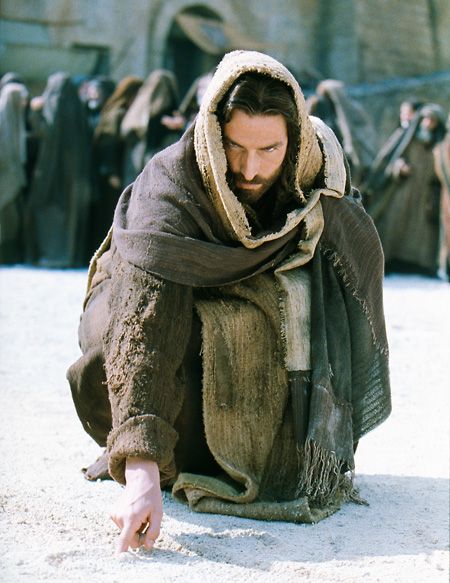











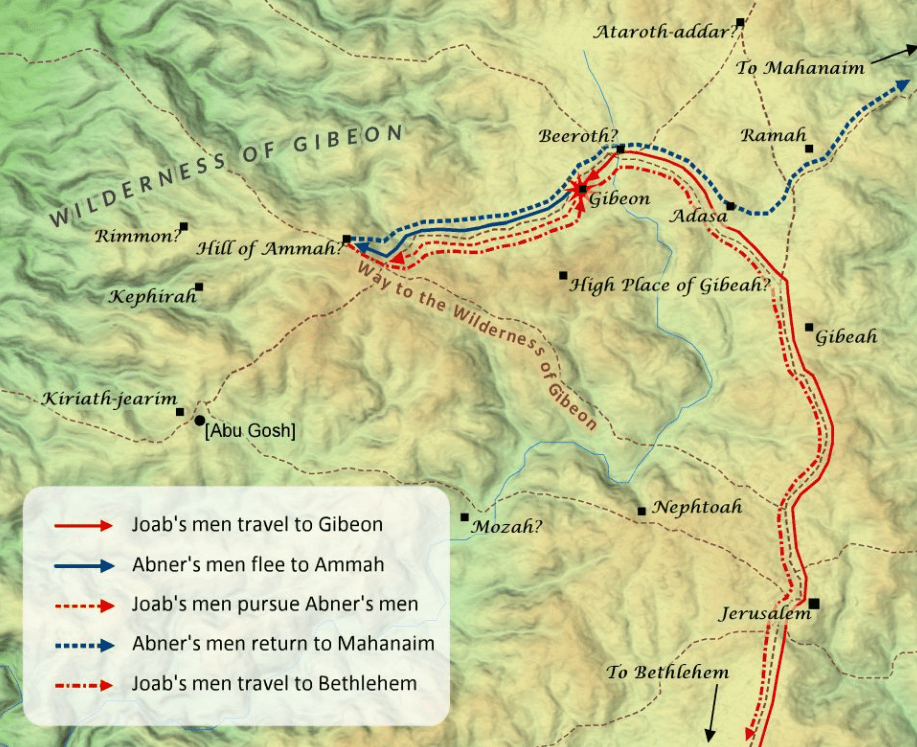
 Considering the Bible