The prophecy of the Lord Jesus for our consideration and edification, written centuries prior to His earthly existence is
Prophecy #136
Description
They stood afar off and watched
Old Testament Prophecy
Psalm 88:8
You have caused my companions to shun me; you have made me a horror to them.
New Testament Fullfillment
Luke 23:49
And all his acquaintances and the women who had followed him from Galilee stood at a distance watching these things.
If you are just joining this blog, or are a first time visitor, welcome to Considering the Bible. We would like to offer a document that provides over 350 prophecies of the Messiah found in the Old Testament for your consideration.
I make no claim to be able to comment on every one of these amazing prophecies in the future, but will occasionally bring one to the readers attention for their edification.
Hopefully you will follow “Considering the Bible” and begin an interaction with us
As considered in my introduction to this series, I would like to look at each of the letters to the churches of Revelation from a different viewpoint than I have had much of my life.
Much could be written on each of the churches, but my intent is to give an overview of Old Testament motifs and pictures that John may have drew on from the Old Testament when he was penning the letters through the Holy Spirit
Our third letter is to the Church of Pergamum
John reaches back into the travails of Israel in the wilderness for this church. Lets read the passage to get our thoughts aligned.
Rev 2:12-17 “And to the angel of the church in Pergamum write: ‘The words of him who has the sharp two-edged sword. “‘I know where you dwell, where Satan’s throne is. Yet you hold fast my name, and you did not deny my faith even in the days of Antipas my faithful witness, who was killed among you, where Satan dwells. But I have a few things against you: you have some there who hold the teaching of Balaam, who taught Balak to put a stumbling block before the sons of Israel, so that they might eat food sacrificed to idols and practice sexual immorality. So also you have some who hold the teaching of the Nicolaitans. Therefore repent. If not, I will come to you soon and war against them with the sword of my mouth. He who has an ear, let him hear what the Spirit says to the churches. To the one who conquers I will give some of the hidden manna, and I will give him a white stone, with a new name written on the stone that no one knows except the one who receives it.’
Consider the following
Pergamum dwells amongst demons, reminding us of Israel’s travels passing through the abode of demons (Lev. 16:10, 17:7, Deut 8:15)
Pergamum’s enemies are described as Balak and Balaam. (Num 25:1-3, 31:16)
Christ will make war against Balaamites with a sword in like manner as the angel of the Lord and Phineas (Numbers 22:31, 24:7-8)
To the overcomers, a promise of hidden manna (Heb 9:4) and a new name on a white stone, speaking of the redeemed people represented on the High Priest clothing (Ex 28:9-12). Note the stone for Pergamum is white, speaking of purity.
Give me your thoughts. Do you see parallels I have missed? Let me know in the comments. I would love to hear from you
I have learned much in our journey through the parables. Not enough, but much. As this is the last of my posts in this series on the parables, I would appreciate your thoughts and comments. I am considering a series on the miracles of the Lord Jesus and would appreciate if this is of interest to any who may be following.
On to our parable! This parable is of sheep and goats. Two animals that are easily distinguishable. I think!
Lets read the passage and then dig in.
Matthew 25:31-46
31 “When the Son of Man comes in his glory, and all the angels with him, then he will sit on his glorious throne. 32 Before him will be gathered all the nations, and he will separate people one from another as a shepherd separates the sheep from the goats. 33 And he will place the sheep on his right, but the goats on the left. 34 Then the King will say to those on his right, ‘Come, you who are blessed by my Father, inherit the kingdom prepared for you from the foundation of the world. 35 For I was hungry and you gave me food, I was thirsty and you gave me drink, I was a stranger and you welcomed me, 36 I was naked and you clothed me, I was sick and you visited me, I was in prison and you came to me.’ 37 Then the righteous will answer him, saying, ‘Lord, when did we see you hungry and feed you, or thirsty and give you drink? 38 And when did we see you a stranger and welcome you, or naked and clothe you? 39 And when did we see you sick or in prison and visit you?’ 40 And the King will answer them, ‘Truly, I say to you, as you did it to one of the least of these my brothers, you did it to me.’ 41 “Then he will say to those on his left, ‘Depart from me, you cursed, into the eternal fire prepared for the devil and his angels. 42 For I was hungry and you gave me no food, I was thirsty and you gave me no drink, 43 I was a stranger and you did not welcome me, naked and you did not clothe me, sick and in prison and you did not visit me.’ 44 Then they also will answer, saying, ‘Lord, when did we see you hungry or thirsty or a stranger or naked or sick or in prison, and did not minister to you?’ 45 Then he will answer them, saying, ‘Truly, I say to you, as you did not do it to one of the least of these, you did not do it to me.’ 46 And these will go away into eternal punishment, but the righteous into eternal life.”
Questions to Consider
Who were the audience?
The disciples, those who were following Him.
When did the Lord give this parable?
Jesus spoke this parable two days prior to the Passover.
When Jesus had finished all these sayings, he said to his disciples, 2 “You know that after two days the Passover is coming, and the Son of Man will be delivered up to be crucified.” – Mat 26:1-2 ESV
Where did the Lord teach the parable?
Jesus had been teaching His future apostles, those who would lead the ekklesia, truths on the mount of Olives
As he sat on the Mount of Olives the disciples came to him… – Mat 24:3a ESV
Why did the Lord give this message?
The purpose of this message as I understand it, is to instruct His men of the extent and power of His Kingdom, of the coming judgement, of His method of judging and can be outlined as follows
The King has authority of all nations (The nations are gathered before Him)
The King divides the nations into two groups (This implies they were together previously)
The King rewards both the groups on behavior towards the “least of these my brothers
The King judges based on linking the least of these my brethren with the King
The King will judge with surprising outcomes for both groups.
What was the message for the original audience?
During the time of this parable, goats and sheep were not as we see them today. Their appearance was not as distinct as we find today. Consider Genesis 30:32, where Moses describes both sheep and goat as being speckled and spotted.
let me pass through all your flock today, removing from it every speckled and spotted sheep and every black lamb, and the spotted and speckled among the goats, and they shall be my wages. – Gen 30:32 ESV
It was not uncommon for a flock to contain both sheep and goats during this time and this parable would ring true to the original hearers.
Consider Leviticus 5:6
he shall bring to the LORD as his compensation for the sin that he has committed, a female from the flock, a lamb or a goat… – Lev 5:6 ESV
The original audience, the disciples were listening to the Messiah speak of the separation of two types of animals from a flock, not based on appearance, but based on the actions of the animal. What they did.
But I must ask. The sheep did things for the least of these my brothers. These things that were performed on the weak and powerless were acts of mercy and kindness. That seems obvious at this point.
But I need to understand who the Lord is referring to when he mentions “the least of these my brothers”?
I have always, until forced to consider it in this post, assumed the “the least of these my brothers” to be the physical, national brothers of the Messiah. Those who have their roots in the nation of Israel. Of course this is a result of my previous fascination with dispensational theology, which I have abandoned.
But ideas linger, and this is one that may be challenged with this passage. This needs to be discussed a bit later, as I am drifting a wee bit!
What is the message for us today?
One item that I have always assumed is that those who are “the least of these my brothers” is referring to the poor, weak and imprisoned, sometimes defining the least of these my brothers as Jewish “brothers” of Jesus.
As an aside, as many of you know, I live in Houston Tx, and the streets are full of the poor and destitute. My wife, who works in a store on a busy intersection, often comments on the organized efforts of the “poor and destitute” beggars who drive up to the intersection and pile out of a relatively nice vehicle, and take their stations for the day. Scam artists are out there and we need to have discernment in our efforts to be loving and kind. One characteristic we watch for are the condition of the shoes. If the “beggar” has nice shoes, it seems apparent they are not poor and destitute.
But I digress
Who are we, as believers to consider as “the least of these my brothers“, when we hear the Lord speak in this parable. I find it curious that the Lord appended His description of “the least of these” with “my brothers” Of course I can find no specific instance in the New Testament where national Israel is defined as Jesus family/brothers, but I do find multiple instances where the New Testament describes believers as His brothers. Consider Matthew 12:48-49, where His mother and brothers were requesting His presence while He was teaching.
48 But he replied to the man who told him, “Who is my mother, and who are my brothers?” 49 And stretching out his hand toward his disciples, he said, “Here are my mother and my brothers! – Mat 12:48-49 ESV
Another passage that comes to mind is when the author of Hebrews reminds us that Jesus is not ashamed to call those sons that He is bringing into glory his brothers.
11 For he who sanctifies and those who are sanctified all have one source. That is why he is not ashamed to call them brothers, – Heb 2:11 ESV
Jesus’ family are those who are His disciples. His brethren (and sistren) are those of faith, not of the flesh. This may seem obvious to some, but I did not catch this truth in the story of the sheep and goats for decades.
Please understand this specific teaching in Matthew 25 does not allow us to ignore the needs of the general population. This is not the intent of the parable nor my wanderings in this post. Each of us are to seek to relieve others of suffering, but as the apostle Paul teaches in Galatians, there is a priority of believers for believers to minister to.
10 So then, as we have opportunity, let us do good to everyone, and especially to those who are of the household of faith. – Gal 6:10 ESV
One concluding thought.
If Jesus is referring to believers as the poor and destitute that are receiving the mercy, that tells us that it is the believers that are in the prisons, that are hungry, thirsty, poor, naked and sick. Believers are not exempt from the suffering of this world, and may be exposed to greater suffering based on our identification with our Brother Jesus.
As believers, we need to prioritize our efforts on those we know as followers as the Lord leads us. My understanding of this parable has taken a turn for the better after my simple rumination. Will you look for ways to bless those in the Body of Christ, those in the Family of the Son, who are suffering, and going without.
May the Lord help us all to know the best way to minister.
Please don’t forget to let me know your thoughts on a future series on the Miracles of the Lord Jesus. Your input and suggestions are always welcome.
The prophecy of the Lord Jesus for our consideration and edification, written centuries prior to His earthly existence is
Prophecy #135
Description
The Suffering and Reproach of Calvary
Old Testament Prophecy
Psalm 88
O Lord, God of my salvation, I cry out day and night before you. Let my prayer come before you; incline your ear to my cry! For my soul is full of troubles, and my life draws near to Sheol. I am counted among those who go down to the pit; I am a man who has no strength, like one set loose among the dead, like the slain that lie in the grave, like those whom you remember no more, for they are cut off from your hand. You have put me in the depths of the pit, in the regions dark and deep. Your wrath lies heavy upon me, and you overwhelm me with all your waves. Selah You have caused my companions to shun me; you have made me a horror[b] to them. I am shut in so that I cannot escape; my eye grows dim through sorrow. Every day I call upon you, O Lord; I spread out my hands to you. Do you work wonders for the dead? Do the departed rise up to praise you? Selah Is your steadfast love declared in the grave, or your faithfulness in Abaddon? Are your wonders known in the darkness, or your righteousness in the land of forgetfulness? But I, O Lord, cry to you; in the morning my prayer comes before you. O Lord, why do you cast my soul away? Why do you hide your face from me? Afflicted and close to death from my youth up, I suffer your terrors; I am helpless. Your wrath has swept over me; your dreadful assaults destroy me. They surround me like a flood all day long; they close in on me together. You have caused my beloved and my friend to shun me; my companions have become darkness.
New Testament Fullfillment
Matt 27:26-50
Then he released for them Barabbas, and having scourged Jesus, delivered him to be crucified.
Then the soldiers of the governor took Jesus into the governor’s headquarters, and they gathered the whole battalion before him.
And they stripped him and put a scarlet robe on him,
and twisting together a crown of thorns, they put it on his head and put a reed in his right hand. And kneeling before him, they mocked him, saying, “Hail, King of the Jews!”
And they spit on him and took the reed and struck him on the head.
And when they had mocked him, they stripped him of the robe and put his own clothes on him and led him away to crucify him.
As they went out, they found a man of Cyrene, Simon by name. They compelled this man to carry his cross.
And when they came to a place called Golgotha (which means Place of a Skull),
they offered him wine to drink, mixed with gall, but when he tasted it, he would not drink it.
And when they had crucified him, they divided his garments among them by casting lots.
Then they sat down and kept watch over him there.
And over his head they put the charge against him, which read, “This is Jesus, the King of the Jews.”
Then two robbers were crucified with him, one on the right and one on the left.
And those who passed by derided him, wagging their heads
and saying, “You who would destroy the temple and rebuild it in three days, save yourself! If you are the Son of God, come down from the cross.”
So also the chief priests, with the scribes and elders, mocked him, saying,
“He saved others; he cannot save himself. He is the King of Israel; let him come down now from the cross, and we will believe in him.
He trusts in God; let God deliver him now, if he desires him. For he said, ‘I am the Son of God.’”
And the robbers who were crucified with him also reviled him in the same way.
Now from the sixth hour there was darkness over all the land until the ninth hour.
And about the ninth hour Jesus cried out with a loud voice, saying, “Eli, Eli, lema sabachthani?” that is, “My God, my God, why have you forsaken me?”
And some of the bystanders, hearing it, said, “This man is calling Elijah.”
And one of them at once ran and took a sponge, filled it with sour wine, and put it on a reed and gave it to him to drink.
But the others said, “Wait, let us see whether Elijah will come to save him.”
And Jesus cried out again with a loud voice and yielded up his spirit.
If you are just joining this blog, or are a first time visitor, welcome to Considering the Bible. We would like to offer a document that provides over 350 prophecies of the Messiah found in the Old Testament for your consideration.
I make no claim to be able to comment on every one of these amazing prophecies in the future, but will occasionally bring one to the readers attention for their edification.
Hopefully you will follow “Considering the Bible” and begin an interaction with us
Calvin’s followers seek to justify their teaching with verses that, with just a little bit of explanation, seem to reinforce their philosophy.
You know – the Romans 9 passage, or maybe 1 Corinthians 2:14.
Some of these passages, without considering alternate views (i.e. listening to only Calvinist teachers!) tend to reinforce the Calvinistic thought pattern.
This series of video podcasts will provide a discussion that many Calvinists may have never heard, or considered.
The prophecy of the Lord Jesus for our consideration and edification, written centuries prior to His earthly existence is
Prophecy #134
Description
The Man of God’s right hand
Old Testament Prophecy
Psalm 80:17
But let your hand be on the man of your right hand, the son of man whom you have made strong for yourself!
New Testament Fullfillment
Mark 14:61-62
But he remained silent and made no answer. Again the high priest asked him, “Are you the Christ, the Son of the Blessed?”
And Jesus said, “I am, and you will see the Son of Man seated at the right hand of Power, and coming with the clouds of heaven.”
If you are just joining this blog, or are a first time visitor, welcome to Considering the Bible. We would like to offer a document that provides over 350 prophecies of the Messiah found in the Old Testament for your consideration.
I make no claim to be able to comment on every one of these amazing prophecies in the future, but will occasionally bring one to the readers attention for their edification.
Hopefully you will follow “Considering the Bible” and begin an interaction with us
Being an engineer in my day job, you can imagine that when numbers show up in the Word, I “calculate”. As we read through this parable, we see that each of the servants are provided a quantity of resources to use for a fixed period of time. Upon return of the Master, a time of reckoning falls on the servants. The Master judges each of the servants and doles out “rewards”.
Is that what this parable is about? Servants doubling their Masters resources and receiving proportional rewards?
Or is it about something else? Let’s read the parable before we make any assumptions.
Matthew 25:14-30
14 “For it will be like a man going on a journey, who called his servants and entrusted to them his property. 15 To one he gave five talents, to another two, to another one, to each according to his ability. Then he went away. 16 He who had received the five talents went at once and traded with them, and he made five talents more. 17 So also he who had the two talents made two talents more. 18 But he who had received the one talent went and dug in the ground and hid his master’s money. 19 Now after a long time the master of those servants came and settled accounts with them. 20 And he who had received the five talents came forward, bringing five talents more, saying, ‘Master, you delivered to me five talents; here, I have made five talents more.’ 21 His master said to him, ‘Well done, good and faithful servant. You have been faithful over a little; I will set you over much. Enter into the joy of your master.’ 22 And he also who had the two talents came forward, saying, ‘Master, you delivered to me two talents; here, I have made two talents more.’ 23 His master said to him, ‘Well done, good and faithful servant. You have been faithful over a little; I will set you over much. Enter into the joy of your master.’ 24 He also who had received the one talent came forward, saying, ‘Master, I knew you to be a hard man, reaping where you did not sow, and gathering where you scattered no seed, 25 so I was afraid, and I went and hid your talent in the ground. Here, you have what is yours.’ 26 But his master answered him, ‘You wicked and slothful servant! You knew that I reap where I have not sown and gather where I scattered no seed? 27 Then you ought to have invested my money with the bankers, and at my coming I should have received what was my own with interest. 28 So take the talent from him and give it to him who has the ten talents. 29 For to everyone who has will more be given, and he will have an abundance. But from the one who has not, even what he has will be taken away. 30 And cast the worthless servant into the outer darkness. In that place there will be weeping and gnashing of teeth.’
Questions to Consider
Who were the audience?
Jesus was teaching His disciples. Those who were His servants.
When did the Lord give this parable?
This teaching was provided during the last week of the Lord’s life on earth.
Where did the Lord teach the parable?
As Matthew 24:3 teaches, the Lord gave this teaching outside of Jerusalem.
Why did the Lord give this message?
Jesus began this parable by likening the Kingdom of God to this story. Jesus was about to leave this world and release the Spirit of God into His Kingdom, providing an inestimable “resource” for His servants. The Kingdom of God was about to explode on the scene, and His servants needed to have a clear understanding of acceptable behavior for a servant, but more importantly, they needed to understand the unacceptable perception of the Master.
But I am getting ahead of myself
What was the message for the original audience?
The first two servants, in doubling the Masters resource were rewarded “with much”. The servant that doubled the Master’s five talents, thereby providing the Master ten talents, received authority over ten cities. Likewise with the servant who doubled His Master’s two talents. He received authority over two cities.
As you can see, this is where my initial thought of proportionality was spawned. But I was not considering the point of the parable. This background information was describing the grace of the Master, revealing the Master’s character.
A talent is a huge sum of cash, equal to 6,000 denarii. One denarii was a full days wage. Therefore, a talent represented approx. 20 years of wages!
The audience in Jesus day would consider the initial trust of such wealth to be unthinkable, and the reward to be unbelievable, for servants worked without the expectation of rewards.
Peter and the gang must have been delirious with this parable!
But alas, the focus of the parable is the third servant. Let’s reconsider this servant’s perception of the Master.
‘Master, I knew you to be a hard man, reaping where you did not sow, and gathering where you scattered no seed, so I was afraid, and I went and hid your talent in the ground. Here, you have what is yours.’ – Mat 25:24b-25 ESV
The servant approaches the Master with a bold defense, claiming it is the Master’s fault for his lack of profit. This fellow is the ultimate “victim” This is quite the claim, since “hard” may be understood as fierce, harsh, or stern. This servant approached the Master, proclaiming his fear due to the Master’s character, and returned the single talent back. He knew the Master would expect profit, and this created fear in this fellow, but this fear supposedly “froze” the servant in his endeavors.
The servant was afraid due to his perception (right or wrong) of the Master.
The Master did not accept the servants claim of fear causing his lack of service. The reason the servant came back empty handed was that he was wicked (evil, bad) and slothful (sluggish, indolent, grievous)! This had nothing to do with the Master’s character, for as the parable describes Him, He is one who entrusts His servants with responsibility, and rewards them richly.
Amazing that the servant was described as “worthless” in a parable describing profits, resources and rewards!
This did not turn out well for the third servant, for the talent was taken from him, given to the first servant (thereby blowing my proportionality theorem!) and was thrown out.
The servant was thrown out! When I read that, I was shocked! This was a servant of the Master! How could that be?
I will not repeat my previous findings on the consequences of this servant’s perception of the Master here. If of interest to the reader, please refer to Parable Surprises – Wedding Banquet.
Suffice it to say, I think the original audience understood that their perception of the Master was key to avoiding failure in the Kingdom.
What is the message for us today?
What is the parables message to us today? The core message I have come away with is not that we are required to double any resources we may have been granted. This is not the intent of the parable. The talents are simply a vehicle used to describe the Master’s gracious character towards His servants.
The key message from this parable is our perception of the Master!
Our Perception of God
How do you “see” God?
Do you see God as the third servant saw his master, as a hard man, reaping where He does not sow, and gathering where He scattered not seed?
When you consider the One above, who came to earth, who took upon Himself the form of a man, and became a servant to His enemies, who loved those who crucified Him, who suffered and bled, do you see Him as “hard”?
I am a weak and sinful man blundering through this existence of mercy, but the Scriptures have a constant witness we are wise to avail ourselves of. The Word speaks of God as ever loving, kind and merciful to those who look to Him.
As we seek to serve Him, we must understand His character in order to serve Him and our fellow man properly. He is like no other, and we must be constantly reminded of His “otherness”, of His not being like us.
But what is the nature of our God?
Anyone who does not love does not know God, because God is love. – 1 John 4:8
So we have come to know and to believe the love that God has for us. God is love, and whoever abides in love abides in God, and God abides in him. – 1 John 4:16
The fruit of the Spirit is the natural outflow of the nature of our God!
But the fruit of the Spirit is love, joy, peace, patience, kindness, goodness, faithfulness, gentleness, self-control; against such things there is no law. – Gal 5:22-23 ESV
To attribute other than these characteristics to the Lord would be an exercise in contradiction. If we see Him as unwieldly, austere, fierce, harsh or stern, as this third servant saw his master, we ourselves shall suffer for this, and eventually end up using this lie as an excuse for our wickedness.
You see, the Scriptures teach us that what we worship is what we become. Now I am not saying if we worship God we become God, but the Scriptures do inform us of the opportunity to be conformed to the One we worship.
And we all, with unveiled face, beholding the glory of the Lord, are being transformed into the same image from one degree of glory to another. For this comes from the Lord who is the Spirit. 2 Corinthians 3:18
But what if we avoid or ignore the witness of the grace of God. What may we be transformed into other than confirming our own likeness, of hardening our opinion of ourselves as being right, pure and good? This is a great danger!
But wait – there are implications of this decision to consider our own opinions as being correct as opposed to the Word. What might be worse is that we may project our character on Him? Make the One we worship identical to ourselves! How utterly disastrous for us and for His name!
To whom then will you compare me, that I should be like him? says the Holy One. – Isa 40:25
He is the Holy One, the ever living One, the One who changes not! How can we ever be conformed into the image of the matchless Son of God if all we see is an image of ourselves!
For those whom he foreknew he also predestined to be conformed to the image of his Son, in order that he might be the firstborn among many brothers. – Rom 8:29
and have put on the new self, which is being renewed in knowledge after the image of its creator. Colossians 3:10
What is your perception of God?
When you fall into a time of trial, do you see Him as One who brought the trial into your life, or as the One who will suffer with you through it?
When you fail in some endeavor, do you see Him as One that will mock you, judge you condemn you, or do you see Him as One who is kind and compassionate, willing to forgive, and inviting your repentance, providing your renewal?
Your perception of God determines your relationship with Him. Your perception of God determines your destiny.
The prophecy of the Lord Jesus for our consideration and edification, written centuries prior to His earthly existence is
Prophecy #133
Description
To speak the Wisdom of God with authority
Old Testament Prophecy
Psalm 78:2b
I will utter dark sayings from of old,
New Testament Fullfillment
Matt 7:29
for he was teaching them as one who had authority, and not as their scribes.
If you are just joining this blog, or are a first time visitor, welcome to Considering the Bible. We would like to offer a document that provides over 350 prophecies of the Messiah found in the Old Testament for your consideration.
I make no claim to be able to comment on every one of these amazing prophecies in the future, but will occasionally bring one to the readers attention for their edification.
Hopefully you will follow “Considering the Bible” and begin an interaction with us
As considered in my introduction to this series, I would like to look at each of the letters to the churches of Revelation from a different viewpoint than I have had much of my life.
Much could be written on each of the churches, but my intent is to give an overview of Old Testament motifs and pictures that John may have drew on from the Old Testament when he was penning the letters through the Holy Spirit
Our second letter is to the Church of Smyrna
John reaches back into the patriarchs (Abraham – Joseph and the children of Israel) for this church. Lets read the passage to get our thoughts aligned.
Rev 2:8-11
“And to the angel of the church in Smyrna write: ‘The words of the first and the last, who died and came to life. “‘I know your tribulation and your poverty (but you are rich) and the slander of those who say that they are Jews and are not, but are a synagogue of Satan. Do not fear what you are about to suffer. Behold, the devil is about to throw some of you into prison, that you may be tested, and for ten days you will have tribulation. Be faithful unto death, and I will give you the crown of life. He who has an ear, let him hear what the Spirit says to the churches. The one who conquers will not be hurt by the second death.’
Consider the following
Jesus is as one who was dead and is alive, with the foreshadowing of a number of stories
Isaac’s picture of the resurrection (Gen 22:1-14)
Joseph’s picture of the resurrection (Gen 37:18-36, 39:20 – 41:45, 45:4-8, 50:20, Heb 11:17-19)
Israel’s salvation from bondage of Egypt
The church is described as poor yet being rich is similar to Abraham and his family as they lived as aliens in the land of promise
Persecution of true Jews by false Jews as Isaac was persecuted by Ismael (Gen 21:9)
The threat of imprisonment via slander mirrors Joseph’s experience in the house of Potiphar (Gen 39:13-20)
The blessing of the crown of life for the faithful is pictured (Gen 41:40-44)
Aaron wore a crown of life, (Ex 28:36-38) picturing the fully redeemed man
Israel’s victory through ten plagues echoes the tribulation of ten days before Israel’s deliverance
Give me your thoughts. Do you see parallels I have missed? Let me know in the comments. I would love to hear from you
Just got home from church and the message was on Deuteronomy 5:18, the seventh command in the Decalogue. It goes like this
“Don’t commit adultery”
It was a great message, speaking of the fact that marriage is a covenant, a binding oath of faithfulness that is defined by God and represents the ultimate wedding marriage of the Son with His Bride, the church.
His teaching was refreshing in the midst of a culture that wants to redefine the concept of marriage, or reject the practice of commitment. As I was listening to the message, I thought back over 40 years ago, when my future bride and I were considering our own vows, and the best way to approach the wedding that would honor God. One of the options my sweetie and I opted for was the practice of announcing “our banns”.
Banns is a method of publicizing a wedding within a church’s regular service, verbally speaking of the intention of marriage for the couple. Our particular church, a fellowship baptist church in Bracebridge Ontario, offered this opportunity for us and we felt it was honoring to the Lord and the people of God we fellowshipped with. After all, they knew us better than most and we trusted their opinions.
Of course no one brought forward any reason why this marriage should not happen, (whew) and we recently celebrated our 40th year together.
Why do I bring this up?
My wife and I took vows in front of God, and not in front of the state. I understand that for the great majority of folks who may not have had the opportunity to wed in the similar manner, this may sound pious and self righteous. This is not my intent. This manner of marriage emphasized in my future bride and my thoughts the authority of God without the State being an active player. We wanted to focus on His authority in our lives only and our commitment to each other. We were promising our selves to each other, and not simply satisfying a governmental legality to conform to societies norms.
He is good and we are simply thankful for His many mercies as we have stumbled through this pilgrimage. He provided me a wonderful wife, that I boast on both at work and in church.
He who finds a wife finds a good thing and obtains favor from the LORD. – Pro 18:22
He is kind. I have obtained favor from the LORD and she is my bestest friend! What a great life!
The prophecy of the Lord Jesus for our consideration and edification, written centuries prior to His earthly existence is
Prophecy #132
Description
He would teach in parables
Old Testament Prophecy
Psalm 78:1-2
Give ear, O my people, to my teaching; incline your ears to the words of my mouth! I will open my mouth in a parable; I will utter dark sayings from of old,
New Testament Fullfillment
Matt 13:34-35
All these things Jesus said to the crowds in parables; indeed, he said nothing to them without a parable.
This was to fulfill what was spoken by the prophet: “I will open my mouth in parables; I will utter what has been hidden since the foundation of the world.”
If you are just joining this blog, or are a first time visitor, welcome to Considering the Bible. We would like to offer a document that provides over 350 prophecies of the Messiah found in the Old Testament for your consideration.
I make no claim to be able to comment on every one of these amazing prophecies in the future, but will occasionally bring one to the readers attention for their edification.
Hopefully you will follow “Considering the Bible” and begin an interaction with us
Calvin’s followers seek to justify their teaching with verses that, with just a little bit of explanation, seem to reinforce their philosophy.
You know – the Romans 9 passage, or maybe 1 Corinthians 2:14.
Some of these passages, without considering alternate views (i.e. listening to only Calvinist teachers!) tend to reinforce the Calvinistic thought pattern.
This series of video podcasts will provide a discussion that many Calvinists may have never heard, or considered.
The prophecy of the Lord Jesus for our consideration and edification, written centuries prior to His earthly existence is
Prophecy #131
Description
All nations shall call Him blessed
Old Testament Prophecy
Psalm 72:17
May his name endure forever, his fame continue as long as the sun! May people be blessed in him, all nations call him blessed!
New Testament Fullfillment
John 12:13
So they took branches of palm trees and went out to meet him, crying out, “Hosanna! Blessed is he who comes in the name of the Lord, even the King of Israel!”
Rev 5:8-12
And when he had taken the scroll, the four living creatures and the twenty-four elders fell down before the Lamb, each holding a harp, and golden bowls full of incense, which are the prayers of the saints.
And they sang a new song, saying, “Worthy are you to take the scroll and to open its seals, for you were slain, and by your blood you ransomed people for God from every tribe and language and people and nation,
and you have made them a kingdom and priests to our God, and they shall reign on the earth.”
Then I looked, and I heard around the throne and the living creatures and the elders the voice of many angels, numbering myriads of myriads and thousands of thousands,
saying with a loud voice, “Worthy is the Lamb who was slain, to receive power and wealth and wisdom and might and honor and glory and blessing!”
If you are just joining this blog, or are a first time visitor, welcome to Considering the Bible. We would like to offer a document that provides over 350 prophecies of the Messiah found in the Old Testament for your consideration.
I make no claim to be able to comment on every one of these amazing prophecies in the future, but will occasionally bring one to the readers attention for their edification.
Hopefully you will follow “Considering the Bible” and begin an interaction with us
In oversimplified terms, universal reconciliation speaks of the eventual redemption of every soul ever created through the work of the Messiah and His sacrifice on the cross. This teaching does not remove the existence of hell, or the suffering associated with it, but it does challenge it’s never ending duration, and the purpose of the flames.
This series of posts, on the book “Heaven’s Doors” will be my last on the topic of universal reconciliation (not universalism). I am thankful to my Calvinist friend for directing me to this “heresy”. The teaching of universal reconciliation has more Scriptural support than I imagined and is worth considering if you are of an open mind and willing to consider alternate views to expand your understanding of the Word.
Of course if you are convinced you are completely right, without error, and doctrinally pure, this topic would be a waste of your time. Please move on!
This post will address Judas
For the Son of Man goes as it is written of him, but woe to that man by whom the Son of Man is betrayed! It would have been better for that man if he had not been born.” – Mark 14:21
So many questions about Judas. Was he a believer that apostatized or simply a professor that fooled everyone. Again, some of these questions are for another post, and I will restrict myself to Mr. Sarris verse reference for the sake of brevity.
To have an existence that is worse than nonexistence! Wow. That has got to be terrible.
A number of times in the Scripture, cursing one’s birth is recorded. Think of Jeremiah
Cursed be the day on which I was born! The day when my mother bore me, let it not be blessed! – Jer 20:14
Or Job
“Let the day perish on which I was born, and the night that said, ‘A man is conceived.’ – Job 3:3
You may remember others, but the point is that this is not uncommon for the Word to record this attitude. Jesus actually referred to the attitude towards Judas as being of woe, as in “woe to that man”.
Woe. What an uncommon word. When was the last time you heard this word in a conversation?
Turns out, this word (ouai) is a primary exclamation of grief.
Sorrow. Grief. Deep heartache. Sadness. Distress. Jesus was referring to sorrow, not anger. He was speaking of the pain of the decision Judas was making and of the resultant deep heartache from this action of betrayal.
So we could read it as “sorrow to this man”. But what man is experiencing the sorrow? I have always associated Judas with the sorrow, the woe.
Mr Sarris brings to our attention that Jesus, in these verses, is speaking of two people, The Son of Man and Judas. Consider the Mark 14:21 with the pronouns identified.
For the Son of Man goes as it is written of him, but woe to that man (Judas) by whom the Son of Man is betrayed! It would have been better for that man (the Son of Man) if he (Judas) had not been born.” – Mark 14:21
Jesus, in this understanding of the verse, is speaking of the grief He would experience concerning Judas, his disciple who was to betray Him.
A Rambling
One other finding that may be of interest to the reader. The last phrase in the verse is translated in the ESV as…
It would have been better for that man if he had not been born.
As I look through the various translations, a number of the literal translations prefer to use “good” as opposed to better.
… good were it to him if that man had not been born.’ – Mar 14:21 YLT
… good were it for that man if he had never been born. – Mar 14:21 KJV
… [It would have been] good for that man if he had not been born.” – Mar 14:21 NASB20
… good were it for that man if he had not been born. – Mar 14:21 ASV
As an aside, there is a difference between better (which is a comparative term) and good (which is a qualitative term) So what Carl – this ain’t English class, eh? I know I know – I am not an English major and never have been, but these things sometimes tickle my mind and make think. Ok so here is what I am thinking.
“Good” for Jesus if Judas had not been born is simply a statement of negation on Judas’ life. – No life for Judas, no existence. Jesus would not have had the sorrow of his close friends betrayal
“Better” for Jesus if Judas had not been born is a comparison with something that is worse. This by implication speaks of suffering, regret, pain on top of the betrayal of his disciple.
This rambling is brought to you by a fuzzy headed writer that is offering a concept to be discussed.
Another Rambling
You know, (one more rambling coming – ) when the Lord walked amongst us, the established God ordained religion of Judaism rejected His message of inclusion, of accepting sinners and tax collectors, even non-Jews into the family of God. It was heresy, and beyond accepted religious thinking. And yet out of this “heresy”, a multinational family of saints has erupted and the expansion of the Body of Christ / the Kingdom of God is greater than any first century religious Jew may have ever expected.
Are we moderns possibly of the same ilk in our understanding of God’s wonderful mercy as the first century Jewish religion?
The body of the post is also available for discussion of course, and I would appreciate your thoughts. As this is the last post on this book, I would like to thank all who have travelled with me in this somewhat surprising book of Mr. Sarris. I thoroughly enjoyed the book and the challenges it provided my thinking. I can not say I am a convinced Universal Reconciliation adherent, but I have definitely seen reasons why some understand the Scripture to provide this hope to God’s creation.
Something to consider – Ramblings done – Thanks for reading.
The prophecy of the Lord Jesus for our consideration and edification, written centuries prior to His earthly existence is
Prophecy #130
Description
All nations shall be blessed by Him
Old Testament Prophecy
Psalm 72:17
May his name endure forever, his fame continue as long as the sun! May people be blessed in him, all nations call him blessed!
New Testament Fullfillment
Gal 3:8
And the Scripture, foreseeing that God would justify the Gentiles by faith, preached the gospel beforehand to Abraham, saying, “In you shall all the nations be blessed.”
If you are just joining this blog, or are a first time visitor, welcome to Considering the Bible. We would like to offer a document that provides over 350 prophecies of the Messiah found in the Old Testament for your consideration.
I make no claim to be able to comment on every one of these amazing prophecies in the future, but will occasionally bring one to the readers attention for their edification.
Hopefully you will follow “Considering the Bible” and begin an interaction with us
As considered in my introduction to this series, I would like to look at each of the letters to the churches of Revelation from a different viewpoint than I have had much of my life.
Much could be written on each of the churches, but my intent is to give an overview of Old Testament motifs and pictures that John may have drew on from the Old Testament when he was penning the letters through the Holy Spirit
Our first letter is to the Church of the Ephesians.
John reaches back into the garden for this church. Lets read the passage to get our thoughts aligned.
Rev 2:1-7
“To the angel of the church in Ephesus write: ‘The words of him who holds the seven stars in his right hand, who walks among the seven golden lampstands. “‘I know your works, your toil and your patient endurance, and how you cannot bear with those who are evil, but have tested those who call themselves apostles and are not, and found them to be false. I know you are enduring patiently and bearing up for my name’s sake, and you have not grown weary. But I have this against you, that you have abandoned the love you had at first. Remember therefore from where you have fallen; repent, and do the works you did at first. If not, I will come to you and remove your lampstand from its place, unless you repent. Yet this you have: you hate the works of the Nicolaitans, which I also hate. He who has an ear, let him hear what the Spirit says to the churches. To the one who conquers I will grant to eat of the tree of life, which is in the paradise of God.’
Consider the following
Christ is announced as the Creator.
Adam was granted privilege of labor in the garden, and this church has an emphasis on labor in its description
Christ walked amongst the lampstands to judge the church, as God had walked amongst His original creation in judgement (Gen 3:8).
The angel was commanded to guard the church, in similar fashion to Adam guarding the garden (Gen 2:15)
Both Adam and the angel of the church had fallen, failing in their duties.
Both Adam and the angel of the church left their first love
Christ threatens to remove the lamp from the church, even as God removed the Tree of Life from Adam and Eve’s through restricting their access to the garden
The Tree of Life was available to Adam, and now available to all who overcome.
Give me your thoughts. Do you see parallels I have missed? Let me know in the comments. I would love to hear from you
In my early studies on this parable, I have found widely varying interpretations and applications. Interpretations that are complex and specific, about which I question the requirement of.
Some of the links of this parable with our current understanding of Christianity included associating the sleep of the virgins with the sleep of death, or that the oil represented either the “works” of the foolish virgins, or the “faith” of the wise virgins.
As I pondered this effort to identify each specific item in the parable, I became engulfed in the details and lost focus on the main point. As a Pastor friend of mine once said… Keep the main point the main point. Therefore, I will seek to stay focused on the main point of the parable.
And what is the main point of the parable? Let’s read the passage, and consider my faithful questions below.
Matthew 25:1-13
1 “Then the kingdom of heaven will be like ten virgins who took their lamps and went to meet the bridegroom. 2 Five of them were foolish, and five were wise. 3 For when the foolish took their lamps, they took no oil with them, 4 but the wise took flasks of oil with their lamps. 5 As the bridegroom was delayed, they all became drowsy and slept. 6 But at midnight there was a cry, ‘Here is the bridegroom! Come out to meet him.’ 7 Then all those virgins rose and trimmed their lamps. 8 And the foolish said to the wise, ‘Give us some of your oil, for our lamps are going out.’ 9 But the wise answered, saying, ‘Since there will not be enough for us and for you, go rather to the dealers and buy for yourselves.’ 10 And while they were going to buy, the bridegroom came, and those who were ready went in with him to the marriage feast, and the door was shut. 11 Afterward the other virgins came also, saying, ‘Lord, lord, open to us.’ 12 But he answered, ‘Truly, I say to you, I do not know you.’ 13 Watch therefore, for you know neither the day nor the hour.
Questions to Consider
Who were the audience?
As mentioned in a previous post Parable Surprises – Fig Tree, the parables spoken by the Messiah are directed to His disciples, the apostles who would lead the church in the near future, who would, in my understanding, watch the Lord build a nation of believers, starting from a nation that was dying on the vine, ready to be spewed from the land.
When did the Lord give this parable?
This parable was provided within a week of the crucifixion.
As an aside, might the disciples have remembered this parable after the crucifixion, (but before the resurrection) and even mocked this delay He spoke of! The delay would be forever – all hope is gone! What a cruel promise is this parable without faith. And yet, the disciples, even after this gut wrenching, hope crushing disappointment, were used mightily of the Lord.
But I digress.
Where did the Lord teach the parable?
As with the previous parables, this one seems to be continued directly after the faithful and wise servant parable, given on the Mount of Olives.
Why did the Lord give this message?
This question is sometimes the most difficult question to answer. Not so with this parable.
This parable is given to warn the disciples that they do not know, nor will they know, when the Son of Man comes. This is the intent of the parable. Identifying additional terms, (like the oil or the lamps) are inconsequential, even distracting, from the intent of this parable. Watch therefore! But alas, I am getting ahead of myself, for we have to find out what the message was for the original audience, prior to making any application for ourselves!
What was the message for the original audience?
Peter James, John and the remaining disciples were listening intently to these parables, not realizing that they were some of the Master’s final stories.
In hearing this parable, they had just come off listening to instruction of staying awake.
Mat 24:42,43
Therefore, stay awake, for you do not know on what day your Lord is coming. But know this, that if the master of the house had known in what part of the night the thief was coming, he would have stayed awake and would not have let his house be broken into.
And now we have a parable about ten virgins, all of them falling asleep. I find it instructive that within this parable, all ten virgins slept and are not judged on this. The wise virgins slept.
Previous teaching during this same period (minutes before?) the disciples were instructed to “stay awake”. What gives?
Parables, in my understanding are telling a story with a message, not twenty messages. One parable does not necessarily convey into the next. Each parable has a point – take the point and move on!
Matthew 24:42, 43 speaks of alertness, of understanding that we are to expect Him when we least expect Him. If we are looking for signs of His coming, this may indicate that we are not expecting Him when we least expect Him. This is actually detrimental to the Christian faith!
The previous parable speaks of a servant assuming the Master’s delay, and the subsequent results of this wrong thinking that led to his suffering.
Matthew 24:48, 50-51 But if that wicked servant says to himself, ‘My master is delayed,’ the master of that servant will come on a day when he does not expect him and at an hour he does not know and will cut him in pieces and put him with the hypocrites. In that place there will be weeping and gnashing of teeth.
The parable of the ten virgins speaks of preparing, even planning for a delay. The foolish servant in the previous parable, assumed a delay for the purpose of selfish indulgence. In this parable of the ten virgins, we are not told why they didn’t prepare. Five of them simply did not prepare for any delay.
As you can see, these parables are to “stand on their own two feet”, to communicate one primary message to the hearers.
So the disciples had been taught of the need for alertness, and of the consequences of thinking wrongly of the Son of Man’s coming.
And in this parable, be ready, be prepared for the Bridegroom’s coming. “Watch therefore” in the parables concluding verse, must include the concept of preparation.
One last topic to bring to my readers attention, is the phrase “the door was shut” in verse 10. Even as the foolish virgins came back with oil, they could not enter the marriage feast. The opportunity had passed.
It seems this unpreparedness was characteristic of these foolish virgins, for the Bridegroom spoke of not knowing them. I am assuming that the bridegroom had a say in choosing these virgins for his celebrations. Did he misjudge their character, and from this say he didn’t (really) know them?
Don’t misunderstand – our Lord knows each and every one of us. Humanly speaking, this bridegroom had misjudged the five virgins. He didn’t know them the way he thought he knew them.
What is the message for us today?
So, what is the main point Carl? Be prepared. To “be” something implies a constancy, a consistency, an existence. Therefore, we need “to be” of such character that we are one’s who are prepared, have a character that looks to be prepared, that plans and prepares for possibilities within our abilities.
Personally, I believe Matthew 24 & 25 is providing teaching to the disciples of the coming of the Son of Man upon the nation of Israel in 70 AD, and that Jesus was giving His disciples direction regarding the dissolution of the political nation of Israel. But that conclusion isn’t critical in finding the important application to be drawn from this story.
This parable was directing the disciples to watch and be prepared for the Son of Man’s coming. A coming that would take 40 years to be realized for Jesus’ apostles. A coming that, in the disciples lives, would occur late in life, even with some of them not actually living to see it.
Long term preparation! Not a preparation that can be accomplished in a moment.
If this is correct, we need to understand that what was intended for the apostles, in the Lord’s call for their character, is not something we should dismiss. Be prepared for His ultimate coming, for I can promise you that His coming will be within your lifetime, (or one nanosecond later!)
Get right with Him, walk with Him, beg for wisdom in living a life of preparedness and watchfulness.
The prophecy of the Lord Jesus for our consideration and edification, written centuries prior to His earthly existence is
Prophecy #129
Description
Belief on His name will produce offspring
Old Testament Prophecy
Psalm 72:17
May his name endure forever, his fame continue as long as the sun! May people be blessed in him, all nations call him blessed!
New Testament Fullfillment
John 1:12-13
But to all who did receive him, who believed in his name, he gave the right to become children of God,
who were born, not of blood nor of the will of the flesh nor of the will of man, but of God.
If you are just joining this blog, or are a first time visitor, welcome to Considering the Bible. We would like to offer a document that provides over 350 prophecies of the Messiah found in the Old Testament for your consideration.
I make no claim to be able to comment on every one of these amazing prophecies in the future, but will occasionally bring one to the readers attention for their edification.
Hopefully you will follow “Considering the Bible” and begin an interaction with us
My wife and I are reading through the Psalms in our evening reading and occasionally a nugget of the Psalms jumps out of the page. Don’t you love it when, after years of reading the “Old Book” passages become alive, reinforcing old teachings or simply warming your heart.
This is the book of Psalms, and it is rich.
I pray I can communicate a portion of the blessing we receive from this wonderful book.
Psalm 35 26 Let them be put to shame and disappointed altogether who rejoice at my calamity! Let them be clothed with shame and dishonor who magnify themselves against me! 27 Let those who delight in my righteousness shout for joy and be glad and say evermore, “Great is the LORD, who delights in the welfare of his servant!” 28 Then my tongue shall tell of your righteousness and of your praise all the day long.
In our last post on this marvelous psalm, we came away with David’s plea for vindication, based not simply on his own blamelessness, but on the righteousness of God.
We spoke of the difference of vindication and vengeance, and reminded the reader that vindication is an overturning of a false conviction, of a clearing of his name, of regaining a good reputation.
In our closing verses above, David pulls back on his requests for active judgement from the Lord, and requests the passive allowance of God, that of letting his enemies fall into their own traps. David often draws on this type of request. A fuller discussion on it may be found in a previous post on this psalm (Psalms for Psome – Ps 35 – B)
In our verses considered this morning, David is summing up his prayer. He asked the Lord to allow his enemies to fall into their own trap, then in verses 22-24, boldly looked to the Lord for active deliverance from his enemies, in the form of vindicating his own actions. The truth will be established, even within his enemies hearts.
The result of this vindication of David is shame upon the enemies
Let them be put to shame and disappointed …
Shame and disappointment are often found together in the Word. As a matter of fact, the root word used here for disappointed is translated as ashamed or shame occasionally in the Old Testament, and is used to describe embarrassment. If I understand this phrase right, he is asking the Lord to allow his enemies to be put to shame and experience humiliation, embarrassment.
My friends, no one enjoys experiencing humiliation. To be humbled by forces beyond our control, by others that bring secrets to light, bringing shame into our lives is a horrible experience, cutting to the very soul. And yet, self humiliation is exalted in the Word. Self humiliation brings forgiveness.
Consider the humbling of Manasseh
Manasseh led Judah and the inhabitants of Jerusalem astray, to do more evil than the nations whom the LORD destroyed before the people of Israel. – 2Ch 33:9 He (Manasseh) prayed to him, and God was moved by his entreaty and heard his plea and brought him again to Jerusalem into his kingdom. Then Manasseh knew that the LORD was God. – 2Ch 33:13 And he (Amon – Manasseh’s son) did what was evil in the sight of the LORD, as Manasseh his father had done. Amon sacrificed to all the images that Manasseh his father had made, and served them. – 2Ch 33:22 And he did not humble himself before the LORD, as Manasseh his father had humbled himself, but this Amon incurred guilt more and more. – 2Ch 33:23
David is seeking for his enemies to experience a humiliation, a reckoning with truth. Earlier in this psalm, David looked for his enemies to experience truth in their hearts. Now he is looking to have his enemies experience disappointment in their plans for him, for the truth to come out and all to see the evil that has been perpetrated on David.
Let them be clothed with shame and dishonor …
I think David returns to the shame, dishonor and disappointment he prayed of earlier.
Let them be put to shame and dishonor who seek after my life! Let them be turned back and disappointed who devise evil against me! – Psa 35:4
In our verse this morning he speaks of his enemies being clothed in shame and dishonor.
When you hear the term “be clothed”, what comes to mind?
I am not a “clothes” horse, as I would rather wear a raggedy pair of work pants and an old t-shirt, something that I “cloth” myself in. I value the appearance of being average, or even poor, and consider myself an ordinary fellow, one who tries not to put on airs. Nevertheless, at work I am sometimes called upon to wear a tie (ick), and even a suit jacket. (Say it isn’t so Carl.) This type of clothing does not “fit” me, and I feel out of place as I wear it. My internal person and outward expression are at odds with each other.
David is looking for these opponents to be clothed in shame and dishonor.
These enemies are to experience the shame, and not simply internally, without any of their peers knowing. These enemies are to be seen as “shamed” ones, men who are openly disappointed in their plans of wickedness and lies. They are to be put to shame, and also to be fully exposed to all of their shamefulness.
David is looking for their internal person and their outward expression is be the same.
David’s enemies did not delight in his righteousness. They sought to tear it down, to destroy it. They will experience shame, dishonor and disappointment
David’s fellows, those who delight in his righteousness, will shout for joy, and attribute to God the salvation of His servant. David also shall tell of God’s righteousness, and praise Him.
As we close on this psalm, let us consider on additional question.
Who is speaking in verse 27? Of course David wrote this verse, but throughout the psalm he appeals to his blamelessness, and God’s righteousness. Three verses refer to righteousness in this psalm.
Vindicate me, O LORD, my God, according to your righteousness, and let them not rejoice over me! – Psalm 35:24 Let those who delight in my righteousness shout for joy and be glad and say evermore, “Great is the LORD, who delights in the welfare of his servant!” – Psalm 35:27 Then my tongue shall tell of your righteousness and of your praise all the day long. – Psalm 35:28
Verse 24, David appeals to God’s righteousness. Verse 28, David again speaks of telling others of God’s righteousness.
Verse 27 contains the quandary. Is this the Lord speaking of His own righteousness through the Psalmist? Is this the Lord taking possession of this prayer and interjecting his own instruction? As if God is instructing those who delight in His righteousness to shout for joy. To say forever – Great is the LORD.
No other verse in this psalm refers to David as being righteous, only blameless. and as we saw earlier in a previous post, their is a difference.
He is righteous, totally balanced in all His wonderful attributes, without any inner conflict or external contradictions within His person
The prophecy of the Lord Jesus for our consideration and edification, written centuries prior to His earthly existence is
Prophecy #128
Description
The corn of wheat to fall into the Ground
Old Testament Prophecy
Psalm 72:16
May there be abundance of grain in the land; on the tops of the mountains may it wave; may its fruit be like Lebanon; and may people blossom in the cities like the grass of the field!
New Testament Fullfillment
John 12:24-25
Truly, truly, I say to you, unless a grain of wheat falls into the earth and dies, it remains alone; but if it dies, it bears much fruit.
Whoever loves his life loses it, and whoever hates his life in this world will keep it for eternal life.
If you are just joining this blog, or are a first time visitor, welcome to Considering the Bible. We would like to offer a document that provides over 350 prophecies of the Messiah found in the Old Testament for your consideration.
I make no claim to be able to comment on every one of these amazing prophecies in the future, but will occasionally bring one to the readers attention for their edification.
Hopefully you will follow “Considering the Bible” and begin an interaction with us
In oversimplified terms, universal reconciliation speaks of the eventual redemption of every soul ever created through the work of the Messiah and His sacrifice on the cross. This teaching does not remove the existence of hell, or the suffering associated with it, but it does challenge it’s never ending duration, and the purpose of the flames.
This series of posts, on the book “Heaven’s Doors” will be my last on the topic of universal reconciliation (not universalism). I am thankful to my Calvinist friend for directing me to this “heresy”. The teaching of universal reconciliation has more Scriptural support than I imagined and is worth considering if you are of an open mind and willing to consider alternate views to expand your understanding of the Word.
Of course if you are convinced you are completely right, without error, and doctrinally pure, this topic would be a waste of your time. Please move on!
This post will address The Book of Life
And if anyone’s name was not found written in the book of life, he was thrown into the lake of fire. – Revelation 20:15
But nothing unclean will ever enter it, nor anyone who does what is detestable or false, but only those who are written in the Lamb’s book of life. – Revelation 21:27
The Book of Life is spoken of in the New Testament in many areas and in many ways, but I would like to restrict myself to the passages Mr. Sarris refers to in his book. After all, we are discussing the book “Heaven’s Doors”, and the topics he brings up.
If the Lake of Fire is a temporary condition, albeit a potentially extremely long period, how can we understand the fact that if a name isn’t found in the Book of Life, they will never enter the New Jerusalem. Revelation 21:9-27 describe the beauty, glory and inhabitants of the New Jerusalem , and the passage ends with verse 27, where we find out that entrance or access to the city will be through inclusion in the Lambs Book of Life. If you name isn’t in it, no access! In the Lake of Fire you shall go!
This seems to be a slam dunk for restriction from the Heavenly City. The Lake of Fire may have a time element to it (see previous posts) but there doesn’t seem to be a time element to the restriction to the city. This must surely be the set of verses that completely negates the teaching of Universal Reconciliation.
By the way, when Abram comes to the entrance to the New Jerusalem, does the Lamb’s Book of Life record his name as Abram, or Abraham? How about Saul? Or Simon, renamed Peter?
Early on in the book of Revelation, a promise is given to the church of Pergamum.
He who has an ear, let him hear what the Spirit says to the churches. To the one who conquers I will give some of the hidden manna, and I will give him a white stone, with a new name written on the stone that no one knows except the one who receives it.’ – Rev 2:17
The Lambs Book of Life has names in it. A limited number of names. These names represent created ones.
Will you become a new creation, and receive a new name, that is waiting for you in the Lamb’s Book of Life?
Therefore, if anyone is in Christ, he is a new creation. The old has passed away; behold, the new has come. – 2Co 5:17
15 For neither circumcision counts for anything, nor uncircumcision, but a new creation. – Gal 6:15
Trust in the Lord Jesus, receive His love and mercy, His salvation from sin and death, by way of His cruel death and resurrection from the dead.
For he says, “In a favorable time I listened to you, and in a day of salvation I have helped you.” Behold, now is the favorable time; behold, now is the day of salvation. – 2Co 6:2 ESV
Become a new creation now, even as you read this short post. Trust in His provision, His grace. Admit your sin before Him, agree that you have been rebellious against His will, and ask for forgiveness, for life and the power to follow after Him. He is good.
The prophecy of the Lord Jesus for our consideration and edification, written centuries prior to His earthly existence is
Prophecy #127
Description
Great persons were to visit Him
Old Testament Prophecy
Psalm 72:10-11
May the kings of Tarshish and of the coastlands render him tribute; may the kings of Sheba and Seba bring gifts! May all kings fall down before him, all nations serve him!
New Testament Fullfillment
Matt 2:1-11
Now after Jesus was born in Bethlehem of Judea in the days of Herod the king, behold, wise men from the east came to Jerusalem,
saying, “Where is he who has been born king of the Jews? For we saw his star when it rose and have come to worship him.”
When Herod the king heard this, he was troubled, and all Jerusalem with him;
and assembling all the chief priests and scribes of the people, he inquired of them where the Christ was to be born.
They told him, “In Bethlehem of Judea, for so it is written by the prophet:
“‘And you, O Bethlehem, in the land of Judah, are by no means least among the rulers of Judah; for from you shall come a ruler who will shepherd my people Israel.’”
Then Herod summoned the wise men secretly and ascertained from them what time the star had appeared.
And he sent them to Bethlehem, saying, “Go and search diligently for the child, and when you have found him, bring me word, that I too may come and worship him.”
After listening to the king, they went on their way. And behold, the star that they had seen when it rose went before them until it came to rest over the place where the child was.
When they saw the star, they rejoiced exceedingly with great joy.
And going into the house, they saw the child with Mary his mother, and they fell down and worshiped him. Then, opening their treasures, they offered him gifts, gold and frankincense and myrrh.
If you are just joining this blog, or are a first time visitor, welcome to Considering the Bible. We would like to offer a document that provides over 350 prophecies of the Messiah found in the Old Testament for your consideration.
I make no claim to be able to comment on every one of these amazing prophecies in the future, but will occasionally bring one to the readers attention for their edification.
Hopefully you will follow “Considering the Bible” and begin an interaction with us
For the first 20 yrs of my life, I shied away from it due to my upbringing and the mind numbing fears I lived through as a child and young adult. (Check out My Testimony for an explanation)
After I became a believer, I hunted and pecked through the book for key verses that would comfort me. But still the memories haunted me and I generally steered away from it. To my loss!
Occasionally I would hear some preaching on the letters to the churches of Revelation, and was introduced to the teaching that each church in the second and third chapter of the book represented a church age. Some teachers split the ages up into specific dates, identifying each age with a predominant characteristic. Initially this appealed to me, since it was presented in a spreadsheet, and most anything in a spreadsheet is super cool for me!
But after thinking about the breakout, I began to struggle with accepting it. It didn’t ring true, at least in this last few hundred years, where the teaching is that we are in the period of the church of Laodicea. I don’t know if those believers in persecuted lands would identify with this designation of being a lukewarm church.
There may be some general truth to this teaching. After all, it is the book of Revelation, and such a mysterious book, full of layers and meanings.
Ok, with that said, let’s move forward many years in my pilgrimage, and stop at a time during a different study topic.
I have found, much to my utter shock, that the book of Revelation depends on Old Testament teaching more than any other book of the New Testament. This floored me. And it opened up an interest in the Book that I hadn’t expected.
Combining both of these topics never occurred to me until I picked up a book by David Chilton.
You see, he has suggested that the letters to the churches are historical, and represent ages of believers, but not from the standpoint of the apostle John’s future, but of Israel’s past.
Yes – of Israel’s past!
Get out!
Join me as I seek to explain an additional viewpoint of the letters to the churches, and of the wonders of this incredible book.
Occasionally I will be dwelling on a verse or passage, ruminating on the message, (or to be honest, wandering off into some undisciplined daydreaming), and the Lord will bless me with a truth that is so obvious, so fresh and such a blessing that I just want to share it with you.
It was a Friday morning and on my way to work, Mark 14 queued up as the scripture I was listening to. It is the night of the arrest of the Lord. The last Passover had been celebrated, and the Lord and His disciples were in Gethsemane. Jesus had spoke to His disciples about the betrayer being at hand, with Judas showing up immediately. Judas, a crowd with swords and clubs, and the religious elite.
Thugs and the religious elite!
Make note of that in your soul my friend. The religious elite were the driving force behind this abduction, this forced seizure of the Son of Man. Of course He knew. Jesus knew His future, and the settled action of the religious elite with their thugs.
Jesus was brought before the council, that of the high priest, the chief priest, the elders and the scribes. Of course this was at night, and the council sought outside testimony in order to convict the Lord. Eventually the council found no testimony that could be used against the Messiah. Frustration must have been at a fever level, and the chief priest could take it no longer.
60 And the high priest stood up in the midst and asked Jesus, “Have you no answer to make? What is it that these men testify against you?” 61 But he remained silent and made no answer. Mar 14:60-61a ESV
But He remained silent and made no answer. Jesus was in control.
Later that day, as I was chatting with my boss, he spoke of a fellow in our office, and his tendency to constantly talk when he is nervous.
I personally have been struggling recently with discussions in meetings with folks who speak over others, who are relentless in making themselves heard. In one discussion, I had to raise my voice to get the others attention. Why?
Is it that the message being touted is wrong? It may be, and there is a time when error has to be rebuked verbally. More on that later.
Is it that I am insecure? I gladly confess that I am insecure in my position, I have taken a position I am woefully unprepared for, and am going through the wringer in my adapting to new situations. Much of my struggle in clearly communicating messages stems from my professional inadequacy. Things are improving and for that I am thankful.
Is it that the other communicator is insecure. The more I listen and seek to “hear” the discussion, the more I am becoming aware of this possibility. Not all are such, but it helps to understand that we are all just a bit insecure.
But not Him. Not the Son of Man! He had the strength of character to remain silent.
I mentioned above that there is a time to rebuke error verbally. Based on the above Scripture, there is a time for quietness also. For the truth to be evident simply by it’s presence. Jesus remained silent and made no answer. Remember dear friend, that He knew what was ahead. The chief priest couldn’t hold back. He knew he had no case against the Son.
Mark 14:61 … the high priest asked him, “Are you the Christ, the Son of the Blessed?”
The chief priest was desperate. He gambled the entire proceedings on this question. No one else could help the chief priest in convicting the Holy One. The chief priest resorted to the very source of all truth.
Could Jesus have stayed silent? He didn’t.
Mark 14:62 And Jesus said, “I am…
As believers, we all know this single statement, the “I am” was the linchpin of truth that set the court in flames. Death was the verdict and the hatred began to be poured out on the Righteous One.
The characteristics of truth telling became a little clearer for me that morning. To tell the truth, to speak of reality instead of a façade of false hopes and empty dreams, to speak the truth properly is to have a characteristic of quietness, a security and a calmness.
Now I admit, I am imagining that as the Messiah spoke the truth of His identity, that He spoke it with a calmness and security. The text does not explicitly describe His demeanor, yet there is no “arguing” with the Chief Priest, but just a simple statement of the truth. Truth that would take Him to the cross.
Later that night, as my wife and I were ruminating through 1 Peter, we came across 3:15.
15 but in your hearts honor Christ the Lord as holy, always being prepared to make a defense to anyone who asks you for a reason for the hope that is in you; yet do it with gentleness and respect, – 1Peter 3:15 ESV
Quietness, gentleness, respect. Such odd characteristics of truth tellers for us who can argue an opponent to the ground. Are we not to shout it from the roofs, defend our position with arguments of logic and reason. Yes, and yet the characteristic of truth telling cannot be denied. Quietness, gentleness, respect.
Truth is not so fragile that we should feel threatened if it is attacked. Truth seemingly can be defeated at times, with the lies of this world apparently gaining acceptance and power. This should not surprise us, as the battle has often appeared to be lost for those clinging to the truth. The Scriptures are multitudinous of this fact!
Truth can be crucified, but Truth does not stay down, does not go away and does not disappear.
Truth, as the Scripture above instructs us, is to be found in the the Lord Jesus Christ, the fountainhead of truth. Be settled in this fact. Sanctify the Lord Jesus in your heart. As the Lord Jesus abides with you, you will increase in your steadfastness, your settled confidence, your spirit of quietness. And you will naturally defend the truth with quietness, gentleness and respect.
The Truth is your friend. The lies we listen to are not. Seek Him. And experience a quietness of soul.
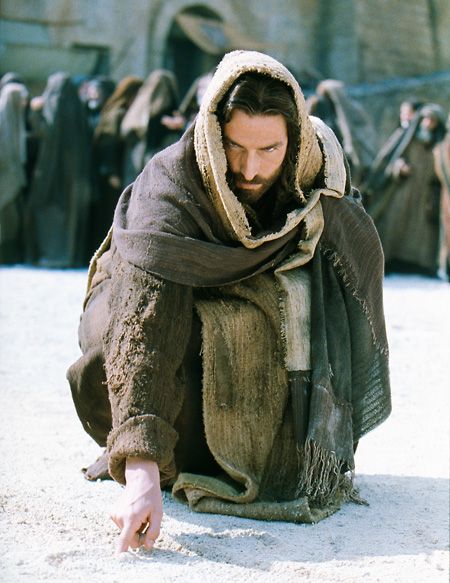


















 Considering the Bible