The prophecy of the Lord Jesus for our consideration and edification, written centuries prior to His earthly existence is
Prophecy #198
Description
His power of Resurrection predicted
Old Testament Prophecy
Isaiah 26:19
Your dead shall live; their bodies shall rise. You who dwell in the dust, awake and sing for joy! For your dew is a dew of light, and the earth will give birth to the dead.
New Testament Fullfillment
Matt 27:50-54
And Jesus cried out again with a loud voice and yielded up his spirit.
And behold, the curtain of the temple was torn in two, from top to bottom. And the earth shook, and the rocks were split.
The tombs also were opened. And many bodies of the saints who had fallen asleep were raised,
and coming out of the tombs after his resurrection they went into the holy city and appeared to many.
When the centurion and those who were with him, keeping watch over Jesus, saw the earthquake and what took place, they were filled with awe and said, “Truly this was the Son of God!”
If you are just joining this blog, or are a first time visitor, welcome to Considering the Bible. We would like to offer a document that provides over 350 prophecies of the Messiah found in the Old Testament for your consideration.
I make no claim to be able to comment on every one of these amazing prophecies in the future, but will occasionally bring one to the readers attention for their edification.
Hopefully you will follow “Considering the Bible” and begin an interaction with us
12 Blessed is the man who remains steadfast under trial, for when he has stood the test he will receive the crown of life, which God has promised to those who love him.
A while back, a preacher chose the book of James to speak on, and it set me thinking. That particular week, we were discussing James 1:12 in Sunday School class and questions on eternal security came to mind again.
Questions like
When will temptation stop?
We had looked at the verses in the beginning of the book (verses 1-4) and it seemed obvious that the “trying of our faith” could stop any time I chose. If I was sick and tired of resisting sin, or of the mockery from my peers, or decided to live a life focused on my wants, all I had to do was to choose to live that life. I could find relief from any faith-based trial simply by giving up my faith.
What is the purpose of being tried?
Again, the first few verses of the chapter indicates that the trial produces patience in the saint.
Patience is a rare commodity in this fast paced society. Patience is that tool that God uses to bring about the mature man, the man who is considered complete, lacking nothing. (vs 4). In short, trials produce maturity (if we endure!)
What is the crown of life?
We didn’t get to discuss this question, but it seems to be the critical issue in the conditional security / eternal security debate.
If the crown of life is a reward to Christians who endure, do those Christians who do not endure simply receive no crown?
If so, might the crown of life be more aptly named the crown of endurance? or the crown of patience?
But if the crown of life is synonymous with eternal life, James is describing something much more important.
Security Problems
The last question is a problem.
What if a believer simply gives up and chases the temptation instead of enduring?
No big deal, right.
The crown of life is simply a reward for faithfulness. At least I get to go to heaven when I die.
Maybe even meet up with Demas.
Somehow I fear this thinking may be producing a shallow, complacent “believer”.
Thanks again for coming to visit. I hope you found something of interest in this post and would appreciate a comment, to begin a discussion. If you would like to receive daily posts from Considering the Bible, click on the “Follow” link below
The prophecy of the Lord Jesus for our consideration and edification, written centuries prior to His earthly existence is
Prophecy #197
Description
The Resurrection predicted
Old Testament Prophecy
Isaiah 25:8
He will swallow up death forever; and the Lord God will wipe away tears from all faces, and the reproach of his people he will take away from all the earth, for the Lord has spoken.
New Testament Fullfillment
1 Cor 15:54
When the perishable puts on the imperishable, and the mortal puts on immortality, then shall come to pass the saying that is written: “Death is swallowed up in victory.”
If you are just joining this blog, or are a first time visitor, welcome to Considering the Bible. We would like to offer a document that provides over 350 prophecies of the Messiah found in the Old Testament for your consideration.
I make no claim to be able to comment on every one of these amazing prophecies in the future, but will occasionally bring one to the readers attention for their edification.
Hopefully you will follow “Considering the Bible” and begin an interaction with us
After my series on the parables, I found I was drawn to look into the miracles of Jesus in the Gospels. I have never studies the mighty works of Jesus as a focused effort before and am looking forward to finding nuggets of truth that we can be encouraged by.
I have provided a general introduction, with an opportunity to download two files for your reference in my initial post Signs and Mighty Works of Jesus – Introduction. I found that the format I used for the parable posts were useful to keep me on track, and will continue to use them for this series, with some minor tweaks. With that said, let’s take a look at
Jesus Heals Peter’s Mother-in-Law
Matthew 8:14-15
And when Jesus entered Peter’s house, he saw his mother-in-law lying sick with a fever. He touched her hand, and the fever left her, and she rose and began to serve him.
Mark 1:29-31
And immediately he left the synagogue and entered the house of Simon and Andrew, with James and John. Now Simon’s mother-in-law lay ill with a fever, and immediately they told him about her. And he came and took her by the hand and lifted her up, and the fever left her, and she began to serve them.
Luke 4:38-39
And he arose and left the synagogue and entered Simon’s house. Now Simon’s mother-in-law was ill with a high fever, and they appealed to him on her behalf. And he stood over her and rebuked the fever, and it left her, and immediately she rose and began to serve them.
General Observations
Peter’s mother-in-law was sick, and I find it interesting that, as is commonly accepted, Mark is the gospel that Peter influenced. With that knowledge, although each of the passages above are of equal value and supplies much of the same information, I would like to dwell on Mark’s passage since it has a “personal” connection with Peter’s mother-in-law.
Questions to Consider
Who were the audience?
The audience was a restricted group for what I can tell. Simon of course, possibly his wife, his brother Andrew, along with James and John. Oh, and the mother-in-law of course!
The passage speaks of the disciples telling Jesus of the sickness. Luke does mention that the disciples appealed to the Lord for a healing, but it is interesting that “Peter’s” gospel doesn’t mention this. Mark states they simply told Him.
No matter the inflection of the statement, the Lord thought nothing of going to the sick lady, taking her of the hand, and lifting her up. No concern of an infectious disease. No concern for His own welfare. We will see this general attitude as we venture through the gospels, that He did not refrain from reaching out to the hurting, the diseased, the poor and destitute. This concept of “no fear” speaks of His power and authority, but I will not venture down that road yet.
Let us simply take away from this passage that He did not fear those we sometimes look away from.
What was the message for the original audience?
The passage does not directly speak of the reason for the healing, or of a message that the audience was to receive, so my imagination may run amuck here!
When a tree falls in the forest, does it make a sound? Jesus is God no matter who sees it, who the audience is or who is paying attention. Moments before, the Lord was in the synagogue, healing the demoniac, and the result was that His fame spread everywhere. Everywhere!
With this miracle, it was limited to the house of Peter. A very small number of witnesses. They had already begun to see miracles by now, and this one would be overshadowed by many others in the future. Lazarus, for instance!
Now I am not trying to say this miracle did not exhibit the glory of our Leader, or the might of the Sovereign One. No – not at all. But there is something about Jesus performing a miracle, in a small itty bitty house, with few people around. It is an exhibition of His humility in a sense, how He is One who does not seek fanfare for the sake of fanfare.
He is reaching for hearts, not seeking clapping hands!
What is the message for us today?
In the book of Matthew, the Lord spoke of a city on a hill, of a lamp not being put under a basket, and so often my mind wanders to the concept of many people seeing the city, of multitudes receiving the light from the lamp. This may be the intended effect the Lord tried to communicate, and yet this does not restrict the quiet deeds of a heart that seeks to please God.
The lamp sheds light no matter the recipients, whether few or many.
Many believers may feel inadequate to be a central figure, one who is on display. There may come a time for the shy and withdrawn to take a public stand, or to rise publicly to their convictions. This is a great challenge and may be a specific calling at some time in their lives.
Yet I would like to draw your attention to a passage in Matthew that may somewhat shed some light on my muddled thoughts I am pursuing.
“Thus, when you give to the needy, sound no trumpet before you, as the hypocrites do in the synagogues and in the streets, that they may be praised by others. Truly, I say to you, they have received their reward. But when you give to the needy, do not let your left hand know what your right hand is doing, so that your giving may be in secret. And your Father who sees in secret will reward you. Matthew 6:2-4
Jesus did this mighty work in relative obscurity. Very few people witnessed this healing. The passage in Matthew above speaks of alms, that I understand. Yet there is a place in the believers life, that he (or she) are to go about quietly doing good to others, without fanfare or acknowledgement. Not as a showy, attention grabbing televangelist, seeking honor and glory for his own ministry, but quietly doing good to others, because it is their nature to do good to others.
Jesus did (does) good all the time. In front of friends and enemies, many and few, rich and poor, healthy and sick. He is good, it is His very nature! Out of His nature, His holy and loving character, flows acts of mercy and kindness that we are recipients of.
Do you recognize this in our Savior? Is He One who turns up in quiet areas of your life, performing good deeds quietly, seeking to minister in ways that few may not see or notice?
The prophecy of the Lord Jesus for our consideration and edification, written centuries prior to His earthly existence is
Prophecy #196
Description
The One given all authority to govern
Old Testament Prophecy
Isaiah 22:22
And I will place on his shoulder the key of the house of David. He shall open, and none shall shut; and he shall shut, and none shall open.
New Testament Fullfillment
Rev 3:7
“And to the angel of the church in Philadelphia write: ‘The words of the holy one, the true one, who has the key of David, who opens and no one will shut, who shuts and no one opens.
If you are just joining this blog, or are a first time visitor, welcome to Considering the Bible. We would like to offer a document that provides over 350 prophecies of the Messiah found in the Old Testament for your consideration.
I make no claim to be able to comment on every one of these amazing prophecies in the future, but will occasionally bring one to the readers attention for their edification.
Hopefully you will follow “Considering the Bible” and begin an interaction with us
Let’s get to work and jump into this verse immediately. I am looking forward to a mental exercise, a good work out, trying to understand Paul’s command to the believers in Thessalonian 2,000 years ago and to us today.
Let’s hope we can provide something of benefit to those dear readers who spend a few moments with me.
So then, brothers, stand firm and hold to the traditions that you were taught by us, either by our spoken word or by our letter. – 2 Thessalonians 2:15
Traditions, we learn from this short passage are taught. Taught by communication, that is through talking or reading/writing. Traditions are not instinctual, or merely a result of some internal thought process. Traditions are handed down, and this is actually one of the defining actions that produces a tradition.
Paul doesn’t directly speak of specific traditions he had handed down to this church in this passage. He does bring up the topic in 3:6. A definite link with 2:5! Ok Paul, thanks for the clarification, but this creates a bit of a confusion. When was the last time you thought of a tradition within the Christian church as a “willingness to work”.
Now we command you, brothers, in the name of our Lord Jesus Christ, that you keep away from any brother who is walking in idleness and not in accord with the tradition that you received from us.
Idleness is against the tradition Paul provided to this church, and a good work ethic, if I am reading this passage correctly, is a Christian tradition/practice. This tradition is seemingly so sensitive to wrong influence, that Paul commands those with a work ethic to keep away from idle brothers. This is truly shocking to my mind, since I don’t usually consider idleness as a reason to avoid a brother.
But let us think on this for a moment. Does not the Word teach us to “not covet”? Idleness produces a spirit of covetousness, for an idle man is usually in need. Now I need to be careful to note that the command does not refer to those who cannot work, but to those who will not work. To those who are incapacitated, truly without the ability to perform some type of task to add to the community, the believer is to come along side and provide encouragement, financial assistance and support. To the one who refuses to work though able, Paul commands – STAY AWAY!
This is not, for the believer, a requirement to determine another persons motivations, intentions or desires, but his or her abilities. A man or woman who wants to produce, though incapacitated in some form, may find many hurdles to be productive, but may produce and find purpose. A man or woman who is able and makes excuses – Paul commands – STAY AWAY.
For even when we were with you, we would give you this command: If anyone is not willing to work, let him not eat.
2 Thessalonians 3:6, 10
But Paul – that is so unloving, so uncompassionate, that is, to let a brother or sister to go hungry. How heartless! Are you actually commanding believers to allow others to go hungry? Are believers to refuse to feed an idle brother?
In my opinion (careful dear reader – this is opinion!) to provide funds or gifts for those who will not work is foolish, since the limited funds we have in order to help truly needful souls is being misdirected. The idle able person receiving the funds could be a positive influence in the community, but is allowed to remain useless. No one wants to be useless, unless they are content with simply being a leach.
My wife and I speak of this compassion as “enabling” a sinful life. We have become somewhat “heartless”, in some peoples thinking, but have found folks that were idle (relatively) to become solid workers, building a work ethic that is positive financially, emotionally and physically.
What brings a person to a level of idleness? For the Thessalonians, it was a misunderstanding of the coming of the Lord. Some thought that since He may appear in a few weeks or months, working at a “9 to 5” was foolish. Why work when you can literally just wait? Bad theology creates wrong living!
What can bring a person out of this condition? Man shall not live by bread alone, but dag nab it, he certainly needs bread to live! Without bread, the motivation to work overcomes the desire to be idle, and the brother may become a positive influence for the community.
My friends, if you see a brother being idle, consider Paul’s command. Others may provide for the idle man or woman, enabling their life of ease and causing unnecessary suffering for those who truly have a need. To the extent you have in exercising your decisions, do not encourage a life of idleness.
It is not traditional!
Thanks for joining me in this short series on traditions. Much more may be spoken of on this topic but hopefully the few thoughts shared have produced some trigger to further read the Word and figger it out. A little work in the word would not cause any complaint from the Father, for He loves one who digs and seeks the truth. But it will require some work, and we know now that work is NOT a dirty word when it comes to the will of God!
Thanks again for coming to visit. I hope you found something of interest in this post and would appreciate a comment, to begin a discussion. If you would like to receive daily posts from Considering the Bible, click on the “Follow” link below
Don’t you love it when, after years of reading the “Old Book” passages become alive, reinforcing old teachings or simply warming your heart. This is the book of Psalms, and it is rich.
I pray I can communicate a portion of the blessing we receive from this wonderful book.
Psalm 40
6 In sacrifice and offering you have not delighted, but you have given me an open ear. Burnt offering and sin offering you have not required. 7 Then I said, “Behold, I have come; in the scroll of the book it is written of me: 8 I delight to do your will, O my God; your law is within my heart.”
As believers, we have come to live in the sacrifice our Lord has provided, and understand the concept (at least intellectually) of self sacrificing love. Try to remember a time when, as a Christian, you did not consider love greater than law, self sacrifice stronger than sanctified image.
Our psalm above starts off with a statement of God not desiring sacrifice and offering. How can David say this, when entire books of the Old Testament, such as Leviticus, spend a majority of time detailing the requirements of sacrifices to and for God?
How is it David is speaking of God not wanting sacrifice?
David, in my opinion, is speaking on two levels.
Level One
The first level, as a prophet, “scratches the surface” of understanding the nature and character of our God, of the core element of the goodness and mercy of God. He is not speaking of a relationship based on animal sacrifices and burnt offering, but reflecting on the nature of God.
I was taught once that the nature of a person (and God is a person), that a persons nature will exude from their inner person to their actions and appearance. Given this, David reflected (I suppose), on the nature of sacrifice described by the God of all creation, and understood that the very nature of the God of the universe was of sacrifice, of giving to others, of supplying needs, of loving those who are unlovely, and of being “otherwise”, when compared with us mere mortals.
To say God has not required burnt offerings and sin offerings, – well that seems to fly in the face of many of the commands of Scripture. And yet, David continues with a seeming “alternative” message.
But let us consider a thought. It may be important to consider that David isn’t providing an “alternative” message, but a deeper message, a fuller message, a message that is as a blooming flower compared to the seedling it once was. Same plant, far different appearance. The standard Old Testament saint, the “ordinary, average” believer in the ancient days may have understood that the physical sacrifices of bulls and goats were what God wanted, and with that understanding, he would be in obedient and in good standing. But David dove deeper!
How about us? Do we understand the shoulders we are standing on? The insight of David, as a prophet of God is light-years ahead of my thoughts and musings. He saw the sacrifices and considered the nature of God. This is instructive to me, as when I read a command or declaration of God in the word, I automatically think of me, how I can do something, how a Scripture statement reflects on mememe.
David was beyond this. As I have been taught previously, David is sometimes described as a New Testament believer in this psalm, one who had grasped the difficult concept of moving from a life depending on the sacrifice of a bull or goat, to a life that understood God’s true nature, and finally to the life of self-sacrifice.
Level Two
The second level is as the Lord Jesus Himself, the Messiah, and of His full understanding of the nature of God, and of a true relationship with His Father.
This second level is clear when we consider the book of Hebrews, and the apostle’s interpretation of the Old Testament passage David provided us. Let’s notice the commentary the apostle has inserted into our text, fleshing out the psalm to provide a full understanding of it – that is the full revelation of David’s text, about the Lord Jesus Christ.
Psalm 40:6-8
In sacrifice and offering you have not delighted, but you have given me an open ear. Burnt offering and sin offering you have not required.
Then I said, “Behold, I have come; in the scroll of the book it is written of me: I delight to do your will, O my God; your law is within my heart.”
Hebrews 10:5-10
Consequently, when Christ came into the world, he said, “Sacrifices and offerings you have not desired, but a body have you prepared for me; in burnt offerings and sin offerings you have taken no pleasure.
Then I said, ‘Behold, I have come to do your will, O God, as it is written of me in the scroll of the book.’”
Notice Hebrews 10, where the apostle adds “a body have you prepared for me”, speaking of the humanity of the God-man Jesus Christ, and check out the “minor edit” the apostle provides in the next verse. He not simply delights to do God’s will, as David expressed in the psalm, but that our Lord Jesus Christ did the will of God!
When we slow down enough to consider who our Great High Priest is, He truly is beyond our wildest imagination. When we speak of Him, although He is still mocked and spit on to this present day, let us remember that He is the Risen King.
Let us keep our eyes on Him for God is good, all the time.
The prophecy of the Lord Jesus for our consideration and edification, written centuries prior to His earthly existence is
Prophecy #195
Description
Called Jesus-Yeshua
Old Testament Prophecy
Isaiah 12:2
“Behold, God is my salvation; I will trust, and will not be afraid; for the Lord God[a] is my strength and my song, and he has become my salvation.”
New Testament Fullfillment
Matt 1:21
She will bear a son, and you shall call his name Jesus, for he will save his people from their sins.”
If you are just joining this blog, or are a first time visitor, welcome to Considering the Bible. We would like to offer a document that provides over 350 prophecies of the Messiah found in the Old Testament for your consideration.
I make no claim to be able to comment on every one of these amazing prophecies in the future, but will occasionally bring one to the readers attention for their edification.
Hopefully you will follow “Considering the Bible” and begin an interaction with us
14 “But if you will not listen to me and will not do all these commandments,
15 if you spurn my statutes, and if your soul abhors my rules, so that you will not do all my commandments, but break my covenant,
16 then I will do this to you: I will visit you with panic, with wasting disease and fever that consume the eyes and make the heart ache. And you shall sow your seed in vain, for your enemies shall eat it.
17 I will set my face against you, and you shall be struck down before your enemies. Those who hate you shall rule over you, and you shall flee when none pursues you.
18 And if in spite of this you will not listen to me, then I will discipline you again sevenfold for your sins,
19 and I will break the pride of your power, and I will make your heavens like iron and your earth like bronze.
20 And your strength shall be spent in vain, for your land shall not yield its increase, and the trees of the land shall not yield their fruit.
21 “Then if you walk contrary to me and will not listen to me, I will continue striking you, sevenfold for your sins.
22 And I will let loose the wild beasts against you, which shall bereave you of your children and destroy your livestock and make you few in number, so that your roads shall be deserted.
23 “And if by this discipline you are not turned to me but walk contrary to me,
24 then I also will walk contrary to you, and I myself will strike you sevenfold for your sins.
25 And I will bring a sword upon you, that shall execute vengeance for the covenant. And if you gather within your cities, I will send pestilence among you, and you shall be delivered into the hand of the enemy.
26 When I break your supply of bread, ten women shall bake your bread in a single oven and shall dole out your bread again by weight, and you shall eat and not be satisfied.
27 “But if in spite of this you will not listen to me, but walk contrary to me,
28 then I will walk contrary to you in fury, and I myself will discipline you sevenfold for your sins.
29 You shall eat the flesh of your sons, and you shall eat the flesh of your daughters.
30 And I will destroy your high places and cut down your incense altars and cast your dead bodies upon the dead bodies of your idols, and my soul will abhor you.
31 And I will lay your cities waste and will make your sanctuaries desolate, and I will not smell your pleasing aromas.
32 And I myself will devastate the land, so that your enemies who settle in it shall be appalled at it.
33 And I will scatter you among the nations, and I will unsheathe the sword after you, and your land shall be a desolation, and your cities shall be a waste.
34 “Then the land shall enjoy its Sabbaths as long as it lies desolate, while you are in your enemies’ land; then the land shall rest, and enjoy its Sabbaths.
35 As long as it lies desolate it shall have rest, the rest that it did not have on your Sabbaths when you were dwelling in it.
36 And as for those of you who are left, I will send faintness into their hearts in the lands of their enemies. The sound of a driven leaf shall put them to flight, and they shall flee as one flees from the sword, and they shall fall when none pursues.
37 They shall stumble over one another, as if to escape a sword, though none pursues. And you shall have no power to stand before your enemies.
38 And you shall perish among the nations, and the land of your enemies shall eat you up.
39 And those of you who are left shall rot away in your enemies’ lands because of their iniquity, and also because of the iniquities of their fathers they shall rot away like them.
40 “But if they confess their iniquity and the iniquity of their fathers in their treachery that they committed against me, and also in walking contrary to me,
41 so that I walked contrary to them and brought them into the land of their enemies–if then their uncircumcised heart is humbled and they make amends for their iniquity,
42 then I will remember my covenant with Jacob, and I will remember my covenant with Isaac and my covenant with Abraham, and I will remember the land.
43 But the land shall be abandoned by them and enjoy its Sabbaths while it lies desolate without them, and they shall make amends for their iniquity, because they spurned my rules and their soul abhorred my statutes.
44 Yet for all that, when they are in the land of their enemies, I will not spurn them, neither will I abhor them so as to destroy them utterly and break my covenant with them, for I am the LORD their God.
45 But I will for their sake remember the covenant with their forefathers, whom I brought out of the land of Egypt in the sight of the nations, that I might be their God: I am the LORD.”
I was on my way to see my grandson play some flag football, and listening to the book of Leviticus. You know, when I am listening to Leviticus, I honestly don’t expect to hear something that arrests my thoughts and get me to thinking.
The following passage did just that.
It seems the Lord is warning His people of their conditional security throughout this passage.
Throughout the passage, the mercy of God seems to scream out at me. When I was strongly encased in the eternal security camp, this passage usually brought a confusion to my thinking that I either did not want to discuss, or simply considered the passage to not be applicable to me.
After all, it was a completely different covenant! What could this passage teach me as a Christian?
Conditional Security
As we consider this passage, I would like to preface it with a few comments
I realize this passage is speaking to Old Covenant believers, but I would like to consider the security God offered His people at that time.
Hebrews 13:8
Jesus Christ the same yesterday, and to day, and for ever.
We have this passage in the Word for our edification – that is, we can learn from it as Paul expected us to.
Romans 15:4
For whatsoever things were written aforetime were written for our learning, that we through patience and comfort of the scriptures might have hope.
I also see a progression of rebellion and apostasy, leading from the loss of security to entering into war with the covenant God.
It occurred to me as I was listening to the passage that this may typify the progression of a backsliding Christian. If so, it may be highly instructive to heed the passage as a warning for ourselves.
Lets read the passage.
Leviticus 26:14-45
Initial Disobedience of a Covenant People
14 But if ye will not hearken unto me, and will not do all these commandments; 15 And if ye shall despise my statutes, or if your soul abhor my judgments, so that ye will not do all my commandments, but that ye break my covenant:
Response of the Covenant God – Security is Slipping Away!
16 I also will do this unto you; I will even appoint over you terror, consumption, and the burning ague, that shall consume the eyes, and cause sorrow of heart: and ye shall sow your seed in vain, for your enemies shall eat it. 17 And I will set my face against you, and ye shall be slain before your enemies: they that hate you shall reign over you; and ye shall flee when none pursueth you.
A Refusal to Repent
18 And if ye will not yet for all this hearken unto me, Continued Action of the Covenant God – Further Loss of Security then I will punish you seven times more for your sins. 19 And I will break the pride of your power; and I will make your heaven as iron, and your earth as brass: 20 And your strength shall be spent in vain: for your land shall not yield her increase, neither shall the trees of the land yield their fruits.
Before we continue, it may be important to bring up the phrase that struck me on my ride to the football game. You see, when the term “contrary” came up, it struck me as odd, and in my study afterwards, I found out that it is synonymous with hostility.
A few things are worth noting. * The hostility originates with the covenant people. * The hostility is a response from God towards those already at war with Him. * The hostility in verse 28 becomes extreme
Hostility from the Covenant People – Open Oppression
21 And if ye walk contrary unto me, and will not hearken unto me; Continued Action of the Covenant God – Increasing Danger I will bring seven times more plagues upon you according to your sins. 22 I will also send wild beasts among you, which shall rob you of your children, and destroy your cattle, and make you few in number; and your high ways shall be desolate.
Continued Hostility from the Covenant People – Increasing Rebellion
23 And if ye will not be reformed by me by these things, but will walk contrary unto me; Introduction of Hostility from a Covenant God 24 Then will I also walk contrary unto you, and will punish you yet seven times for your sins. It is difficult to place where all security has vanished for the covenant people, but from this point on, it seems this is it. When the covenant God speaks of hostility towards His people, it seems evident that security has evaporated! 25 And I will bring a sword upon you, that shall avenge the quarrel of my covenant: and when ye are gathered together within your cities, I will send the pestilence among you; and ye shall be delivered into the hand of the enemy. 26 And when I have broken the staff of your bread, ten women shall bake your bread in one oven, and they shall deliver you your bread again by weight: and ye shall eat, and not be satisfied.
Hostility of the Covenant People
27 And if ye will not for all this hearken unto me, but walk contrary unto me;
Extreme Hostility of the Covenant God
28 Then I will walk contrary unto you also in fury; and I, even I, will chastise you seven times for your sins. 29 And ye shall eat the flesh of your sons, and the flesh of your daughters shall ye eat. 30 And I will destroy your high places, and cut down your images, and cast your carcases upon the carcases of your idols, and my soul shall abhor you. 31 And I will make your cities waste, and bring your sanctuaries unto desolation, and I will not smell the savour of your sweet odours. 32 And I will bring the land into desolation: and your enemies which dwell therein shall be astonished at it. 33 And I will scatter you among the heathen, and will draw out a sword after you: and your land shall be desolate, and your cities waste. 34 Then shall the land enjoy her sabbaths, as long as it lieth desolate, and ye be in your enemies’ land; even then shall the land rest, and enjoy her sabbaths. 35 As long as it lieth desolate it shall rest; because it did not rest in your sabbaths, when ye dwelt upon it. 36 And upon them that are left alive of you I will send a faintness into their hearts in the lands of their enemies; and the sound of a shaken leaf shall chase them; and they shall flee, as fleeing from a sword; and they shall fall when none pursueth. 37 And they shall fall one upon another, as it were before a sword, when none pursueth: and ye shall have no power to stand before your enemies. 38 And ye shall perish among the heathen, and the land of your enemies shall eat you up. 39 And they that are left of you shall pine away in their iniquity in your enemies’ lands; and also in the iniquities of their fathers shall they pine away with them.
Prior to the offer of restoration, the Lord describes the end of the covenant people, that is of those left.
….they shall pine away.
What does that mean? The word is a verb meaning to waste away, to rot away. It means to dissipate, to decompose, to putrefy; used of Israel as a people in exile (Lev_26:39; Eze_4:17; Eze_24:23; Eze_33:10)… Prior to any restoration conditions offered, all security and safety has evaporated, with no hope.
Conditions of Restoration – An Opportunity to Regain Security?
40 If they shall confess their iniquity, and the iniquity of their fathers, with their trespass which they trespassed against me, and that also they have walked contrary unto me; 41 And that I also have walked contrary unto them, and have brought them into the land of their enemies; if then their uncircumcised hearts be humbled, and they then accept of the punishment of their iniquity: 42 Then will I remember my covenant with Jacob, and also my covenant with Isaac, and also my covenant with Abraham will I remember; and I will remember the land. 43 The land also shall be left of them, and shall enjoy her sabbaths, while she lieth desolate without them: and they shall accept of the punishment of their iniquity: because, even because they despised my judgments, and because their soul abhorred my statutes. 44 And yet for all that, when they be in the land of their enemies, I will not cast them away, neither will I abhor them, to destroy them utterly, and to break my covenant with them: for I am the LORD their God.
At this point in the progression of apostasy and restoration, it may be necessary to remind those of the eternal security camp that the refusal to cast away His people comes after the condition of restoration has been performed.
What are the conditions to regain security?
1. If they shall confess their iniquity 2. If they shall confess the iniquity of their fathers with their trespass which they trespassed against me 3. If they shall confess that also they have walked contrary unto me 4. If they shall confess that I also have walked contrary unto them 5. If they shall confess that God brought them into the land of their enemies 6. if then their uncircumcised hearts be humbled 7. if they then accept of the punishment of their iniquity
Lets continue
45 But I will for their sakes remember the covenant of their ancestors, whom I brought forth out of the land of Egypt in the sight of the heathen, that I might be their God: I am the LORD.
Security is a blessing, and this security is available to those who satisfy the conditions.
Thanks again for coming to visit. I hope you found something of interest in this post and would appreciate a comment, to begin a discussion. If you would like to receive daily posts from Considering the Bible, click on the “Follow” link below
The prophecy of the Lord Jesus for our consideration and edification, written centuries prior to His earthly existence is
Prophecy #194
Description
The Gentiles seek Him
Old Testament Prophecy
Isaiah 11:10
In that day the root of Jesse, who shall stand as a signal for the peoples—of him shall the nations inquire, and his resting place shall be glorious.
New Testament Fullfillment
John 12:18-21
The reason why the crowd went to meet him was that they heard he had done this sign.
So the Pharisees said to one another, “You see that you are gaining nothing. Look, the world has gone after him.”
Now among those who went up to worship at the feast were some Greeks.
So these came to Philip, who was from Bethsaida in Galilee, and asked him, “Sir, we wish to see Jesus.”
If you are just joining this blog, or are a first time visitor, welcome to Considering the Bible. We would like to offer a document that provides over 350 prophecies of the Messiah found in the Old Testament for your consideration.
I make no claim to be able to comment on every one of these amazing prophecies in the future, but will occasionally bring one to the readers attention for their edification.
Hopefully you will follow “Considering the Bible” and begin an interaction with us
My wife and I got up at 3:30 a.m. (in the morning!) to head to Billings Montana for a long awaited vacation. We were quite excited to see our son and his family during our camping trip. It was going to be great.
But alas, life interrupted our plans! Arriving at the airport at 5 am, we hit a giant, colossal, insurmountable hurdle. For some reason, the flight was booked and no seats were available for us. We used a third party provider to set up the flight, and the night before, received verification that the flight would be departing as scheduled.
The flight was fully booked! What a catastrophe! A complete meltdown of all that was important in life!
We were told the flight had no seats available, even though the documents said they had been reserved! I couldn’t help thinking of the Seinfeld bit about reservations!
Of course, I didn’t have the foresight to use some of those classic lines he used at the car rental desk, since I was more disappointed in not seeing my son, daughter in law and my widdle grandbabies that afternoon. But alas, my wife and I resolved the problem and flew out the following day
My point isn’t to compare my experience with Seinfeld, although I find some of it to be similar with the clip. No, the issue that came to mind was that this was more of a “first world” problem, and that it shouldn’t shake me, irritate me, or cause me to fall into a frustrated ball of nerves.
I suppose as we walk this life, it is easy to accept minor inconveniences as major disruptions in our lives. Kinda like calling a paper cut a life threating open wound. Call it what you want, but in all honesty, it is only a paper cut. And complaining about a paper cut (or even a life threatening open wound), seems to be at odds with Paul’s admonition to think on positive things. Let’s take a minute to consider that passage.
Finally, brothers, whatever is true, whatever is honorable, whatever is just, whatever is pure, whatever is lovely, whatever is commendable, if there is any excellence, if there is anything worthy of praise, think about these things. Philippians 4:8
Notice there is nothing in the verse speaking of thinking on disappointments such as cancelled airplanes, reservation losses or ticketing issues. Although it is true that these things occurred, they do not fall under the “lovely” or “commendable” descriptors. Considering that, I’m thinking Paul is defining an attitude that includes all the descriptors for us to settle our minds upon.
Maybe a much bigger challenge than what I first considered.
What think ye?
Thanks again for coming to visit. I hope you found something of interest in this post and would appreciate a comment, to begin a discussion. If you would like to receive daily posts from Considering the Bible, click on the “Follow” link below
The prophecy of the Lord Jesus for our consideration and edification, written centuries prior to His earthly existence is
Prophecy #193
Description
Character: Righteous & Faithful
Old Testament Prophecy
Isaiah 11:5
Righteousness shall be the belt of his waist, and faithfulness the belt of his loins.
New Testament Fullfillment
Rev 19:11
Then I saw heaven opened, and behold, a white horse! The one sitting on it is called Faithful and True, and in righteousness he judges and makes war.
If you are just joining this blog, or are a first time visitor, welcome to Considering the Bible. We would like to offer a document that provides over 350 prophecies of the Messiah found in the Old Testament for your consideration.
I make no claim to be able to comment on every one of these amazing prophecies in the future, but will occasionally bring one to the readers attention for their edification.
Hopefully you will follow “Considering the Bible” and begin an interaction with us
Earlier on in my blogging efforts, I posted a short note on the following verse, and linked an essay I found that challenged me on the meaning of “elemental”.
If interested, see Elements – Stoicheia. For this post, we will address the topic of human tradition.
Let’s read the passage and consider.
See to it that no one takes you captive by philosophy and empty deceit, according to human tradition, according to the elemental spirits of the world, and not according to Christ.
Colossians 2:8
Paul is giving a command (See to it…) in this verse, that a believer is to not be taken captive. This is a warning to believers that we have the capacity to fall victim to falsehoods and lies. He is providing the method of captivity, when He speaks of “according to human tradition”. This captivity Paul refers to depends on human tradition, is in conformity with human tradition.
So, what might we glean from this framing of a real danger Paul is warning us of? Is there a certain method or process that human tradition provides that will give us ample warning that we are slipping into dangerous territory? Maybe.
First off, let’s consider how traditions are handed down? This is the second aspect discussed in our opening post on this topic, that is, the faithfulness of the followers in continuing a tradition. Our first aspect was, as you may remember, the authority establishing the tradition, and of course, when Paul speaks of human traditions, he may be hinting at the source of authority of the tradition as being human. This definitely may be his intent, and is to be considered.
But my take on this verse is considering the method used when these practices are handed down. When Paul brings in the terms philosophy and deceit, I again lean to the opinion that this is describing a method of handing down a practice or tradition to the next generation. This method of handing down a practice to the next generation may include twisting of the tradition that was originally of the Lord, until it slowly becomes a tradition rooted in human authority.
But I digress again. The method, I suppose is my concern in this verse. The method! According to human tradition. Two items for you to consider, and remember my friend, as I sometimes suggest in this blog, we are dealing with my thoughts and extra-biblical research and not necessarily anything directly from the Scripture, so beware!
Slight Revisions to the Original Tradition/Practice
These slight revisions are often a result of using a thesis/antithesis argument, which inevitably produces a result, called the synthesis, which holds strictly to neither position, but finds a middle ground. This is an acceptable, convenient, and logic based way to move from the original intent, to a watered down message. Without a commitment to the authority of the Scripture, human logic allows for this movement, and therefore a sliding away from the original intent of the command. As the tradition veers from the original intent, there is no way to return to the original command using this philosophy. There always has to be a consideration of the opposing view, which humanly speaking is opposing to the Scripture.
A formal logic of this philosophy follows
A thesis is a proposition
In this case, the original intent of the tradition/practice given by God. Let’s remember Exodus 20 where the original intent is to honor your parents.
The antithesis is simply the negation of the thesis, a reaction to the proposition
Let’s consider Matthew 15, where the giving of money to God through the temple is a tradition negating the command to honor a father or mother.
The synthesis solves the conflict between the thesis and antithesis by reconciling their common truths, and forming a new proposition – a new basis for the tradition.
The synthesis might be an allowance of both, giving a nod to the original intent of the Word, but not condemning the alternative option. It seems Jesus did not accept this as an alternative option.
A Dependence on Historical Precedent
Once this drift from the truth occurs, human tradition uses the historical precedent of this practice to support the practice. How often have you heard the saying – But we have always done it this way, to justify a certain action or practice. When you think of it, this argument completely ignores the importance of the original authority the practice is hopefully based on.
This post highlights, hopefully our dire need to always go back to the original commands from the Giver of truth. Logic and time may not provide us a basis upon which to depend on for traditions we exercise in our lives.
Let me finish this wordy post with a challenging passage from the Word.
For God alone, O my soul, wait in silence, for my hope is from him. He only is my rock and my salvation, my fortress; I shall not be shaken. On God rests my salvation and my glory; my mighty rock, my refuge is God. – Psalm 62:5-7
God alone is our source authority, He is our rock, our salvation, our fortress, our glory and refuge. He is the only One we can truly trust. Don’t argue against His word, trying to justify an alternate thinking. Be quiet and wait for Him.
Thanks again for coming to visit. I hope you found something of interest in this post and would appreciate a comment, to begin a discussion. If you would like to receive daily posts from Considering the Bible, click on the “Follow” link below
Don’t you love it when, after years of reading the “Old Book” passages become alive, reinforcing old teachings or simply warming your heart. This is the book of Psalms, and it is rich.
I pray I can communicate a portion of the blessing we receive from this wonderful book.
Psalm 40
4 Blessed is the man who makes the LORD his trust, who does not turn to the proud, to those who go astray after a lie! 5 You have multiplied, O LORD my God, your wondrous deeds and your thoughts toward us; none can compare with you! I will proclaim and tell of them, yet they are more than can be told.
Let’s continue with this incredible psalm, remembering that David earlier described the actions of the Lord in rescuing him from the miry pit and setting him on a firm foundation. The natural expected response to this show of grace to the sinner was that we would make the Lord our trust. Those who do make the Lord their trust, they are blessed.
But what does it look like to make the Lord their trust? David gives us some direction in this regard, by providing two descriptions of those who do not trust the Lord.
Trusting the Proud
David speaks of the one who makes the Lord his trust as one who does not turn to the proud.
First off, this implies a difference between the saint and the sinner, since a typical characteristic of those who do not know and trust the Lord in His mercies, these poor souls only have themselves to depend on (or at least another mere man) for their guidance and stability, which naturally breeds a pride and arrogance in their lives. This is an inevitable outcome of trusting our own thoughts and opinions. I cannot depend on my own thoughts and at the same time truly consider myself to be humble, for I have elevated my accumulated bank of wisdom over all others.
Consider a man that has attained a high level of education, excelled in his career, and is confident of his abilities. It is a rare that he will consider others opinions to be equal to his, although for the sake of social graces and professional appearance, this may seem to occur.
Trusting the Lord is a different matter, since many, if not all of the precepts of the Lord go against our natural inclination, and rub against our pride. A believer, trusting in the Lord, will exhibit a willingness to be subdued by the Word as he hears it, and will reject a dependence on those who are confident in their own status.
Trusting the Liar
Many times in the ancient writings, the Hebrews would use a type of poetry that is not familiar to us. Where we tend to look for words that rhyme, or for a certain cadence to the verse, for the Hebrew prophet, much poetry started with a statement, followed by a clarification of the statement.
A prophet using a synonymous poetry style, is seen in the following passages.
Deliver me, O LORD, from lying lips, from a deceitful tongue. – Psalm 120:2
Notice how lying lips are further defined as a deceitful tongue
My son, do not despise the LORD’s discipline or be weary of his reproof, – Proverbs 3:11
Notice that discipline is further refined as reproof.
But he was pierced for our transgressions; he was crushed for our iniquities; upon him was the chastisement that brought us peace, and with his wounds we are healed. – Isaiah 53:5
Multiple parallels in this short passage. Take a moment to identify at least two parallel descriptions in the verse above.
Lets return to our passage in Ps 40 where David speaks of the one who does not make the Lord his trust. Consider that to turn to the proud, is refined in this couplet as going after a lie! Pride and lies are common bedfellows in both the Old and New Testament.
The relation between humility and trust is again brought to my attention, and I ask those who may be reading, to consider the place of humility in trusting the Lord in their experience with the Lord.
Deeds and Thoughts Toward Us
David reverts to considering the One to whom he is praying, the One who has rescued him from the miry pit, and has set his feet on solid ground.
His thoughts and deeds are toward us, toward the hurting and helpless, toward those who suffer and are ignored, toward those who are weak and without guidance. The Lord’s deeds and thoughts are more than can be spoken. More than can be revealed. More than can be communicated.
His character of grace and mercy towards those who trust Him, (and those who don’t) cannot be fully expressed. Of course those who do not know Him, are still the recipients of multitudinous mercies on a daily basis, and yet they have no knowledge. We who claim to know Him, will naturally proclaim Him, even though it is impossible to fully communicate each and every one of His gracious thoughts and deeds toward us.
He is toward us, He is good and He is to be trusted.
The prophecy of the Lord Jesus for our consideration and edification, written centuries prior to His earthly existence is
Prophecy #192
Description
Judges with the sword of His mouth
Old Testament Prophecy
Isaiah 11:4
but with righteousness he shall judge the poor, and decide with equity for the meek of the earth; and he shall strike the earth with the rod of his mouth, and with the breath of his lips he shall kill the wicked.
New Testament Fullfillment
Rev 2:16
Therefore repent. If not, I will come to you soon and war against them with the sword of my mouth.
Rev 19:11, 15
Then I saw heaven opened, and behold, a white horse! The one sitting on it is called Faithful and True, and in righteousness he judges and makes war.
From his mouth comes a sharp sword with which to strike down the nations, and he will rule them with a rod of iron. He will tread the winepress of the fury of the wrath of God the Almighty.
If you are just joining this blog, or are a first time visitor, welcome to Considering the Bible. We would like to offer a document that provides over 350 prophecies of the Messiah found in the Old Testament for your consideration.
I make no claim to be able to comment on every one of these amazing prophecies in the future, but will occasionally bring one to the readers attention for their edification.
Hopefully you will follow “Considering the Bible” and begin an interaction with us
I attend a church that occasionally teaches the eternal security of the Christian. This mornings service was good. Don’t get me wrong – it usually is – but the message this morning was in the book of James, and the pastor made some comments that triggered my thinking about the book.
One of those comments was that the book of James has difficult passages in it. I definitely agree. As a former eternal security adherent, I was always confused about the passage considered in this post.
Another comment that the pastor made was that James addressed his letter to believers. This is obvious in many passages, as it is important to remember this in the passage we are considering today.
This also bothered me as a believer when I supported the eternal security teaching.
Lets read the passage before we dig in.
19 My brothers, if anyone among you wanders from the truth and someone brings him back,
20 let him know that whoever brings back a sinner from his wandering will save his soul from death and will cover a multitude of sins.
Security Problems
James is describing a situation where one believer errs from the truth, and another believer converts this sinning brother from his errors. The problem is that James describes this as “saving a soul from death”
This is a big problem if eternal security is true. Eternal security teaches that true believers are eternally secure, with no danger of falling away. But James doesn’t seem to know of this security. He describes one of these brothers – the erring one, as being in the state of death. The erring brothers conversion is described as his soul being saved from death.
Now of course the word “soul” may be translated as “life”. But that fact isn’t supported by the context of James message. Notice that James does not say that the brother may die, or is in danger of dying, which may support the death as being a physical death. The experience of the erring brother was one of death. The physically alive brother was in the state of (spiritual) death. Therefore, the translation of “soul” makes sense to me and the general teaching of the scriptures in relation to eternal security seems weakened again in my thinking.
What think ye? Where might I be erring in my thinking here?
Thanks again for coming to visit. I hope you found something of interest in this post and would appreciate a comment, to begin a discussion. If you would like to receive daily posts from Considering the Bible, click on the “Follow” link below
The prophecy of the Lord Jesus for our consideration and edification, written centuries prior to His earthly existence is
Prophecy #191
Description
Judge in righteousness
Old Testament Prophecy
Isaiah 11:4
but with righteousness he shall judge the poor, and decide with equity for the meek of the earth; and he shall strike the earth with the rod of his mouth, and with the breath of his lips he shall kill the wicked.
New Testament Fullfillment
Acts 17:31
because he has fixed a day on which he will judge the world in righteousness by a man whom he has appointed; and of this he has given assurance to all by raising him from the dead.”
If you are just joining this blog, or are a first time visitor, welcome to Considering the Bible. We would like to offer a document that provides over 350 prophecies of the Messiah found in the Old Testament for your consideration.
I make no claim to be able to comment on every one of these amazing prophecies in the future, but will occasionally bring one to the readers attention for their edification.
Hopefully you will follow “Considering the Bible” and begin an interaction with us
After my series on the parables, I found I was drawn to look into the miracles of Jesus in the Gospels. I have never studies the mighty works of Jesus as a focused effort before and am looking forward to finding nuggets of truth that we can be encouraged by.
I have provided a general introduction, with an opportunity to download two files for your reference in my initial post Signs and Mighty Works of Jesus – Introduction. I found that the format I used for the parable posts were useful to keep me on track, and will continue to use them for this series, with some minor tweaks.
With that said, let’s take a look at our third mighty work of Jesus
Jesus Drives Out an Evil Spirit
Mark 1:21-27
And they went into Capernaum, and immediately on the Sabbath he entered the synagogue and was teaching. And they were astonished at his teaching, for he taught them as one who had authority, and not as the scribes. And immediately there was in their synagogue a man with an unclean spirit. And he cried out, “What have you to do with us, Jesus of Nazareth? Have you come to destroy us? I know who you are–the Holy One of God.” But Jesus rebuked him, saying, “Be silent, and come out of him!” And the unclean spirit, convulsing him and crying out with a loud voice, came out of him. And they were all amazed, so that they questioned among themselves, saying, “What is this? A new teaching with authority! He commands even the unclean spirits, and they obey him.”
Luke also provides a record of this mighty work.
Luke 4:31-36
And he went down to Capernaum, a city of Galilee. And he was teaching them on the Sabbath, and they were astonished at his teaching, for his word possessed authority. And in the synagogue there was a man who had the spirit of an unclean demon, and he cried out with a loud voice, “Ha! What have you to do with us, Jesus of Nazareth? Have you come to destroy us? I know who you are–the Holy One of God.” But Jesus rebuked him, saying, “Be silent and come out of him!” And when the demon had thrown him down in their midst, he came out of him, having done him no harm. And they were all amazed and said to one another, “What is this word? For with authority and power he commands the unclean spirits, and they come out!”
General Observations
Two items in this passage jump out to me.
First, this passage is about authority. The authority of Jesus in His words and works. Both the words of Jesus, in His teaching, and the actions He takes in His healing of this demoniac demonstrate that this humble rabbi is much more than a humble rabbi.
Secondly, as a young believer, this passage caused me a bit of confusion. If the possessed man is speaking the truth, why would the Lord of truth rebuke him and tell him to be silent?
Questions to Consider
Who were the audience?
Of course, the disciples were present. Additional witnesses this this mighty work would include those who were in the audience, observant Jews, in synagogue for the sabbath, seeking to obey God’s call on their life.
Little did they know that God was going to show up that day!
A difficult question, for He may have simply sought to rescue this demon possessed man, or at the least remove the this disturbance in the synagogue. After all, the synagogue was a sanctified building!
I think the last phrase gives us a hint as to the reason this mighty work was performed, for the miracle supported the authority of His words, giving those who heard Him an encouragement to follow Him, or conversely, a reason to persecute Him. How often it is that it is either the one or the other.
Notice the first reference of authority in this passage, where the audience speaks of the Lord teaching “as One who had authority”, that He was not referring to other men’s teaching as the scribes would. It was common practice for the average scribe to depend on past authorities, men who had also depended on past authorities.
We know that Jesus depended on the Word of God for His foundation of teaching, and His interpretation of the Old Testament Scriptures continually shocked His audience. The issue of Him not depending on past teachers, and being in sync (fully) with the Old Testament, must have been shocking to His audience.
When He performed His mighty work, this dependence on the singular Word of God, this “teaching as one who had authority”, was reinforced, and the opinion of the audience changed. This teaching was with authority! He didn’t simply appear to be “One who had authority”, but this rabbi possessed authority!
As my momma used to say, He walked the talk!
What was the message for the original audience?
The message for the original audience was that the One who was present had authority, not like the scribes, not like the teachers of the day, not like anyone else.
Thinking about this might work, it provided a number of messages to the original audience. As mentioned , those in attendance changed their opinion of the Masters teaching and ministry. They saw proof of His authority, and were not simply surprised. Mark 1:22 & Luke 4:32 both speak of His audience being “astonished” at His teaching. This word speaks of being struck with amazement. Of being shocked, even to a point of panic.
After the mighty work was performed, both writers used a different term, a term that describes the effect of the miracle to include fear. The audience were amazed at this miracle, and that amazement included the element of fear. The audience was frightened.
Of course, having a demoniac enter the sanctified area of a synagogue would be frightening to the average attendant. One who had greater authority than the demon would also incur greater fear. Who was this Rabbi?
What is the message for us today?
Who do you consider authoritative? I have spent much of my life referring to commentaries for understanding the words of Scripture, and I am thankful for the teaching they have provided. The teaching of the saints are a treasure trove of learning.
The issue is that I need to consider the teaching of past and present saints for what it is, and that the only real authority is the Lord Jesus. We are not to fall into the same trap that the scribes fell into, and that is they “depended” on past teachers, that “depended” on past teachers, that “depended” on past teachers. The source of the “teaching” was lost in dilution and the teaching being provided to the masses became a monster on it’s own.
To simply read, study, memorize and seek to understand the Living Word is one of the greatest challenges a present saint can venture into. To be sure, to seek to depend only on the Word is full of pitfalls and will induce periods of uncertainty, since we may find truths in the Word that go against our current denominational stance.
Fear not, study and search the Scripture and stand on the Word, gracefully speaking the truth in love. Finding truth from the Word and bellowing it out to all in an attitude of pride and arrogance is one of the pitfalls I can attest to. I need to constantly remind myself to walk humbly with the Lord, and exercise mercy and love towards those I am privileged to rub shoulders with.
One other truth is important, and I referred to earlier as an issue of confusion for myself as a young believer. Why would the Lord stop the declaration of the demoniac’s message.
Is not Jesus the Holy One of God? Did He not come to destroy the power of the devil? Of course these statements are true. So why did the Master command this man to be silent?
Was it too early for this truth to come out? Jesus had earlier visited Samaria, and had openly identified Himself to the woman at the well. The truth of Jesus identity had been given out to the Samaritans by this time.
Ok, so was it the audience, faithful Jews, that were not be be informed of this fact at this time? Was it too early for the religious Jew to hear the truth? Again, I am not convinced this was the reason, for at the baptism of Jesus, a voice from heaven revealed that this humble rabbi was God’s beloved Son.
So why did the Master tell this demoniac to shut up? A wonderful message needs a clean vessel to come from.
Therefore, if anyone cleanses himself from what is dishonorable, he will be a vessel for honorable use, set apart as holy, useful to the master of the house, ready for every good work. – 2 Timothy 2:21
Although the truth came out of this demoniac, it actually damaged the message, in that all knew the demoniac was of the dark side, associated with violence, fear, lies and hatred. The message of the Lord Jesus is not to be associated with these characteristics. This is a great challenge for us who seek to represent our Lord Jesus properly.
A corollary truth also comes out of this for myself, in that I have fallen in my walk with the Lord far to often. But it is important to realize that a clean vessel does not equal a perfect vessel, or a vessel that does not need cleaning occasionally.
To be a clean vessel includes the concept of continual cleansing, as our passage in 2 Timothy informs us. Spend some time today alone with Him, and as the Lord speaks to you of areas in your life that are in opposition to His will, confess this sin, and if necessary, go to the one who you may have a strained relationship with, ask forgiveness, and seek to restore your peace with them, (if possible). Exercise humility, and a spirit of meekness, which is required for the believer to imitate, since the Master Himself is gentle and lowly in heart.
Take my yoke upon you, and learn from me, for I am gentle and lowly in heart, and you will find rest for your souls. – Matthew 11:29 ESV
A doctrinally pure message out of a defiled (proud) vessel may actually be an affront to our Master. Consider!
The prophecy of the Lord Jesus for our consideration and edification, written centuries prior to His earthly existence is
Prophecy #190
Description
He would know their thoughts
Old Testament Prophecy
Isaiah 11:3
And his delight shall be in the fear of the Lord. He shall not judge by what his eyes see, or decide disputes by what his ears hear,
New Testament Fullfillment
Luke 6:8
But he knew their thoughts, and he said to the man with the withered hand, “Come and stand here.” And he rose and stood there.
John 2:25
and needed no one to bear witness about man, for he himself knew what was in man.
If you are just joining this blog, or are a first time visitor, welcome to Considering the Bible. We would like to offer a document that provides over 350 prophecies of the Messiah found in the Old Testament for your consideration.
I make no claim to be able to comment on every one of these amazing prophecies in the future, but will occasionally bring one to the readers attention for their edification.
Hopefully you will follow “Considering the Bible” and begin an interaction with us
For you have heard of my former life in Judaism, how I persecuted the church of God violently and tried to destroy it. And I was advancing in Judaism beyond many of my own age among my people, so extremely zealous was I for the traditions of my fathers. – Gal 1:13-14
Paul speaks of his history, of his past desire to practice the traditions of the religion of Judaism. Of the persecution of the church of God as a result of his former life in Judaism. He was zealous. He was advancing in the traditions, seemingly due to his persecuting the church of God, trying to destroy it.
Two issues erupt in my thinking with this passage, in relation to traditions.
First, the traditions were bad! Very bad! The fruit of these traditions produced a murderous man, intent on destroying the work of God. This is an additional text in the New Testament that speaks to the negativity of traditions, religious traditions that were running amok.
In the New Testament, Jesus speaks of “wisdom being justified by all her children”. No matter the appearance or method of the delivering agent (whether it be by Moses, Jesus or John the Baptist), the fruit of a teaching is how it is worked out in those who hear it, the children of the wisdom. The appearance can be ridiculed, mocked and condemned. The children of the wisdom will justify the wisdom being taught and received.
For John the Baptist has come eating no bread and drinking no wine, and you say, ‘He has a demon.’ The Son of Man has come eating and drinking, and you say, ‘Look at him! A glutton and a drunkard, a friend of tax collectors and sinners!’ Yet wisdom is justified by all her children.” – Luke 7:33-35
In this regard, Paul’s desire to kill others is the fruit of a tradition that completely removed the intent of the commandments. For you see, the original intent of the Word of God was to save lives not kill. How can a man honor God by dishonoring his command not to kill?
God want’s us to honor our parents. How can I honor my parents if I become a murderous man?
God wants us to not covet. How can I love God if my motivation is to kill in order to maintain my own religion, covet my own faith?
No my friends, this tradition produced a fruit that was poisonous. Let us consider the wisdom we are consuming, in order to reflect our lives as being of the Lord, and not of some tradition that is of another intent!
Secondly, these traditions, many many moons back, were based on the Word of God. Now the iterations to take the holy commandments of God and to turn them into a belief that encourages persecution of the very followers of God, is an exercise in manipulation far beyond my understanding.
It took centuries to slip into a tradition that became a prevailing faith, and we have certainly experienced centuries of tradition within the life of the church. Over 2,000 years of manipulation by teachers and enemies within the church. This is the reason we need to refer to the Word and not depend on what a man says, even a well intentioned and or highly trained man may teach. Will we always be right if we turn to the Scriptures as our primary source. Absolutely not, for we are a weak, biased and selfish people, but we may find we are approaching a closer walk with the Master, a closer understanding of the intent of God in providing traditions for our lives.
Suffice it to say, let us depart from the “traditions of our fathers” and seek to follow the One who is worthy, who provided instruction in His Word. As Paul states just a verse later, God was pleased to reveal His Son in him. Traditions needed to be set aside in this revealing, traditions that were against God’s word and will.
Can you think of any traditions that may be causing you to loose out on God’s will?
Thanks again for coming to visit. I hope you found something of interest in this post and would appreciate a comment, to begin a discussion. If you would like to receive daily posts from Considering the Bible, click on the “Follow” link below
Don’t you love it when, after years of reading the “Old Book” passages become alive, reinforcing old teachings or simply warming your heart. This is the book of Psalms, and it is rich.
I pray I can communicate a portion of the blessing we receive from this wonderful book.
Psalm 40
1 To the choirmaster. A Psalm of David. I waited patiently for the LORD; he inclined to me and heard my cry. 2 He drew me up from the pit of destruction, out of the miry bog, and set my feet upon a rock, making my steps secure. 3 He put a new song in my mouth, a song of praise to our God. Many will see and fear, and put their trust in the LORD.
He inclined to me. He bent down to me.
The psalms speak of the Lords bending down to the saint in many passages. I will supply a few verses that use the very same Hebrew word David uses here, but as you read through the psalms, it will become evident the image of the King of Glory “bending down” is quite regular.
Incline your ear to me; rescue me speedily! Be a rock of refuge for me, a strong fortress to save me! – Psalm 31:2
In your righteousness deliver me and rescue me; incline your ear to me, and save me! – Psalm 71:2
A Prayer of David. Incline your ear, O LORD, and answer me, for I am poor and needy. – Psalm 86:1
Let my prayer come before you; incline your ear to my cry! – Psalm 88:2
Do not hide your face from me in the day of my distress! Incline your ear to me; answer me speedily in the day when I call! – Psalm 102:2
Because he inclined his ear to me, therefore I will call on him as long as I live. – Psalm 116:2
As I was gathering these verses, I was simply looking for the Hebrew word that is translated as “incline” in Psalm 40:1. I was hoping to simply display the fact that the Lord of Glory would incline towards the saint through this simple study, but something much more specific has been observed. Can you see it?
The Lord inclined His ear! He listened to the saint. He took time (I speak as a fool again) to consider the saints concerns and troubles. This was a wonder to the Old Testament saint, a blessing from the hand of God, and a privilege the saint experienced.
How so for us in the church? Do we have this privilege, of the Lord inclining His ear to us?
Oh my friends, we have much more than that. He inclined His life to us, taking on the form of a servant, and was born in our likeness.
He “inclined” totally!
who, though he was in the form of God, did not count equality with God a thing to be grasped, but emptied himself, by taking the form of a servant, being born in the likeness of men. And being found in human form, he humbled himself by becoming obedient to the point of death, even death on a cross. – Philippians 2:6-8 ESV
This is a mystery that is beyond me when I seek to understand it, and rightly so. The very fact that He took time to listen in days of old speaks volumes, for the Old Testament saint did not have a God who was indifferent or standoffish.
How much more for us, in that He not simply listened to the ones he heard, but rubbed shoulders with us, ate with us, walked with us and died for us.
Verse 2 speaks of His deliverance of our lives and a phrase caught my attention as I was a ruminating! He drew me up, “out of the miry bog”
When I first believed, I was so excited about escaping the fires of hell, but not so with the Psalmist. David has a different emphasis in this verse. He does not say He drew me up out of the fiery flames. No no no
The miry bog. A pit of clay. A hole without escape. Not to get too technical, but clay, when wet, has no bearing capacity, in not confined. It is a condition that the more you struggle and fight, the more the clay grabs you, holds you, even consumes you. No hope of escape on your own. A condition of distress, confusion and helplessness.
How often have you been in this condition? All is dark, with no seeming hope and nothing positive on the horizon? This is the condition David recounts as he begins this psalm and speaks of the unilateral help of the only true God in giving us deliverance.
He is the only One active in this set of verses, with the saint being the benefactor, the recipient of the goodness of God.
He is good. Think on these things and praise Him for His many mercies to us!
The prophecy of the Lord Jesus for our consideration and edification, written centuries prior to His earthly existence is
Prophecy #189
Description
His Character-Wisdom, Knowledge, et al
Old Testament Prophecy
Isaiah 11:2
And the Spirit of the Lord shall rest upon him, the Spirit of wisdom and understanding, the Spirit of counsel and might, the Spirit of knowledge and the fear of the Lord.
New Testament Fullfillment
Col 2:3
in whom are hidden all the treasures of wisdom and knowledge.
If you are just joining this blog, or are a first time visitor, welcome to Considering the Bible. We would like to offer a document that provides over 350 prophecies of the Messiah found in the Old Testament for your consideration.
I make no claim to be able to comment on every one of these amazing prophecies in the future, but will occasionally bring one to the readers attention for their edification.
Hopefully you will follow “Considering the Bible” and begin an interaction with us
To those who have been with me for a time, this is a repost of a previous standalone post from back in March of 2020. I find it to be relevant to the topic and offer it to those who may have joined this blog recently.
My intent with the previous posting was to remind us that the claiming of His friendship had some conditions. Although this is an Old Testament promise, please consider if this truth may be applicable to our standing before Him in our present day.
Exodus 23:20-22
20 “Behold, I send an angel before you to guard you on the way and to bring you to the place that I have prepared.
21 Pay careful attention to him and obey his voice; do not rebel against him, for he will not pardon your transgression, for my name is in him
22 “But if you carefully obey his voice and do all that I say, then I will be an enemy to your enemies and an adversary to your adversaries.
Being The Lord’s Enemy
The Old Testament seems to always have a special little problem when I read it. But this time, it is not just a little problem. As I was reading Exodus this morning I came across the verse above and it stopped me in my reading for a couple of reasons.
God will be an enemy?
An Enemy Does Not Obey
Many times I have heard or thought myself of how the Lord is on the side of a certain people group. Take for instance in the Old Testament. It was commonly thought (correctly at times) that the people of Israel had God on their side. I suppose that is how it appears, (I hope I am not splitting hairs here) but it seems that is not exactly what is going on here. The initial condition that has to be met is that the people “pay careful attention to him and obey his voice”, “do not rebel against him” and “carefully obey his voice and do all that I say”, THEN God will be an enemy to their enemies, an adversary to their adversaries.
Note that the obedience to the voice of the Lord brings the people into the will and desire of the LORD Himself. The “enemy” here does not gain an adversary in God if the people of God obey God. God’s enemy does not change (unless of course they change into His friends). The people simply join God in having the same enemy.
Is our motivation in obeying God simply to earn a big brother to beat up a personal enemy that may have hurt our feelings or made us cry.
Huh.
An Enemy Is Not Pardoned
What is tarnation is going on with verse 21? “he will not pardon your transgressions: for my name is in him”
I don’t know about you but whenever I hear “my name is in him” I automatically think of a theophany. Also the fact that the one referred to is “an angel”, I want to think it is a preincarnate appearance of the Lord Himself. Usually the Old Testament mentions “the Angel of the Lord” as what is commonly accepted as a theophany – I don’t know. If it is the Lord Himself or a representative (angel), the message is the same.
I fear that sometimes modern nations fall into this wrong-headed thinking. They give lip service to God and call on Him to fight for their nation.
This gives me pause. Why would God do this when the Word clearly describes His nation as a holy nation of saints that is pulled from each nation on earth.
1 Peter 2:9
But ye are a chosen generation, a royal priesthood, an holynation, a peculiar people; that ye should shew forth the praises of him who hath called you out of darkness into his marvelous light:
I suppose judgement must fall on nations who do evil, (and maybe that is the idea of verse 21?), but to think that God is pleased when innocents die in war, or enlisted men are killed simply due to an imaginary line in the sand, this is beyond my understanding. I admit my past desire to see justice after 9/11, but looking back on those days, I see my understanding of God’s will for this planet was wrong.
My Confusion
If someone can explain verse 21 to me, I sho nuff would appreciate it. How could it be said that he (God or God’s messenger) would not pardon their transgressions, when many times the Old Testament clearly states that the Lord Himself is plenteous in mercy
Psalm 86:5
For you, O Lord, are good and forgiving, abounding in steadfast love to all who call upon you.
Ps 86:15
But you, O Lord, are a God merciful and gracious, slow to anger and abounding in steadfast love and faithfulness.
Ps 103:8
The LORD is merciful and gracious, slow to anger, and plenteous in mercy.
It is good to remember His mercy to us as we stumble through this life, through misunderstandings, through fears, through trials and bad decisions.
He is plenteous in mercy, and that draws me to Him. Oh to love Him just a bit more today. Simply for the sake of how wonderful He is.
Thanks again for coming to visit. I hope you found something of interest in this post and would appreciate a comment, to begin a discussion. If you would like to receive daily posts from Considering the Bible, click on the “Follow” link below
The prophecy of the Lord Jesus for our consideration and edification, written centuries prior to His earthly existence is
Prophecy #188
Description
Anointed One by the Spirit
Old Testament Prophecy
Isaiah 11:2
And the Spirit of the Lord shall rest upon him, the Spirit of wisdom and understanding, the Spirit of counsel and might, the Spirit of knowledge and the fear of the Lord.
New Testament Fullfillment
Matt 3:16-17
And when Jesus was baptized, immediately he went up from the water, and behold, the heavens were opened to him, and he saw the Spirit of God descending like a dove and coming to rest on him;
and behold, a voice from heaven said, “This is my beloved Son, with whom I am well pleased.”
Acts 10:38
how God anointed Jesus of Nazareth with the Holy Spirit and with power. He went about doing good and healing all who were oppressed by the devil, for God was with him.
If you are just joining this blog, or are a first time visitor, welcome to Considering the Bible. We would like to offer a document that provides over 350 prophecies of the Messiah found in the Old Testament for your consideration.
I make no claim to be able to comment on every one of these amazing prophecies in the future, but will occasionally bring one to the readers attention for their edification.
Hopefully you will follow “Considering the Bible” and begin an interaction with us










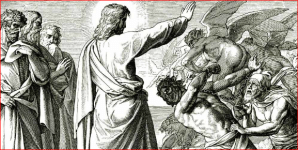


 Considering the Bible