The prophecy of the Lord Jesus for our consideration and edification, written centuries prior to His earthly existence is
Prophecy #208
Description
He will come to reward
Old Testament Prophecy
Isaiah 40:10
Behold, the Lord God comes with might, and his arm rules for him; behold, his reward is with him, and his recompense before him.
New Testament Fullfillment
Rev 22:12
“Behold, I am coming soon, bringing my recompense with me, to repay each one for what he has done.
If you are just joining this blog, or are a first time visitor, welcome to Considering the Bible. We would like to offer a document that provides over 350 prophecies of the Messiah found in the Old Testament for your consideration.
I make no claim to be able to comment on every one of these amazing prophecies in the future, but will occasionally bring one to the readers attention for their edification.
Hopefully you will follow “Considering the Bible” and begin an interaction with us
For this series in Philippians, I am going to limit each post to one verse, and hopefully produce a short, succinct read for my friends who follow.
1:4 always in every prayer of mine for you all making my prayer with joy,
Prayer
Paul prayed for his church. No, that statement is not true, if I understand Paul.
He prayed for his friends. He prayed for individuals that were on his heart. I do not understand Paul as thinking of the church in Philippi as an organization that needed to meet some arbitrary budget, or that his authority in the church needed to be stengthened, or that the expansion plans were not hitting goals.
Nope. He prayed for people. And in those prayers, the predominant theme he naturally expressed was that of joy. Joy is the theme of this letter and I find it interesting, even revealing that it is associated with prayer at it first occurrence.
Pray for people, and remember the joy of loving those you pray for.
Don’t you love it when, after years of reading the “Old Book” passages become alive, reinforcing old teachings or simply warming your heart. This is the book of Psalms, and it is rich.
I pray I can communicate a portion of the blessing we receive from this wonderful book.
Psalm 40
16 But may all who seek you rejoice and be glad in you; may those who love your salvation say continually, “Great is the LORD!” 17 As for me, I am poor and needy, but the Lord takes thought for me. You are my help and my deliverer; do not delay, O my God!
The Lord is great, but I am poor and needy.
Let’s recount the historical reason for David writing this psalm. Many believe this psalm was written after the revolution of Absalom, and that David was back on the throne of Israel, nearing the end of his life.
He had experienced the greatest of betrayal in his life, and had been brought to the very edge of defeat and death by his son and a trusted friend. The depth of despair David experienced also brought with it a humility and gratefulness that is expressed in the final verses of this great psalm.
Also, it is instructive to note that the last two verses have two subjects, that is those who seek God and the author himself. The author looks to those who seek God, and desires joy and gladness for them in their chasing after God. He desires the best for them as they seek God.
For himself, he admits to his poverty and need. Please remember that the author is King David, and is near the end of his rule, where he rules over the most prosperous and militarily mighty nation in the area. His expansion of his rule saw few limits and the Lord gave him victory many, many times. He was the king of Israel, and is considered the greatest king that ruled over the nation.
Yet he saw himself as poor and needy. The word poor may be translated as afflicted. To be afflicted is to be in need, subject to oppression or abuse, and admitting to the need for deliverance.
How is it that David could honestly say these things, while sitting on the throne of Israel, and reigning over God’s people?
David was in the enviable position of understanding where he stood in relation to the great God we serve. Although he is considered one of histories greatest kings, he considered himself as poor and needy, a man before God, stripped of his earthly strength, and bowing before Him. David was great because he did not consider himself.
If this was the only one we might consider in the final verses, it would be enough, but I ask you to consider the greater David, the Lord Jesus Christ, for as we have seen though this psalm, the subject turns to the Messiah, and we can see glimpses of His life throughout the passage.
Consider Jesus, in relation to the claim of being poor and needy, One who voluntarily left all power and glory to be brought to a point of poverty and need, to being one who needed deliverance from God, who experienced affliction, poverty, humiliation and ultimately death.
David was rescued from the pit, but Jesus entered the grave, having prayed for deliverance. This exercise of trust in the Father is unexplainable, if He was not continually and always in the presence of the Father, communing with the Father, being One with Him.
His trust in the Father during His experience of poverty and affliction is amazing, and His willingness to enter death, while not deserving the condemnation is beyond any sense of logic or understanding.
The psalmist, at the end of this psalm, prayed for God not to delay. The Lord also prayed for deliverance. God delivered David. All appearance of deliverance for Jesus, in the eyes of the disciples was snuffed out at the point of death. It seemed the Father had delayed, had not delivered the greater David.
We must understand that the deliverance that was expected and the deliverance that was supplied was dependent on our understanding of the goal. Any one of us, being in the sandals of the disciples, would have seen this as the disciples did, as a great failure, a massive disappointment. If only God had not delayed in delivering Jesus from death.
But love is like that.
He truly is the leader of our salvation, the One who loved first, best and always.
The prophecy of the Lord Jesus for our consideration and edification, written centuries prior to His earthly existence is
Prophecy #207
Description
“Behold your God”
Old Testament Prophecy
Isaiah 40:9
Go on up to a high mountain, O Zion, herald of good news;[a] lift up your voice with strength, O Jerusalem, herald of good news;[b] lift it up, fear not; say to the cities of Judah, “Behold your God!”
New Testament Fullfillment
John 1:36
and he looked at Jesus as he walked by and said, “Behold, the Lamb of God!”
John 19:14
Now it was the day of Preparation of the Passover. It was about the sixth hour. He said to the Jews, “Behold your King!”
If you are just joining this blog, or are a first time visitor, welcome to Considering the Bible. We would like to offer a document that provides over 350 prophecies of the Messiah found in the Old Testament for your consideration.
I make no claim to be able to comment on every one of these amazing prophecies in the future, but will occasionally bring one to the readers attention for their edification.
Hopefully you will follow “Considering the Bible” and begin an interaction with us
Why are you bringing this passage into the topic of conditional security Carl? This verse is obviously in the Bible for the sake of evangelism.
How often have you used Romans 6:23 in presenting the gospel to the lost, or heard someone refer to it in a gospel presentation. Romans 6:23 is a critical verse in the common “Romans Road” method of sharing the gospel.
With that background to the passage, how can the topic of conditional security become associated with it? Am I simply looking for any verse to wrap up into a conditional security teaching? I hope not – You be the judge!
Let’s consider the passage by first reading it.
So you also must consider yourselves dead to sin and alive to God in Christ Jesus. Let not sin therefore reign in your mortal body, to make you obey its passions. Do not present your members to sin as instruments for unrighteousness, but present yourselves to God as those who have been brought from death to life, and your members to God as instruments for righteousness. For sin will have no dominion over you, since you are not under law but under grace. What then? Are we to sin because we are not under law but under grace? By no means! Do you not know that if you present yourselves to anyone as obedient slaves, you are slaves of the one whom you obey, either of sin, which leads to death, or of obedience, which leads to righteousness? But thanks be to God, that you who were once slaves of sin have become obedient from the heart to the standard of teaching to which you were committed, and, having been set free from sin, have become slaves of righteousness. I am speaking in human terms, because of your natural limitations. For just as you once presented your members as slaves to impurity and to lawlessness leading to more lawlessness, so now present your members as slaves to righteousness leading to sanctification. For when you were slaves of sin, you were free in regard to righteousness. But what fruit were you getting at that time from the things of which you are now ashamed? For the end of those things is death. But now that you have been set free from sin and have become slaves of God, the fruit you get leads to sanctification and its end, eternal life. For the wages of sin is death, but the free gift of God is eternal life in Christ Jesus our Lord. – Romans 6:11-23
Take a look at that last verse. Yes – Romans 6:23. I will wager a penny that many of my readers have this verse committed to memory. I know I do, and have had it wobbling around in my head for close to 40 years. But many years ago, a brother by the name of Jim challenged me to consider the passage above. He asked a very pointed question (further below) that I fought against for years. After hearing the question, and when this passage came to mind, I simply ignored Jim’s question, it and referred to passages that seemed to support my “unconditional security” understanding of the Scriptures.
Paul is discussing the servant-hood of the believer in this passage. It is commonly accepted that by this time in the epistle, he has laid the foundation of the gospel and is dealing with the present condition and sanctification of the believer.
What was the question Jim asked?
“Why did Paul mention death in verse 23 of this passage?”
It can not simply refer to physical death, can it? Notice that Paul begins to conclude his thoughts on service to God by defining the fruit of our service (unto holiness) and the end being everlasting life. All through the passage, Paul is referring to believers and suddenly brings the topic of death into the mix.
Why?
The thing that really confused me, even as a young believer, was that as evangelicals, we use verse 23 to evangelize the lost, which is in the middle of an extended teaching on the Christians responsibility to serve God.
The question above was put to me over 25 years ago, but God is faithful and in my many wanderings and detours, some things just kept hanging on in my mind. The idea that death is an option by way of choice for the believer is a fearful thought, and yet I sense an authority I welcome and a growing respect that I have lacked far too long towards Him.
As always, your thoughts on this passage are always welcome.
Thanks again for coming to visit. I hope you found something of interest in this post and would appreciate a comment, to begin a discussion. If you would like to receive daily posts from Considering the Bible, click on the “Follow” link below
The prophecy of the Lord Jesus for our consideration and edification, written centuries prior to His earthly existence is
Prophecy #206
Description
Preceded by forerunner
Old Testament Prophecy
Isaiah 40:3-4
A voice cries: “In the wilderness prepare the way of the Lord; make straight in the desert a highway for our God. Every valley shall be lifted up, and every mountain and hill be made low; the uneven ground shall become level, and the rough places a plain.
New Testament Fullfillment
John 1:23
He said, “I am the voice of one crying out in the wilderness, ‘Make straight the way of the Lord,’ as the prophet Isaiah said.”
If you are just joining this blog, or are a first time visitor, welcome to Considering the Bible. We would like to offer a document that provides over 350 prophecies of the Messiah found in the Old Testament for your consideration.
I make no claim to be able to comment on every one of these amazing prophecies in the future, but will occasionally bring one to the readers attention for their edification.
Hopefully you will follow “Considering the Bible” and begin an interaction with us
If you have been following my ramblings for the past few months, you may remember that I spend some time in a parking lot, walking to the top and back down, praying for my family and friends, or memorizing a verse that I am trying to master. During my walks, as many of you may remember, I tend to wander in my thinking, ending up in a place in my mind I hadn’t intended. This post is the result of such wandering.
For some unknown reason, I began to consider the concept of courage, and the many commands in the Word of believers told to “fear not”. I have found that the Word actually speaks the words “do not fear” (or some similar phrase) over 100 times. Some of these verses are directed to individuals in specific historic circumstances, but the example provided can be very instructive. Other passages, especially in the gospels or epistles can be applied directly to us as believers. This is incredible, and reveals to me that fear is a huge issue that God often addresses with in His people.
As an aside, it is important to understand that if you are in a dangerous situation, fear is a healthy emotion, and is not to be rejected. Fear in an unsafe condition actually may save your life.
No, this post is about a non-defined, non justified fear that has no basis in truth, paralyzing (or controlling) us without any clear danger defined. Out of this condition of fear, God has a solution. Don’t be afraid. Be courageous.
It seems incredibly obvious to me now that fear is a decision to live in. Now don’t get me wrong, that when I am in the midst of fear, when the panic hits and the terror strikes, making a simple decision to be courageous, and reject fear is not my first consideration. I usually fall into the fear trap, get wrapped up in it’s tentacles and tremble. Usually, I actually feed the fear monster, by thinking of or listening to fear mongering. This is very easy to do in this society of social networking. Bad news sells!
But Good News heals. Only after I spend some quiet with the Lord, do I regain my sense of control over this emotion.
Let’s consider the emotion of anger. In the past I have grown in my rejection of unjustified anger. How is it that fear is any different in the way the Word addresses a solution for believers. The Word tells us to not be angry.
But now you must put them all away: anger, wrath, malice, slander, and obscene talk from your mouth. – Col 3:8 ESV
It seems to be a straight forward command. A decision that one can make to humbly admit our weakness and depend on Him. And yet, in the midst of the sexual immorality, impurity, sensuality, idolatry, sorcery, enmity, strife, jealousy, fits of anger, rivalries, dissensions, divisions, envy, drunkenness, orgies, there appears to be no escape, no other way. (Consider Gal 5:19-21 for this list of sins)
A walking with the Lord rescues us from these debilitating choices, these temptations that are overpowering for the one who is seemingly alone!
But let us return to the topic at hand.
When I finally recover from an “attack of the fearries”, I usually think of the time I went back to college in my mid 30’s, when I once again fell into fear. Paralyzed by fear if my memory serves me right.
I was a latecomer in the class, starting the semester a week late, one of the older students, with the peer clicks firmly established and the pecking order obvious. I don’t recall any reason fear crept up my spine and nestled in my mind, but it settled in for a long stay. For weeks, I was quiet, not looking at anyone, or entering into any conversations with other students. It seemed hopeless.
The fear that had controlled my actions for weeks was literally shattered while I was in the hallway next to my soils class, and I read the following Scripture.
“Behold, God is my salvation; I will trust, and will not be afraid; for the LORD GOD is my strength and my song, and he has become my salvation.” – Isa 12:2
All I could hear was that my fear was revealing my lack of faith. There were two attitudes the prophet spoke of. Either trust or be afraid. Trust resulted in not being afraid. I will trust, and not be afraid. This was a seminal moment for me and I have often thought of this time in future periods or fear.
Is there a time in your life when you could state you exercised faith and experienced fear at the same time. The Bible tells us that fear is something we can reject through trust in the Living God.
Can it be that believers want it to be more complicated? Let me know of your experiences with fear and how the Lord has provided deliverance for His child.
Thanks again for coming to visit. I hope you found something of interest in this post and would appreciate a comment, to begin a discussion. If you would like to receive daily posts from Considering the Bible, click on the “Follow” link below
The prophecy of the Lord Jesus for our consideration and edification, written centuries prior to His earthly existence is
Prophecy #205
Description
To have a ministry of miracles
Old Testament Prophecy
Isaiah 35:5-6
Then the eyes of the blind shall be opened, and the ears of the deaf unstopped; then shall the lame man leap like a deer, and the tongue of the mute sing for joy. For waters break forth in the wilderness, and streams in the desert;
New Testament Fullfillment
Matt 11:2-6
Now when John heard in prison about the deeds of the Christ, he sent word by his disciples
and said to him, “Are you the one who is to come, or shall we look for another?”
And Jesus answered them, “Go and tell John what you hear and see:
the blind receive their sight and the lame walk, lepers are cleansed and the deaf hear, and the dead are raised up, and the poor have good news preached to them.
And blessed is the one who is not offended by me.”
If you are just joining this blog, or are a first time visitor, welcome to Considering the Bible. We would like to offer a document that provides over 350 prophecies of the Messiah found in the Old Testament for your consideration.
I make no claim to be able to comment on every one of these amazing prophecies in the future, but will occasionally bring one to the readers attention for their edification.
Hopefully you will follow “Considering the Bible” and begin an interaction with us
For this series in Philippians, I am going to limit each post to one verse, and hopefully produce a short, succinct read for my friends who follow.
1:3 I thank my God in all my remembrance of you,
Thankfulness.
I was sitting with my favorite the other night and began to tell her how thankful I was for the many things she does for me, and for her strength and love. I didn’t let her reciprocate, since it was naturally coming from my heart. It was a very enjoyable chat for me, but after a while I sensed she became a bit uncomfortable.
Many reasons are possible for her discomfort, but I think primarily that she is one who gives without thinking of receiving. Maybe I just haven’t been the thankful husband she deserves.
Either way, it was a bit surprising to me that she became uncomfortable, and it made me think of believers thanking God. I do not think God is ever uncomfortable in receiving thanksgiving, for He truly is the source of all good things.
Give thanks to the Lord, for He is good. It is an enjoyable experience to give thanks!
Don’t you love it when, after years of reading the “Old Book” passages become alive, reinforcing old teachings or simply warming your heart. This is the book of Psalms, and it is rich.
I pray I can communicate a portion of the blessing we receive from this wonderful book.
Psalm 40
13 Be pleased, O LORD, to deliver me! O LORD, make haste to help me! 14 Let those be put to shame and disappointed altogether who seek to snatch away my life; let those be turned back and brought to dishonor who delight in my hurt! 15 Let those be appalled because of their shame who say to me, “Aha, Aha!”
In our last post, the passage emphasized the trials David experienced, a hopeless that was expressed by outward and inward enemies. Multiple iniquities, more than the hairs of his head, and evils surrounding him.
His heart was failing.
As we consider our passage, verse 13 reflects David’s heartfelt desire to see God active and working, delivering his child from all his enemies. David is not asking for mercy in this request, but that the motivating factor to drive God in delivering his child is God’s own pleasure in saving those who call out to Him. Not only is David appealing to God to take pleasure in delivering the saint, but that the Lord would make haste.
I love doing things that please me. I love writing in this blog, and will get up early in the morning in order to be involved with the text and to ask God for direction. I take pleasure in it! I usually (always?) put off things that I take no pleasure in (weeding the garden for example), in order to do that which pleases me. Of course this is a comparison of earth with heaven, yet that which we are pleased to do, we seek to find time to do.
How about God? Do you see God as a God who takes pleasure in delivering His saints? Is the God you worship a God that is reluctant in delivering the saint? Is He One who is distant and would rather not be bothered?
What is it that God takes no pleasure in? What actions does God prefer not to be involved in (I speak as a man)? A quick search of the Word brings a number of verses for my reader to consider.
For I have no pleasure in the death of anyone, declares the Lord GOD; so turn, and live.” – Ezekiel 18:32 ESV
in burnt offerings and sin offerings you have taken no pleasure. – Hebrews 10:6 ESV
but my righteous one shall live by faith, and if he shrinks back, my soul has no pleasure in him.” – Hebrew 10:38 ESV
After David appeals to God for deliverance, he speaks of the natural outcome of this deliverance as he understood it. Deliverance for David would mean the doom of his enemies.
He speaks of “those” enemies that he was facing, that they be put to shame, disappointed, turned back, brought to dishonor and appalled.
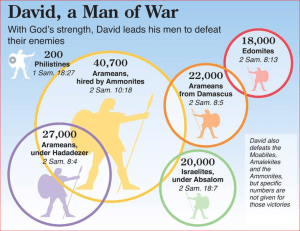
Let’s remember that David is a man of war, that his perspective was that of victory or defeat against his foes. The entire kingdom of Israel existed through military conquest, and for the nation to continue, it’s physical enemies would need to be held back.
Is it so for us as the body of Christ in the church age? Are we dealing with physical enemies, and should we seek their downfall, that they be put to shame?
Consider the contrast of David’s desire for his enemies with the New Testament teaching provided to the saints.
For we do not wrestle against flesh and blood, but against the rulers, against the authorities, against the cosmic powers over this present darkness, against the spiritual forces of evil in the heavenly places. – Ephesians 6:12 ESV
Is it fair to deduce from this passage that since we do not wrestle against the physical, that we are also not to enter into adversarial attitudes with those who may appear to be “against” us?
But I say to you, Love your enemies and pray for those who persecute you, – Matthew 5:44 ESV
In my opinion, (which is worth less than two pennies) this is the most challenging single verse in the Bible to live out. I am a naturally pessimistic, argumentative and judgmental fella, and find that an attitude of grace and mercy towards those I meet with during my day to day life is impossible without the continual help from God in thinking and behaving properly, under His direction.
Our outlook on life is to be per the Messiah’s teaching and though we often feel as David felt in this passage, we have a higher calling, a calling that will prioritize love over revenge, of forgiveness over bitterness, of prayer over argumentation.
We have a high calling brothers. Let us remember the challenge, and seek to follow the One who loved us when we were enemies!
For if while we were enemies we were reconciled to God by the death of his Son, much more, now that we are reconciled, shall we be saved by his life. – Romans 5:10
The prophecy of the Lord Jesus for our consideration and edification, written centuries prior to His earthly existence is
Prophecy #204
Description
He will come and save you
Old Testament Prophecy
Isaiah 35:4
Say to those who have an anxious heart, “Be strong; fear not! Behold, your God will come with vengeance, with the recompense of God. He will come and save you.”
New Testament Fullfillment
Matt 1:21
She will bear a son, and you shall call his name Jesus, for he will save his people from their sins.”
If you are just joining this blog, or are a first time visitor, welcome to Considering the Bible. We would like to offer a document that provides over 350 prophecies of the Messiah found in the Old Testament for your consideration.
I make no claim to be able to comment on every one of these amazing prophecies in the future, but will occasionally bring one to the readers attention for their edification.
Hopefully you will follow “Considering the Bible” and begin an interaction with us
16 “For God so loved the world, that he gave his only Son, that whoever believes in him should not perish but have eternal life.
Recently I have blogged about conditional security.
During these posts, I have not addressed verses that I used when I defended the “Once Saved Always Saved” (OSAS) teaching.
I suppose it is easy to pick the low hanging fruit of the common conditional security verses to defend this position, but sooner or later I will have to discuss OSAS verses, at least to be honest with myself.
Therefore, I will occasionally post to the blog a verse or passage that seems to support the OSAS position. I say “seems” since I am in the midst of the study of the OSAS passages. I consider it wise to seek to understand the opposing side’s argument without prejudging. I suppose that is why I have had so many adjustments in my thinking in the last 5-10 years. Come to think of it, adjustments are another way of describing repentance – a changing of the mind.
This verse is pregnant with meaning and offers much to discuss, but I will restrain myself to the topic at hand. A key to this verse I believe, in relation to the topic of security, is the word believe. As far as I can tell, believe is a present tense participle which might be translated as – “the continually believing ones” If this is so, then the idea of entering a salvation contract by signing on the dotted line with single past belief seems to be weak.
Initially Considering Conditional Security
One of the verses that made me initially consider the conditional security topic was also in John 3, where the Master states – You must be born again”
I think I understood Him to say “You must become born again”, but that isn’t what He said. You see, to be something is a present condition. To be an engineer is not to simply begin on a career based on a momentary decision, but a lifetime of decisions based on that first decision. To be born again, although dependent on the initial decision to repent and trust, must be maintained on a lifetime of decisions stemming from the initial commitment.
Security in the Person of Christ
Earlier I mentioned that the tense of believing is a key to the verse in understanding the impact on conditional security. Another item of interest in the verse is the concept of eternal life.
Is eternal life dependent on time? (Remember that God created time and He existed prior to the creation, therefore eternality is outside of the realm of time.)
Why all this metaphysical junk?
Sometimes when I would teach on OSAS, I would make the argument that since eternal life was a gift, and by definition it was eternal/forever, it could not be returned.
But I think I missed the bigger picture. Eternal life is in the person of Christ. (1 John 5:11) If I am in Christ, I enjoy the benefits (and responsibilities) of eternal life. If I intentionally depart from the Living One, I remove myself from the eternal life that is in the Son.
Nowadays I consider eternal life to be the quality of life (in the Son) instead of simply a quantity of life (from the Son).
Thanks again for coming to visit. I hope you found something of interest in this post and would appreciate a comment, to begin a discussion. If you would like to receive daily posts from Considering the Bible, click on the “Follow” link below
The prophecy of the Lord Jesus for our consideration and edification, written centuries prior to His earthly existence is
Prophecy #203
Description
A Refuge-A man shall be a hiding place
Old Testament Prophecy
Isaiah 32:2
Each will be like a hiding place from the wind, a shelter from the storm, like streams of water in a dry place, like the shade of a great rock in a weary land.
New Testament Fullfillment
Matt 23:37
“O Jerusalem, Jerusalem, the city that kills the prophets and stones those who are sent to it! How often would I have gathered your children together as a hen gathers her brood under her wings, and you were not willing!
If you are just joining this blog, or are a first time visitor, welcome to Considering the Bible. We would like to offer a document that provides over 350 prophecies of the Messiah found in the Old Testament for your consideration.
I make no claim to be able to comment on every one of these amazing prophecies in the future, but will occasionally bring one to the readers attention for their edification.
Hopefully you will follow “Considering the Bible” and begin an interaction with us
After my series on the parables, I found I was drawn to look into the miracles of Jesus in the Gospels. I have never studies the mighty works of Jesus as a focused effort before and am looking forward to finding nuggets of truth that we can be encouraged by.
I have provided a general introduction, with an opportunity to download two files for your reference in my initial post Signs and Mighty Works of Jesus – Introduction. I found that the format I used for the parable posts were useful to keep me on track, and will continue to use them for this series, with some minor tweaks. With that said, let’s take a look at
Jesus Heals Many Sick at Evening
Matthew 8:16-17
That evening they brought to him many who were oppressed by demons, and he cast out the spirits with a word and healed all who were sick. This was to fulfill what was spoken by the prophet Isaiah: “He took our illnesses and bore our diseases.”
Mark 1:32-34
That evening at sundown they brought to him all who were sick or oppressed by demons. And the whole city was gathered together at the door. And he healed many who were sick with various diseases, and cast out many demons. And he would not permit the demons to speak, because they knew him.
Luke 4:40-41
Now when the sun was setting, all those who had any who were sick with various diseases brought them to him, and he laid his hands on every one of them and healed them. And demons also came out of many, crying, “You are the Son of God!” But he rebuked them and would not allow them to speak, because they knew that he was the Christ.
General Observations
Now, in the previous post, we spoke of Jesus performing the miracle of Peter’s mother-in-law being healed, and how the audience was small, and of the closest friends to the Messiah. We made comment that God is God no matter who is watching, and that His purpose in displaying power over sickness is not always for the masses. He sometimes works in quiet.
If the intent of the previous mighty work was to simply heal his disciples mother, the effect seems to be that attention was drawn to Him no matter!
Questions to Consider
Who were the audience?
Two categories of people were brought to Jesus at sundown. The sick and the oppressed/possessed of demons. Although this is not be the first time we have come across in the gospels the existence of demons, this particular instance speaks of “many who were oppressed of demons”.
This audience was massive in relation to previous instances of Jesus’ mighty works. Mark 1:33 speaks of the whole city of Capernaum gathered at the door. Obviously not everyone was sick or demon possessed, but the spectacle of a miracle working Rabbi brought everyone out!
And the whole city was gathered together at the door. Mark 1:33
It is estimated that Capernaum had about 1,500 people residing in the city. The wedding at Cana may have had numerous guests (but few witnesses – see Signs and Mighty Works of Jesus #1 – Jesus Turns Water into Wine), but with this mighty work, many in the audience were intimately affected by the Messiah through His healing ministry.
Matthew provides a reason. The healing ministry of the Lord, during the night of mighty works, was to fulfill prophecy.
This was to fulfill what was spoken by the prophet Isaiah: “He took our illnesses and bore our diseases.” Matthew 8:17
What prophecy? What prophecy is the apostle directing us to, that Jesus fulfilled on this night of mighty works?
Surely he has borne our griefs and carried our sorrows – Isaiah 53:4a
For Matthew to assign the night of mighty works performed by the Messiah as to fulfilling this prophecy is totally unexpected. When I read the 53rd chapter of Isaiah, I think crucifixion, not a single night in Capernaum. And yet Matthew associates Isaiah 53:4 with physical healing and casting out demons.
Of course, this Old Testament passage is also applied to the crucifixion by Peter in his second epistle
He himself bore our sins in his body on the tree, that we might die to sin and live to righteousness. By his wounds you have been healed. 2 Peter 2:24
So, if this prophecy is fulfilled during the night of miracles, how is Matthew wanting us to understand this? May I suggest one intent of Matthew was to inform of how the miracles were performed. The passage Matthew quotes here speaks of Jesus taking our illness and baring our diseases.
Notice that both verbs have the general sense of accepting something from someone, of receiving something from someone, of carrying a burden for someone. It is not my understanding that during this night of miracles, the Lord simply deleted demons and illness. In relation to the demons, the passages speak of them being cast out. The healing of the sick is another matter, if only in my understanding.
At this point I am simply riffing, that is, supposing a thought. Was it that the goodness of God, the life resident in the Messiah, would simply overpower the physical sickness of the “patient”? Or was it that the Lord Himself “exchanged” the sickness with His health? Questions of the curious I suppose. No matter, for in the grand scheme of things, Jesus declared His identification with the Messiah found in Isaiah 53, through this night of mighty works in a little city on the northern shores of the Sea of Galilee.
Jesus, healed and casted our demons, from residents of a city that would end up faithless towards Him.
And you, Capernaum, will you be exalted to heaven? You will be brought down to Hades. For if the mighty works done in you had been done in Sodom, it would have remained until this day. – Mathew 11:23
Why did Jesus chose to heal so many in a city that ultimately would reject Him?
What was the message for the original audience?
For the one receiving the miracle
The message was that Jesus was a miracle working rabbi, that healing and casting out of demons was not beyond this One who travelled the area. Each of the recipients of a healing, would have an experience, face to face with the Messiah, an experience that should have drawn them to the Messiah, caused them to have a desire to know His message, to know Him. And yet, I can’t get away from the fact that this city ended up in greater danger of judgement than Sodom and Gomorrah.
For the Jewish leadership
None of the passages speak of the Jewish leadership, but as we will find out as we venture through these mighty works, Jesus’ displays of power over nature were not welcomed by the rulers.
For the disciples
The message for the disciples is not explicitly referred to in the passages, yet I can’t help to assume that this extended concentrated healing ministry of the Lord would have caused more questions than answers.
When will He stop? Why is He taking in so many? How can He do this? Will this healing ministry eventually heal everyone? Is Jesus going to reign over a nation of completely healthy people? (Will doctors be put out of work?)
What is the message for us today?
Hind sight is 20/20. As we watch the Messiah walk His ministry, we find that the miracles were intended to reveal His person, the God-man. Physical healing and the casting out of demons during the Master’s time of earth primarily were works that revealed His arrival, of the Kingdom of God arriving, and that the Greater King David was on the scene.
Can we as believers, by faith, demand healings of multitudes? Will not mass healings exhibit His personhood even today? Of course , this is not the history of the body of Christ. Healings may occur, (through the mercy of God), yet it is often in sickness and grief we sense God’s loving care, and realize that no matter how God deals with us, He is good, He is able and He is wise.
Some may teach that healings of this nature are the natural outcome of being a believer, that is, we also have authority over sickness. This seems to be emphasized in the “ministries” of faith healers, touting their message to the weak and infirmed. Personally, I believe many of the current “healing ministries” I have looked into reek of greed and avarice, and bring much disgrace to the body of Christ
Have you a ministry of healing? Have you, through prayer and fasting, brought health to the sick, or casted out a demon? I would appreciate if you tell your story in the comments below. Although I struggle with healing ministries, I am open to being corrected, through your personal story and the witness of the Word of God.
Thanks again for joining me as we venture through Jesus Mighty Works!
The prophecy of the Lord Jesus for our consideration and edification, written centuries prior to His earthly existence is
Prophecy #202
Description
The wise are confounded by the Word
Old Testament Prophecy
Isaiah 29:14
therefore, behold, I will again do wonderful things with this people, with wonder upon wonder; and the wisdom of their wise men shall perish, and the discernment of their discerning men shall be hidden.
New Testament Fullfillment
1 Cor 1:18-31
For the word of the cross is folly to those who are perishing, but to us who are being saved it is the power of God.
For it is written, “I will destroy the wisdom of the wise, and the discernment of the discerning I will thwart.”
Where is the one who is wise? Where is the scribe? Where is the debater of this age? Has not God made foolish the wisdom of the world?
For since, in the wisdom of God, the world did not know God through wisdom, it pleased God through the folly of what we preach to save those who believe.
For Jews demand signs and Greeks seek wisdom,
but we preach Christ crucified, a stumbling block to Jews and folly to Gentiles,
but to those who are called, both Jews and Greeks, Christ the power of God and the wisdom of God.
For the foolishness of God is wiser than men, and the weakness of God is stronger than men.
For consider your calling, brothers: not many of you were wise according to worldly standards, not many were powerful, not many were of noble birth.
But God chose what is foolish in the world to shame the wise; God chose what is weak in the world to shame the strong;
God chose what is low and despised in the world, even things that are not, to bring to nothing things that are,
so that no human being might boast in the presence of God.
And because of him you are in Christ Jesus, who became to us wisdom from God, righteousness and sanctification and redemption,
so that, as it is written, “Let the one who boasts, boast in the Lord.”
If you are just joining this blog, or are a first time visitor, welcome to Considering the Bible. We would like to offer a document that provides over 350 prophecies of the Messiah found in the Old Testament for your consideration.
I make no claim to be able to comment on every one of these amazing prophecies in the future, but will occasionally bring one to the readers attention for their edification.
Hopefully you will follow “Considering the Bible” and begin an interaction with us
For this series in Philippians, I am going to limit each post to one verse, and hopefully produce a short, succinct read for my friends who follow.
1:2 Grace to you and peace from God our Father and the Lord Jesus Christ.
As mentioned earlier, Paul is writing to a church that has planted itself into his own heart, and that he wants to establish in grace and peace. Throughout Paul’s writings, he emphasizes grace and peace to the churches, (and adds mercy when writing to preachers like Timothy and Titus)
Paul’s emphasis on grace and peace would do us well to be remembered, for we may often think of how we disappoint, frustrate or displease the Lord of Glory, while all the time, the grace of God is there to encourage, strengthen and admonish us to be His people, and do better things for Him.
Grace and peace. Grace is unmerited favor, favor of the Lord that we do not deserve, that we cannot earn, and that is dependent on the character of Jesus and not own frail efforts.
I often consider peace to be somewhat equivalent with wholeness, or balance, or restfulness. A sense that God is taking care of those things that are beyond our strength. As we get older and hopefully wiser, we begin to realize that our strength is a weakness, and that God has been in the midst of it all. With this realization, the peace we experience becomes a settled condition.
Don’t you love it when, after years of reading the “Old Book” passages become alive, reinforcing old teachings or simply warming your heart. This is the book of Psalms, and it is rich.
I pray I can communicate a portion of the blessing we receive from this wonderful book.
Psalm 40
11 As for you, O LORD, you will not restrain your mercy from me; your steadfast love and your faithfulness will ever preserve me! 12 For evils have encompassed me beyond number; my iniquities have overtaken me, and I cannot see; they are more than the hairs of my head; my heart fails me.
In our earlier passage, David declared his “nots”. Just as a reminder, let’s review them
I have told the glad news of deliverance in the great congregation; behold, I have not restrained my lips, as you know, O LORD.
I have not hidden your deliverance within my heart; I have spoken of your faithfulness and your salvation; I have not concealed your steadfast love and your faithfulness
David is confident that the Lord will not restrain His mercy from him. I find it somewhat interesting that the prophet used the same negative terminology for both the Lord and his own actions, that is, that restraint was not carried out.
Restraint implies a restriction, an unwillingness, a loss of freedom, inhibition. Both David and the Lord are free to exercise their respective actions. David has freedom to share the goodness of God. The Father is free to exercise mercy in David’s experience.
But that brings up a question for my readers.
Is David linking his freedom to share with the congregation, with God finally able to exercise mercy to him?
In other words, is the Lord free to exercise mercy in every and all circumstances? Or is He restricted upon our actions?
Comment below with your thoughts.
Let’s continue. David proceeds into verse 12 with a litany of overwhelming perils. Let’s look them one at a time.
Wickedness surrounding me
David confessed he had enemies all about. Friends, acquaintances or sworn enemies, he realized wickedness was prevalent outside of his own person. We know of this trial in our own lives, as we realize that many in our lives may would seek to take advantage of us, harm us or at the least sideline us to make us of no effect.
Iniquities within me
David was realizing that external forces were not his only problem.
If he lived in a utopian kingdom, where all was love and kindness, no wickedness or evil intent possible, He would still have an enemy. As Pogo, a cartoon character of 50 years ago quipped, “We have met the enemy and he is us”
David realized his own inner wickedness, selfishness, self deceit and weakness. This I find to be the hardest truth for the average Christian to accept (it is for me!) and the most difficult to discuss. We tend to exaggerate either extreme. Some may state that sin is not resident in their lives, thereby experiencing spiritual perfection. I don’t meet many believers of this doctrinal stance, that is sinless perfection, yet I fear there are many that believe they may have attained to it without verbally expressing it!
The other extreme is complete and utter evil only lurking in the heart of man. This seems to have much Scriptural backing, and my calvinist brothers would claim it is the reason for their gospel message. (Without this key lynch pin holding their theology together, the logical system they have built crashes to the ground).
Although I spent decades in this thinking, I have come to understand that wickedness resides in me alongside a desire to know God, a desire to seek him and know him. As an experiential knowledge of my own heart, I understand that my own witness is not to be trusted. Therefore, I would appreciate my readers to comment on this topic – the heart of man and it’s condition.
It is instructive though, that David states “my iniquities have overtaken me.” He does not say that his entire being is only sinful, iniquitous, evil, hateful and dastardly. Of course I am being extreme here, but I hope you get my point. (I have always wanted to use the word dastardly in my blog – now I have!)
No vision to guide me out
David claims blindness. He cannot see. Of course we are not to take this literally. He is speaking of his trials, his situation. He is looking for a way out, but with external and internal enemies, there is no escape, no where to run for safety. His back is up against a wall, and he is realizing the wall is also a foe.
Nope, As my momma used to say “He is up the crik without a paddle stick!”
Sins uncountable
How many hair reside on your head? Innumerable, uncountable. Why count them when there are so many. This is the sense I get as David describes his sins to God. It is hopeless!
As we have mentioned in our blog earlier, the Hebrew poets would repeat a thought in the next stansa, using this devise to explain or amplify the previous thought. David is dwelling on his internal iniquities when speaking of the innumerable sins he is recounting.
No strength
His heart fails. No hope, no escape, no relief, no release, nothing that would give encouragement for the future. That is, if we did not have the foundation of God’s promise in the verse above.
As for you, O LORD, you will not restrain your mercy from me; your steadfast love and your faithfulness will ever preserve me!
The foundation of God’s mercy, steadfast love and faithfulness is what David finds hope in. He will venture into this great hope in our next blog, dealing with verses 13 – 15.
I hope you can join me as a hopeless situation finds light shone on it! And hopefully, we can see our own situations in like manner, where the Lord Jesus will bring light to our situation and provide deliverance and help in time of need.
Thanks for joining me in this venture through the Psalms. I rarely express my gratitude for your attention to my ruminations. Thanks again, and I look forward to your comments.
The prophecy of the Lord Jesus for our consideration and edification, written centuries prior to His earthly existence is
Prophecy #201
Description
He indicated hypocritical obedience to His Word
Old Testament Prophecy
Isaiah 29:13
And the Lord said: “Because this people draw near with their mouth and honor me with their lips, while their hearts are far from me, and their fear of me is a commandment taught by men,
New Testament Fullfillment
Matt 15:7-9
You hypocrites! Well did Isaiah prophesy of you, when he said:
“‘This people honors me with their lips, but their heart is far from me;
in vain do they worship me, teaching as doctrines the commandments of men.’”
If you are just joining this blog, or are a first time visitor, welcome to Considering the Bible. We would like to offer a document that provides over 350 prophecies of the Messiah found in the Old Testament for your consideration.
I make no claim to be able to comment on every one of these amazing prophecies in the future, but will occasionally bring one to the readers attention for their edification.
Hopefully you will follow “Considering the Bible” and begin an interaction with us
8 Remember Jesus Christ, risen from the dead, the offspring of David, as preached in my gospel,
9 for which I am suffering, bound with chains as a criminal. But the word of God is not bound!
10 Therefore I endure everything for the sake of the elect, that they also may obtain the salvation that is in Christ Jesus with eternal glory.
11 The saying is trustworthy, for: If we have died with him, we will also live with him;
12 if we endure, we will also reign with him; if we deny him, he also will deny us;
13 if we are faithless, he remains faithful–for he cannot deny himself.
The security of the believer is a topic I seem to find popping up in daily conversations with other believers. I have spent the greater part of my Christian life teaching and defending the eternal security of the believer, (sometimes called the “once saved always saved” teaching), but after considering some of the “difficult verses” in the Word, I think I have to reconsider this position.
Conditional Security
One passage that has “difficult verses” that needs consideration is 2 Timothy 2:8-13. And wouldn’t you know it, but we were in Sunday School a while back and the topic of eternal security popped up again. We began to look at 2 Timothy 2:8-13, and the context was security, suffering, denial and commitment.
Verse 10 speaks of the elect, out of which they may obtain the salvation…
Notice that Paul says that he endures all things for the elects sake, that they may obtain the salvation. I do not think this is the same as ….for the elects sake, that they shall obtain the salvation…
In my thinking this allows for two interpretations.
Out of the group of elect, a subgroup of those who actually obtain salvation exists, based on the choices made by those within the group of the elect. This implies that there are some of the elect that never obtain salvation.If there are some in the elect that never obtain salvation, why are they called the elect? I suppose the simplest explanation would be that Paul is referring to the nation of Israel as the elect, but this isn’t a very satisfying explanation. I don’t see him mentioning Israel within the letter and he is speaking to a gentile convert concerning a gentile church.
Out of the group of the elect there are some that do not remain in the salvation that is in Christ Jesus. The context seems to lean, in my opinion, towards this interpretation. Paul’s immediate context is endurance. Paul is speaking of suffering, commitment and denial within the Christian church, and specifically to Timothy, a Christian. He reminds Timothy, in verse 12, of the faithful saying, if we endure, we shall also reign with him: if we shall deny him, he also will deny us.
A fine Christian man within the Sunday School class made a valiant effort at defending the eternal security position. Even after class, we chatted about the benefits of open discussion between believers, and we assured each other that Christianity needs to allow for this openness.
As an adherent of eternal security, I use to struggle to explain this verse. I no longer am so sure of the eternal security teaching and as I open myself up to the possibility that our salvation is conditional, I find that throughout the Word, choices made by believers have had eternal consequences.
Let me know what you think. I am hopeful that your comments and questions will stir up some good discussion!
Thanks again for coming to visit. I hope you found something of interest in this post and would appreciate a comment, to begin a discussion. If you would like to receive daily posts from Considering the Bible, click on the “Follow” link below
The prophecy of the Lord Jesus for our consideration and edification, written centuries prior to His earthly existence is
Prophecy #200
Description
The Sure Foundation
Old Testament Prophecy
Isaiah 28:16
therefore thus says the Lord God, “Behold, I am the one who has laid as a foundation in Zion, a stone, a tested stone, a precious cornerstone, of a sure foundation: ‘Whoever believes will not be in haste.’
New Testament Fullfillment
1 Cor 3:11
For no one can lay a foundation other than that which is laid, which is Jesus Christ.
Matt 16:18
And I tell you, you are Peter, and on this rock I will build my church, and the gates of hell shall not prevail against it.
If you are just joining this blog, or are a first time visitor, welcome to Considering the Bible. We would like to offer a document that provides over 350 prophecies of the Messiah found in the Old Testament for your consideration.
I make no claim to be able to comment on every one of these amazing prophecies in the future, but will occasionally bring one to the readers attention for their edification.
Hopefully you will follow “Considering the Bible” and begin an interaction with us
My favorite and I flew to Montana a few weeks back to spend some time with our eldest son and his lovely family. While we were there, we camped out at a KOA camp, sat by the fire at night, ate hotdogs and burgers off the grill and played a bunch of rummy.
I was able to teach my grandson the game and he took to it, to the point he wanted to play and play and play. He won a few times, which only fueled his confidence, but that is another story.
This story is about my son and I trying our hand at fly fishing.
We purchased the rods, flies, licenses and even some boots to wade into the river with. Our first day out was a Monday, and we had no cell service – which was glorious in it’s own way. Our trek took us upstream to a sand bar on the Boulder River, where we could get some practice in our casting skills, which admittedly were pre-beginner status.
A bit of testing and trying, and pretty soon I felt like I knew what I was doing. Note that it is a feeling – I didn’t know what I was doing, but as my momma used to say “Ignorance is bliss”. We fished for a few hours, pulled our flies out of the trees, untangled our line numerous time and generally appeared completely out of our realm.
By 2 pm, we were ready to head home, realizing the fish were not gonna cooperate. Dang fish!
The point of this story is not to describe the frustration with our efforts, or to whine about our lack of success, or to complain about the heat of the day.
No, there was absolutely no reason to be negative. I was in the middle of some of the pertiest nature I had ever experienced.
As I was trekking away from the Boulder River, looking back at the clear blue pristine river, the bright green hillside, with a rustic brown escarpment, up against a crystal clear sky, that just for a moment, a fleeting moment, I was flooded with praise to the One who created such beauty and grandeur. (I would describe my reaction with greater detail, but I fear I would be giving up my man-card.)
Of course, as a city dweller, I never experience this in the concrete jungle. Grey concrete structures and steel pan bridges do not ignite the inner wonder of God’s creation I experienced that afternoon. For many, if I were to paste a photo of this area, would simply bypass it, thinking it was a “dime a dozen” view, nothing to get excited about, and well it may be.
But that afternoon, under the sun and with God, I experienced something that will not escape my memory for many many years. It was indescribable, and I will quit trying to do the impossible.
My point is – Get out of the city and experience nature as soon as you have opportunity. Thankfully, God is with us always and everywhere, that is the gospel truth. Yet, it may be that out in a wide open field, with a cold bubbling river beside you, (and uncooperative fish teasing you) you may get a new perspective that will light you up!
God is good.
Thanks again for coming to visit. I hope you found something of interest in this post and would appreciate a comment, to begin a discussion. If you would like to receive daily posts from Considering the Bible, click on the “Follow” link below
The prophecy of the Lord Jesus for our consideration and edification, written centuries prior to His earthly existence is
Prophecy #199
Description
The Messiah is the precious corner stone
Old Testament Prophecy
Isaiah 28:16
therefore thus says the Lord God, “Behold, I am the one who has laid[a] as a foundation in Zion, a stone, a tested stone, a precious cornerstone, of a sure foundation: ‘Whoever believes will not be in haste.’
New Testament Fullfillment
Acts 4:11-12
This Jesus is the stone that was rejected by you, the builders, which has become the cornerstone.
And there is salvation in no one else, for there is no other name under heaven given among men by which we must be saved.”
If you are just joining this blog, or are a first time visitor, welcome to Considering the Bible. We would like to offer a document that provides over 350 prophecies of the Messiah found in the Old Testament for your consideration.
I make no claim to be able to comment on every one of these amazing prophecies in the future, but will occasionally bring one to the readers attention for their edification.
Hopefully you will follow “Considering the Bible” and begin an interaction with us
For this series in Philippians, I am going to limit each post to one verse, and hopefully produce a short, succinct read for my friends who follow.
1:1 Paul and Timothy, servants of Christ Jesus, To all the saints in Christ Jesus who are at Philippi, with the overseers and deacons:
Paul loved this church and knew each of the founding members, along with those who joined as the church grew and he visited. He was there in the beginning, like so many of the churches he writes to in the New Testament, and I dare say, this may have been the church that settled in his heart the deepest.
He sends this letter of joy to the saints in Christ Jesus, along with the church leadership. I find this challenging, since my background would expect a church planter and apostle to send directions directly to the leadership, and allow them to disseminate the instructions to the laity.
It seems this structure is not at play in Paul’s mind.
Should a hierarchy be accepted in our mind? What thinkest thou?
Don’t you love it when, after years of reading the “Old Book” passages become alive, reinforcing old teachings or simply warming your heart. This is the book of Psalms, and it is rich.
I pray I can communicate a portion of the blessing we receive from this wonderful book.
Psalm 40
9 I have told the glad news of deliverance in the great congregation; behold, I have not restrained my lips, as you know, O LORD. 10 I have not hidden your deliverance within my heart; I have spoken of your faithfulness and your salvation; I have not concealed your steadfast love and your faithfulness from the great congregation.
In our previous post we found it spoke directly of David’s prophetic ability to delve into the text beyond the surface reading of Old Testament commands. But more importantly, Psalm 40:6-8 speaks of the life purpose of the Messiah, that is the Messiah’s desire, ‘to do thy will”.
The passage also speaks of the desire of God in both the arenas of sacrifice and of obedience, of how the sacrifices were never the end goal, but the complete obedience of the Lord Jesus to the Father’s will as being the great story, the end goal, the purpose of it all.
Our passage before us speaks of the telling, preaching, sharing, and declaring of the message to the great congregation, to those who need to hear of the Messiah and of His heart for God.
David spoke freely to the congregation, to those who assembled together. He did not hide the message within his heart, but freely spoke the good news of the God of creation. David has spoken of hiding the word in his heart in another Psalm, in order to not sin against God, but in this Psalm he is not restrained in voicing the glad news.
Although the Psalm speaks of David proclaiming the God of all creation to the congregation, the passage should be recognized as describing the Lord Jesus (and His followers) as the preachers of the salvation provided.
If we consider the congregation David shared with as His own nation, or possibly to the faithful within his own nation (the remnant of faithful), we should not understand that as applicable to the times of the Lord. His congregation was those He came across, the adulterous Samaritan woman, the legalistic Pharisee, the blind beggar at the well, and a dead man in a cave. He was not restricted as David may have been in preaching or sharing of the great salvation He was to provide, in the good news of the kingdom of God arriving. His congregation was all of creation, and as a believer, I need to be reminded that He is the Lord of all, that all of creation is His congregation, His assembly.
To the Ones who know Him currently, He is to be declared. To the ones who have yet to understand, He is to be declared. To the ones who have never heard of Him, He is to be declared. To those who despitefully hate Him, He is to be declared.
Each declaration of the Lord Jesus is to be from the heart, as the psalmist describes that he had not concealed or hidden His deliverance within his heart. It is to be a life message, based on the Living Word having passed through our lives and into our neighbor. Each person we meet, we must have wisdom to know the best manner of sharing His deliverance, the love to open ourselves up to unwanted responses, and the courage and boldness to share the truth and react in love.
Earlier I spoke of the Living Word passing though our lives and into others. Without experiencing an ongoing active relationship with the God of our salvation through the Word of God and prayer, the message of God’s love may simply become cold, lifeless, factual, exact, documental, even story like.
This is a great challenge to myself as I need to be awakened to the great news of His deliverance, of my heart being opened to the Living truth, of a refreshing, a revival of glimpsing His great love, not only for myself, but for the entire congregation.
No matter how passionate you feel you are in preaching the good news to His congregation, there is currently no restriction for the believer to grow in this privilege. There is always a greater depth to plunge in the knowledge of God, and out of that experiential relationship, a greater desire to share will be the natural outcome. The desire will naturally pour out of our lives, our speech and to the ones we meet. Each of the verses we have looked at above speak of David telling good news, not restraining his lips, not hiding God’s deliverance, speaking of God’s faithfulness, and finally not concealing His steadfast love.
Wherever you may judge yourself in exercising this privilege, dig into the Living Word, (please do not simply look for facts!) look to the Father for boldness, passion and wisdom, and witness a change as you share with those who are in His congregation.












 Considering the Bible