The prophecy of the Lord Jesus for our consideration and edification, written centuries prior to His earthly existence is
Prophecy #259
Description
He would be judged
Old Testament Prophecy
Isaiah 53:8b
that he was cut off out of the land of the living, stricken for the transgression of my people?
New Testament Fulfillment
John 18:13-22
First they led him to Annas, for he was the father-in-law of Caiaphas, who was high priest that year.
It was Caiaphas who had advised the Jews that it would be expedient that one man should die for the people.
Simon Peter followed Jesus, and so did another disciple. Since that disciple was known to the high priest, he entered with Jesus into the courtyard of the high priest,
but Peter stood outside at the door. So the other disciple, who was known to the high priest, went out and spoke to the servant girl who kept watch at the door, and brought Peter in.
The servant girl at the door said to Peter, “You also are not one of this man’s disciples, are you?” He said, “I am not.”
Now the servants and officers had made a charcoal fire, because it was cold, and they were standing and warming themselves. Peter also was with them, standing and warming himself.
The high priest then questioned Jesus about his disciples and his teaching.
Jesus answered him, “I have spoken openly to the world. I have always taught in synagogues and in the temple, where all Jews come together. I have said nothing in secret.
Why do you ask me? Ask those who have heard me what I said to them; they know what I said.”
When he had said these things, one of the officers standing by struck Jesus with his hand, saying, “Is that how you answer the high priest?”
If you are just joining this blog, or are a first time visitor, welcome to Considering the Bible. We would like to offer a document that provides over 350 prophecies of the Messiah found in the Old Testament for your consideration.
I make no claim to be able to comment on every one of these amazing prophecies in the future, but will occasionally bring one to the readers attention for their edification.
Hopefully you will follow “Considering the Bible” and begin an interaction with us
For this series in Philippians, I am going to limit each post to one verse, and hopefully produce a short, succinct read for my friends who follow.
1:20 as it is my eager expectation and hope that I will not be at all ashamed, but that with full courage now as always Christ will be honored in my body, whether by life or by death.
From the previous verse Paul stated he expected deliverance. He now speaks of his expectations and hope of not being ashamed. Might the deliverance Paul speaks of in the previous verse be a deliverance from shame?
The next phrase seems to clear up the issue of Paul’s expectation of physical deliverance, since he is suggesting this deliverance may be accomplished by death.
Paul seeks to honor Christ in his body.
If I am reading this passage correctly, he is more concerned of experiencing shame than death. This is enlightening to me, since shame is not a topic we speak of in the modern church to often. Shame and courage are directly linked in this verse, and associated with the Messiah. To be courageous is to relegate shame to the rear. We all have areas of our lives that we have experienced shame, those times when we performed deeds we want no one to know of. Yet the Lord knows and forgives.
Paul is looking to avoid the need for forgiveness, through faith and courage. As death approaches Paul, he resolved to look to the Master for his strength.
My wife and I are reading through the Psalms in our evening reading and occasionally a nugget of the Psalms jumps out of the page. Don’t you love it when, after years of reading the “Old Book” passages become alive, reinforcing old teachings or simply warming your heart.
This is the book of Psalms, and it is rich.
I pray I can communicate a portion of the blessing we receive from this wonderful book.
Todays passage is found in Psalm 45, one of a number of royalty / coronation psalms, with the passage speaking of two parties in a wedding.
Verse 2 – 9 speaks of the bridegroom, whilst verses 10 – 17 describes the royal bride. Given a number of verses within the body of the psalm, it becomes apparent this psalm is Messianic, and deliver to it’s readers a description of the Lord Jesus Christ as the Bridegroom, and of the church as His bride.
Hopefully, this will become more evident as we dig into this truly amazing portion of Scripture.
Let’s being with verse 1.
Psalm 45:1
To the choirmaster: according to Lilies. A Maskil of the Sons of Korah; a love song. My heart overflows with a pleasing theme; I address my verses to the king; my tongue is like the pen of a ready scribe.
The psalmist begins this passage, giving us notice that this psalm is a song of love. And as a psalm of love, he is overflowing with anticipation, anxious to speak to (or of) the King, prepared to offer his body to be used of God to provide truths he can’t hold back.
How wonderful when the heart is bubbling with an excitement that overflows its banks. The psalmist speaks of his heart overflowing, and the term he uses occurs only once in the Word. This word refers to a bubbling of a fountain or the boiling of water, with the intent of the word communicating the noise associated with the action of the water. This “overflowing” of his heart is resulting in a noise or sound that is of a pleasant theme. And we have previously understood that the psalm’s theme is love, but we have not delved into the breadth, and length, and depth, and height of this love.
Theme
He speaks of the “bubbling of his heart ” as resulting in a pleasant theme. How understated the Word is at times. As we venture into this passage, we will begin to find that this no ordinary love, for that alone is wonderful. No – this is an eternal love springing from the King of Glory, and the psalm simply states it is a pleasant theme. At the risk of introducing my confusion, how could this theme of love simply be pleasant? Is it not a theme that is to be described as miraculous, phenomenal, transcendent, extraordinary?
Let us not depend on superlatives to describe a truth the Scripture describes as pleasant. Let us not go beyond the excitement the author is experienceing, and describ it incorrectly. The theme of love is pleasant, and as we enter further into the passage, we will see that the source of this love is worthy of greater superlatives. The love the psalmist speaks of will be elevated based on the source of the love. Currently, he is speaking of a topic, and not the Person we will be introduced to shortly that will expand the beuty of this topic!
Purpose
The psalmist goes on to declare His purpose. He will address, or utter his message to the King. Many Bibles translate this portion as the psalmist uttering his message of the King, or about the King. Entering this passage, we will become convinced of its Messianic message. Considering this, both translations may have a ring of truth to them. The psalmist speaks to the King, the God and Father of the Lord Jesus, and of the King, the Son of God, Jesus the Christ.
Preparation
The psalmist speaks of his readiness, of his willingness, of his desire to be of service, to listen only (as a scribe) and to record the message of the Author. He is one seeking to be a servant, and not an author, a willing scribe, not interjecting his own thoughts, but only the thoughts of the Author.
Scribes were known as scholars in the Old Testament, principally involved in the accurate transmission of documents of importance. A major characteristic of a scribe was an obsession with accuracy, the continuous rigor of exactness in the message, that the message not be interjected with his own thoughts or reasonings. Transmission of the message was the only intent of the scribes efforts.
Of course with this attitude of accuracy, the scribe also became an expert in the message, absorbing the message, becoming a human container of the truth he toiled so diligently to maintain for the next generation.
Consider our own time with the Word of the King. How scribal are we, in the absorption of the Word? Is it becoming a part of you? Is it working its way through you in your life, in the way you think and act, and eventually in how you speak? Is the message of love interrupting your life, making you consider your ways, changing your perceptions of what is important and what is of no consequence?
This psalm will continue to describe One who, if you follow, will interrupt your life, remold your thoughts, cause you to change your purpose and provide you times of struggle, introducing His ways, which are not our ways. This will inevitably cause struggles in your thoughts, feelings, speech and lifestyle.
For you see, this King is interested in truth, meekness and righteousness. If we are honest with ourselves, we tend toward lies, pride and selfishness. There will be a battle. The battle waged will not be as we expect, but it will be productive, gaining the desire of the King.
The prophecy of the Lord Jesus for our consideration and edification, written centuries prior to His earthly existence is
Prophecy #258
Description
Confined and persecuted
Old Testament Prophecy
Isaiah 53:8a
By oppression and judgment he was taken away; and as for his generation, who considered
New Testament Fulfillment
Matt 26:47-27:31
While he was still speaking, Judas came, one of the twelve, and with him a great crowd with swords and clubs, from the chief priests and the elders of the people.
Now the betrayer had given them a sign, saying, “The one I will kiss is the man; seize him.”
And he came up to Jesus at once and said, “Greetings, Rabbi!” And he kissed him.
Jesus said to him, “Friend, do what you came to do.” Then they came up and laid hands on Jesus and seized him.
And behold, one of those who were with Jesus stretched out his hand and drew his sword and struck the servant of the high priest and cut off his ear.
Then Jesus said to him, “Put your sword back into its place. For all who take the sword will perish by the sword.
Do you think that I cannot appeal to my Father, and he will at once send me more than twelve legions of angels?
But how then should the Scriptures be fulfilled, that it must be so?”
At that hour Jesus said to the crowds, “Have you come out as against a robber, with swords and clubs to capture me? Day after day I sat in the temple teaching, and you did not seize me.
But all this has taken place that the Scriptures of the prophets might be fulfilled.” Then all the disciples left him and fled.
Then those who had seized Jesus led him to Caiaphas the high priest, where the scribes and the elders had gathered.
And Peter was following him at a distance, as far as the courtyard of the high priest, and going inside he sat with the guards to see the end.
Now the chief priests and the whole council were seeking false testimony against Jesus that they might put him to death,
but they found none, though many false witnesses came forward. At last two came forward
and said, “This man said, ‘I am able to destroy the temple of God, and to rebuild it in three days.’”
And the high priest stood up and said, “Have you no answer to make? What is it that these men testify against you?”
But Jesus remained silent. And the high priest said to him, “I adjure you by the living God, tell us if you are the Christ, the Son of God.”
Jesus said to him, “You have said so. But I tell you, from now on you will see the Son of Man seated at the right hand of Power and coming on the clouds of heaven.”
Then the high priest tore his robes and said, “He has uttered blasphemy. What further witnesses do we need? You have now heard his blasphemy.
What is your judgment?” They answered, “He deserves death.”
Then they spit in his face and struck him. And some slapped him,
saying, “Prophesy to us, you Christ! Who is it that struck you?”
Now Peter was sitting outside in the courtyard. And a servant girl came up to him and said, “You also were with Jesus the Galilean.”
But he denied it before them all, saying, “I do not know what you mean.”
And when he went out to the entrance, another servant girl saw him, and she said to the bystanders, “This man was with Jesus of Nazareth.”
And again he denied it with an oath: “I do not know the man.”
After a little while the bystanders came up and said to Peter, “Certainly you too are one of them, for your accent betrays you.”
Then he began to invoke a curse on himself and to swear, “I do not know the man.” And immediately the rooster crowed.
And Peter remembered the saying of Jesus, “Before the rooster crows, you will deny me three times.” And he went out and wept bitterly.
When morning came, all the chief priests and the elders of the people took counsel against Jesus to put him to death.
And they bound him and led him away and delivered him over to Pilate the governor.
Then when Judas, his betrayer, saw that Jesus was condemned, he changed his mind and brought back the thirty pieces of silver to the chief priests and the elders,
saying, “I have sinned by betraying innocent blood.” They said, “What is that to us? See to it yourself.”
And throwing down the pieces of silver into the temple, he departed, and he went and hanged himself.
But the chief priests, taking the pieces of silver, said, “It is not lawful to put them into the treasury, since it is blood money.”
So they took counsel and bought with them the potter’s field as a burial place for strangers.
Therefore that field has been called the Field of Blood to this day.
Then was fulfilled what had been spoken by the prophet Jeremiah, saying, “And they took the thirty pieces of silver, the price of him on whom a price had been set by some of the sons of Israel,
and they gave them for the potter’s field, as the Lord directed me.”
Now Jesus stood before the governor, and the governor asked him, “Are you the King of the Jews?” Jesus said, “You have said so.”
But when he was accused by the chief priests and elders, he gave no answer.
Then Pilate said to him, “Do you not hear how many things they testify against you?”
But he gave him no answer, not even to a single charge, so that the governor was greatly amazed.
Now at the feast the governor was accustomed to release for the crowd any one prisoner whom they wanted.
And they had then a notorious prisoner called Barabbas.
So when they had gathered, Pilate said to them, “Whom do you want me to release for you: Barabbas, or Jesus who is called Christ?”
For he knew that it was out of envy that they had delivered him up.
Besides, while he was sitting on the judgment seat, his wife sent word to him, “Have nothing to do with that righteous man, for I have suffered much because of him today in a dream.”
Now the chief priests and the elders persuaded the crowd to ask for Barabbas and destroy Jesus.
The governor again said to them, “Which of the two do you want me to release for you?” And they said, “Barabbas.”
Pilate said to them, “Then what shall I do with Jesus who is called Christ?” They all said, “Let him be crucified!”
And he said, “Why? What evil has he done?” But they shouted all the more, “Let him be crucified!”
So when Pilate saw that he was gaining nothing, but rather that a riot was beginning, he took water and washed his hands before the crowd, saying, “I am innocent of this man’s blood; see to it yourselves.”
And all the people answered, “His blood be on us and on our children!”
Then he released for them Barabbas, and having scourged Jesus, delivered him to be crucified.
Then the soldiers of the governor took Jesus into the governor’s headquarters, and they gathered the whole battalion before him.
And they stripped him and put a scarlet robe on him,
and twisting together a crown of thorns, they put it on his head and put a reed in his right hand. And kneeling before him, they mocked him, saying, “Hail, King of the Jews!”
And they spit on him and took the reed and struck him on the head.
And when they had mocked him, they stripped him of the robe and put his own clothes on him and led him away to crucify him.
If you are just joining this blog, or are a first time visitor, welcome to Considering the Bible. We would like to offer a document that provides over 350 prophecies of the Messiah found in the Old Testament for your consideration.
I make no claim to be able to comment on every one of these amazing prophecies in the future, but will occasionally bring one to the readers attention for their edification.
Hopefully you will follow “Considering the Bible” and begin an interaction with us
For anyone who eats and drinks without discerning the body eats and drinks judgment on himself. That is why many of you are weak and ill, and some have died. But if we judged ourselves truly, we would not be judged. But when we are judged by the Lord, we are disciplined so that we may not be condemned along with the world. – 1 Corinthians 11:29-32
Come on Paul, condemned with the world?
We can never be condemned with the world! Believers are rescued from this present evil world (Galations 1:4) and Jesus promised that we have overcome the world.
I personally believe there are no contradictions in our God breathed Bible. So how dare Paul break my security bubble by saying that if we are not disciplined, there is the risk of being condemned along with the world.
Note he says along with the world – with, by association, companionship, resemblance, possession, instrumentality, addition, etc.
I thought when we first got saved, condemnation along with the world was forever removed from our lives. And yet Paul brings this topic up to believers in Corinth.
As some who follow, I have written posts regarding the difference between judging and condemning, and found that judging may have a positive connotation to it. Think of when you win a formal debate, or a foot race. The audience judges you the winner!
The word Paul uses in this verse is condemn, and is not used in any sense of a positive judgement as described above. Check out the list below for all the times this word “condemn” is used, and consider the context of our verse in consideration today, as it relates to believers.
Can believers be condemned with the world? Take note of the multiple times Paul refers to judgement by ourselves or the Lord, previous to his using the “c” word.
New Testament verses containing the Greek word katakrinō, translated as condemn.
Matthew 12:41, 42 The men of Nineveh will rise up at the judgment with this generation and condemn it, for they repented at the preaching of Jonah, and behold, something greater than Jonah is here. The queen of the South will rise up at the judgment with this generation and condemn it, for she came from the ends of the earth to hear the wisdom of Solomon, and behold, something greater than Solomon is here.
Matthew 20:18 “See, we are going up to Jerusalem. And the Son of Man will be delivered over to the chief priests and scribes, and they will condemn him to death
Matthew 27:3 Then when Judas, his betrayer, saw that Jesus was condemned, he changed his mind and brought back the thirty pieces of silver to the chief priests and the elders,
Mark 10:33 saying, “See, we are going up to Jerusalem, and the Son of Man will be delivered over to the chief priests and the scribes, and they will condemn him to death and deliver him over to the Gentiles.
Mark 14:64 You have heard his blasphemy. What is your decision?” And they all condemned him as deserving death.
Mark 16:16 Whoever believes and is baptized will be saved, but whoever does not believe will be condemned.
Luke 11:31 The queen of the South will rise up at the judgment with the men of this generation and condemn them, for she came from the ends of the earth to hear the wisdom of Solomon, and behold, something greater than Solomon is here.
Luke 11:32 The men of Nineveh will rise up at the judgment with this generation and condemn it, for they repented at the preaching of Jonah, and behold, something greater than Jonah is here.
John 8:10 Jesus stood up and said to her, “Woman, where are they? Has no one condemned you?”
John 8:11 She said, “No one, Lord.” And Jesus said, “Neither do I condemn you; go, and from now on sin no more.”
Romans 2:1 Therefore you have no excuse, O man, every one of you who judges. For in passing judgment on another you condemn yourself, because you, the judge, practice the very same things.
Romans 8:3 For God has done what the law, weakened by the flesh, could not do. By sending his own Son in the likeness of sinful flesh and for sin, he condemned sin in the flesh,
Romans 8:34 Who is to condemn? Christ Jesus is the one who died–more than that, who was raised–who is at the right hand of God, who indeed is interceding for us.
Romans 14:23 But whoever has doubts is condemned if he eats, because the eating is not from faith. For whatever does not proceed from faith is sin.
1 Corinthians 11:32 But when we are judged by the Lord, we are disciplined so that we may not be condemned along with the world.
Hebrews 11:7 By faith Noah, being warned by God concerning events as yet unseen, in reverent fear constructed an ark for the saving of his household. By this he condemned the world and became an heir of the righteousness that comes by faith.
2 Peter 2:6 if by turning the cities of Sodom and Gomorrah to ashes he condemned them to extinction, making them an example of what is going to happen to the ungodly;
Thanks again for coming to visit. I hope you found something of interest in this post and would appreciate a comment, to begin a discussion. If you would like to receive daily posts from Considering the Bible, click on the “Follow” link below
The prophecy of the Lord Jesus for our consideration and edification, written centuries prior to His earthly existence is
Prophecy #257
Description
Sacrificial lamb
Old Testament Prophecy
Isaiah 53:7c
like a lamb that is led to the slaughter
New Testament Fulfillment
John 1:29
The next day he saw Jesus coming toward him, and said, “Behold, the Lamb of God, who takes away the sin of the world!
1 Pet 1:18-19
knowing that you were ransomed from the futile ways inherited from your forefathers, not with perishable things such as silver or gold,
but with the precious blood of Christ, like that of a lamb without blemish or spot.
If you are just joining this blog, or are a first time visitor, welcome to Considering the Bible. We would like to offer a document that provides over 350 prophecies of the Messiah found in the Old Testament for your consideration.
I make no claim to be able to comment on every one of these amazing prophecies in the future, but will occasionally bring one to the readers attention for their edification.
Hopefully you will follow “Considering the Bible” and begin an interaction with us
After my series on the parables, I found I was drawn to look into the miracles of Jesus in the Gospels. I have never studies the mighty works of Jesus as a focused effort before and am looking forward to finding nuggets of truth that we can be encouraged by.
I have provided a general introduction, with an opportunity to download two files for your reference in my initial post Signs and Mighty Works of Jesus – Introduction. I found that the format I used for the parable posts were useful to keep me on track, and will continue to use them for this series, with some minor tweaks. With that said, let’s take a look at
Jesus Heals an Invalid at Bethesda
John 5:1-17
After this there was a feast of the Jews, and Jesus went up to Jerusalem. Now there is in Jerusalem by the Sheep Gate a pool, in Aramaic called Bethesda, which has five roofed colonnades. In these lay a multitude of invalids–blind, lame, and paralyzed. waiting for the moving of the water; for an angel of the Lord went down at certain seasons into the pool, and stirred the water: whoever stepped in first after the stirring of the water was healed of whatever disease he had One man was there who had been an invalid for thirty-eight years. When Jesus saw him lying there and knew that he had already been there a long time, he said to him, “Do you want to be healed?” The sick man answered him, “Sir, I have no one to put me into the pool when the water is stirred up, and while I am going another steps down before me.” Jesus said to him, “Get up, take up your bed, and walk.” And at once the man was healed, and he took up his bed and walked. Now that day was the Sabbath. So the Jews said to the man who had been healed, “It is the Sabbath, and it is not lawful for you to take up your bed.” But he answered them, “The man who healed me, that man said to me, ‘Take up your bed, and walk.’” They asked him, “Who is the man who said to you, ‘Take up your bed and walk’?” Now the man who had been healed did not know who it was, for Jesus had withdrawn, as there was a crowd in the place. Afterward Jesus found him in the temple and said to him, “See, you are well! Sin no more, that nothing worse may happen to you.” The man went away and told the Jews that it was Jesus who had healed him. And this was why the Jews were persecuting Jesus, because he was doing these things on the Sabbath. But Jesus answered them, “My Father is working until now, and I am working.”
General Observations
Five roofed colonnades over the pool? Is it not curious that John speaks of five covered areas? In my research, I found an explanation at www.biblicalarchaeology.org
…the Bethesda Pool is described as having five porticoes—a puzzling feature suggesting an unusual five-sided pool, which most scholars dismissed as an unhistorical literary creation. Yet when this site was excavated, it revealed a rectangular pool with two basins separated by a wall—thus a five-sided pool—and each side had a portico.
This detail is one that has been used to attack the accuracy of the Scriptures over the ages. You see, no archeologist had identified this pool of Bethesda until the early 19th century. Critics assumed that someone other than John wrote the gospel centuries after the destruction of Jerusalem, supposedly describing the surroundings without ever seeing them. Once again, the critic is proven wrong! Truly, the Scriptures are constantly being verified by archeology, and provides us with a constant reminder of the fact of Jesus and His disciples walked amongst the citizens of Israel, even amongst the poorest and weakest.
This pool was called Bethesda, which means a house of mercy, or a house of kindness. With the pool designated as a “house of mercy” so close to the temple, it may speak of the spiritual temperature of the city of Jerusalem. So much suffering so close to God’s house. Many of the most religious adherents attending the temple, along with those ministering in the temple, must surely have known of this pool, and of those in need.
Questions to Consider
Who were the audience?
Every sick person in the pool witnessed this miracle. The audience was the many who had come to the pool for relief, for healing, who needed a miracle. Yet only the invalid in our passage received assistance, and not because of any great faith or virtue, but simply out of mercy. Simply out of compassion.
Verse 10 tells us that “the Jews” were present. Were they there to minister to the sick, elderly and infirmed? Did they bring hot meals to them during lunchtime? Nothing is stated regarding these acts of mercy, but they were keen to inform this newly walking un-invalid that he was breaking the Sabbath.
How utterly amazing to see a religious person ignore the work of God in order to enforce the word of man. Carrying a bed as an affront to God? How could anyone justify this as wrong? Yet the guardians of God and His temple found a way to exercise power over their flock by providing rules rules rules.
Recently, I published a post on this miracle from the standpoint of the timing of the miracle. Jesus on the Sabbath – Part 15 – Equal with God. It may be of interest for those who want to consider this miracle as it relates to the Sabbath.
The pool was located north of the temple, and it’s association with the sheep gate provides a hint as to it’s purpose for the temple. Could it have been a source of water to purify sacrificial sheep, prior to being offered in the temple? Some archeologists and Bible scholars believe this pool was a Jewish bath for worshippers to achieve ritual purity, but with the rumor of healings being available at the pool, all those who were in need of a miracle flocked to the pool.
Why did the Lord perform this mighty work?
Jesus saw him lying there and knew that he had already been there a long time. Jesus determined this man would be healed, simply based out of compassion for this man who had been crippled for almost four decades. Four decades!
Jesus asked what seemed to be a foolish question. Do you want to be healed? Considering that the man was waiting for the stirring of the water and that legend spoke of the healing of the waters, it seemed to be obvious that the man wanted to be healed, but was simply unable to get to the pool.
As we read the passage, we find that this simple question was not answered directly. The man did not answer the question, request any assistance from Jesus, but simply provided the Master a reason he had not experienced any healing. He was at the pool, but had no ability to take advantage of any possible healing.
John 5:8 Jesus said to him, “Get up, take up your bed, and walk.”
Am I right in thinking that Jesus’ response indicates a bit of impatience, a bit of frustration with this invalid? Is that fair? Jesus had been performing miracles throughout Israel, and often we hear of those witnessing the Lord’s works as spreading the news of this miracle worker far and wide. This miracle alone was not the first in Jerusalem, and His fame was spreading like wildfire. I will leave it to the reader to consider the situation, and of Jesus’ tone of voice as He responds to the invalid.
In defense of the invalid, we have to remember that he had been an invalid for close to forty years, and we don’t know how long he had visited the pool. Sure there was a miracle worker in Israel, yet why would anyone care for an old invalid man who had been forgotten by so many?
What was the message for the original audience?
For the invalid, the message was simple. Get up. Pick up your bed. Walk. All three commands were obeyed and the invalid received his miracle.
For those at the pool who were still in need, they had seen the Messiah perform a healing which indicated the Hope of Israel had arrived. The physical healing was a signpost for others to understand Who had arrived. Healing everyone would not have accomplished anything greater than what occurred that day. As a matter of fact, it may have simply redirected the focus from Him. This was a constant concern of the Messiah, that those who came to Him simply wanted their immediate needs addressed.
For those Jews who had been watching Jesus, this miracle sparked active persecution towards Jesus.
John 5:16 And this was why the Jews were persecuting Jesus, because he was doing these things on the Sabbath.
For the Jewish leadership, directing the invalid to carry his bed on the Sabbath became the straw that broke the camels back. This was too much for them. Could Jesus have simply told the invalid to get up and walk away? Sure. But He didn’t. Would this have created an equal reaction from the Jewish leadership? We may never know, but I think you can know what I think!
The miracle should have been understood differently. Jesus directed an invalid, whom He healed, to carry his bed on the Sabbath. The miracle of healing should have indicated to the Jews that Jesus was from God, but they had already determined that His source of authority came from the enemy. (See the previous post – Signs and Mighty Works of Jesus #17 – Jesus Heals a Man Unable to Speak)
Now, in their minds, He was openly disobeying the rules set up by men in order to properly obey God. A rebel, an enemy of the establishment, a preacher that would not conform to their demands. But why should He conform to their demand, for He is Lord of the Sabbath, the One who established the nation of Israel and provided the ordinances, laws and ceremonies they lived by.
He is the Authority that is greater than any law they sought to obey.
What is the message for us today?
Jesus healed this invalid, though the invalid did not express any faith in Him, request any assistance or even acknowledge who He was. The invalid couldn’t even identify the One who healed him to the Jewish authorities. Jesus actually withdrew into the crowd (vs 13) after the healing. If there is ever a miracle that would satisfy our modern need for instantaneous satisfaction, this is the one.
In this miracle, this quick, instantaneous and sudden miracle working on this unknown invalid, Jesus exhibited Himself as Lord. We must allow Him to be who He is. He may, at His discretion, have compassion on any sinner or saint, whether famous or unknown, rich or poor, wise or foolish, young or old, full of faith or without belief, at any time, for any reason, without warning, and without hesitation.
His miracles, if understood properly, point to His person, to His relation to the Father and His authority over all of creation. Some miracles may occur during your walk with the Lord, and may I suggest that a proper understanding of them is critical to appreciate the wonder of the One providing the miracle.
Acts of mercy are, by their very nature undeserved, and if you are blessed in receiving a miracle in this life, consider Who it is that touched your life. Focus on the miracle provider and not on the miracle provided. Filter the fact of the miracle through the character of our Messiah.
For He is good, all the time.
Thanks again for coming to visit. I hope you found something of interest in this post and would appreciate a comment, to begin a discussion. If you know someone this blog may bless (or challenge), send them a link, so they may join us in our discussion
The prophecy of the Lord Jesus for our consideration and edification, written centuries prior to His earthly existence is
Prophecy #256
Description
Silent before his accusers
Old Testament Prophecy
Isaiah 53:7b
yet he opened not his mouth
New Testament Fulfillment
Matt 27:12-14
But when he was accused by the chief priests and elders, he gave no answer.
Then Pilate said to him, “Do you not hear how many things they testify against you?”
But he gave him no answer, not even to a single charge, so that the governor was greatly amazed.
If you are just joining this blog, or are a first time visitor, welcome to Considering the Bible. We would like to offer a document that provides over 350 prophecies of the Messiah found in the Old Testament for your consideration.
I make no claim to be able to comment on every one of these amazing prophecies in the future, but will occasionally bring one to the readers attention for their edification.
Hopefully you will follow “Considering the Bible” and begin an interaction with us
For this series in Philippians, I am going to limit each post to one verse, and hopefully produce a short, succinct read for my friends who follow.
1:19 for I know that through your prayers and the help of the Spirit of Jesus Christ this will turn out for my deliverance,
Paul is here speaking of the divine human cooperative. The prayers of the saints, and the work of the Spirit of Jesus Christ will cooperate with each other in the deliverance of the apostle. Paul knows this will produce a deliverance for him, he is confident in this. He does allow for some leeway in the type of deliverance, allowing God’s will to be done. This is acceptable to Paul, since he seeks to be under the will of God, and realizes the promise of God, when saints join together in prayer, God listens and acts.
Paul ties these two parties (man and God) together in expecting his deliverance, although he has yet to define the deliverance. This generality in Paul describing his delieverance, especially in the next verse, allows freedom to recieve God’s will in his life.
I have often heard the statement, “Be specific in prayer, in order for God to specifically answer” Many times the Lord has answered specific prayers in our lives, and yet there is wisdom in allowing God’s will to play a part of the answer.
Paul was general in his expectation, and yet had confidence in the working of both the prayers of the saints and of the Spirit of Jesus.
My wife and I are reading through the Psalms in our evening reading and occasionally a nugget of the Psalms jumps out of the page. Don’t you love it when, after years of reading the “Old Book” passages become alive, reinforcing old teachings or simply warming your heart.
This is the book of Psalms, and it is rich.
I pray I can communicate a portion of the blessing we receive from this wonderful book.
Psalm 44:23-26
Awake! Why are you sleeping, O Lord? Rouse yourself! Do not reject us forever! Why do you hide your face? Why do you forget our affliction and oppression? For our soul is bowed down to the dust; our belly clings to the ground. Rise up; come to our help! Redeem us for the sake of your steadfast love!
We return to the last four verses of our psalm, with one overriding impression.
This psalmist had passion! Oh for a passion to confront God, even to the point of confronting Him with a seeming injustice He is guilty of.
We do not know the heart of this psalmist, nor even the historical background for his complaints, but that is beside the point. This man was passionate to see the Lord keep His end of the bargain, and was bold enough to come before God with some startling claims. He had the boldness to claim the Lord was asleep on His watch, that He was not attentive to the people He claimed to love. He was fully convinced the fault lay at the feet of the Lord. He was telling the Lord to wake up. Commanding the Lord to wake up? Ordering the Master?
Is this a proper attitude for the believer today? Can we bring claims of unfaithfulness of the Lord to the Lord?
As we walk on this earth, with all the media influences, general lies, emotional upheavals, mental limitations, physical constraints and lifestyle pressures, how can we make any accurate judgement as to the Lord’s dealings with us?
As we walk on this earth, with all the historical proofs of the Lord Jesus, the written documentation that has survived for millennium of His life, the proofs of His mighty resurrection, the gift of the apostles teaching, the blessing of the Spirit of God, and the support of the Body of Christ, how can we not simply be thankful for the grace He has provided to us, and simply accept our current condition (good or bad), thinking of His dealings with us in a positive manner.
A great challenge, and if accepted, may spurn us onto better things for the Kingdom. (And this exhortation from a pessimist!)
May God help us in our struggles to relate to the Holy One. May He redeem us from ourselves,
The prophecy of the Lord Jesus for our consideration and edification, written centuries prior to His earthly existence is
Prophecy #255
Description
Oppressed and afflicted
Old Testament Prophecy
Isaiah 53:7a
He was oppressed, and he was afflicted
New Testament Fulfillment
Matt 27:27-31
Then the soldiers of the governor took Jesus into the governor’s headquarters, and they gathered the whole battalion before him.
And they stripped him and put a scarlet robe on him,
and twisting together a crown of thorns, they put it on his head and put a reed in his right hand. And kneeling before him, they mocked him, saying, “Hail, King of the Jews!”
And they spit on him and took the reed and struck him on the head.
And when they had mocked him, they stripped him of the robe and put his own clothes on him and led him away to crucify him.
If you are just joining this blog, or are a first time visitor, welcome to Considering the Bible. We would like to offer a document that provides over 350 prophecies of the Messiah found in the Old Testament for your consideration.
I make no claim to be able to comment on every one of these amazing prophecies in the future, but will occasionally bring one to the readers attention for their edification.
Hopefully you will follow “Considering the Bible” and begin an interaction with us
For this very reason, make every effort to supplement your faith with virtue, and virtue with knowledge, and knowledge with self-control, and self-control with steadfastness, and steadfastness with godliness, and godliness with brotherly affection, and brotherly affection with love. For if these qualities are yours and are increasing, they keep you from being ineffective or unfruitful in the knowledge of our Lord Jesus Christ. For whoever lacks these qualities is so nearsighted that he is blind, having forgotten that he was cleansed from his former sins. Therefore, brothers, be all the more diligent to confirm your calling and election, for if you practice these qualities you will never fall. For in this way there will be richly provided for you an entrance into the eternal kingdom of our Lord and Savior Jesus Christ. – 2 Peter 1:5-11 ESV
If these things (that is – faith, virtue, knowledge, self-control, steadfastness, godliness, brotherly affection and finally love) abound, Peter tells his audience they will not be unfruitful.
He that lacks these things (that is – faith, virtue, knowledge, self-control, steadfastness, godliness, brotherly affection and finally love), Peter goes on to tell the lost that they are so nearsighted, they are blind. Nope – Can’t say that -. I can’t make that audience shift here. Peter is continuing to speak to believers, when he defines them as blind and forgetful.
Seeing this comparison, Peter then states that if we give diligence to “make our calling and election sure” we will have an entrance ministered unto us abundantly.
Ok, so here is the problem – “…. confirm your calling and election” (See below for gk definition of “confirm”)
If we pursue the many steps that Peter speaks of, then my election is confirmed. Consider some of the questions implications, my friend.
What if we spend our entire life seeking these characteristics and then in the last five years, throw it all away. Will my election be confirmed?
Who is it that knows of this surety? Is it a matter of confidence for God or myself? It must be a matter of confidence for myself if I practice these characteristics.
Remember this is dealing with confirmation of our salvation, not the purchasing or final deliverance of our souls. That is the grace of our Lord completing that. Our diligence in working on these characteristics provides us confirmation of our entrance into the eternal kingdom.
Is anyone else thinking of Ezekiel 18:24? 1 Peter and Ezekiel deal with somewhat different topics. This passage is not dealing directly with conditional security of the believer (as Ezekiel 18) but it does address a believer’s own understanding of his security with the Lord. What I mean is that the perception of the saint and the reality of the situation may be surprising when found out.
So lets review –
If I practice these traits in my life I will have confidence in my salvation.
If I don’t practice these traits in my life, I loose confidence in my salvation.
But some might say that even without this confidence (due to my diligence in supplementing my salvation), I can still be confident of my salvation.
Am I missing something?
Word study on “Confirm” from Vines Expository Dictionary
G949 βέβαιος [ A-2,Adjective,G949, bebaios ] “firm, steadfast,” is used of (a) God’s promise to Abraham, Romans 4:16; (b) the believer’s hope, Hebrews 6:19, “steadfast;” (c) the hope of spiritual leaders regarding the welfare of converts, 2 Corinthians 1:7, “steadfast;” (d) the glorying of the hope, Hebrews 3:6, “firm;” (e) the beginning of our confidence, Hebrews 3:14, RV, “firm” (AV, “steadfast”); (f) the Law given at Sinai, Hebrews 2:2, “steadfast;” (g) the testament (or covenant) fulfilled after a death, Hebrews 9:17, “of force;” (h) the calling and election of believers, 2 Peter 1:10, to be made “sure” by the fulfillment of the injunctions in 2 Peter 1:5-7; (i) the word of prophecy, “made more sure,” 2 Peter 1:19, RV, AV, “a more sure (word of prophecy);” what is meant is not a comparison between the prophecies of the OT and NT, but that the former have been confirmed in the person of Christ (2 Peter 1:16-18). See FIRM.
Thanks again for coming to visit. I hope you found something of interest in this post and would appreciate a comment, to begin a discussion. If you would like to receive daily posts from Considering the Bible, click on the “Follow” link below
The prophecy of the Lord Jesus for our consideration and edification, written centuries prior to His earthly existence is
Prophecy #254
Description
God’s will that He bear sin for all mankind
Old Testament Prophecy
Isaiah 53:6b
and the Lord has laid on him the iniquity of us all.
New Testament Fulfillment
Gal 1:4
who gave himself for our sins to deliver us from the present evil age, according to the will of our God and Father,
If you are just joining this blog, or are a first time visitor, welcome to Considering the Bible. We would like to offer a document that provides over 350 prophecies of the Messiah found in the Old Testament for your consideration.
I make no claim to be able to comment on every one of these amazing prophecies in the future, but will occasionally bring one to the readers attention for their edification.
Hopefully you will follow “Considering the Bible” and begin an interaction with us
After my series on the parables, I found I was drawn to look into the miracles of Jesus in the Gospels. I have never studies the mighty works of Jesus as a focused effort before and am looking forward to finding nuggets of truth that we can be encouraged by.
I have provided a general introduction, with an opportunity to download two files for your reference in my initial post Signs and Mighty Works of Jesus – Introduction. I found that the format I used for the parable posts were useful to keep me on track, and will continue to use them for this series, with some minor tweaks. With that said, let’s take a look at
Jesus Heals a Man Unable to Speak
Matthew 9:32-34
As they were going away, behold, a demon-oppressed man who was mute was brought to him. And when the demon had been cast out, the mute man spoke. And the crowds marveled, saying, “Never was anything like this seen in Israel.” But the Pharisees said, “He casts out demons by the prince of demons.”
General Observations
We have been in Mathew for a series of miracles and it may be profitable to recount the work of Jesus up to this point, at least from Matthews standpoint. Previous to this miracle, Jesus has
Healed a woman of a blood disease
Raised a 12 year old girl from the dead
Given two blind men sight
Given our last mighty work of Jesus as providing sight to blind men, it is interesting to compare the two miracles and their recipients.
What actually was this fellows physical disability? Of course, the source of the mute man’s condition was the demon oppression, which Jesus addressed in this miracle. Yet to get a feel of this man’s existence, it is worth considering the world he lived in. The term describing this man brought to Jesus is the Greek word kōphosκόπτω (G2875), and includes the idea of deafness. Although this passage describes the man as unable to speak, the term may also include the inability to hear. If so, consider this poor man’s condition.
If deaf and mute, he was in a world where communication was limited to hand gestures, or facial expressions. Understanding the simplest message was fraught with confusion. Remember, the skill of reading and writing was not as widespread as it is today, and we may safely assume this skill was not available to this poor soul. Given this, he lived in a world of silence, restricted of any method of communication to those around him. His thoughts were his and his alone, and the privilege of sharing with another person the joys or sorrows of this life were unavailable to him. He experienced a loneliness many have never entered into.
If only mute, this condition is not much better, since he may hear a message, yet not be able to communicate his thoughts or feelings fully. This, in my opinion, would be incredibly frustrating, since I am a fairly opinionated fella!
Questions to Consider
Who were the audience?
Those who brought the mute man. (I am assuming more than one person brought him.) These folk who brought him had heard of Jesus, and may have seen the miracles. But nothing is said of those who brought him to Jesus. They are not the focus of this miracle.
As a matter of fact, nothing is said of the mute man, other than his demon oppression and of his cure. He is a “silent” witness in all of this – no pun intended!
Two main groups are spoken of in the recounting of this miracle.
The Crowd
The crowd marveled, saying “Never was anything like this seen in Israel.” To be marveled was to be amazed, to be cast into wonder. This crowd may very well be made of many in Capernaum that had seen many of Jesus’ miracles so far, yet this one amazed them. At no time does Matthew inform us of the mute man or his friend(s) requesting a healing. (Granted – they may have and Matthew simply doesn’t record it!) Yet the absence of the request allows me to think Jesus may have addressed this man’s disability without request.
Just healing a mute man for the sake of those in attendance? For the Pharisees possibly? Remember that at this time, the Pharisees are tagging behind the Lord to determine if He truly is a charlatan or the real McCoy!
A miracle for the Pharisees? Interesting possibility!
The Pharisees
Consider the progression Matthew gives us in this chapter, regarding the Pharisees attitude toward the Messiah. Initially, the Pharisees accused Him in their hearts of blasphemy in Matthew 9:3.
Matthew 9:3 And behold, some of the scribes said to themselves, “This man is blaspheming.”
Then the Pharisees breach the subject of besmirching the Lord’s character with the disciples in Matthew 9:11.
Matthew 9:11 And when the Pharisees saw this, they said to his disciples, “Why does your teacher eat with tax collectors and sinners?”
Finally, with the healing of this mute man, the Pharisees come out with their current judgement against the Master and His ministry.
Matthew 9:34 ESV – But the Pharisees said, “He casts out demons by the prince of demons.”
This is the first time this judgement on the Lord’s ministry is delivered to the masses, but Matthew will inform us later that the Pharisees maintained this strategy to defame the Lord.
Matthew 12:24 But when the Pharisees heard it, they said, “It is only by Beelzebul, the prince of demons, that this man casts out demons.”
At this point in the Lord’s ministry, and due to this mute man being healed, the Pharisees reveal their opinion of the Messiah to the masses and set themselves on a collision course with God and His Messiah.
As mentioned above, the Pharisees had seen enough, and publicly gave a judgement against the Lord, informing the crowd of their determination of His source of power. It is quite humorous (if it wasn’t so tragic) that given the proofs of His person, those most qualified to determine His identity would be so far off in their judgement! Yet we must admit that good religion has to rejects Jesus. This miracle provides a perfect example of how religious pride breeds a rejection of the only true God.
Jealousy and pride may be found in every religion, and sad to say, even within Christianity – or should I say Christendom? Denominational claims of superiority over other groups of believers is a blight that hurts the church constantly.
What was the message for the original audience?
The message to the original audience?
It was, for the crowd, a message of amazement, a message that this itinerant preacher was constantly astounding those who came to Him. He performed mighty works that had not been seen before, and the multitude of various and diverse disabilities brought to Him did not limit His abilities to heal.
For the Pharisees, the message was received with mockery, disdain and disbelief, producing a verdict associating the Judge of all the earth as being in cahoots with the His arch enemy. Consider this reaction by the Pharisees. It is illogical, due to their pride twisting a normal thought process upside down, eliminating a thoughtful conclusion. Pride forces, against all proofs, a ridiculous conclusion that brings pain and sorrow on the ones living in that pride. Pride truly goes before destruction!
What is the message for us today?
Two reactions to the Lord’s ministry is provided for us in this mighty work.
Amazement
As those in the crowd, we may experience amazement over His grace to all in need, even to those who have no faith, as this mute man brought by his friends seems to exhibit. Each of the miracles, and each of His messages, should produce a level of amazement in our hearts. He is beyond our understanding, and this is good to remember. When He becomes like you and I in our thoughts, and we see Him as we see ourselves, we lose.
Pride
As for the reaction of the Pharisees, as believers, we are to remember that pride is the death knell of the Christian life. Pride of religious association brought the Pharisees to an erroneous conclusion concerning the identity of their Messiah. You see, the Pharisees “knew” they were right and looked down on those who were the unwashed. They were the righteous ones, the ones “in the know”, the only ones with truth, and as the pure and wise arbiters of truth for the theocracy of Israel, felt they had to protect their sheep and make a public judgement against Jesus.
Proverbs 16:18 Pride goes before destruction, and a haughty spirit before a fall.
As we have seen in this miracle, one of the fallouts of religious pride is a rebellion against God and His Messiah. This religious rebellion produces many toxins within the Body of Christ, one of which is division within the Body.
Paul saw the damage of pride in the body when he wrote to the Corinthians. Consider his appeal to the Corinthians when he writes of their allegiance and pride of association to multiple parties in the church. He is shocked by the tribalism of the Corinthian church, and seeks an agreement of mind and judgement.
It may be wise to consider any attitude we may harbor toward other Christian groups, denominations, churches, associations and such, for if we judge our group to be superior to others, we may have fallen into the Pharisee trap.
It didn’t turn out well for them, for the very nation they thought they were protecting became the very nation that had one generation left before destruction. The Pharisees, fueled by religious pride, brought destruction to the nation that they were tasked to protect.
As a tonic to this toxin, consider Micah’s admonition for our final application out of todays miracle, for I fear our modern church, consisting of the modern Christian, finds the Pharisee trap very appealing for their religious life.
Micah 6:8
He has told you, O man, what is good; and what does the LORD require of you but to do justice, and to love kindness, and to walk humbly with your God?
Thanks again for coming to visit. I hope you found something of interest in this post and would appreciate a comment, to begin a discussion. If you know someone this blog may bless (or challenge), send them a link, so they may join us in our discussion
The prophecy of the Lord Jesus for our consideration and edification, written centuries prior to His earthly existence is
Prophecy #253
Description
He would be the sin-bearer for all mankind
Old Testament Prophecy
Isaiah 53:6a
All we like sheep have gone astray; we have turned—every one—to his own way
New Testament Fulfillment
1 John 2:2
He is the propitiation for our sins, and not for ours only but also for the sins of the whole world.
1 John 4:10
In this is love, not that we have loved God but that he loved us and sent his Son to be the propitiation for our sins.
If you are just joining this blog, or are a first time visitor, welcome to Considering the Bible. We would like to offer a document that provides over 350 prophecies of the Messiah found in the Old Testament for your consideration.
I make no claim to be able to comment on every one of these amazing prophecies in the future, but will occasionally bring one to the readers attention for their edification.
Hopefully you will follow “Considering the Bible” and begin an interaction with us
For this series in Philippians, I am going to limit each post to one verse, and hopefully produce a short, succinct read for my friends who follow.
1:18 What then? Only that in every way, whether in pretense or in truth, Christ is proclaimed, and in that I rejoice. Yes, and I will rejoice,
Paul comes to a conclusion, that admittedly, I do not understand. It must be a deliberate decision on his part, that given the circumstances, he has concluded he has nothing he can do at this time but to rely on the Lord for working in the brothers of rivalry, and to give thanks for those who are preaching Christ out of good will.
In both cases, he rejoices in that Christ is proclaimed. The name of Christ is published amongst folk that need to hear of Him, and Paul realizes this is God’s work, and God’s will is being accomplished, even in the midst of bad relations and wrong motivations.
This is somewhat relieving/encouraging for myself, for this exhibition of the greatness of God in working with the less than perfect seems to fit in with my situation. In case you may not know, I am less (far less) than perfect. And although I do not knowingly harbor any rivalry with Paul, I am sure my motivations are not always of the highest good will. Nevertheless, God is good and he works with both donkeys and prophets.
How about you? Do you seek to take another’s place in the kingdom, seek to have power over someone, or simply an ambitious Christian, looking for status amongst the brothers and sisters of the Lord?
My wife and I are reading through the Psalms in our evening reading and occasionally a nugget of the Psalms jumps out of the page. Don’t you love it when, after years of reading the “Old Book” passages become alive, reinforcing old teachings or simply warming your heart.
This is the book of Psalms, and it is rich.
I pray I can communicate a portion of the blessing we receive from this wonderful book.
Psalm 44:17-22
All this has come upon us, though we have not forgotten you, and we have not been false to your covenant. Our heart has not turned back, nor have our steps departed from your way; yet you have broken us in the place of jackals and covered us with the shadow of death. If we had forgotten the name of our God or spread out our hands to a foreign god, would not God discover this? For he knows the secrets of the heart. Yet for your sake we are killed all the day long; we are regarded as sheep to be slaughtered.
Our psalmist continues with the claim that the nation has not forgotten God, nor been false to the covenant. Since it is difficult, if not impossible to date this psalm, it seems either the psalmist was in the middle of a national revival, or that he was exaggerating the practice of the nation. I fear it may have been the latter, only based on my understanding of the nations history, (and my own personal experience of self deception).
If the former, that is their hearts were leaning to the Lord, it appears that God had not kept the promise of the covenant. Deuteronomy 28 laid out the promise that a faithful Israel would reap blessings, and an unfaithful Israel would suffer defeat, spoiling, shame, dispersion and exile. Compare the list of complaints the psalmist provided in our last post with Deuteronomy 28:15-28. It seems the psalmist is pulling the very curses from Deuteronomy and laying them out in front of God in our psalm.
It appears He is connecting the works of the nation with a reaction from God as described in Deuteronomy, and claiming God is not keeping His end of the bargain up. Someone is not keeping up with the covenant!
All of this bargaining with God is assuming the Israelites covenant keeping, and not allowing for the freedom of the Lord to exercise His wisdom in teaching His people through suffering. This is reminiscent of a time in the gospels when the disciples asked the Lord about a man born blind. Jesus disconnected sin from the sickness in this instance, and said the blindness was for the glory of God. (Read out it in John 9). Afairly radical idea for men who were under the thinking of Deuteronomy.
The psalmist was seeing the problem in the same manner, I believe, as the disciples. It is a very common association, and one that I struggle with personally. I so want to associate God’s gifts with my good behavior, and blame Him for difficult times, sometimes seeing my actions worthy of some discipline.
Note the familiar verse 22, where the psalmist claims that they are experiencing death because of God. This is the ultimate claim against God, and under the Deuteronomy 28 covenant, is the ultimate reaction of God to a rebellious nation.
For believers after the resurrection, this complaint by the psalmist becomes a standard lifestyle according to the apostle Paul. Death is not the conqueror that the psalmist claims, the enemy that seemed to be indicating God’s disfavor.
Through the Lord Jesus, death has been conquered and per Paul’s instructions, even in death, the believer is more than a conqueror. Death (and suffering) is not the indicator of dissatisfaction from the Lord, as the psalmist, (and our modern thinking may lead us to believe).
Though our enemies are many, Paul assures us that through the Lord Jesus
neither death nor life, nor angels nor rulers, nor things present nor things to come, nor powers, nor height nor depth, nor anything else in all creation, will be able to separate us from the love of God in Christ Jesus our Lord.
Where are you in your relationship with the Lord Jesus? If under duress, do you blame God? If experiencing success (in any arena of life) do you pat yourself on the back?
Of course, as the psalmist claimed to be in good relationship with the covenant keeping God, we more so, and we have the Helper to teach us of the secrets of our heart.
would not God discover this? For he knows the secrets of the heart.
Yet in all of our pilgrimage, whether sweet or sour, we are to give thanks in all things, and to think on the things of God, as found in Philippians 4:8-9.
Honest complaint before the Lord is allowed by the example of the saints before us, yet for the standard instruction and peace of God in our lives, we are to seek after
whatever is true, whatever is honorable, whatever is just, whatever is pure, whatever is lovely, whatever is commendable, if there is any excellence, if there is anything worthy of praise, think about these things.
Let us look to the One who accepted shame, exile and death. He turned the ultimate defeat of an ignominious death into the greatest victory, and that not for Himself, but for us also who seek to follow Him. Let us mimic His character through the Spirit of God, seeing the work of God in our lives by thinking His thoughts and not ours.
The prophecy of the Lord Jesus for our consideration and edification, written centuries prior to His earthly existence is
Prophecy #252
Description
His sacrifice would heal man of sin
Old Testament Prophecy
Isaiah 53:5c
and with his wounds we are healed.
New Testament Fulfillment
1 Pet 2:24
He himself bore our sins in his body on the tree, that we might die to sin and live to righteousness. By his wounds you have been healed.
If you are just joining this blog, or are a first time visitor, welcome to Considering the Bible. We would like to offer a document that provides over 350 prophecies of the Messiah found in the Old Testament for your consideration.
I make no claim to be able to comment on every one of these amazing prophecies in the future, but will occasionally bring one to the readers attention for their edification.
Hopefully you will follow “Considering the Bible” and begin an interaction with us
And this is love, that we walk according to his commandments; this is the commandment, just as you have heard from the beginning, so that you should walk in it. For many deceivers have gone out into the world, those who do not confess the coming of Jesus Christ in the flesh. Such a one is the deceiver and the antichrist. Watch yourselves, so that you may not lose what we have worked for, but may win a full reward. Everyone who goes on ahead and does not abide in the teaching of Christ, does not have God. Whoever abides in the teaching has both the Father and the Son.
This passage starts out as many passages in John’s epistles start out, describing love and how love is defined through obeying the commandments – no – let’s be clear – through obeying His commandments. We must remember that in John’s mind, when the term “commandments” comes up, He is referring to the words of Jesus, the full revelation of God’s will, and not simply to Moses commandments from Sinai.
As we have noted in earlier posts, Jesus reinterpreted the Mosaic code to provide His followers the fully orbed character of God reflected in His commandments, through examples He gave us and teachings He has supplied us. A good example of Jesus reinterpretation of the Mosaic commands may be found when He taught His understanding of God’s commandments in contrast to some of the laws in the decalogue.
You have heard that it was said…But I say to you
This is a radical teaching that must have shocked the religious Jew, but I am starting down a rabbit trail, for this is not the principle reason for this post.
We just need to understand that when John speaks of commands, he is referring to what Jesus taught, as opposed to referring back to Moses. This connection in John’s mind, linking “commandment” and “love” is further supported by checking out the verse prior to our passage, and John 13:34.
John, in verse 7 then introduces some deceivers he wants to warn his loved ones of. The one characteristic John uses to describe a deceiver is that they
do not confess the coming of Jesus in the flesh
Is the Christ a partaker of flesh? Did He walk the earth as a man, fully God and die a death for all? This teaching of His humanity, is a watershed teaching that John is directing his people to hold on to. The issue for John is the believers faith in the correct Messiah, One who walked the earth fully human, and fully God.
Quite a while back, I provided a series of posts on 1 John, and addressed this topic. For those who may want to check it out, see 1 John – Testing to Know – Test 11
John is speaking of those who are teaching of Jesus as not God in the flesh. John describes them as deceivers and the antichrist. (What? The antichrist during John’s lifetime? – Something to discuss in a different post!)
Let’s focus on the next verse. John says
Watch yourselves so that you may not lose what wehave worked for, but may win a full reward.
Notice the pronoun change in this verse. John speaks of the believers loosing what the apostles have worked for. The believers were provided a gift, presumably the teaching of Jesus coming in the flesh, that has been delivered to the saints. Per John’s discussion so far, deceivers are out and about, drawing believers away from a central teaching of Christianity.
As an OSAS (One Saved, Always Saved) believer previously, I always found refuge in the last phrase of verse 8, in that he was concerned the believers
…may win a full reward.
Taken alone, this verse might lend itself to a believer maintaining his salvation, but loosing his reward in glory, yet the next verse gives me some pause.
Everyone who goes on ahead and does not abide in the teaching of Christ, does not have God. Whoever abides in the teaching has both the Father and the Son.
How do I dance away from the implications John is communicating in this verse. A number of items to draw your attention to.
John is speaking to believers. When he writes of anyone who
does not abide in the teaching of Christ
he speaks of believers, for only believers abide in the teaching of Christ. He then makes a direct connection with those who do not abide as not having God. John does not speak of the rewards of God, but of God Himself. He then clarifies this warning further by defining who has both the Father and the Son as those who abide in the teaching of
the coming of Jesus Christ in the flesh
As believers, we must abide, remain, dwell, continue in the core teachings of the Word. This is a foundational teaching, a teaching that defines one as a believer. Many claim to be Christian nowadays. Claiming to be a believer, yet refusing to confess that Jesus Christ came in the flesh. How can that be? John says it cannot be.
God the Son was (and is) a man that walked the earth from conception through the crucifixion, resurrection and ascension, currently sitting in heaven, praying for His people. Do not listen to those who may take verses out of context, or speak from some logical basis, or simply deny (or avoid) the teaching John provided us.
We must cling to the written Word, and walk in the truth of Jesus Christ, loving one another if we are not to join the deceivers and antichrists. The apostles provided a New Testament record so that we may walk properly. As we abide in the truth of Jesus’ humanity, we shall not loose the full reward of knowing God and His Son Jesus Christ.
Be blessed today in the truth of Jesus Christ, and of His immense sacrifice for us, even in the taking on of flesh for the sake of those who despised and rejected Him.
He is good, all the time!
Thanks again for coming to visit. I hope you found something of interest in this post and would appreciate a comment, to begin a discussion. If you would like to receive daily posts from Considering the Bible, click on the “Follow” link below
The prophecy of the Lord Jesus for our consideration and edification, written centuries prior to His earthly existence is
Prophecy #251
Description
His sacrifice provides peace between man and God
Old Testament Prophecy
Isaiah 53:5b
upon him was the chastisement that brought us peace,
New Testament Fulfillment
Col 1:20
and through him to reconcile to himself all things, whether on earth or in heaven, making peace by the blood of his cross.
If you are just joining this blog, or are a first time visitor, welcome to Considering the Bible. We would like to offer a document that provides over 350 prophecies of the Messiah found in the Old Testament for your consideration.
I make no claim to be able to comment on every one of these amazing prophecies in the future, but will occasionally bring one to the readers attention for their edification.
Hopefully you will follow “Considering the Bible” and begin an interaction with us
After my series on the parables, I found I was drawn to look into the miracles of Jesus in the Gospels. I have never studies the mighty works of Jesus as a focused effort before and am looking forward to finding nuggets of truth that we can be encouraged by.
I have provided a general introduction, with an opportunity to download two files for your reference in my initial post Signs and Mighty Works of Jesus – Introduction. I found that the format I used for the parable posts were useful to keep me on track, and will continue to use them for this series, with some minor tweaks. With that said, let’s take a look at
Jesus Heals Two Blind Men
Matthew 9:27-31
And as Jesus passed on from there, two blind men followed him, crying aloud, “Have mercy on us, Son of David.” When he entered the house, the blind men came to him, and Jesus said to them, “Do you believe that I am able to do this?” They said to him, “Yes, Lord.” Then he touched their eyes, saying, “According to your faith be it done to you.” And their eyes were opened. And Jesus sternly warned them, “See that no one knows about it.” But they went away and spread his fame through all that district.
General Observations
This miracle comes on the heels of our previous miracle of the raising of the 12 year old girl. Let’s recount the day Jesus was experiencing
A storm on the sea
A calming of the storm
Pigs in the lake
Rejection by the people of the decapolis
Travel across the sea again
Jairus begging for help
A woman claiming a healing
A raising of the 12 year old girl
Now – healing of the two blind men.
Quite the day!
Again, Jesus instructs the recipients of a miracle to not publish the effects of His power on their lives. In our modern culture of media attempts to grab our attention, Jesus restricts that option. Do not speak of this miracle. See that no one know about it!
This is so counterintuitive, and even as we spoke in our last blog post, the miracle is not the focus, it is still astounding that this was the only command Jesus gave these two blind men. And this command was sternly given. Jesus was not suggesting the blind men consider His suggestion. No – the command was sternly required of the blind men.
Questions to Consider
Who were the audience?
Whatever house Jesus entered (most likely Peter’s) restricted those who witnessed this miracle. Jesus and the two blind men were the only ones called out specifically in the text. Might the disciples have been included, along with the owner of the house?
This is another time when Jesus was requested to do the impossible, and He provided.
Might the fact that the blind men referred to Jesus as the Son of David play a part in the reception of this healing. Might this provide some insight as to what is going on between the Lord and the blind men?
Let’s take a look at an Old Testament promise to get some background
2 Samuel 7:12-13
When your days are fulfilled and you lie down with your fathers, I will raise up your offspring after you, who shall come from your body, and I will establish his kingdom. He shall build a house for my name, and I will establish the throne of his kingdom forever.
This “son” of David, since His throne was to be forever, was widely considered by the Jewish nation to refer to the Messiah. David’s Son would reign forever. To call Jesus the “Son of David” was to ascribe to Him the office of Messiah.
Obviously every human son of David had failed at establishing an eternal throne, and this included some truly great kings, such as Asa, Jehoshaphat, Uzziah, and Hezekiah. To be called the Son of David, was to claim a very specific faith in this man called Jesus.
To be called the “Son of David” also had political overtones, and by this time in the Lord’s ministry, the powers that be were already dogging the Lord. Minimizing additional fodder for the press may have been the reason for waiting to address the blind men until in the house, as opposed amongst the crowds.
What was the message for the original audience?
Let’s remember that the blind men began this request calling aloud, for all to hear, requesting the Son of David to have mercy on them. Everyone would hear this cry for help. Eventually Jesus isolated these men in a home and He challenged them to understand their confession of Him as the Son of David.
Do you believe that I am able to do this?
When you call me Son of David, there are implications associated with this claim. Do you believe this Son of David is able? Jesus didn’t ask them if He would perform the miracle, but if he could perform the miracle! I believe this is a distinction we may miss as we walk with Him, but we will get to that in the next section. For now, the focus is on the blind men, and their ability to see that their public identification of Jesus as the Son of David carried with it great baggage.
To establish a throne for ever, as Nathan the prophet spoke to David, implied a kingdom of righteousness, of no degradation of sin, of no slippage away from the God of Israel, of complete and exact compliance with the nature and character of God. In other words, this Son of David would have to be God Himself to be able to establish an eternal throne.
The blind men confessed they understood what they understood.
“According to your faith be it done to you.”
This faith, that is that Jesus was the Messiah, is what was being clarified by the Lord. He wanted to get a clear understanding of what the blind men understood when they called out “Son of David”. Based on this understanding, this miracle was provided, along with some possible associated fallout. This possible fallout may include additional persecution of the Jewish leadership in investigating this miracle.
Let’s remember that to restore the sight of a blind man was a clarion call to the Jewish leadership for some examination. No prophet in the Old Testament had healed a blind man, although we have recounts of prophets raising the dead. Compared to raising the dead, blindness was the greater (or should I say rarer) accomplishment! One of many passages claiming who can open the eyes of the blind include Psalm 146:8.
the LORD opens the eyes of the blind. The LORD lifts up those who are bowed down; the LORD loves the righteous.
The leadership would have to examine the miracle, and admit that a true miracle had occurred. This must have been galling to the leadership, since by now, their opinion of Jesus was becoming hardened into a fixed judgement against Him.
And yet Jesus sternly commanded the blind men to
See that no one knows about it.
Was Jesus exhibiting a reluctance to get the Jewish leadership involved? That was too late. The Jewish leadership had been examining the Master’s movements and miracles since the cleansing of the man with leprosy. (See Signs and Mighty Works of Jesus #7 – Jesus Cleanses a Man With Leprosy)
This “stern command’ sounds familiar though. When dealing with the leper, he had also “sternly charged” him with silence.
Mark 1:43 And Jesus sternly charged him and sent him away at once,
He had spoken likewise to the leper, and instructed him to only provide evidence of the healing to the priests. No command to show the priest was included in the command to the blind men, for the priests were already on Jesus trail, watching His every move.
But let us not think this command was a suggestion, allowing the blind men to consider it and make a decision to lightly ignore it. This was not the intent of the command. To sternly charge was a serious matter, and carried with it a sense of anger.
Yet, the blind men did what they wanted to do. Somewhat like our modern belief system. (As an aside, a great song depicting this attitude may be found here) They simply spread His fame throughout all the district. But this was not what the Lord wanted! This was not to be done!
What is the message for us today?
Can He?
Jesus asked the blind men if He was able to have mercy on them. He did not ask them of his desires, or of His opinion, or of what the weather was like? The question was “Do you believe the Son of David is able to heal the blind?
The question was regarding strength, skill, power. The ability to perform something no one else had ever performed. Jesus didn’t ask them of His feelings toward them, or of His schedule, or of anything else.
The question centered on the blind men’s belief of Jesus ability!
Ability is the general word for a capacity to do something. It may imply that the work will be done, or can be done, but not necessarily. The Lord asked the blind men of His ability to perform a miracle. A safe assumption by this time, was that Jesus would perform a miracle. It had become evident that He was filled with compassion and the previous few minutes with the woman and Jairus’ daughter had proven His willingness to heal.
But blindness? That was a big one. If He could, He would. But could He?
What big hurdle are you facing today? What question is Jesus asking you today, to stretch your faith, to refocus on Him, to put into practice the claim we have made, that He is the Son of David and that He is ruling an eternal kingdom, granting citizenship to all those who follow.
What hurdle are you facing my friend?
Thanks again for coming to visit. I hope you found something of interest in this post and would appreciate a comment, to begin a discussion. If you know someone this blog may bless (or challenge), send them a link, so they may join us in our discussion
The prophecy of the Lord Jesus for our consideration and edification, written centuries prior to His earthly existence is
Prophecy #250
Description
Bears penalty for mankind’s iniquities
Old Testament Prophecy
Isaiah 53:5a
But he was pierced for our transgressions; he was crushed for our iniquities;
New Testament Fulfillment
2 Cor 5:21
For our sake he made him to be sin who knew no sin, so that in him we might become the righteousness of God.
Heb 2:9
But we see him who for a little while was made lower than the angels, namely Jesus, crowned with glory and honor because of the suffering of death, so that by the grace of God he might taste death for everyone.
If you are just joining this blog, or are a first time visitor, welcome to Considering the Bible. We would like to offer a document that provides over 350 prophecies of the Messiah found in the Old Testament for your consideration.
I make no claim to be able to comment on every one of these amazing prophecies in the future, but will occasionally bring one to the readers attention for their edification.
Hopefully you will follow “Considering the Bible” and begin an interaction with us
For this series in Philippians, I am going to limit each post to one verse, and hopefully produce a short, succinct read for my friends who follow.
1:17 The former proclaim Christ out of selfish ambition, not sincerely but thinking to afflict me in my imprisonment.
Paul returns to the brothers who were preaching out of envy and rivalry (vs 15). As mentioned earlier, these brothers were fueled by selfish ambition.
In our modern church, I fear we are witness to the same two types of brothers. Those that preach out of good will include many godly, humble men who serve silently and without fanfare. Thiers is a life of servanthood and quiet periods of prayer, visiting with those who are hurting, and seeking to encourage those who are downtrodden.
There also are those who, by Paul’s own description, see the ministry as a career, an opportunity to have influence over others, to chase after the larger congregation, the larger church, a TV / Internet ministry, to be n the spotlight, and to draw attention to themselves, (for the sake of Christ of course!)
At this point in my Christian walk, I am somewhat jaded toward these so called ministers. I understand that the prevailing winds of Christianity almost require this conformity to seeing the church as a corporation, a business venture, or a organization. I get that, but I can’t seem to give up on the idea that the church is a living organism, and that those who preach for selfish ambition are not the highest example of Christianity.
I need some of Paul’s vision, (see vs 18) in understanding the will of God, even amongst brothers who base thier ministry on rivalry with their brothers, even seeking to afflict their leader for their own benefit.
To afflict the apostle? What is going on with these guys?
My wife and I are reading through the Psalms in our evening reading and occasionally a nugget of the Psalms jumps out of the page. Don’t you love it when, after years of reading the “Old Book” passages become alive, reinforcing old teachings or simply warming your heart.
This is the book of Psalms, and it is rich.
I pray I can communicate a portion of the blessing we receive from this wonderful book.
Psalm 44:10-16
But you have rejected us and disgraced us and have not gone out with our armies. You have made us turn back from the foe, and those who hate us have gotten spoil. You have made us like sheep for slaughter and have scattered us among the nations. You have sold your people for a trifle, demanding no high price for them. You have made us the taunt of our neighbors, the derision and scorn of those around us. You have made us a byword among the nations, a laughingstock among the peoples. All day long my disgrace is before me, and shame has covered my face at the sound of the taunter and reviler, at the sight of the enemy and the avenger.
In our last posting, I left off stating the psalmist had a big problem. He had recounted of the mighty power of God in planting the Israelites in the land, providing them opportunity to spread thier branches, signifying growth as a tree, and of thier victories over enemies, as an ox gores and tramples his enemy.
All great stuff to glory in, and he ends the last portion we looked at with a claim that they continually boasted of God, and gave thanks forever. Definitely a high point in the psalm. But this high point brought with it a complaint.
Why are you silent, O God? No, it’s not even that God is silent, but for the psalmist, he describes God as actively working against the nation, (even though they continually boast of God and give thanks forever).
Let’s not dull the description of the psalmist. He continually ascribes blame to God for the condition the nation is in. Each of the following six verses, the psalmist lays the blame for the nations weakness and defeats squarely at the feet of the Lord.
God, in the psalmist’s mind, had actively
Rejected them
Spurned them, cast them off, rejected them
Disgraced them
Humiliation, even brought the nation to confusion
Not gone out with their armies
Israel appeared to be defenseless, and was without the help of the God who had delivered them previously
Made them turn back from thier foes
Definitely not the ox goring power house the psalmist described earlier!
Allowed them to be spoiled by those who hate them
Instead of being those who gain spoils of war, the Israelites were suffering from enemies taking their goods.
Made them as sheep for a slaughter
Sheep for the slaughter. The term speaks of the enemy killing the sheep (God’s people) for the purpose of food.
God’s previously loved nation was now to be sacrificed as food, sustenance for the enemy?
Scattered them among the nations
The nation was disintegrating. The previously established and growing branches of the tree were no longer expanding, but was being broken apart, fractured, even cast away or scattered. This term carries an echo of verse 10, where the psalmist speaks of rejection.
Sold them for a trifle, for a pittance, demanding no high price
It is not (humanly speaking) a profit motivation that drives the Lord to sell the nation. He is giving the nation away, as any worth has been abandoned.
Made them as a taunt of their neighbors
A taunt, a reproach. Shame had settled on the nation, for all to see.
Surrounded them with derision and scorn
Derision, ridicule
Scorn, mocking
Made them a byword
Deuteronomy 28:37. A byword may be understood as a proverb or a parable. A story, in this instance, of disaster and doom, a lesson to those listening of the nations plight.
Made them a laughingstock
Laughingstock is only used this once in the Old Testament. It speaks of a head wagging or a shaking of the one watching the disaster.
Brought disgrace and shame to them
Disgrace, dishonor, insult
Shame, humiliation
This is an amazing list of complaints by the psalmist, and for all we know, he was not struck down by fire from heaven, or suddenly died due to this assault on the name of the Lord. This brings to mind a number of applications, of which the first is the need to be bold and honest with the Lord in our relationship with Him.
In reality, we have nothing to complain about, at least I don’t, but our experience sometimes needs to be expressed, our perception of the life we live may need to be expressed before our God in order to get our head on straight.
Honesty with God
When I first saw the honesty of Jeremiah complaining to God, it gave me an increased freedom to be somewhat more honest with the Lord.
Jeremiah 12:1
Righteous are you, O LORD, when I complain to you; yet I would plead my case before you. Why does the way of the wicked prosper? Why do all who are treacherous thrive?
And yet with this freedom, we must be open to the answer we receive. After all, complaining for the sake of complaining is of no purpose but to satisfy our own desire to appear righteous!
Well, it seems Jeremiah got an answer.
Jeremiah 12:5-6
“If you have raced with men on foot, and they have wearied you, how will you compete with horses? And if in a safe land you are so trusting, what will you do in the thicket of the Jordan? For even your brothers and the house of your father, even they have dealt treacherously with you; they are in full cry after you; do not believe them, though they speak friendly words to you.”
The Lord doesn’t answer Jeremiah’s question directly, but He also does not condemn Jeremiah. He reveals to Jeremiah his personal condition, his weakness, his false security in the land he lived in, and even of the family he belonged to. Yes the Lord is righteous, and He will answer our concerns, but we must be ready for hard news if we are to be honest before Him.
The True Israel
This passage is very difficult, in that it appears the people of God are capable of being abandoned by the Lord, of being offered up as mere food for the enemy. The psalmist writes passionately about his complaint, and describes a very dire condition the nation was experiencing.
And yet, when we read each of these complaints, they remind me of the the True Israel, the One who was slaughtered on a cross, who became a byword, was put to shame, and was sold for a pittance. He is the True Israel, who actually did provide thanks to the Father in all things, and boasted of God continually.
May His name be praised in our lives today and may we become ones who are reflective of His multi-faceted love.
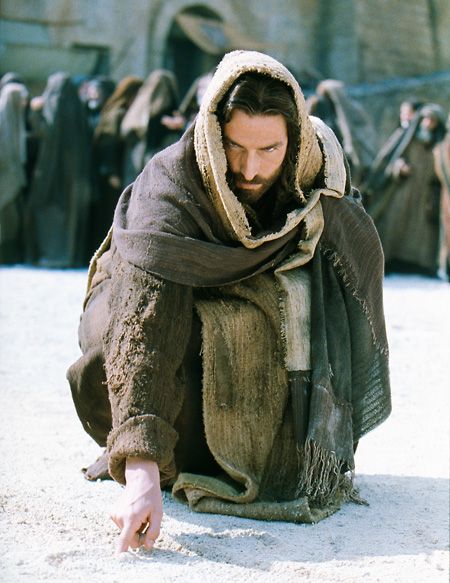





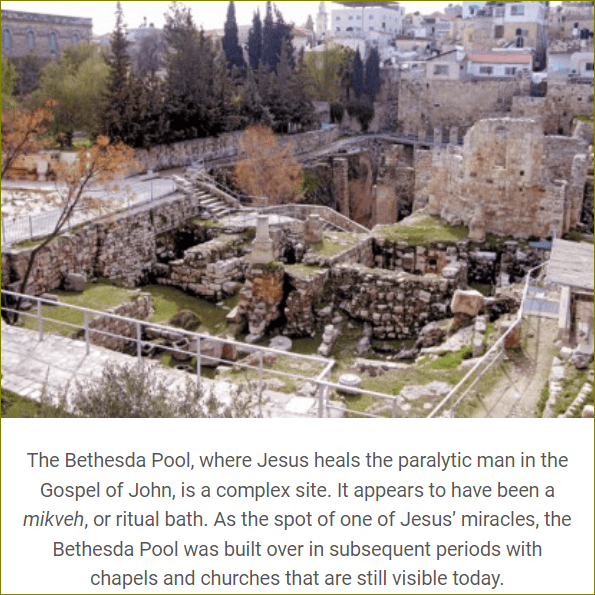

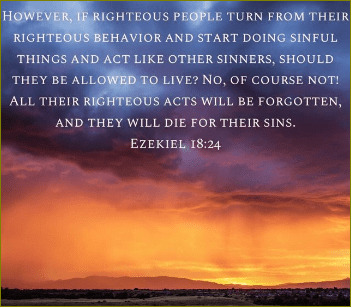






 Considering the Bible