The prophecy of the Lord Jesus for our consideration and edification, written centuries prior to His earthly existence is
Prophecy #290
Description
The Messiah would be both God and Man
Old Testament Prophecy
Jeremiah 23:5-6
“Behold, the days are coming, declares the Lord, when I will raise up for David a righteous Branch, and he shall reign as king and deal wisely, and shall execute justice and righteousness in the land. In his days Judah will be saved, and Israel will dwell securely. And this is the name by which he will be called: ‘The Lord is our righteousness.’
New Testament Fulfillment
John 13:13
You call me Teacher and Lord, and you are right, for so I am.
1 Tim 3:16
Who is to condemn? Christ Jesus is the one who died–more than that, who was raised–who is at the right hand of God, who indeed is interceding for us.
If you are just joining this blog, or are a first time visitor, welcome to Considering the Bible. We would like to offer a document that provides over 350 prophecies of the Messiah found in the Old Testament for your consideration.
I make no claim to be able to comment on every one of these amazing prophecies in the future, but will occasionally bring one to the readers attention for their edification.
Hopefully you will follow “Considering the Bible” and begin an interaction with us
After my series on the parables, I found I was drawn to look into the miracles of Jesus in the Gospels. I have never studies the mighty works of Jesus as a focused effort before and am looking forward to finding nuggets of truth that we can be encouraged by.
I have provided a general introduction, with an opportunity to download two files for your reference in my initial post Signs and Mighty Works of Jesus – Introduction. I found that the format I used for the parable posts were useful to keep me on track, and will continue to use them for this series, with some minor tweaks. With that said, let’s take a look at
Jesus Provides the Temple Tax
Matthew 17:24-27
When they came to Capernaum, the collectors of the two-drachma tax went up to Peter and said, “Does your teacher not pay the tax?” He said, “Yes.” And when he came into the house, Jesus spoke to him first, saying, “What do you think, Simon? From whom do kings of the earth take toll or tax? From their sons or from others?” And when he said, “From others,” Jesus said to him, “Then the sons are free. However, not to give offense to them, go to the sea and cast a hook and take the first fish that comes up, and when you open its mouth you will find a shekel. Take that and give it to them for me and for yourself.”
General Observations
Matthew the tax collector tells us of the temple tax teaching. No other telling is found in the New Testament, and I find that Matthew telling us this occurrence in the life of the Messiah provides us a picture of the freedoms the Lord allows in each of our travels with Him. He provides freedom to address those things that we may be inclined to, but with the added impact of the kingdom influence.
Did you catch the fact that the Lord asked Peter of his thoughts? He allowed Peters personal experience with tax collectors to become part of the teaching. This is a recurring theme in the Lord’s ministry, for He often asked others questions to communicate truth. He drew folks into His teaching through getting them actively involved in the discussion.
I also love Peter’s response, for he was always protecting the ministry and told the collectors that the Master paid the tax. Obviously He had not paid the tax, or there would be no miracle to discuss here! But Peter was a reactionary type of guy, reacting to issues that came up, looking to protect his friend. Maybe running a bit on fear, or simply seeking to find the quickest resolution to a problem. I can identify with Peter!
Questions to Consider
Who were the audience?
Seems to be primarily a personal discussion between Peter and Jesus. The disciples and Jesus were present for the original question from the tax collectors, but Jesus pulls Peter aside to do some personal counselling, some personal enlightening.
Since the Lord instructed Peter to go “cast a hook”, this was not a team effort of fishing with nets that he was typically accustomed to. This seemed to be a lone effort on Peter’s part, and the audience for witnessing this miracle most likely was Peter himself.
First off, this miracle highlights the identification of those who follow the Lord. Followers are sons of the kingdom. Jesus used a current structure of taxation to highlight the freedom believers have specifically in relation to “temple” tax. Followers need to pay it! This might easily transform into an exhortation to commit to a consistent faithful giving to a local church, but I do no think the Lord had this in mind. I think the issue was much bigger, much more impactful. For Peter was to pay the temple tax for a specific reason, and it had nothing to do with supplying the needs of professional religious people.
The reason? Yes – that is the rub in this miracle. Peter said He paid it, and the Lord used this interaction with the temple tax cops for a time of clarification for Peter.
Pay it. But for the right reason. What is the correct motivation?
Provide no offense!
What was the message for the original audience?
Provide no offense. Do not place a tripping hazard in front of anyone. In the old KJV, this word was translated as “stumbling block”.
I can imagine the Lord’s message to Peter –
Look Peter, these temple folk are already tripping over My being the Messiah. Let us not add unimportant tripping hazards to these folks in order make a point.
One additional topic that is important to recognize is that Jesus, when speaking of kingdoms, claimed His kingdom, the Kingdom of God, would be the kingdom that received tolls or taxes from other nations. Let us not make this teaching walk on all four legs and claim the kingdom of God is to receive financial benefit from the nations surrounding it, for that is foolishness.
In my opinion, the point is that Jesus is defining the Kingdom as the dominant kingdom, the most powerful kingdom, the kingdom that is over all other kingdoms! And the Kingdom of God is an upside down kingdom, where leaders serve and King’s suffer.
What is the message for us today?
Is there a “temple” tax in your life? Are you free of the legislative burden of providing fees to a “temple”? I say legislative, in order to highlight, in my opinion, Jesus’ point. The end result in paying this temple tax was the same, but the route to the end is definitely not per the temples efforts.
Let me try to explain.
The temple received the two drachma tax from Peter, but Jesus highlights the reason for providing! The sons of the kingdom are free from the legislative responsibility of paying this tax, since the sons of the kingdom are free of this responsibility. They are free of the religious law of paying the tax, but for the sake of love, for the sake on not causing offence, the tax was to be paid!
Offence to those within the temple was abundant in the person of Christ. All those in the temple, when interacting with Jesus, continually and consistently found offence in the person of Jesus. This was unavoidable for they had committed to a life of religion, and Jesus definitely upends the religious life!
Don’t be committed to a religious life. Be a Christian. Follow Jesus. For He is good, all the time!
As an aside, I published a series called Taxes & Churches a few years ago on this general topic that may interest those who have recently begun following this blog.
Thanks again for coming to visit. I hope you found something of interest in this post and would appreciate a comment, to begin a discussion. If you know someone this blog may bless (or challenge), send them a link, so they may join us in our discussion
The prophecy of the Lord Jesus for our consideration and edification, written centuries prior to His earthly existence is
Prophecy #289
Description
Descendant of David
Old Testament Prophecy
Jeremiah 23:5-6
“Behold, the days are coming, declares the Lord, when I will raise up for David a righteous Branch, and he shall reign as king and deal wisely, and shall execute justice and righteousness in the land. In his days Judah will be saved, and Israel will dwell securely. And this is the name by which he will be called: ‘The Lord is our righteousness.’
New Testament Fulfillment
Luke 3:23-31
Jesus, when he began his ministry, was about thirty years of age, being the son (as was supposed) of Joseph, the son of Heli,
the son of Matthat, the son of Levi, the son of Melchi, the son of Jannai, the son of Joseph,
the son of Mattathias, the son of Amos, the son of Nahum, the son of Esli, the son of Naggai,
the son of Maath, the son of Mattathias, the son of Semein, the son of Josech, the son of Joda,
the son of Joanan, the son of Rhesa, the son of Zerubbabel, the son of Shealtiel, the son of Neri,
the son of Melchi, the son of Addi, the son of Cosam, the son of Elmadam, the son of Er,
the son of Joshua, the son of Eliezer, the son of Jorim, the son of Matthat, the son of Levi,
the son of Simeon, the son of Judah, the son of Joseph, the son of Jonam, the son of Eliakim,
the son of Melea, the son of Menna, the son of Mattatha, the son of Nathan, the son of David,
If you are just joining this blog, or are a first time visitor, welcome to Considering the Bible. We would like to offer a document that provides over 350 prophecies of the Messiah found in the Old Testament for your consideration.
I make no claim to be able to comment on every one of these amazing prophecies in the future, but will occasionally bring one to the readers attention for their edification.
Hopefully you will follow “Considering the Bible” and begin an interaction with us
For this series in Philippians, I am going to limit each post to one verse, and hopefully produce a short, succinct read for my friends who follow.
1:30 engaged in the same conflict that you saw I had and now hear that I still have.
Fellowship. A sharing of experience. Paul described his arena of conflict as the same as the Philippians.
Let me explain.
The word conflict is associated with the Greek word for a place of assembly, or a place of contest. This is enlightening, for we, as believers must recognize that we are all on display as we seek to follow Him and battle against those who are our opponents, and more importantly, inlight of the context of this passage, to be unified in our struggle as a body of believers, to be worthy of the gospel of Christ (Phil 1:27)
How often has the contest went sour, when we exercise our rights in order to get our way, simply for prides sake. I may have told the story previously, but it is a clear example of lack of unity in my mind.
One of the first churches I was honored to attend, had a business meeting to discuss the new roofing they needed to have installed. By the end of the meeting, no decision had been made, people were at odds with one another, things were said out of anger or frustration and a gossip mill started.
The color of shingles! This is so insignificant, and yet the church communicated to many, at least to me as a young believer, that unity was not exercised in the body of Christ. Now don’t get me wrong, this church was uniform in their doctrinal beliefs, for sure! But to what gain is that if a stranger comes in and sees animosity, jealousy, self will and gossip? No joy, no unity, no single mind (attitude) of unity!
In that instance, I was saddened to see no fellowship, or sharing of a conflict being experienced by the body.
A few years later, after we moved away, we found that the church had to close it’s doors, and the land is now the extended parking lot of a gas and service repair station. The roof that was so important became a pile of trash for the construction crew to clean up.
So sad. Lets not be petty, but caring for others, giving up our desires for the sake of Christ and his children.
My wife and I are reading through the Psalms in our evening reading and occasionally a nugget of the Psalms jumps out of the page. Don’t you love it when, after years of reading the “Old Book” passages become alive, reinforcing old teachings or simply warming your heart.
This is the book of Psalms, and it is rich.
I pray I can communicate a portion of the blessing we receive from this wonderful book.
Psa. 48:0 ¶ A Song. A Psalm of the Sons of Korah. Psa. 48:1 ¶ Great is the LORD and greatly to be praised in the city of our God! His holy mountain, Psa. 48:2 beautiful in elevation, is the joy of all the earth, Mount Zion, in the far north, the city of the great King. Psa. 48:3 Within her citadels God has made himself known as a fortress.
Psalm 48, by many accounts, continues a response from the people of God concerning the deliverance that was described in Psalm 46. Personally, I lean to the deliverance that is referred to during the time of Sennacherib’s attempted invasion of Israel (under Hezekiah), but some consider the attack from the kings of Ammon and Moab (2 Chronicles 20:1, 10) to be the historical deliverance of Israel (under Jehoshaphat) referred to in this psalm.
I will not enter any argument for either, except to say that Israel experienced multiple time of deliverance, multiple times where the Great King protected Hs people.
He is the subject of this Psalm, though it’s focus appears to be the City of the Great King, that city would be nothing if it weren’t for the presence of the Great King. As mentioned above, the City had experienced deliverance multiple times, seen great provisions and protection, found a steady help and constant refuge in the city, all due to the presence of the King.
Did the inhabitants feel His presence every day, every minute? Did they sense this protection, this Great King personally overseeing and guarding His people. Obviously not, since both attacks from the enemies caused the population to enter into stress mode, finding relief only after their deliverance. After being delivered in such a way as to be obviously from Him.
The psalmist states it beautifully – He made Himself known.
He was present in the City, overseeing that which was required, and quietly expressing His care for those who were, at least sometimes unaware of His personal intervention, His personal oversight.
Not only is He watching, this psalm speaks of His presence being a refuge for the people, a fortress. The term for fortress in this psalm is also found in Psalm 46.
Psalm 46:7 The LORD of hosts is with us; the God of Jacob is our fortress. Selah Psalm 46:11 The LORD of hosts is with us; the God of Jacob is our fortress. Selah
The refrain in Psalm 46 speaks of the results of His being made known. In Psalm 48, He is made known by the response of the enemy, by the historical results of the defense provided to the City that was otherworldly. He manifested His presence in the deliverance of His people against an attack.
He was there at all times. The attack brought about the realization of His presence.
As we go through our day, we spend much of it “taking care of business”, occupied with activities we need to concentrate on, tasks that need our focus and concentration. Sometimes this continual stress of meeting deadlines, of satisfying expectations, of providing a service to others, of being a blessing to those in need (and we are all in need!) becomes all we experience. All of this activity, whether physical, mental, emotional or spiritual, becomes the only thing we live in, and yet He is in the midst of it.
Surely He does not reveal Himself to our senses 24/7, for He is not our personal servant, waiting only to satisfy our wants and wishes, to remove our discomforts and concerns. At times He may seem distant, He may seem far off and not actively working in our lives, but He is our fortress. He is our refuge.
We need only to listen for His voice, wait on Him for guidance, ask for His direction and will. At the point when we reach out, whether there be enemies at the door, or we are just consumed in a daily grind, He will reveal Himself. He will reveal Himself in a quiet still voice, a quiet presence that calms the heart, assuring those who seek Him that He is there.
The prophecy of the Lord Jesus for our consideration and edification, written centuries prior to His earthly existence is
Prophecy #288
Description
Proclaim a period of grace
Old Testament Prophecy
Isaiah 61:1-2a
to proclaim the year of the Lord’s favor,
New Testament Fulfillment
Gal 4:4-5
But when the fullness of time had come, God sent forth his Son, born of woman, born under the law,
to redeem those who were under the law, so that we might receive adoption as sons.
If you are just joining this blog, or are a first time visitor, welcome to Considering the Bible. We would like to offer a document that provides over 350 prophecies of the Messiah found in the Old Testament for your consideration.
I make no claim to be able to comment on every one of these amazing prophecies in the future, but will occasionally bring one to the readers attention for their edification.
Hopefully you will follow “Considering the Bible” and begin an interaction with us
Our last set of verses we will consider in the book of Jude.
Verse 12 is the original portion I was going to provide for the sake of our topic, but as I looked through the passage, I just couldn’t resist including the passage from verse 4 on.
So let’s take a few moments, and listen to Jude as if we were hanging out 2,000 years ago in a brothers home, getting ready to worship Him.
Jude 1:11 Woe to them! For they walked in the way of Cain and abandoned themselves for the sake of gain to Balaam’s error and perished in Korah’s rebellion. Jude 1:12 These are hidden reefs at your love feasts, as they feast with you without fear, shepherds feeding themselves; waterless clouds, swept along by winds; fruitless trees in late autumn, twice dead, uprooted; Jude wild waves of the sea, casting up the foam of their own shame; wandering stars, for whom the gloom of utter darkness has been reserved forever.
Jude brings forward three Old Testament characters to describe these ungodly people, along with the predominant characteristics associated with these three.
Cain
Walking in the way of Cain. Let us remember that Cain was the first natural born human on earth and the natural inclination of this firstborn was to bring a sacrifice of his own choice to the Lord. He was religious. He is the father of religion, and in that religion, the works of envy, hatred and jealousy erupt. We see this to be a consistent attribute of religion, even to the ministry of the Lord Himself.
The work of religion is to frustrate the grace of God, and as the religious Jews sought to crucify the Savior, they brought the very act that began with Cain to its natural end.
Religion not only kills, it is also deadly, for it deceives the religious adherent, and seeks to destroy truth to support it’s own lies.
Cain killed Abel freely, since there was no social restrictions at the time, and this allowed for the the very nature of the religious to be seen clearly. Nowadays, we cover it up with niceties, with pleasant sayings and polite nods, but given the right circumstances, religion erupts into all forms of hatred, envy, works of violence and jealousy.
These certain men that had crept into the body, whether they were believers at one time or not, have woe coming upon them. But the descriptions of these ungodly men continues.
Balaam
Abandoned themselves for the sake of gain. As many who may have followed my blog, you may recall that I have a distinct concern for the professional Christian. Many who are professional Christians have serious hearts seeking the God who delivered them, but the office of the professional Christian attracts many who care not for the Lord but only seek after the gain they may receive by speaking great swelling words.
Although this description again does not help us with our topic, it is instructive to understand Jude’s position for the sake of the health of the church. Those who abandon truth to seek gain are not our allies. They are certain men who are condemned to perish.
Korah
Jude’s last character is Korah, the one who led a rebellion against Moses, God’s appointed leader.
Who do you identify in your life as God’s leader? For we need to know who our leader is in order to take the correct side, that we may determine who is walking as Korah did in the camp.
But let us be clear. There is one leader that pleases God in each of our experiences, and He is the One who sacrificed Himself for our sake. Any person who seeks to take His place as an authority in a Christian’s life is following in the rebellion of Korah.
Each of these character’s Jude provides gives the believer, upon reflection, good direction as to those who may be of danger within a congregation. It is for the believer to reflect on these characteristics and to first of all, check our own condition before the Lord. These certain men above are warnings for the church, and we ignore them to our detriment. But within these descriptions, there does not seem to be any clear teaching regarding our topic of conditional security.
Until our next verse. And I will admit that my understanding of Jude’s phrasing in this verse lends itself to various interpretations, so I try not to go beyond the limits he allows with his statements.
Jude 1:12 These are hidden reefs at your love feasts, as they feast with you without fear, shepherds feeding themselves; waterless clouds, swept along by winds; fruitless trees in late autumn, twice dead, uprooted;
The phrase I will bring to your attention is “shepherds feeding themselves”. Why does this perk my ears up? I suppose those who attain to a status of shepherd would have shown life at one time in their witness. Now granted, I may be inserting my understanding into this phrase, but consider.
As a body starts to meet, opportunities to minister are various and abundant, and for a believer to exercise the gifts given to him or her, amongst a small, close knit group of believers, allows for a very personal examination of the believers way of life. Passion for the Lord, a commitment to others, a desire to see God’s will expanded in the area all signal to the life of God in a person. These who exercise this type of passion commonly “float” to the top in the body, and become shepherds of others. And in doing so, open themselves to temptations that may be destructive, as we saw above.
Paul took up this subject when he warned Timothy that young men should not to take on leadership roles too early, for fear the converts fall into condemnation of the devil. (We will address this verse under the Conditional Security topic in a separate post!)
1 Timothy 3:6 He must not be a recent convert, or he may become puffed up with conceit and fall into the condemnation of the devil.
Although Jude does not directly address our current topic in every verse we have reviewed, many times he provides teaching that does not refute the teaching. During my time in the OSAS camp, I found that this passage was great for condemning every teacher that I didn’t like, or that didn’t carry water for my denomination, but I fear there is more to this passage than a simple us / them mentality. Jude is warning us of serious dangers that are lurking in the camp, and we need to be diligent in assessing our own hearts, judging our own actions, and being open to the leading of the Spirit in relation to the attitude, lifestyle and submission of those who seek to lead us in the way of God.
The Lord taught us of these men, and I will finish with His words.
John 10:10 The thief comes only to steal and kill and destroy. I came that they may have life and have it abundantly.
The thieves are abundant! God is good! The difference makes all the difference!
Thanks again for coming to visit. I hope you found something of interest in this post and would appreciate a comment, to begin a discussion. If you would like to receive daily posts from Considering the Bible, click on the “Follow” link below
The prophecy of the Lord Jesus for our consideration and edification, written centuries prior to His earthly existence is
Prophecy #287
Description
Provide freedom from the bondage of sin
Old Testament Prophecy
Isaiah 61:1c
to proclaim liberty to the captives, and the opening of the prison to those who are bound;
New Testament Fulfillment
John 8:31-36
So Jesus said to the Jews who had believed him, “If you abide in my word, you are truly my disciples,
and you will know the truth, and the truth will set you free.”
They answered him, “We are offspring of Abraham and have never been enslaved to anyone. How is it that you say, ‘You will become free’?”
Jesus answered them, “Truly, truly, I say to you, everyone who practices sin is a slave to sin.
The slave does not remain in the house forever; the son remains forever.
So if the Son sets you free, you will be free indeed.
If you are just joining this blog, or are a first time visitor, welcome to Considering the Bible. We would like to offer a document that provides over 350 prophecies of the Messiah found in the Old Testament for your consideration.
I make no claim to be able to comment on every one of these amazing prophecies in the future, but will occasionally bring one to the readers attention for their edification.
Hopefully you will follow “Considering the Bible” and begin an interaction with us
After my series on the parables, I found I was drawn to look into the miracles of Jesus in the Gospels. I have never studies the mighty works of Jesus as a focused effort before and am looking forward to finding nuggets of truth that we can be encouraged by.
I have provided a general introduction, with an opportunity to download two files for your reference in my initial post Signs and Mighty Works of Jesus – Introduction. I found that the format I used for the parable posts were useful to keep me on track, and will continue to use them for this series, with some minor tweaks. With that said, let’s take a look at
Jesus Heals a Boy with a Demon
Matthew 17:14-21
And when they came to the crowd, a man came up to him and, kneeling before him, said, “Lord, have mercy on my son, for he has seizures and he suffers terribly. For often he falls into the fire, and often into the water. And I brought him to your disciples, and they could not heal him.” And Jesus answered, “O faithless and twisted generation, how long am I to be with you? How long am I to bear with you? Bring him here to me.” And Jesus rebuked the demon, and it came out of him, and the boy was healed instantly. Then the disciples came to Jesus privately and said, “Why could we not cast it out?” He said to them, “Because of your little faith. For truly, I say to you, if you have faith like a grain of mustard seed, you will say to this mountain, ‘Move from here to there,’ and it will move, and nothing will be impossible for you.”
Mark 9:14-29
And when they came to the disciples, they saw a great crowd around them, and scribes arguing with them. And immediately all the crowd, when they saw him, were greatly amazed and ran up to him and greeted him. And he asked them, “What are you arguing about with them?” And someone from the crowd answered him, “Teacher, I brought my son to you, for he has a spirit that makes him mute. And whenever it seizes him, it throws him down, and he foams and grinds his teeth and becomes rigid. So I asked your disciples to cast it out, and they were not able.” And he answered them, “O faithless generation, how long am I to be with you? How long am I to bear with you? Bring him to me.” And they brought the boy to him. And when the spirit saw him, immediately it convulsed the boy, and he fell on the ground and rolled about, foaming at the mouth. And Jesus asked his father, “How long has this been happening to him?” And he said, “From childhood. And it has often cast him into fire and into water, to destroy him. But if you can do anything, have compassion on us and help us.” And Jesus said to him, “‘If you can’! All things are possible for one who believes.” Immediately the father of the child cried out and said, “I believe; help my unbelief!” And when Jesus saw that a crowd came running together, he rebuked the unclean spirit, saying to it, “You mute and deaf spirit, I command you, come out of him and never enter him again.” And after crying out and convulsing him terribly, it came out, and the boy was like a corpse, so that most of them said, “He is dead.” But Jesus took him by the hand and lifted him up, and he arose. And when he had entered the house, his disciples asked him privately, “Why could we not cast it out?” And he said to them, “This kind cannot be driven out by anything but prayer.”
Luke 9:37-43
On the next day, when they had come down from the mountain, a great crowd met him. And behold, a man from the crowd cried out, “Teacher, I beg you to look at my son, for he is my only child. And behold, a spirit seizes him, and he suddenly cries out. It convulses him so that he foams at the mouth, and shatters him, and will hardly leave him. And I begged your disciples to cast it out, but they could not.” Jesus answered, “O faithless and twisted generation, how long am I to be with you and bear with you? Bring your son here.” While he was coming, the demon threw him to the ground and convulsed him. But Jesus rebuked the unclean spirit and healed the boy, and gave him back to his father. And all were astonished at the majesty of God. But while they were all marveling at everything he was doing, Jesus said to his disciples, “Let these words sink into your ears: The Son of Man is about to be delivered into the hands of men.”
General Observations
We have three very different tellings of this father’s plight and of this son’s suffering. And of the disciples failure.
This is one of those stories the disciples inserted into the Word that strictly defines the failure of the disciples, and lifts Christ up. Of course each of these miracles and interactions with the Messiah show evidence of His superiority, and of their insufficiency, but this one seems to highlight the disciples inabilities.
We should be used to this by now, if you have been tracking with me in this series. He is able. We are not. And in this story, three apostles write of the disciples failure. And the the disciples failure becomes public knowledge for the crowd (and all who read this passage ) from both the father and the Lord to a crowd.
Let me ask my reader about personal failure before we go much further.
How do you handle failure? Ignore it? Run from it? Promise yourself you will never do it again? Ok – seems natural. How about personal failure that is published, for all to know? Blush and avoid it? Get angry and fight against it? But the disciples did not simply experience published failure. No no no. They experienced public failure published by a friend, even their Rabbi? How would you handle a friend publishing to all around of your personal failure? Feel betrayed? Conjure up ways to get back at him or her?
Questions to Consider
Who were the audience?
The audience consisted of a “great crowd”, including a father and son, the disciples, a number of scribes arguing with the disciples (presumably) and the Lord Himself. He saw the arguing and initially asked of the topic, but a man who had a suffering son took precedence. Suffering took precedence over theological hair splitting in this man’s thoughts. But of course, if a loved one is suffering, the emphasis is on relief of the pain. And it appears that Jesus is of the same opinion in this instance. Interesting thought!
Or could the response of the man be an answer to the Messiahs question of the topic of the argument? By that I mean, were the disciples and scribes arguing over the failure of the disciples to heal the son ?
If so, the disciples may have been seeking to defend their failure in some way, to justify their lack of ability. Of course this is mere conjecture, but when confronted with failure that I need to own up to, especially in a crowd, my go-to place is to defend my personal honor, integrity and goodness. (A bit of sarcasm there but you get my point!). Could the disciples be arguing in order to defend their inability to heal the son, all in an effort to protect the ministry? (Again a bit of sarcasm!)
All through the three years, Jesus brought circumstances to challenge the disciples, and many, many times they failed. Yet they continued to follow Him. They stuck with Him for the long run, even when they had to experience failure, shame, disappointment, pain, embarrassment, loss of reputation. Need I go on? But that is faith.
Did the Lord perform the work of healing this boy to show He had greater abilities than that of the disciples? Let us not consider that foolishness, for He does not have a chip on His shoulder, always needing to prove His person.
Did the Lord heal this boy simply out of compassion? The text does not refer to His compassion being exercised, even though the father appealed to the Lord’s compassion.
The passage speaks of the disciples lack of faith. The passage also speaks of the father’s lack of faith. Faith becomes a central topic in the midst of failure. Interesting!
What was the message for the original audience?
The message out of this miracle is two fold.
The Father
But if you can do anything, have compassion on us and help us.
Two things occur to me in this phrase that I ask you to consider.
Faith that demands a certain result cannot be the problem here. That is, the father wasn’t rebuked by the Lord for not believing that He could specifically heal the son. It was doubting that the Messiah could perform any miracle.
Two different outcomes that I sometimes get mixed up. Some consider faith to be an act that determines their own goals, that will see their will be done, and it is a matter of convincing the Master to do our bidding. This is not the faith I read of in the Bible.
Of course, the Master does consider our pleas, our prayers, and in His mercy. He provides His working in our lives, even providing some of our desires, in line with His will. But that is a huge topic, that I do not want to enter into here, since my understanding of that topic is woefully deficient!
The faith the Master focused on for the father was His identity, His personhood, His authority, and not on a specific “run of the mill” exorcism. I say “run of the mill” since He had proven over and over again that this situation was NOT a problem for Him. He had provided evidence, and the evidence spoke volumes!
The faith spoken of to the father has to answer the question – “Who is Jesus?”
The Disciples
Why could we not cast it out?
The father may have never seen the Master before, and only heard of His fame. We do not know of his interaction with Jesus prior to this encounter.
Not so for the disciples. They had been with Him for an extended period of time, had seen miracles and heard the teaching, listened to His parables and had been sent out with authority prior to this failure. They had preached the kingdom, healed the sick, fed thousands, seen the dead rise, walked on water, saw blind men receive sight.
And they asked the question that was the core of the argument. Why couldn’t they cast it out?
Jesus answer was short and pointed.
This kind cannot be driven out by anything but prayer
Notice that Jesus did not pray to heal this boy. The text does not speak of any prayer being given at the time. Let’s read the passage the way we interpret it for our own application.
And when Jesus saw that a crowd came running together, he spent 2 hours in prayer and then he rebuked the unclean spirit, saying to it, “You mute and deaf spirit, I command you, come out of him and never enter him again.
It’s as if He healed the boy quickly, even unexpectantly, due to the crowd coming together. And yet His message is that this kind cannot be driven out by anything but prayer. So what gives?
This passage speaks to the Master being always in a state of prayer. He was constantly in contact with the Father in heaven. He knew the Father’s will regarding this father and son, exercised the authority the Father gave Him to heal in this instance and used the healing to further the kingdom, not only with those who witnessed the miracle in the crowd, and the father and son, but more pointedly, the disciples who had to face their failure.
What is the message for us today?
In our application portion of this post, I would like to discuss how failure actually becomes the backdoor to succes in the Lord’s plans.
Failure implies we are going beyond the comfort zone we are used to, that we are not in familiar territory and that our efforts may not be in line with truth. (Of course failure may imply simply an attitude of laziness, of not trying even in those things we are have practiced and understand. This is not the failure I speak of here!)
Failure implies that a change is required. It is the fool who continues to bang his head against the wall in order to heal a headache.
Failure tells us that we are not living according to truth in the area we are failing in.
Failure does not always define a need to go beyond our current state of existence. We need to understand that we have limitations, and though we are to continue to grow, which includes changing, their will come times of failure that simply indicate a limitation in our experience. The proverbial hitting of the wall! Wisdom from the Lord is definitely required here to live in peace within our souls.
So let me ask you. How do you see failure in your life? An enemy? A nuisance? A megaphone in your head, informing of a need, providing information or wisdom, and giving direction for life?
Failure can be the back door to success, but let us be very clear. Success in the Christian life is not mimicking the worlds teaching of claiming power from a deity to perform a certain act that satisfies your current desires (or even needs).
Success in the Christian life is conforming to the character of the Messiah, who submitted to the Father’s will. He described Himself as
Matt. 11:29 … gentle and lowly in heart
This is a great challenge for the believer in this day and age, for we often seek to get things done for God, we seek to provide guidance and direction to Him for the sake of the church, or our personal lives. I struggle of course with this challenge, since I do not want to give up some of my power over the direction of my life.
And yet He claims to be Lord. And with that, as we accept His process, His methods, and find our own methods to be lacking, we will experience failure. For we have much transformation to experience, and our methods of change needs to be according to his plans, not our methods.
But in all this upheaval and pain, we can rest in the fact that He is good, all the time.
Thanks again for coming to visit. I hope you found something of interest in this post and would appreciate a comment, to begin a discussion. If you know someone this blog may bless (or challenge), send them a link, so they may join us in our discussion
The prophecy of the Lord Jesus for our consideration and edification, written centuries prior to His earthly existence is
Prophecy #286
Description
The Messiah would preach the good news
Old Testament Prophecy
Isaiah 61:1b
to bring good news to the poor; he has sent me to bind up the brokenhearted,
New Testament Fulfillment
Luke 4:16-21
And he came to Nazareth, where he had been brought up. And as was his custom, he went to the synagogue on the Sabbath day, and he stood up to read.
And the scroll of the prophet Isaiah was given to him. He unrolled the scroll and found the place where it was written,
“The Spirit of the Lord is upon me, because he has anointed me to proclaim good news to the poor. He has sent me to proclaim liberty to the captives and recovering of sight to the blind, to set at liberty those who are oppressed,
to proclaim the year of the Lord’s favor.”
And he rolled up the scroll and gave it back to the attendant and sat down. And the eyes of all in the synagogue were fixed on him.
And he began to say to them, “Today this Scripture has been fulfilled in your hearing.”
If you are just joining this blog, or are a first time visitor, welcome to Considering the Bible. We would like to offer a document that provides over 350 prophecies of the Messiah found in the Old Testament for your consideration.
I make no claim to be able to comment on every one of these amazing prophecies in the future, but will occasionally bring one to the readers attention for their edification.
Hopefully you will follow “Considering the Bible” and begin an interaction with us
For this series in Philippians, I am going to limit each post to one verse, and hopefully produce a short, succinct read for my friends who follow.
1:29 For it has been granted to you that for the sake of Christ you should not only believe in him but also suffer for his sake,
For the sake of Christ, Paul speaks of two gifts for the believer.
Gifts? Yes – gifts, for that is what is implied when he states “it has been granted”.
Believers have been granted faith and suffering. But before my Calvinist brothers jump on this verse, as I used to, it is important to understand that “grant” may also be understood as allowing or consenting to the fulfillment of something requested.
With belief, this understanding seems to me a basic truth. I sought the Lords deliverance through faith and he provided the request. Asking for faith is not the same as have faith thrust upon a non-believer.
Regarding the suffering aspect, we sometimes consider suffering to be that which leads to or is completed by martyrdom, and well it should, for that may be the end result. But please do not limit suffering to that which leads only to death.
Suffering in a believers life entails many aspects, ranging from loss of friends to loss of employment, loss of loved ones, persecution, and various other trials that come upon a believer due to his allegiance to the Lord.
Suffering may be granted to the believer for many reasons in the will of God. The number one reason I can think of, and that many reading may default to is simply a maturing process for the believer. It has been said that the whisper of God in the face of suffering becomes very recognizable, and is such that the believer will be willing to hear and obey.
The Lord desires a believer to hear at all times, but we know our frailty and understand the need for the Lord to get our attention through various means. In our married life, my favorite and I have went through various suffering and come out of it with a deeper resolve to follow the Messiah, a thankful heart (for the Lord’s care in the midst of loss), and a confidence that future trials will include His mercies and grace. This is the process of growing, of not simply knowing some facts about God, but knowing God, and His mercies, His grace, the patience and perspective only He can provide.
If you are going through any suffering at this time, look to the Lord, especially the cross of our Master to find encouragement, comfort and strength to endure the trial. He is good.
Our youngest daughter met a fella a while back. Quite a while back, and they became an item. A couple with a future, a commitment to one another. He is a mighty fine fella, a hard working man that treats my little girl with care and love. We are so happy for their care for one another.
Recently he was informed that his cancer had returned. This time the cancer has become quite aggressive and he is beginning his fourth battle against this enemy in as little as 2 years. He is currently in MD Anderson in Houston Texas, undergoing an eight week chemotherapy and stem cell replacement regimen that when described to me, shocked my senses.
His is a dire plight, much worse than I had understood earlier, and though the intent of this blog is to “Consider the Bible”, I would ask of you to consider Sean.
If the Lord calls you to prayer for Sean, consider his battle ahead. Not only will he have to endure physical pain, but emotional and spiritual battles that some of my readers may also have faced. Some may not. But all can pray for him.
His family also have many fears to face, and need strength to support Sean in this time of need.
Finally, my little girl Sarah is in need of your prayers, for she is also entering a very difficult time, and desires to support and help in the struggle. She needs strength and wisdom to care for Sean, a compassion that is only found in the Lord.
If you could present Sean’s life before the Lord in your prayers, we would count it a great blessing.
My wife and I are reading through the Psalms in our evening reading and occasionally a nugget of the Psalms jumps out of the page. Don’t you love it when, after years of reading the “Old Book” passages become alive, reinforcing old teachings or simply warming your heart.
This is the book of Psalms, and it is rich.
I pray I can communicate a portion of the blessing we receive from this wonderful book. Let’s take a few seconds to read this psalm, before we enter into our considerations.
1 To the choirmaster. A Psalm of the Sons of Korah. Clap your hands, all peoples! Shout to God with loud songs of joy! 2 For the LORD, the Most High, is to be feared, a great king over all the earth. 3 He subdued peoples under us, and nations under our feet. 4 He chose our heritage for us, the pride of Jacob whom he loves. Selah 5 God has gone up with a shout, the LORD with the sound of a trumpet. 6 Sing praises to God, sing praises! Sing praises to our King, sing praises! 7 For God is the King of all the earth; sing praises with a psalm! 8 God reigns over the nations; God sits on his holy throne. 9 The princes of the peoples gather as the people of the God of Abraham. For the shields of the earth belong to God; he is highly exalted!
In our last post we spoke of how the Lord is over all the peoples and how the psalmist opens his eyes to the truth that God is not restricted to the national boundaries of Israel. This thinking is “out of the box” thinking for an Old Testament saint, for it was common to consider the nation of Israel as the favored nation, and that somehow, this restricted God to their cause.
This became a trap for the nation, as it does for our modern church, to the point we actually attribute God as being on our political side, as One who would defend our national interests no matter what, and that would protect our way of living, since He loves us (more than others?). You see, if we read the Word carefully, we find out that He is not on our side politically, nationally, or religiously. We are to be on His side! There is quite a difference!
Also, it is very easy to consider Him to be our servant for our interests! He has stooped down to our place! He has washed our feet! He has suffered for our sake! There is no denying the tremendous humbling the Savior has entered into to connect with His people, to provide life and love to us, to give us the Spirit for guidance, comfort and conviction.
Yet He is the King of Kings, and His position is described beautifully in our next portion of Psalm 47.
5. God has gone up with a shout, the LORD with the sound of a trumpet. 6 Sing praises to God, sing praises! Sing praises to our King, sing praises! 7 For God is the King of all the earth; sing praises with a psalm! 8 God reigns over the nations; God sits on his holy throne. 9 The princes of the peoples gather as the people of the God of Abraham. For the shields of the earth belong to God; he is highly exalted!
Our first phrase catches my attention.
God has gone up with a shout
The psalmist informs us that upon the victory over the Israeli enemy, God ascended with a shout. The term “shout” may be understood as a battle cry, or a trumpet blast. This is a repetition of the next phrase in our psalm, and we must remember that Hebrew poetry consists of synonymous thoughts, unlike our modern way of writing poetry, in which we merely rhyme the last word. The Hebrews “rhymed” thoughts. In other words, they often provided a thought, and then said it in another way. In this instance, the Psalmist rephrased his thoughts by writing…
the Lord with the sound of a trumpet.
I am so tempted to link this with the New Testament, where the apostle speaks of the trumpet blast as Lord descends at the second coming.
1 Thessalonians 4:16 For the Lord himself will descend from heaven with a cry of command, with the voice of an archangel, and with the sound of the trumpet of God.
I say tempted, since my temptation is based on associating of the idea of a trumpet blowing in both passages. I have often ignored context and favored word links like this to create a connection in Bible passages, but now see that as unwise.
The reference to God ascending should make us consider this to be an event that is not associated with the second coming. The ascension spoken of here, directly by the psalmist, is of the Lord returning to His throne after He brought devastation on the Assyrians, rescuing His people, and displaying His authority for all the nations to see.
This reference of ascension speaks of His returning to His throne, and as the psalmist describes this action, the fallout is the retelling of the fact that He is the King over all the earth, that He reigns over all the nations. Again, the psalmist drives home the point that our God is not some local deity that is restricted to a lone culture, a geopolitical region or some people group.
As believers in the Messiah, we understand that the Old Testament provides shadows of greater truths revealed in the bright shining light of the Messiah. This passage explodes with a truth that is the capstone of the Messiah’s victory, for in the telling of this victory over the Assyrians, the psalmist foreshadowed the victory Christ attained in His resurrection, and His subsequent ascension to the throne. He ascended into heaven with a shout, a trumpet blast, indicating the war for the souls of all men had been initiated through His ascension, declaring of His ruling over all.
He is over all, and upon this truth Jesus speaks to us, as the risen King over all, the exalted One who is ruling over all nations.
Matthew 28:18
And Jesus came and said to them, “All authority in heaven and on earth has been given to me.
In summary, there is one fitting response to this truth.
Sing praises to God, sing praises! Sing praises to our King, sing praises! For God is the King of all the earth; sing praises with a psalm!
The prophecy of the Lord Jesus for our consideration and edification, written centuries prior to His earthly existence is
Prophecy #285
Description
The Spirit of God upon him
Old Testament Prophecy
Isaiah 61:1a
The Spirit of the Lord God is upon me, because the Lord has anointed me
New Testament Fulfillment
Matt 3:16-17
And when Jesus was baptized, immediately he went up from the water, and behold, the heavens were opened to him, and he saw the Spirit of God descending like a dove and coming to rest on him;
and behold, a voice from heaven said, “This is my beloved Son, with whom I am well pleased.”
If you are just joining this blog, or are a first time visitor, welcome to Considering the Bible. We would like to offer a document that provides over 350 prophecies of the Messiah found in the Old Testament for your consideration.
I make no claim to be able to comment on every one of these amazing prophecies in the future, but will occasionally bring one to the readers attention for their edification.
Hopefully you will follow “Considering the Bible” and begin an interaction with us
Half way through our set of verses in the epistle of Jude and so much to consider. I have not spent a concentrated time in the book of Jude for many years and find his writing to be challenging.
Good stuff to review and consider! Let us continue with the next three verses.
Jude 1:8 Yet in like manner these people also, relying on their dreams, defile the flesh, reject authority, and blaspheme the glorious ones. Jude 1:9 But when the archangel Michael, contending with the devil, was disputing about the body of Moses, he did not presume to pronounce a blasphemous judgment, but said, “The Lord rebuke you.” Jude 1:10 But these people blaspheme all that they do not understand, and they are destroyed by all that they, like unreasoning animals, understand instinctively.
Jude again refers back to the ungodly people in verse 4, comparing the cities of Sodom with them, speaking of their defilement of flesh. Is he referring to the sexual immorality those of Sodom entered into?
Note that the basis of this defilement is their reliance on some dreams they were experiencing, which brings up a salient point. Is it wise to depend on subjective dreams or visions in finding the will of God? This verse definitely does not paint that thinking in a good light, and when we consider the objective Word that has be provided for our reference, along with the Spirit of God to give aid in understanding the message, dreams seem to be a very poor choice to rely upon.
We have the Lord we can rely on, trust in and believe, and seeking dreams for guidance is not wise. Excuse the sidebar, but for believers to abandon the Word and prayer for the sake of dreams is very much like turning my back on a flowing fountain to find relief in a broken cistern. But that is our inclination, and as such we need to be rescued from.
But back to our topic of conditional security.
This set of verse speaks of two parties. Micheal, one of the highest angels in God’s creation, did not abandon his position, but rebuked the devil correctly through the Lord, not assuming any authority of his own. Micheal did not reject authority!
This ungodly people described by Jude have no respect, no understanding of the position they consider themselves in. Jude speaks of these ungodly people as having no understanding. It seems obvious that this particular portion of Jude does not directly address our current topic, other than stating that if the ungodly were believers at one time, they have fallen far, and are in danger of destruction by their choice.
Our last portion of the passage we are dealing with will find ourselves reading Jude’s description of ungodly people. Some of his terms may shed some light on this discussion.
Hope you can join me as we finish this portion next time!
Thanks again for coming to visit. I hope you found something of interest in this post and would appreciate a comment, to begin a discussion. If you would like to receive daily posts from Considering the Bible, click on the “Follow” link below
The prophecy of the Lord Jesus for our consideration and edification, written centuries prior to His earthly existence is
Prophecy #284
Description
He would show light to the Gentiles
Old Testament Prophecy
Isaiah 60:1-3
Arise, shine, for your light has come, and the glory of the Lord has risen upon you. For behold, darkness shall cover the earth, and thick darkness the peoples; but the Lord will arise upon you, and his glory will be seen upon you. And nations shall come to your light, and kings to the brightness of your rising
New Testament Fulfillment
Acts 26:23
that the Christ must suffer and that, by being the first to rise from the dead, he would proclaim light both to our people and to the Gentiles.”
If you are just joining this blog, or are a first time visitor, welcome to Considering the Bible. We would like to offer a document that provides over 350 prophecies of the Messiah found in the Old Testament for your consideration.
I make no claim to be able to comment on every one of these amazing prophecies in the future, but will occasionally bring one to the readers attention for their edification.
Hopefully you will follow “Considering the Bible” and begin an interaction with us
After my series on the parables, I found I was drawn to look into the miracles of Jesus in the Gospels. I have never studies the mighty works of Jesus as a focused effort before and am looking forward to finding nuggets of truth that we can be encouraged by.
I have provided a general introduction, with an opportunity to download two files for your reference in my initial post Signs and Mighty Works of Jesus – Introduction. I found that the format I used for the parable posts were useful to keep me on track, and will continue to use them for this series, with some minor tweaks. With that said, let’s take a look at
Jesus Heals a Man Born Blind
John 9:1-12
As he passed by, he saw a man blind from birth. And his disciples asked him, “Rabbi, who sinned, this man or his parents, that he was born blind?” Jesus answered, “It was not that this man sinned, or his parents, but that the works of God might be displayed in him. We must work the works of him who sent me while it is day; night is coming, when no one can work. As long as I am in the world, I am the light of the world.” Having said these things, he spit on the ground and made mud with the saliva. Then he anointed the man’s eyes with the mud and said to him, “Go, wash in the pool of Siloam” (which means Sent). So he went and washed and came back seeing. The neighbors and those who had seen him before as a beggar were saying, “Is this not the man who used to sit and beg?” Some said, “It is he.” Others said, “No, but he is like him.” He kept saying, “I am the man.” So they said to him, “Then how were your eyes opened?” He answered, “The man called Jesus made mud and anointed my eyes and said to me, ‘Go to Siloam and wash.’ So I went and washed and received my sight.” They said to him, “Where is he?” He said, “I do not know.”
General Observations
Jesus healed this man born blind through the application of spittle and earth, sending him away to a pool, and then melted into the crowd. Of course the mud did not perform the healing, for it was simply a vehicle the Lord chose to perform His mighty work.
The man born blind did not see his Healer when he received his sight. He was on his own, doing as he was told, finding the pool of Siloam and washing his face. In this act of obedience, we must consider this to be the blind man’s exhibition of faith in his healer’s commands. This is extraordinary, though the Messiah’s fame had certainly passed through the city, for the man born blind to believe, would push the envelope of Jesus power to an unheard of result.
No man born blind had ever been healed in the Old Testament! There had been resurrections, as in the days of Elisha, but for a man born blind to receive his sight – that was unheard of!
Questions to Consider
Who were the audience?
During the actual healing, the ones witnessing this healing were the crowds at the pool of Siloam. They most likely had no context of the Lord’s interaction with the blind man, and this produced the questioning and random comments that became the fodder for future discussions, eventually landing on a ridiculous controversy over working on the Sabbath. Although we will not enter into that controversy in this post, those who are curious may visit Jesus on the Sabbath – Part 11 – An Interrogation
The pool of Siloam is an interesting site, and due to construction work on a large water pipe south of the temple mount, was discovered only 20 years ago. The size of this pool was over 200 ft. long and many think it may have served as a ceremonial mikveh, that is a pool for ritual cleansing. It’s history is found in King Hezekiah’s construction of it in preparation for future sieges, and that it was fed by the Gihon Spring.
Jesus is the Light of the World. He performed this miracle to exhibit His personhood for all to see. Of course the blind man received his sight as an aside, a man who had been born blind, but this benefit for the blind man would be temporary, for he also would succumb to the ravages of death. But the miracle of giving sight to a man born blind has lived on, and shall always witness to the person of Christ.
What was the message for the original audience?
Jesus is God. He has been informing the masses, and the Jewish leadership through His teaching and His miracles, and the very miracle He performs with the healing of a man born blind speaks volumes.
Throughout the Old Testament, never had a man that had been born blind received his sight. Some that had been blinded recovered their sight, as in the days of Elisha. This is true, but a man who had never experienced vision given sight? That was beyond the pale!
The message? Jesus is the Light of the world. If you cannot see light, you are blind. No shame in this, for it is a simple statement of fact. But if a person states he sees, and does not understand that Jesus is the Messiah, that He is the One to whom we need to look to, that person remains blind, and lives in denial.
The message? Jesus is the Light of the world. He did not say He is a light of the world, implying one of many lights available. He is the Light of the world, with all other “sources of light” becoming less than visible. The many other “sources of light” are actually sources of darkness, sources of distraction and/or sources of destruction.
One Light is provided, and one Light is all that is needed. One Light that was extinguished so that we could be given the privilege to see.
What is the message for us today?
For believers today, the message is simple. Jesus is the Light of the World. It is the same old message, that thankfully does not change, though some who claim to be “lights” state otherwise. Yes there are many nowadays, so called “experts” making high faluting claims of their ability to give guidance, to provide direction for our lives, to even enforce moral codes or ethics upon the masses for the greater good.
My brother and sister – If your eyes are open to the Light, follow Him. Test all other “lights” by the True and Faithful light, for some “lights” may reflect Him, although weakly and faltingly. He is the True Light, and the source of Light that gives us wisdom, strength and power to live lives according to truth. He is the True Light, providing us marvelous light, a light that is brilliant, beyond our comprehension, and ever shining.
1Pet. 2:9 ¶ But you are a chosen race, a royal priesthood, a holy nation, a people for his own possession, that you may proclaim the excellencies of him who called you out of darkness into his marvelous light.
To those who may still struggle with Jesus’ claims of Messiah, of being God in the flesh, of being the only way to the Father, of being the true Light of the world. To those who may still have their eyes closed, I have one plea.
Do not continue to actively reject the Light. Ignoring the Light is not an option. A decision has to be made, and ignoring a light, does not extinguish that light.
Deal with His claim! He has claimed the sole position of being the Light, the true illuminance of the Living God. He is the Light, and as such nothing will be hid from Him. Sin will be exposed. Rebellion, lies, theft, sexual unfaithfulness will be uncovered for all to see.
Admit your sin, your blindness, your stubbornness to the One who can cleanse you and give sight. Admit it now, while you have the freedom to agree of your own free will. There will come a time when the truth will be forced upon you, and at that time, the multiple benefits of seeing the Light will be extinguished.
Trust Him, by agreeing with Him, admitting your sin, and begin to learn of Him, for He is worthy, He is good, and He is alive.
Thanks again for coming to visit. I hope you found something of interest in this post and would appreciate a comment, to begin a discussion. If you know someone this blog may bless (or challenge), send them a link, so they may join us in our discussion
The prophecy of the Lord Jesus for our consideration and edification, written centuries prior to His earthly existence is
Prophecy #283
Description
He would come to Zion as their Redeemer
Old Testament Prophecy
Isaiah 59:20
“And a Redeemer will come to Zion, to those in Jacob who turn from transgression,” declares the Lord.
New Testament Fulfillment
Luke 2:38
And coming up at that very hour she began to give thanks to God and to speak of him to all who were waiting for the redemption of Jerusalem.
If you are just joining this blog, or are a first time visitor, welcome to Considering the Bible. We would like to offer a document that provides over 350 prophecies of the Messiah found in the Old Testament for your consideration.
I make no claim to be able to comment on every one of these amazing prophecies in the future, but will occasionally bring one to the readers attention for their edification.
Hopefully you will follow “Considering the Bible” and begin an interaction with us
For this series in Philippians, I am going to limit each post to one verse, and hopefully produce a short, succinct read for my friends who follow.
1:28 and not frightened in anything by your opponents. This is a clear sign to them of their destruction, but of your salvation, and that from God.
Courage pops up again in this chapter. Courage and joy seem to be linked in Paul’s mind, and experientially, as I have found courage in Christ, I will readily admit, the sense of joy in my life becomes more evident.
Living in fear is a deadly trap, and is not to be the normal life of the believer. Many may have succumbed to the fear mongering that is of late within the media, and I am convinced will continue. My friends, as Paul noted above, do not be frightened in anything by our opponents.
Rethink the reason for their use of fear in your life, for as Paul notes, as we live our lives courageously, this one response will signal an eventual doom to the opponent.
This perspective is not something that will be provided to you through the message of the world, but through a knowledge of the One who has provided hope and joy to the believer.
Immerse yourself in the message of Christ, for His message is liberating, and will provide truth to live and die by.
My wife and I are reading through the Psalms in our evening reading and occasionally a nugget of the Psalms jumps out of the page. Don’t you love it when, after years of reading the “Old Book” passages become alive, reinforcing old teachings or simply warming your heart.
This is the book of Psalms, and it is rich.
I pray I can communicate a portion of the blessing we receive from this wonderful book.
Psalm 47
1 To the choirmaster. A Psalm of the Sons of Korah. Clap your hands, all peoples! Shout to God with loud songs of joy! 2 For the LORD, the Most High, is to be feared, a great king over all the earth. 3 He subdued peoples under us, and nations under our feet. 4. He chose our heritage for us, the pride of Jacob whom he loves. Selah
Our current psalm is extension of psalm 46, a wonderful psalm speaking of a victory over an enemy. Although the 46th psalm is often thought of in our modern times as a highly personal psalm, providing encouragement in times of difficulty, its purpose initially was to embolden and encourage Israel in facing an enemy nation. Israel was facing a dire threat during the writing of the 46th psalm and many Bible teachers link it with Hezekiah’s confrontation against Assyria.
Considering this possible background, verse 10 takes on a whole new meaning
Psalm 46:10 “Be still, and know that I am God. I will be exalted among the nations, I will be exalted in the earth!”
The Israelites literally were still while the Lord took care of 185,000 Assyrians. He was exalted among the nations, not only Egypt in the past, but now over Assyria.
But let us focus on 47, for that is our current Psalm. Many Bible scholars consider Psalm 47 (and 48) to be a continuation of the settings Psalm 46 was penned under, even picking up previous thoughts and topics found earlier. Let us consider this to be accurate and enter into Psalm 47.
The psalmist is instructing all peoples to clap their hands. Peoples? I assumed initially that this term “peoples” must refer to the nation of Israel, since the context seems to speak of a victory over another nation. And yet, psalm 47:3 speaks of the subjugation of “peoples” under us. This is the very same term the psalmist used earlier and makes understanding “peoples” in verse 1 as the Israelites confusing.
So what is going on here? Let me try to explain.
This psalm directs all acts of praise, even acts of praise of those who are subdued to the Lord, the Most High, the Great King. He is not to be considered a god restricted to the land of Israel, as if only the Israelites were allowed to be worshippers, but He is the King of Kings, over all other deities, national leaders, religious systems and cultural arrangements. The psalmist writes of the Lord as being over all, directing all nations (peoples) to rejoice, even if experiencing a crushing defeat as the Assyrians did in Hezekiah’s day. All nations would hear of this act by the Great King, and recall once more that He is the Most High, higher than any of the national deities neighboring peoples bowed down to.
God was alive and active, and provided visible obvious proof of His greatness to not only the nation of Israel, but those who were foolish enough to seek other gods than Him.
It is amazing that many forms of praise are referred to in this psalm, whether it be the clapping of the hands, shouting to God, or singing praises to the Most High. All forms of praise are instructed, and we would do well to remember that restricting a brother to a specific form of praise that we are comfortable with is not wise. When the praise focuses on God (and does not bring undo attention to the one praising), we should join in and give thanks for the manifold ways God provides His people to vent their need to look to Him.
One additional thought regarding the concept of God not being restricted to a certain nation, but that He is over all, is the misdirection we believers sometimes accept in assigning the Lord of heaven as our national defender. He is over all, and as the New Testament witnesses, His “nation” is the organic living church, His body through which He reaches all peoples.
1 Peter 2:9 But you are a chosen race, a royal priesthood, a holy nation, a people for his own possession, that you may proclaim the excellencies of him who called you out of darkness into his marvelous
With that thought, is it biblical to assume He defends one physical nation against another? That He actively promotes a favored nation over another nation? This condition may have been understood during the days of the theocracy of Israel, but the arrangement of a favored nation has come to an end. Israel, as a physical national theocracy is no more, and the church has the privilege of spreading the truth of His reign throughout all peoples.
Let’s pursue this thought a bit further. Upon what basis can any believer make the claim that his nation is favored over another nation? The Lord is over all the peoples, and for Him “to take sides” in one nation gaining power over another nation seems to be in conflict with the character of our Savior. Dang, He didn’t even get involved in civil matters when one in a crowd asked Him to judge over the inheritance he had received!
Luke 12:13-14 Someone in the crowd said to him, “Teacher, tell my brother to divide the inheritance with me.” But he said to him, “Man, who made me a judge or arbitrator over you?”
After all, He is at “war”, not to provide land to some physical nation in order to increase power over others, but in seeking the lost, whether they be American, Chinese, Ukrainian or Russian. His war is to provide healing of the nations, to bring about a peace amongst brothers and to provide unity of the Body.
His war is unlike any we naturally consider, for His war is not against us, but is for us, for our souls.
I imagine that the physical death of any soul due to a physical war, and that a battle’s victory being attributed to Him must break His heart. He has told us that He takes no pleasure in the death of anyone, and to attribute the success of one soul killing another soul to His name must give Him sorrow beyond my comprehension
Ezekiel 18:32 For I have no pleasure in the death of anyone, declares the Lord GOD; so turn, and live.”
In the second half of the Psalm, we will read of an even greater truth regarding the Lord, that provides further support of Him being over all peoples. This Psalm provides greater reasons to praise His name when looking to Him as being over all peoples, and not simply our little world we want defended, whether national or cultural.
God is much bigger than we imagine, and realizing the greatness of God is of great benefit to the saint. I hope to see you next time, and as you venture through your day, remember He is over all peoples, whether they like it or not, and that our interaction with them needs to reflect that truth.
The prophecy of the Lord Jesus for our consideration and edification, written centuries prior to His earthly existence is
Prophecy #282
Description
He would come to provide salvation
Old Testament Prophecy
Isaiah 59:16b
then his own arm brought him salvation, and his righteousness upheld him.
New Testament Fulfillment
John 6:40
For this is the will of my Father, that everyone who looks on the Son and believes in him should have eternal life, and I will raise him up on the last day.”
If you are just joining this blog, or are a first time visitor, welcome to Considering the Bible. We would like to offer a document that provides over 350 prophecies of the Messiah found in the Old Testament for your consideration.
I make no claim to be able to comment on every one of these amazing prophecies in the future, but will occasionally bring one to the readers attention for their edification.
Hopefully you will follow “Considering the Bible” and begin an interaction with us
Let’s continue with our time in Jude, by reading our next two verses.
Jude 1:6 And the angels who did not stay within their own position of authority, but left their proper dwelling, he has kept in eternal chains under gloomy darkness until the judgment of the great day– Jude 1:7 just as Sodom and Gomorrah and the surrounding cities, which likewise indulged in sexual immorality and pursued unnatural desire, serve as an example by undergoing a punishment of eternal fire.
Our first verse speaks of angels not staying within their position of authority. They had been given a position of authority, and by their own volition decided to abandon a position they had always had.
Jude describes their action with two verbs.
Not Stay
This term may also be translated as did not keep. When I see this term, I automatically think of “guarding” something. It is the term tēreō (τηρέω) and is used in many ways, of which include the manner Herod restrained Peter when he placed him in jail. He “guarded” the jail, in order to restrict Peter from escaping. It is also used multiple times of how Jesus has “kept” His disciples, guarding them from destruction in John 17:12.
John 17:12 ESV – While I was with them, I kept them in your name, which you have given me. I have guarded them, and not one of them has been lost except the son of destruction, that the Scripture might be fulfilled.
Sometimes this term refers to “keeping” or “guarding” the commands of Christ given to believers. An example such as
John 14:21 ESV – Whoever has my commandments and keeps them, he it is who loves me. And he who loves me will be loved by my Father, and I will love him and manifest myself to him.”
Jude uses this term four times in his short book, the first verse of his epistle speaking of the believers being kept for (or by) Jesus.
Jude 1:1 Jude, a servant of Jesus Christ and brother of James, To those who are called, beloved in God the Father and kept for Jesus Christ:
The last verse of his epistle places responsibility on the believer, keeping ourselves in the love of God.
Jude 1:21 ESV – keep yourselves in the love of God, waiting for the mercy of our Lord Jesus Christ that leads to eternal life.
With that short review, we see that these angels did not keep (or guard) their position, they did not value their privilege. This speaks to their estimation of grace they had received from the Lord, in His granting them a position of authority. They did not value the grace that was bestowed upon them.
Left
This term is apoleipō (ἀπολείπω), and is used only 6 times in the New Testament. It speaks to something being left behind, of something that is abandoned. Paul uses the term in 2 Tim 4:13 when he refers to a cloak, and some books and parchments he left with Carpus in Troas.
2 Timothy 4:13 When you come, bring the cloak that I left with Carpus at Troas, also the books, and above all the parchments.
The author of Hebrews speaks of a rest in Hebrews 4:8 that has been left behind for believers.
Hebrews 4:8 For if Joshua had given them rest, God would not have spoken of another day later on.
The author of Hebrews also uses it in the negative sense when he speaks in Hebrews 10:26, referring to the great sacrifice our Lord provided.
Hebrews 10:26 ESV – For if we go on sinning deliberately after receiving the knowledge of the truth, there no longer remains a sacrifice for sins,
No other sacrifice is available, no other option other than the one sacrifice provided through the Lamb of God. There is nothing left behind that is available for the one seeking to know God. All other options are abandoned and to be jettisoned from our thinking as of any merit!
So the angels left, abandoned and forsook their first estate. Why is Jude using this example of a created being actively abandoning a position of grace to enter into judgement?
A warning? Of course, but is this example an “apples to apples” comparison with a believer’s potential experience? Is he being somewhat hyperbolic, frivolous or extending a threat in using this warning when applied to believers who many teach are eternally secure?
I mentioned the angels actively abandoning a position of grace above. As you may remember, I use Blue Letter Bible as my default study tool and for good reason, since it is very intuitive and provides the tools that assist me in my writing. One of those tools is Greek parsing, which identifies properties within each verb of the text.
Looking at the verb “left” in our verse, the following parsing comes up.
Note the description of the voice as being active. For a verse to have the active voice, this signifies the subject as the doer of the action. In this verse, the angels abandoned their estate. They were not acted upon, as if they were kicked out of their estate, but the angels performed this action of abandonment.
As a matter of fact, this voice is also used when Jude speaks of the angels not “keeping” their first estate above. Both actions, that of not keeping, and that of abandoning, were actions the angels executed.
How does Jude expect us to interpret this, for if we are eternally secure, this example of the angels abandoning their first estate seems to not quite be applicable. Is Jude bringing this example up simply to warn of judgement for the lost? Possibly, yet it seems he labors the concept of the angels having a good thing and walking away, with the resultant judgement coming to get them!
Jude continues with using Sodom and Gomorrah as a similar example of indulging in sexual immorality. Is Jude referring to the angels here, for there is no mention of the specific sin they chased after in their abandonment of their grace. I think not, but Jude does refer to the ungodly people in verse 4 as changing the grace of God into sensuality. I think Jude is reaching back to verse 4 when he brings up the topic of the cities of Sodom and Gomorrah. The judgement the cities of Sodom underwent is an example of that which these ungodly people within the body will experience.
As an aside, it is interesting that the removal of all believers from Sodom and Gomorrah is spoken of often in the Word, and that all true believers (although few) were rescued from the judgment that fell on the region. But I don’t see where this verse addresses our topic of a believers security.
In conclusion, the example Jude uses of the angels leaving their estate brings our current topic of conditional security to the forefront, and is provided for my reader to consider. No matter where my gentle reader may land on this topic, it is only right to remember that our God is a covenant keeping God and that in every instance where we may think He has abandoned us, we are mistaken! He is actively keeping us, guarding us from destruction.
As believers, we need to seek His will, conform to His nature, and look to be like Him. In the discipline of seeking Him, of understanding His grace to us and appreciating His constant care for us, we will be careful in not estimating His love for us as less than it is, chasing after some alternative as the angels above did. And coming into destruction.
He is good all the time!
Thanks again for coming to visit. I hope you found something of interest in this post and would appreciate a comment, to begin a discussion. If you would like to receive daily posts from Considering the Bible, click on the “Follow” link below
The prophecy of the Lord Jesus for our consideration and edification, written centuries prior to His earthly existence is
Prophecy #281
Description
Intercessor between man and God
Old Testament Prophecy
Isaiah 59:16a
He saw that there was no man, and wondered that there was no one to intercede
New Testament Fulfillment
Matt 10:32
So everyone who acknowledges me before men, I also will acknowledge before my Father who is in heaven,
If you are just joining this blog, or are a first time visitor, welcome to Considering the Bible. We would like to offer a document that provides over 350 prophecies of the Messiah found in the Old Testament for your consideration.
I make no claim to be able to comment on every one of these amazing prophecies in the future, but will occasionally bring one to the readers attention for their edification.
Hopefully you will follow “Considering the Bible” and begin an interaction with us
In the mid nineties, I had a little red Buick and a big ol’ bass box in the trunk, and would listen to “Christian Rock”, cranked to 11.
(What did you say? Huh? Can you say that again, I didn’t hear you….)
I have gotten away from that genre for many reasons, the least of which may be a loss of hearing, but some songs have stuck with me over the decades.
The artist’s I listened to sought to reflect Scriptural teaching for the most part. They ranged from “preaching” pop culture religion to significant theological teaching. As I listened to the lyrics, I found some to be quite challenging.
To be honest, I listened because I could justify the rock beat with “sanctified lyrics”.
Occassionaly I will post a song, supply the lyrics and make a comment or two. If you decide to listen to the tune, turn the speaker down unless you are already deaf. Some of the songs tend to have a certain “volume” about them!
This post will consider the song.
I Miss the Rain – Bride
Take a listen!
I Miss the Rain – by Bride
There’s a place I’d like to go back to Time seems to stand still We ran wild, we had no cares Take me back to that place I wish there was a door that I could walk right through To escape this life I want to go back to what we had, Times were better then
I miss the rain, I miss the rain My heart’s been dry like the tear in my eye I’ve been hurting for you again I miss the rain, I miss the rain My heart’s been dry like the tear in my eye And the pain that I feel, lord I miss the rain
It keeps me young when I remember In my mind the past still lives I’ve held on to every thought, It keeps me so alive The future holds nothing for me If I can’t hold you I used to try and change the world, Now I change a little for myself
I know there are those who are far sadder than I They lost things they can’t replace Like the beauty in their eyes But through it all one thing is constant and remains The love of God erases all my pain
Let me know what you think of the lyrics, and of the tunes!
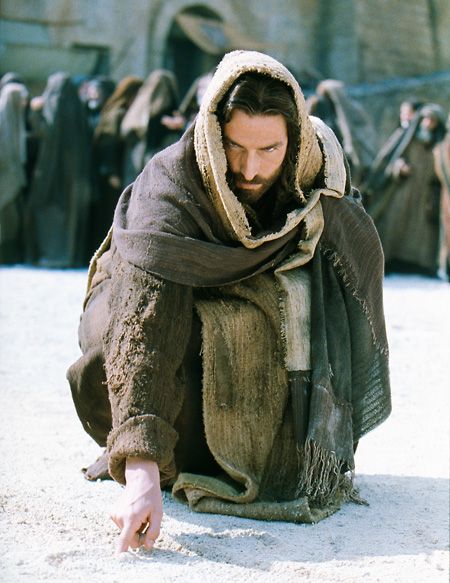




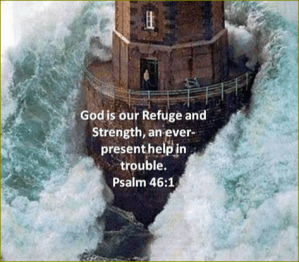


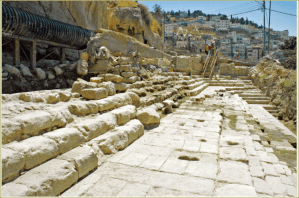


 Considering the Bible