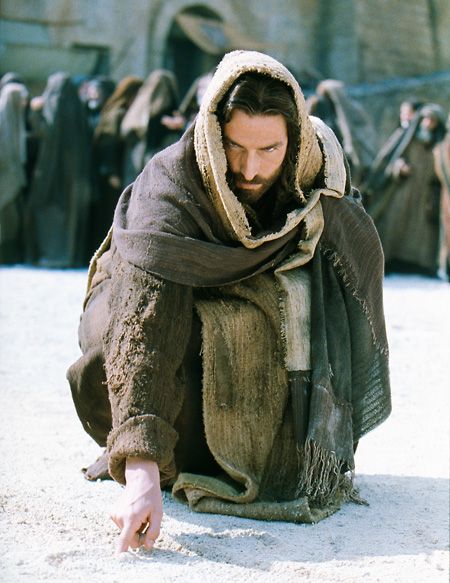

The prophecy of the Lord Jesus for our consideration and edification, written centuries prior to His earthly existence is
Prophecy #335
Description
Betrayed for thirty pieces of silver
Old Testament Prophecy
Zechariah 11:12-13a
Then I said to them, “If it seems good to you, give me my wages; but if not, keep them.” And they weighed out as my wages thirty pieces of silver.
New Testament Fulfillment
Matt 26:14-15
Then one of the twelve, whose name was Judas Iscariot, went to the chief priests
and said, “What will you give me if I deliver him over to you?” And they paid him thirty pieces of silver.
If you are just joining this blog, or are a first time visitor, welcome to Considering the Bible. We would like to offer a document that provides over 350 prophecies of the Messiah found in the Old Testament for your consideration.
I make no claim to be able to comment on every one of these amazing prophecies in the future, but will occasionally bring one to the readers attention for their edification.
Hopefully you will follow “Considering the Bible” and begin an interaction with us
Jesus in the Old Testament is a series of posts that will offer my readers a chance to consider pictures or shadows of Jesus in the Old Testament. As mentioned in the introduction to this series, some may be obvious, some may be not so obvious, and some may simply be a facet of the Lord those reading may not have considered previously.
I hope as we venture through this series, we will see the Lord in many wonderful pictures throughout the Old Testament.
SEEING JESUS IN
ADAM
MIRACULOUS BIRTH
Genesis 2 7 then the LORD God formed the man of dust from the ground and breathed into his nostrils the breath of life, and the man became a living creature.
Luke 1 27 to a virgin betrothed to a man whose name was Joseph, of the house of David. And the virgin’s name was Mary. 31 And behold, you will conceive in your womb and bear a son, and you shall call his name Jesus.
Both Adam and Jesus were “born” miraculously.
Granted, Adam was created out of the dust of the ground, but even Eve was not created in such a mysterious way. Likewise Jesus, in His humanity was created in the womb of a virgin, miraculously as no other man has been created
Thanks again for coming to visit. I hope you found something of interest in this post and would appreciate a comment, to begin a discussion. If you know someone this blog may bless (or challenge), send them a link, so they may join us in our discussion.
The prophecy of the Lord Jesus for our consideration and edification, written centuries prior to His earthly existence is
Prophecy #334
Description
The Messiah would be God
Old Testament Prophecy
Zechariah 11:10-11b
And I took my staff Favor, and I broke it, annulling the covenant that I had made with all the peoples. 11 So it was annulled on that day, and the sheep traders, who were watching me, knew that it was the word of the Lord.
New Testament Fulfillment
John 14:7
If you had known me, you would have known my Father also. From now on you do know him and have seen him.”
If you are just joining this blog, or are a first time visitor, welcome to Considering the Bible. We would like to offer a document that provides over 350 prophecies of the Messiah found in the Old Testament for your consideration.
I make no claim to be able to comment on every one of these amazing prophecies in the future, but will occasionally bring one to the readers attention for their edification.
Hopefully you will follow “Considering the Bible” and begin an interaction with us
For this series in Philippians, I am going to limit each post to one verse, and hopefully produce a short, succinct read for my friends who follow.
2:13 for it is God who works in you, both to will and to work for his good pleasure.
The believer works (vs 12) and God works.
We work with fear and trembling, and God works in us, both to want and work for His good pleasure. A lot of work is being discussed here!
A few posts back, I mentioned the Divine Human Cooperative. Of course this concept is not original with me, for I was introduced to it decades ago, and though I have lost some memory as I am aging, this phrase stuck with me. The idea that Jesus works with me, or maybe better said, that I am to work with Jesus in appealing for others to receive the grace of God, this concept or teaching simply amazes me.
The typical believer, (for I consider myself almost typical) looks to the Lord as the Master, the Lord, the Supreme Authority, and this is correct. This is the gospel, to know and understand that He is God and the Lord, and to bring our lives into conformance with His character and will.
But understand that the Word speaks of us as participating in the relationship with God, that we have a part to play in His drama, that we are not alone in this struggle, and not simply passive participants in the life He has for us.
As many who follow this blog know I am an engineer, and as a lead engineer on a project, I am responsible to get plan packages out to my clients on time and under budget. Today was a deadline and as I loaded up my designers with final edits, I was informed of a set of standards that had not been updated. With previous tasks already handed out, it was impossible for my folks to get the additional task done. So for a couple hours, I reverted back to a draftsman (albeit on the computer) and worked the standards to the present need.
Could I have derided my team, forced them to stay, caused them unnecessary stress? I could have and been strictly within my position within the firm. Instead I worked with my team to get a product out. And had a few laughs!
God has a plan that He will deliver and we are His “team”, albeit with inabilities, inhibitions, and insecurities, we work to please Him, and yet we fall behind, fail Him and fumble the ball on the one yard line. Brothers and sisters, do not think it all depends on you, for He is a loving God, that works in you and with you in getting us across the finish line.
He works with us by not only working in us, giving us the desire and will to work with Him, but also outside of us, in orchestrating our circumstances, bringing people into our lives, providing safety from evils, and granting us the strength to bless others, and not simply ourselves.
He is a big God, and worthy to follow, and as we follow, we are never alone, never abandoned, never forsaken.
Praise Him name for He is good!
Thanks again for coming to visit. I hope you found something of interest in this post and would appreciate a comment, to begin a discussion. If you know someone this blog may bless (or challenge), send them a link, so they may join us in our discussion
My wife and I are reading through the Psalms in our evening reading and occasionally a nugget of the Psalms jumps out of the page. Don’t you love it when, after years of reading the “Old Book” passages become alive, reinforcing old teachings or simply warming your heart.
This is the book of Psalms, and it is rich.
I pray I can communicate a portion of the blessing we receive from this wonderful book.
Psalm 51
1 To the choirmaster. A Psalm of David, when Nathan the prophet went to him, after he had gone in to Bathsheba. Have mercy on me, O God, according to your steadfast love; according to your abundant mercy blot out my transgressions. 2 Wash me thoroughly from my iniquity, and cleanse me from my sin!
I honestly tried to finish the above two verses in our last post but the mercy concept just ate me up. Can we revisit this passage for a short time, and consider verse 2?
As I mentioned in the earlier post, David is taking the sacrificial system that the priests worked at, and as prescribed by God, and internalized it, applying the washing and cleansing performed at the brazen altar to actions he needs for his life, actions that need to be done by God.
Let’s consider the first phrase – Wash me thoroughly from my iniquity
Wash
Out of the 51 times this term is found in the Old Testament, Leviticus has the overwhelming number of occurrences (31 times), and is used for the cleansing of those that have been defiled. It is used of anyone who has become defiled, and the required cleansing of the garments (and/or his flesh) required to be performed in order to become clean before God and remain in the camp of Israel. Leviticus is the book of holiness and as such speaks of the methods required to be practiced by the Israelites to walk before the Lord in a prescribed way. Without this cleansing, approaching the Lord was not allowed, with the person actually retaining his iniquity.
Leviticus 17:16 But if he does not wash them or bathe his flesh, he shall bear his iniquity.”
When I hear of washing spoken, especially in this reference, I have the picture of water flowing over my heart, like a waterfall, crystal clear, warm and comforting, gently washing any filth off my “skin”. I’m afraid this picture is simply not the image I should imagine as I read this passage.
The term translated as washed in the second verse is כָּבַסkâbaçkāḇas, and is related to a term which means to trample. The term describes the washing of garments by the stamping of the feet. This type of washing is not the image I had in mind above! The garment is being scrubbed with much force, underfoot and seemingly without mercy. I have an image in my mind of being down at the river bank, with the garments being rubbed/scrubbed against the rocks, a somewhat forceful undertaking. No gentle flow of water comforting the subject, but of trampling, crushing, scouring.
David is begging the Lord to wash him, to “trample on him” in order to produce the cleansing required, that the washing would rid him of his iniquity. This term “iniquity” isn’t used much nowadays, but it speaks of perversity or depravity, a moral evil, and we certainly can see a connection with this concept in David’s past actions. He has, in one decision on the roof of his house, fallen into a depravity that seemed impossible prior to it’s occurrence. This was the man who followed after God’s heart, and yet fell to such a depth of sin. Consider this for our own lives my friend.
1 Corinthians 10:12 Therefore let anyone who thinks that he stands take heed lest he fall.
cleanse
This term is what I expected, but it does have a few implications that are of interest. Again, it is a term that the book of Leviticus uses heavily (43 times out of 80 verses in the Old Testament), and relates to the cleansing of the defiled one who seeks to be clean before the Lord. The term speaks of purity, and of a cleansing both ceremonially and morally. It came from a root term meaning “to be bright”. It is used very often in relation to the cleansing of leprosy.
David connects this cleansing to his “sin”, the familiar term we associate with evil in our lives. Since this psalm is speaking of confession sin, it may be good to review all of the ways David speaks of sin in this Psalm
Phrase or Word
Hebrew
Synonyms
v1 …blot out my transgressions
פֶּשַׁעpeshaʻ
Rebellion, trespass, revolt
v2…my iniquity
עָוֺןʻâvôn
Perversity, depravity, iniquity
v2…my sin
חַטָּאָהchaṭṭâʼâh
Sin, sinful, guilt of sin, condition of sin
v3…my transgressions
פֶּשַׁעpeshaʻ
Rebellion, trespass, revolt
v3…my sin
חַטָּאָהchaṭṭâʼâh
Sin, sinful, guilt of sin, condition of sin
v4… I sinned
חָטָאchâṭâʼ
To miss the mark, to lose oneself, to induce sin, to cause to sin
David expressed his sin in multiple terms, and multiple ways to make his confession before God. Granted two of the references are possibly speaking of David’s conception (brought forth in iniquity, in sin did my mother…), yet it is David’s description of not only his deeds in relation to God, but his condition before God, his history, his very existence.
You might notice in the table above a repetition of 3 Hebrew root words, that speak of an escalation of evil in the human experience.
châṭâʼ – to miss the mark. May refer to an unintentional sin. May speak of inability to hit the mark, or lack of skill in hitting a mark.
ʻâvâh – to bend or distort. To know the good and to twist or distort.
pâshaʻ – to rebel or revolt. to act defiantly, to know the good and to fight against it
King David was asking for forgiveness, yet he did not shy away from expressing the multiple ways he had offended God. He sought a washing and a cleansing from his sin, and he knew the only One who could provide this was the One whom he had offended.
His name is Jesus and He is the One who not only knows your sin, He entered into our existence in order to deliver us from all our inabilities, distortions and rebellion. Will you look to Him for your salvation, for your deliverance from a wasted life, from a life of distortion and revolt against the truth?
He is the Savior and He is the Lord. Confession of sin is to be addressed to Him, for He died to provide full forgiveness to those who seek Him.
The prophecy of the Lord Jesus for our consideration and edification, written centuries prior to His earthly existence is
Prophecy #333
Description
Rejection causes God to remove protection
Old Testament Prophecy
Zechariah 11:10-11a
And I took my staff Favor, and I broke it, annulling the covenant that I had made with all the peoples. 11 So it was annulled on that day, and the sheep traders, who were watching me, knew that it was the word of the Lord.
New Testament Fulfillment
Luke 19:41-44
And when he drew near and saw the city, he wept over it,
saying, “Would that you, even you, had known on this day the things that make for peace! But now they are hidden from your eyes.
For the days will come upon you, when your enemies will set up a barricade around you and surround you and hem you in on every side
and tear you down to the ground, you and your children within you. And they will not leave one stone upon another in you, because you did not know the time of your visitation.”
If you are just joining this blog, or are a first time visitor, welcome to Considering the Bible. We would like to offer a document that provides over 350 prophecies of the Messiah found in the Old Testament for your consideration.
I make no claim to be able to comment on every one of these amazing prophecies in the future, but will occasionally bring one to the readers attention for their edification.
Hopefully you will follow “Considering the Bible” and begin an interaction with us
That is true. They were broken off because of their unbelief, but you stand fast through faith. So do not become proud, but fear. For if God did not spare the natural branches, neither will he spare you. Note then the kindness and the severity of God: severity toward those who have fallen, but God’s kindness to you, provided you continue in his kindness. Otherwise you too will be cut off.
You too will be cut off? Who is Paul speaking to here?
Romans 9-11 is sometimes considered the hotbed of Calvinism, and I tend to think this is an accurate statement since the strength of their argument for determinism is found in a few verses within this passage. When we come to Romans 11:20-22 though, Paul is finishing up his teaching on the relationship of national, ethnic Israel with the New Creation, the Body of Christ.
Paul just finished with a typical theoretical gentiles comment reflecting an attitude of superiority, when in v 19, he writes
Romans 11:19 Then you will say, “Branches were broken off so that I might be grafted in.”
The Gentile Christian in Rome may be considering the history of the nation of Israel, see their rejection of the Messiah (as a nation) and conclude that the nation of Israel was rejected, broken off, in order to bring the Gentiles in, implying the Gentiles were superior to the nation of Israel.
Will this pride thing ever stop? Earlier the Jews were warned of living in pride (Romans 2:17) and now the Gentiles are entering into proud attitudes and ideas.
Paul turns the actions of God in relation to ethnic Israel back onto the new believers, warning them of God’s severity. He acted in severity towards a nation He created, loved, was patient with, and constantly reached out to for centuries, yet they rejected His call out of pride and envy. Now they are cut off! To be an ethnic Jew is of no consequence with God. They are in the same boat as all the world and without Jesus, they have no hope!
Note that Paul speaks of God’s kindness extended to believers, provided believers continue in his kindness. We must continue in His kindness for His sake and ours.
Thanks again for coming to visit. I hope you found something of interest in this post and would appreciate a comment, to begin a discussion. If you would like to receive daily posts from Considering the Bible, click on the “Follow” link below
The prophecy of the Lord Jesus for our consideration and edification, written centuries prior to His earthly existence is
Prophecy #332
Description
Stops ministering to those who rejected Him
Old Testament Prophecy
Zechariah 11:9
So I said, “I will not be your shepherd. What is to die, let it die. What is to be destroyed, let it be destroyed. And let those who are left devour the flesh of one another.”
New Testament Fulfillment
Matt 13:10-11
Then the disciples came and said to him, “Why do you speak to them in parables?”
And he answered them, “To you it has been given to know the secrets of the kingdom of heaven, but to them it has not been given.
If you are just joining this blog, or are a first time visitor, welcome to Considering the Bible. We would like to offer a document that provides over 350 prophecies of the Messiah found in the Old Testament for your consideration.
I make no claim to be able to comment on every one of these amazing prophecies in the future, but will occasionally bring one to the readers attention for their edification.
Hopefully you will follow “Considering the Bible” and begin an interaction with us
Jesus in the Old Testament is a series of posts that will offer my readers a chance to consider pictures or shadows of Jesus in the Old Testament. As mentioned in the introduction to this series, some may be obvious, some may be not so obvious, and some may simply be a facet of the Lord those reading may not have considered previously.
I hope as we venture through this series, we will see the Lord in many wonderful pictures throughout the Old Testament.
SEEING JESUS IN
ADAM
HEAD OF CREATION
Genesis 2 7 then the LORD God formed the man of dust from the ground and breathed into his nostrils the breath of life, and the man became a living creature. 8 And the LORD God planted a garden in Eden, in the east, and there he put the man whom he had formed. 15 The LORD God took the man and put him in the garden of Eden to work it and keep it.
Romans 5 12 Therefore, just as sin came into the world through one man, and death through sin, and so death spread to all men because all sinned–
Moses describes the creation of Adam and His placing Him in the garden to work it and to keep it. He was created as the crowning centerpiece of all creation! Paul, in the New Testament speaks of Adam as the representative head of creation, and as the head of creation, due to his disobedience to the Father, death spread to all of creation. Jesus has established a new creation, and within that new creation, through His obedience to the Father, life spreads to all.
Thanks again for coming to visit. I hope you found something of interest in this post and would appreciate a comment, to begin a discussion. If you know someone this blog may bless (or challenge), send them a link, so they may join us in our discussion.
The prophecy of the Lord Jesus for our consideration and edification, written centuries prior to His earthly existence is
Prophecy #331
Description
Despised
Old Testament Prophecy
Zechariah 11:8b
But I became impatient with them, and they also detested me.
New Testament Fulfillment
Matt 27:20
Now the chief priests and the elders persuaded the crowd to ask for Barabbas and destroy Jesus.
If you are just joining this blog, or are a first time visitor, welcome to Considering the Bible. We would like to offer a document that provides over 350 prophecies of the Messiah found in the Old Testament for your consideration.
I make no claim to be able to comment on every one of these amazing prophecies in the future, but will occasionally bring one to the readers attention for their edification.
Hopefully you will follow “Considering the Bible” and begin an interaction with us
For this series in Philippians, I am going to limit each post to one verse, and hopefully produce a short, succinct read for my friends who follow.
2:12 Therefore, my beloved, as you have always obeyed, so now, not only as in my presence but much more in my absence, work out your own salvation with fear and trembling,
What a church, for Paul to tell them that they have always obeyed. Amazing! He was able to say that without fear of pride swelling up in them, speaking of the very humility we just worked through in the retelling of the humiliation of the Christ! These saints were truly catching them message, and Paul’s love for these gentle souls spoke volumes of the work of Christ in their lives. He was seeking their continued obedience even as he is in a prison far away.
This obedience consisted of work. But Carl – Christianity of a relationship, a matter of the heart towards God, a faith based connection with God. Why are you bringing up “work?”
Let me tell you a bit of a story. I was in Sunday School a few days back and we were chatting about a topic, and a question came up about Christians being judged by their works. This immediately brought about “corrections”, and concerns that Christianity is all about the heart condition. One young lady was quite shocked that this was even mentioned in the class, that our works would be judged.
It is somewhat funny that the very passage we were studying moments before was in Jeremiah 17, speaking of the deceitfulness of the heart.
Jeremiah 17:9 The heart is deceitful above all things, and desperately sick; who can understand it? Jeremiah 17:10 “I the LORD search the heart and test the mind, to give every man according to his ways, according to the fruit of his deeds.”
Might that be one reason Paul indicated the motivation for a believers work as being with “fear and trembling”? Not only does this verse speak of “work”, but also of fear and of trembling. That is somewhat surprising since the book of Philippians is often considered the letter of joy, and rightly so, for joy is a predominant theme. So why bring up these two “downers” Paul?
I would suggest that the Christian life is a life lived in tension with multiple truths. Paradox’s are abundant within the Word, and it is for the believer to understand and live within these paradox’s through study, discernment, and faith. Consider the following paradox.
Matthew 10:39 Whoever finds his life will lose it, and whoever loses his life for my sake will find it.
For me, at first glance, the mention of “fear and trembling” is a paradox within this letter to the Philippians. Yet after a bit of considering and thinking on it, if understood properly, is actually a foundation for a deep seated joy in our discipleship. A mindset of seriousness, a determination, a focus on completing your course before God, only adds to the joy that is available for the believer.
As an aside, fear and trembling occurs in two additional passages in the New Testament.
2 Corinthians 7:15 ESV – And his affection for you is even greater, as he remembers the obedience of you all, how you received him with fear and trembling.
Ephesians 6:5 ESV – Bondservants, obey your earthly masters with fear and trembling, with a sincere heart, as you would Christ,
Work out your own salvation with fear and trembling. There is joy in Jesus.
Thanks again for coming to visit. I hope you found something of interest in this post and would appreciate a comment, to begin a discussion. If you know someone this blog may bless (or challenge), send them a link, so they may join us in our discussion
My wife and I are reading through the Psalms in our evening reading and occasionally a nugget of the Psalms jumps out of the page. Don’t you love it when, after years of reading the “Old Book” passages become alive, reinforcing old teachings or simply warming your heart.
This is the book of Psalms, and it is rich.
I pray I can communicate a portion of the blessing we receive from this wonderful book.
Psalm 51
1 To the choirmaster. A Psalm of David, when Nathan the prophet went to him, after he had gone in to Bathsheba. Have mercy on me, O God, according to your steadfast love; according to your abundant mercy blot out my transgressions. 2 Wash me thoroughly from my iniquity, and cleanse me from my sin!
David was so New Testamental!
I have this picture in my mind of an Old Testament saint, after committing sin, getting a sacrifice in order, finding a priest and providing the sacrifice to the priest in order to absolve the saint of sin. After all the sacrificial system was set up in order to take care of our sins, right?
When David is confronted by Nathan, and he comes to realizing the depth of his sin, how in his desire for another man’s wife, God’s laws were trampled on, how his action caused the complete decimation of God’s second tablet of the law, including his acts of murder, adultery, theft, lies and coveting, his reaction is not what I would have considered typical for the Old Testament Saint.
No, he takes the sacrificial system provided by God, and transforms it from a physical approach to an altar to an personal inner approach directly to God.
His first thought is to depend on the living God, and not on a system of sacrifice, a set of rules that the living God provided. He goes directly to the source, not depending on any human intermediary. In approaching God (full of sin) he asks for mercy first and up front. He has just committed a minimum of breaking six of God’s laws, and has the audacity to request mercy.
This speaks of the nature of mercy, does it not? For mercy to be exercised by the giver, it implies the mercy giver is in the position of strength, that is that the one offended has the right to exercise his justice upon the one who is in the wrong.
God is a righteous judge, and David knew this, yet his request for mercy is actually an effort to disarm God of his rightful choice of demanding retribution upon a sinful and thankless saint, a rebellious man who had experienced being personally lifted by God from being a lonely shepherd in the back 40 of his fathers ranch into the highest office of the land. Beyond this, God promised David an eternal Kingdom through his Son, a covenant referred to as the Davidic Covenant. No small commitment! And after all these expressions of love God showers on David, he goes off and runs ragged over the commandments of God.
And then seeks mercy! Let’s take a moment to understand what he is asking for from God. Three Hebrew terms are translated as mercy in the Old Testament.
כַּפֹּרֶתkappôrethrefers to the mercy seat, originally defining a “covering”. The mercy seat was the top of the ark and emphasized, not the judgement that may be due, but the mercy afforded to the one who approached, though it be infrequent (yearly) and by the high priest only.
רָחַםrâchamis to be compassionate, or to show compassion. The term is not restricted to God showing compassion or love, for David himself, in earlier days expressed his râcham to God in Psalm 18:1.
Psalm 18:1 … who addressed the words of this song to the LORD on the day when the LORD delivered him from the hand of all his enemies, and from the hand of Saul. He said: I love you, O LORD, my strength.
חָסִידchâçîyd is often translated as steadfast love in the Old Testament, and refers to a faithfulness in showing love. A love that is shown at the worst of times, Consider
Isaiah 54:10 For the mountains may depart and the hills be removed, but my steadfast love shall not depart from you, and my covenant of peace shall not be removed,” says the LORD, who has compassion on you.
When our limits of expressing love ends, this steadfast love continues
Lamentations 3:31-32 For the Lord will not cast off forever, but, though he cause grief, he will have compassion according to the abundance of his steadfast love;
This last one is the term David uses in relating to God’s character. It is not referring to the mercy seat, as I may have expected, or to compassion as the second term emphasizes. David goes to the character of God, the very heart of the One who he has to face. David is looking to the One who is steadfast love. It is who God is, and David understood this. Oh that I would understand God as the One who is steadfast in His love.
Yet I have missed the first term David used when requesting mercy, for when David states “Have mercy”, he uses the Hebrew term חָנַןchânan. This term is often translated as gracious, as in 2 Samuel 12:22
2 Samuel 12:22 He said, “While the child was still alive, I fasted and wept, for I said, ‘Who knows whether the LORD will be gracious to me, that the child may live?’
David, in Psalm 51 seeks grace from God in relation to his sin before God. Months later, when the child who is the result of this sin is born very sick, David again reverts to asking for grace in relation to this child. Boy oh boy – David had hutzpah, nerve, gall! How dare he continue to ask for mercy, for grace. Maybe he knew something we sometimes forget about the God we serve.
In closing, as I opened up this post, I mentioned that David was so New Testamental. Lets take a few moments to remind ourselves of the grace we live under.
Matthew 9:13 Go and learn what this means: ‘I desire mercy, and not sacrifice.’ For I came not to call the righteous, but sinners.”
James 2:13 For judgment is without mercy to one who has shown no mercy. Mercy triumphs over judgment.
Matthew 5:7 “Blessed are the merciful, for they shall receive mercy.
In adding Matthew 5:7, I want to leave my readers with the challenge of expressing mercy to those around you in your daily lives. Let us be like the God David called out to, and show mercy to those who do not deserve mercy, for that is the very nature of mercy!
Be blessed and walk in peace towards those who you come in contact with!
The prophecy of the Lord Jesus for our consideration and edification, written centuries prior to His earthly existence is
Prophecy #330
Description
Unbelief forces Messiah to reject them
Old Testament Prophecy
Zechariah 11:8a
In one month I destroyed the three shepherds.
New Testament Fulfillment
Matt 23:33
You serpents, you brood of vipers, how are you to escape being sentenced to hell?
If you are just joining this blog, or are a first time visitor, welcome to Considering the Bible. We would like to offer a document that provides over 350 prophecies of the Messiah found in the Old Testament for your consideration.
I make no claim to be able to comment on every one of these amazing prophecies in the future, but will occasionally bring one to the readers attention for their edification.
Hopefully you will follow “Considering the Bible” and begin an interaction with us
Revelation 22:18 – 19 I warn everyone who hears the words of the prophecy of this book: if anyone adds to them, God will add to him the plagues described in this book, and if anyone takes away from the words of the book of this prophecy, God will take away his share in the tree of life and in the holy city, which are described in this book
God will take away a believers share in the tree of Life?
Oh Carl – how can you say that it is a believer, a Christian who experiences this loss in the tree of life? Note that it is taken away, implying strongly that the one had full right of possession to the tree of life. Now I ask you – who has access to the tree of life if it is not the believer?
However you may understand Revelation 22, this passage speaks of one who has a share in the tree of life that will be taken from him. This is definitely scary stuff, yet the reason for this “taking” is due to one taking away from the words of this letter John was writing. I have not come to any settled understanding what that means, and if my readers have a reasoned suggestion I would appreciate hearing from you.
Nevertheless, in the last chapter of the book of Revelation, John gives us a dire warning from God about the eternal ownership of a share in the tree of life.
Thanks again for coming to visit. I hope you found something of interest in this post and would appreciate a comment, to begin a discussion. If you would like to receive daily posts from Considering the Bible, click on the “Follow” link below
The prophecy of the Lord Jesus for our consideration and edification, written centuries prior to His earthly existence is
Prophecy #329
Description
Ministry to “poor,” the believing remnant
Old Testament Prophecy
Zechariah 11:7
So I became the shepherd of the flock doomed to be slaughtered by the sheep traders. And I took two staffs, one I named Favor, the other I named Union. And I tended the sheep.
New Testament Fulfillment
Matt 9:35-36
And Jesus went throughout all the cities and villages, teaching in their synagogues and proclaiming the gospel of the kingdom and healing every disease and every affliction.
When he saw the crowds, he had compassion for them, because they were harassed and helpless, like sheep without a shepherd.
If you are just joining this blog, or are a first time visitor, welcome to Considering the Bible. We would like to offer a document that provides over 350 prophecies of the Messiah found in the Old Testament for your consideration.
I make no claim to be able to comment on every one of these amazing prophecies in the future, but will occasionally bring one to the readers attention for their edification.
Hopefully you will follow “Considering the Bible” and begin an interaction with us
After my series on the parables, I found I was drawn to look into the miracles of Jesus in the Gospels. I have never studies the mighty works of Jesus as a focused effort before and am looking forward to finding nuggets of truth that we can be encouraged by.
I have provided a general introduction, with an opportunity to download two files for your reference in my initial post Signs and Mighty Works of Jesus – Introduction. I found that the format I used for the parable posts were useful to keep me on track, and will continue to use them for this series, with some minor tweaks. With that said, let’s take a look at
Jesus Provides a Catch of Fish Again
John 21:4-11
Just as day was breaking, Jesus stood on the shore; yet the disciples did not know that it was Jesus. Jesus said to them, “Children, do you have any fish?” They answered him, “No.” He said to them, “Cast the net on the right side of the boat, and you will find some.” So they cast it, and now they were not able to haul it in, because of the quantity of fish. That disciple whom Jesus loved therefore said to Peter, “It is the Lord!” When Simon Peter heard that it was the Lord, he put on his outer garment, for he was stripped for work, and threw himself into the sea. The other disciples came in the boat, dragging the net full of fish, for they were not far from the land, but about a hundred yards off. When they got out on land, they saw a charcoal fire in place, with fish laid out on it, and bread. Jesus said to them, “Bring some of the fish that you have just caught.” So Simon Peter went aboard and hauled the net ashore, full of large fish, 153 of them. And although there were so many, the net was not torn.
General Observations
First off, I don’t know why there was 153 fish. Why spend the time counting when the Lord is in the vicinity, calling His disciples to Himself? It is a detail that kinda befuddles me, but it isn’t something that should become a focus for our time together. We got bigger fish to fry (bad pun!).
It is good to remember that this isn’t the first time the disciples were visited by the resurrected Christ. There must have been times of absence of the Lord (preparing them for the ascension?) that were punctuated with visits such as the one we read of here. Prior to the upper room experience, these disciples had seen the Lord at least twice (once for Thomas), but had not experienced the filling of the Spirit of God in their lives.
Questions to Consider
Who were the audience?
Seven of the disciples were present for this visit from the Lord. Peter, John, James, Thomas, Nathanael, and two other unnamed disciples, maybe Andrew and Phillip.
So why were only a portion of the disciples gathered together? Had the group started to fracture already? It seems Simon had informed the group that he was going fishing, and six of the disciples joined him. I have often thought this was an act of rebellion on Peters part, for the Lord, after His resurrection commanded His disciples to stay in Jerusalem. (I don’t recall any lake in Jerusalem large enough to go fishing in!)
Luke 24:49 And behold, I am sending the promise of my Father upon you. But stay in the city until you are clothed with power from on high.”
How this all works out, I cannot be sure, for I am not sure if this command came before or after our visit from the Lord and this miracle. Nevertheless, whether Peter’s stubborn streak got ahold of him or if he innocently left the City to fish, he did pull half the group with him. He was influential!
As with all the miracles we have considered in the past few months, the Lord’s purpose may be very evident, or I may have had to resort to His general message, that is of communicating the truth of His person being on earth. Each of multitude of the miracles He performed, whether they are recorded or not in the Word, were never intended to simply amaze the crowds or draw a crowd as an end. His miracles were intended to communicate to God’s people , (and the world) that the Messiah had arrived.
Of course some of the miracles were obviously pointed to specific people for specific purposes also, as we see in this final act of remembrance for Peter. This miracle is very reminiscent of the calling of Peter in Luke 5 (See Signs and Mighty Works of Jesus #6 – Jesus Provides a Catch of Fish).
Might Jesus be using this occasion to remind Peter of this commitment, of his history with Jesus?
What was the message for the original audience?
There were a number of “minor” miracles that we should consider prior to the large catch of fish.
Bread & Fish Prepared
Notice that the Lord came prepared for His meeting with His men. Early in the morning, He had a fire going, with broiled fish, and bread available for His tired disciples. Of course He knew they were frustrated with the lack of any catch for the night, and He got their attention with a massive catch, but we shall chat about that in a moment. The fact that He prepared a meal for His men speaks volumes, for He is always the One to lead, and He leads by setting the example of service. And yet He instructs them to follow in supplying the needs around them by having them bring some of the fish they had just caught for the meal also. This cooperative work of God and man reminds me of 2 Corinthians 6:1, where the apostle speaks of the “Divine Human Cooperative”
2 Corinthians 6:1 Working together with him, then, we appeal to you not to receive the grace of God in vain.
This verse, when I understood some of the ramifications of “working together” with God, shook me a wee bit. I mean, we are to be considered servants, and that is true, and yet He allows us to enter into the work “with” Him and not simply “for” Him.
Consider this truth as you seek to serve Him.
Super Strong Net
So many fish! (We are not going to mention that number!)
When Jesus performs a mighty work, He leaves no doubt about the miraculous nature of the act. Oh, He could have had them pull in ten or twenty big fish, after a night of no fish, and gotten the attention of the disciples. But no – He created a situation that potentially would have broke the nets. And yet the nets withstood the pressure, the strain, the load!
Are you under some God ordained pressure that in your normal state of affairs could not handle. Yet you are still walking (strained and stressed) and surviving, possibly thriving because of the focus on God this stress guides you into? At times, God’s hand adds pressure to our lives, in an act of mercy towards us, so that you (and I) can experience something beyond a simple explanation, beyond our weakness and foolishness.
Super Strong Peter
I don’t know the mass of the multitude of large fish caught that day, nor the coefficient of friction the many fish had with the bottom of the sea, but the text states that Peter dragged the the net full of large fish ashore. Incredible feat of strength! An act of obedience on Peter’s part. Even though the Lord requested “some” of the fish, Peter would not be satisfied with simply bringing a few fish – He hauled all the fish onto the shore. Now whether Jesus was simply telling his men to “bring some fish” over to the cooking area , and possibly to release many of the fish is hard to discern. But Peter drug the entire net full onto the shore!
Bunch of Fish
The message of second catch of fish was meant for the disciples, or at least for the disciples who decided to leave the City and venture out into “normal” life again.
I can’t help but think that this decision of Peter to go fishing was either out of boredom, or out of frustration. We have seen that Peter was a man of action, a man that was happy doing something, anything. Patience , waiting and being quiet might not have been Peter’s strong suit. We often see him taking a leader’s role in activating some decision, moving forward, getting people to follow through on some action. In the seeming vacuum of activities that they were living in since the crucifixion and resurrection, (prior to the day of Pentecost), Peter had to sit on his hands, so to speak.
Peter had to be called back into the original call Jesus had for Him. Peter was critical for the future Body of Christ, and Jesus, in His inimitable ways, established an environment reminiscent of Peter’s first call. He established an environment to assault Peter’s memories with their past, in order to prepare Peter for the famous three questions for Peter. It is a passage that has multiple nuances for Peter to navigate and Peter was being prepared for this discussion through this miracle.
Thankfully Peter was a man that couldn’t resist the love of God and would admit his own weakness and rebellion in order to follow the Lord.
What is the message for us today?
For us today, I believe Jesus also establishes conditions or environments that we find ourselves in to direct us to the greatest possible obedience to our call. Our neighborhood, our employment, our church body, our health, our social level, our family condition – all of our lives are being guided , at least passively by the Lord.
Passively I say, since we do have the option to refuse to work with Him in the tasks of each day. The good news though is that His hand in our lives can become more evident, more specific, and more active as we actively seek His will in even the smallest of decisions.
We also need to watch for His hand in the events of our lives, understanding and interpreting them through the lens of the gospel, and His love for us. Accidents, sickness and “bad news” needs to be seen in light of the gospel, for faith demands this response. This miracle though, lends itself to our understanding that great windfalls, or blessings such as multitudinous fish in a net, as a message to be understood properly also.
His hand is active in our lives, in our environment and condition, and we would profit greatly if we learned to see with the eyes of faith, seeking to understand His will. He prepared Peter for a difficult discussion, and He is possibly preparing us also for difficult discussions. He is very skillful in preparing His people for His messages, but let me ask – Are you watching for His hand while you are toiling away in your “normal” life?
Thanks again for coming to visit. I hope you found something of interest in this post and would appreciate a comment, to begin a discussion. If you know someone this blog may bless (or challenge), send them a link, so they may join us in our discussion
The prophecy of the Lord Jesus for our consideration and edification, written centuries prior to His earthly existence is
Prophecy #328
Description
Rejected in favor of another king
Old Testament Prophecy
Zechariah 11:4-6c
Thus said the Lord my God: “Become shepherd of the flock doomed to slaughter. Those who buy them slaughter them and go unpunished, and those who sell them say, ‘Blessed be the Lord, I have become rich,’ and their own shepherds have no pity on them. For I will no longer have pity on the inhabitants of this land, declares the Lord. Behold, I will cause each of them to fall into the hand of his neighbor, and each into the hand of his king, and they shall crush the land, and I will deliver none from their hand.”
New Testament Fulfillment
John 19:13-15
So when Pilate heard these words, he brought Jesus out and sat down on the judgment seat at a place called The Stone Pavement, and in Aramaic Gabbatha.
Now it was the day of Preparation of the Passover. It was about the sixth hour. He said to the Jews, “Behold your King!”
They cried out, “Away with him, away with him, crucify him!” Pilate said to them, “Shall I crucify your King?” The chief priests answered, “We have no king but Caesar.”
If you are just joining this blog, or are a first time visitor, welcome to Considering the Bible. We would like to offer a document that provides over 350 prophecies of the Messiah found in the Old Testament for your consideration.
I make no claim to be able to comment on every one of these amazing prophecies in the future, but will occasionally bring one to the readers attention for their edification.
Hopefully you will follow “Considering the Bible” and begin an interaction with us
For this series in Philippians, I am going to limit each post to one verse, and hopefully produce a short, succinct read for my friends who follow.
2:11 and every tongue confess that Jesus Christ is Lord, to the glory of God the Father.
In our last post we discussed the free and willing “knee bowing” of all creation, suggesting that Paul may be including the motivation of all of creation bowing the knee, and not simply the act of bowing the knee.
Philippians 2:11 may provide additional considerations supporting this thinking. In this passage, the verb for confess halted me. A short time back, I reviewed a book called “Jesus Undefeated” by Keith Giles and he brought to my attention the Greek term for confess in this passage. I will not regurgitate my findings in this post (See Book Look – Jesus Undefeated – Passage 6 for discussion) other than that term used for confess in this verse includes the idea of joy. The term implies a joyful confession, even a celebration of confession.
This strikes at the heart of my original thinking regarding the eventual confession of those in punishment! This passage does not seem to allow for a begrudging reluctant confession, a confession of requirement and obligation. Not only does He deserve the confession of, and bowing to His identity, He shall receive this to the glory of God.
Yet the rebels confession, if from a thankful heart, would it not provide greater glory than a reluctant and forced confession?
Don’t get me wrong. I understand punishment will be dealt out, and judgment will be just for all. Although Philippians does not address the punishment aspect of those who are in rebellion against the Savior, many may think this teaching of worship after death removes all punishment. I am not suggesting that, but only that I don’t understand the passage describing any punishment, but addressing the eventual (after punishment?) submission and confession of His Person by all.
Is this difficult to consider?
Is the possibility of Jesus bringing together both those who followed and those who rebelled into one “group” distressing for you? Consider some in the early church, and their reluctance to accept those sinners, those dirty Gentiles, into the Body of Christ. I think they were continually surprised by the working of God in the Body of Christ!
As I consider the Word as I get older, I am becoming more and more convinced that God is bigger than I imagine, that His grace is much greater than I can grasp, and that maybe, just maybe, He will surprise us all!
No matter – It is up to God to perform His will, and we are to be thankful participants in this ride we call Christianity!
Thank Him for the adventure, for He is looking for those who will have thankful hearts in worship!
My wife and I are reading through the Psalms in our evening reading and occasionally a nugget of the Psalms jumps out of the page. Don’t you love it when, after years of reading the “Old Book” passages become alive, reinforcing old teachings or simply warming your heart.
This is the book of Psalms, and it is rich.
I pray I can communicate a portion of the blessing we receive from this wonderful book.
Psalm 50:22-23
22 “Mark this, then, you who forget God, lest I tear you apart, and there be none to deliver! 23 The one who offers thanksgiving as his sacrifice glorifies me; to one who orders his way rightly I will show the salvation of God!”
Two short verses to finish our time in the 50th Psalm
God is delivering His final judgement, and that is of a coming discipline, a coming trial. God speaks of a tearing apart. This term is often used in the Old Testament of the fate of one at the hand of a ravenous animal.
Exodus 22:13 If it is torn by beasts, let him bring it as evidence. He shall not make restitution for what has been torn. Job 16:9 He has torn me in his wrath and hated me; he has gnashed his teeth at me; my adversary sharpens his eyes against me. Psalm 7:2 lest like a lion they tear my soul apart, rending it in pieces, with none to deliver. Psalm 22:13 they open wide their mouths at me, like a ravening and roaring lion. Jeremiah 5:6 Therefore a lion from the forest shall strike them down; a wolf from the desert shall devastate them. A leopard is watching their cities; everyone who goes out of them shall be torn in pieces, because their transgressions are many, their apostasies are great.
The tearing apart is that of one being consumed, of being a true victim, of the end of a life. God does not mince words here, for there have been previous times where the nation or people of God were destined to be torn apart, but for the deliverance of God in their lives.
When God is tearing, there are none to deliver. How could there be, for the Lord is delivering His verdict, His judgement upon a thankless people, to a people who do not consider His guidance to be of any worth.
Even in His judgements, God offers hope. Offer thanksgiving for the privilege of knowing the eternal One. If you are not of a thankful spirit, it may be wise to examine yourself, to see if you are in the faith. How could one know God and be thankless? Bow the knee to Him, confess your rejection of His love and provision, seek to know Him through intentional acts, such as reading the Word, praying to the Father, fellowshipping with saints, and sharing what you find with other’s.
He who orders his way rightly will see the salvation of God.
Be thankful and order your lives according to His Word. And see the salvation of God in your life.
The prophecy of the Lord Jesus for our consideration and edification, written centuries prior to His earthly existence is
Prophecy #327
Description
Rejection causes God to remove His protection
Old Testament Prophecy
Zechariah 11:4-6b
Thus said the Lord my God: “Become shepherd of the flock doomed to slaughter. Those who buy them slaughter them and go unpunished, and those who sell them say, ‘Blessed be the Lord, I have become rich,’ and their own shepherds have no pity on them. For I will no longer have pity on the inhabitants of this land, declares the Lord. Behold, I will cause each of them to fall into the hand of his neighbor, and each into the hand of his king, and they shall crush the land, and I will deliver none from their hand.”
New Testament Fulfillment
Luke 19:41-44
And when he drew near and saw the city, he wept over it,
saying, “Would that you, even you, had known on this day the things that make for peace! But now they are hidden from your eyes.
For the days will come upon you, when your enemies will set up a barricade around you and surround you and hem you in on every side
and tear you down to the ground, you and your children within you. And they will not leave one stone upon another in you, because you did not know the time of your visitation.”
If you are just joining this blog, or are a first time visitor, welcome to Considering the Bible. We would like to offer a document that provides over 350 prophecies of the Messiah found in the Old Testament for your consideration.
I make no claim to be able to comment on every one of these amazing prophecies in the future, but will occasionally bring one to the readers attention for their edification.
Hopefully you will follow “Considering the Bible” and begin an interaction with us
As we come close to the end of our series on Old Testament Messianic Prophesies, where we have reviewed Old Testament prophecies of the Messiah, I have been drawn to those instances in the Old Testament that point to Jesus in a somewhat veiled way.
It began with just a few examples of shadows of Christ in the Old Testament, but as I have considered this added facet of Jesus and His pre-eminence in the Old Testament, these pictures of Christ are began occurring with greater and greater frequency.
Examples of these shadows or types or pictures of Jesus in the Old Testament are sometimes very obvious, and referred to in the New Testament. A very recognizable picture is that of Jonah and the whale, prefiguring Christ’s resurrection. Some shadows or pictures or types are a bit more veiled and are the “Easter Eggs” I love to find. Some that I suggest may be somewhat vague in connection with the Lord Jesus. I will leave that to my readers discernment.
Throughout this series, I will be providing posts with a table similar to the Old Testament Messianic Prophecies series, with the following format.
SEEING JESUS IN
CHARACTER/ANIMAL/EVENT/PLACE/THING
SHADOW/TYPE/FIGURE
OLD TESTAMENT PASSAGE OR REFERENCE
NEW TESTAMENT PASSAGE
I hope as we venture through this series, we will see the Lord in many wonderful pictures throughout the Old Testament. Some of them, quite frankly are surprising, some may be obvious, and some may be somewhat unconventional. Nevertheless, as one thinks on a particular aspect or likeness in the subject in reflecting our Savior, the picture of Christ becomes one bit larger, better and fuller.
Although it is common to consider specific Old Testament saints as the method used to typify Christ, I have found that God does not restrict His telling of His Son’s character to a reflection of mere people, but also uses animals, buildings, places, events or things that prefigure the Lord in the Old Testament.
I have developed a spreadsheet with five of the Greek terms used in the New Testament, referring to Old Testament types or figures that may be of interest to some of my readers. Please feel free to download this spreadsheet for your records and use.
Thanks again for coming to visit. I hope you found something of interest in this post and would appreciate a comment, to begin a discussion. If you know someone this blog may bless (or challenge), send them a link, so they may join us in our discussion.
The prophecy of the Lord Jesus for our consideration and edification, written centuries prior to His earthly existence is
Prophecy #326
Description
At His coming, Israel to have unfit leaders
Old Testament Prophecy
Zechariah 11:4-6a
Thus said the Lord my God: “Become shepherd of the flock doomed to slaughter. Those who buy them slaughter them and go unpunished, and those who sell them say, ‘Blessed be the Lord, I have become rich,’ and their own shepherds have no pity on them. For I will no longer have pity on the inhabitants of this land, declares the Lord. Behold, I will cause each of them to fall into the hand of his neighbor, and each into the hand of his king, and they shall crush the land, and I will deliver none from their hand.”
New Testament Fulfillment
Matt 23:1-4
Then Jesus said to the crowds and to his disciples,
“The scribes and the Pharisees sit on Moses’ seat,
so do and observe whatever they tell you, but not the works they do. For they preach, but do not practice.
They tie up heavy burdens, hard to bear, and lay them on people’s shoulders, but they themselves are not willing to move them with their finger.
If you are just joining this blog, or are a first time visitor, welcome to Considering the Bible. We would like to offer a document that provides over 350 prophecies of the Messiah found in the Old Testament for your consideration.
I make no claim to be able to comment on every one of these amazing prophecies in the future, but will occasionally bring one to the readers attention for their edification.
Hopefully you will follow “Considering the Bible” and begin an interaction with us
After my series on the parables, I found I was drawn to look into the miracles of Jesus in the Gospels. I have never studies the mighty works of Jesus as a focused effort before and am looking forward to finding nuggets of truth that we can be encouraged by.
I have provided a general introduction, with an opportunity to download two files for your reference in my initial post Signs and Mighty Works of Jesus – Introduction. I found that the format I used for the parable posts were useful to keep me on track, and will continue to use them for this series, with some minor tweaks. With that said, let’s take a look at
Jesus Heals a Servant’s Severed Ear
Luke 22:50-51
And one of them struck the servant of the high priest and cut off his right ear. But Jesus said, “No more of this!” And he touched his ear and healed him.
General Observations
The only gospel that speaks of this miracle is Luke. The remaining three gospels speak of the Peter’s sword fight with the servants ear, but do not inform of any healing. Some pertinent information may be culled from the other gospels though.
John 18:10, 11 Then Simon Peter, having a sword, drew it and struck the high priest’s servant and cut off his right ear. (The servant’s name was Malchus.) So Jesus said to Peter, “Put your sword into its sheath; shall I not drink the cup that the Father has given me?”
First off – John tells us that Peter was the swordster!
Mark 14:47 – 48 But one of those who stood by drew his sword and struck the servant of the high priest and cut off his ear. And Jesus said to them, “Have you come out as against a robber, with swords and clubs to capture me?
Secondly, Mark records Jesus response to those who were arresting Him. Jesus’ question on their methods of capture speaks volumes to the chief priests understanding of who He was. When did He show any resistance (physically) to the requests of any?
Was He leading a band of sword toting hooligans, just itching for a fight? Just hours earlier, the disciples had requested about having swords, implying that this was a new option for them. They had not bore swords before, and it seems that Jesus’ response was somewhat confusing, when He said “It is enough!” Was He saying that two swords were enough, or that it was enough of this type of question.
When a sword was used (on the poor servant’s ear), Jesus reversed the damaged it caused, so it seems a bit much to consider two swords as something Jesus required, or even advocated. He may simply be responding to their request out of frustration with His disciples faith in swords.
Matthew 26:51 -54 And behold, one of those who were with Jesus stretched out his hand and drew his sword and struck the servant of the high priest and cut off his ear. Then Jesus said to him, “Put your sword back into its place. For all who take the sword will perish by the sword. Do you think that I cannot appeal to my Father, and he will at once send me more than twelve legions of angels? But how then should the Scriptures be fulfilled, that it must be so?”
Finally, Jesus gives the famous quote of taking the sword and dying by the sword. Of course we do not want to go literal here, for we know of many who have never used a 9 mm pistol and yet died from that weapon. He speaks of the nature of those who resort to weapons as a way of life and that this way of life will typically result in the manner of death.
Questions to Consider
Who were the audience?
This was a busy goup
Malchus, the healed servant.
Eleven disciples.
a great crowd with swords and clubs. (I assume this is different than the soldiers!)
a band of soldiers and officers from the chief priests and Pharisees.
Judas.
Quite a crowd, yet it was in the dark, in a wooded garden with torches surrounding the Savior. Quite a time of terror!
Two groups were controlled by fear. The guards were intimidated by Jesus, for they fell at His feet. The disciples were intimidated, for some started chopping with a sword.
Two men were not controlled by fear. Of course the Savior was in control of the situation, even to the point of determining who the guards would arrest. The other man not controlled by fear? Judas. He had all earthly authority supporting him, and even the encouragement from the Savior to “do what you came to do”. This courage would soon evaporate!
As hinted at above, the Master was a man of peace, a Teacher that brought non violence to the nation of Israel, a Man that taught us to love our enemies, to pray for those who persecute us. He was (and is) a healer, so when His people miss the message and go about hacking at the enemy, His response is to reach out to those hurt and to heal, drawing them to His side, even in the midst of His darkest moment of betrayal.
What was the message for the original audience?
The original audience packed with friends and foes had a message delivered to them, if they wanted to see it. A simple touch by a peaceful man, reversing the effects of a sword hacking fearful follower. (How often I see myself in Peter, trying to defend the Master!)
He did not need the weapon, and Peter’s efforts actually frustrated Jesus plans, for He was going to the cross. He was going to show us much more than a simple healing of an ear. His death would bring healing to any one who would hear His message of peace, understand who this Man of peace actually is and follow after Him.
What is the message for us today?
Of all the miracles He has performed, I see this miracle as one that comes from His nature of peace, from One whose character is rooted in gentleness and non-retaliation, a man who sought good for others, no matter their allegiance. He led His followers by example, and even as they go off on their own, He is constantly leading, teaching, being the Savior of those who need saving.
As you go about your day today, understand that a life of peacemaking is the life of the believer.
Matthew 5:9 “Blessed are the peacemakers, for they shall be called sons of God.
Strife, jealousy and a continual arguing with those you work with or associate with are signs you may need to consider as warnings. Be at peace with God, and out of that peace, be at peace with those around you. Be the one who seeks peace, not merely maintain a lack of hostility. We are to be the instigators of peace! Put your sword down, seek the peace of your enemy, and be at peace with God.
Thanks again for coming to visit. I hope you found something of interest in this post and would appreciate a comment, to begin a discussion. If you know someone this blog may bless (or challenge), send them a link, so they may join us in our discussion
The prophecy of the Lord Jesus for our consideration and edification, written centuries prior to His earthly existence is
Prophecy #325
Description
The cornerstone
Old Testament Prophecy
Zechariah 10:4
From him shall come the cornerstone, from him the tent peg, from him the battle bow, from him every ruler—all of them together.
New Testament Fulfillment
Eph 2:20
built on the foundation of the apostles and prophets, Christ Jesus himself being the cornerstone,
If you are just joining this blog, or are a first time visitor, welcome to Considering the Bible. We would like to offer a document that provides over 350 prophecies of the Messiah found in the Old Testament for your consideration.
I make no claim to be able to comment on every one of these amazing prophecies in the future, but will occasionally bring one to the readers attention for their edification.
Hopefully you will follow “Considering the Bible” and begin an interaction with us