Considering the Bible

  • Testimony
  • Purpose
  • Contact Me
  • Home
  • About
  • Jesus in the Old Testament – Adam 9

    2023-09-05

    Jesus in the Old Testament is a series of posts that will offer my readers a chance to consider pictures or shadows of Jesus in the Old Testament. As mentioned in the introduction to this series, some may be obvious, some may be not so obvious, and some may simply be a facet of the Lord those reading may not have considered previously.

    I hope as we venture through this series, we will see the Lord in many wonderful pictures throughout the Old Testament.

    SEEING JESUS IN
     
    ADAM
     
    DEEP SLEEP
     
    Genesis 2
    21 So the LORD God caused a deep sleep to fall upon the man, and while he slept took one of his ribs and closed up its place with flesh.
     
    Matthew 27
    50 And Jesus cried out again with a loud voice and yielded up his spirit.
     

    Adam’s “deep sleep” speaks of the Messiah’s death, of a death that was purposed for the creation of a partner, a new life out of the death.

    Thanks again for coming to visit. I hope you found something of interest in this post and would appreciate a comment, to begin a discussion. If you know someone this blog may bless (or challenge), send them a link, so they may join us in our discussion.


    ← Back

    Thank you for your response. ✨

    Warning
    Warning
    Warning
    Warning.

    Come join us at Considering the Bible

    Share this:

    • Email a link to a friend (Opens in new window) Email
    • Print (Opens in new window) Print
    • Share on Telegram (Opens in new window) Telegram
    Like Loading…
  • Names of God – JEHOVAH (LORD) – 2

    2023-09-04

    My hope is that this series will offer my readers a chance to consider the names, characteristics and descriptions of our God in the Word.

    Our first three names are considered His primary names!

    The Word is truly rich with descriptions of the Living God, and this effort of searching in the Word was quite illuminating. He truly is the ultimate subject of the Word, and His revelation of self-descriptions, or the accolades offered Him by His priests, prophets, kings apostles and faithful truly was a blessing.

    May the Name of the Lord be praised, and by thinking on His name, may you have a blessed day.

    2
     
    JEHOVAH (LORD)
     
    Genesis 4:1 Now Adam knew Eve his wife, and she conceived and bore Cain, saying, “I have gotten a man with the help of the LORD.”

    Exodus 3:14 God said to Moses, “I am who I am.” And he said, “Say this to the people of Israel: r‘I am has sent me to you.’ ”
    This name of God, from the Old Testament is of even greater mystery than our first name, Elohim which introduced the concept of multiple persons in the godhead. Jehovah, or as some scholars prefer Yahweh, is our feeble attempt to understand YHWH, the tetragrammatron, (meaning four letters). No vowels. Four consanants.

    The problem with knowing the correct pronunciation of YHWH is that out of respect for the God of Israel, the Jews would not pronouce his name for fear of saying it wrong.

    The “four letters” were God’s self revelatory illumination to Moses in Exodus 3:14, as to who was speaking to him. He is the self existant One, the only One who depends on no one else for anything. We are created, He is uncreated. We exist in Him, He is self existant. We are empty shells always needing needing needing. He is the self sufficient One.

    Up until Genesis 4:1, Moses referred to God as “LORD God”, or the compound name Jehovah Elohim.  Until this verse, all activities were describing Gods actions (creation, commanding, taking, causing, banishment, etc) as first person.

    Genesis 4 begins referring to the Lord as Jehovah as the primary name, not a compound name.  This verse speaks of Eve’s description of God, due to her giving birth to Cain.

    For today, it may well be a good reminder that our God is the One who depends on no one out of necessity, He has no one to answer to, and He is the only One who is not created, but the One who is self existant. I expect that to dwell on this truth today will be a stabilizing influence in our lives, and will honor the One to whom honor is due.

    I would love to hear of your favorite name, characteristic or description of the Living God. Please leave me a comment, and I will include it in the list!

    Thanks again for coming to visit. I hope you found something of interest in this post and would appreciate a comment, to begin a discussion. If you know someone this blog may bless (or challenge), send them a link, so they may join us in our discussion.


    ← Back

    Thank you for your response. ✨

    Warning
    Warning
    Warning
    Warning.

    Come join us at Considering the Bible

    Share this:

    • Email a link to a friend (Opens in new window) Email
    • Print (Opens in new window) Print
    • Share on Telegram (Opens in new window) Telegram
    Like Loading…
  • Philippian Bits – 2:19

    2023-09-03

    For this series in Philippians, I am going to limit each post to one verse, and hopefully produce a short, succinct read for my friends who follow.

    The letter takes a turn for us transitioning from the humility of Christ and his apostle, to describing two additional followers of Christ that impact the lives of the Philippians.

    Timothy and Epaphroditus are two men who will minister to the Philippians. Timothy, Paul’s very own disciple would be offered to the Philippians in service to their needs, and Epaphroditus would return to them, after having travelled to the apostle in order to provide a gift to him from his beloved church. But let us not get head of ourselves, for we are set to get a glimpse of how Paul considered his young Timothy in this letter to his friends. Our first verse in this description starts with hope, and of course includes cheer, a close relative to the ever present joy we find in the book.

    2:19   I hope in the Lord Jesus to send Timothy to you soon, so that I too may be cheered by news of you.

    Since we will be spending a few verses looking at Timothy, a quick reminder of the caliber of man this young believer was may be in order.

    Paul described this young man as a fellow co-worker, his beloved and faithful child, his brother, a servant of Christ Jesus, and his true child in the faith. I can not think of another character that Paul refers to as much as Timothy in his writings. This short portion we enter into may be Paul’s deepest expression and estimation of Timothy’s value to him in his ministry.

    How did Paul express his trust in this young man? He often sent Timothy ahead, to churches that he couldn’t get to, or that caused him immediate concerns. Paul placed tremendous faith in Timothy’s ability to represent him, even in the midst of a very troubled and rebellious church as the Corinthians.

    Consider that many scholars think of Timothy meeting Paul around 50 AD, during his second missionary trip, and that Timothy was 16 when he first met Paul. Paul wrote 1 Corinthians in 54 AD, which would make Timothy a young man of 20, having been under Pauls influence for roughly 4 years. Imagine sending a relatively young convert into the moral confusion of the Corinthians.

    1 Corinthians 4:17

    That is why I sent you Timothy, my beloved and faithful child in the Lord, to remind you of my ways in Christ, as I teach them everywhere in every church.

    Timothy also was sent to a very young church, experiencing some troubling teaching, in order to establish the Thessalonians, to encourage them in the faith and to relieve the apostle of his concerns over the fledgling church

    1 Thessalonians 3:1,2,6

    Therefore when we could bear it no longer, we were willing to be left behind at Athens alone,
    and we sent Timothy, our brother and God’s coworker in the gospel of Christ, to establish and exhort you in your faith,
    But now that Timothy has come to us from you, and has brought us the good news of your faith and love and reported that you always remember us kindly and long to see us, as we long to see you–

    Timothy was a man that voluntarily entered into circumcision to be an example of self sacrifice for the sake of others.

    Acts 16:3

    Paul wanted Timothy to accompany him, and he took him and circumcised him because of the Jews who were in those places, for they all knew that his father was a Greek.

    I met a man once who experienced this “pain” later in life, and he informed me that it caused him great discomfort. Very great discomfort!

    We have seen that Timothy was a man of character, willing to enter into difficult situations, endure pain for the sake of ministry, and to represent Paul faithfully in his ministry to churches he had planted. Philippians 2:19 speaks of Paul sending Timothy to the Philippians to be encouraged. For his own encouragement.

    But notice that Paul assumes that this church is moving forward in thier faith, that they will naturally be an encouragement to Paul, not only in thier support of him, as he has recieved a gift from them by Epaphroditus visit, but that thier general condition will be encouraging to him.

    And to send Timothy to the Philippians, at least in part for his own encouragement, speaks of the apostles humanity, of his admission of weakness in his ministry. “Strong” leaders would not admit to the need for encourement, for that may show weakness. This is not Paul’s stance, for he freely admits his weakness through many of his letters.

    He admits his weakness, his need of encouragement in front of those he is leading. Such a strange, upside down way of looking at leadership. Maybe I have witnessed too much of another kind of leadership in the church. Yes – maybe that is the problem.


    Thanks again for coming to visit. I hope you found something of interest in this post and would appreciate a comment, to begin a discussion. If you know someone this blog may bless (or challenge), send them a link, so they may join us in our discussion

    ← Back

    Thank you for your response. ✨

    Warning
    Warning
    Warning
    Warning
    Warning.

    Follow Considering the Bible on WordPress.com

    Share this:

    • Email a link to a friend (Opens in new window) Email
    • Print (Opens in new window) Print
    • Share on Telegram (Opens in new window) Telegram
    Like Loading…
  • Psalms for Psome – Ps 52.02

    2023-09-02

    My wife and I are reading through the Psalms in our evening reading and occasionally a nugget of the Psalms jumps out of the page. Don’t you love it when, after years of reading the “Old Book” passages become alive, reinforcing old teachings or simply warming your heart.

    This is the book of Psalms, and it is rich.

    I pray I can communicate a portion of the blessing we receive from this wonderful book.

    Psalm 52:5 But God will break you down forever; he will snatch and tear you from your tent; he will uproot you from the land of the living. Selah
    Psalm 52:6 The righteous shall see and fear, and shall laugh at him, saying,
    Psalm 52:7 “See the man who would not make God his refuge, but trusted in the abundance of his riches and sought refuge in his own destruction!”

    David just completed the introductory verses of Ps 52, describing the boasting of the mighty man, referring to Doeg the Edomite, as he ratted on David to Saul.

    We noticed in our last study that Doeg and David had some similarities, in that they were both men associated with a deceitful tongue. Remember that David was lying to Ahimelech when he spoke of his circumstances. Granted we may readily admit that Doeg was a man who sought to deceive, destroy and devour, whereas David fell into deception at a weak point in his life. All that may be true, but as we spoke last time, David will speak of the outcome of a deceitful, destructive devouring tongue, even though David fell into that very condition for a short time. Yet, David did not shy away from the holiness and righteousness of God, even if it condemned him. That, in my mind, is a wonderful testimony of the truth and inspiration of the Word. Sin isn’t covered up, even by the author who performed a sin.

    Nevertheless, our passage today speaks of God’s judgement on the mighty man who devours, destroys and deceives, and the reaction of the righteous when the mighty man is broken.

    Verse 5 begins with the statement that God will break the mighty man down forever. Reading it for the first time, I assumed David was speaking of Doeg’s destruction, his death and eternal judgement. Even as I say that, I am not sure that is what David intended me to understand, for as we read the following verse, David speaks of the mighty man torn from his home (tent) and uprooted from the land of the living. Yes, seeing land of the living may refer to the death of the mighty man. That may be the intent of David’s message.

    But, consider what it means to be broken. God will break the mighty man down forever. May this expression be synonymous to a humbling of the mighty man? God is able to humble the mighty man, we know that. And I think you may agree with me that being taken into captivity (or at least from his home and land) is a most humbling event.

    Still though Carl, when David refers to the land of the living, he must be speaking of Doegs death. Well might that be, but consider that the land of the living may also reference a land full of vibrant life, much vegetation, wildlife, plenty of water and resources for a population. The land of the living may be our present condition, pre-death.

    Consider Psalm 27:13

    I believe that I shall look upon the goodness of the LORD in the land of the living!

    This makes some sense to this feeble mind, even as David continues in verse 6, stating that the righteous will see and fear the outcome of the mighty man. And laugh at him!

    If David is describing what we consider to be eternal conscious torment, how would laughing be appropriate for the righteous man? I am not convinced that David, or any OT prophet had the understanding of the afterlife – especially for the unrighteous – that we say we have today!

    David finished this three verse middle portion of Psalm 52 with a statement from the righteous man’s lips, speaking of the mighty man’s own destruction, how the life of the mighty man showed that he was in reality seeking refuge in his own destruction!

    What a difficult truth to grapple with! To seek refuge in our own destruction. What is it for us to seek our own hurt, our own pain, to avoid life and turn from it? I believe if my reader has walked with the Lord for any period of time, they will admit to the pull of the old man, dragging us away from life, away from real blessing, away from the fountainhead of all goodness.

    He rescues us from the guilt of sin in our initial salvation, but our walk with Him is our rescue from a life of sin, a life of rebellion, a life of seeking death. Sanctification during our time on earth is the battle to say no to seeking our own hurt, and to pursue the blessing of knowing the One True God.

    Let us admit that our daily lives are not simply a time for us to wait for the end to be delivered to heaven, but that even today, He is actively working in us to do His good will, to conform us to His dear Son, to imitate God, walking in the way of love.

    My friends, this condition is somewhat common amongst both the mighty and the humble. The difference is that only the humble understand how treacherous and strong the old man is, for the mighty man never challenges the old man, but simply follows his whims.

    Follow after Him and say no to your old man. It is the path He walked.


    ← Back

    Thank you for your response. ✨

    Warning
    Warning
    Warning
    Warning
    Warning.

    Thanks again for coming to visit. I hope you found something of interest in this post and would appreciate a comment, to begin a discussion.

    Follow Considering the Bible on WordPress.com

    Share this:

    • Email a link to a friend (Opens in new window) Email
    • Print (Opens in new window) Print
    • Share on Telegram (Opens in new window) Telegram
    Like Loading…
  • Names of God – ELOHIM (GOD) – 1

    2023-09-01

    My hope is that this series will offer my readers a chance to consider the names, characteristics and descriptions of our God in the Word.

    Our first three names are considered His primary names.

    The Word is truly rich with descriptions of the Living God, and this effort of searching in the Word was quite illuminating. He truly is the ultimate subject of the Word, and His revelation of self-descriptions, or the accolades offered Him by His priests, prophets, kings apostles and faithful truly was a blessing.

    May the Name of the Lord be praised, and by thinking on His name, may you have a blessed day.

    1
     
    ELOHIM (GOD)
     
    Genesis 2:3 So God blessed the seventh day and made it holy, because on it God rested from all his work that he had done in creation.
    The root word “El” of Elohim denotes strength, and reflects on the creative power of our God.

    Elohim occurs over 2,500 times in the Old Testament, and is the Hebrew word meaning “mighty ones” or “gods” Yes – multiple gods! You see, when the Hebrews wanted to indicate a plural form of a word, they would add “him” to the end of the root word. So Elohim basicically means – “god who is more than one”.

    Even in the earliest revelation of the Word, God introduced the seed thought of the trinity, at least introducing the multiplicity of persons in the God-head. Much revelation was to come, but God did not shy away from providing a mysterious truth from the start.

    It may also surprise some of my readers to realize that elohim sometimes refers to false gods, sometimes to angels, and sometimes to human beings. This should not become a point of confusion, for the name is generic enough to be applied somewhat liberally, and our God will refine our understanding of His person through later and greater revelation.

    The root term “El” is also used in what we will describe as compound names later in our study.

    For today, let us consider that our God is a mighty God, a God who is mysterious and will not shy away from the truth. He seeks to bring us to higher and higher understandings of His person and character, and this first of His primary names certainly challenges us.

    He is the mighty One, the One who created all things “ex nihilo”, out of nothing.

    I would love to hear of your favorite name, characteristic or description of the Living God. Please leave me a comment, and I will include it in the list!

    Thanks again for coming to visit. I hope you found something of interest in this post and would appreciate a comment, to begin a discussion. If you know someone this blog may bless (or challenge), send them a link, so they may join us in our discussion.


    ← Back

    Thank you for your response. ✨

    Warning
    Warning
    Warning
    Warning.

    Come join us at Considering the Bible

    Share this:

    • Email a link to a friend (Opens in new window) Email
    • Print (Opens in new window) Print
    • Share on Telegram (Opens in new window) Telegram
    Like Loading…
  • Paradoxical Passages – Hebrews 4:11

    2023-08-31

    Hebrews 4:11 Let us therefore strive to enter that rest, so that no one may fall by the same sort of disobedience.

    Striving to enter rest? What is the writer trying to say? Is it his way of exhorting the brethren to labor for the Lord while we are on this blue marble in the universe, and after all our striving and labor, we will enter into the rest of death, as we often see on gravestones. You know – RIP – rest in peace!

    Though that is a truth that is provided for us in other passages of the Word, I am not convinced the author is describing rest as our death, at least our physical death.

    It just didn’t make sense for me, and, as a paradox is wont to do, it took me outside of my usual way of thinking

    Let’s take a look at the context of the verse.

    Hebrews 4:6-11

    Since therefore it remains for some to enter it, and those who formerly received the good news failed to enter because of disobedience,
    again he appoints a certain day, “Today,” saying through David so long afterward, in the words already quoted, “Today, if you hear his voice, do not harden your hearts.”
    For if Joshua had given them rest, God would not have spoken of another day later on.
    So then, there remains a Sabbath rest for the people of God,
    for whoever has entered God’s rest has also rested from his works as God did from his.
    Let us therefore strive to enter that rest, so that no one may fall by the same sort of disobedience.

    Notice that the author speaks of “the rest” as something the people of God are to enter into, and former believers did not enter into it because of disobedience. Now if the disobedience spoken of is that which the first generation in the wilderness commited, (and it was) they certainly entered the state of death, some quite speedily. So the disobedient entered death, without experiencing rest, and therefore we cannot equate this death with the rest we think of in some of the other passages we know in the Word.

    So what in tarnation is going on?

    The rest is restricted from those who have a hardened heart, as the author appeals to Psalm 95, speaking of those who were disobedient, and encouraging those in the present generation to “not harden thier hearts” as those in the past had. The heart is beating blood, producing an existence on this earth, yet it is the very spiritual hardeneing of the heart that restricts the people of God from the rest that they are called to.

    Ps 95 speaks of the rebellious generation, with a scathing description of thier heart condition and God’s response.

    Psalm 95:7c-11

    … Today, if you hear his voice,
    do not harden your hearts, as at Meribah, as on the day at Massah in the wilderness,
    when your fathers put me to the test and put me to the proof, though they had seen my work.
    For forty years I loathed that generation and said, “They are a people who go astray in their heart, and they have not known my ways.”
    Therefore I swore in my wrath, “They shall not enter my rest.”

    Notice the heart condition as it relates to the rest provided. They had seen God’s deliverance and continued to test Him. God will not provide the rest to those who constantly test Him, rebel against him, and harden thier hearts against Him. And why should He? He is the One who is experiencing the Sabbath rest of a complete salvation provided to His people. It is open to the people of God to also partake of this rest, but it is contingent on a soft heart, a teachable heart, a pliable heart.

    The catch is that a soft heart requires diligent guarding and instruction. Diligent care and feeding. Diligent reception of the Word of God, for the author immediately enters into the importance of the Word in the next few verses in Hebrews.

    Hebrews 4:12-13

    For the word of God is living and active, sharper than any two-edged sword, piercing to the division of soul and of spirit, of joints and of marrow, and discerning the thoughts and intentions of the heart.
    And no creature is hidden from his sight, but all are naked and exposed to the eyes of him to whom we must give account.

    Notice the power of the Word of God available to those who diligently interact with it. The Word will reveal the thoughts and intentions of the heart, and will remind us of our exposure in His sight. We are all exposed to His eyes, and we must all give account.

    Would it not be the wisest of all instruction for the author to exhort us to strive to enter into the rest that is avaialable for the believer, the Sabbath “rest” of the salvation they already possess? To understand His grace requires our minds, hearts and wills to be transformed by the Spirit and the Word. But this does not happen passively, as if we are simply sponges that water is poured upon. No, it is more like a miner digging for truth, seeking to know the One True God who is truly mysterious and glorious.

    There really isnt any paradox with this verse any more. The truth is obvious. Seek the rest that is available in this earthly pilgrimage by diligently seeking out the heavenly One who provides this rest. A rest that supplies a confidence in the Living God, that His provision for us through His Son is more than sufficient for not only our eternal salvation, but for the day to day experience of knowing our God.

    Could we admit that the greater our efforts, our striving, the deeper the rest we may experience? Has any of my readers experienced this blessing? Let me know in the comments. I would love to hear from you.

    In conclusion, as believers, we are simply reacting to His tremendous grace by keeping, guarding and opening our heart for Him, as an expression of a thankful and revived life.

    He is good, and He is good all the time.


    Thanks again for coming to visit. I hope you found something of interest in this post and would appreciate a comment, to begin a discussion. If you know someone this blog may bless (or challenge), send them a link, so they may join us in our discussion

    Come join us at Considering the Bible

    ← Back

    Thank you for your response. ✨

    Warning
    Warning
    Warning
    Warning
    Warning.

    Share this:

    • Email a link to a friend (Opens in new window) Email
    • Print (Opens in new window) Print
    • Share on Telegram (Opens in new window) Telegram
    Like Loading…
  • Life of David – 0.0

    2023-08-30

    Introduction

    As many who have followed me for a bit, I have fallen into the Psalms, and I can’t get up! (As if I would want to.) The Psalms are a majestic collection of poetry, of heart felt human experiences that constantly challenge me in my own frail attempt to follow the true King. As many of the Psalms were written by David, my Psalms for Psome study has spurred me on to looking at the life of David, and to following the victories and tragedies of the shepherd King of Israel.

    Many times in the narrative, we will see the Lord Jesus, imperfectly, yet a reflection of His spirit may be found in David, a man exposed for us to wonder at, to identify with and to gain warnings from.

    In my initial research, I discovered an introductory snippet, that encapsulates David’s life as a central character in the Old Testament narrative.

    Of all the lives in Scripture, David’s is the only one that is exhaustively examined from the time of his childhood to his death. It is an open book like no other. Even his state of mind is revealed in the Psalms, like a diary open to our review. How would our own lives look if subjected to this type of scrutiny? I am humbled to consider that the day is coming when all the hidden things of my life will be revealed. For that reason alone, we should be kind to the memory of David, recognizing in him many of our own failings and weaknesses, but also admiring his strengths.

    William H Gross, 2005

    David is an amazing soul, that we will do well to learn from. Although his life covers both books of Samuel, and the beginning of 1Kings (with supplemental information provided in the books of the Chronicles), I propose to venture through his life using the topics found in the table below. Of course as I get into the details of this man’s life, I anticipate I will need to create multiple posts for singular topics.

    A listing of future posts I hope to share with my readers follows and may be downloaded for personal study at your leisure.

     SubjectScripture PassageAprox Date
    1Saul Chosen, Anointed and Proclaimed to Be King1 Samuel 9:1-15,16, 10:1,18-19-241040 BC
    2The Lord Rejects Saul1 Sam. 15:10-281030 BC
    3David Anointed King1 Samuel 16:1-131025 BC
    4David in Saul’s Service1 Samuel 16:14-23, 17:151023 – 1015 BC
    5David and Goliath1 Samuel 17:1-581020 BC
    6David and Jonathan’s Friendship1 Samuel 18:1-51020 BC
    7Saul’s Jealousy of David1 Samuel 18:6-161010 BC
    8David Marries Michal1 Samuel 18:17-301008 BC
    9Saul Tries to Kill David1 Samuel 19:1-241007 BC
    10Jonathan Warns David1 Samuel 20:1-421006 BC
    11David and the Holy Bread1 Samuel 21:1-91006 BC
    12David Flees to Gath1 Samuel 21:10-151006 BC
    13David at the Cave of Adullam1 Samuel 22:1-51005 BC
    14Saul Kills the Priests at Nob1 Samuel 22:6-231005 BC
    15David Saves the City of Keilah1 Samuel 23:1-141005 BC
    16Saul Pursues David1 Samuel 23:15-291005 BC
    17David Spares Saul’s Life1 Samuel 24:1-221005 BC
    18The Death of Samuel1 Samuel 25:11005 BC
    19David and Abigail1 Samuel 25:2-441005 BC
    20David Spares Saul Again1 Samuel 26:1-251004 BC
    21David Flees to the Philistines1 Samuel 27:1-121004 BC
    22Saul and the Medium of En-dor1 Samuel 28:1-251000 BC
    23The Philistines Reject David1 Samuel 29:1-111000 BC
    24David’s Wives Are Captured1 Samuel 30:1-151000 BC
    25David Defeats the Amalekites1 Samuel 30:16-311000 BC
    26The Death of Saul1 Samuel 31:1-131000 BC
    27David Hears of Saul’s Death2 Samuel 1:1-161000 BC
    28David’s Lament for Saul and Jonathan2 Samuel 1:17-271000 BC
    29David Anointed King of Judah2 Samuel 2:1-71000 BC
    30Ish-bosheth Made King of Israel2 Samuel 2:8-11998 BC
    31The Battle of Gibeon2 Samuel 2:12-32998 BC
    32Abner Joins David2 Samuel 3:1-25998 BC
    33Joab Murders Abner2 Samuel 3:26-30998 BC
    34David Mourns Abner2 Samuel 3:31-39998 BC
    35Ish-bosheth Murdered2 Samuel 4:1-12998 BC
    36David Anointed King of Israel2 Samuel 5:1-16997 BC
    37David Defeats the Philistines2 Samuel 5:17-25993 BC
    38The Ark Brought to Jerusalem2 Samuel 6:1-4992 BC
    39Uzzah and the Ark2 Samuel 6:5-15992 BC
    40David and Michal2 Samuel 6:16-23992 BC
    41The Lord’s Covenant with David2 Samuel 7:1-17992 BC
    42David’s Prayer of Gratitude2 Samuel 7:18-29992 BC
    43David’s Victories2 Samuel 8:1-14982 BC
    44David’s Officials2 Samuel 8:15-18982 BC
    45David’s Kindness to Mephibosheth2 Samuel 9:1-13982 BC
    46David Defeats Ammon and Syria2 Samuel 10:1-19981 BC
    47David and Bathsheba2 Samuel 11:1-27980 BC
    48Nathan Rebukes David2 Samuel 12:1-15980 BC
    49David’s Child Dies2 Samuel 12:16-23980 BC
    50Solomon’s Birth2 Samuel 12:24-25979 BC
    51Rabbah Is Captured2 Samuel 12:26-31979 BC
    52Amnon and Tamar2 Samuel 13:1-22978 BC
    53Absalom Murders Amnon2 Samuel 13:23-33976 BC
    54Absalom Flees to Geshur2 Samuel 13:34-39976 BC
    55Absalom Returns to Jerusalem2 Samuel 14:1-33974 BC
    56Absalom’s Conspiracy2 Samuel 15:1-12972 BC
    57David Flees Jerusalem2 Samuel 15:13-37969 BC
    58David and Ziba2 Samuel 16:1-4969 BC
    59Shimei Curses David2 Samuel 16:5-14969 BC
    60Absalom Enters Jerusalem2 Samuel 16:15-23969 BC
    61Hushai Saves David2 Samuel 17:1-29969 BC
    62Absalom Killed2 Samuel 18:1-18969 BC
    63David Hears of Absalom’s Death2 Samuel 18:19-30969 BC
    64David’s Grief2 Samuel 18:31-33969 BC
    65Joab Rebukes David2 Samuel 19:1-8969 BC
    66David Returns to Jerusalem2 Samuel 19:9-15969 BC
    67David Pardons His Enemies2 Samuel 19:16-43969 BC
    68The Rebellion of Sheba2 Samuel 20:1-26969 BC
    69David Avenges the Gibeonites2 Samuel 21:1-14968 – 966 BC
    70War with the Philistines2 Samuel 21:15-22965 BC
    71David’s Song of Deliverance2 Samuel 22:1-51965 BC
    72The Last Words of David2 Samuel 23:1-7965 BC
    73David’s Mighty Men2 Samuel 23:8-39 
    74David’s Census2 Samuel 24:1-9964 BC
    75The Lord’s Judgment of David’s Sin2 Samuel 24:10-17964 BC
    76David Builds an Altar2 Samuel 24:18-25963 BC
    77David in His Old Age1 Kings 1:1-4962 BC
    78Adonijah Sets Himself Up as King1 Kings 1:5-10962 BC
    79Nathan and Bathsheba Before David1 Kings 1:11-27962 BC
    80Solomon Anointed King1 Kings 1:28-53961 BC
    81David’s Instructions to Solomon1 Kings 2:1-9961 BC
    82The Death of David1 Kings 2:10-12961 BC

    Thanks again for coming to visit. I hope you found something of interest in this post and would appreciate a comment, to begin a discussion. If you know someone this blog may bless (or challenge), send them a link, so they may join us in our discussion.

    Come join us at Considering the Bible

    ← Back

    Thank you for your response. ✨

    Warning
    Warning
    Warning
    Warning.

    Share this:

    • Email a link to a friend (Opens in new window) Email
    • Print (Opens in new window) Print
    • Share on Telegram (Opens in new window) Telegram
    Like Loading…
  • Jesus in the Old Testament – Adam 8

    2023-08-29

    Jesus in the Old Testament is a series of posts that will offer my readers a chance to consider pictures or shadows of Jesus in the Old Testament. As mentioned in the introduction to this series, some may be obvious, some may be not so obvious, and some may simply be a facet of the Lord those reading may not have considered previously.

    I hope as we venture through this series, we will see the Lord in many wonderful pictures throughout the Old Testament.

    SEEING JESUS IN
     
    ADAM
     
    HIS IMPACT
     
    Genesis 3
    17 And to Adam he said, “Because you have listened to the voice of your wife and have eaten of the tree of which I commanded you, ‘You shall not eat of it,’ cursed is the ground because of you; in pain you shall eat of it all the days of your life;
    18 thorns and thistles it shall bring forth for you; and you shall eat the plants of the field.
    19 By the sweat of your face you shall eat bread, till you return to the ground, for out of it you were taken; for you are dust, and to dust you shall return.”
     
    Romans 5
    12 Therefore, just as sin came into the world through one man, and death through sin, and so death spread to all men because all sinned–
     

    Adam’s decision to eat of the fruit brought about an escalating impact upon every descendant of his. The impact of his decision to eat of the fruit is still with us, evident in every child born, every death in nature, every argument and fight we witness or take part in! Jesus’ impact is also with us every day, evident in the new life He provides to those who seek Him, the peacemakers and humble servants He has raised up, those believers who are walking with Him. His impact will be of greater impact than Adam’s for He is the Lord of All.

    Thanks again for coming to visit. I hope you found something of interest in this post and would appreciate a comment, to begin a discussion. If you know someone this blog may bless (or challenge), send them a link, so they may join us in our discussion.


    ← Back

    Thank you for your response. ✨

    Warning
    Warning
    Warning
    Warning.

    Come join us at Considering the Bible

    Share this:

    • Email a link to a friend (Opens in new window) Email
    • Print (Opens in new window) Print
    • Share on Telegram (Opens in new window) Telegram
    Like Loading…
  • Names of God – Introduction

    2023-08-28

    As we come to a close of “Old Testament Messianic Prophecies”, I would like to offer my readers a series of posts focused on how the Bible describes the True and Living God. My hope is that this series will offer my readers a chance to consider the names, characteristics and descriptions of our God in the Word.

    I do not claim to have found every possible name, combination of names, description, or characteristic of the Lord in this series. Having said this, I have found many more than I initially thought possible. The Word is truly rich with descriptions of the Living God, and this effort of searching in the Word was quite illuminating. He truly is the ultimate subject of the Word, and His revelation of self-descriptions, or the accolades offered Him by His priests, prophets, kings apostles and faithful truly was a blessing.

    I will present the names in a very similar fashion as the Old Testament Prophecies series, one name/description/characteristic per post, for an opportunity for my readers to meditate on during the day.

    Of course I would love to hear of your favorite name, characteristic or description of the Living God. Please leave me a comment, and I will include it in the list!

    #
     
    Name/Description/Characteristic
     
    Bible Verse(s)
    Commentary


    Thanks again for coming to visit. I hope you found something of interest in this post and would appreciate a comment, to begin a discussion. If you know someone this blog may bless (or challenge), send them a link, so they may join us in our discussion.


    ← Back

    Thank you for your response. ✨

    Warning
    Warning
    Warning
    Warning.

    Come join us at Considering the Bible

    Share this:

    • Email a link to a friend (Opens in new window) Email
    • Print (Opens in new window) Print
    • Share on Telegram (Opens in new window) Telegram
    Like Loading…
  • Philippian Bits – 2:18

    2023-08-27

    For this series in Philippians, I am going to limit each post to one verse, and hopefully produce a short, succinct read for my friends who follow.

    2:18   Likewise you also should be glad and rejoice with me.

    When I first considered writing my thoughts on each verse in the book of Philippians, my intent was to limit my rambling and create a short, succinct, to the point post. This post may be the “succinctest” (Is that a word?)

    What more can be said about this verse? We have considered Paul’s witness of rejoicing in the previous post. We have seen the humility and self sacrifice of his life for others. What else but to simply follow Paul’s admonition and …

    Be glad and rejoice.

    It is a choice for the believer.

    Choose well my friends!


    Thanks again for coming to visit. I hope you found something of interest in this post and would appreciate a comment, to begin a discussion. If you know someone this blog may bless (or challenge), send them a link, so they may join us in our discussion

    ← Back

    Thank you for your response. ✨

    Warning
    Warning
    Warning
    Warning
    Warning.

    Follow Considering the Bible on WordPress.com

    Share this:

    • Email a link to a friend (Opens in new window) Email
    • Print (Opens in new window) Print
    • Share on Telegram (Opens in new window) Telegram
    Like Loading…
  • Psalms for Psome – Ps 52.01

    2023-08-26

    My wife and I are reading through the Psalms in our evening reading and occasionally a nugget of the Psalms jumps out of the page. Don’t you love it when, after years of reading the “Old Book” passages become alive, reinforcing old teachings or simply warming your heart.

    This is the book of Psalms, and it is rich.

    I pray I can communicate a portion of the blessing we receive from this wonderful book.

    Why do you boast of evil, O mighty man? The steadfast love of God endures all the day.
    Psalm 52:2 Your tongue plots destruction, like a sharp razor, you worker of deceit.
    Psalm 52:3 You love evil more than good, and lying more than speaking what is right. Selah
    Psalm 52:4 You love all words that devour, O deceitful tongue.

    The background to this story is found in1 Samuel 21:1-2, where David is fleeing Saul. Jonathon had just challenged his father regarding David and realized Saul’s desire to kill David. Jonathon, a faithful friend, informed David and he took to running. His suspicions of Saul’s murderous intent had been verified, and now David, who once was celebrated in Israel, is now an enemy of the state!

    Ahimilech

    Twelve miles from Jerusalem was the priestly city of Nob, where many priests lived. One of those priests was Ahimelech, a descendant of Eli the High Priest. It appears the news feed of Saul’s intent hadn’t been updated when David approaches Ahimelech, and surely the priest assumed David was in good graces with the King. After all, David was the son in law to the King!

    First thing out of Ahimelech’s mouth was David’s condition – that is, What da heck are you alone for? His general demeanor was that of fear, for the passage speaks of Ahimelech trembling. Something wasn’t right!

    David used this situation to spin a yarn (tell a lie). The secrecy of the throne was a useful tool to take advantage of, and David used it to settle Ahimelech’s concern. I’m on a secret mission, with men that I need to meet up with. Don’t say anything Ahimelech. Very top secret. By the way, do you have any food?

    Ahimelech eventually provides David (and his non-existent men) bread to eat. Notice that David has misled Ahimelech as to his reason for being alone, and the reason was his need of bread. There were no men that he was joining with – He was on the run all alone! David then requests a weapon, and eventually receives the sword of Goliath.

    Doeg

    All of this discussion happens in front of Doeg the Edomite. The name Doeg actually is the Hebrew term for “fearful”, and may give us a look into his inner demons. He was an anxious man, that was controlled by suspicions and fear. We shall see it was the wrong type of fear to be controlled by.

    Doeg was a man in charge of Saul’s herdsmen, a chief of the herdsmen, and he happened to be at Nob “detained before the Lord”. An Edomite detained before the Lord? He wasn’t of the chosen people, and as we will see in the Psalm, he was not a man seeking after God’s heart. Many think he was simply at the tabernacle to fulfil some ceremonial requirement to keep his position under Saul. No matter why he was there, he heard David and Ahimelech, saw the food and weapon transfer and couldn’t wait to get back to Saul. What great information to share with the King. How advantageous to be at the right place and at the right time! How providential!

    David

    With that background, let’s consider Davids opening to this psalm

    Psalm 52:1 To the choirmaster. A Maskil of David, when Doeg, the Edomite, came and told Saul, “David has come to the house of Ahimelech.”

    Why do you boast of evil, O mighty man? The steadfast love of God endures all the day.

    David is referring to Doeg when he speaks of the “mighty man” in this opening verse and describes him as one who boast’s of evil. He sets the tone of Doegs character by associating him with evil.

    Let’s stand back here for a moment.

    Given that David is on the run, and Doeg is an employee of Saul, is it not Doeg’s responsibility to report back to the King? Is this not the right thing for Doeg to do? King Saul is the God appointed leader of the nation of Israel. Although this will provide an opportunity for Doeg to advance in Saul’s eyes, it is also an opportunity provided to Doeg, seemingly providentially. Surely this is the will of God for Doeg to provide security to the King in informing him of his enemies whereabouts.

    Is this not a plausible argument for Doeg? I suggest that many in our culture would side with Doeg, in finding an opportunity to “rat” on someone to gain favor of a government official. Of course, in Doeg’s case, this information led to the slaughter of 85 priests in the city of Nob. Sometimes an advantageous situation simply leads to death and destruction, and we need to recognize that. Such is the nature of the kingdom of this world.

    Doeg’s decision is typical for those who side against the kingdom of God, in that they seek power over others, to gain self advantage in any way possible, and to find opportunities of self advancement, even as being provided by God Himself. God provides opportunities for each of us in our daily lives, but we are to be wise in determining the use of the opportunity. Consider David a bit later in his life. He was providentially provided an opportunity to kill King Saul, his enemy, yet did not for He was not seeking self advantage, but God’s honor.

    Doeg was seeking his own self advantage, and David calls him out on this. This psalm contrasts the man of destruction against the man who takes refuge in God, and in our first portion of this psalm, David describes this man of destruction.

    Psalm 52:2 Your tongue plots destruction, like a sharp razor, you worker of deceit.
    Psalm 52:3 You love evil more than good, and lying more than speaking what is right. Selah
    Psalm 52:4 You love all words that devour, O deceitful tongue.

    • He boasts of evil
    • His tongue plots destruction, as a razor cuts
    • He loves evil more than good
    • He loves lying more than speaking truth
    • His words devour
    • He is a liar

    David doesn’t mince words here. And yet I can’t help but think David, during his time of flight from Saul, also entered into this life of deceit and lies when he spoke to Elimelech.

    This Psalm doesn’t protect David from some personal incrementation, and the fact that David is bold in proclaiming God’s truth even in an instance where it condemns himself – I find that to be refreshing. How often do we see some believers padding the truth to protect their own image, decisions or habits. To honor God means that we are not honored. He is the only One who is honorable, when it comes to being a truthful witness. We have that pull in us to defend ourselves, to blame someone else, to claim it wasn’t my fault, or it was an accident. May I suggest to my gentle reader that we must admit we have that pull in us, that self desire that seeks to take advantage, to pursue our own agenda.

    To realize this weakness, to agree with this truth, to live in this fact, is a much needed characteristic in the modern church nowadays. We are so often taught that we deserve God’s love, deserve God’s blessing, deserve God’s attention, because we do some act of charity or attend church once a week. Yet we turn away from the mirror when we see a bit of Doeg in us, and decide that we would rather have the affirmation of the world.

    My friends, consider your base nature, as how active it is in your life. Do you find yourself speaking lies to avoid uncomfortable times, boasting of your accomplishments out of insecurity, cutting others down with your tongue in gossip and slander? Jesus spoke of taking up his cross daily. We know the cross is an instrument of death, and the death we have to face is not pleasant, affirming or enjoyable. We are to decide against ourselves, and seek to honor God, even to our own detriment. Jesus is the ultimate model of self sacrifice to honor God, and He is truly the One to follow after.

    1 Peter 2:21 For to this you have been called, because Christ also suffered for you, leaving you an example, so that you might follow in his steps.

    Doeg was a man committed to evil and it led to the murder of 85 of God’s priests, and the continued persecution of God’s newly chosen king.

    David was a man after God’s heart, and yet had periods in his life where he was dominated by that pull of self, the desire to trust in his own thoughts, to succumb to his fears. I identify with David in these times where his humanity sneaks out and reveals itself. A man that sought God’s honor beyond his own self interests.

    May we have the courage to do likewise!


    ← Back

    Thank you for your response. ✨

    Warning
    Warning
    Warning
    Warning
    Warning.

    Thanks again for coming to visit. I hope you found something of interest in this post and would appreciate a comment, to begin a discussion.

    Follow Considering the Bible on WordPress.com

    Share this:

    • Email a link to a friend (Opens in new window) Email
    • Print (Opens in new window) Print
    • Share on Telegram (Opens in new window) Telegram
    Like Loading…
  • Old Testament Messianic Prophecies – Prophecy #351

    2023-08-25
    Bible Scroll

    The prophecy of the Lord Jesus for our consideration and edification, written centuries prior to His earthly existence is

    Prophecy #351
    Description
    Forerunner would turn many to righteousness
    Old Testament Prophecy
    Malachi 4:6
    And he will turn the hearts of fathers to their children and the hearts of children to their fathers, lest I come and strike the land with a decree of utter destruction.
    New Testament Fulfillment
    Luke 1:16-17
     And he will turn many of the children of Israel to the Lord their God,
    and he will go before him in the spirit and power of Elijah, to turn the hearts of the fathers to the children, and the disobedient to the wisdom of the just, to make ready for the Lord a people prepared.”

    If you are just joining this blog, or are a first time visitor, welcome to Considering the Bible. We would like to offer a document that provides over 350 prophecies of the Messiah found in the Old Testament for your consideration.

    351-O.T.-prophecies-fulfilled-in-Jesus-ChristDownload

    I make no claim to be able to comment on every one of these amazing prophecies in the future, but will occasionally bring one to the readers attention for their edification.

    Hopefully you will follow “Considering the Bible” and begin an interaction with us


    ← Back

    Thank you for your response. ✨

    Warning
    Warning
    Warning
    Warning
    Warning.

    Follow Considering the Bible on WordPress.com

    Thanks again for coming to visit. I hope you found something of interest in this post and would appreciate a comment, to begin a discussion.

    Share this:

    • Email a link to a friend (Opens in new window) Email
    • Print (Opens in new window) Print
    • Share on Telegram (Opens in new window) Telegram
    Like Loading…
  • Psalms for Psome – Ps 21 – 30

    2023-08-24

    As we have been venturing through the Psalms, getting lost in the volume of the book, and the many nuggets of truth laid out for believers, I have come to realize (again and again) the beauty of the book, the depth of the book, the expanse of the human experience the book describes and allows us to join into.

    We started with a quick dip into one of the most amazing chapters in the Word, one that has impacted my life in various stages of my Christian faith. It is a psalm that spoke to my wife and I as we were reading that night, but it began a journey through the psalms that has continued for over a year, and I suspect may continue to hold me.

    With that said, I would like to offer those who read my bumbling efforts to understand one of the great books of the greatest book ever delivered to the human race, an ongoing summary of the findings and blessings I have enjoyed discovering.

    Psalms for Psome – Ps 21
    Psalms for Psome – Ps 22
    Psalms for Psome – Ps 23
    Psalms for Psome – Ps 24.01
    Psalms for Psome – Ps 24.02
    Psalms for Psome – Ps 25.01
    Psalms for Psome – Ps 25.02
    Psalms for Psome – Ps 26
    Psalms for Psome – Ps 27
    Psalms for Psome – Ps 28
    Psalms for Psome – Ps 29
    Psalms for Psome – Ps 30

    ← Back

    Thank you for your response. ✨

    Warning
    Warning
    Warning
    Warning
    Warning.

    Thanks again for coming to visit. I hope you found something of interest in this post and would appreciate a comment, to begin a discussion.

    Follow Considering the Bible on WordPress.com

    Share this:

    • Email a link to a friend (Opens in new window) Email
    • Print (Opens in new window) Print
    • Share on Telegram (Opens in new window) Telegram
    Like Loading…
  • Old Testament Messianic Prophecies – Prophecy #350

    2023-08-23
    Bible Scroll

    The prophecy of the Lord Jesus for our consideration and edification, written centuries prior to His earthly existence is

    Prophecy #350
    Description
    Forerunner in spirit of Elijah
    Old Testament Prophecy
     Malachi 4:5
    “Behold, I will send you Elijah the prophet before the great and awesome day of the Lord comes.
    New Testament Fulfillment
    Matt 3:1-3
    In those days John the Baptist came preaching in the wilderness of Judea,
    “Repent, for the kingdom of heaven is at hand.” 3 For this is he who was spoken of by the prophet Isaiah when he said,
    “The voice of one crying in the wilderness:
    ‘Prepare the way of the Lord;
        make his paths straight.’”
    Matt 11:10-14
    This is he of whom it is written, “‘Behold, I send my messenger before your face, who will prepare your way before you.’

    Truly, I say to you, among those born of women there has arisen no one greater than John the Baptist. Yet the one who is least in the kingdom of heaven is greater than he.

    From the days of John the Baptist until now the kingdom of heaven has suffered violence, and the violent take it by force.

    For all the Prophets and the Law prophesied until John,

    and if you are willing to accept it, he is Elijah who is to come.
    Matt 17:11-13
    He answered, “Elijah does come, and he will restore all things.

    But I tell you that Elijah has already come, and they did not recognize him, but did to him whatever they pleased. So also the Son of Man will certainly suffer at their hands.”

    Then the disciples understood that he was speaking to them of John the Baptist.

    If you are just joining this blog, or are a first time visitor, welcome to Considering the Bible. We would like to offer a document that provides over 350 prophecies of the Messiah found in the Old Testament for your consideration.

    351-O.T.-prophecies-fulfilled-in-Jesus-ChristDownload

    I make no claim to be able to comment on every one of these amazing prophecies in the future, but will occasionally bring one to the readers attention for their edification.

    Hopefully you will follow “Considering the Bible” and begin an interaction with us


    ← Back

    Thank you for your response. ✨

    Warning
    Warning
    Warning
    Warning
    Warning.

    Follow Considering the Bible on WordPress.com

    Thanks again for coming to visit. I hope you found something of interest in this post and would appreciate a comment, to begin a discussion.

    Share this:

    • Email a link to a friend (Opens in new window) Email
    • Print (Opens in new window) Print
    • Share on Telegram (Opens in new window) Telegram
    Like Loading…
  • Jesus in the Old Testament – Adam 7

    2023-08-22

    Jesus in the Old Testament is a series of posts that will offer my readers a chance to consider pictures or shadows of Jesus in the Old Testament. As mentioned in the introduction to this series, some may be obvious, some may be not so obvious, and some may simply be a facet of the Lord those reading may not have considered previously.

    I hope as we venture through this series, we will see the Lord in many wonderful pictures throughout the Old Testament.

    SEEING JESUS IN
     
    ADAM
     
    TOOK HIS WIFE’S SIN UPON HIMSELF
     
    Genesis 3
    6 So when the woman saw that the tree was good for food, and that it was a delight to the eyes, and that the tree was to be desired to make one wise, she took of its fruit and ate, and she also gave some to her husband who was with her, and he ate.
     
    1 Peter 2
    24 He himself bore our sins in his body on the tree, that we might die to sin and live to righteousness. By his wounds you have been healed.
     

    Adam took the fruit from his wife, from his wife who had already fallen into death. I often wonder if Adam recognized death in Eve as he took the fruit, and joined her in her sin. We know that the Messiah recognized sin in His bride, and not only joined us in death, but was delivered, resurrected out of death and is bringing His wife out of the death we wallow in!

    Thanks again for coming to visit. I hope you found something of interest in this post and would appreciate a comment, to begin a discussion. If you know someone this blog may bless (or challenge), send them a link, so they may join us in our discussion.


    ← Back

    Thank you for your response. ✨

    Warning
    Warning
    Warning
    Warning.

    Come join us at Considering the Bible

    Share this:

    • Email a link to a friend (Opens in new window) Email
    • Print (Opens in new window) Print
    • Share on Telegram (Opens in new window) Telegram
    Like Loading…
  • Old Testament Messianic Prophecies – Prophecy #349

    2023-08-21
    Bible Scroll

    The prophecy of the Lord Jesus for our consideration and edification, written centuries prior to His earthly existence is

    Prophecy #349
    Description
    Messenger of the new covenant
    Old Testament Prophecy
     Malachi 3:1c
    the messenger of the covenant in whom you delight, behold, he is coming, says the Lord of hosts.
    New Testament Fulfillment
    Luke 4:43
    but he said to them, “I must preach the good news of the kingdom of God to the other towns as well; for I was sent for this purpose.”

    If you are just joining this blog, or are a first time visitor, welcome to Considering the Bible. We would like to offer a document that provides over 350 prophecies of the Messiah found in the Old Testament for your consideration.

    351-O.T.-prophecies-fulfilled-in-Jesus-ChristDownload

    I make no claim to be able to comment on every one of these amazing prophecies in the future, but will occasionally bring one to the readers attention for their edification.

    Hopefully you will follow “Considering the Bible” and begin an interaction with us


    ← Back

    Thank you for your response. ✨

    Warning
    Warning
    Warning
    Warning
    Warning.

    Follow Considering the Bible on WordPress.com

    Thanks again for coming to visit. I hope you found something of interest in this post and would appreciate a comment, to begin a discussion.

    Share this:

    • Email a link to a friend (Opens in new window) Email
    • Print (Opens in new window) Print
    • Share on Telegram (Opens in new window) Telegram
    Like Loading…
  • Philippian Bits – 2:17

    2023-08-20

    For this series in Philippians, I am going to limit each post to one verse, and hopefully produce a short, succinct read for my friends who follow.

    2:17   Even if I am to be poured out as a drink offering upon the sacrificial offering of your faith, I am glad and rejoice with you all.

    A drink offering on a sacrificial offering?

    In the Old Testament, God required a number of different offerings in the sacrificial system. The main offerings are of course

    • The Burnt Offering – generally an offering for atonement of sine and an expression of devotion to God, and could be a bull, sheep, goat, dove or pigeon, and the animal, with the skin removed was completely consumed in the fires of the sacrifice.
    • The Grain Offering – generally used as a voluntary offering of gratefulness, and an expression of devotion to God. As the name states, this sacrifice was bread based, and was only partially consumed, that is a part of the bread was sacrificed, with the priest retaining some for their own consumption.
    • The Peace Offering – generally was used to consecrate a meal between two or more parties before God. This offering included both animal and grain in the sacrifice, with portions retained for the priest.
    • The Sin Offering – occasionally seen as an offering to atone for unintentional sins, or for the removal of guilt from the offending party. Some of the sins atoned for were of ritual impurity, but primarily is used to purify the offering party to enter into God’s presence. This offering was not to be shared with anyone.
    • The Guilt Offering – sometimes called the trespass offering, was not to clear the conscious of the offeror, but to restore, or make restitutions or reparations to the one offended. This offering usually ended up being a provided in cold hard cash, or some monetary offering to settle a debt.

    Notice that in all the offerings, not once was a drink offering described. Each of these five offering hearken to the Lord Jesus, and in my “Jesus in the Old Testament” series we will enter into each of offerings a bit deeper, seeing how they speak of the Messiah. For now, let us understand that the drink offering Paul describes himself as is that which supplements the sacrificial offering of the Philippians faith.

    In the Old Testament, the drink offering was associated with the peace, burnt and grain offerings. In Paul’s mind, I want to think that he is referring to the Philippians faith as a burnt offering, that offering which signifies complete dedication to God. Paul, in his life as the apostle, is simply describing himself as an “add on” to the Philippians faith, a supplemental drink offering to their sacrificial lives.

    What a wonderful way to consider his life, a humble man that sees his own existence as only supplementing someone else in their effort to please God. Again, we see the humility of the Lord Jesus being expressed in a side comment from the apostle Paul. He is simply speaking of his desire to assist the Philippians in their faith, for them to understand his deep love and devotion not only to God but to them.

    Humility of service shines forth from the apostle, and the theme of humility continues through this short passage, starting back in the first few verses of Chapter 2. Humility is a characteristic of the Lord, a characteristic of the apostle Paul and a characteristic of the faithful believer.

    Humility. Are you proud of your humility? Boast in the Lord and humility will be a fruit that grows without noticing!


    Thanks again for coming to visit. I hope you found something of interest in this post and would appreciate a comment, to begin a discussion. If you know someone this blog may bless (or challenge), send them a link, so they may join us in our discussion

    ← Back

    Thank you for your response. ✨

    Warning
    Warning
    Warning
    Warning
    Warning.

    Follow Considering the Bible on WordPress.com

    Share this:

    • Email a link to a friend (Opens in new window) Email
    • Print (Opens in new window) Print
    • Share on Telegram (Opens in new window) Telegram
    Like Loading…
  • Psalms for Psome – Ps 51.07

    2023-08-19

    My wife and I are reading through the Psalms in our evening reading and occasionally a nugget of the Psalms jumps out of the page. Don’t you love it when, after years of reading the “Old Book” passages become alive, reinforcing old teachings or simply warming your heart.

    This is the book of Psalms, and it is rich.

    I pray I can communicate a portion of the blessing we receive from this wonderful book.

    Psalm 51

    18 Do good to Zion in your good pleasure; build up the walls of Jerusalem;
    19 then will you delight in right sacrifices, in burnt offerings and whole burnt offerings; then bulls will be offered on your altar.

    David is closing his prayer of contrition with these final verses, and expanding his prayers beyond his own life.

    His first desire is that God will do good to Zion. This is God’s heart for His people and David is expressing his own heart in connection with God. He is seeking the prosperity of Jerusalem, and this must mean the spiritual prosperity of Jerusalem, for he immediately refers to God delighting in right sacrifices.

    After this entire psalm, if there is one thing that stands out, it is that the sacrifices God prescribed in the Old Testament were not only to be physically performed, but that the practice of sacrifice had a much greater meaning than a simple offering of an animal.

    The greatest message of sacrifice is of the Lord Jesus Himself, and of His full and complete provision of our salvation through his sacrifice on the cross. This is the focus of the Word and we (at least I) need to be remined of it daily.

    Yet David speaks to the believer also in this psalm, describing the sacrificial system in the believers life, not only of physical sacrifice, but of the sacrifice of our will to God’s will, of the acceptance of a verdict of death in our own lives.

    As he closes he speaks of “then bulls will be offered..” Bulls and goats, sheep and doves were being offered in sacrifice even as he wrote this psalm, yet David speaks of the sacrifices of a humble and contrite (broken) spirit in the believer, that is to accompany acts of worship and remembrance. When the believer humbles himself, accepts the truth of his rebellion and obstinacy, openly confesses his dark heart, and seeks renewal and restoration after a period of sin, this is when the sacrifices become pleasing in the sight of the Lord.

    May God open our eyes to our own condition before Him so that we may gladly offer up sacrifices to Him in spirit and in truth!


    ← Back

    Thank you for your response. ✨

    Warning
    Warning
    Warning
    Warning
    Warning.

    Thanks again for coming to visit. I hope you found something of interest in this post and would appreciate a comment, to begin a discussion.

    Follow Considering the Bible on WordPress.com

    Share this:

    • Email a link to a friend (Opens in new window) Email
    • Print (Opens in new window) Print
    • Share on Telegram (Opens in new window) Telegram
    Like Loading…
  • Old Testament Messianic Prophecies – Prophecy #348

    2023-08-18
    Bible Scroll

    The prophecy of the Lord Jesus for our consideration and edification, written centuries prior to His earthly existence is

    Prophecy #348
    Description
    Sudden appearance at the temple
    Old Testament Prophecy
     Malachi 3:1b
    And the Lord whom you seek will suddenly come to his temple
    New Testament Fulfillment
    Mark 11:15-16
    And they came to Jerusalem. And he entered the temple and began to drive out those who sold and those who bought in the temple, and he overturned the tables of the money-changers and the seats of those who sold pigeons.
    And he would not allow anyone to carry anything through the temple.

    If you are just joining this blog, or are a first time visitor, welcome to Considering the Bible. We would like to offer a document that provides over 350 prophecies of the Messiah found in the Old Testament for your consideration.

    351-O.T.-prophecies-fulfilled-in-Jesus-ChristDownload

    I make no claim to be able to comment on every one of these amazing prophecies in the future, but will occasionally bring one to the readers attention for their edification.

    Hopefully you will follow “Considering the Bible” and begin an interaction with us


    ← Back

    Thank you for your response. ✨

    Warning
    Warning
    Warning
    Warning
    Warning.

    Follow Considering the Bible on WordPress.com

    Thanks again for coming to visit. I hope you found something of interest in this post and would appreciate a comment, to begin a discussion.

    Share this:

    • Email a link to a friend (Opens in new window) Email
    • Print (Opens in new window) Print
    • Share on Telegram (Opens in new window) Telegram
    Like Loading…
  • Paradoxical Passages – Hebrews 13:15

    2023-08-17

    Hebrews 13:15 Through him then let us continually offer up a sacrifice of praise to God, that is, the fruit of lips that acknowledge his name.

    It was a Friday, early in the morning when the Lord reminded me of a phrase in the Word. Even as I rehearsed it out loud, having my walk about, it seemed to be as if I had never considered it before, almost as if I had never read it. (I can assure my readers that I have read it many times in the past.)

    Nevertheless, I couldn’t reconcile the idea of sacrifice with praise, for in my mind, my primary association with sacrifice is that of giving something up that has personal value, yet not from any internal desire, but from an external influence. For example, I don’t sacrifice a meal unless I have to (Doctors orders) , or at the very least, believe some resultant benefit will come from it (a personal fast for concentrating on God’s will, or a period of prayer).

    Another tripping thought for me was the idea that sacrifice involves a death, as in the Old Testament Levitical system with the slaughter of bulls, goats and sheep. In our modern world, this does not literally occur in the Christian life, and I had another disconnect in my thinking regarding this verse.

    It just didn’t make sense for me, and, as a paradox is wont to do, it took me outside of my usual way of thinking.

    So for the remainder of the day and into the weekend, this nagging disconnect kept floating around in my mind. Until I mixed in the human experience, (and not just a logical analysis of the verse) did it become apparent as to what the author was describing.

    Consider the background of the epistle. Groups of Hebrew’s were being ostracized, persecuted and rejected by their religious culture, and the apostle was addressing their condition. They seemed to be at the edge of apostacy, willing to jump for it was simply too hard for some.

    So what does the apostle challenge this group with. Sacrifice. A very familiar concept for these believers, for they grew up in a culture of sacrifice, or giving up something to the God of their fathers. Only, sly apostle as he was. this sacrifice was something that would not only honor the Lord Jesus, but also give them strength to endure.

    For you see, as the believer decides to praise the Father and Son, specifically in the midst of trials and tribulations, when the situation is difficult, disappointing and even discouraging, an active decision to praise when he or she doesn’t feel like it, that is the sacrifice the apostle is admonishing these believers to enter into.

    Many believers who may be reading this may consider this to be Christianity 101. This is true, for we are to praise Him for His glorious working in our lives when we see it and don’t see it, when we feel it and when we don’t feel it. So true, but this verse and the message it had for me that weekend produced a memory that I can tuck away in a corner of my mind for future times of difficulty.

    The Lord is faithful, and I trust that He will remind me of this “paradox” the next time a period of difficulty arrives at my doorstep.

    For that I praise Him!


    Thanks again for coming to visit. I hope you found something of interest in this post and would appreciate a comment, to begin a discussion. If you know someone this blog may bless (or challenge), send them a link, so they may join us in our discussion

    Come join us at Considering the Bible

    ← Back

    Thank you for your response. ✨

    Warning
    Warning
    Warning
    Warning
    Warning.

    Share this:

    • Email a link to a friend (Opens in new window) Email
    • Print (Opens in new window) Print
    • Share on Telegram (Opens in new window) Telegram
    Like Loading…
  • Old Testament Messianic Prophecies – Prophecy #347

    2023-08-16
    Bible Scroll

    The prophecy of the Lord Jesus for our consideration and edification, written centuries prior to His earthly existence is

    Prophecy #347
    Description
    Messenger to prepare the way for Messiah
    Old Testament Prophecy
     Malachi 3:1a
    “Behold, I send my messenger, and he will prepare the way before me. 
    New Testament Fulfillment
    Mark 1:1-8
    The beginning of the gospel of Jesus Christ, the Son of God.[a]
    As it is written in Isaiah the prophet,
    “Behold, I send my messenger before your face,
        who will prepare your way,
    the voice of one crying in the wilderness:
        ‘Prepare the way of the Lord,
        make his paths straight,’”
    John appeared, baptizing in the wilderness and proclaiming a baptism of repentance for the forgiveness of sins.
    And all the country of Judea and all Jerusalem were going out to him and were being baptized by him in the river Jordan, confessing their sins.
    Now John was clothed with camel’s hair and wore a leather belt around his waist and ate locusts and wild honey.
    And he preached, saying, “After me comes he who is mightier than I, the strap of whose sandals I am not worthy to stoop down and untie.
    I have baptized you with water, but he will baptize you with the Holy Spirit.”

    If you are just joining this blog, or are a first time visitor, welcome to Considering the Bible. We would like to offer a document that provides over 350 prophecies of the Messiah found in the Old Testament for your consideration.

    351-O.T.-prophecies-fulfilled-in-Jesus-ChristDownload

    I make no claim to be able to comment on every one of these amazing prophecies in the future, but will occasionally bring one to the readers attention for their edification.

    Hopefully you will follow “Considering the Bible” and begin an interaction with us


    ← Back

    Thank you for your response. ✨

    Warning
    Warning
    Warning
    Warning
    Warning.

    Follow Considering the Bible on WordPress.com

    Thanks again for coming to visit. I hope you found something of interest in this post and would appreciate a comment, to begin a discussion.

    Share this:

    • Email a link to a friend (Opens in new window) Email
    • Print (Opens in new window) Print
    • Share on Telegram (Opens in new window) Telegram
    Like Loading…
  • Jesus in the Old Testament – Adam 6

    2023-08-15

    Jesus in the Old Testament is a series of posts that will offer my readers a chance to consider pictures or shadows of Jesus in the Old Testament. As mentioned in the introduction to this series, some may be obvious, some may be not so obvious, and some may simply be a facet of the Lord those reading may not have considered previously.

    I hope as we venture through this series, we will see the Lord in many wonderful pictures throughout the Old Testament.

    SEEING JESUS IN
     
    ADAM
     
    STOOPED TO EVE’S CONDITION
     
    Genesis 3
    6 So when the woman saw that the tree was good for food, and that it was a delight to the eyes, and that the tree was to be desired to make one wise, she took of its fruit and ate, and she also gave some to her husband who was with her, and he ate.
     
    Philippians 2
    6 who, though he was in the form of God, did not count equality with God a thing to be grasped,
    7 but emptied himself, by taking the form of a servant, being born in the likeness of men.
    8 And being found in human form, he humbled himself by becoming obedient to the point of death, even death on a cross.
     

    Adam, in joining Eve in her decision to eat of the forbidden fruit, and knowing the word of God in relation to this tree, joined Eve in her condition of death. Jesus also stooped to our condition of death, yet His stooping to our condition was temporary and for the lifting of our lives out of the pit of death. Praise His name!

    Thanks again for coming to visit. I hope you found something of interest in this post and would appreciate a comment, to begin a discussion. If you know someone this blog may bless (or challenge), send them a link, so they may join us in our discussion.


    ← Back

    Thank you for your response. ✨

    Warning
    Warning
    Warning
    Warning.

    Come join us at Considering the Bible

    Share this:

    • Email a link to a friend (Opens in new window) Email
    • Print (Opens in new window) Print
    • Share on Telegram (Opens in new window) Telegram
    Like Loading…
  • Old Testament Messianic Prophecies – Prophecy #346

    2023-08-14
    Bible Scroll

    The prophecy of the Lord Jesus for our consideration and edification, written centuries prior to His earthly existence is

    Prophecy #346
    Description
    He would return to the Mt. of Olives
    Old Testament Prophecy
     Zechariah 14:4
    On that day his feet shall stand on the Mount of Olives that lies before Jerusalem on the east, and the Mount of Olives shall be split in two from east to west by a very wide valley, so that one half of the Mount shall move northward, and the other half southward.
    New Testament Fulfillment
    Acts 1:11-12
    and said, “Men of Galilee, why do you stand looking into heaven? This Jesus, who was taken up from you into heaven, will come in the same way as you saw him go into heaven.”
    Then they returned to Jerusalem from the mount called Olivet, which is near Jerusalem, a Sabbath day’s journey away.

    If you are just joining this blog, or are a first time visitor, welcome to Considering the Bible. We would like to offer a document that provides over 350 prophecies of the Messiah found in the Old Testament for your consideration.

    351-O.T.-prophecies-fulfilled-in-Jesus-ChristDownload

    I make no claim to be able to comment on every one of these amazing prophecies in the future, but will occasionally bring one to the readers attention for their edification.

    Hopefully you will follow “Considering the Bible” and begin an interaction with us


    ← Back

    Thank you for your response. ✨

    Warning
    Warning
    Warning
    Warning
    Warning.

    Follow Considering the Bible on WordPress.com

    Thanks again for coming to visit. I hope you found something of interest in this post and would appreciate a comment, to begin a discussion.

    Share this:

    • Email a link to a friend (Opens in new window) Email
    • Print (Opens in new window) Print
    • Share on Telegram (Opens in new window) Telegram
    Like Loading…
  • Philippian Bits – 2:16

    2023-08-13

    For this series in Philippians, I am going to limit each post to one verse, and hopefully produce a short, succinct read for my friends who follow.

    2:16   holding fast to the word of life, so that in the day of Christ I may be proud that I did not run in vain or labor in vain.

    Holding fast to the word of life is the anchor out of which we can endure in the correct path. The previous verse speaks of the church as lights in the world, and to be light is what we have been called to. This light we are called to shine is the light of God’s truth, love and ways.

    If we go about imagining God’s ways, we simply become darkness, assimilating into the ignorance of God that the world lives in. We need to be in the Word if we are to know reflect the truth.

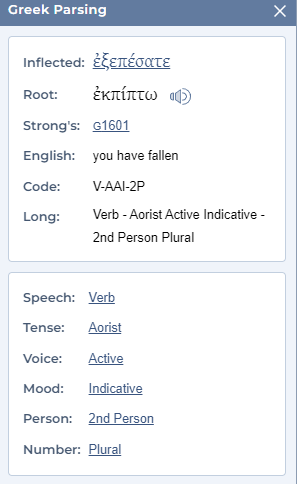
    We need to hold the Word in the conventional sense, that is to not let go, to possess the Word, to hang on to the promises, and bend our wills to its teachings. Yet there are shades of meaning that the Greek word ἐπέχω epéchō (“hold fast”) may provide us additional truths for our lives.

    Noticing

    To hold fast in the ancient world also spoke of actively noticing, being alert to a situation, as Luke uses in his gospel.

    Luke 14:7 Now he told a parable to those who were invited, when he noticed how they chose the places of honor, saying to them,

    Jesus noticed, perceived, caught sight of His surroundings. He was taking it all in, understanding the environment. He was not passively existing, simply existing, but absorbing the situation He was in. May this word also be informing us to be active in our understanding in the Word of Life and not simply be a passive reader, one who has heard and walked away?

    Concentrating

    Acts 3:4-5 And Peter directed his gaze at him, as did John, and said, “Look at us.” And he fixed his attention on them, expecting to receive something from them.

    When Peter and John were entering the Beautiful Gate, Peter and John looked at a cripple begging for alms. When Peter told the beggar to look at them, the beggar “fixed his attention” on the apostles. This speaks of focus, of concentration. He was single minded in looking at Peter and John. Of course he did not know what he would end up receiving, but that is immaterial to our topic at hand. He concentrated on the apostles.

    May this word also be informing us that we are to concentrate on the principles and truth of the Word of God. Paul, when speaking of holding fast the Word of Life is also exhorting us to concentrate on the truth of the Word. Surely this is a responsibility and the desire of the believer that always needs to be refreshed!

    Watching

    1 Timothy 4:16 Keep a close watch on yourself and on the teaching. Persist in this, for by so doing you will save both yourself and your hearers.

    Although Paul is speaking to Timothy in this verse, the Greek word ἐπέχω epéchō exhibits one additional facet of meaning for the believer. Paul uses the term in an application to Timothy to watch, or even guard his life and teaching. Back in Philippians 2:16, we might apply it to our own guarding of the Word in our own lives. As we grow in the Word we need to be careful (diligent) to maintain that which we have already learned. A relearning of principles and truths in the Word is an ongoing practice of the believer, and builds the spiritual fencing we need in guarding or protecting the Word in our own lives.

    Presenting

    Finally, Paul’s use of the term in Philippians 2:16 may also have the meaning of presenting, holding forth (as is translated in my old KJV) or displaying. After Paul speaks of the church as shining as lights in the world, he exhorts them to present, or display the Word of Life to those outside of the church, as light shines from it’s source. If the world is watching (and they are!), they should see the truths of the Word in the life of the believer.

    The picture in this verse is of gospel truths being clearly presented to the world by redeemed sinners, for the world to see in those who claim the name of Jesus to actually recognize Jesus (in some manner) as we walk about in the darkness of this world.

    Be in the Word in the morning, evening or afternoon. Consider the truths you have learned and walk in them. Notice the Word, concentrate on the Word, watch over the Word and finally present the Word to those around you. And if necessary, use words!

    Remember God is good, all the time!


    Thanks again for coming to visit. I hope you found something of interest in this post and would appreciate a comment, to begin a discussion. If you know someone this blog may bless (or challenge), send them a link, so they may join us in our discussion

    ← Back

    Thank you for your response. ✨

    Warning
    Warning
    Warning
    Warning
    Warning.

    Follow Considering the Bible on WordPress.com

    Share this:

    • Email a link to a friend (Opens in new window) Email
    • Print (Opens in new window) Print
    • Share on Telegram (Opens in new window) Telegram
    Like Loading…
←Previous Page
1 … 35 36 37 38 39 … 91
Next Page→

Create a website or blog at WordPress.com


Loading Comments...
 

    • Subscribe Subscribed
      • Considering the Bible
      • Join 692 other subscribers
      • Already have a WordPress.com account? Log in now.
      • Considering the Bible
      • Subscribe Subscribed
      • Sign up
      • Log in
      • Report this content
      • View site in Reader
      • Manage subscriptions
      • Collapse this bar
    %d