Jesus in the Old Testament is a series of posts that will offer my readers a chance to consider pictures or shadows of Jesus in the Old Testament. As mentioned in the introduction to this series, some may be obvious, some may be not so obvious, and some may simply be a facet of the Lord those reading may not have considered previously.
I hope as we venture through this series, we will see the Lord in many wonderful pictures throughout the Old Testament.
SEEING JESUS IN
Aaron
Behind the veil
Exodus 28:29 So Aaron shall bear the names of the sons of Israel in the breastpiece of judgment on his heart, when he goes into the Holy Place, to bring them to regular remembrance before the LORD.
Hebrews 6:19-20 We have this as a sure and steadfast anchor of the soul, a hope that enters into the inner place behind the curtain, where Jesus has gone as a forerunner on our behalf, having become a high priest forever after the order of Melchizedek.
As Aaron represented the children of Israel for a very short period of time before the LORD into the earthly Holy Place, His actions depicted the Greater Aaron, as our High Priest entering before the Father in reality.
Both entered behind the veil, into the Holy Place.
Aaron, as a type of Christ in his representing the children of Israel, was to remain for a short period behind the veil, performing his priestly duty and then returning to the people he represented. (Jesus too will be returning to His people but that is a separate topic for another day!)
Although Jesus is of a different priesthood, His entrance into the Father’s presence provides our future access, for not only does our author not speak of His leaving the Father’s presence, but that Jesus is described as a forerunner, One who is sent before those who follow.
Yes they both entered behind a veil, but only Jesus went behind the veil to remain behind the veil, and to provide access for those who He represented forever.
Thanks again for coming to visit. I hope you found something of interest in this post and would appreciate a comment, to begin a discussion. If you know someone this blog may bless (or challenge), send them a link, so they may join us in our discussion.
My hope is that this series will offer my readers a chance to consider the names, characteristics and descriptions of our God in the Word.
The remaining Names of God in this series might be considered descriptors, or characteristics of the Lord. We have reviewed the three primary Names of God, along with nineteen compound Names of God in our previous posts. As we venture through these descriptors of our God, I hope we will recognize all the many characteristics of our God that we tend to take for granted.
The Word is truly rich with descriptions of the Living God, and this effort of searching in the Word was quite illuminating. He truly is the ultimate subject of the Word, and His revelation of self-descriptions, or the accolades offered Him by His priests, prophets, kings apostles and faithful truly is a blessing.
May the Name of the Lord be praised, and by thinking on His name, may you have a blessed day.
54
BLESSED AND ONLY SOVEREIGN
2 Timothy 6:15 which he will display at the proper time–he who is the blessed and only Sovereign, the King of kings and Lord of lords,
For this name of God, I would like to concentrate on the concept of Sovereign. It is not a word that is commonly used outside of the Christian culture (or Britain), but the term refers to one who serves as a chief of state, or more applicable in our study, One who exercises supreme authority.
In my past studies, when I read Sovereign in relation to the Lord, the principal image of control rose in my mind. That is, He is in control of all things, from the time we are born, to the time we die. He is the creator and sustainer of all life and has provided a Savior that has redeemed us, rescuing us from damnation and loss.
For a period of time, my ruminations on the concept of control as Sovereign, in my mind, elevated God to the highest plane, to a point where every decision, act and attitude could be attributed to God. For a period of time this became a passion of mine, until I sensed a personal lack of concern for my own responsibility in front of Him. After all, in this scheme of thinking, He is the One who controls everything in His kingdom. And eventually, I felt I was slipping into a void.
Until I heard a man speak of a sovereign in a silly story.
He asked me to imagine a family going to a park, with three or four children tagging along. Prior to getting to the park, the father informed the children they were to stay within eyesight, not climb too high, and to care for each other. Upon arriving, the mother and father sat down, reminded the children of the instructions, and let them have some fun. As the children played, the father and mother were on constant watch, but the children had tremendous freedom to play within the boundaries set.
I ask you. Could this father be considered a sovereign? Did He have control over his “subjects”? If they rebelled, did he have the authority to discipline? If the children did right, exercising the freedom they were provided, did he become less sovereign?
My friends, the Sovereignty of God is a massive truth, and I take no credit for this story, but for the wise man who told it to me, I am thankful. I have come to understand that God is good, He has set limitations for us in the “park” and that He is always watching us, walking with us, and giving us guidance as we look to Him.
He is confident in Himself to allow His creation to work together with Him, to make mistakes (and learn from them) to provide a measure of freedom for His children, and yet still get the glory only He deserves.
He is good and He is good all the time!
I would love to hear of your favorite name, characteristic or description of the Living God. Please leave me a comment, and I will include it in the list!
Thanks again for coming to visit. I hope you found something of interest in this post and would appreciate a comment, to begin a discussion. If you know someone this blog may bless (or challenge), send them a link, so they may join us in our discussion.
For this series in Philippians, I am going to limit each post to one verse, and hopefully produce a short, succinct read for my friends who follow.
3:14 I press on toward the goal for the prize of the upward call of God in Christ Jesus.
If Paul is carrying the topic of resurrection from amongst the dead through the last few verses, that is his completion of his service and life upon the earth, then he gives us additional descriptions of the goal of his life.
It is a Goal
Again Paul refers to this idea of perfection, or as I now understand it as a completion of a task. It is something he has not “attained” yet but he is pushing to it
It is a Prize
The “prize” also has the connotation of being an award to a victor in the games. It is an accomplishment, something that is tangible and may be remembered to prove talent or energy expending, of the ability to excel and complete a task or race.
It is an Upward Call
It is upward, not downward. This seems obvious but consider your actions in the past day. Have your actions and attitudes been on a higher scale than last year? Last month? We are to be changing, growing and straining to a better witness of our Savior. I am becoming convinced that much of this witness is never seen by man, that our witness if true, is a continual lifestyle of service, and even as we are alone with our thoughts and Savior, we are to seek higher thoughts, higher motivations, higher attitudes, that reflect the nature He has given us.
Also, note that is is a call, an invite. You don’t have to serve, sacrifice or suffer if you don’t love Him. Walk away.
It is of God
The call came from God. Incredible. An invitation from God to a sinner, a man of weakness and frailty, a man that has been distracted, disillusioned and depressed, and yet the call goes out to this man that has no claim to deserving this call. Other than the radical love of the Savior, always seeking and saving!
It is in Christ Jesus.
How fitting for Paul to finish this description of the prize as Christ Jesus. How appropriate! How good to be reminded that He is the prize, and the resurrection from amongst the dead is not a final goal of the believer but a channel through which we will enter into His presence for all of eternity.
Consider your call my friend.
Thanks again for coming to visit. I hope you found something of interest in this post and would appreciate a comment, to begin a discussion. If you know someone this blog may bless (or challenge), send them a link, so they may join us in our discussion
My wife and I are reading through the Psalms in our evening reading and occasionally a nugget of the Psalms jumps out of the page. Don’t you love it when, after years of reading the “Old Book” passages become alive, reinforcing old teachings or simply warming your heart.
This is the book of Psalms, and it is rich.
I pray I can communicate a portion of the blessing we receive from this wonderful book.
David has described his persecutors in last weeks passage, and by extension has described our heart and potential actions also. Out of this treasonous and evil choice of life, David begs God for true justice, for justice that can be provided from the only true Judge.
Psalm 58
6 O God, break the teeth in their mouths; tear out the fangs of the young lions, O LORD! 7 Let them vanish like water that runs away; when he aims his arrows, let them be blunted. 8 Let them be like the snail that dissolves into slime, like the stillborn child who never sees the sun. 9 Sooner than your pots can feel the heat of thorns, whether green or ablaze, may he sweep them away!
In our last post, David described the wicked one, the one who refuses correction, the one who is fully loaded with venom, ready to attack, the one who seeks their own desires above all else.
David turns a corner with this portion, for he is now seeking justice on those who are persecuting him. He is asking the Lord for retribution on the wicked for the suffering he has experienced due to their wicked plans against him. Can you feel the frustration he is experiencing. He faithfully served the King, saved the nation from the Philistines in slaying Goliath, ministered to Saul in his sickness, and is now on the run for his life.
Persecuted, not due to anything he has done, other than the Lord choosing him for the throne of Israel. David’s heart for God, and God’s response in anointing him for the throne of Israel brought about his life of being on the run, of being but a step from the grave.
Can you feel his frustration? What is going on? Surely being chosen by God will only bring blessing and honor into David’s life. Surely there is something wrong with this picture! Surely God is not acting correctly, not providing the justice needed, and David begins to describe to God the ways these men are to be treated. David is looking for his God to deliver him, to execute justice upon those who are unjustly smearing his name, chasing him down and ruining his life.
In these verses, David writes numerous descriptions of how God should judge the wicked, all of which lead to their destruction. Note that David is pleading with God, but David’s actions reflect his faith in God, his belief that God truly is the Judge of all the earth, and that even the timing of justice is in God’s hands.
I can’t help but think of a time I chatted with my best friend and she spoke of her desire to lash out at her boss over an injustice. There was no doubt about the injustice, and yet she had not said anything, nor taken any hasty actions. This situation, though a microcosm of David’s experience, has some parallels. And thankfully, as she is wont to do, just needed to express her feelings, share how she felt, and then reconsidered how Jesus would respond. (She took donuts to work with her to be a blessing!)
As we face injustice, it is good for us to be honest with the Lord in our prayers. Trying to come to God with a “face on” will help no one, and God is not deceived. David fully expressed his desires for these wicked men, yet would not hurt the Lord’s anointed.
David expressed his anger and frustration with God, yet was under God’s control in his day to day life. He was under persecution for doing right, for being right, and yet no retaliation, no seeking of revenge against Saul.
Consider the Greater David. Consider His actions toward those who unjustly mocked Him, ridiculed Him, defamed Him, beat him, whipped Him and crucified Him. Did He seek justice, or ask the Father to forgive them?
My hope is that this series will offer my readers a chance to consider the names, characteristics and descriptions of our God in the Word.
The remaining Names of God in this series might be considered descriptors, or characteristics of the Lord. We have reviewed the three primary Names of God, along with nineteen compound Names of God in our previous posts. As we venture through these descriptors of our God, I hope we will recognize all the many characteristics of our God that we tend to take for granted.
The Word is truly rich with descriptions of the Living God, and this effort of searching in the Word was quite illuminating. He truly is the ultimate subject of the Word, and His revelation of self-descriptions, or the accolades offered Him by His priests, prophets, kings apostles and faithful truly is a blessing.
May the Name of the Lord be praised, and by thinking on His name, may you have a blessed day.
53
BELOVED SON
Colossians 1:13 He has delivered us from the domain of darkness and transferred us to the kingdom of his beloved Son, in whom we have redemption, the forgiveness of sins.
Jesus is called the Father’s beloved Son.
Beloved is the Greek term ἀγάπη agápē.
As many know, there are a number of terms in the Bible that refer to love, but this is the term that was not in use in the Greek language at the time of the first century. It is a term that reflects the character of the One loving and not of the one being loved.
With that said, when God so loved the world, this term seems appropriate, for the One loving is God and the one being loved is those in rebellion. The ones receiving this love were not deserving, they were actually enemies of God. Yet, out of the character of God, He loved them. God expressed His love to them because that is the character of God. The recipients had nothing to do with it other than being contrary to the love, refusing and fighting against the hound of heaven.
When Paul states that the Son is beloved, and uses the same Greek term, we are to understand that the love the Father has for His Son is the same love He has for us, as we are in the Son and He is the Beloved Son.
The Father’s love for the Son came out of His own character, and though there was nothing between the Father and Son (except while the Son was on the cross), the love was pure and unrelenting.
Jesus is the Beloved Son.
I would love to hear of your favorite name, characteristic or description of the Living God. Please leave me a comment, and I will include it in the list!
Thanks again for coming to visit. I hope you found something of interest in this post and would appreciate a comment, to begin a discussion. If you know someone this blog may bless (or challenge), send them a link, so they may join us in our discussion.
Colossians 2:18-19 Let no one disqualify you, insisting on asceticism and worship of angels, going on in detail about visions, puffed up without reason by his sensuous mind, and not holding fast to the Head, from whom the whole body, nourished and knit together through its joints and ligaments, grows with a growth that is from God.
Disqualify Christians?
Who is Paul talking to here? Is he speaking to those on the fringe of the church, those who may not be totally committed to the Savior. Maybe this passage is intended for those on the outside looking in, those who have not made a commitment, that are not believers yet. No – that can’t be since Paul has addressed this letter to the saints and faithful.
Colossians 1:2
To the saints and faithful brothers in Christ at Colossae: Grace to you and peace from God our Father.
No this warning can’t be for those on the fringe of the church. Since we have established this warning to true believers, then we must understand what it means to be disqualified for a believer?
First, what is it to be “disqualified”? What does the Greek word actually mean? Let us refer to Strong’s definition to begin.
It is a compound word in the Greek, made up of kata – “against” and brabeus – “an umpire”, and refers to those false teachers in the church who are acting as judges or umpires regarding the truth, fighting against the teaching Paul has provided.
Disqualified from Christian leadership?
Some may approach this verse in conjunction with Paul’s teaching in other passages where the apostle (or any other Christian leader) would be disqualified from further service due to sin or lapse in faithfulness. This certainly is a truth in the Word, but I struggle finding this theme in this passage. It appears Paul is talking to all the saints and faithful in Colossae
Disqualified from Christian rewards?
To be disqualified in this verse is to loose the opportunity for some (or all) the rewards possible for a believer when he passes from this earth. This is the common fall back position I took when I was invested in OSAS (Once Saved Always Saved). This may have some connection to the previous topic of service, and may be the correct interpretation, if the theme of rewards may be found in the earlier verses. Can you find the theme of rewards in this passage?
Disqualified from Christian life?
Although the grimmest of end results, that is the apostacy of the believer being referred to here in verse 18 , the very next verse may direct me to this conclusion. Paul speaks of being disqualified, and then speaks of the believer “not holding fast to the Head”
Colossians 2:19
and not holding fast to the Head, from whom the whole body, nourished and knit together through its joints and ligaments, grows with a growth that is from God.
When might we think that not holding fast to the Head would be an acceptable condition for salvation?
Although I typically use the ESV throughout my posts on this blog, I do refer to other translations occasionally, and in this instance found two translations that speak of an apostacy.
Colossians 2:19 NIV
They have lost connection with the head, from whom the whole body, supported and held together by its ligaments and sinews, grows as God causes it to grow.
Colossians 2:19 NLT
and they are not connected to Christ, the head of the body. For he holds the whole body together with its joints and ligaments, and it grows as God nourishes it.
Also, though my understanding of the English word disqualified may not be worth much, when I see the term “disqualified” I understand the word to mean that the participant is ejected from the competition, that he or she is no longer allowed to be involved, that upon some decision or act of the participant, a rule was broken (or in my understanding a relationship was rejected).
Rejecting the Head for an alternate method of reaching God. Foolishness yet a very real threat in this age, as we have multitudinous false teachers seeking to pull us away from the truth of the gospel.
Jesus is the only way, and any teacher that distracts you from the simple truth of Jesus the Messiah, crucified for you is a deadly distraction.
Thanks again for coming to visit. I hope you found something of interest in this post and would appreciate a comment, to begin a discussion. If you would like to receive daily posts from Considering the Bible, click on the “Follow” link below
As many who have followed me for a bit, I have fallen into the Psalms, and I can’t get up! (As if I would want to.) The Psalms are a majestic collection of poetry, of heart felt human experiences that constantly challenge me in my own frail attempt to follow the true King. As many of the Psalms are written by David, my study on the Psalms has spurred me on to looking at the life of David, is the main contributor to this book, and to follow the victories and tragedies of the shepherd King of Israel.
Many times in the narrative, we will see the Lord Jesus, imperfectly, yet a reflection of His spirit in a man with weaknesses.
1 Samuel 17:19-23
19 Now Saul and they and all the men of Israel were in the Valley of Elah, fighting with the Philistines. 20 And David rose early in the morning and left the sheep with a keeper and took the provisions and went, as Jesse had commanded him. And he came to the encampment as the host was going out to the battle line, shouting the war cry. 21 And Israel and the Philistines drew up for battle, army against army. 22 And David left the things in charge of the keeper of the baggage and ran to the ranks and went and greeted his brothers. 23 As he talked with them, behold, the champion, the Philistine of Gath, Goliath by name, came up out of the ranks of the Philistines and spoke the same words as before. And David heard him.
David was a responsible young man, always ensuring those assignments to which he could not attend to, were taken care of. Note that prior to leaving for the front, he left the sheep with a keeper. As he entered the encampment area, he assigned a keeper to care for the provisions he brought for his brothers.
Note also, that David rose early, indicating a willing spirit, for he didn’t stay in bed, sleep in, act the sluggard, but rose early and performed his assigned tasks. This enthusiasm, it turns out was instrumental for David to arrive at the camp, just in time to hear Goliaths rant. To be with his brothers as they were subjected to psychological warfare.
The soldiers were being worn down, with this assembly of the ranks before the enemy required with a daily formation and approach, only to pull back, to take the mental hit and go back to the camp, licking their wounds.
This time a young man, a teenager, a future king, a shepherd, heard the rant from the enemy. At this point, everything changes! And Goliath might better start measuring his coffin, for he is a dead man!
Thanks again for coming to visit. I hope you found something of interest in this post and would appreciate a comment, to begin a discussion. If you know someone this blog may bless (or challenge), send them a link, so they may join us in our discussion.
Jesus in the Old Testament is a series of posts that will offer my readers a chance to consider pictures or shadows of Jesus in the Old Testament. As mentioned in the introduction to this series, some may be obvious, some may be not so obvious, and some may simply be a facet of the Lord those reading may not have considered previously.
I hope as we venture through this series, we will see the Lord in many wonderful pictures throughout the Old Testament.
SEEING JESUS IN
Aaron
Tempted
Exodus 32:1 When the people saw that Moses delayed to come down from the mountain, the people gathered themselves together to Aaron and said to him, “Up, make us gods who shall go before us. As for this Moses, the man who brought us up out of the land of Egypt, we do not know what has become of him.”
Hebrews 4:15 For we do not have a high priest who is unable to sympathize with our weaknesses, but one who in every respect has been tempted as we are, yet without sin.
We all know of Aaron’s failure before the Lord in succumbing to the pressure of the Israelites. He actually created (or oversaw the creation) of Israel’s first idol, while Moses was speaking with God on the mountain.
Aaron was tempted, and as he fell in this temptation, he produced a situation that spread far beyond his own life. The repercussions of falling into this temptation was the potential wiping out of the entire nation. Yet Aaron, and the nation, due to Moses intercession, escaped judgement.
Obviously Moses is a type of the Lord in this instance, and we shall get to him, but in Aaron, we find a man who was tempted. He felt the pressure of the crowd, the influence of the multitude, and fell to the coercion, rejecting the truth Moses spoke to him.
Jesus also was tempted, not only in the wilderness all alone, for 40 days, in a weakened condition, but also in the multitudes, in large groups and gangs that had death on their minds. He stayed the course, even to death, knowing that the temptation to save His own skin would doom not only the nation, but the created world.
He was tempted, yet without sin!
Thanks again for coming to visit. I hope you found something of interest in this post and would appreciate a comment, to begin a discussion. If you know someone this blog may bless (or challenge), send them a link, so they may join us in our discussion.
My hope is that this series will offer my readers a chance to consider the names, characteristics and descriptions of our God in the Word.
The remaining Names of God in this series might be considered descriptors, or characteristics of the Lord. We have reviewed the three primary Names of God, along with nineteen compound Names of God in our previous posts. As we venture through these descriptors of our God, I hope we will recognize all the many characteristics of our God that we tend to take for granted.
The Word is truly rich with descriptions of the Living God, and this effort of searching in the Word was quite illuminating. He truly is the ultimate subject of the Word, and His revelation of self-descriptions, or the accolades offered Him by His priests, prophets, kings apostles and faithful truly is a blessing.
May the Name of the Lord be praised, and by thinking on His name, may you have a blessed day.
52
BEGINNING OF WISDOM
Psalm 111:10 The fear of the LORD is the beginning of wisdom; all those who practice it have a good understanding. His praise endures forever!
This description of our Savior is the third time He is associated with a beginning.
In the last two posts, we have seen that when “beginning” was referring to the Christ, it was related to the new creation, the church, and to His mission and sacrifice.
Not so here for Psalmist speaks of the beginning of wisdom as the attitude of the fear of the Lord.
We understand the fear of the Lord is the Old Testament motivation for all obedience to the commands of God. Whether it is a holy reverence or a soul quaking fear is not the focus of this post.
The focus of this post is to consider the ultimate “beginning of wisdom” to be best displayed in the Savior Himself.
We know He is the sinless Son of God, obedient in all his actions and attitudes before Hs Father. His fear of the Lord was consummate, for He never looked to the right or to the left. Only on the Father.
The term “beginning”, though often denoting the first in time, may also speak of the first in place, order or rank. Given this, it would be easy to understand that the beginning of wisdom was best exemplified and lived out in the Messiah.
He is the beginning of wisdom.
I would love to hear of your favorite name, characteristic or description of the Living God. Please leave me a comment, and I will include it in the list!
Thanks again for coming to visit. I hope you found something of interest in this post and would appreciate a comment, to begin a discussion. If you know someone this blog may bless (or challenge), send them a link, so they may join us in our discussion.
For this series in Philippians, I am going to limit each post to one verse, and hopefully produce a short, succinct read for my friends who follow.
3:13 Brothers, I do not consider that I have made it my own. But one thing I do: forgetting what lies behind and straining forward to what lies ahead,
In our last post we spoke of Paul’s attitude of accomplishment, and he continues to flesh this out in this verse.
He again speaks of the sacrificial life, in that he forgets his previous service, the sacrifice and the suffering he has experienced in ministry to the Lord. To forget in this verse has the added meaning sometimes of not caring about, or neglecting something.
In your walk with the Lord, do you find yourself comparing your ministry with that of your peers? Doesn’t feel like you are forgetting what lies behind you Carl!
How about in your estimation of the service you have provided? Is it something that you remind yourself of, roll it about in your mind and find comfort in? Is that a healthy way to think Carl?
Every moment we spend in the past, whether if be in remembering our successes (or failures) we are not pressing forward, as Paul speaks of in the passage.
He is straining to what lies ahead, and in this phrase he may be referring to the resurrection from the dead that he spoke of above. He is keeping his eye on the prize, for to strain for what lies ahead – the resurrection from the dead – is to look to Jesus.
It is our privilege to concentrate, focus and strain to see the One who has been resurrected from amongst the dead, into a new life. His works are the only service we are to remember, and all other service can be forgotten, if it feeds a heart of pride, consumes our limited time or distracts us from our focus.
Let us not forget Him and yet forget us!
Thanks again for coming to visit. I hope you found something of interest in this post and would appreciate a comment, to begin a discussion. If you know someone this blog may bless (or challenge), send them a link, so they may join us in our discussion
My wife and I are reading through the Psalms in our evening reading and occasionally a nugget of the Psalms jumps out of the page. Don’t you love it when, after years of reading the “Old Book” passages become alive, reinforcing old teachings or simply warming your heart.
This is the book of Psalms, and it is rich.
I pray I can communicate a portion of the blessing we receive from this wonderful book.
David provided the core, foundational problem of mankind in last weeks post, of the heart of the ruler, and the violence that flows from the rulers heart through his hands and to the victims.
In todays post, David will continue to describe wicked man, those men who sought him out, chased him with the intention of death, those who hated him without cause. He is also describing those amongst whom we live, those who have gained breath from birth, those we love and cherish, even ourselves – if we are honest with ourselves.
Although uncomfortable, let us read the following passage.
Psalm 58
3 The wicked are estranged from the womb; they go astray from birth, speaking lies. 4 They have venom like the venom of a serpent, like the deaf adder that stops its ear, 5 so that it does not hear the voice of charmers or of the cunning enchanter.
If we are honest with ourselves.
It is a difficult message, when I see my little grandchildren cooing and gurgling, to believe that within those cute little ones, their lies a heart that is bent to selfishness.
It is hard to admit that each of us, as we gain breath, have a desire to satisfy own own heart and none else. Though David’s description is speaking of those who were in full bloom of their sin, they began with a self centered spirit. These enemies of David had potential to either follow after or fight against their estrangement, their isolation from others, and especially from God the Father. These particular men followed after their estrangement. We all do. It is natural. It is normal. It is inevitable.
If we are honest with ourselves.
The wicked come fully weaponized. The wicked have venom. They do not need to gain a source of venom, but come fully equipped with poisonous intent.
Story time
As I was walking though my office yesterday, a peer had his radio on, volume low, and barely discernible, but I caught a phrase in a song that we repeat to ourselves constantly.
I believe people are good. I believe I am good.
Even as I heard that, I felt good. I enjoyed that message. I thought highly of myself. I have done some good things in life, therefore I am good, right?
My friends, I am not trying to say every human is as evil as Hitler in their actions, but we all are capable of great self deception, and easily able to justify evil acts, all the while thinking we are good.
If we are honest with ourselves.
Note that the wicked do not hear the voice of the charmers, or the enchanter. They refuse any counsel or direction. They stop their ears, intentionally refusing to hear of any alternate message, of any correction or rebuke.
At this point, David’s description of mankind is desperate. A fully weaponized individual that refuses any direction, being directed only by a heart that seeks it’s own desire
Let’s be honest with ourselves my friend. If we have ever veered from the perfection of God, (and we all have), we belong to the group David is describing here. Venomous individuals seeking their own. Individuals with a heart that spews out violence.
Is there no hope? Surely we are without any ability to correct our ways, for our only influence is the heart we were born with, that we are controlled by, that devise our plans and direct our actions. No wonder Paul cried out…
Romans 7:24 Wretched man that I am! Who will deliver me from this body of death?
Let us remember that the main issue in this Psalm is the search for the true Judge of all the earth. David is describing a judge (or ruler) vying for control over our lives. In his description of those against him, he condemns us all, for his description is the description of my own heart.
But am I being to harsh, too judgmental, to negative? Jesus himself sealed this truth when He described the heart of man in Matthew 15:18-19
But what comes out of the mouth proceeds from the heart, and this defiles a person. For out of the heart come evil thoughts, murder, adultery, sexual immorality, theft, false witness, slander.
We have a heart that seeks it’s own. The true Judge is One who has the heart we think we have, that is, a heart that is the very definition of right, that has been pieced for us, that has drawn us to Him.
Seek Him. Listen to Him. Do not stop your ears from His counsel. Seek His heart, for His heart is a heart of mercy, forgiveness, love, patience, kindness wisdom.
My hope is that this series will offer my readers a chance to consider the names, characteristics and descriptions of our God in the Word.
The remaining Names of God in this series might be considered descriptors, or characteristics of the Lord. We have reviewed the three primary Names of God, along with nineteen compound Names of God in our previous posts. As we venture through these descriptors of our God, I hope we will recognize all the many characteristics of our God that we tend to take for granted.
The Word is truly rich with descriptions of the Living God, and this effort of searching in the Word was quite illuminating. He truly is the ultimate subject of the Word, and His revelation of self-descriptions, or the accolades offered Him by His priests, prophets, kings apostles and faithful truly is a blessing.
May the Name of the Lord be praised, and by thinking on His name, may you have a blessed day.
51
BEGINNING OF GOD’S CREATION
Revelation 3:14 “And to the angel of the church in Laodicea write: ‘The words of the Amen, the faithful and true witness, the beginning of God’s creation.
In our last post we considered Jesus as the beginning of the church, as Paul was writing to the Colossians.
In this portion of Scripture, John is describing our Savior as the beginning of God’s creation. Again. let us be careful to not assume Jesus had a beginning (other than as a man) and was not One of the eternal persons in the Trinity.
As the audience is the church of the Laodiceans, I have always considered the creation John refers to here as the church, very much of the same vein of truth as Paul expressed in Colossians 1:18
I would love to hear of your favorite name, characteristic or description of the Living God. Please leave me a comment, and I will include it in the list!
Thanks again for coming to visit. I hope you found something of interest in this post and would appreciate a comment, to begin a discussion. If you know someone this blog may bless (or challenge), send them a link, so they may join us in our discussion.
As many who read this blog are believers, to see this verse is to simply accept it at face value. We have accepted it since it is in the Word and not been shocked as the disciples must have been when they first heard it.
Considering the original audience, it is a paradox, and in trying to understand the message as the original hearers, – well – it is a difficult saying!
It just didn’t make sense for me, and, as a paradox is wont to do, it took me outside of my usual way of thinking.
I suppose the easiest way to understand this paradox is the throw myself under the bus. It isn’t the saying that is the problem but my false concept that to be great means to accept the world’s definition of greatness. My nature is such that I to want to have power over others, and that power over others somehow is evidence of greatness in my life. To be over someone, to have someone serve me, can be heady, it feeds the pride, makes my self estimation blow up, and allows the self deception of my own importance grow.
So why is it that power over someone makes me think I am of more worth, have greater value, or simply am a “better” person. If we consider some of the most powerful men in history, they have been despots, dictators that have taken their power over others and abused it, causing suffering and death. Absolute power corrupts absolutely.
Jesus’ truth in this verse, if considered in the opposite, shows the truth of His statement. Those who have had the more “servants” have actually become lesser people, loosing moral guidance and ethical anchors, their very souls to the drive for more power.
Yes, this verse is a paradox, but only due to my upside down thinking of what it takes to be great. As we watch those who have incredible power over others in this age, we must remind ourselves that they have lost everything in order to gain this temporal condition. They are truly to be pitied, for they have fallen for a lie, and will suffer due to their success!
If we seek greatness (an imitation of Christ in us), the only path is through service to others.
Thanks again for coming to visit. I hope you found something of interest in this post and would appreciate a comment, to begin a discussion. If you know someone this blog may bless (or challenge), send them a link, so they may join us in our discussion
As many who have followed me for a bit, I have fallen into the Psalms, and I can’t get up! (As if I would want to.) The Psalms are a majestic collection of poetry, of heart felt human experiences that constantly challenge me in my own frail attempt to follow the true King. As many of the Psalms are written by David, my study on the Psalms has spurred me on to looking at the life of David, is the main contributor to this book, and to follow the victories and tragedies of the shepherd King of Israel.
Many times in the narrative, we will see the Lord Jesus, imperfectly, yet a reflection of His spirit in a man with weaknesses.
1 Samuel 17:17-18
17 And Jesse said to David his son, “Take for your brothers an ephah of this parched grain, and these ten loaves, and carry them quickly to the camp to your brothers. 18 Also take these ten cheeses to the commander of their thousand. See if your brothers are well, and bring some token from them.”
Jesse sent his youngest son into a war zone. According to my calculations, Jesse still had five sons at home, of whom David is the youngest.
Why send David?
Jesse sent the future king of Israel into a war zone. How long ago had it been that David was anointed to be King of Israel?
Why send David?
Jesse sent the family shepherd into a war zone. Were the other four brothers busy working for the father?
Why send David?
Jesse sent David into a warzone to provide supplies for his brothers and superior, and to “spy” on the conditions of the army of Israel. ”Spy” may be too harsh a word for this errand but the result is the same. Jesse was curious about the conditions his sons were experiencing, and Jesse’s concern for his older boys brought David into an unsafe situation.
So why send David. Did not Jesse have a servant that was trustworthy, but somewhat expendable? It turns out in our next passage, we find that David, prior to leaving on this mission, found a keeper for his sheep. Jesse had servants!
Was Jesse revealing how he saw David, not as the future King, or as his youngest son, but just as another servant, one whom was already busy performing shepherding tasks for him and service to the king. Note that David had just been described as having returned from the king’s service in our previous passage.
In all of this conjecture, I find that David’s anointing made no difference to those about him. Nothing changed in the eyes of the family towards the youngest son of Jesse. The promise of God on David may have only created further friction within the family.
Forgetting motivations and family interactions within David’s family, it is always good to see the Lord Jesus pictured in the Old Testament. In this very passage, we see the Son being sent by the Father into a warzone for the sake of His own. We see the Son providing sustenance for those of His people. We will see that He was rejected by those he came to serve, and entered into a battle all alone, was mocked and ridiculed and faced certain death in front of the enemy. He entered battle without the conventional defensive and offensive battle gear, but that which was simple and effective.
This story of David and Goliath is truly amazing as a historical incident in the nation of Israel, a time that set the nation on a course of great success both politically and militarily. Only more so is this story worth considering if we see Jesus in the midst of it, and consider how these stories of a young shepherd boy pre-shadowed the true King of Israel.
His story is the greater story, for He is the Greater David.
Thanks again for coming to visit. I hope you found something of interest in this post and would appreciate a comment, to begin a discussion. If you know someone this blog may bless (or challenge), send them a link, so they may join us in our discussion.
Jesus in the Old Testament is a series of posts that will offer my readers a chance to consider pictures or shadows of Jesus in the Old Testament. As mentioned in the introduction to this series, some may be obvious, some may be not so obvious, and some may simply be a facet of the Lord those reading may not have considered previously.
I hope as we venture through this series, we will see the Lord in many wonderful pictures throughout the Old Testament.
SEEING JESUS IN
Aaron
A Brother
Exodus 4:14 Then the anger of the LORD was kindled against Moses and he said, “Is there not Aaron, your brother, the Levite? I know that he can speak well. Behold, he is coming out to meet you, and when he sees you, he will be glad in his heart.
Hebrews 2:17 Therefore he had to be made like his brothers in every respect, so that he might become a merciful and faithful high priest in the service of God, to make propitiation for the sins of the people.
It is interesting that Aaron is first called out as a brother of Moses. Earlier we met a priest by the name of Melchizedek, which for reasons beyond our topic today, was not chosen to represent the nation of Israel as high priest. Some may think Melchizedek would have passed on by now, but I tend to think differently!
Aaron was a man that had two descriptions the Lord noted for Moses. One that he could speak well, which addresses Moses claim to limit his ability to represent before Pharoah, and that he was a brother. The fact that he was a Levite comes into the equation later for the priesthood!
Aaron was a brother. One who was of the same “stuff” as Moses, coming from the same family, the same time, the same location, the same history. He knew what it meant to be of the population of an oppressed people. He had heard of the promise of a new land.
Jesus is also of the same “stuff” in that He took on a physical body, experienced hunger, anger, frustration and remaining gamut of emotional impacts a man experienced in the first century, under an oppressive ruler, and yet He knew the promise of a new land.
Note that the apostle speaks of Jesus “made like His brothers in every respect”. We can not claim He did not experience what we go through, both internally and externally, or that we undergo trials beyond His understanding.
He is a Brother.
Thanks again for coming to visit. I hope you found something of interest in this post and would appreciate a comment, to begin a discussion. If you know someone this blog may bless (or challenge), send them a link, so they may join us in our discussion.
My hope is that this series will offer my readers a chance to consider the names, characteristics and descriptions of our God in the Word.
The remaining Names of God in this series might be considered descriptors, or characteristics of the Lord. We have reviewed the three primary Names of God, along with nineteen compound Names of God in our previous posts. As we venture through these descriptors of our God, I hope we will recognize all the many characteristics of our God that we tend to take for granted.
The Word is truly rich with descriptions of the Living God, and this effort of searching in the Word was quite illuminating. He truly is the ultimate subject of the Word, and His revelation of self-descriptions, or the accolades offered Him by His priests, prophets, kings apostles and faithful truly is a blessing.
May the Name of the Lord be praised, and by thinking on His name, may you have a blessed day.
50
BEGINNING
Colossians 1:18 And he is the head of the body, the church. He is the beginning, the firstborn from the dead, that in everything he might be preeminent.
He is the beginning.
Some may think this refers to Jesus as being created, and would assign to Him an existence other than the truth of His eternality.
This thinking does not makes sense, for in the very verse we are looking at, Paul is speaking of Him as He relates to the church, not of His nature. He is the beginning of the church, the trailblazer, the Apostle sent to rescue us.
We cannot think of Paul or Peter as the ones who started the church.
He is the beginning.
As a man, He began His earthly existence in a cradle, for He needed a body to sacrifice for our rebellion. In a body, He related to those around Him, led by example, showed His character, and finally offered up the body created for Him.
He is the beginning.
I would love to hear of your favorite name, characteristic or description of the Living God. Please leave me a comment, and I will include it in the list!
Thanks again for coming to visit. I hope you found something of interest in this post and would appreciate a comment, to begin a discussion. If you know someone this blog may bless (or challenge), send them a link, so they may join us in our discussion.
For this series in Philippians, I am going to limit each post to one verse, and hopefully produce a short, succinct read for my friends who follow.
3:12 Not that I have already obtained this or am already perfect, but I press on to make it my own, because Christ Jesus has made me his own.
Let’s remember that this letter includes some of the greatest exhortations to humility in the Bible, through the example of the Master, and of His servants Timothy and Epaphroditus. Let’s not forget Paul, in that he provides direction to live a life a humility, and that he exhibits that same characteristic throughout the letter.
This is evident in this passage, as he makes no claim to accomplishment, even though in terms of Christian ministry, very few could boast of his efforts.
Of course none have attained a physical resurrection on this side of the grave, so could he be breaching something else as he brings this truth to our attention. Is he speaking of a status within the Christin life? A perfection?
Consider the previous verse
….that I may attain the resurrection from the dead. Not that I have already attained it (the resurrection from the dead) or am already perfect.
To be perfect! Paul uses the Greek word τελειόω teleióō, which is somewhat different than my initial understanding of perfection, or of a status dependant on character or spirituality. Somewhat akin to a sinless perfection. No Paul is not speaking of that condition, but when he brings up being perfect in this verse, he is referring to completion, or accomplishment, crossing a goal or finishing a course. This thought is very much related to Paul’s earlier use of the term “attain”. This portion of the word is speaking of crossing a goal, or to bring to an end a certain assignment.
Hence the humility, for he is not going to let the Philippians consider him to be on a different plane of spiritual life than they are, but that he is still actively working out his salvation. He hadn’t arrived yet!
That is good news, for I often think of Paul as a man that could not be related to, that was so different as a believer that he was somewhat different, somewhat unapproachable.
Yet his example of humility and desire to press on is challenging to say the least. In his maturing of service to the Lord, he did not “rest on his laurels”, an attitude that is so easy for many of us to fall into.
Consider Paul’s life and attitude in this verse and try to relate.
Have you “rested on your laurels” somewhat?
Thanks again for coming to visit. I hope you found something of interest in this post and would appreciate a comment, to begin a discussion. If you know someone this blog may bless (or challenge), send them a link, so they may join us in our discussion
My wife and I are reading through the Psalms in our evening reading and occasionally a nugget of the Psalms jumps out of the page. Don’t you love it when, after years of reading the “Old Book” passages become alive, reinforcing old teachings or simply warming your heart.
This is the book of Psalms, and it is rich.
I pray I can communicate a portion of the blessing we receive from this wonderful book.
This psalm is a psalm answering the question “Who is the rightful Judge/Ruler of all the earth?” and the complaint concerning the unjust ruler comes from a prophet named David.
A generally accepted background to this psalm is rooted in the early days of David’s relationship with Saul, when Saul became mad (crazy), and sought out David’s life. It seems Saul gathered those of his inner circle and codified his intentions to seek and destroy David, a young man who had only served Saul in his court.
In the loss of his kingdom, Saul must have heard of David’s anointing, for he had eyes throughout the land. Given notice that he was destined to fall from power, Saul sought to frustrate the plan of God, and persecute the one who was rightfully the king.
During this persecution David wrote this psalm, and some think it may have been in the very cave of Adullum, where David was a hair breadth from being caught and hauled off.
David’s poetry is harsh in this passage, and as we live in a time of unjust rulers, there may be some out there who can relate to David’s frustration, anger and eventual release of joy.
But first, let us read David’s initial complaint.
Psalm 58
1 To the choirmaster: according to Do Not Destroy. A Miktam of David. Do you indeed decree what is right, you gods? Do you judge the children of man uprightly? 2 No, in your hearts you devise wrongs; your hands deal out violence on earth.
Immediately, David describes the heart of the rulers, and their unjust ruling over men. His frustration over the corruption within the ruling class is brimming over. Some may think David is referring to spiritual powers when he mentions “gods”, but this passage is addressing the culpability of the men in leadership, making decisions.
His complaint rests in the fact that though the ruler has been granted power to exercise influence over his people, this power can be abused. This abuse is dependent on the nature of the ruler, his heart condition, his desire for either his own good or the good of the people. This difference can be justified easily if the heart of the ruler is not leaning on God constantly. David, as the one who is the target of a ruler who is not leaning on God, sees the extent to which a man without God can fall.
Does the ruler indeed decree what is right?
Indeed. The sarcasm is heavy, for in David’s very question the answer rests, for the very definition of right is being defined by the ruler.
Yes – the very definition of right is defined by the ruler. David understands the motivation of the ruler (his heart’s desire) will define the actions being classified as “right” by the ruler in power. A ruler with evil intent can justify gross sin as a righteous act.
David cuts to the heart of the problem by exposing the intention of the ruler chasing him. Verse 2 describes the source of this corruption.
In your hearts you devise wrongs.
The king has a goal, something born in his desires, and in his heart, he devises actions to bring to fruit his desires. Never mind that some (if not all) of the actions are selfish, sinful and destructive. It can easily be justified by the dark heart, claiming whatever actions he takes, it is for the greater good!
The ruler’s decisions that impact his people are highly dependent on the condition of his heart. Out of the self centered desires of his heart, evil actions flow while he smiles at his people, telling them of his good intentions, of his saving efforts for the future. Some difficult times may come, but it is for a glorious time ahead.
Difficult times do come from a ruler whose heart devises wrong, for out of this heart, David correctly describes the outcome.
Violence on the earth.
The Hebrew term for violence speaks of injustice, of both ethical and physical wrongdoing, of unrighteous gain, cruelty. The term is châmâç, transliterated as ḥāmās.
Saul wanted David out of the picture and he had the authority to put into action his desires and devices. He was granted authority and abused it. Of course we know the mercy and goodness of God in the outcome, but in the meantime, David is experiencing the blunt force power of an evil heart in a jealous ruler.
Violence is what flows from an evil heart, and we must consider it for our own lives, for we all influence others, and though our authority may be small, the heart is still the issue.
We must be those who seek the heart of God, for out of His heart true righteousness flows. His heart is the very definition of “right” for it cannot be otherwise. Anyone who devices “right” apart from God, is fooling himself and will cause violence in their circle of influence.
As a judge/ruler, we shall see that Saul fails miserably, along with all those who sought to follow his plans. The power granted to him was abused, and God through His mysterious will, allowed it for a period, for training of a man of God, and for our instruction.
We also have rulers with evil intent. Let us not forget David’s actions when faced with unjust persecution. If persecution comes, remember the heart of God, the One whose heart was pierced so that we may be forgiven of our evil desires, actions and violence.
My hope is that this series will offer my readers a chance to consider the names, characteristics and descriptions of our God in the Word.
The remaining Names of God in this series might be considered descriptors, or characteristics of the Lord. We have reviewed the three primary Names of God, along with nineteen compound Names of God in our previous posts. As we venture through these descriptors of our God, I hope we will recognize all the many characteristics of our God that we tend to take for granted.
The Word is truly rich with descriptions of the Living God, and this effort of searching in the Word was quite illuminating. He truly is the ultimate subject of the Word, and His revelation of self-descriptions, or the accolades offered Him by His priests, prophets, kings apostles and faithful truly is a blessing.
May the Name of the Lord be praised, and by thinking on His name, may you have a blessed day.
49
BEAUTIFUL AND GLORIOUS
Isaiah 4:2 In that day the branch of the LORD shall be beautiful and glorious, and the fruit of the land shall be the pride and honor of the survivors of Israel.
We haven’t spoke of the Branch of the Lord yet, as we are looking at His names in an alphabetical order, but suffice to say, Isaiah is speaking of the Messiah when he speaks of the Branch.
He shall be beautiful and glorious.
Beautiful. This Hebrew term often translated as glorious, or glory in our Old Testament. Using this term, Isaiah is bringing us a varied description of beauty, for this term is very closely associated with the thought of glory.
But what is glory? If I met you on the street, and asked you “What is glory”, could you answer without using the term glory?
Glory. This Hebrew term speaks of glory, honor and abundance, and is used 200 times in the Old Testament.
The term rose from a root meaning of heaviness or weight, and this root meaning may be associated with abundance combined with authority.
In my thoughts, for someone to be glorious in ancient times, meant he had abundance, for he was most likely a ruler of some kind, and he suffered no loss of want. He had weight, not only as a man who had physical abundance, but moral and or authoritarian influence. To be glorious may have had a visual aspect to it, but if we consider the root meaning of the word to have continued in its usage, the term likely meant the weight of authority the owner was able to wield.
In all of this conjecture, it makes sense to this believer that when I hear of glory, I think of authority, and not necessarily beaming rays of light.
Our Savior has all authority; His influence has no limits and He has no competitor in His beauty(glory) and glory(authority).
I would love to hear of your favorite name, characteristic or description of the Living God. Please leave me a comment, and I will include it in the list!
Thanks again for coming to visit. I hope you found something of interest in this post and would appreciate a comment, to begin a discussion. If you know someone this blog may bless (or challenge), send them a link, so they may join us in our discussion.
and also for me, that words may be given to me in opening my mouth boldly to proclaim the mystery of the gospel, for which I am an ambassador in chains, that I may declare it boldly, as I ought to speak.
Introduction to the paradox and my difficulty with the verse or set of verses
It just didn’t make sense for me, and, as a paradox is wont to do, it took me outside of my usual way of thinking.
Ambassador in chains?
Maybe the cultural soup I live in is making me struggle with this phrase, but if I listen to the famous preachers on the one eyed bandit, I come away from their message thinking we are only blessed in the physical realm, that as believers in the crucified One, we are kings and queens, ruling over all else, exercising dominion and taking all material wealth simply by claiming it as a right for the child of God.
When Paul describes himself as an ambassador, I relate it to the modern equivalent, one who is protected by the government he or she represents. No harm is to be effected on an ambassador for fear of retaliation from the sending government. There is nothing the ambassador can be charged with in the land he or she was sent to, having diplomatic immunity provided by the host country.
This may be the source of my paradox, for with the modern rights afforded the ambassador, and the influence of the modern preacher telling me I have rights as a child of God to earthly wealth health and prosperity, I come away from this verse with a big ol’ bowl of confusion.
But wait – maybe the confusion lies more in me than the text. If I reject the modern preacher’s cloak of maliciousness, and understand that my view of an ambassador is relatively modern, we may dispense with this paradox swiftly.
Paul uses the term πρεσβεύωpresbeúō,, and its base meaning is to be a senior. With a little imagination, my reader may guess this word is related to presbýteros, and speaks of elders within a church body, (or even lends its term to a denomination – Presbyterian).
Paul is referring primarily to his age in this verse and as the aged Paul, he has represented Christ through his journey, which is what an ambassador does. To think of Paul the aged as being chained up in a cold dungeon like jail, as he represents the King of all Creation still hearkens to a paradox, for if those who locked him up understood who he represented, they would realize they are actually locking up the King.
To chain an ambassador, the King’s representative, is to do do harm to the King. In such instances, the host county would be in danger of retaliation from the King.
Jesus had his retaliation upon the Roman government, for He eventually conquered that nation, converting vast swaths of Romans to submission to God.
Maybe the paradox is in our modern understanding of how a believer relates to this old world we travel in!
Thanks again for coming to visit. I hope you found something of interest in this post and would appreciate a comment, to begin a discussion. If you know someone this blog may bless (or challenge), send them a link, so they may join us in our discussion
As many who have followed me for a bit, I have fallen into the Psalms, and I can’t get up! (As if I would want to.) The Psalms are a majestic collection of poetry, of heart felt human experiences that constantly challenge me in my own frail attempt to follow the true King. As many of the Psalms are written by David, my study on the Psalms has spurred me on to looking at the life of David, is the main contributor to this book, and to follow the victories and tragedies of the shepherd King of Israel.
Many times in the narrative, we will see the Lord Jesus, imperfectly, yet a reflection of His spirit in a man with weaknesses.
Let’s continue with the life of David, and his relations to two men who influenced his life greatly.
1 Samuel 17
12 Now David was the son of an Ephrathite of Bethlehem in Judah, named Jesse, who had eight sons. In the days of Saul the man was already old and advanced in years. 13 The three oldest sons of Jesse had followed Saul to the battle. And the names of his three sons who went to the battle were Eliab the firstborn, and next to him Abinadab, and the third Shammah. 14 David was the youngest. The three eldest followed Saul, 15 but David went back and forth from Saul to feed his father’s sheep at Bethlehem. 16 For forty days the Philistine came forward and took his stand, morning and evening.
Consider Jesse the Ephrathite. To be from Ephrath was to come from an historic location. Many who may be reading this may be surprised to find that Ephrath is the same place as Bethlehem.
Let’s go back to the first verse of the first chapter of the first book of Samuel. You see, Samuel’s ancestor came out of Ephrath, and we know that a very famous King was to be born in Ephrathah.
Micah 5:2 But you, O Bethlehem Ephrathah, who are too little to be among the clans of Judah, from you shall come forth for me one who is to be ruler in Israel, whose coming forth is from of old, from ancient days.
Jesse, the father of David, found his place in Israel in the little town of Bethlehem. An old man by the time David shows up on the scene, with numerous children prior to the future kings birth. An old man with a large family, in a small, seemingly insignificant town. With his nation on the brink of yet another war.
It turns out that there were at least 7 son’s of Jesse before David came on the scene. David, at the time of his anointing, was the eighth son of Jesse. As we mentioned earlier, David’s relationship within the family is not as clearly described as we might want it. If you haven’t been following my journey through David’s life, consider reading Life of David – 3.04 for some hints as to the family dynamics David lived within.
The first three sons followed King Saul to battle. These three soldiers had recently experienced the anointing of David to be the future King of Israel, yet they followed after King Saul into battle. A bit of conflict? Might this speak of the brother’s faith, or even of their jealousy? Of course this may have been more a factor of age than political difference, yet it makes me wonder of the relationship David had with his brothers.
I think as we venture a bit further into the story we will find that at least one of the brothers was undergoing a sampling of the green-eyed monster, a wee bit of jealousy. But I am getting ahead of myself.
Consider the heart of David in that when he was requested of King Saul, David did not forget his father. If there was some relational difficulties between David and the family, David’s actions did not reveal this. He could have justifiably stayed with King Saul, but he returned to his father, going back and forth between his father’s needs and the king’s needs.
David went back and forth, from Jesse, a man that may have “ignored” his son at times, possibly favoring his first born, or the elder brothers, to King Saul, a man who could not ignore David, but instead became his lethal enemy.
David served them both.
May I remind you that another King lived as a servant, a King that humbled Himself beyond our imaginations. A Man who gave to His enemies, even as He suffered and died. The Greater David came not to be served but to serve, and to give His life a ransom for all.
Thank Him for His loving kindness today, for His safeguarding of your life, for the blessing of knowing Him and His goodness.
Praise the Lord.
Thanks again for coming to visit. I hope you found something of interest in this post and would appreciate a comment, to begin a discussion. If you know someone this blog may bless (or challenge), send them a link, so they may join us in our discussion.
Leave it to a Civil Engineer to title a blog about gravel properties, but please don’t leave me yet. I bring this topic up because it has reminded me of the gospel, and of love. Now I guess you are thinking I’m nuts. That’s alright – I get that sometimes.
The background to my story is the filling of some potholes I was working on this afternoon on my driveway. We picked up a material that is called road base and it has little stones in it, medium stones in it, and some larger stones. A little bit of sand and a touch of clay, and abra cadabra, – fill for a pothole.
As I was shoveling the material out of the truck, my wife would level it out with a rake, and as she was leveling, she asked me why we didn’t use sand for the holes since we have so much available on site. I had to reach back to my schooling, but I described sand as a uniformly graded material very much like marbles, and any effort to pile marbles usually results in the marbles rolling away from each other. Hence the footprint in the sand syndrome!
The material we picked up was a non-uniformly graded base material with interlocking structures. The differing sizes find their place amongst the other stones, and the result is that after a bit of packing, the stones fill up the voids, allowing for greater bearing capacity for the road bed.
After all my rambling on about stones, I eventually looked up and saw that my wife was sincerely looking to understand something that was a part of my life. Please understand that my wife is an awesome lady, a sensitive loving person that cares for sick puppies, loves her garden, finds enjoyment in cleaning her home, and loves to dress up to go out. She is, in my opinion, the perfect example of a Christian lady, but then I may be a bit biased!
In all of this, she entered into my world of logic and analysis, of design and structure, of numbers and schedules to try to understand the fundamentals of gravel.
Who cares about gravel?
That’s the point. Gravel is about as interesting as watching paint dry, even for an engineer, but she was sincerely involved in the conversation, trying to understand it for the sake of understanding. Maybe to try to understand me a bit better.
You know, there is another who has taken an interest in our world. He has come down to talk of farmers and pearls, fish and tax collectors, kings and beggars, prostitutes and lepers. He often asked questions to bring people into conversations.
As He is God Almighty, it is not as if He needed any knowledge, or direction or input, but He involved Himself with a motley gang of unknown men, and expressed His love to them in all the interactions He entered into. And I am sure that each interaction left a mark on the disciple or friend, and His attention to their lives became an anchor for their memory of Him.
I wonder if He chatted with one of them about non-uniformly graded base with interlocking granular structures? I think He would have made it very interesting!
Thanks again for coming to visit. I hope you found something of interest in this post and would appreciate a comment, to begin a discussion. If you know someone this blog may bless (or challenge), send them a link, so they may join us in our discussion
My hope is that this series will offer my readers a chance to consider the names, characteristics and descriptions of our God in the Word.
The remaining Names of God in this series might be considered descriptors, or characteristics of the Lord. We have reviewed the three primary Names of God, along with nineteen compound Names of God in our previous posts. As we venture through these descriptors of our God, I hope we will recognize all the many characteristics of our God that we tend to take for granted.
The Word is truly rich with descriptions of the Living God, and this effort of searching in the Word was quite illuminating. He truly is the ultimate subject of the Word, and His revelation of self-descriptions, or the accolades offered Him by His priests, prophets, kings apostles and faithful truly is a blessing.
May the Name of the Lord be praised, and by thinking on His name, may you have a blessed day.
48
BAPTIZER
Luke 3:16 John answered them all, saying, “I baptize you with water, but he who is mightier than I is coming, the strap of whose sandals I am not worthy to untie. He will baptize you with the Holy Spirit and fire. John 1:32-34 And John bore witness: “I saw the Spirit descend from heaven like a dove, and it remained on him. I myself did not know him, but he who sent me to baptize with water said to me, ‘He on whom you see the Spirit descend and remain, this is he who baptizes with the Holy Spirit.’ And I have seen and have borne witness that this is the Son of God.” Acts 1:5 for John baptized with water, but you will be baptized with the Holy Spirit not many days from now.”
I imagine John the Baptist was a bit of a fiery preacher, calling the Pharisees a brood of vipers and speaking of wrath to come. So when John described the One coming as the One who would baptize with the Holy Spirit and fire, I was somewhat surprised to hear of what (or Who) He will baptize with.
First, He will baptize with the Holy Spirit. No one but God Almighty has the authority to baptize with the Holy Spirit. It is not as if the Holy Spirit was to come upon someone in order to provide authority or power for a certain task, as in the Old Testament. This is the next level, where God would create a new humanity on the day of Pentecost.
Secondly, He will baptize with fire. Now some think this refers to the tongues of fire in Acts 2, which it might, but the audience at the time had just experienced John’s teaching of wrath. The message those in attendance heard was likely a continuation of wrath-speak. If fire refers to judgement, the audience heard of the One who had the power of judgement over their lives, and of the One who was able to administer wrath.
Both of these modes of baptism speaks of the authority and power of our God, of our Savior who came down to make us a new person and to rescue us from the very fire He’ has the power to administer.
Think on Him today. Listen to Him and as He speaks to you, honor His name by following His lead.
I would love to hear of your favorite name, characteristic or description of the Living God. Please leave me a comment, and I will include it in the list!
Thanks again for coming to visit. I hope you found something of interest in this post and would appreciate a comment, to begin a discussion. If you know someone this blog may bless (or challenge), send them a link, so they may join us in our discussion.
For this series in Philippians, I am going to limit each post to one verse, and hopefully produce a short, succinct read for my friends who follow.
3:11 that by any means possible I may attain the resurrection from the dead.
In our last post we spoke of the resurrection, and Paul continues to in this verse, yet it is not exactly the same resurrection, at least not the same Greek word. In our previous verse, Paul uses the regular Greek word for resurrection, ἀνάστασις anástasis. In our present verse, he changes gears on us, modifying the previous verse by adding a prefix. ἐξανάστασις exanástasis
Do you see the difference? it is the little two letter prefix “ex”. In the Greek this prefix modifies the root word by adding the image or thought of being “out of” or “from”. In other words, as the verse above translates, Paul is seeking a resurrection “from the dead”
But isn’t that what is implied when we read the term resurrection? That is we are raised from the dead? Some believers see this term, which is only used here in this verse, as Paul describing a resurrection that is from “among the corpses”, from among those who are in a present state of death. Not necessarily speaking of his resurrections from his own body of death, but from amongst others who are experiencing death.
Does that help me in understanding this verse? Not much, for I am still unsure of Paul’s intent when he speaks this way.
No matter how we see this verse, it is important for us to understand the resurrection is closer today than it ever was, that those who trust in Christ will attain to this rescue, and that based on the general context of the verses we are in, suffering is the environment that this resurrection is attained.
Yes, Paul did say “by any means”, but I would be carefull to read into his phrase the idea of the end justifies the means.
In my opinion, and that is all this is, that when he mentions “by any means”, he is describing the general attitude our Lord also expressed when He prayed “Not my will but thine”
Whatever it takes!
A spirit of surrender is called for in this passage. A spirit of surrender that endures suffering, in order for the resurrections to be experienced.
May His will be our will today!
Straining toward the Goal
3:12 Not that I have already obtained this or am already perfect, but I press on to make it my own, because Christ Jesus has made me his own.
Let’s remember that this letter includes some of the greatest exhortations to humility in the Bible, through the example of the Master, and of His servants Timothy and Epaphroditus. Let’s not forget Paul, in that he provides direction to live a life a humility, and that he exhibits that same characteristic throughout the letter.
This is evident in this passage, as he makes no claim to accomplishment, even though in terms of Christian ministry, very few could boast of his efforts.
Of course none have attained a physical resurrection on this side of the grave, so could he be breaching something else as he brings this truth to our attention. Is he speaking of a status within the Christin life? A perfection?
Consider the previous verse
….that I may attain the resurrection from the dead. Not that I have already attained it (the resurrection from the dead) or am already perfect.
To be perfect! Paul uses the Greek word τελειόω teleióō, which is somewhat different than my initial understanding of perfection, or of a status dependant on character or spirituality. Somewhat akin to a sinless perfection. No Paul is not speaking of that condition, but when he brings up being perfect in this verse, he is referring to completion, or accomplishment, crossing a goal or finishing a course. This thought is very much related to Paul’s earlier use of the term “attain”. This portion of the word is speaking of crossing a goal, or to bring to an end a certain assignment.
Hence the humility, for he is not going to let the Philippians consider him to be on a different plane of spiritual life than they are, but that he is still actively working out his salvation. He hadn’t arrived yet!
That is good news, for I often think of Paul as a man that could not be related to, that was so different as a believer that he was somewhat different, somewhat unapproachable.
Yet his example of humility and desire to press on is challenging to say the least. In his maturing of service to the Lord, he did not “rest on his laurels”, an attitude that is so easy for many of us to fall into.
Consider Paul’s life and attitude in this verse and try to relate.
Have you “rested on your laurels” somewhat?
3:13 Brothers, I do not consider that I have made it my own. But one thing I do: forgetting what lies behind and straining forward to what lies ahead,
In our last post we spoke of Paul’s attitude of accomplishment, and he continues to flesh this out in this verse.
He again speaks of the sacrificial life, in that he forgets his previous service, the sacrifice and the suffering he has experienced in ministry to the Lord. To forget in this verse has the added meaning sometimes of not caring about, or neglecting something.
In your walk with the Lord, do you find yourself comparing your ministry with that of your peers? Doesn’t feel like you are forgetting what lies behind you Carl!
How about in your estimation of the service you have provided? Is it something that you remind yourself of, roll it about in your mind and find comfort in? Is that a healthy way to think Carl?
Every moment we spend in the past, whether if be in remembering our successes (or failures) we are not pressing forward, as Paul speaks of in the passage.
He is straining to what lies ahead, and in this phrase he may be referring to the resurrection from the dead that he spoke of above. He is keeping his eye on the prize, for to strain for what lies ahead – the resurrection from the dead – is to look to Jesus.
It is our privilege to concentrate, focus and strain to see the One who has been resurrected from amongst the dead into a new life. His works are the only service we are to remember, and all other service can be forgotten, if it feeds a heart of pride, consumes our limited time or distracts us from our focus.
Let us not forget Him and yet forget us!
Thanks again for coming to visit. I hope you found something of interest in this post and would appreciate a comment, to begin a discussion. If you know someone this blog may bless (or challenge), send them a link, so they may join us in our discussion







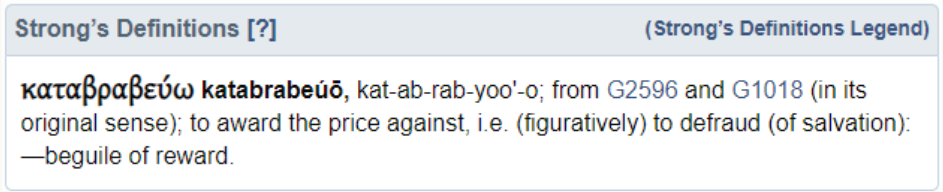





 Considering the Bible