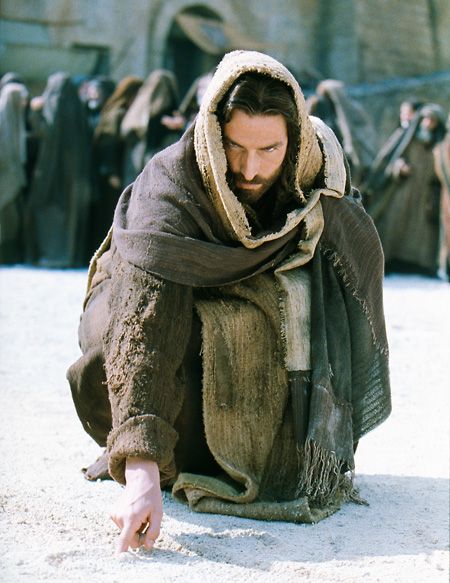

Jesus in the Old Testament is a series of posts that will offer my readers a chance to consider pictures or shadows of Jesus in the Old Testament. As mentioned in the introduction to this series, some may be obvious, some may be not so obvious, and some may simply be a facet of the Lord those reading may not have considered previously.
I hope as we venture through this series, we will see the Lord in many wonderful pictures throughout the Old Testament.
SEEING JESUS IN
BATHSHEBA
Child of Promise
1 Kings 1:28-30 Then King David answered, “Call Bathsheba to me.” So she came into the king’s presence and stood before the king. And the king swore, saying, “As the LORD lives, who has redeemed my soul out of every adversity, as I swore to you by the LORD, the God of Israel, saying, ‘Solomon your son shall reign after me, and he shall sit on my throne in my place,’ even so will I do this day.”
Romans 9:8 This means that it is not the children of the flesh who are the children of God, but the children of the promise are counted as offspring.
In our last posts we have seen the shame and of a promise kept for both Bathsheba and the Lord.
In this post we see a principle that is related to the patriarchs of Israel, Abraham’s sons Isaac and Ishmael, and Isaac’s sons Jacob and Esau.
A short history lesson regarding Abraham. He had a son through the impatience of a certain wife, naming him Ishmael. Over a decade later, Isaac was born through a certain wife. Both sons were of Abrahams loins. Isaac was the younger and received the inheritance!
Later, as Isaac was about to become a father, Esau actually fully breached the birth canal first, making Jacob the literal second born. (Jacob struggled with his brother even in the womb though). Jacob was therefore classified as second born, but the promises were passed onto him.
In the Word, it is not uncommon for a child of promise to be elevated over a child of the flesh.
In this passage we see Solomon, a son of David, a son whom the King had provided Bathsheba a promise of the throne to, usurp the “normal” succession of the a throne to the eldest. Solomon had a promise laid on him at an early age, and though Bathsheba became David’s wife after a number of predecessors had provided children, the promise the king gave to Bathsheba invalidated all normal procedures and practices. Solomon would be elevated based on promise, not on order of birth.
The promise of God is not held down by convention or customs, by standard accepted procedures or expectations. Jesus, as the second Adam, is the true Son of Promise and as such reigns over all.
Thanks again for coming to visit. I hope you found something of interest in this post and would appreciate a comment, to begin a discussion. If you know someone this blog may bless (or challenge), send them a link, so they may join us in our discussion.
My hope is that this series will offer my readers a chance to consider the names, characteristics and descriptions of our God in the Word.
The remaining Names of God in this series might be considered descriptors, or characteristics of the Lord. We have reviewed the three primary Names of God, along with nineteen compound Names of God in our previous posts. As we venture through these descriptors of our God, I hope we will recognize all the many characteristics of our God that we tend to take for granted.
The Word is truly rich with descriptions of the Living God, and this effort of searching in the Word was quite illuminating. He truly is the ultimate subject of the Word, and His revelation of self-descriptions, or the accolades offered Him by His priests, prophets, kings apostles and faithful truly is a blessing.
May the Name of the Lord be praised, and by thinking on His name, may you have a blessed day.
187
GOD OF THE SPIRITS OF THE PROPHETS
Revelation 22:6 And he said to me, “These words are trustworthy and true. And the Lord, the God of the spirits of the prophets, has sent his angel to show his servants what must soon take place.”
I was writing a proposal for a small engineering task this morning and as I was writing, I began to insert multiple nouns into the sentence, connecting them with words such as “associated” or “with” or “of the”.
I find I am very susceptible to typing long winded sentences describing various conditions or situations, defining requirements of a project that is associated with the location of the site relating the parameters of the scope to the expectations of my client.
Did you understand my gobbledygook? Did I ramble on and on about something that made no sense? Did I thoroughly confuse you, leaving behind my poor reader with no clear message, and a blurry feeling of “What was that?”
We can be thankful that the Word is not susceptible to this weakness, that the words used by God in communicating to us a truth can be understood with a little patience, a little diligence and little effort.
For me, this passage presents a small challenge. I got more than one noun in this passage. How do they relate to one another?
Shall I understand this phrase to mean “God of the spirits (which are the spirits) of the prophets”, or God of the prophets, each prophet having the Holy Spirit?
You see how I struggle with communicating a simple truth?
Let me see if I can clear up my self inflicted confusion by comparing two phrases within this passage.
God of the Spirits
Two verses in the Old Testament use this English equivalent.
Numbers 16:22 And they fell on their faces and said, “O God, the God of the spirits of all flesh, shall one man sin, and will you be angry with all the congregation?”
This verse is describing Moses and Aarons plea to God for reasonableness in judgement, that the whole nation not be consumed due to Korah’s rebellion.
Numbers 27:16 “Let the LORD, the God of the spirits of all flesh, appoint a man over the congregation
This second verse speaks of the appointing of Joshua over the congregation of Israel, after the passing of Moses.
What may we understand from the two uses of this phrase in the Old Testament? Is there a common situation that we might gain in these two verses?
One truth is that Moses is the only one who referred to God in this manner, that the phrase is connected to “all flesh”, and most interesting to myself is that both are related to the separation of a man or group from the congregation. Granted, one is for destruction, and one is related to consecration of service. Nevertheless, when this phrase is used, it is in the context of separation
Spirits of the Prophets
Two verses in the New Testament use this English equivalent. One is the passage we are in now, and the second is
1 Corinthians 14:32 and the spirits of prophets are subject to prophets.
Paul is addressing a church that is out of control on the “gift of the Spirit”, seeking the flamboyant and ignoring the humble gifts, such as service and giving.
How like our own lives!
Paul’s message to the church is that the spirits of the prophets are controlled (subject to) the prophets.
Consider a typical church service, where a number of prophets may be in attendance, and one stands to give a message. This message is judged by the prophets. Note that the word “prophets” denotes more than one, implying the other prophets judge the the message, determine it’s validity, and join in declaring the truth to the congregation, or declare it to be false.
Now, after I have initially claimed I was seeking to simplify this study, I find I have travelled two rabbit trails, so let me try to being this home.
God is the God of the spirits, a God who separates, a God who classifies groups from other groups, a God who creates structure or order by separating one group or situation from another. We see this in our own lives, as we are all somewhat different in our talents, our ministries, our abilities and even in our weaknesses. God is a God of order and structure.
God is also the God of the prophets, those whom He allows to seek Him, to pursue after Him. Prophets seeking truth by being together, by declaring a message to others, and by submitting to the judgement of the spirits of the (other) prophets.
He separates and He gathers.
God is a God of the spirits of the prophets, and in the Book of Revelation, we find He separates those who do not seek Him from those who do seek Him, and gathers together both in their respective groups, or destinies.
I have to admit to my readers that I have never felt so inadequate in explaining my thoughts, and I pray that this short study might even irritate you to dig deeper into this name of God.
He is truly a wonderful God seeking to fulfill His purpose in those who seek Him with a humble heart.
Even with an ol’ fool who struggles to explain a simple concept!
I would love to hear of your favorite name, characteristic or description of the Living God. Please leave me a comment, and I will include it in the list!
Thanks again for coming to visit. I hope you found something of interest in this post and would appreciate a comment, to begin a discussion. If you know someone this blog may bless (or challenge), send them a link, so they may join us in our discussion.
My hope is that this series will offer my readers a chance to consider the names, characteristics and descriptions of our God in the Word.
The remaining Names of God in this series might be considered descriptors, or characteristics of the Lord. We have reviewed the three primary Names of God, along with nineteen compound Names of God in our previous posts. As we venture through these descriptors of our God, I hope we will recognize all the many characteristics of our God that we tend to take for granted.
The Word is truly rich with descriptions of the Living God, and this effort of searching in the Word was quite illuminating. He truly is the ultimate subject of the Word, and His revelation of self-descriptions, or the accolades offered Him by His priests, prophets, kings apostles and faithful truly is a blessing.
May the Name of the Lord be praised, and by thinking on His name, may you have a blessed day.
186
God of Shem
Genesis 9:26 He also said, “Blessed be the LORD, the God of Shem; and let Canaan be his servant.
I will be honest with you. When I first saw this verse, the three stooges popped in my head, and I had a picture in my mind of Shep.
Let me tell you first off, that that this mental picture is not helpful, and it is absolutely not true. Well, let me take that back, for it may be true that God is the God of Shep if he had trusted in Christ during his life, and generally, that God is the God of all, (and therefore the God of Shep). but I am going down a rabbit trail.
Let me get back on topic. Who is Shem?
Shem is the first son of Noah, brother to Japheth and Ham, and the father of the line of the Shemites, or as we say it today, the Semites. Yes, he is the father to Abraham, who produced the people of Israel, along with the the Arab nations.
Shem was the eldest of the brothers, and showed respect to his father, (along with his brother Japheth), when Noah fell drunk and lay naked in his tent.
Shem, along with his brothers were associated with Noah in the building of the ark, a massive endeavor to complete. Nowhere does the Word speak of these sons receiving direction or any message from God directly, and this speaks of the honor these men showed to their prophet father Noah.
When we consider Noah’s drunken incident, it occurs to me that Shem is revealing his true colors, his actual faith in God by honoring God’s prophet. He had been faithful prior to the flood in construction efforts and the shame associated with that He had been faithful during the flood, since he was carried through the flood in the ark!
This final act of reverence to the prophet Noah, who has “exposed his nakedness” in some manner, describes the ongoing character of Shem as a righteous man, a protector of his father’s reputation.
Shem is mentioned only a few times in the Old Testament, but from those few times we can deduce that he was a man who worked for his father, who accepted shame for his father, who endured hardness for his father and protected the name of his father.
As Noah spoke these words over his son Shem, the actions of Shem in his past provided Noah a basis of character for this prophecy. Was it clear to Noah that Shem would carry the lineage of Jesus? Maybe. It surely is clear for us, for the chronicler listed a lineage of Shem to include Abraham.
1 Chronicles 1:24 -27 Shem, Arpachshad, Shelah, Eber, Peleg, Reu Serug, Nahor, Terah Abram, that is, Abraham.
Shem’s character showed who he trusted, and Noah declared that God was the God of Shem.
May we hear the Father speak the same of us!
I would love to hear of your favorite name, characteristic or description of the Living God. Please leave me a comment, and I will include it in the list!
Thanks again for coming to visit. I hope you found something of interest in this post and would appreciate a comment, to begin a discussion. If you know someone this blog may bless (or challenge), send them a link, so they may join us in our discussion.
Jesus in the Old Testament is a series of posts that will offer my readers a chance to consider pictures or shadows of Jesus in the Old Testament. As mentioned in the introduction to this series, some may be obvious, some may be not so obvious, and some may simply be a facet of the Lord those reading may not have considered previously.
I hope as we venture through this series, we will see the Lord in many wonderful pictures throughout the Old Testament.
SEEING JESUS IN
BATHSHEBA
Covenant Owner
1 Kings 1:28-30 Then King David answered, “Call Bathsheba to me.” So she came into the king’s presence and stood before the king. And the king swore, saying, “As the LORD lives, who has redeemed my soul out of every adversity, as I swore to you by the LORD, the God of Israel, saying, ‘Solomon your son shall reign after me, and he shall sit on my throne in my place,’ even so will I do this day.”
Hebrews 6:17 So when God desired to show more convincingly to the heirs of the promise the unchangeable character of his purpose, he guaranteed it with an oath,
In our last post we spoke of the shame both Bathsheba and the Lord experienced at the hands of the politically powerful.
In this post, we see Bathsheba receiving the fruit of the promise King David gave to her regarding her son Solomon. Solomon would sit on the throne of David upon his passing.
The promise provided to Bathsheba was certain. Bathsheba went to the King, in the midst of another coup attempt happening in the nation of Israel, and was assured of the promise given her, that her son Solomon would be king. The promise granted to Bathsheba was fulfilled at a time when all seemed dark and threatening for her and her son.
A little background may help, for you see, Adonijah had legal right to the throne of David. He was the oldest living son of David, and by the standard of primogeniture, his claim to the throne was valid. Although He assumed the throne prior to the death of king David, which is highly irregular and speaks of his nature, he did have the ancient custom and common law behind him in his effort to ascend to the throne.
It is interesting that David initiated the completion of the promise, that Bathsheba (in this passage) was passive in the transaction. The only action Bathsheba performed was paying homage to the King.
Jesus also was passive in the grave, as the Father worked His power, and kept His promise in raising Him physically from the dead. The Father kept the promise of an everlasting seed on the throne of David by way of having the True King rise from the dead.
Thanks again for coming to visit. I hope you found something of interest in this post and would appreciate a comment, to begin a discussion. If you know someone this blog may bless (or challenge), send them a link, so they may join us in our discussion.
My hope is that this series will offer my readers a chance to consider the names, characteristics and descriptions of our God in the Word.
The remaining Names of God in this series might be considered descriptors, or characteristics of the Lord. We have reviewed the three primary Names of God, along with nineteen compound Names of God in our previous posts. As we venture through these descriptors of our God, I hope we will recognize all the many characteristics of our God that we tend to take for granted.
The Word is truly rich with descriptions of the Living God, and this effort of searching in the Word was quite illuminating. He truly is the ultimate subject of the Word, and His revelation of self-descriptions, or the accolades offered Him by His priests, prophets, kings apostles and faithful truly is a blessing.
May the Name of the Lord be praised, and by thinking on His name, may you have a blessed day.
185
GOD OF MY SALVATION
Psalm 18:46 The LORD lives, and blessed be my rock, and exalted be the God of my salvation
We spoke of the God of Salvation in an earlier post, recounting the nature of the God we worship. This passage speaks of the personal ownership of such a God.
I understand David wrote this psalm in his old age. He wrote this passage after having been rejected by king Saul, hunted by king Saul, ran out of his country by king Saul, rejected by the nation and having only a small portion of Israelites trust him. He had to hide in caves, run at night, have cities that he rescued turn on him. Those he protected rejected him, and those of his family he lost. Wives were taken from him, his best friend was torn from him, and all the comforts and recognition he once enjoyed, was ripped from him, replaced with suspicion, deception and slander.
By the time Saul passed, David had been through the wringer. His testing had proven to be severe, and by the grace and mercy of God, he came out alive, rising to the throne of Judah. Yet his struggles were far from over. Seven and a half years of war with his own people to establish one nation, having to struggle against Saul’s son Is-bosheth and Abner.
Once on the throne of Israel, he experienced a period of personal quietness, while the nation took to warring against their enemies, and eventually becoming the dominant power in the region. If David led the battle, the nation won. God was doing amazing work through a man that had been crushed, chased, hunted, ridiculed, slandered and threatened.
Once he found comfort, he stumbled. This stumble brought great pain and severe consequences to his life, family, and the nation. He lost multiple children to the sin with Bathsheba in the immediate and long term, his daughter was raped by a son who found license by example, and the kingdom of Israel was torn apart, leaving David in his old age, teetering between the grave and the throne. Rejection by the nation he led though the treachery of his own son, and betrayal by his best friend pained David. Even on his death bed, forces were acting in the kingdom, in his very own family, to take his legacy away.
A short history of David is offered here to remind us that the God of Salvation can be the God of My Salvation, and that to experience the God of Salvation requires difficulties, struggles, pain and disappointment. It is in the battles and wars we fight through with the God of Salvation, that allows us to experience the God of My Salvation.
As we walk with Him and taught by Him, we need to keep our eyes on Him as He leads us. He can be the God of My Salvation as we wait on Him each day.
Psalm 25:5 Lead me in your truth and teach me, for you are the God of my salvation; for you I wait all the day long.
I would love to hear of your favorite name, characteristic or description of the Living God. Please leave me a comment, and I will include it in the list!
Thanks again for coming to visit. I hope you found something of interest in this post and would appreciate a comment, to begin a discussion. If you know someone this blog may bless (or challenge), send them a link, so they may join us in our discussion.
My hope is that this series will offer my readers a chance to consider the names, characteristics and descriptions of our God in the Word.
The remaining Names of God in this series might be considered descriptors, or characteristics of the Lord. We have reviewed the three primary Names of God, along with nineteen compound Names of God in our previous posts. As we venture through these descriptors of our God, I hope we will recognize all the many characteristics of our God that we tend to take for granted.
The Word is truly rich with descriptions of the Living God, and this effort of searching in the Word was quite illuminating. He truly is the ultimate subject of the Word, and His revelation of self-descriptions, or the accolades offered Him by His priests, prophets, kings apostles and faithful truly is a blessing.
May the Name of the Lord be praised, and by thinking on His name, may you have a blessed day.
184
GOD OF SALVATION
Psalm 68:20 Our God is a God of salvation, and to GOD, the Lord, belong deliverances from death.
I once heard a preacher challenge the saints to a thought experiment.
Consider God differently than the Bible teaches.
Hold on a moment. Consider if God was not as the Word teaches. We know He is not for the Scriptures are abundant in the claims of the love, patience, mercy, humility and saving nature of God. We can be thankful for such a God who is for us and not against us!
Yet consider the thought experiment.
What if God’s nature, His personality were grounded and based in hatred, of despising all that were not perfect, providing no hope to those who sought Him.
What if His character allowed, or even championed the trait of deception. No trust could be developed, suspicion would constantly fester and grow within all of creation.
This is painful to consider!
What if God’s character demanded not only perfect obedience to all His demands, but also allowed no delay in that perfect obedience. Instant compliance.
What if God was proud, arrogant and haughty? No encouragement of approaching Him for assistance! No possibility that He might bend down to us, but our only expectation was that He exhibit scorn and contempt towards those below Him.
Can you imagine?
But alas, some want to think of Him in this way. Those who know not the Suffering Savior want to consider Him as the worst possible God.
In fact, as believers, we also tend to sometimes imagine Him this way in our lives, forgetting the message of the Word, the beauty of the God we serve, the mercy He shows, the patience of His love, His willingness to bend down to us in our condition of weakness.
God is a God of love, not hate, a God of truth, not lies, a God of patience, not of agitation, a God of meekness and lowliness, not of scorn and contempt.
We have a God, who by His very nature is a God of Salvation, who can not help but by His very own nature seek to save. Deliverance from death is His game plan, His goal and we are simply the recipients of such a God’s desire.
It is out of this nature of love, truth, patience and lowliness that we find He is the God of Salvation.
He is the God of Salvation, bringing salvation to us through the death of His own Son, proving Him to be the loving, truthful, patient and lowly God we don’t really understand or can fully comprehend.
He is the God of Salvation, and His very name speaks of salvation, for His name is Jesus!
I would love to hear of your favorite name, characteristic or description of the Living God. Please leave me a comment, and I will include it in the list!
Thanks again for coming to visit. I hope you found something of interest in this post and would appreciate a comment, to begin a discussion. If you know someone this blog may bless (or challenge), send them a link, so they may join us in our discussion.
Jesus in the Old Testament is a series of posts that will offer my readers a chance to consider pictures or shadows of Jesus in the Old Testament. As mentioned in the introduction to this series, some may be obvious, some may be not so obvious, and some may simply be a facet of the Lord those reading may not have considered previously.
I hope as we venture through this series, we will see the Lord in many wonderful pictures throughout the Old Testament.
SEEING JESUS IN
Bathsheba
Subservient to Power
2 Samuel 11:2 It happened, late one afternoon, when David arose from his couch and was walking on the roof of the king’s house, that he saw from the roof a woman bathing; and the woman was very beautiful. 2 Samuel 11:4 So David sent messengers and took her, and she came to him, and he lay with her. (Now she had been purifying herself from her uncleanness.) Then she returned to her house.
Mark 15:3-5 And the chief priests accused him of many things. And Pilate again asked him, “Have you no answer to make? See how many charges they bring against you.” But Jesus made no further answer, so that Pilate was amazed.
This particular typology, or picture of Christ is related to the exercise of power and not an intimate act, though in this case violent. It seems beyond my understanding to think of this as a consensual act of intercourse, but rather an act of political power over a servant of the kingdom.
Simply stated, David took Bathsheba.
As I read the portion of Scripture that describes David’s initial meeting with Bathsheba, it appears that David is the instigator, the manipulator, the power broker, and the dominating force on that fateful day. You see, I have generally thought that Bathsheba may have known that David was in eyesight, and that she may have been laying a trap for him, enticing him, drawing him to her.
I am not convinced, for what woman would in her uncleanness perform such a task. Nowhere do I see her other than one that was abused, even raped by a powerful king, and then sent away. David took her and David lay with her. Verse 4 speaks of David acting, not Bathsheba. The only action Bathsheba took was returning to her house. I imagine her walk back was in shame, that she had been treated so violently.
This understanding of the life of Bathsheba establishes for myself a picture of one who has been violently acted upon by one of power. David was the ultimate authority in the nation at the time, and he did what his selfish desires wanted. He raped a woman without regard to the consequences.
One thousand years later, a Man appeared that came in peace, providing healing and encouragement for the poor and broken hearted. His life was of gentleness and humility, yet those in power decided to violently exercise their power, having him shamed and tortured.
They, like David, let their will and base emotions take control of the situation, not considering the outcome. They wanted what they wanted, and they had the power to get it.
Jesus, like Bathsheba, bowed to the force of power, taking the shame and humiliation without response, without restraint. The record states that Jesus despised the shame, and yet He eventually sat at the right hand of the throne of God. We may visit this topic next time, but for now, consider the likeness of the True King to Bathsheba.
Both suffered unjustly.
Both experienced shame.
Both endured violence.
Thanks again for coming to visit. I hope you found something of interest in this post and would appreciate a comment, to begin a discussion. If you know someone this blog may bless (or challenge), send them a link, so they may join us in our discussion.
My hope is that this series will offer my readers a chance to consider the names, characteristics and descriptions of our God in the Word.
The remaining Names of God in this series might be considered descriptors, or characteristics of the Lord. We have reviewed the three primary Names of God, along with nineteen compound Names of God in our previous posts. As we venture through these descriptors of our God, I hope we will recognize all the many characteristics of our God that we tend to take for granted.
The Word is truly rich with descriptions of the Living God, and this effort of searching in the Word was quite illuminating. He truly is the ultimate subject of the Word, and His revelation of self-descriptions, or the accolades offered Him by His priests, prophets, kings apostles and faithful truly is a blessing.
May the Name of the Lord be praised, and by thinking on His name, may you have a blessed day.
183
God of Peace
1 Thessalonians 5:23 Now may the God of peace himself sanctify you completely, and may your whole spirit and soul and body be kept blameless at the coming of our Lord Jesus Christ.
We have just considered the name “God of Love” in 2 Corinthians 13:11, in which Paul added this very description near the end of the verse.
2 Corinthians 13:11 …and the God of love and peace will be with you.
Paul brought this name to bear in the Corinthian passage speaking of the potential of the God of love and peace being with the Corinthians, if they mend their ways.
For the Thessalonians, this name of God is focused solely on peace, and Paul is praying that the God of Peace sanctify these believers completely. There were some issues that the apostle brings before the saints that needed some work.
There appears to be ethical standards, specifically sexual norms, and work ethics that needed addressing. This is common for religious groups that think the end of the world in upon them. Some in the church were definitely preaching His coming, even that he had come. The Second Coming will be addressed in chapter 4, along with Paul’s admonitions to sexual purity and personal responsibility.
One additional item of concern was the attitude of the Thessalonians towards their spiritual leadership. There may have been confusion as to who the leadership was that the believers were to listen to. There were others speaking alternate viewpoints that caused some confusion.
Paul calls on the God of Peace to sanctify these folks. To sanctify means to set apart.
Whenever I hear that term, I recall a message I heard over 40 yrs ago by a dear brother who became a missionary in Bangladesh. He told the story of his brother with an ice cream cone, and that he wanted a bite. The brother decided the best way to avoid any loss of ice cream to his bothersome brother was to lick the entire cone, ice cream and all. He sanctified that cone, and was not bothered again for a bite.
He did not lick a portion of it, allowing a portion still available for my preacher friend. He licked it all. He effectively owned that ice cream cone, and no one else. That cone was set apart for the brother, and no one else.
Although crass, in a very weird way, this analogy strikes a chord in me. Obviously that is true since it has been over 40 years, but it also makes a great point.
God wants us all, and Paul is asking God to accomplish this! Are you not thankful that Paul did not describe God as an all-consuming God? (Especially when thinking of this analogy!)
The God who wants to sanctify us, who wants to set us apart from the world, our sin and our pain is a God of Peace.
Jesus is the God of Peace and He brings peace into our lives, taking the confusion and stress away as we seek His ways.
I would love to hear of your favorite name, characteristic or description of the Living God. Please leave me a comment, and I will include it in the list!
Thanks again for coming to visit. I hope you found something of interest in this post and would appreciate a comment, to begin a discussion. If you know someone this blog may bless (or challenge), send them a link, so they may join us in our discussion.
My hope is that this series will offer my readers a chance to consider the names, characteristics and descriptions of our God in the Word.
The remaining Names of God in this series might be considered descriptors, or characteristics of the Lord. We have reviewed the three primary Names of God, along with nineteen compound Names of God in our previous posts. As we venture through these descriptors of our God, I hope we will recognize all the many characteristics of our God that we tend to take for granted.
The Word is truly rich with descriptions of the Living God, and this effort of searching in the Word was quite illuminating. He truly is the ultimate subject of the Word, and His revelation of self-descriptions, or the accolades offered Him by His priests, prophets, kings apostles and faithful truly is a blessing.
May the Name of the Lord be praised, and by thinking on His name, may you have a blessed day.
182
God of Love
2 Corinthians 13:11 Finally, brothers, rejoice. Aim for restoration, comfort one another, agree with one another, live in peace; and the God of love and peace will be with you.
He is the God of Love. No matter how you cut it, He is the God of Love. Not only is He the source of all that is considered love, but He is the very definition of what true love is.
But in the interest of this verse, lets take a few moments and consider what Paul may be saying here.
Paul admonishes these believers to rejoice. In all of the council Paul has had to offer these believers, all the rebukes and reproaches, he ends with an admonition to rejoice, for in all of the interpersonal issues that have erupted between him and the Corinthian church, all the disciplinary stances he has had to take with this church, he is encouraging them to rejoice. No matter the situation, in the end, there is always reason to rejoice, for we have a God that is over all the storms in our lives, and settles those hearts that look to Him. He is good, and for that simple fact, we should rejoice.
The next thing Paul speaks of is the goal of restoration. There have been relationships strained to the point of breaking in this church, and this is not God’s ideal. Paul directs his saints to aim for restoration, to find ways to make relationships whole, to seek others for the sake of peace. Might he even be suggesting the giving up of rights in order to be peace makers? To die to their own desires for the sake of others? You may have a hard time convincing me otherwise!
The NASB and the RSV actually translates “aim for restoration” as “mend your ways”, for the ways of the saint needed mending. The comfort/encouragement may not be self directed, but intended for saint to provide to others. Two verses earlier in the chapter, Paul is praying for restoration to occur in this church.
They need it!
2 Corinthians 13:9 For we are glad when we are weak and you are strong. Your restoration is what we pray for.
Comfort one another. This is another phrase that may be translated other than it appears. It seems a few of the common translations suggest that Paul is asking the saints to “listen to his appeal”. He has provided God’s will for the people, but if it is ignored, all the counsel in the world will count for nothing for these dear saints!
As if he simply cannot get off the unity theme, his next phrase to admonish and encourage this church of strife is that they are to agree with one another. As an out growth of this call to agreeableness with one another, or as a final admonition for these saints, is to live in peace.
After all of these admonitions, encouragements, directions and counsels, he adds that if they obey, if they seek to follow, then the God of Love and Peace will be with them. (Why would the God of Love and Peace be with a fractious warlike congregation?)
After the effort is expended to find restoration, peace, agreeableness and peace amongst themselves, this church will experience the God of Love.
It is not that God is not the God of Love until they get straight. No no no. Let us not suggest such silliness. No – God is the God of Love, but due to the sin in the group and amongst the brothers, they have cut themselves off from the experience of God’s peace and love in their personal and group life. They sacrificed the knowledge of the God of Love to exercise their selfish desires.
He is the God of Love, and in His person perfect love is found. For the God of Love is found most clearly in Jesus, who is the sum total expression of the Love of God!
I would love to hear of your favorite name, characteristic or description of the Living God. Please leave me a comment, and I will include it in the list!
Thanks again for coming to visit. I hope you found something of interest in this post and would appreciate a comment, to begin a discussion. If you know someone this blog may bless (or challenge), send them a link, so they may join us in our discussion.
Jesus in the Old Testament is a series of posts that will offer my readers a chance to consider pictures or shadows of Jesus in the Old Testament. As mentioned in the introduction to this series, some may be obvious, some may be not so obvious, and some may simply be a facet of the Lord those reading may not have considered previously.
I hope as we venture through this series, we will see the Lord in many wonderful pictures throughout the Old Testament.
SEEING JESUS IN
Balaam
A Saving Donkey
Numbers 22:23 And the donkey saw the angel of the LORD standing in the road, with a drawn sword in his hand. And the donkey turned aside out of the road and went into the field. And Balaam struck the donkey, to turn her into the road.
Psalm 68:19 Blessed be the Lord, who daily bears us up
As we consider Balaam as a picture of the Christ, we cannot think of Balaam without thinking of the donkey he rode. This donkey, in its efforts to keep it’s master Balaam safe, did all it could to avoid certain danger from the Angel of the Lord. It may seem odd to refer to the donkey as an appropriate topic in relation to the Christ, but did not the Master do all He could to keep us from danger, from the Angel of the Lord.
Also, the donkey is quite appropriate to associate with the Master. Though white stallions are often associated with Kings, a careful reading of the Old Testament reveals that when a King rode a donkey, it was due to him coming in peace.
Consider 1 Kings 1:33
And the king said to them, “Take with you the servants of your lord and have Solomon my son ride on my own mule, and bring him down to Gihon.
or Judges 5:10, when Deborah and Barak spoke of royalty
Tell of it, you who ride on white donkeys, you who sit on rich carpets and you who walk by the way.
or Judges 10:4, describing the aspirations of Jair the Gieladite
And he had thirty sons who rode on thirty donkeys, and they had thirty cities, called Havvoth-jair to this day, which are in the land of Gilead.
or Judges 12:14, speaking of Abdon the son of Hillel’s lineage.
He had forty sons and thirty grandsons, who rode on seventy donkeys, and he judged Israel eight years.
Though it may seem obvious to associate a donkey as a beast of burden, and find the likeness of the Christ as the Great burden bearer, it may be also appropriate to see the nature and character of peacefulness as a point of similarity in the Messiah.
After all, He came into Jerusalem, as the prophet predicted.
Zechariah 9:9 Rejoice greatly, O daughter of Zion! Shout aloud, O daughter of Jerusalem! Behold, your king is coming to you; righteous and having salvation is he, humble and mounted on a donkey, on a colt, the foal of a donkey. Zechariah 9:10 I will cut off the chariot from Ephraim and the war horse from Jerusalem; and the battle bow shall be cut off, and he shall speak peace to the nations; his rule shall be from sea to sea, and from the River to the ends of the earth.
For the Prince of Peace entered Jerusalem on a donkey, humble and on a mission of peace
Matthew 21:5 “Say to the daughter of Zion, ‘Behold, your king is coming to you, humble, and mounted on a donkey, on a colt, the foal of a beast of burden.’”
The sad thing is that though the donkey sought to protect Balaam, as the Christ sought to protect and save His people, both the donkey and the Savior received a punishment from the very ones they were caring for.
Yet, as with all pictures of the Christ, the punishment was not equal, for the Messiah suffered, bled and died a horrible death, completely unlike the relatively minor punishment received by the donkey.
The likeness is found in the unjustness of the punishment, and not necessarily the extent, or depth of punishment experienced!
How unjust for the Savior to suffer for me!
Thanks again for coming to visit. I hope you found something of interest in this post and would appreciate a comment, to begin a discussion. If you know someone this blog may bless (or challenge), send them a link, so they may join us in our discussion.
My hope is that this series will offer my readers a chance to consider the names, characteristics and descriptions of our God in the Word.
The remaining Names of God in this series might be considered descriptors, or characteristics of the Lord. We have reviewed the three primary Names of God, along with nineteen compound Names of God in our previous posts. As we venture through these descriptors of our God, I hope we will recognize all the many characteristics of our God that we tend to take for granted.
The Word is truly rich with descriptions of the Living God, and this effort of searching in the Word was quite illuminating. He truly is the ultimate subject of the Word, and His revelation of self-descriptions, or the accolades offered Him by His priests, prophets, kings apostles and faithful truly is a blessing.
May the Name of the Lord be praised, and by thinking on His name, may you have a blessed day.
181
GOD OF JESHURUN
Deuteronomy 33:26 There is none like the God of Jeshurun, Who rides the heavens to your help, And through the skies in His majesty.
Jeshurun. The name means upright one, and it is used exclusively of Israel. As you may know, Israel mean God prevails.
Jeshurun is a name provided by God, speaking of her ideal character, the goal she as a nation was to strain for. It is a poetic name, especially as we see Israel fail and fail.
To be called Jeshurun was a reminder of the loving attitude of God Almighty towards His called people.
It is interesting that even when God referred to His people by this term of endearment, reflecting an ideal image of the nation, of a nation that was “upright”, that God would ride the heaven to her help.
This truth is sometimes forgotten when things are good in our lives, when we are seeking to please God, when we are not under conviction of sin or undergoing a learning lesson, but simply walking with Him to the best of our ability and knowledge. Even then, He rides the heavens to our help.
He is not a God that only rescues those in trouble, though for that I am eternally thankful, but He is a God who helps those who are walking properly. He is a God who is always at our side, riding the heavens to provide aid to the upright.
He is a God who is with us always.
Matthew 28:20 … behold, I am with you always, to the end of the age.
He is the God of Jeshurun.
I would love to hear of your favorite name, characteristic or description of the Living God. Please leave me a comment, and I will include it in the list!
Thanks again for coming to visit. I hope you found something of interest in this post and would appreciate a comment, to begin a discussion. If you know someone this blog may bless (or challenge), send them a link, so they may join us in our discussion.
My hope is that this series will offer my readers a chance to consider the names, characteristics and descriptions of our God in the Word.
The remaining Names of God in this series might be considered descriptors, or characteristics of the Lord. We have reviewed the three primary Names of God, along with nineteen compound Names of God in our previous posts. As we venture through these descriptors of our God, I hope we will recognize all the many characteristics of our God that we tend to take for granted.
The Word is truly rich with descriptions of the Living God, and this effort of searching in the Word was quite illuminating. He truly is the ultimate subject of the Word, and His revelation of self-descriptions, or the accolades offered Him by His priests, prophets, kings apostles and faithful truly is a blessing.
May the Name of the Lord be praised, and by thinking on His name, may you have a blessed day.
180
GOD OF HEAVEN AND EARTH
Ezra 5:11 And this was their reply to us: ‘We are the servants of the God of heaven and earth, and we are rebuilding the house that was built many years ago, which a great king of Israel built and finished.
Ezra is a teaching scribe, provided by God to the nation after being in Babylon for 70 years. Those brave enough to leave the nation that took them captive, experienced challenges beyond our imagination, but with leaders like Ezra and Nehemiah, were able to surmount those challenges.
The challenge the nation was confronting in this portion of Scripture is the neighboring governors of nearby provinces, impacting the Jews desire to rebuild the temple. These neighboring powers, (Tattenai and Shethar-bozenai) sent a letter to Darius, the king of Persian, the ultimate power of the region, questioning the legality of the Jews efforts.
The situation smacks of sucking up to the powers that be, in order to find some advantage. (A bit like my little grandkids when they go tattle on their brother to mommy).
Nevertheless, this was another challenge to the Jews that may cause a work stoppage. A letter was crafted by the Jews, describing their efforts and their authority to perform the work. In this letter, that Tattenai and Shethar-bozenai sent off to Darius, the Jews declare they are the servants of the God of heaven and earth.
Interestingly, Darius, as king of Persia, and ruling over the largest empire the world had ever known at the time, was very tolerant of other religions. He, himself seemed to be monotheistic, that is, he only spoke of one God, speaking only of the religion of Zoroaster.
For the Jews to refer to the God of heaven and earth, as apposed the the God of Israel, had two intents, if I understand the motivation for speaking to Darius in such a way.
To refer to God as the God of Israel, may introduce an element of superiority of the Jews over the Persian king. This communication may have been chosen in order to maintain good relations with the Persian king while they have his favor.
The second reason the Jews may have referred to God as the God of heaven and earth is that Darius spoke of one god, Ahura Mazda, the supreme god of the Persians. Though the identification of the supreme God differed between the Persians and the Jewish nation, both agreed there was a power over them that was supreme.
The Jews reminded Darius, (along with Tattenai and Shethar-bozenai), of this truth. Even the king of Persia had to answer to someone, and the Jews communicated this truth to find common ground between them. Very diplomatic!
He is the God of Heaven and Earth. He reigns over all inhabitants of this creation, making all responsible to Him, whether you were a recently released people or the reigning King of Persia.
We are all under Him, the God of Heaven and Earth. Thankfully, we can know Him, as He has entered our existence, bled and died, was raised for our salvation and rules over us.
There is no longer any need to speak in general terms to identify the God of Heaven and Earth. The God of Heaven and Earth is Jesus.
I would love to hear of your favorite name, characteristic or description of the Living God. Please leave me a comment, and I will include it in the list!
Thanks again for coming to visit. I hope you found something of interest in this post and would appreciate a comment, to begin a discussion. If you know someone this blog may bless (or challenge), send them a link, so they may join us in our discussion.
Jesus in the Old Testament is a series of posts that will offer my readers a chance to consider pictures or shadows of Jesus in the Old Testament. As mentioned in the introduction to this series, some may be obvious, some may be not so obvious, and some may simply be a facet of the Lord those reading may not have considered previously.
I hope as we venture through this series, we will see the Lord in many wonderful pictures throughout the Old Testament.
SEEING JESUS IN
Balaam
Third Temptation
Numbers 31:16 Behold, these, on Balaam’s advice, caused the people of Israel to act treacherously against the LORD in the incident of Peor
Matthew 4:10 Then Jesus said to him, “Be gone, Satan! For it is written, “‘You shall worship the Lord your God and him only shall you serve.’”
At this point in the narrative, Balak and Balaam are together, with Balak still needing that cursing. He really, really needs that cursing, and yet Balaam is constant in his claim that what the Lord speaks, he will speak.
Balaam gives a number of oracles, or prophecies in chapters 23 & 24 that are worthy of review, and the result is that Balak comes away from this time with Balaam, being cursed himself!
It looks like Balaam, on the surface survived the testing and moved on. Yes, he certainly said the right things!
Except, it appears that Moses brings up a time where Balaam provide some counsel to Balak. He rightly did not and could not curse the people of God as a prophet, but as a counsellor to Balak, Balaam was able to provide Balak’s needs.
Numbers 31:16 Behold, these, on Balaam’s advice, caused the people of Israel to act treacherously against the LORD in the incident of Peor, and so the plague came among the congregation of the LORD.
After all of Balaam’s “faithfulness” in speaking, in the manner of a prophet, it seems Balaam takes the king aside, and counsels him with some “free” advise.
I can hear ol’ Balaam even now.
“You know king Balak, if you draw the Israelites away from worshipping God with some wild Moabite women, God may not take too kindly to that. Just saying…”
Effective advice, for after the proclamation of Balaam’s oracles, that speak of the Lord Jesus as the Messiah in chapters 23 & 24, immediately we see the Israelites whoring with the daughters of Moab, worshipping Baal at Peor. The result? The anger of the Lord lashes out, killing many of the Israelites!
Balaam’s third temptation may not have been a specific temptation, at least that I can find, but simply a response to the original thought of “a house full of gold and silver”. Balak’s blank check just couldn’t be resisted.
So Balaam provided some counsel!
Numbers 25:3 So Israel yoked himself to Baal of Peor. And the anger of the LORD was kindled against Israel. Numbers 25:4 And the LORD said to Moses, “Take all the chiefs of the people and hang them in the sun before the LORD, that the fierce anger of the LORD may turn away from Israel.” Numbers 25:9 Nevertheless, those who died by the plague were twenty-four thousand.
Balak, for all his efforts, and through all the frustrations he had with Balaam, was able to find success in weakening those people he feared. Twenty four thousand dead, and Balak didn’t have to raise a spear!
Balaam is such a mixed bag. He spoke right, seemed to have the ear of God, and yet caused such devastation to the people of God.
Balaam decided to worship things. He found ways to avoid the conditions God set down for him, and when all was said and done, when all the prophecies were spoken, and when Balak was fully frustrated with Balaam, only then would Balaam let the cat out of the bag, and provide Balak counsel. The prophecies certainly were not satisfying Balak, and when any hope of funds transferring hands seemed to be slipping away, Balaam stepped up for Balak. So disappointing!
For the Lord’s last temptation, He was offered all the glory of the kingdoms of the world. The “house full of gold” that Jesus was tempted with far outshone that which Balaam could have imagined.
But the end result was so different. For the Lord, He sought no “out”, no looking for loopholes in the will of God, no adjustments in who (or what) to worship, no distraction from who He would serve. He resisted to the end! He was not simply avoiding sin, He was seeking God with everything He had.
Thanks again for coming to visit. I hope you found something of interest in this post and would appreciate a comment, to begin a discussion. If you know someone this blog may bless (or challenge), send them a link, so they may join us in our discussion.
My hope is that this series will offer my readers a chance to consider the names, characteristics and descriptions of our God in the Word.
The remaining Names of God in this series might be considered descriptors, or characteristics of the Lord. We have reviewed the three primary Names of God, along with nineteen compound Names of God in our previous posts. As we venture through these descriptors of our God, I hope we will recognize all the many characteristics of our God that we tend to take for granted.
The Word is truly rich with descriptions of the Living God, and this effort of searching in the Word was quite illuminating. He truly is the ultimate subject of the Word, and His revelation of self-descriptions, or the accolades offered Him by His priests, prophets, kings apostles and faithful truly is a blessing.
May the Name of the Lord be praised, and by thinking on His name, may you have a blessed day.
179
God my Rock
Psalm 42:9 I say to God, my rock: “Why have you forgotten me? Why do I go mourning because of the oppression of the enemy?”
The psalmist is all alone. At least that is his experience, if not his reality. He is mourning, with an enemy actively attacking him, causing him trials and taking away any semblance of peace in his life.
He is not is a whining attitude, complaining about God, as if folr some reason God is at fault. No no no. During the first few verses of this psalm, he speaks of his desire to know God.
Psalm 42:2 My soul thirsts for God, for the living God. When shall I come and appear before God?
He also speaks of the faithfulness of God.
Psalm 42:8 By day the LORD commands his steadfast love, and at night his song is with me, a prayer to the God of my life.
By the time we arrive at verse 9, we may think he is claiming God has forgotten him. How can he say that when just the verse prior, he speaks of God commanding His steadfast love towards him?
It is a familiar place for the believer to admit, even confess the greatness of God, of His faithfulness and constancy, of His continual care for the saint. Yet there is the admission that some of the trial the believer may be going through is directly from the One who cares.
Consider verse 7, where he speaks of God’s waterfalls, God’s breakers and God’s waves going over him.
Psalm 42:7 Deep calls to deep at the roar of your waterfalls; all your breakers and your waves have gone over me.
This saint is confessing what seems to be conflicting truths! On top of these two truths, that of God’s faithfulness, and the God has provided a trial for the saint, we find he reminds himself of the truth that God is His protection.
God is his rock. Now when he speaks of God as his rock, he is not referring to a stone that could be picked up, a trinket of rock that may be thought of as a souvenir.
When he speaks of God the rock, he is speaking of a massive rocky outcrop, a craggy place providing areas of protection for the saint. The term also describes a lofty, high location, defined by cliffs with deep depressions. One passage speaks of the rock as a place where judgement was unleashed on the enemies of Israel.
2 Chronicles 25:12 The men of Judah captured another 10,000 alive and took them to the top of a rock and threw them down from the top of the rock, and they were all dashed to pieces.
For the majority of passages in the Old Testament, this term “rock” often describes a stronghold, a place of refuge, a place of security and perspective. Perspective, for the rock provides a different viewpoint, a place that is not on the level ground of our existence, but elevated, above our trials and temptations, a place where we may understand God’s perspective on a matter.
Is this not the Psalmist’s witness, even as he corrects his own soul?
Psalm 42:5 Why are you cast down, O my soul, and why are you in turmoil within me? Hope in God; for I shall again praise him, my salvation
Psalm 42:11 Why are you cast down, O my soul, and why are you in turmoil within me? Hope in God; for I shall again praise him, my salvation and my God.
Yes, our saint is in inner turmoil, with external forces buffeting him and internal conflicts raging. But when he resorts to the Rock, he gains a perspective, he gains a security, as a stronghold can afford one in a battle. He resorts to God his Rock, and finds a safe place, providing clarity for his situation.
God is our Rock.
Flee to Him if you are embattled and confused.
I would love to hear of your favorite name, characteristic or description of the Living God. Please leave me a comment, and I will include it in the list!
Thanks again for coming to visit. I hope you found something of interest in this post and would appreciate a comment, to begin a discussion. If you know someone this blog may bless (or challenge), send them a link, so they may join us in our discussion.
My hope is that this series will offer my readers a chance to consider the names, characteristics and descriptions of our God in the Word.
The remaining Names of God in this series might be considered descriptors, or characteristics of the Lord. We have reviewed the three primary Names of God, along with nineteen compound Names of God in our previous posts. As we venture through these descriptors of our God, I hope we will recognize all the many characteristics of our God that we tend to take for granted.
The Word is truly rich with descriptions of the Living God, and this effort of searching in the Word was quite illuminating. He truly is the ultimate subject of the Word, and His revelation of self-descriptions, or the accolades offered Him by His priests, prophets, kings apostles and faithful truly is a blessing.
May the Name of the Lord be praised, and by thinking on His name, may you have a blessed day.
178
GOD MOST HIGH
Genesis 14:19 And he blessed him and said, “Blessed be Abram by God Most High, Possessor of heaven and earth;
This name of God has been addressed once previously, but the passage considered translated the as “the Most High God”, and it was addressed very early in our study, at the 6th posting. The post may be found at Names of God – EL ELYON (THE MOST HIGH GOD) – 6.
Although this is the same name in the Hebrew, the translators have decided to rearrange the terms, and given me an opportunity to consider the name God Most High.
The passage finds us with Abram after his victory over the kings in the Valley of Siddim. After the battle of the nine kings, where Chedorlaomer, and three of his allies crushed five smaller kings, he looted the area, picking up a certain fellow named Lot. This was definitely not an acceptable condition for Abram, so with 318 trained servants, he ran a night mission and rescued his nephew Lot.
Abraham actually didn’t simply sneak into the camp and steal Lot away under cover of darkness, but the passage speaks of Abraham pursuing the 4 kings as far as Dan, defeating them.
Get that? An old shepherd with 318 servants, trained though they be, attacked a coalition force of 4 armies, successful armies that were on their victory march back to their home country. Not only did Abraham have the hutzpah to attack, he found victory over this marauding force, rescuing Lot, recovering Lot’s possessions, along with the women and people of Sodom.
A fantastic story of a man rescuing his nephew, a nephew that took the best area to settle in, that seemed to have a selfish streak, and that is remembered only in relation to his uncle.
A tremendous foreshadowing of Another who left everything behind to save a selfish man!
After this testing and restoration of the family, a mysterious man shows up by the name of Melchizedek. I personally believe this was the Lord Jesus in a pre incarnate visit with His saint.
Upon this meeting, Abraham was in the presence of the Master, with Melchizedek blessing Abraham. Note the blessing carefully.
“Blessed be Abram by God Most High”
Ok, let’s think about this. Who was blessing Abram?
Melchizedek?
Melchizedek spoke the words, and therefore the blessing was by Melchizedek
God Most High?
Yet Melchizedek stated the blessing on Abram was by God Most High.
Seems to be obvious to me that Melchizedek, as God Most High was blessing Abram.
Jesus is God Most High!
I would love to hear of your favorite name, characteristic or description of the Living God. Please leave me a comment, and I will include it in the list!
Thanks again for coming to visit. I hope you found something of interest in this post and would appreciate a comment, to begin a discussion. If you know someone this blog may bless (or challenge), send them a link, so they may join us in our discussion.
Jesus in the Old Testament is a series of posts that will offer my readers a chance to consider pictures or shadows of Jesus in the Old Testament. As mentioned in the introduction to this series, some may be obvious, some may be not so obvious, and some may simply be a facet of the Lord those reading may not have considered previously.
I hope as we venture through this series, we will see the Lord in many wonderful pictures throughout the Old Testament.
SEEING JESUS IN
Balaam
Second Temptation
Numbers 22:18 But Balaam answered and said to the servants of Balak, “Though Balak were to give me his house full of silver and gold, I could not go beyond the command of the LORD my God to do less or more.
Matthew 4:7 Jesus said to him, “Again it is written, ‘You shall not put the Lord your God to the test.’”
In our first consideration of Balaam as a type or picture of the Lord, we find him resisting the initial offering of the king of Moab, fighting off the temptation, and successfully sending the Moabite servants back to Balak.
But Balak, like all tempters, is not to give up easily. He needs Balaam’s “talent” and sends more important folks to discuss with Balaam.
Let’s read the passage and consider how Balaam performs in this second tempation.
Numbers 22:15 Once again Balak sent princes, more in number and more honorable than these. Numbers 22:16 And they came to Balaam and said to him, “Thus says Balak the son of Zippor: ‘Let nothing hinder you from coming to me, Numbers 22:17 for I will surely do you great honor, and whatever you say to me I will do. Come, curse this people for me.’” Numbers 22:18 But Balaam answered and said to the servants of Balak, “Though Balak were to give me his house full of silver and gold, I could not go beyond the command of the LORD my God to do less or more. Numbers 22:19 So you, too, please stay here tonight, that I may know what more the LORD will say to me.” Numbers 22:20 And God came to Balaam at night and said to him, “If the men have come to call you, rise, go with them; but only do what I tell you.” Numbers 22:21 So Balaam rose in the morning and saddled his donkey and went with the princes of Moab.
Now before we get into this passage, lets remember this is the temptation that includes Balaam’s donkey chit chatting with him. Although super interesting, this portion of the passage will not be dealt with in this posting.
second Temptation
In this second temptation, Balak offers Balaam great honor and a blank check. He is not simply providing the diviner’s fees as in the last temptation. No no no. Balak offered him an incredible, though generic, offer.
Numbers 22:17 ….whatever you say to me I will do
Balaam, if anything in this passage, is not subtle. He pontificates on his ability to resist – I would suggest this is a great weakness – even as the offer of a blank check is provided.
Numbers 22:18 …”Though Balak were to give me his house full of silver and gold, I could not go beyond the command of the LORD my God to do less or more”.
Balaam’s response is awesome. Sounds really good, but I wonder. Why mention gold and silver unless it was on his mind? Could he not have simply said no, that Israel was blessed, and that God was in charge, that God was the One who determined Israel’s future?
Balaam begins to show his inner man, his desire for wealth and power in this temptation. The covering is dropping and his nature becomes a bit more evident than in the first temptation.
Yes Balaam rejected the temptation, but he also seemed to introduce an opportunity for the men of Moab to provide greater motivation for Balaam next time.
You know, I am wondering. Did Balaam actually resist the temptation here? As I read a bit further, and see that God becomes angry with Balaam, I have to ask myself – What is going on? Lets review the passage and check out verse 20 through 22 for some clues.
Numbers 22:20 And God came to Balaam at night and said to him, “If the men have come to call you, rise, go with them; but only do what I tell you.” Numbers 22:21 So Balaam rose in the morning and saddled his donkey and went with the princes of Moab. Numbers 22:22 But God’s anger was kindled because he went, …
What is it that Balaam did, per the passage above, that might have kindled the anger of the Lord?
You see, Balaam eventually ventured off to Moab with these fellas, but I don’t see where the men came to call on him. Notice in verse 20, that tiny word “if”. Notice that God placed a condition on Balaam’s release to venture off, but it seems Balaam, in his desire for houses full of gold, may have made an assumption he shouldn’t have. He simply rose and went.
God told Balaam to rise. Balaam rose in the morning.
God told Balaam to go with the princes of Moab. Balaam went with the men.
The only thing Balaam didn’t do was to wait for the men to come get him. The silence of the passage referring to the men coming to Balaam is deafening. Balaam simply wanted to go and he simply went.
If it wasn’t so sad, it would be funny, for Balaam used that “if” word in response to God’s restricting him while travelling
Numbers 22:34 ESV – Then Balaam said to the angel of the LORD, “I have sinned, for I did not know that you stood in the road against me. Now therefore, if it is evil in your sight, I will turn back.”
Again, Balaam did not simply bow to the Lord, admit his sin and turn back. Was there something in the circumstances that allowed Balaam to think his sin in travelling, without fulfilling the condition God set, was acceptable? Maybe he was simply looking for an opportunity to continue on his way, hoping for the allowance of God in his mission.
In summary, he refused the offer of the Moabites in verse 18, but told the men to stick around. Maybe God may change His mind, maybe he could work this situation. After that night, and knowing the condition God set, Balaam simply started travelling with the emissaries. Now he is asking if….
Numbers 22:34 … if it is evil in your sight, I will turn back.”
It turns out God did allow Balaam to venture into the lions den, into Moab and to face the tempter himself, Balak, the king of Moab.
Balaam, by his speech and teaching to the Moabites is looking relatively good. He is speaking of God’s blessing on Israel, and the refusal of cursing upon Israel. Yet he seems to be exhibiting the character traits of a self willed, greedy man.
Jesus, though, did not succumb to His second temptation, nor provide any long winded reasoning or excuse, but simply quoted God’s word. He exhibited the willingness to allow suffering to enter His life, and to not test God, but to be subject to the will of God.
Balaam sought the worlds riches, while Jesus rebuked His tempter. Note that this second temptation of the Messiah speaks of God’s blank check to the Messiah, of His care for the Messiah, of the angels at God’s beck and call for the sake of the Messiah.
Such commitment from the Father to the Son, and to think that that care was relinquished for our sake. Of course, the Father’s eye watched over the Son in every trial and terror, until the last, where the Son willingly suffered for our sakes.
He gave up this promise for us. He gave up all for us. He is so unlike Balaam. He is so unlike us.
Thanks again for coming to visit. I hope you found something of interest in this post and would appreciate a comment, to begin a discussion. If you know someone this blog may bless (or challenge), send them a link, so they may join us in our discussion.
My hope is that this series will offer my readers a chance to consider the names, characteristics and descriptions of our God in the Word.
The remaining Names of God in this series might be considered descriptors, or characteristics of the Lord. We have reviewed the three primary Names of God, along with nineteen compound Names of God in our previous posts. As we venture through these descriptors of our God, I hope we will recognize all the many characteristics of our God that we tend to take for granted.
The Word is truly rich with descriptions of the Living God, and this effort of searching in the Word was quite illuminating. He truly is the ultimate subject of the Word, and His revelation of self-descriptions, or the accolades offered Him by His priests, prophets, kings apostles and faithful truly is a blessing.
May the Name of the Lord be praised, and by thinking on His name, may you have a blessed day.
177
GOD MANIFEST IN THE FLESH
1 Timothy 3:16 Great indeed, we confess, is the mystery of godliness: He was manifested in the flesh, vindicated by the Spirit, seen by angels, proclaimed among the nations, believed on in the world, taken up in glory.
I have a friend down south who stated this passage was his very favorite verse of the entire Bible.
The entire Bible.
That is some claim, and he certainly used it in many contexts, but his favorite context was when we were evangelizing on the streets, in the winter, while the temps were -20 to -30 degrees, on Tuesday nights.
No-one left their warm homes during the winter, especially on a Tuesday night (for some unknown reason), and we were occasionally asked in as a gesture of kindness. Sometimes the invite was due to curiosity, for we clearly represented ourselves immediately as Christian believers sharing the gospel of Christ.
Prior to knocking, we would always decide which of us would speak, and which of us would pray, and as this one night I will speak of progressed, my brother took this verse and shared a mystery with a young family.
He spoke of God being in the flesh. He really labored on this phrase, for he sought to make Jesus understood for who He is, and not some generic, run of the mill Rabbi, or teacher, or prophet. He labored in making the point that Jesus was not simply a good man, but that He was God in the flesh.
Now if you spend just a moment considering this phrase, hopefully you will come to the same conclusion Paul suggested as he began this verse..
This truth, that Jesus was (and is) God in the flesh is a great mystery. How could God be “in the flesh”?
Sometimes in the New Testament, to be “in the flesh” is synonymous with living in the sinful nature, or to be fleshly, earthy and natural. Surely this is not the message Paul is giving out, for he speaks of the Messiah as being vindicated by the Spirit, that He was the worthy Lamb of God.
So what is Paul getting at? What is so mysterious?
The mystery, at least in this verse, is that Paul is speaking of how God saves sinners, that is, God saves sinners through the Christ, that God’s Messiah was not just a very good man, but that He was God in the flesh, in a human body.
That really is a mind blowing truth.
Now, for context, a mystery for those of the first century, referred to something that had been hidden, that had not been understood, or even considered, but that was now a known truth.
So let me try to summarize.
God’s method of saving lost souls is through His taking on of human flesh, with all the limitations, pains, weakness, fears, pressures and trials of the human experience.
God’s method of saving lost souls is through Jesus, accepting the condition of humanity forever, and dying to bring us to God.
Jesus is God manifest in the flesh!
That night, a friendly family who invited us in for some warmth, were given a mystery, a message revealed that is truly magnificent, and after 30 years, still rings in my ears.
He is God manifest in the flesh!
I would love to hear of your favorite name, characteristic or description of the Living God. Please leave me a comment, and I will include it in the list!
Thanks again for coming to visit. I hope you found something of interest in this post and would appreciate a comment, to begin a discussion. If you know someone this blog may bless (or challenge), send them a link, so they may join us in our discussion.
My hope is that this series will offer my readers a chance to consider the names, characteristics and descriptions of our God in the Word.
The remaining Names of God in this series might be considered descriptors, or characteristics of the Lord. We have reviewed the three primary Names of God, along with nineteen compound Names of God in our previous posts. As we venture through these descriptors of our God, I hope we will recognize all the many characteristics of our God that we tend to take for granted.
The Word is truly rich with descriptions of the Living God, and this effort of searching in the Word was quite illuminating. He truly is the ultimate subject of the Word, and His revelation of self-descriptions, or the accolades offered Him by His priests, prophets, kings apostles and faithful truly is a blessing.
May the Name of the Lord be praised, and by thinking on His name, may you have a blessed day.
176
GOD AT HAND
Jeremiah 23:23 “Am I a God at hand, declares the LORD, and not a God far away?
I used to go to a church where the general attitude was that the sanctuary was a bit holier than the hallway leading up to it. I bought into that for years, mostly out of well meaning peer pressure.
I can hear myself telling my kids that they need to be quiet, not run around, or chase their friends in the sanctuary. Of course this was appropriate during the church service, but even when I went in that area after church, or before prayer meeting, I naturally spoke softer, tried to sin less, and generally figgered God was watching, even in the room.
My adjusting of my actions due to being in the sanctuary is something similar to what Jeremiah is speaking of with the Jewish folk of his time. Many of the prophets, those lying prophets, who were contemporary to Jeremiah, spoke of God being more influential in the Temple, that the Temple was the center of God’s influence and the farther from the Temple, the farther from God. Convenient for these prophets if they could control where the influence might be found! And maybe set up shop, or a little knickknack stand. But I digress!
Jeremiah needed to fix this thinking!
Jeremiah agrees with the teaching of God being at hand, but he expands the idea to describe a God who is afar off, a God who is not restricted to a temple, or a sanctuary.
As a God at hand, those of us in the New Testament church realize even this description has been expanded, redefined and deepened. For God is not only a God at hand, who is with us in our trials and tribulations, in our joys and victories, but for us modern believers, He is a God who is within us, always ministering to our concerns, our hopes, our needs, and our fears.
He is a God at Hand, and for that we are thankful, and yet He is so much more. Thank you Jesus!
I would love to hear of your favorite name, characteristic or description of the Living God. Please leave me a comment, and I will include it in the list!
Thanks again for coming to visit. I hope you found something of interest in this post and would appreciate a comment, to begin a discussion. If you know someone this blog may bless (or challenge), send them a link, so they may join us in our discussion.
Jesus in the Old Testament is a series of posts that will offer my readers a chance to consider pictures or shadows of Jesus in the Old Testament. As mentioned in the introduction to this series, some may be obvious, some may be not so obvious, and some may simply be a facet of the Lord those reading may not have considered previously.
I hope as we venture through this series, we will see the Lord in many wonderful pictures throughout the Old Testament.
SEEING JESUS IN
Balaam
First Temptation
Numbers 22:13 So Balaam rose in the morning and said to the princes of Balak, “Go to your own land, for the LORD has refused to let me go with you.”
Matthew 4:4 But he answered, “It is written, “‘Man shall not live by bread alone, but by every word that comes from the mouth of God.’”
Balaam was a non Israelite prophet that is reknown as a man with an evil (greedy) eye, of a prophet who forsook the way of righteousness, and that loved the wages of unrighteousness. His greatest failing was that of providing Balak cousel to cripple Israel though committing fornication and to eat things sacrificed to idols. Revelation 2:14.
Peter also has some very harsh things to say about this man.
In all of Balaam’s moral failings and apostacy, he remains a type of Christ in a number of surprising ways.
In Numbers 22 & 23, we find a prophet of God by the name of Balaam being approached by the king of Moab. It seems the people of Israel were causing Balak, the king of Moab some concerns as they camped in the plains of Moab. That Moabite king needed to take care of those Israelites before they became to powerful. The entire nation was in dread of the Israelites! What could be done?
The Israelites had dominated the Amorites, and the Moabites realized they needed an alternative approach. Enter the prophet Balaam, a non Israeli who was known as a prophet of God, and that Balak hoped he could hire for service.
Three times Balak tempted Balaam to curse the nation of Israel. Three temptations, three refusals. In the final temptation, Balak took Balaam to a high place to look down on Israel and curse them. Each time Balaam blessed them. (sort of)
First temptation
Numbers 22:6 Come now, curse this people for me, since they are too mighty for me. Perhaps I shall be able to defeat them and drive them from the land, for I know that he whom you bless is blessed, and he whom you curse is cursed.” Numbers 22:12 God said to Balaam, “You shall not go with them. You shall not curse the people, for they are blessed.” Numbers 22:13 So Balaam rose in the morning and said to the princes of Balak, “Go to your own land, for the LORD has refused to let me go with you.”
The portion of Scripture I want to draw your attention to is the response Balaam has for Balak. Balaam was not allowed to go anywhere with the servants of Balak, for God directed him to stay back. The message Balaam provided the men of Moab was directly from God.
At this point in the story, Balaam is looking better than average, and has rejected the temptation of the king of Moab. The tempters Balak had sent had the fees of divination in their possession to assist Balaam in making a positive decision, yet he stood strong.
Numbers 22:7 So the elders of Moab and the elders of Midian departed with the fees for divination in their hand. And they came to Balaam and gave him Balak’s message.
Jesus, as He was tempted by the Adversary to change a rock into food, also rejected a self serving temptation, but note the difference.
Balaam only referred to himself, of God’s refusal to allow him to go with them. Nothing about the reason for not going, or that Israel was blessed unconditionally. Just that he can’t go. Nothing regarding the reason for this denial of service.
Not so with Jesus. His rejection of temptation provided no “out” for the tempter, no opportunity to find a crack to leverage for the next temptation.
Jesus referred to the written Word of God in rebuking the devil. Balaam, on the other hand, provided a message to Balak, the tempter, couched in terms of refusal, as if Balaam wanted to go, but had to stay back. He also provided a somewhat modified message of God from the message he received.
This difference provides insight for our own victory over temptation. Jesus did not mince words about His rejection of the temptation, but referred to the spoken and written Word of God. Balaam, though victorious over the temptation, seemed to be destined to allow some wiggle room.
Thankfully this was not the attitude of our Savior!
Thanks again for coming to visit. I hope you found something of interest in this post and would appreciate a comment, to begin a discussion. If you know someone this blog may bless (or challenge), send them a link, so they may join us in our discussion.
My hope is that this series will offer my readers a chance to consider the names, characteristics and descriptions of our God in the Word.
The remaining Names of God in this series might be considered descriptors, or characteristics of the Lord. We have reviewed the three primary Names of God, along with nineteen compound Names of God in our previous posts. As we venture through these descriptors of our God, I hope we will recognize all the many characteristics of our God that we tend to take for granted.
The Word is truly rich with descriptions of the Living God, and this effort of searching in the Word was quite illuminating. He truly is the ultimate subject of the Word, and His revelation of self-descriptions, or the accolades offered Him by His priests, prophets, kings apostles and faithful truly is a blessing.
May the Name of the Lord be praised, and by thinking on His name, may you have a blessed day.
175
GOD ALMIGHTY
Genesis 35:11 And God said to him, “I am God Almighty: be fruitful and multiply. A nation and a company of nations shall come from you, and kings shall come from your own body.
Granted this name of God is essentially the same Hebrew word construction, but with the English equivalent name being reordered, I simply couldn’t resist considering it one more time.
In our passage this morning, God appears to Jacob, renaming him Israel, and speaking to this newly named saint that he was to be fruitful, that he was to multiply his seed throughout the land. Not only was Israel to have abundant offspring, this offspring would become a nation, with other nations splitting off from the core. To top it off, kings would be produced through Israel’s family.
Let’s remember that Jacob was a shepherd, a man who worked with his hands, and schemed with his mind. Was he not a man of the fields, using a stone for a pillow, and watching over his sheep?
He was a man who had done some nasty things to those closest to him, and had lost contact with his family due to his selfish decisions. Had he not been on the run from a brother who had committed to killing him?
Now the Lord shows up and tells him he is of royal lineage, that his family will become a nation. Of course, as he grew up under his father Isaac, he must have heard of the promises given to Abraham, and he had been personally visited by God. This word from God should not have surprised him. God is faithful, but Jacob had not been a stellar fella!
Nevertheless, God was present and He identified as God Almighty. Not as the God who had great ability, or that He was stronger than most, but that He was almighty. He had all might, and His resources could not be depleted.
Consider that when you sense you have asked for too much from God, or that you are too much of a burden on God, or that your situation is too difficult to solve for God.
Jacob, by this time had advanced in years, had raised a family, had renewed his relationship with his only brother, and was about to visit his father Isaac for the last time. The command to be fruitful was given to the patriarch Israel as a reminder to continue to grow, to advance, to increase in size and impact upon the world. He would be the father of a nation that would be led, and rescued by God, and that would produce the Savior.
He is God Almighty, and for one elderly man who had stumbled through life with dubious decisions and poor lifestyle choices, God was still on the throne and able to perform great and mighty, dare I say Almighty things.
For He is God Almighty.
I would love to hear of your favorite name, characteristic or description of the Living God. Please leave me a comment, and I will include it in the list!
Thanks again for coming to visit. I hope you found something of interest in this post and would appreciate a comment, to begin a discussion. If you know someone this blog may bless (or challenge), send them a link, so they may join us in our discussion.
My hope is that this series will offer my readers a chance to consider the names, characteristics and descriptions of our God in the Word.
The remaining Names of God in this series might be considered descriptors, or characteristics of the Lord. We have reviewed the three primary Names of God, along with nineteen compound Names of God in our previous posts. As we venture through these descriptors of our God, I hope we will recognize all the many characteristics of our God that we tend to take for granted.
The Word is truly rich with descriptions of the Living God, and this effort of searching in the Word was quite illuminating. He truly is the ultimate subject of the Word, and His revelation of self-descriptions, or the accolades offered Him by His priests, prophets, kings apostles and faithful truly is a blessing.
May the Name of the Lord be praised, and by thinking on His name, may you have a blessed day.
174
GLORY OF THEIR STRENGTH
Psalm 89:17 For you are the glory of their strength; by your favor our horn is exalted.
Let us consider this phrase, this name of God and what it is communicating, at least to this ol’ believer.
The psalmist is speaking of the saints strength, and that this strength they have is due to the might of God in their lives. In all the saint’s life, all is due to God, the very breath we breath and the ability to trust Him. all is due to the Living God.
But this phrase is not speaking primarily of the strength of the people, the sustaining might provided to the saint to walk properly though crippled. That is a truth that is known to the psalmist, for he is drenched in this truth.
No, for the psalmist goes further, speaking of the glory, the beauty and the honor of this strength granted to the saint. The strength provided to the saint is not brute force, nor a violent dangerous, and hurtful strength, not a careless and uncontrolled strength, but a strength that is exhibited in a glorious life, a life that is adorned with a beauty and splendor.
The strength of the Lord in the saint’s life is that which exudes love, joy, peace, patience, kindness, goodness, faithfulness, gentleness and self-control. It is a life that is full, gracious, forgiving and bountiful with thanksgiving.
The glory of the saint’s strength is Jesus.
I would love to hear of your favorite name, characteristic or description of the Living God. Please leave me a comment, and I will include it in the list!
Thanks again for coming to visit. I hope you found something of interest in this post and would appreciate a comment, to begin a discussion. If you know someone this blog may bless (or challenge), send them a link, so they may join us in our discussion.
Jesus in the Old Testament is a series of posts that will offer my readers a chance to consider pictures or shadows of Jesus in the Old Testament. As mentioned in the introduction to this series, some may be obvious, some may be not so obvious, and some may simply be a facet of the Lord those reading may not have considered previously.
I hope as we venture through this series, we will see the Lord in many wonderful pictures throughout the Old Testament.
SEEING JESUS IN
ABIATHAR
REJECTION
1 Kings 2:27 ESV – So Solomon expelled Abiathar from being priest to the LORD, thus fulfilling the word of the LORD that he had spoken concerning the house of Eli in Shiloh.
Matthew 21:42 Jesus said to them, “Have you never read in the Scriptures: “‘The stone that the builders rejected has become the cornerstone; this was the Lord’s doing, and it is marvelous in our eyes’?
I would like to return to Abiathar for one more post, for though he reflected Jesus as a survivor, (Jesus in the Old Testament – Abiathar – 01) he also reflects the Lord’s experience as one rejected.
Remember that Abiathar was a priest that had narrowly escaped the wrath of a crazy king, but in his latter days, he made a decision that was not in his own favor. In the last days of David’s reign, Abiathar decided to break away from his king to follow Adonijah. The rebel son who sought to become King Solomon’s enemy. The son of David who saw his brother Absalom succumb to the hand of God in protecting the reign of David, also tried to wrest the kingdom away.
David’s reign and dynasty was to be extended through Solomon, but Adonijah saw opportunity, and Abiathar got caught up in the possibility of a King Adonijah
All of this history speaks of Abiathar’s mistakes, his ungratefulness, his treachery to the reign of God through David, yet he was rejected by the king, rightfully so, but rejected!
A priest rejected by a king. How shameful!
Jesus, as a priest above and beyond the mere earthly honor of Abiathar, performed no self serving lining up with an earthly political flashpoint, but served God only in His faithful life. He is nothing like Abiathar in this priest’s efforts to gain office through treachery, yet they both suffered rejection, shame and dishonor.
Only how much greater shame the Son of God experienced, for though Abiathar deserved the shame, Jesus only deserves honor, glory and splendor. For His name to be associated with shame, rejection and dishonor only reflects on us, a people who truly do not understand the greatness of the Son!
Honor and accept His ways, for He is beyond our imagination in the goodness He will guide us into.
Thanks again for coming to visit. I hope you found something of interest in this post and would appreciate a comment, to begin a discussion. If you know someone this blog may bless (or challenge), send them a link, so they may join us in our discussion.
My hope is that this series will offer my readers a chance to consider the names, characteristics and descriptions of our God in the Word.
The remaining Names of God in this series might be considered descriptors, or characteristics of the Lord. We have reviewed the three primary Names of God, along with nineteen compound Names of God in our previous posts. As we venture through these descriptors of our God, I hope we will recognize all the many characteristics of our God that we tend to take for granted.
The Word is truly rich with descriptions of the Living God, and this effort of searching in the Word was quite illuminating. He truly is the ultimate subject of the Word, and His revelation of self-descriptions, or the accolades offered Him by His priests, prophets, kings apostles and faithful truly is a blessing.
May the Name of the Lord be praised, and by thinking on His name, may you have a blessed day.
173
GLORY TO YOUR PEOPLE ISRAEL
Luke 2:32 a light for revelation to the Gentiles, and for glory to your people Israel.”
In a post in this series, the Name of God we considered was “Glory of Israel”, and Samuel was addressing King Saul, trying to get through his head that he wasn’t the glory of Israel, he wasn’t the strength or supreme eminence of Israel, and that his throne was not perpetual – As a matter of fact, his kingdom had been taken from him.
Flash forward over 1,000 years into the future from the rejection of the earthly reign of King Saul to the birth of a young peasant girl’s first born.
Mary and Joseph arrive at the temple, with the child being 40 days old for his presentation before the God of Israel when Simeon first laid eyes on this baby. Now it seems God had somehow communicated to Simeon that he would see the salvation of the “Lord’s Christ”. This is no small event that Simeon had been privileged to enter into. The focus of all the prophets, seers, priests and faithful of Israel and beyond had waited for this day, the day when the Savior would be revealed to the world.
Did Simeon have preconceptions? Was he informed by God that he would recognize the Messiah in the form of a baby? Might he have thought that the Messiah would be a man of power that would rise up in the nation, with God providing verification to him at the right time? Even anointed as David was, though somewhat in obscurity until the right time?
All conjecture, but for myself, to think that Simeon would make such a statement over a baby as he did, after waiting to see the “Lord’s Christ”, the Anointed of God, is remarkable.
Jesus spoke no words. He provided no message. He had performed no miracles. He was a helpless baby, dependent upon his parents, held close to his mothers heart. Mary had treasured up many things, pondering truths revealed to her in her heart. Joseph had been spoken to, and now Simeon comes out of the woodwork, speaking of the person of this baby.
Even at His birth, those of the nascent church recognized truth without any argument, without any “evidence” required. They heard the voice of God and knew this baby was the One.
He was, and is, the glory offered to the nation of Israel. Even as the nation of Israel was in the throws of it’s deepest idolatry and legalism, God’s greatest gift was provided to the nation, and not only the nation, but to the world. And one more voice, the voice of an elderly man, was added to the list of witnesses that spoke of salvation from God in the form of a baby.
To those who have yet to trust Him, His person, His words, and His works, glory has also been offered. To those who know not God, glory is offered.
Yet note that Simeon spoke of glory being offered to “your” people Israel. Simeon spoke of glory being offered to Israel, the people of God. They had no idea of the explosive, blinding glory they would experience as His life was lived before them.
Beyond His life, His resurrection only multiplied and magnified the glory they experienced during His life amongst them. Glory upon glory to a people who rejected Him, and yet were offered greater glory than they could have ever imagined!
He truly is good, and He is truly good all the time!
I would love to hear of your favorite name, characteristic or description of the Living God. Please leave me a comment, and I will include it in the list!
Thanks again for coming to visit. I hope you found something of interest in this post and would appreciate a comment, to begin a discussion. If you know someone this blog may bless (or challenge), send them a link, so they may join us in our discussion.
My hope is that this series will offer my readers a chance to consider the names, characteristics and descriptions of our God in the Word.
The remaining Names of God in this series might be considered descriptors, or characteristics of the Lord. We have reviewed the three primary Names of God, along with nineteen compound Names of God in our previous posts. As we venture through these descriptors of our God, I hope we will recognize all the many characteristics of our God that we tend to take for granted.
The Word is truly rich with descriptions of the Living God, and this effort of searching in the Word was quite illuminating. He truly is the ultimate subject of the Word, and His revelation of self-descriptions, or the accolades offered Him by His priests, prophets, kings apostles and faithful truly is a blessing.
May the Name of the Lord be praised, and by thinking on His name, may you have a blessed day.
172
Glory of Israel
1 Samuel 15:29 And also the Glory of Israel will not lie or have regret, for he is not a man, that he should have regret.
Samuel, the great prophet of God, the king maker of Israel is facing Saul, Israel’s first king. Samuel is not a happy camper, for Saul has ignored the Word of the Lord by not completely destroying the enemy of Israel. Saul has decided to be religious instead of righteous, for instead of obeying, he sacrifices animals that cost him nothing, in an effort to appease the God who had given him everything.
Nothing good is coming from this decision of Saul’s. Samuel lets him know that the kingdom will be taken from him, that the Lord has rejected him as king over Israel.
Samuel had to tell the man he anointed as king over Israel that his time of authority over Israel, and under God was over. Not only has Saul lost the kingdom, God had already found a replacement.
This has to be a mistake. Saul was desperate and sought to find a solution, yet Samuel makes the statement we are considering this morning declaring God’s unchanging will in this matter.
This is the only time this name of God shows up in the Word, and the term “Glory” in this verse is the term נֶצַח netsach. Of the many Hebrew words that are translated as glory in the Word, this particular word is inclined to the meaning of strength, or eminence, even perpetuity.
An interesting word to remind Saul that he is not the strength or eminence of Israel, and that his reign is not perpetual.
God is the perpetual strength of His people. He is the eminent One, the King of all. He is the Glory of Israel!
I would love to hear of your favorite name, characteristic or description of the Living God. Please leave me a comment, and I will include it in the list!
Thanks again for coming to visit. I hope you found something of interest in this post and would appreciate a comment, to begin a discussion. If you know someone this blog may bless (or challenge), send them a link, so they may join us in our discussion.