My wife and I are reading through the Psalms in our evening reading and occasionally a nugget of the Psalms jumps out of the page. Don’t you love it when, after years of reading the “Old Book” passages become alive, reinforcing old teachings or simply warming your heart.
This is the book of Psalms, and it is rich.
I pray I can communicate a portion of the blessing we receive from this wonderful book.
Psa. 48:0 ¶ A Song. A Psalm of the Sons of Korah. Psa. 48:1 ¶ Great is the LORD and greatly to be praised in the city of our God! His holy mountain, Psa. 48:2 beautiful in elevation, is the joy of all the earth, Mount Zion, in the far north, the city of the great King. Psa. 48:3 Within her citadels God has made himself known as a fortress.
Psalm 48, by many accounts, continues a response from the people of God concerning the deliverance that was described in Psalm 46. Personally, I lean to the deliverance that is referred to during the time of Sennacherib’s attempted invasion of Israel (under Hezekiah), but some consider the attack from the kings of Ammon and Moab (2 Chronicles 20:1, 10) to be the historical deliverance of Israel (under Jehoshaphat) referred to in this psalm.
I will not enter any argument for either, except to say that Israel experienced multiple time of deliverance, multiple times where the Great King protected Hs people.
He is the subject of this Psalm, though it’s focus appears to be the City of the Great King, that city would be nothing if it weren’t for the presence of the Great King. As mentioned above, the City had experienced deliverance multiple times, seen great provisions and protection, found a steady help and constant refuge in the city, all due to the presence of the King.
Did the inhabitants feel His presence every day, every minute? Did they sense this protection, this Great King personally overseeing and guarding His people. Obviously not, since both attacks from the enemies caused the population to enter into stress mode, finding relief only after their deliverance. After being delivered in such a way as to be obviously from Him.
The psalmist states it beautifully – He made Himself known.
He was present in the City, overseeing that which was required, and quietly expressing His care for those who were, at least sometimes unaware of His personal intervention, His personal oversight.
Not only is He watching, this psalm speaks of His presence being a refuge for the people, a fortress. The term for fortress in this psalm is also found in Psalm 46.
Psalm 46:7 The LORD of hosts is with us; the God of Jacob is our fortress. Selah Psalm 46:11 The LORD of hosts is with us; the God of Jacob is our fortress. Selah
The refrain in Psalm 46 speaks of the results of His being made known. In Psalm 48, He is made known by the response of the enemy, by the historical results of the defense provided to the City that was otherworldly. He manifested His presence in the deliverance of His people against an attack.
He was there at all times. The attack brought about the realization of His presence.
As we go through our day, we spend much of it “taking care of business”, occupied with activities we need to concentrate on, tasks that need our focus and concentration. Sometimes this continual stress of meeting deadlines, of satisfying expectations, of providing a service to others, of being a blessing to those in need (and we are all in need!) becomes all we experience. All of this activity, whether physical, mental, emotional or spiritual, becomes the only thing we live in, and yet He is in the midst of it.
Surely He does not reveal Himself to our senses 24/7, for He is not our personal servant, waiting only to satisfy our wants and wishes, to remove our discomforts and concerns. At times He may seem distant, He may seem far off and not actively working in our lives, but He is our fortress. He is our refuge.
We need only to listen for His voice, wait on Him for guidance, ask for His direction and will. At the point when we reach out, whether there be enemies at the door, or we are just consumed in a daily grind, He will reveal Himself. He will reveal Himself in a quiet still voice, a quiet presence that calms the heart, assuring those who seek Him that He is there.
My wife and I are reading through the Psalms in our evening reading and occasionally a nugget of the Psalms jumps out of the page. Don’t you love it when, after years of reading the “Old Book” passages become alive, reinforcing old teachings or simply warming your heart.
This is the book of Psalms, and it is rich.
I pray I can communicate a portion of the blessing we receive from this wonderful book. Let’s take a few seconds to read this psalm, before we enter into our considerations.
1 To the choirmaster. A Psalm of the Sons of Korah. Clap your hands, all peoples! Shout to God with loud songs of joy! 2 For the LORD, the Most High, is to be feared, a great king over all the earth. 3 He subdued peoples under us, and nations under our feet. 4 He chose our heritage for us, the pride of Jacob whom he loves. Selah 5 God has gone up with a shout, the LORD with the sound of a trumpet. 6 Sing praises to God, sing praises! Sing praises to our King, sing praises! 7 For God is the King of all the earth; sing praises with a psalm! 8 God reigns over the nations; God sits on his holy throne. 9 The princes of the peoples gather as the people of the God of Abraham. For the shields of the earth belong to God; he is highly exalted!
In our last post we spoke of how the Lord is over all the peoples and how the psalmist opens his eyes to the truth that God is not restricted to the national boundaries of Israel. This thinking is “out of the box” thinking for an Old Testament saint, for it was common to consider the nation of Israel as the favored nation, and that somehow, this restricted God to their cause.
This became a trap for the nation, as it does for our modern church, to the point we actually attribute God as being on our political side, as One who would defend our national interests no matter what, and that would protect our way of living, since He loves us (more than others?). You see, if we read the Word carefully, we find out that He is not on our side politically, nationally, or religiously. We are to be on His side! There is quite a difference!
Also, it is very easy to consider Him to be our servant for our interests! He has stooped down to our place! He has washed our feet! He has suffered for our sake! There is no denying the tremendous humbling the Savior has entered into to connect with His people, to provide life and love to us, to give us the Spirit for guidance, comfort and conviction.
Yet He is the King of Kings, and His position is described beautifully in our next portion of Psalm 47.
5. God has gone up with a shout, the LORD with the sound of a trumpet. 6 Sing praises to God, sing praises! Sing praises to our King, sing praises! 7 For God is the King of all the earth; sing praises with a psalm! 8 God reigns over the nations; God sits on his holy throne. 9 The princes of the peoples gather as the people of the God of Abraham. For the shields of the earth belong to God; he is highly exalted!
Our first phrase catches my attention.
God has gone up with a shout
The psalmist informs us that upon the victory over the Israeli enemy, God ascended with a shout. The term “shout” may be understood as a battle cry, or a trumpet blast. This is a repetition of the next phrase in our psalm, and we must remember that Hebrew poetry consists of synonymous thoughts, unlike our modern way of writing poetry, in which we merely rhyme the last word. The Hebrews “rhymed” thoughts. In other words, they often provided a thought, and then said it in another way. In this instance, the Psalmist rephrased his thoughts by writing…
the Lord with the sound of a trumpet.
I am so tempted to link this with the New Testament, where the apostle speaks of the trumpet blast as Lord descends at the second coming.
1 Thessalonians 4:16 For the Lord himself will descend from heaven with a cry of command, with the voice of an archangel, and with the sound of the trumpet of God.
I say tempted, since my temptation is based on associating of the idea of a trumpet blowing in both passages. I have often ignored context and favored word links like this to create a connection in Bible passages, but now see that as unwise.
The reference to God ascending should make us consider this to be an event that is not associated with the second coming. The ascension spoken of here, directly by the psalmist, is of the Lord returning to His throne after He brought devastation on the Assyrians, rescuing His people, and displaying His authority for all the nations to see.
This reference of ascension speaks of His returning to His throne, and as the psalmist describes this action, the fallout is the retelling of the fact that He is the King over all the earth, that He reigns over all the nations. Again, the psalmist drives home the point that our God is not some local deity that is restricted to a lone culture, a geopolitical region or some people group.
As believers in the Messiah, we understand that the Old Testament provides shadows of greater truths revealed in the bright shining light of the Messiah. This passage explodes with a truth that is the capstone of the Messiah’s victory, for in the telling of this victory over the Assyrians, the psalmist foreshadowed the victory Christ attained in His resurrection, and His subsequent ascension to the throne. He ascended into heaven with a shout, a trumpet blast, indicating the war for the souls of all men had been initiated through His ascension, declaring of His ruling over all.
He is over all, and upon this truth Jesus speaks to us, as the risen King over all, the exalted One who is ruling over all nations.
Matthew 28:18
And Jesus came and said to them, “All authority in heaven and on earth has been given to me.
In summary, there is one fitting response to this truth.
Sing praises to God, sing praises! Sing praises to our King, sing praises! For God is the King of all the earth; sing praises with a psalm!
My wife and I are reading through the Psalms in our evening reading and occasionally a nugget of the Psalms jumps out of the page. Don’t you love it when, after years of reading the “Old Book” passages become alive, reinforcing old teachings or simply warming your heart.
This is the book of Psalms, and it is rich.
I pray I can communicate a portion of the blessing we receive from this wonderful book.
Psalm 47
1 To the choirmaster. A Psalm of the Sons of Korah. Clap your hands, all peoples! Shout to God with loud songs of joy! 2 For the LORD, the Most High, is to be feared, a great king over all the earth. 3 He subdued peoples under us, and nations under our feet. 4. He chose our heritage for us, the pride of Jacob whom he loves. Selah
Our current psalm is extension of psalm 46, a wonderful psalm speaking of a victory over an enemy. Although the 46th psalm is often thought of in our modern times as a highly personal psalm, providing encouragement in times of difficulty, its purpose initially was to embolden and encourage Israel in facing an enemy nation. Israel was facing a dire threat during the writing of the 46th psalm and many Bible teachers link it with Hezekiah’s confrontation against Assyria.
Considering this possible background, verse 10 takes on a whole new meaning
Psalm 46:10 “Be still, and know that I am God. I will be exalted among the nations, I will be exalted in the earth!”
The Israelites literally were still while the Lord took care of 185,000 Assyrians. He was exalted among the nations, not only Egypt in the past, but now over Assyria.
But let us focus on 47, for that is our current Psalm. Many Bible scholars consider Psalm 47 (and 48) to be a continuation of the settings Psalm 46 was penned under, even picking up previous thoughts and topics found earlier. Let us consider this to be accurate and enter into Psalm 47.
The psalmist is instructing all peoples to clap their hands. Peoples? I assumed initially that this term “peoples” must refer to the nation of Israel, since the context seems to speak of a victory over another nation. And yet, psalm 47:3 speaks of the subjugation of “peoples” under us. This is the very same term the psalmist used earlier and makes understanding “peoples” in verse 1 as the Israelites confusing.
So what is going on here? Let me try to explain.
This psalm directs all acts of praise, even acts of praise of those who are subdued to the Lord, the Most High, the Great King. He is not to be considered a god restricted to the land of Israel, as if only the Israelites were allowed to be worshippers, but He is the King of Kings, over all other deities, national leaders, religious systems and cultural arrangements. The psalmist writes of the Lord as being over all, directing all nations (peoples) to rejoice, even if experiencing a crushing defeat as the Assyrians did in Hezekiah’s day. All nations would hear of this act by the Great King, and recall once more that He is the Most High, higher than any of the national deities neighboring peoples bowed down to.
God was alive and active, and provided visible obvious proof of His greatness to not only the nation of Israel, but those who were foolish enough to seek other gods than Him.
It is amazing that many forms of praise are referred to in this psalm, whether it be the clapping of the hands, shouting to God, or singing praises to the Most High. All forms of praise are instructed, and we would do well to remember that restricting a brother to a specific form of praise that we are comfortable with is not wise. When the praise focuses on God (and does not bring undo attention to the one praising), we should join in and give thanks for the manifold ways God provides His people to vent their need to look to Him.
One additional thought regarding the concept of God not being restricted to a certain nation, but that He is over all, is the misdirection we believers sometimes accept in assigning the Lord of heaven as our national defender. He is over all, and as the New Testament witnesses, His “nation” is the organic living church, His body through which He reaches all peoples.
1 Peter 2:9 But you are a chosen race, a royal priesthood, a holy nation, a people for his own possession, that you may proclaim the excellencies of him who called you out of darkness into his marvelous
With that thought, is it biblical to assume He defends one physical nation against another? That He actively promotes a favored nation over another nation? This condition may have been understood during the days of the theocracy of Israel, but the arrangement of a favored nation has come to an end. Israel, as a physical national theocracy is no more, and the church has the privilege of spreading the truth of His reign throughout all peoples.
Let’s pursue this thought a bit further. Upon what basis can any believer make the claim that his nation is favored over another nation? The Lord is over all the peoples, and for Him “to take sides” in one nation gaining power over another nation seems to be in conflict with the character of our Savior. Dang, He didn’t even get involved in civil matters when one in a crowd asked Him to judge over the inheritance he had received!
Luke 12:13-14 Someone in the crowd said to him, “Teacher, tell my brother to divide the inheritance with me.” But he said to him, “Man, who made me a judge or arbitrator over you?”
After all, He is at “war”, not to provide land to some physical nation in order to increase power over others, but in seeking the lost, whether they be American, Chinese, Ukrainian or Russian. His war is to provide healing of the nations, to bring about a peace amongst brothers and to provide unity of the Body.
His war is unlike any we naturally consider, for His war is not against us, but is for us, for our souls.
I imagine that the physical death of any soul due to a physical war, and that a battle’s victory being attributed to Him must break His heart. He has told us that He takes no pleasure in the death of anyone, and to attribute the success of one soul killing another soul to His name must give Him sorrow beyond my comprehension
Ezekiel 18:32 For I have no pleasure in the death of anyone, declares the Lord GOD; so turn, and live.”
In the second half of the Psalm, we will read of an even greater truth regarding the Lord, that provides further support of Him being over all peoples. This Psalm provides greater reasons to praise His name when looking to Him as being over all peoples, and not simply our little world we want defended, whether national or cultural.
God is much bigger than we imagine, and realizing the greatness of God is of great benefit to the saint. I hope to see you next time, and as you venture through your day, remember He is over all peoples, whether they like it or not, and that our interaction with them needs to reflect that truth.
My wife and I are reading through the Psalms in our evening reading and occasionally a nugget of the Psalms jumps out of the page. Don’t you love it when, after years of reading the “Old Book” passages become alive, reinforcing old teachings or simply warming your heart.
This is the book of Psalms, and it is rich.
I pray I can communicate a portion of the blessing we receive from this wonderful book.
Psalm 46
8 Come, behold the works of the LORD, how he has brought desolations on the earth. 9 He makes wars cease to the end of the earth; he breaks the bow and shatters the spear; he burns the chariots with fire. 10 “Be still, and know that I am God. I will be exalted among the nations, I will be exalted in the earth!” 11 The LORD of hosts is with us; the God of Jacob is our fortress. Selah
In this psalm, we have seen the protection, provision, availability and declaration of the Lord. The psalmist continues with a description of God providing the help, and that right early, even as the dawn breaks. The wars are raging, yet He causes them to cease. He breaks the weapons of warfare, and destroys the implements to enter into battle.
This psalm is speaking to the saint only. The heathen will not care for or even desire to read of this victory to be provided to the saint. For the saint, on the other hand, this passage speaks of a strength we cannot understand, that we cannot muster up in our own energies, or that is available in any other but God.
This strength is gained in the saint, by beholding the works of the Lord, and of the desolations He has caused. Even in the desolations, God has created something beautiful, in that the cultures or societies that did fade and disappear were rescued by the gospel, where the city of God provided a refuge for those who desired to put down their arms, to leave war behind and to experience joy and peace.
He makes wars to cease unto the ends of the earth. As the declaration of the gospel moved unto the ends of the earth, the influence of a peaceful, joy filled body impacted the societies they were a part of, as it should be today. But I fear we look unto God as a warrior not unlike a great human leader, who controls by fear and domination.
Is that your God?
Be still, and know that He is God. Be still, my friend. Consider who your God is.
He is not One who overpowers you, shouts out His demands, dominating and forcing Himself in a overbearing fashion, subjugating and vanquishing you by authority or fear! His presence and character is found in the Lord Jesus Christ, the full revelation and expression of God’s nature, of His sacrificial love to His enemies, in the self denying acceptance of death on a cross for those who hung Him there.
Is that how you see God?
When you think of God, do you see Him like James and John, who wanted to bring fire down on the Samaritans? Or is your God the One who rebukes that thinking, and instead reaches out, conquering enemies, making wars cease, through loving kindness and truth.
He is looking for those who will be still, who will remove the distractions and noise, who want to understand our loving, kind God.
Paul provides his thoughts on “being still” in a passage that shocked me when I first read it. 2 Corinthians speaks of the saint being transformed. Of course I entered into reading this passage thinking are to be transformed through ministry, service, sacrifice and self denial. The greater my service the more I am loved, and therefore the more I become like Him.
What poppycock! (That means garbage for those who are mystified by my words!)
Let’s consider the passage.
2 Corinthians 3:18
And we all, with unveiled face, beholding the glory of the Lord, are being transformed into the same image from one degree of glory to another. For this comes from the Lord who is the Spirit.
You see, Paul, like the psalmist, speaks of us “beholding the glory of the Lord”, and in this looking, or staring at the Lord and His character, His works, His actions, and all that He has done, through looking (and not our efforts!) we are transformed!
As the psalmist began this wonderful psalm, we are to remember that He is a very present help, that He is “findable”, and in the finding, we shall be transformed into His likeness.
Only the Lord would take on this gargantuan task, allowing a sinner like myself to find Him, to be given the privilege to begin to behold Him and to enter into a growing realization that the God we serve is ever present and able to transform us into His likeness.
Take time to find Him today, to be still, to behold the glory of the Lord in His sacrificial life!
My wife and I are reading through the Psalms in our evening reading and occasionally a nugget of the Psalms jumps out of the page. Don’t you love it when, after years of reading the “Old Book” passages become alive, reinforcing old teachings or simply warming your heart.
This is the book of Psalms, and it is rich.
I pray I can communicate a portion of the blessing we receive from this wonderful book.
Psalm 46
4 There is a river whose streams make glad the city of God, the holy habitation of the Most High. 5 God is in the midst of her; she shall not be moved; God will help her when morning dawns. 6 The nations rage, the kingdoms totter; he utters his voice, the earth melts. 7The LORD of hosts is with us; the God of Jacob is our fortress. Selah
In our last post we considered the fears a saint may reject if we know our God as a refuge and strength, who is not only able to help the saint, but most assuredly, He is available to the saint. We found that the passage may describe a situation that is not unlike our own, where we find systems breaking down, moral corruption and social decay. The psalmist spoke of the earth moving and the mountains shaking. Turbulent catastrophes that have the natural result being the striking of fear in the population. A natural result of catastrophes is fear, but for the saint, as the psalmist describes our God as a provider of strength and ever available, would allow the saint to reject this fear! There is a refuge to be found and a strength to rely on!
The psalmist continues with describing a river. A river that has streams feeding into it. The picture in my mind is of a mighty river, with many tributaries (streams) feeding into it. It appears the psalmist is drawing a contrast with the water based upheaval in the previous verse, of the water roaring and the mountains crashing into the sea.
You see, this river isn’t turbulent, roaring or destructive as the fear inducing sea is above. It makes glad the city of God. It produces joy, or merriment. No fear in this scene, for the joy replaces the fear.
And yet the psalmist seems to be stating this is a current condition for the saint, that the fear discussed in verse 2, which the saint decides not to live in, is contrasted or replaced with this experience of joy and peace.
Don’t get me wrong when I mention we can choose to reject fear as if that was something any person can do. Fear is not to be replaced by dogged determinism, by simply saying no to fear, but by chasing after or deciding to have the joy of the Lord that He provides.
If He doesn’t provide this joy (but praise God He does), all the decision making of the most determined person out there to reject fear would still simply leave him full of pride. What a fearful place to be! But this river that provides joy is only at the City of God, the church of the Living Savior.
God is in the midst of her, and we cannot speak of this truth without understanding that the city of God is the church, a body of believers that have confessed Jesus as Lord and seek to follow after Him in their crippled, weak and imperfect ways. This church will not be moved, or as the Master said
Matthew 16:18 …I will build my church, and the gates of hell shall not prevail against it
The psalmist continues with describing the stability of the church, the city of God. God shall help her and that right early, or just at the break of dawn. Many of the popular translations refer to the dawn breaking in relation to when God will help the church. This implies in my thinking that the church may have to go through dark periods of trial prior to the help received from God. This requires the faith that is so critical at times when it seems the God who is available doesn’t seem to be paying attention.
The nations rage, the kingdoms totter; he utters his voice, the earth melts.
In support of the thinking that the first few verses as speaking of national catastrophe as opposed to geological ruination of the planet, the psalmist speaks of the heathen raging, resulting in the moving of a kingdom. We have political upheaval being described here, where those who do not live in the city of God (heathen) are raging, making noise, and causing kingdoms to move. As we see disruptions in our society, and voices demanding change to satisfy their wants, we see kingdoms change. Whether in the west or the east, the power of the combined voice of the people will change kingdoms. Mob raging makes change happen!
Multiplied voices of heathen can rage. And move a kingdom.
He simply utters His voice. A single voice pronouncing a statement. A declaration that changes everything. The earth, as a result of His declaration, is spoken of as melting away, dissolving, being consumed!
This declaration is not defined in this passage, but may I suggest a New Testament reference?
The declaration that “melts” the earth is
concerning his Son, who was descended from David according to the flesh and was declared to be the Son of God in power according to the Spirit of holiness by his resurrection from the dead, Jesus Christ our Lord, Romans 1:3-4
His resurrection is the “declaration” we need to run to, we need to take refuge in, the resurrection that produced the City of God, and has given a river of joy to all who follow.
The psalmist returns to reminding us that God is a refuge. Notice that God is the refuge, and not the city of God, blessing that it is.
He alone is our refuge and strength, a very present help in time of need.
My wife and I are reading through the Psalms in our evening reading and occasionally a nugget of the Psalms jumps out of the page. Don’t you love it when, after years of reading the “Old Book” passages become alive, reinforcing old teachings or simply warming your heart.
This is the book of Psalms, and it is rich.
I pray I can communicate a portion of the blessing we receive from this wonderful book.
Psalm 46
1 To the choirmaster. Of the Sons of Korah. According to Alamoth. A Song. God is our refuge and strength, a very present help in trouble. 2 Therefore we will not fear though the earth gives way, though the mountains be moved into the heart of the sea, 3 though its waters roar and foam, though the mountains tremble at its swelling. Selah
Psalm 46, such a well known psalm, consists of a number of passages within it that are very familiar. Our first verse is such a verse, speaking of God and our need of Him in troubling times
The psalmist begins with declaring God’s abilities first.
Abilities
Notice our opening phrase “God is our refuge and strength” does not speak of any specific time or occurrence in the saints life where God was needed. This phrase sets forth a truth of God, in that His nature is that of protecting and providing. Yes, the psalmist refers to God as “our” refuge, and we shall venture into the relationship we are privileged to enjoy with this All-Sufficient One. But let us consider the God the psalmist presents to us in this verse
Protection
God is a refuge.
When this term refuge appears in my reading, I usually ask which danger is present that requires the refuge, for a refuge is not required when all is at peace. A refuge is needed during dangerous times. Therefore as the psalmist speaks of God as a refuge, he is also indirectly expressing a danger that is present.
A common alternate translation for this Hebrew word is a shelter, and it is sometimes related to the physical arena.
Isaiah 4:6 There will be a booth for shade by day from the heat, and for a refuge and a shelter from the storm and rain.
More often than not, this term speaks of the spiritual arena, where it caries with it the idea of hope, a shelter from lies and deception, even from ourselves. Consider Psalm 62:8
Trust in him at all times, O people; pour out your heart before him; God is a refuge for us. Selah
One of my favorite verses in the Psalms speaks of God’s people openly pouring out their hearts before God, and then declares God as our refuge. Is the Psalmist telling me that I can have freedom in expressing my heart before God without fear of danger?
I cannot resist one final verse on the topic of God being a refuge.
Hebrews 6:18 – so that by two unchangeable things, in which it is impossible for God to lie, we who have fled for refuge might have strong encouragement to hold fast to the hope set before us.
As believers, we have fled for refuge in the Lord Jesus. Jesus is a refuge!
Provision
Not only is God a refuge, He is a providing God.
The psalmist speaks of God as providing strength, or might. This term is used in multiple applications, ranging from strengths in the personal, social, political, and physical arenas. Implications of this term include boldness of the one receiving the strength, for if one has strength, fear and intimidation fade into the background. Note that confidence (or boldness) is also associated with the sense of safety provided by a refuge. Consider Hebrews 6:18 above.
Since it is God that is providing strength, one more implication is that we are weak. In all our strengths, God is stronger. In areas we deem we have sufficient strength, it may be necessary to reconsider our position. Our self estimation may become a dangerous position for us to reside in.
But I understand that God is One who protects us and provides shelters, even from ourselves. He is overall and superior to us in everyway, though the psalmist focuses on protection and provision in this first verse.
God can (is able) to provide and protect, but is He too far away, is He too busy, or is He not interested? Foolish questions as I write them, yet how often have you quietly thought the same? The psalmist addresses our thoughts, with the very pleasant outcome that God is not only able, but available!
Availabilities
He also is available.
One who can provide and protect, but that isn’t available is of no comfort or use to those who are in danger, to those who are weak and in need. But the psalmist does not describe God as One who is unwilling or unavailable.
The truth of His continual existence gives confidence, but this term does not directly speak only of a continual existence, for we know of God as being the eternal, everlasting One. This term speaks of a One who is not hiding from those who seek Him, but of One who is “findable” (Is that a word?)
When we read the term “present” in this verse, the root meaning in the Hebrew seems to be “to attain”, or “to find”. Could we, without damage to the message the Psalmist is providing us, consider this phrase to be understood as ” a very findable help in trouble”?
This very thought is continued into the New Testament in the book of Hebrews.
Hebrews 4:16 Let us then with confidence draw near to the throne of grace, that we may receive mercy and find grace to help in time of need.
The Hebrews author speaks of the believer finding grace to help. Not only is this passage speaking to the “findability” of help in the Lord, but also of the provision of mercy as we may receive.
Let’s consider verse 2 & 3
We have spent the majority of this post on one phrase within the first verse, and rightly so, for if we understand Who God is, or should I say, if we are learning of Who our God is, (for He is more than we can ever fully know), we can enter into the experience the psalmist describes in the two verses above.
Therefore we will not fear though the earth gives way, though the mountains be moved into the heart of the sea, though its waters roar and foam, though the mountains tremble at its swelling. Selah
The Psalmist uses the logical term “Therefore” in verse 2, and as a young believer I was taught to always check why the “therefore” was there for! To remember that the message following the “therefore” is based on the previous information, this being the God Who is described in verse 1.
One last dip into verse 1 is important to bring up. He is our refuge and strength. The earlier descriptions focused on Who God is, and rightly so, but in all of that description, we need to come back to the relationship with God that is stated, and upon which the therefore is there for!
No matter the disasters that occur, fear is a decision that is not required to be entered into as a saint belonging to the Living God. But what is the fear caused by?
Earth Giving Way
The psalmist speaks of the earth giving way. That ain’t good, no matter how you slice it! The Hebrew term for earth in this verse is ‘ereṣ, and is translated as “earth” over 700 times in the Old Testament. But the Hebrew word is used over 2,500 times in the Old Testament, with it translated as “land” more than 60% of the time.
Therefore, if the psalmist was speaking of the physical earth, the entire planet we exist on, he may be describing catastrophic geological upheaval that results in a near or complete loss of all life on earth (for if the earth is the subject, the geological changes would result in massive death and destruction.)
If the psalmist is thinking land, as opposed to earth, he may be describing massive changes within the “land” (of Israel), and speaking of a national localized upheaval. Something to consider.
Mountains Moving
Moving onto the shaking mountains, there are some places in the Old Testament that the terminology of mountains speak of kingdom, of political power structures.
One of these examples may be found in Jeremiah, where he addresses the Babylonian Kingdom, and addresses it as a “destroying mountain”
Jeremiah 51:24-25 “I will repay Babylon and all the inhabitants of Chaldea before your very eyes for all the evil that they have done in Zion, declares the LORD. “Behold, I am against you, O destroying mountain, declares the LORD, which destroys the whole earth; I will stretch out my hand against you, and roll you down from the crags, and make you a burnt mountain.
One other example may be found in the book of Daniel, where Daniel speaks of the God of heaven setting up a kingdom.
Daniel 2:35, 44-45
Then the iron, the clay, the bronze, the silver, and the gold, all together were broken in pieces, and became like the chaff of the summer threshing floors; and the wind carried them away, so that not a trace of them could be found. But the stone that struck the image became a great mountain and filled the whole earth.
And in the days of those kings the God of heaven will set up a kingdom that shall never be destroyed, nor shall the kingdom be left to another people. It shall break in pieces all these kingdoms and bring them to an end, and it shall stand forever, just as you saw that a stone was cut from a mountain by no human hand, and that it broke in pieces the iron, the bronze, the clay, the silver, and the gold. …
For this short study on “earth” and “mountains”, my intent is to offer my reader a possible interpretation of the circumstances the psalmist is describing. (If the entire earth is being referred to, fear may not be the issue at all for we all shall have perished!)
This understanding of the psalmists message in relationship to government stability is so applicable to us who are watching the current upheaval within our own systems, and a national breakdown that seems to have no good end in sight. Deterioration of our moral and social order that we took for granted just a decade ago has suddenly given way to a new thinking, and a new way of understanding our culture and way of life. Supply systems are broken and misinformation is rampant. It is impossible to determine what is correct, and therefore what to base decisions on. Things are out of control!
Yet, as we shall be refreshed to see in the next passage, there is a source we can find gladness in. Verse 1 speaks of our God as a refuge and a strength. A findable help in times of trouble.
Our current days are sufficient to require every believer to reach out to our God, to find Him and to take the shelter and provision He gladly provides.
In finding Him, we shall loose the fear we may be walking in, as we see things falling apart. Take courage my friend, in the Lord and Him only, for He is good.
My wife and I are reading through the Psalms in our evening reading and occasionally a nugget of the Psalms jumps out of the page. Don’t you love it when, after years of reading the “Old Book” passages become alive, reinforcing old teachings or simply warming your heart.
This is the book of Psalms, and it is rich.
I pray I can communicate a portion of the blessing we receive from this wonderful book.
Psalm 45:13-17
All glorious is the princess in her chamber, with robes interwoven with gold. In many-colored robes she is led to the king, with her virgin companions following behind her. With joy and gladness they are led along as they enter the palace of the king. In place of your fathers shall be your sons; you will make them princes in all the earth. I will cause your name to be remembered in all generations; therefore nations will praise you forever and ever.
With our final portion of Psalm 45 before us, we see the procession of the princess to the King, of her glory, typified by her wedding robes.
Her procession to the King is described as joyous and with gladness. She is not described as being of a sober nature but with anticipation for the ceremony of marriage to be performed. Note that she has those who minister to her, not unlike the church today, where we have ministering spirits.
Hebrews 1:14
Are they not all ministering spirits sent out to serve for the sake of those who are to inherit salvation?
Verse 14 states, “She is led to the King”, and the following verse speaks of her being “led along as they enter the palace of the King”. The bride is led, and not allowed to determine her course of entry before the King. Her and her companions are dependent on some unknown servant of the King to bring her to Him. A servant that is not described, a silent servant that is not directly referred to.
When I consider the act of leading for the believer today, I invariably turn to John 16.
John 16:13-14
When the Spirit of truth comes, he will guide you into all the truth, for he will not speak on his own authority, but whatever he hears he will speak, and he will declare to you the things that are to come. He will glorify me, for he will take what is mine and declare it to you.
The Spirit does not speak of Himself but of the Master. The Spirit will guide us, as the Bride was guided (or led) to the King. As the One leading the Bride in this passage, the Spirit is One who serves the King, directs all attention to the King, leads those who follow to the King and not to Himself. In our modern church, this truth may need to be considered for some who may place an emphasis not wholly on the Son of God.
Verse 16 speaks of sons and fathers. In the midst of the theme of the Bride being instructed to “forget he fathers house”, the passage speaks of a replacement of the fathers with sons. In a marriage, children would be expected, and typically become the focus of the bride. In the typology of this Psalm, I understand that the emphasis described in this passage of the marriage would be to produce sons. Multiplication of the Kings nature and character would be the emphasis, as opposed to looking backward to the fathers of the faith.
And don’t miss the intended outcome for these sons. They are to become princes in all the earth. Princes! How wonderful that the church will be elevated to a status of princes, no – not just princes but to a status of a joint heir.
Romans 8:17
and if children, then heirs—heirs of God and fellow heirs with Christ, provided we suffer with him in order that we may also be glorified with him.
And yet let us not forget that in all of the marriage and family discussion within this wonderful psalm, one purpose is to be remembered. One end result of each of the previous actions is to be realized. and what is that end goal, the purpose of each action and description above?
It is simply that His name is to be remembered, and the nations praise Him. God, in all His glory and attributes, in all His wisdom and strength, in all His mercy and grace is to be recalled, and based on His excellent glories, the nations will praise Him forever and ever.
The marriage of the King to His bride has one intended long-term effect, and that is to glorify the Godhead and bring praise from the nation to His throne.
Romans 11:36
For from him and through him and to him are all things. To him be glory forever. Amen.
Let us take part in this today, as we go about our daily lives. Remember Him, think of His many acts of grace toward you, and praise Him in the midst of your day. For He is good, all the time!
My wife and I are reading through the Psalms in our evening reading and occasionally a nugget of the Psalms jumps out of the page. Don’t you love it when, after years of reading the “Old Book” passages become alive, reinforcing old teachings or simply warming your heart.
This is the book of Psalms, and it is rich.
I pray I can communicate a portion of the blessing we receive from this wonderful book.
Psalm 45:10-12
Hear, O daughter, and consider, and incline your ear: forget your people and your father’s house, and the king will desire your beauty. Since he is your lord, bow to him. The people of Tyre will seek your favor with gifts, the richest of the people.
With the beginning of verse 10, our view transitions from the King/Bridegroom, to the Bride.
Instructions hearkening back to the original “leaving of your parents, cleaving to your husband” ring true in this passage, as the Bride is directed to hearken, incline her ear, and consider to forget her people and her father’s house. In our modern world (with our modern thinking), this seems so harsh, so destructive to a positive relationship with the brides family.
Consider some of the saintly women in the Old Testament that left their family behind, to be joined to a man for life.
Sarah left her family behind, following Abraham into a wilderness. left her family on the witness of a servant, without seeing Isaac, her future husband. Rachel also left her family behind, although Jacob did stay with her family for two decades. Eventually, she also left her parents and family.
Yet the bride is instructed, not only to leave her family behind, but also her people, or the tribe/nation she was associated with. Her entire identity was to be “lost” in order to find her new life with the Bridegroom.
My very own wife has experienced both these separations in a stepped process, as the very day of our wedding was the day we left her hometown and family and moved 4 hours away. Of course, we had the modern convenience of transportation to visit her family on a rare occasion, but eventually our lives pulled us farther and farther away, eventually leaving the nation we grew up in. My favorite has went through numerous cultural and national transitions in her commitment to her hubby. The passage goes on to say …
and the king will desire your beauty
Now don’t get me wrong, for I am no king, but as I have grown old with my favorite, I have caught myself staring at her, desiring her more every year we are together. My view of her beauty has evolved from seeing a gorgeous lady to a deeper realization of who this lady is. Of course I love to look at her, for she is “pertier” today than when I married her. But beyond my favorites physical appearance, and with each experience we have, my understanding of her character, personality and commitment shines through.
Is this not the very call of God on each of His people. Our identity in and with this world is to be lost in order to gain the name of Christ.
Galatians 6:14 ESV – But far be it from me to boast except in the cross of our Lord Jesus Christ, by which the world has been crucified to me, and I to the world.
My wife and I have been together for over 40 years now, through thick and thin. Her commitment to his family is fierce and her heart breaks for every pain we go though. She goes without in order to provide, and is willing to be stretched to ease her families times of trouble. My estimation of this lady has consistently grown and my desire has only increased as she works out this principle.
This Psalm directs the Kings bride to forget her own people and family, in order to focus on her mate. Out of this commitment, the King will greatly desire her beauty. Note that transition. The Psalm speaks of the brides responsibilities of abandoning her family and friends in order for the King to greatly desire her. The King seeks full and total allegiance from His bride, and out of this loyalty or fidelity to the King, the King’s desire would increase.
As the bride of Christ, our fidelity to Him is to be absolute. Is it fair to say that as we fight the good fight to be faithful to the true King, our efforts, desires and willingness increase the Kings love toward us? Is that heresy? I think not, for even while walking with us on this ball of mud, the Savior had those He attended to more than others. His love for each of us is exorbitant, and it is hard to understand the grace He has exercised toward us. Yet, in some way that I fear I am failing at describing, our fidelity to Him does effect His desire toward each of us.
If that is so, let us seek to “forget our people and our father’s house”, in order to remember Him and His great love toward us. Let us consider His ways, and walk in them, in order for all to see that we have a Bridegroom that we love.
My wife and I are reading through the Psalms in our evening reading and occasionally a nugget of the Psalms jumps out of the page. Don’t you love it when, after years of reading the “Old Book” passages become alive, reinforcing old teachings or simply warming your heart.
This is the book of Psalms, and it is rich.
I pray I can communicate a portion of the blessing we receive from this wonderful book.
Psalm 45:6-9
Your throne, O God, is forever and ever. The scepter of your kingdom is a scepter of uprightness; you have loved righteousness and hated wickedness. Therefore God, your God, has anointed you with the oil of gladness beyond your companions; your robes are all fragrant with myrrh and aloes and cassia. From ivory palaces stringed instruments make you glad; daughters of kings are among your ladies of honor; at your right hand stands the queen in gold of Ophir.
Earlier, in our previous posts, we have stated their are implications that this King in not the common, run of the mill King that ascended the throne of Israel, and then descended into shame and eventually death. This King was gracious, and received blessing for ever! We have seen where the passage describes this King as meek, and the battle not as expected.
In our next passage, the Psalmist blurts it out. He can’t hold it back. It is boiling over, the identity of this King cannot be retrained any further. Any why should it be, for this King is the ultimate King, a King that is a King over all other Kings.
The author of Hebrews sees this passage as descriptive of the Lord Jesus, and His identification as God.
Hebrews 1:8 But of the Son he says, “Your throne, O God, is forever and ever, the scepter of uprightness is the scepter of your kingdom.
The Son is God, and His throne is forever and ever. This is the cornerstone of Christianity, the foundation of our faith, the center and circumference of all we understand. The eternal God, in the person of Jesus Christ is the ruling King.
The psalmist continues his description of the King, describing His scepter as a scepter of righteousness. As monarchies are a fading method of government in our modern societies, it may serve us well to understand the accoutrements of the King.
For a King, three outward forms of recognition are commonly associated with his royal identity.
The Throne
The passage speaks of the Kings throne, and this is the only fixed item of the three. The King would go to the throne, ascend the throne, and the throne was for no other. Since the psalmist describes this throne as the throne of God, and remembering the eternal nature of God, this ascension could not be speaking of the Father God and His ascending, since that would imply a time of His not being King. This ascension, in my understanding, is of the God-man Jesus Christ, after His resurrection, after the period with His disciples, when He visibly rose to the heavens in bodily form, to reign over the Kingdom of God.
The Scepter
Our passage also describe the scepter of the King and this item is not as familiar to our modern way of thinking. What did a scepter represent? First off, the scepter is typically a staff held by the monarch during his time on the throne, and represents the Kings authority, or sovereignty. His authority to make decisions that will without any formal recourse will be implemented simply on the desire of the King.
A common misconception is that sovereignty is synonymous with control, and I have yet to find this association in the Word. Authority of a King is not lessened by his granting a measure of freedom to His subjects. As a matter of consideration, a wise and benevolent King would grant a measure of freedom to his subjects in order to express their allegiance or rebellion. Complete and absolute control of a “king” over his subject’s every decision would mimic a dictatorship, and not a healthy kingdom.
The scepter represented the Kings authority, and provided the King a symbol, or a tool, to exhibit His decision to an audience. His internal ruminations of all aspects required to be considered in the making of a wise and righteous decision could be communicated to his audience by the use of his scepter. The scepter did not posses the authority, but only represented it
The Crown
Of course a crown identifies the ruler as the head of the nation, in combination with the throne and scepter. The crown is often associated with a coronation ceremony, mixing the crown and the anointing of the King together, and represents a symbol of achievement, or attainment for the one crowned.
Our King wore a crown, and it brought blood to His brow. The crown of thorns the guards impaled on our Saviors head, was a wretched attempt by the Romans to mock His claim of authority. The mockery He endured
Yet it wasn’t just mockery that this one (of many) evil acts was intended to inflict on our Lord.
Many identify this crown of thorns as being woven from a plant called Euphorbia. If this is the correct plant, it has a toxic sap that irritates the skin and eyes, causing painful inflammation. Considering the massive suffering He would undergo in the next hours, with the whipping and the eventual crucifixion, this initial effort of humiliation brought with it an associated physical pain.
Each aspect of His suffering carried with it multiple areas of attack, including the physical, emotional, volitional and spiritual arenas of His life. In every arena of possible suffering, He experienced depths of pain, loneliness, shame and abandonment that I can not imagine, or comprehend.
Sometimes it is good to dwell on one aspect of His suffering for us, for the entire passion is unfathomable. Take a few minutes considering the Messiah’s crown of thorns.
He is the King, yet He suffered prior to His glory.
My wife and I are reading through the Psalms in our evening reading and occasionally a nugget of the Psalms jumps out of the page. Don’t you love it when, after years of reading the “Old Book” passages become alive, reinforcing old teachings or simply warming your heart.
This is the book of Psalms, and it is rich.
I pray I can communicate a portion of the blessing we receive from this wonderful book.
In our last post we spoke of the theme of love, of the psalm as depicting a marriage between a King and His bride, and of a battle the King would enter into. Although the first verse did not describe the warfare motif, we do enter into it here.
Let’s read on to get a sense of the direction this psalm takes us
Psalm 45:2-5
You are the most handsome of the sons of men; grace is poured upon your lips; therefore God has blessed you forever. Gird your sword on your thigh, O mighty one, in your splendor and majesty! In your majesty ride out victoriously for the cause of truth and meekness and righteousness; let your right hand teach you awesome deeds! Your arrows are sharp in the heart of the king’s enemies; the peoples fall under you.
The subject of this passage is the superlative subject, the most handsome One, One who exercises gracious speech, One who is blessed forever. He is the stellar, highest example of the created being, and yet is blessed forever. Did you get that? He is described as created yet obtaining eternal blessing. Alone, without the next few verses, an argument for the hypostatic union (that is, the union of God and man in the person of Jesus Christ) could be made. He is a man. He has eternal blessing, implying His eternal existence. Truly we are entering into a very high truth about this King! And we are finding this King to be a gracious One, and that characteristic is worthy of resting on for a moment to consider.
Years back, a preacher challenged me to consider God as not good. A thought exercise that revealed to me some great truths I take for granted.
Gracious Lips
One truth is the gracious words of the Messiah. What if His words were judgmental, condemning and filled with contempt toward His rebelling creation! Could not an argument be made that He has a right for this attitude toward His sinning people? This is the importance of the revelation we are provided, since without it, it would be a logical conclusion, based on our experience, that His speech would be more like ours. How frightful!
Consider any passage in the New Testament, and replace Jesus with yourself. Consider your response to the disciples as they frustrate you. Consider your speech those who constantly wanted something. Consider your reactions to those seeking your destruction, even from the time of birth! Even in His rebukes, He showed restraint, grace, patience and a meekness that is impossible to comprehend. If He exercised the tongue I exercise, bitterness, anger and jealousies would be commonplace.
But He didn’t, since He is a good God, One whose lips have been filled with grace and truth.
Battle Ready
The topic of a battle is entered into in verse 3. The King, described as the most handsome, gracious and blessed, will now enter into battle.
Weapon of War
A sword. The King has girded a sword to His thigh, in preparation for the battle. In Old Testament picture form, this description brings to our imagination a King ready to shed blood, to vanquish his enemies though death and destruction, through subjection by force and brutality. This sword, in the theocracy of Israel, represented dominion over other countries and peoples for the sake of the Kings throne. Yet this picture, even within this Psalm, needs to be reconsidered, for the psalmist will surprise us in the next verse.
Cause of War
The King will ride out victoriously, for a specific cause or reason, and that reason is threefold.
Truth
As we are well aware in our modern society, truth is the first fatality of war, with propaganda used to support the reason for a war, to support the moral of the troops, to keep the nation unified (?) and to justify bloodshed and destruction. This King, in His march to war, is going out to war because of truth, even to spread truth, in response to truth. Truth is the banner this King is basing the war upon.
Meekness
This term is where a hint is dropped that the typical picture of a blood lusting King is not being described. A King that is seeking an expansion of His Kingdom for the purpose of worldly power and riches. This King described is going to battle for the sake of meekness.
Meekness speaks of gentleness, even condescension. How can any king wage war as we know it without a bravado, an elevated ego of self importance, of a “look at me” leadership quality. This description of meekness, or of gentleness, reminds me the true King, the King who is being described over and over again in this Psalm.
Matthew 11:29 is the only self description Jesus provides of His person.
Take my yoke upon you, and learn from me, for I am gentle and lowly in heart, and you will find rest for your souls.
This battle is not the type of battle I expected as I began reading this Psalm.
Righteousness
Our last characteristic of the cause of this battle or war is righteousness. Righteousness, in my mind is the perfect balancing of all of the characteristics of our God. Even in the Old Testament, love was the dominant, overarching characteristic of our God, for the Old Testament often stated His love for the nation, or in His practice of His patient calling back of the nation.
One psalmist could not repeat the truth of the Lord’s “stedfast love” enough. Psalm 136 repeats this truth every verse, for 26 verses. God’s steadfast love endures forever.
Result of War
A battle field strewn with corpses, blood flowing into waterways, the stench of death permeating the area with columns of smoke rising from the fires. Is this the picture you are seeing in this psalm? Bodies with arrows sticking out of the enemies chest?
Let’s take a hint from the description of why the King is waging war, and consider the One who is leading the battle. It must be obvious by now that the battle is spiritual, that the Gentle King is waging war with His Sword, a sword that cuts into us, into our very being and not simply into our body.
Hebrews 4:12 For the word of God is living and active, sharper than any two-edged sword, piercing to the division of soul and of spirit, of joints and of marrow, and discerning the thoughts and intentions of the heart.
His arrows are sharp. The weapons Jesus uses to conquer His enemies pierce the heart. No blood is seen in this picture other than the blood of our sacrificial King in drawing us to Him, turning us from enemies to worshippers. Those Jesus is conquering, do fall under Him, but not in death, but as a result of the gift of life, in worshipping Him.
The result of this war is to conquer, but through love and not hatred, though compassion and meekness, not destruction and pride. How different is our Messiah. how utterly beyond our imagination His work toward us.
Let us be different, not for the sake of simply being different, but for the sake of following after our “battling” King!
For He is good, all the time, and His steadfast love endures forever!
My wife and I are reading through the Psalms in our evening reading and occasionally a nugget of the Psalms jumps out of the page. Don’t you love it when, after years of reading the “Old Book” passages become alive, reinforcing old teachings or simply warming your heart.
This is the book of Psalms, and it is rich.
I pray I can communicate a portion of the blessing we receive from this wonderful book.
Todays passage is found in Psalm 45, one of a number of royalty / coronation psalms, with the passage speaking of two parties in a wedding.
Verse 2 – 9 speaks of the bridegroom, whilst verses 10 – 17 describes the royal bride. Given a number of verses within the body of the psalm, it becomes apparent this psalm is Messianic, and deliver to it’s readers a description of the Lord Jesus Christ as the Bridegroom, and of the church as His bride.
Hopefully, this will become more evident as we dig into this truly amazing portion of Scripture.
Let’s being with verse 1.
Psalm 45:1
To the choirmaster: according to Lilies. A Maskil of the Sons of Korah; a love song. My heart overflows with a pleasing theme; I address my verses to the king; my tongue is like the pen of a ready scribe.
The psalmist begins this passage, giving us notice that this psalm is a song of love. And as a psalm of love, he is overflowing with anticipation, anxious to speak to (or of) the King, prepared to offer his body to be used of God to provide truths he can’t hold back.
How wonderful when the heart is bubbling with an excitement that overflows its banks. The psalmist speaks of his heart overflowing, and the term he uses occurs only once in the Word. This word refers to a bubbling of a fountain or the boiling of water, with the intent of the word communicating the noise associated with the action of the water. This “overflowing” of his heart is resulting in a noise or sound that is of a pleasant theme. And we have previously understood that the psalm’s theme is love, but we have not delved into the breadth, and length, and depth, and height of this love.
Theme
He speaks of the “bubbling of his heart ” as resulting in a pleasant theme. How understated the Word is at times. As we venture into this passage, we will begin to find that this no ordinary love, for that alone is wonderful. No – this is an eternal love springing from the King of Glory, and the psalm simply states it is a pleasant theme. At the risk of introducing my confusion, how could this theme of love simply be pleasant? Is it not a theme that is to be described as miraculous, phenomenal, transcendent, extraordinary?
Let us not depend on superlatives to describe a truth the Scripture describes as pleasant. Let us not go beyond the excitement the author is experienceing, and describ it incorrectly. The theme of love is pleasant, and as we enter further into the passage, we will see that the source of this love is worthy of greater superlatives. The love the psalmist speaks of will be elevated based on the source of the love. Currently, he is speaking of a topic, and not the Person we will be introduced to shortly that will expand the beuty of this topic!
Purpose
The psalmist goes on to declare His purpose. He will address, or utter his message to the King. Many Bibles translate this portion as the psalmist uttering his message of the King, or about the King. Entering this passage, we will become convinced of its Messianic message. Considering this, both translations may have a ring of truth to them. The psalmist speaks to the King, the God and Father of the Lord Jesus, and of the King, the Son of God, Jesus the Christ.
Preparation
The psalmist speaks of his readiness, of his willingness, of his desire to be of service, to listen only (as a scribe) and to record the message of the Author. He is one seeking to be a servant, and not an author, a willing scribe, not interjecting his own thoughts, but only the thoughts of the Author.
Scribes were known as scholars in the Old Testament, principally involved in the accurate transmission of documents of importance. A major characteristic of a scribe was an obsession with accuracy, the continuous rigor of exactness in the message, that the message not be interjected with his own thoughts or reasonings. Transmission of the message was the only intent of the scribes efforts.
Of course with this attitude of accuracy, the scribe also became an expert in the message, absorbing the message, becoming a human container of the truth he toiled so diligently to maintain for the next generation.
Consider our own time with the Word of the King. How scribal are we, in the absorption of the Word? Is it becoming a part of you? Is it working its way through you in your life, in the way you think and act, and eventually in how you speak? Is the message of love interrupting your life, making you consider your ways, changing your perceptions of what is important and what is of no consequence?
This psalm will continue to describe One who, if you follow, will interrupt your life, remold your thoughts, cause you to change your purpose and provide you times of struggle, introducing His ways, which are not our ways. This will inevitably cause struggles in your thoughts, feelings, speech and lifestyle.
For you see, this King is interested in truth, meekness and righteousness. If we are honest with ourselves, we tend toward lies, pride and selfishness. There will be a battle. The battle waged will not be as we expect, but it will be productive, gaining the desire of the King.
My wife and I are reading through the Psalms in our evening reading and occasionally a nugget of the Psalms jumps out of the page. Don’t you love it when, after years of reading the “Old Book” passages become alive, reinforcing old teachings or simply warming your heart.
This is the book of Psalms, and it is rich.
I pray I can communicate a portion of the blessing we receive from this wonderful book.
Psalm 44:23-26
Awake! Why are you sleeping, O Lord? Rouse yourself! Do not reject us forever! Why do you hide your face? Why do you forget our affliction and oppression? For our soul is bowed down to the dust; our belly clings to the ground. Rise up; come to our help! Redeem us for the sake of your steadfast love!
We return to the last four verses of our psalm, with one overriding impression.
This psalmist had passion! Oh for a passion to confront God, even to the point of confronting Him with a seeming injustice He is guilty of.
We do not know the heart of this psalmist, nor even the historical background for his complaints, but that is beside the point. This man was passionate to see the Lord keep His end of the bargain, and was bold enough to come before God with some startling claims. He had the boldness to claim the Lord was asleep on His watch, that He was not attentive to the people He claimed to love. He was fully convinced the fault lay at the feet of the Lord. He was telling the Lord to wake up. Commanding the Lord to wake up? Ordering the Master?
Is this a proper attitude for the believer today? Can we bring claims of unfaithfulness of the Lord to the Lord?
As we walk on this earth, with all the media influences, general lies, emotional upheavals, mental limitations, physical constraints and lifestyle pressures, how can we make any accurate judgement as to the Lord’s dealings with us?
As we walk on this earth, with all the historical proofs of the Lord Jesus, the written documentation that has survived for millennium of His life, the proofs of His mighty resurrection, the gift of the apostles teaching, the blessing of the Spirit of God, and the support of the Body of Christ, how can we not simply be thankful for the grace He has provided to us, and simply accept our current condition (good or bad), thinking of His dealings with us in a positive manner.
A great challenge, and if accepted, may spurn us onto better things for the Kingdom. (And this exhortation from a pessimist!)
May God help us in our struggles to relate to the Holy One. May He redeem us from ourselves,
My wife and I are reading through the Psalms in our evening reading and occasionally a nugget of the Psalms jumps out of the page. Don’t you love it when, after years of reading the “Old Book” passages become alive, reinforcing old teachings or simply warming your heart.
This is the book of Psalms, and it is rich.
I pray I can communicate a portion of the blessing we receive from this wonderful book.
Psalm 44:17-22
All this has come upon us, though we have not forgotten you, and we have not been false to your covenant. Our heart has not turned back, nor have our steps departed from your way; yet you have broken us in the place of jackals and covered us with the shadow of death. If we had forgotten the name of our God or spread out our hands to a foreign god, would not God discover this? For he knows the secrets of the heart. Yet for your sake we are killed all the day long; we are regarded as sheep to be slaughtered.
Our psalmist continues with the claim that the nation has not forgotten God, nor been false to the covenant. Since it is difficult, if not impossible to date this psalm, it seems either the psalmist was in the middle of a national revival, or that he was exaggerating the practice of the nation. I fear it may have been the latter, only based on my understanding of the nations history, (and my own personal experience of self deception).
If the former, that is their hearts were leaning to the Lord, it appears that God had not kept the promise of the covenant. Deuteronomy 28 laid out the promise that a faithful Israel would reap blessings, and an unfaithful Israel would suffer defeat, spoiling, shame, dispersion and exile. Compare the list of complaints the psalmist provided in our last post with Deuteronomy 28:15-28. It seems the psalmist is pulling the very curses from Deuteronomy and laying them out in front of God in our psalm.
It appears He is connecting the works of the nation with a reaction from God as described in Deuteronomy, and claiming God is not keeping His end of the bargain up. Someone is not keeping up with the covenant!
All of this bargaining with God is assuming the Israelites covenant keeping, and not allowing for the freedom of the Lord to exercise His wisdom in teaching His people through suffering. This is reminiscent of a time in the gospels when the disciples asked the Lord about a man born blind. Jesus disconnected sin from the sickness in this instance, and said the blindness was for the glory of God. (Read out it in John 9). Afairly radical idea for men who were under the thinking of Deuteronomy.
The psalmist was seeing the problem in the same manner, I believe, as the disciples. It is a very common association, and one that I struggle with personally. I so want to associate God’s gifts with my good behavior, and blame Him for difficult times, sometimes seeing my actions worthy of some discipline.
Note the familiar verse 22, where the psalmist claims that they are experiencing death because of God. This is the ultimate claim against God, and under the Deuteronomy 28 covenant, is the ultimate reaction of God to a rebellious nation.
For believers after the resurrection, this complaint by the psalmist becomes a standard lifestyle according to the apostle Paul. Death is not the conqueror that the psalmist claims, the enemy that seemed to be indicating God’s disfavor.
Through the Lord Jesus, death has been conquered and per Paul’s instructions, even in death, the believer is more than a conqueror. Death (and suffering) is not the indicator of dissatisfaction from the Lord, as the psalmist, (and our modern thinking may lead us to believe).
Though our enemies are many, Paul assures us that through the Lord Jesus
neither death nor life, nor angels nor rulers, nor things present nor things to come, nor powers, nor height nor depth, nor anything else in all creation, will be able to separate us from the love of God in Christ Jesus our Lord.
Where are you in your relationship with the Lord Jesus? If under duress, do you blame God? If experiencing success (in any arena of life) do you pat yourself on the back?
Of course, as the psalmist claimed to be in good relationship with the covenant keeping God, we more so, and we have the Helper to teach us of the secrets of our heart.
would not God discover this? For he knows the secrets of the heart.
Yet in all of our pilgrimage, whether sweet or sour, we are to give thanks in all things, and to think on the things of God, as found in Philippians 4:8-9.
Honest complaint before the Lord is allowed by the example of the saints before us, yet for the standard instruction and peace of God in our lives, we are to seek after
whatever is true, whatever is honorable, whatever is just, whatever is pure, whatever is lovely, whatever is commendable, if there is any excellence, if there is anything worthy of praise, think about these things.
Let us look to the One who accepted shame, exile and death. He turned the ultimate defeat of an ignominious death into the greatest victory, and that not for Himself, but for us also who seek to follow Him. Let us mimic His character through the Spirit of God, seeing the work of God in our lives by thinking His thoughts and not ours.
My wife and I are reading through the Psalms in our evening reading and occasionally a nugget of the Psalms jumps out of the page. Don’t you love it when, after years of reading the “Old Book” passages become alive, reinforcing old teachings or simply warming your heart.
This is the book of Psalms, and it is rich.
I pray I can communicate a portion of the blessing we receive from this wonderful book.
Psalm 44:10-16
But you have rejected us and disgraced us and have not gone out with our armies. You have made us turn back from the foe, and those who hate us have gotten spoil. You have made us like sheep for slaughter and have scattered us among the nations. You have sold your people for a trifle, demanding no high price for them. You have made us the taunt of our neighbors, the derision and scorn of those around us. You have made us a byword among the nations, a laughingstock among the peoples. All day long my disgrace is before me, and shame has covered my face at the sound of the taunter and reviler, at the sight of the enemy and the avenger.
In our last posting, I left off stating the psalmist had a big problem. He had recounted of the mighty power of God in planting the Israelites in the land, providing them opportunity to spread thier branches, signifying growth as a tree, and of thier victories over enemies, as an ox gores and tramples his enemy.
All great stuff to glory in, and he ends the last portion we looked at with a claim that they continually boasted of God, and gave thanks forever. Definitely a high point in the psalm. But this high point brought with it a complaint.
Why are you silent, O God? No, it’s not even that God is silent, but for the psalmist, he describes God as actively working against the nation, (even though they continually boast of God and give thanks forever).
Let’s not dull the description of the psalmist. He continually ascribes blame to God for the condition the nation is in. Each of the following six verses, the psalmist lays the blame for the nations weakness and defeats squarely at the feet of the Lord.
God, in the psalmist’s mind, had actively
Rejected them
Spurned them, cast them off, rejected them
Disgraced them
Humiliation, even brought the nation to confusion
Not gone out with their armies
Israel appeared to be defenseless, and was without the help of the God who had delivered them previously
Made them turn back from thier foes
Definitely not the ox goring power house the psalmist described earlier!
Allowed them to be spoiled by those who hate them
Instead of being those who gain spoils of war, the Israelites were suffering from enemies taking their goods.
Made them as sheep for a slaughter
Sheep for the slaughter. The term speaks of the enemy killing the sheep (God’s people) for the purpose of food.
God’s previously loved nation was now to be sacrificed as food, sustenance for the enemy?
Scattered them among the nations
The nation was disintegrating. The previously established and growing branches of the tree were no longer expanding, but was being broken apart, fractured, even cast away or scattered. This term carries an echo of verse 10, where the psalmist speaks of rejection.
Sold them for a trifle, for a pittance, demanding no high price
It is not (humanly speaking) a profit motivation that drives the Lord to sell the nation. He is giving the nation away, as any worth has been abandoned.
Made them as a taunt of their neighbors
A taunt, a reproach. Shame had settled on the nation, for all to see.
Surrounded them with derision and scorn
Derision, ridicule
Scorn, mocking
Made them a byword
Deuteronomy 28:37. A byword may be understood as a proverb or a parable. A story, in this instance, of disaster and doom, a lesson to those listening of the nations plight.
Made them a laughingstock
Laughingstock is only used this once in the Old Testament. It speaks of a head wagging or a shaking of the one watching the disaster.
Brought disgrace and shame to them
Disgrace, dishonor, insult
Shame, humiliation
This is an amazing list of complaints by the psalmist, and for all we know, he was not struck down by fire from heaven, or suddenly died due to this assault on the name of the Lord. This brings to mind a number of applications, of which the first is the need to be bold and honest with the Lord in our relationship with Him.
In reality, we have nothing to complain about, at least I don’t, but our experience sometimes needs to be expressed, our perception of the life we live may need to be expressed before our God in order to get our head on straight.
Honesty with God
When I first saw the honesty of Jeremiah complaining to God, it gave me an increased freedom to be somewhat more honest with the Lord.
Jeremiah 12:1
Righteous are you, O LORD, when I complain to you; yet I would plead my case before you. Why does the way of the wicked prosper? Why do all who are treacherous thrive?
And yet with this freedom, we must be open to the answer we receive. After all, complaining for the sake of complaining is of no purpose but to satisfy our own desire to appear righteous!
Well, it seems Jeremiah got an answer.
Jeremiah 12:5-6
“If you have raced with men on foot, and they have wearied you, how will you compete with horses? And if in a safe land you are so trusting, what will you do in the thicket of the Jordan? For even your brothers and the house of your father, even they have dealt treacherously with you; they are in full cry after you; do not believe them, though they speak friendly words to you.”
The Lord doesn’t answer Jeremiah’s question directly, but He also does not condemn Jeremiah. He reveals to Jeremiah his personal condition, his weakness, his false security in the land he lived in, and even of the family he belonged to. Yes the Lord is righteous, and He will answer our concerns, but we must be ready for hard news if we are to be honest before Him.
The True Israel
This passage is very difficult, in that it appears the people of God are capable of being abandoned by the Lord, of being offered up as mere food for the enemy. The psalmist writes passionately about his complaint, and describes a very dire condition the nation was experiencing.
And yet, when we read each of these complaints, they remind me of the the True Israel, the One who was slaughtered on a cross, who became a byword, was put to shame, and was sold for a pittance. He is the True Israel, who actually did provide thanks to the Father in all things, and boasted of God continually.
May His name be praised in our lives today and may we become ones who are reflective of His multi-faceted love.
My wife and I are reading through the Psalms in our evening reading and occasionally a nugget of the Psalms jumps out of the page. Don’t you love it when, after years of reading the “Old Book” passages become alive, reinforcing old teachings or simply warming your heart.
This is the book of Psalms, and it is rich.
I pray I can communicate a portion of the blessing we receive from this wonderful book.
Psalm 44:1-8
To the choirmaster. A Maskil of the Sons of Korah.
O God, we have heard with our ears, our fathers have told us, what deeds you performed in their days, in the days of old: you with your own hand drove out the nations, but them you planted; you afflicted the peoples, but them you set free; for not by their own sword did they win the land, nor did their own arm save them, but your right hand and your arm, and the light of your face, for you delighted in them. You are my King, O God; ordain salvation for Jacob! Through you we push down our foes; through your name we tread down those who rise up against us. For not in my bow do I trust, nor can my sword save me. But you have saved us from our foes and have put to shame those who hate us. In God we have boasted continually, and we will give thanks to your name forever. Selah
The psalmist is recounting the glory days of Israel in this passage, remembering when the fathers spoke of great victories the Israelites witnessed, or took part in. In some of the victories, Israel was instructed to simply watch, such as the parting of the Red Sea, and in some of the victories, the Israelites took part in, such as the unconventional triumph over Jericho. Other victories may have included a more active participation by the tribe of Israel, yet this did not discount the active participation of the Lord in the fight.
The psalmist claims the Lord was the One who orchestrated Israel’s national status and their possession in the land, and he uses a parallelism to describe the Lord’s duals actions in completing His
Verse two contains this parallelism, and
you with your own hand drove out the nations,
The psalmist is speaking of the Canaanites, and of God’s hand pushing the Canaanites out of the land destined for His people
but them you planted;
The Lord simply did not empty the land of the Canaanites, but He planted His people in it. Like a great tree, Israel was planted in the land. Consider Psalm 80:8, 2 Samuel 7:10
you afflicted the peoples,
Again, the psalmist speaks of God spoiling the Canaanites occupying the land. The psalmist was not apologetic or sensitive in the describing of the Lord’s actions in clearing the land for His people. The affliction was severe.
but them you set free;
This phrase has some ambiguity to it, but to follow the parallelism, the psalmist may be referring to the Israelites being “set free”.
The word translated as set free has a root meaning of to send, or to send away, but one use of the term is to describe the sending forth of branches, which fits nicely with the metaphor of the Lord planting His people in the land.
God not only brought the family of Jacob out of bondage in Egypt, but emptied a land that had been promised to Abraham, and established the nation of Israel, not only with their great laws and ordinances, given at Sinai, but with the physical land. They were not simply provided a piece of land to fend off enemies from, but God established them, planted them and provided them the ability (and right) to spread their “branches” out. They were to be a permanent witness to the power and strength of the Living God.
In verse 3, the psalmist reiterates that the Israelites had one true resource, one claim to fame, one salvation and strength, and it was not their military power. The evidence was in and the witness from the fathers of old was ringing in their ears – God led and provided the victories, great victories that could not be logically explained away.
The Lord was in the midst of the nation, providing miraculous victories.
The psalmist continues in describing the victories, and the confession of the nations utter helplessness without the Lord. Verse 5 has a great word picture that I must take a few minutes to describe.
5 Through you we push down our foes; through your name we tread down those who rise up against us.
To “push down” in the Israelites thinking was linked to the action of a bull, goring another animal, throwing the animal into the air prior to trampling over it to kill it. Again, for some of us who love animals, this may be a gruesome picture in our minds, but this is the graphic description the psalmist uses of the Israelites victory over their enemies. The psalmist continues with this picture of the ox dominating his victim, by describing the treading down (to the death) of any who rise up against them.
In all of this description, the psalmist identifies the Lord as performing this action, giving the ability to the Israelites to overcome their enemies.
The psalmist continues with confession of their own inabilities, and of God’s actions in saving them from their foes, and putting to shame those who hate them. The nation, the psalmist claims, has continually boasts of the Lords greatness, continually giving thanks to Him for His work in their lives.
Can you identify with the psalmist in the passage we have looked at today? Have you experienced the active saving power of the Lord in your life, and seen your enemies fall before you? (Remember now, we are speaking of enemies in our spiritual lives, not of the flesh and blood creation we exist with on this ball of mud). Has the past been littered with times of great victories by the Lord in your life?
Well, in the psalmist’s mindset, all the past victories were a problem! A big problem! A problem. I fear that is most common in our lives, at least in my life.
Take a few minutes to read the rest of the psalm to identify the problem, and let me know what you find. Of course, you are most welcome to come visit Considering the Bible for our next posting on this Psalm, where we will wade into the next few verses.
My wife and I are reading through the Psalms in our evening reading and occasionally a nugget of the Psalms jumps out of the page. Don’t you love it when, after years of reading the “Old Book” passages become alive, reinforcing old teachings or simply warming your heart.
This is the book of Psalms, and it is rich.
I pray I can communicate a portion of the blessing we receive from this wonderful book.
Psalm 43:3-5 Send out your light and your truth; let them lead me; let them bring me to your holy hill and to your dwelling! Then I will go to the altar of God, to God my exceeding joy, and I will praise you with the lyre, O God, my God. Why are you cast down, O my soul, and why are you in turmoil within me? Hope in God; for I shall again praise him, my salvation and my God.
In our last post we spoke of the audacity of David asking the Lord to judge him. He was dependent on God as his refuge in the storm he was in, and only in God could he find protection (refuge) from the ungodly, deceitful and unjust man.
David again pleads with God for help, and in verse 3, if we read it carefully, we find that he has two requests of God.
Send Your Light and Truth
David knew the source of light and truth, and that it wasn’t from his own thoughts or ruminations. He needed the light and truth from outside of himself. This is foremost an act of humility, admitting that he just doesn’t have all the answers. Secondly, it was an act of praise, since he identified the only One who has light and truth, for all other sources of “light and truth” are mere corrupted and damaged mimics of the Holy One of Israel.
In our day to day life, I find I depend on my accumulated experience and (somewhat) logical thinking to get me through the day. Occasionally, I will reach out to the Lord for direction, and find Him to be ever faithful, in anyway He answers. Yet I need light to see, not only my own circumstances, but also the goal I am to reach for, the method of attaining that goal.
Light speaks of revelation, that which reveals a subject, or uncovers something that was hidden before hand. The One who occupies eternity certainly has the ability, the right, and based on His will, the desire to shed His light on a situation or problem the saint is in need of.
David doesn’t stop there. He needs light to be shed on a worthwhile object, and in this his request includes truth. No use having light shine on something worthless! Truth speaks of that which complies with actual reality, that which conforms to actuality. Truth is that which is in accord with fact.
Truth is a very rare thing nowadays, and to request both light and truth by the psalmist reveals David’s realization of his circumstances. Unless the Lord provides light and truth, David’s situation is one of darkness and falsehood. My friends, our situation is no less dire, one of darkness and falsehood. And how great is that darkness, for we cannot see our circumstance without the light, or understand the circumstance without understanding the truth of our condition!
Lead Me in the Light
David was not satisfied with the Lord merely sending out light and truth, but that the truth and light would lead him. He is asking to be led by the truth, not simply to hear about it, to consider it, or to hear it for the sake of hearing it.
He was looking to be subservient to the light and truth. David sought to be led by light and truth. He echoed the One in the garden who prayed
Luke 22:42 b …Nevertheless, not my will, but yours, be done.”
What did David expect as a result of being subservient to the truth and light? He knows the result of this prayer, that he will be led by the light and truth to the One who provides these treasures. He will be led by truth and light to the holy hill of God, to the dwelling of God, to the altar of God, and finally to God Himself, his exceeding Joy.
Truth and light do not lead the saint to lies and darkness. That is illogical, and is to be rejected. If you are following your truth or your light, realize this is a serious concern. Light and truth emanate from outside of ourselves. My truth, or my light is simply the delusion of a proud creation that provides comforting messages to those who refuse to look for truth outside of themselves.
There is only One who we are to follow, One who is the embodiment of truth and light, the Messiah Himself, who was sent out by God, to lead us to the holy hill of God, to the dwelling of God, to the altar of God, and finally to God Himself, our exceeding Joy.
John 8:12 Again Jesus spoke to them, saying, “I am the light of the world. Whoever follows me will not walk in darkness, but will have the light of life.”
John 14:6 Jesus said to him, “I am the way, and the truth, and the life. No one comes to the Father except through me.
Are you on the path drawing closer to Him? Upon what can you objectively look to for direction? To what shall we pay attention to? While in darkness, where may we find light, even as a lamp shining in a dark place?
2 Peter 1:19 And we have the prophetic word more fully confirmed, to which you will do well to pay attention as to a lamp shining in a dark place, until the day dawns and the morning star rises in your hearts,
The Word of God, exalting the Son of God, provides the light and truth we need so desperately. But not only this truth needs to be reckoned with, we are to respond properly to the Son of God in an attitude of submission and obedience.
He is good and has supplied all our needs. Take advantage of His bounty, for it will only benefit us greater and greater as we are drawn near to Him Who gave Himself for us.
My wife and I are reading through the Psalms in our evening reading and occasionally a nugget of the Psalms jumps out of the page. Don’t you love it when, after years of reading the “Old Book” passages become alive, reinforcing old teachings or simply warming your heart.
This is the book of Psalms, and it is rich.
I pray I can communicate a portion of the blessing we receive from this wonderful book.
Psalm 43:1-2
1 Vindicate me, O God, and defend my cause against an ungodly people, from the deceitful and unjust man deliver me! 2 For you are the God in whom I take refuge; why have you rejected me? Why do I go about mourning because of the oppression of the enemy?
Vindicate me. Judge me. Of course David is praying with an assumption of innocence, and that his aggressors to be guilty. Yet this is somewhat of a strange plea if I am honest with myself.
Let me try to explain.
How often have you sought the Lord, and asked Him to judge you? To vindicate includes the concept of judgement, and being used in this passage, must mean that David see’s himself as the offended party, the one who is “guiltless” in the conflict that he is in the middle of.
If anything can be said about King David, he was an honest soul with the Lord. He is looking for a judgement by God, declaring himself to be in the right, and pleading for a defense against the ungodly, deceitful and unjust man.
And yet, I may have spoken somewhat to early, for as I read the first verse, David does not clearly state he is innocent, but as he enters into the second verse, states the reason for his expectation of a good judgement.
Note that verse two starts with “For”. For you are the God in whom I take refuge. Notice that he doesn’t state that the reason he expects a positive judgement is based on his actions directly, but on who he takes refuge in. It is his faith in the covenant keeping God that he is claiming as his defense.
And as I type that, it occurs to me that as modern believers, we tend to use this defense without considering some of the back story to what it means to take refuge in the Lord. Some may have a mental acceptance of the truth of the gospel, and yet in their lives, they take no refuge in Him.
To Take Refuge
As David is writing this psalm, he is obviously in trouble. His enemies are seeking him out, and he is looking for deliverance. Remember my friend, he is a man of war, yet he seeks the Lord for his protection, his refuge from danger.
And that is the point.
To take refuge implies danger, stress, conflict, a storm in your life. David is a man of war, yet he is not depending on his wits, or strategic abilities, his past victories or his command of any army. No, he is taking refuge in the Lord, as opposed to his own strengths, wisdom or abilities.
Let me try to explain this as I understand it.
I was at work the other day, and had a meeting to go into, which may have become somewhat of a storm for myself, a “difficult” meeting. Admittedly, I was tempted to be quiet on a matter of importance for the group. I asked for grace to refrain from “little white lies” which in my opinion, would be taking refuge in my methods. I asked God for strength to tell the truth, though it may cause myself harm. In this minor, tiny, little itty bitty decision, looking back, I think I was taking refuge in the God of my salvation. I trusted Him to provide strength to be factual, and to bring about His will in the midst of the meeting. (By the way, the Lord gave me strength, and provided a wonderful resolution for all!)
To take refuge in Him is to seek to honor the character He displayed while on this ball of dirt and muck. To trust His word, and to practice the outworking of His word in our lives is the message I am getting from this wonderful psalm.
As a believer, if we constantly fall back to our reasonings, our methods, our defenses, and not on His revealed character as displayed in the life of our Messiah, we may have to ask ourselves if we are really following. Of course none of us follow perfectly, (as least speaking for myself), and yet there comes a confidence in trusting in His will, and in asking for the strength to perform his wishes.
So, when I read that David takes refuge in the God of Israel, I read that he is following the Lord, hearing the voice of God, and responding positively in times of danger, in the storms of his life. Did he know all doctrine, pure teaching and all truths? Not at all, and again we are in good standing with the King of Israel. But to the truth he had revealed to him, he sought to follow the will of God as opposed to his own will, though the danger was staring him flat in the face.
Don’t you love it when, after years of reading the “Old Book” passages become alive, reinforcing old teachings or simply warming your heart.
This is the book of Psalms, and it is rich. I pray I can communicate a portion of the blessing we receive from this wonderful book.
Forgotten
Psalm 42:9-10
I say to God, my rock: “Why have you forgotten me? Why do I go mourning because of the oppression of the enemy?” As with a deadly wound in my bones, my adversaries taunt me, while they say to me all the day long, “Where is your God?”
Even in the midst of claiming God has forgotten him, the saint refers to God as his rock. This speaks volumes to me, not in the fact that I am experienced in the depth of this saints trial and the resulting settled conviction. No no no. It is that the saint is possibly accepting the blame of his condition, since God is the never changing, stable, dependable rock of his life. It cannot be God who has changed!
He feels forgotten, and I can definitely relate to this condition. I have felt alone and “abandoned” (I speak as a fool) many periods in my life, and as a testimony, looking back, I realize God was protecting me, guiding me and providing for us as a family. He has not forgotten you, yet at times the feeling of aloneness is unquenchable.
Mockery
On top of the internal struggle of claiming God’s stability in the midst of an emotional low, the saint speaks of his adversaries again, of their oppressions, taunting and mockery. Our psalmist paints a vivid picture of the pain inflicted on him through the taunting. The mockery is as a knife buried deep into his bones, a wound that is intended to kill.
What is the taunting about? Is it about his stature in life, a condition of poverty, a lack of education, minimal skill levels, mental disabilities? The taunting focuses on one central topic.
“Where is your God?”
The saint has definitely claimed to know the living God and at this point, the enemy, with their presupposed understanding of God, interprets the saints condition as being proof that God has abandoned him. Get this if you can. The saint has claimed allegiance to the true God, and the taunting is based on a wrong understanding of God.
This is reminiscent of the siege of Jerusalem when Sennacherib claimed the ability to overthrow the True God since he had overthrown the false gods of the land surrounding Jerusalem. (Consider 2 Chronicles 32:9-15)
The taunting of the enemy was based on lies they believed about the True God. This is often the source of mockery and taunting believers have to endure, and the New Testament addresses a proper response in 2 Timothy 2:24-25
And the Lord’s servant must not be quarrelsome but kind to everyone, able to teach, patiently enduring evil, correcting his opponents with gentleness. God may perhaps grant them repentance leading to a knowledge of the truth
Note that we are not to argue, but to be kind to others, looking to teach truth. It is interesting that Paul speaks of patience in this very verse. We should not teach in a demeaning demanding way but understand we all have need understand our own fallibility. Out of this understanding, a genuine humility towards others allows us to be of a patient teacher, knowing we are of the same frailty of knowing truth.
Refocusing on God
Psalm 42:11
Why are you cast down, O my soul, and why are you in turmoil within me? Hope in God; for I shall again praise him, my salvation and my God.
Finally the saint comes to a summary thoughts, still questioning the condition he finds himself in, even though he has recounted his relationship with God through the good times and bad times. (Albeit, this psalm definitely speaks of the bad times more than most psalms!)
He admits to his downfallen condition, and the turnoil within. Denying his condition and putting on a “happy face” was not a solution based in reality for this saint. Admit the struggle, the truth, and ask the hard questions.
In the end, hope in God, for it is inevitable that the saint shall again praise Him. The saint looks forward to the time of rejoicing, even in the middle of sorrow, struggle and pain. This is a great hope, and the Great Hope is our Lord Jesus, for He does carry us through our trials, as we keep our eyes on Him.
Thanks again for coming to visit. I hope you found something of interest in this post and would appreciate a comment, to begin a discussion. If you know someone this post may bless, send them a link so they may join us.
Don’t you love it when, after years of reading the “Old Book” passages become alive, reinforcing old teachings or simply warming your heart.
This is the book of Psalms, and it is rich.
I pray I can communicate a portion of the blessing we receive from this wonderful book.
A Need Presented to God
The psalmist has had a realization in the midst of his experience, in the midst of a period of sorrow, loneliness and mockery, where some are constantly wearing him down, asking “Where is your God?” In the midst of his inner conflicts, he has come to a realization that he will praise God again. The current situation is not permanent, and through this realization, he speaks to himself of hoping in God. Hoping in God in order to stabilize his thinking, his life and to endure through his time of struggle.
In our next couple of verses, the psalmist describes his distance from God in a geographical sense
A Prayer from Afar and my God. My soul is cast down within me; therefore I remember you from the land of Jordan and of Hermon, from Mount Mizar. – Psa 42:6 ESV
The land of Jordan is to the east of the Jordan River, with the psalmists further clarification of his location being given as Mount Hermon. This mount is famous through the Old Testament and is northeast of the Sea of Galilee, per the map provided.
Mount Mizar is another matter, for I have not found a location for this mount. Some have referred to it a a minor hill near Hermon. Suffice to say, the psalmist is far from the temple, and this distance is what is exacerbating his thinking. His horizontal distance from God is great and he is at an utter loss due to this separation.
A Prayer from a Depth
Psalm 42:7-8
Deep calls to deep at the roar of your waterfalls; all your breakers and your waves have gone over me. By day the LORD commands his steadfast love, and at night his song is with me, a prayer to the God of my life.
Being in the mountains of Hermon, the psalmist may have been near a waterfall, and provided a fitting description of his own state of mind. As the water crashed to the bottom of the falls, two things may have come to his mind.
First, the relentless, continual crashing of water to the base of the falls, with the turbulence of the water picturing his own outer trials. As the water falls, it drags all other things into the base, drawing them down into the mix, a physical force that cannot be resisted. This may be a fitting picture as the psalmists compares this continual water pounding the base of the falls, with his own internal struggles.
Secondly, the continual roaring of the falls, may act as a constant reminder of his inner trials. As the noise roars on, it is a constant mental reminder of the struggles he is in, a battle on another front that is constantly influencing and distracting the psalmist. We must remember that though he has spoken of praise in the future, he is still in the experience of being cast down, in a valley, and is at this time, hanging on through hope in God.
Hope
Hope, in our modern thinking may be synonymous with wishing for a possible event to occur. Not unlike when I hear someone say, “I sure hope it rains this month”.
Others may refer to hope as describing a condition we all know won’t occur without divine intervention, as in referring to a loved ones situation after being diagnosed with a terminal sickness. We have heard it said, “Well the only thing we have left is hope…”
This latter definition may be somewhat the condition the psalmist has in mind. Far from God and experiencing an internal drowning in his own life struggles, he realizes his only hope is in God.
Hope, as I understand it, has one thing in common. Hope consists of knowing that positive outcomes shall occur after an unknown period of time. If this is a correct understanding of hope, for the psalmist to have a confident expectation of good outcomes through this experience, he does not simply say that he hopes things turn out. He connects this expectation with God. By that I mean, his expectation of his future outcome resides in God, and not according to his current situation.
This is the Christians hope, based in God and the truth He has provided to us. He is faithful and good, and we can safely hope in Him at our most dire of times.
Thanks again for coming to visit. I hope you found something of interest in this post and would appreciate a comment, to begin a discussion. If you know someone this post may bless, send them a link so they may join us.
Don’t you love it when, after years of reading the “Old Book” passages become alive, reinforcing old teachings or simply warming your heart.
This is the book of Psalms, and it is rich. I pray I can communicate a portion of the blessing we receive from this wonderful book.
In our last post, we considered the living waters that may be found only in the Lord Jesus, the privilege we have in knowing Him and the opportunity to experience rivers of living water flowing from our hearts.
In our psalm, the Psalmist speaks of tears and sorrow. He speaks of his enemies taunting him, of those who ridiculed him regarding his God. He sought opportunity to appear before his God, but was unable. He was anxious to appear before Him and yet he was far from God, unable to enter the temple, and to be before the creator of heaven and earth.
My friend, the tension between our standing in God and our experience with God may become unbearable at times, where faith is not simply a comfort for our hearts but a lifeline of hope.
Memories
These things I remember, as I pour out my soul: how I would go with the throng and lead them in procession to the house of God with glad shouts and songs of praise, a multitude keeping festival. Psalm 42:4
Our author speaks of better days as he pours out his soul. He had precious memories of being with other worshippers, even leading them to the house of God. Memories of better days, of freely heading off to the temple to worship with others. But memories were all he had. And these memories set off reactions in his thinking, of how to deal with his current condition of being away from both God and His people.
He speaks of pouring out his soul. Often in the Old Testament, when an author used this specific term of “pouring out” it was associated with a blood offering. Consider Leviticus 4:18, 25, 30 & 34. The psalmist is pouring out his soul before God, not unlike an offering, as he remembers his previous times of praise and joy. Now he is alone, without the joy and praise of others, without the energy of the multitudes buoying his spirts. No temple, no God, no multitude, no encouragement, no direction, no joy or praise. He only had his tears to comfort him. His soul was as a sacrifice within him before God.
Internal Ruminations
Psalm 42:5
Why are you cast down, O my soul, and why are you in turmoil within me? Hope in God; for I shall again praise him, my salvation – Psalm 42:5
In the midst of this sacrifice before His God, of his pouring out his soul, he suddenly questions his state of thinking. His soul is in the midst of being poured out, the turmoil and loneliness of his life as a constant reminder of his previous joy and praise. In the midst of this felt experience, he enters a realization, a time of questioning his own perceptions, of his inner life, and he realizes this is a temporary situation. In the midst of a dry, lonely, bitter time, he considers that praise for the God of all creation is an inevitable experience.
Looking back over the years with the Lord, I have experienced the relative emotional valleys somewhat similar to this psalmist’s description. Early in my walk with Jesus, and while in a valley, I often feared that I would only and continually experience loneliness, sadness, and disappointment.
After all, believers are called to suffer and some of the sufferings described for believers may be of the internal type, as this psalmist describes. This is an experience a believer will enter into, and this psalmist provides a reason for hope. He shall yet praise Him. Praise is inevitable in this psalmist’s mind. Based on this inevitability of honest heartfelt praise to the Lord of all creation, he speaks of hoping in God. A hope that he grasps for in the midst of a serious valley in his life.
Yet as we consider our walk with the Lord, it is good to remind ourselves of the promise of all things working out together for good. This valley the psalmist was experiencing became an opportunity for a cleansing of his thinking, for a mental readjustment, a realignment of his perspective. I understand these valleys in our experience is necessary for faith to be exercised, for endurance to be increased and for a growing experience of God in our lives.
Although as saints as we are to go through bitter times, it is critical to remember that God is with us. He is at work within us and around us, and we shall have opportunity to praise Him in the near future.
Thanks again for coming to visit. I hope you found something of interest in this post and would appreciate a comment, to begin a discussion. If you know someone this post may bless, send them a link so they may join us.
Don’t you love it when, after years of reading the “Old Book” passages become alive, reinforcing old teachings or simply warming your heart.
This is the book of Psalms, and it is rich.
I pray I can communicate a portion of the blessing we receive from this wonderful book.
Psalm 42:1-3
To the choirmaster. A Maskil of the Sons of Korah.
As a deer pants for flowing streams, so pants my soul for you, O God. My soul thirsts for God, for the living God. When shall I come and appear before God? My tears have been my food day and night, while they say to me all the day long, “Where is your God?”
How often I have heard the beginning verse of this psalm, thinking of the privilege of coming before God and spending time with Him, of the joys of being in His presence. The lyrics of the song “As The Deer Pants For The Waters” by Martin Nystrom addresses the first phrase of this psalm, where a desire to be before God is spoken of, where he confesses his complete reliance on the Lord.
It is a wonderful song, yet the psalmist veers into a sadder, somewhat darker & less hopeful expression of his inner being. The psalmist is hurting, and frustrated, far from God and not able to approach Him in His temple.
A Saint’s Need.
Such a popular well known introductory verse to begin a psalm that introduces a true saints desire to be with God, quickly moves into some troubling issues a saint may likely experience in this life. This introductory portion of psalm 42 provides a description of a saint’s felt need for God. I say “felt need”, since in actuality, our need of God is very real each and every day of our pilgrimage on earth. The psalmist’s statement describing this felt need is also his prayer, and is so required in the saint’s life.
The psalmist is blessed to be so thirsty, even though it hurts!
As believers, we truly are desperate for the living God. And yet, would you not agree that our experience is not reflective of this reality? Through diversions, distractions and deceptions, our realization to this actual need is not met. We spin our wheels with worry and short term goals, “keeping busy”. All the while we are missing out on aligning our experience with reality.
A Saint’s Salvation
The saint is not one who can be satisfied with still water, water that is available yet not alive, not moving, not active! Oh to have that desperation for the Source of Living Waters. The mention of living water reminds me of a two different of verses in the Gospel of John.
Jesus answered her, “If you knew the gift of God, and who it is that is saying to you, ‘Give me a drink,’ you would have asked him, and he would have given you living water.” – John 4:10
In this passage, we find the Lord giving the offer of living water to the Samaritan woman, and describing Himself as the originator and provider of this living water. Might I suggest this is the same living water that is being panted after by the deer in our Psalm.
A wee bit later, in a different setting, Jesus described the living water as a river, and not simply a personal possession. The believer becomes a conduit for this living water to gush out from. The believer!
Whoever believes in me, as the Scripture has said, ‘Out of his heart will flow rivers of living water.’” – John 7:38
Jesus was speaking to His disciples regarding their ability to provide living water out of their own lives to those around, contingent on their belief in Him. Rivers of living water, my friends. Some may experience rivers as mighty as the Amazon river, and some may have rivers not unlike Turkey Creek (a tiny creek I know of), but nevertheless, those who trust in Him shall have rivers of living water flowing from his heart.
What a tremendous promise for the believer, and yet those satiated by this river of living water exuding from a believer may never know from whence it came. The influence of the river is up to the One who guides the flow, and we are not to force who or when the effect of the living water may impact. Our promise given is to be simply be a conduit, for the ultimate source is God Himself. We are simply conduits, a channel for God to use in order to bless others and provide a glimpse of His nature.
Availability
The fact that moving waters requires an unending source of water is part of the beauty of this word picture. A water well, or a pond may have a gazillion gallons of water, but the pond has a measurable volume. Living waters never end. By definition they continue to flow. Continue to be available. Continue to be active. Continue to be cleansing.
Cleansing
A well or pond may have no visible activity, and can easily become stagnant, “stinky” and a source of death and sickness. Without movement, water can become a source of contamination and death. In contrast, living waters, moving and active, actually has the ability to cleanse itself, to be improved by it’s very activity.
This truth came home to me while I was in engineering school. A sanitation course I took required the class to analyze the effects a “babbling” river has on the waste produced from cattle grazing near a river, upstream from a population’s only water source. Could the movement of the water naturally “treat” the waste material seeping into the river upstream form the town?
We were required to calculate the distance needed to ensure water quality was safe for the population. I pulled my calculator out, found the appropriate formulas, calculated a distance, and provided an answer. (If my memory serves me right, it was much closer to the town than I expected, but I digress!)
But as I walked out of the class, it occurred to me that living, moving, active waters are self-healing, and may be part of the image spoken of in the Word.
Self healing waters, are also cleansing waters for others. The Psalmist may be considering the cleansing power of living (fresh) waters spoken of in the law, such as in Leviticus 15:13
“… And he shall bathe his body in fresh water and shall be clean. – Lev 15:13 ESV
In summary, in God we find our only source of living waters waters that cleanse and provide life. Because of God, we have the opportunity to provide living water, waters that are continuous, cleansing and healing to others.
Let me ask you a question before moving on. Are you seeing evidence of a continuous cleansing and healing spirit about you as you interact with family friends, coworkers and strangers? If I am honest with myself, I simply stop short and join with the Psalmist in admitting my need for Him.
How about you?
The Psalmist admits his need and desire for God, and as we venture through this psalm, we find he is in desperate straights, a great distance having accumulated between himself and his God. He looks for a chance to come and appear before his God, to find a closeness he had at one time. He desires to enter into the presence of God, at His temple and before His throne.
Yet his current experience is far from his deep desire. He is in the midst of those who mock him, taunting him of his allegiance to “some god out there”, experiencing weakness and ridicule, and apparently without support from God.
What a seeming contradiction, where our inner desires are not realized, and our outer conditions are beating us down, causing us pain and distress. Why put up with this emptiness and abuse? Why live a life that actually becomes a target for others, and in the midst of ridicule and mockery, find a loneliness and seeming abandonment at our time of greatest need?
Yet this is the very environment in which faith is required, exercised and tempered. But take note, it is not some faith in a religious teaching or a general truth all may agree to, but faith in the Son of Man, who is
…the founder and perfecter of our faith, who for the joy that was set before him endured the cross, despising the shame, and is seated at the right hand of the throne of God. – Hebrews 12:2
The reality we experience is full of contradictions, for we are, as believers in the crucified One, raised to heights of privilege no others have ever been granted. Yet also, at times we experience to varying degrees, depths of inner turmoil that is inexplicable and full of pain, doubt and self absorption.
At these times we must consider our Founder and Perfecter of our faith. He is good, and at times of loneliness or inner turmoil, remember His cross and the love He has proven to us.
Thanks again for coming to visit. I hope you found something of interest in this post and would appreciate a comment, to begin a discussion. If you know someone this post may bless, send them a link so they may join us.
My wife and I are reading through the Psalms in our evening reading and occasionally a nugget of the Psalms jumps out of the page. Don’t you love it when, after years of reading the “Old Book” passages become alive, reinforcing old teachings or simply warming your heart.
This is the book of Psalms, and it is rich.
I pray I can communicate a portion of the blessing we receive from this wonderful book.
Psalm 41:11-13 By this I know that you delight in me: my enemy will not shout in triumph over me. But you have upheld me because of my integrity, and set me in your presence forever. Blessed be the LORD, the God of Israel, from everlasting to everlasting! Amen and Amen.
Let’s summarize what we have discussed in the last few posts regarding Psalm 41.
David started out this psalm with a statement of blessing upon the one who considers the poor, and the reciprocal reaction of the Lord toward the saint when he is in trouble, keeping him alive and giving the saint a good name, being called blessed in the land.
He continues with his confession of sin, and experiencing an attack from his enemies. The attack appeared to be the spreading of malice, empty words and whispering against the king.
Our last posting described the continued attack upon David and his throne through the betrayal of David’s familiar friend, Ahithophel, joining his son Absalom in the rebellion. He ended the passage from our last post with his request to the Lord to raise him up, that he may repay his enemies.
In our passage above, David states his dependence on the Lord to respond favorably to his request for deliverance. He is looking for the Lord to provide deliverance, giving a proof of His delight in him. The deliverance will provide David an opportunity to find justice over his enemies and be restored to the throne.
And then he speaks of the Lord upholding him due to his integrity.
What? Now I am confused!
In our last post I suggested the betrayal of Ahithophel may have sprung from David’s sin with Bathsheba, his greatest fall from grace. David now claims the Lord upheld him in his integrity? How does a fall from grace relate to this claimed integrity of David? David claimed an integrity during this trial, and the Lord Himself described David as one with integrity of heart when Solomon came to the throne.
And as for you, if you will walk before me, as David your father walked, with integrity of heart and uprightness, doing according to all that I have commanded you, and keeping my statutes and my rules, – 1 Kings 9:4
Am I confusing innocence with integrity? Can the saint walk in integrity, though having fallen in sin?
Let me go out on a limb and suggest that the integrity David walked in included an active response to his own sin. He did not seek to deceive his God in denying his sin before the Lord, as we will continue to see as we travel the psalms. This teaching is somewhat similar to the teaching of the New Testament believer being blameless. Let me explain.
The believer is admonished to be blameless in a number of New Testament passages, one of which is Philippians 1:10
so that you may approve what is excellent, and so be pure and blameless for the day of Christ, – Philippians 1:10
As you read the verses leading up to verse 10, you will find that Paul is encouraging the believer to grow in their knowledge and discernment. This has always fascinated me, in that the believer is encouraged to find the Lord’s will, which may include possible mistakes or errors. Through these efforts, the believer gains knowledge of the Lord’s will and thus discernment. Paul speaks of the saint “approving” what is excellent, implying that some actions are to be disapproved, and possibly an error for that particular saint. How can the saint then be blameless, if he is not in the Lord’s will completely and fully at all times?
As I walk my faith out, I may hurt of offend a brother. Let’s say I exercise my thieving side, and steal something from a brother. I then repent and go to my brother the next day, confess my fault, offer restitution and ask for forgiveness. At this point, I understand I have regained my blamelessness before my brother and God. My brother can forgive me, or reject my appeal, but he can no longer blame me in good conscience.
So, in simple terms, blamelessness is the condition of a good conscience toward our brothers and God.
It turns out that David is a stellar example of this, in that the Word describes David as a man after God’s own heart, and yet he experienced a great fall. In the midst of this fall, when challenged of his sin, he repented and found mercy.
As may be apparent by now, I do not understand blamelessness to be sinless perfection, but a brutal honesty before those we relate to. David was brutally honest with his God, and the Lord looks for this in His people.
Psalm 41 ends with David stating that the Lord set him in his presence forever. David was in the Lord’s presence at the very time of the psalm being written, and that David experienced the presence of the Lord during his time on earth. He didn’t state that he would be in the presence of the Lord in the future only, but that the Lord “set him” in His presence, even at that current time!
This is the God we serve. Out of the greatest fall in David’s life came a threat that potentially would remove David from his Throne, and extinguish his life from the earth. And yet, God “set’s” him in His presence forever.
As we walk this sod, let us remember to imitate the Lord’s grace, not allowing evil to triumph but to overcome evil with good. As you go about your day, watch for opportunities to be gracious to those who may seek your harm. Disarm your enemies with love!
But let us not forget how this relates to the Lord Jesus Christ, for the Word speaks ultimately of Him. Per verse 11, we know that God delights in His Son, and that the enemy did not shout in triumph over Him, but that His resurrection proved to be the enemies downfall.
Join me in confessing with David – Blessed be the LORD, the God of Israel! Jesus is “set” as the King over all, forever and to everlasting.
My wife and I are reading through the Psalms in our evening reading and occasionally a nugget of the Psalms jumps out of the page. Don’t you love it when, after years of reading the “Old Book” passages become alive, reinforcing old teachings or simply warming your heart.
This is the book of Psalms, and it is rich.
I pray I can communicate a portion of the blessing we receive from this wonderful book.
Psalm 41:8-10 They say, “A deadly thing is poured out on him; he will not rise again from where he lies.” Even my close friend in whom I trusted, who ate my bread, has lifted his heel against me. But you, O LORD, be gracious to me, and raise me up, that I may repay them!
In our last post we spoke of a rejection that we as believers may experience in our walk with the Crucified One.
This portion of the Psalm continues the enemies efforts to destroy King David (and the greater King David).
Verse 8 speaks of the slander and evil desire of the enemy. When the passage speaks of “a deadly thing poured out on him”, I would like to consider, in my humble opinion, a more literal, descriptive rendering of the phrase. I refer you to a translation by John N. Darby, a Bible translation first published in 1890, which was intended by the author for private study, in that he maintained the Hebrew and Greek structure at the cost of readability.
A thing of Belial cleaveth fast unto him; and now that he is laid down, he will rise up no more. – Psalm 41:8 DBY
The Hebrew term translated Belial, for many of my readers may be recognizable. It speaks of worthlessness or of no profit, and refers to that which is evil, wicked and ungodly. Some Bible scholars consider the “thing” of Belial as that of a disease, and David’s description of this evil disease “clinging” to him exhibits the word picture of metal being poured out and clinging to its mold. This evil, worthless sickness clung to David.
My question to the reader is this. Is David physically sick, or is he continuing with his theme of reputation destruction that we spoke of in our earlier blog? You see, the term “thing of Belial” may also be translated as “a word of Belial” and may refer to destructive slander and reproach. Is David describing an effort by his enemies to destroy his reputation and therefore take the power of the throne from him?
I admit this is a difficult verse to understand, but when we consider verse nine, and the connection of the friend lifting his heel against him, it makes sense that this is not a physical sickness being referred to here.
Verse nine speaks of David’s familiar friend. A friend that typified wisdom, peace and soundness, one that David depended on for counsel. This friend is commonly understood to be Ahithophel, the wisest of David’s counsellors. Ahithophel turned traitor to David, joining David’s son’s revolt, counselling Absalom on how to destroy David.
Why this traitorous action on the part of Ahithophel? Years ago, as I was reading through the Old Testament, I found that Ahithophel was the grandfather of Bathsheba. This interrelated relationship within the court of David was surprising to me, and it offered a reason for Ahithophel’ s traitorous turn.
You see, during the mid point of David’s 40 year reign over Israel, he fell into sin. As his army was out gaining new territory, David stayed back. David stayed back and fell down! A bit of background may help here.
Some scholars place David’s age at approx. 50. Bathsheba’s father, Eliam, served with David as a mighty man must surely have been with the armies. Bathsheba thus must have been at least a generation younger than David. A suggested age of Bathsheba when David first “eyed” her is very early twenties. If so, David’s adultery with Bathsheba was of an older man, the King of Israel, forcing himself on a young woman.
Seeing this scenario, I could well imagine Ahithophel’ s bitterness of this sexual sin, bringing reproach on his granddaughter, and of the death of a godly husband for Bathsheba, all at the hands of his King. This act of treachery on the part of David on Ahithophel’ s family line may have been the seeds of revolt David refers to in this Psalm.
With this possibility, we can see Ahithophel’s justification for the actions he took in his turning from his King. Was it a righteous act? I can’t see that, but in Ahithophel’s mind, he may have had ample emotional impetus to cause him to turn.
Yet, when we think of the Greater King David, how can we consider Judas’ rebellion. Jesus sought to rein him in on a number of occasions, and even at the end, in the garden, spoke to Judas as friend.
Jesus said to him, “Friend, do what you came to do.” Then they came up and laid hands on Jesus and seized him. – Matthew 26:50
What did Jesus do to deserve this traitorous action on the part of Judas? Simply put, Jesus received adoration.
The setting is Jesus and his disciples at Simon the lepers house, during which a woman anointed His body for burial. Of course no-one else understood what was going on during this act of adoration, but Jesus informed them of His acceptance. This simple act of adoration, from a woman using her own “very expensive ointment”, caused a surprising reaction from some in the room.
Lets read the passage.
Now when Jesus was at Bethany in the house of Simon the leper, a woman came up to him with an alabaster flask of very expensive ointment, and she poured it on his head as he reclined at table. And when the disciples saw it, they were indignant, saying, “Why this waste? For this could have been sold for a large sum and given to the poor.”- Matthew 26:6-9
Notice that all the disciples were indignant. Wasteful! What about the poor?
Then one of the twelve, whose name was Judas Iscariot, went to the chief priests and said, “What will you give me if I deliver him over to you?” And they paid him thirty pieces of silver. Matthew 26:14-15
But Judas was a man of action. He acted on this indignation. His reaction to the adoration of the woman was to allow a traitorous act. Through his walk with the disciples, he had been known to pilfer a coin or two. Now the idol of greed was demanding action from his servant, and Judas obeyed.
Remember, in all this, Jesus did nothing of fault, unlike, it may be argued his ancestor David had deserved by committing adultery with Bathsheba and shaming Ahithophel’s family name. Jesus simply received what is due to Him, in the anointing of His body for burial.
How twisted this story is, in that an unknown woman is honored, and a chosen disciple brought to utter shame. Jesus’ familiar friend, one He had counselled and taught for three years, became a traitor. Judas betrayed his Master without cause, without any justification, without any deserved action on the part of the Greater King David. Jesus acted out of love, even for the disciple who turned on Him, calling him friend as He was being betrayed.
This psalm speaks of the pain David experienced as his counsellor betrayed him, yet he may have been simply reaping what he sowed years earlier. Jesus reaped what we sowed, in that Judas’ act of betrayal was completely based out of his own sinful desires, and might I say, our own sinful desires.
I used to think this passage corresponded with Jesus betrayal. I see now, it is more than a simple reoccurrence of David’s suffering, but a contrast of the betrayal a sinful man (David) reluctantly received against the betrayal the Sinless Man willingly accepted.
He is utterly good, and deserving of our allegiance. May we honor His name in all we do.
My wife and I are reading through the Psalms in our evening reading and occasionally a nugget of the Psalms jumps out of the page. Don’t you love it when, after years of reading the “Old Book” passages become alive, reinforcing old teachings or simply warming your heart.
This is the book of Psalms, and it is rich.
I pray I can communicate a portion of the blessing we receive from this wonderful book.
Psalm 41:4-7 As for me, I said, “O LORD, be gracious to me; heal me, for I have sinned against you!” My enemies say of me in malice, “When will he die, and his name perish?” And when one comes to see me, he utters empty words, while his heart gathers iniquity; when he goes out, he tells it abroad. All who hate me whisper together about me; they imagine the worst for me.
In our previous post, I considered what it means to consider the poor. During the discussion, I found that the term poor, may be understood to be equal to weak, or frail, without strength.
David continues with his cry out to God, referring to himself as one who is in need of healing. Although this healing may be referring to physical healing, I am of the opinion that David is speaking of spiritual healing, for verse 4 speaks of healing of his soul. His soul. Not his body, but his soul.
Many translations actually use the term soul, when David speaks “heal me” and appears as “heal my soul” in the KJV, NKJV, NASB, LSB, ASV, YLT, DBY and the WEB.
So what exactly is David referring to when he mentions his soul. It is the Hebrew word נֶפֶשׁ (nephesh), and is used to speak of breath, or of life. Strangely, I have found that the very same word used for our soul (נֶפֶשׁ) is also used in the Old Testament when referring to the life given to animals. Check out Genesis 1:20; 9:10; 24:30. Dang it, it also speaks of God Himself (Isaiah 1:14), when he refers to His “soul”.
With that very brief introduction to the Hebrew term נֶפֶשׁ, can we understand that David refers to a separate entity beyond his physical body, or simply an energy that is required to animate the body, and that upon death, this “energy” simply runs out? There may be some who would consider this life to be all there is, but even in the Old Testament, there was indications that the person, the soul, (the breath) existed after death.
Let’s consider about Ps 49:14
14 Like sheep they are appointed for Sheol; death shall be their shepherd, and the upright shall rule over them in the morning. Their form shall be consumed in Sheol, with no place to dwell. 15 But God will ransom my soul from the power of Sheol, for he will receive me.
The psalmist definitely expressed his hope in a redemption from the grave. (Sheol is considered a synonym for the grave in the Old Testament.)
How about Psalm 73:26
My flesh and my heart may fail, but God is the strength of my heart and my portion forever.
Or from a different perspective, David expressed hope of seeing his departed baby after death, when he expressed his hope in 2 Samuel 12:23.
But now he is dead. Why should I fast? Can I bring him back again? I shall go to him, but he will not return to me.”
The life provided to each of us is a gift of God, that which is our real person. I have heard it said that the body is simply a tent for the person to live in while the tent is available. (Was it Paul that used that metaphor?)
If David is seeking to find healing for his soul, many of the remaining requests have to do with his reputation. His enemies want his name to perish (vs 5), they spread empty (false) words of him (vs 6), and gather together hoping the worst for him (vs 7).
David reaches out to God for healing, for resuscitation of his soul, for a renewal and rescue of his soul, and yet the remaining verses, along with our next post, deal primarily with his reputation and standing in the community. These two aspects of life, in our modern way of thinking, are somewhat separate from one another. We, in the modern church, tend to separate our physical existence from the life reputation we experience.
This does not appear to be the Old Testament mindset. To have a good reputation is to be preferred above great riches. Sadly this is not the common thinking of today’s society.
Proverbs 22:1 A good name is to be chosen rather than great riches, and favor is better than silver or gold
Proverbs 10:7 The reputation of the righteous leads to blessing, but the name of the wicked will rot.
Yet, to have a good reputation brings with it some complex problems in this modern age.
First off, a reputation is based on a set of standards that a society accepts. Decades back, the Decalogue was still a standard our society referred to, but that seems to be slipping away in our North American culture. With that slippage, comes in a variable, feel good, nothing is wrong type of social acceptance, that allows for a good reputation to be assumed, even while in the midst of living in sin.
Secondly, those who fear God and seek to honor His Word, living under His authority and standing up for the good and right found in the Word, are maligned and considered trouble makers. Reputations are often smeared. Of course, a minority may respect the one who stands up, but the general population rejects, demeans and destroys the reputation of godly folk.
As David speaks of his enemies hoping for his worst, for his death, and uttering empty words, imaging the worst for him, we should realize this is an expected condition in our walk with God. True, we are to seek a good reputation, and to maintain integrity (whether others regard it or not), and yet the Lord speaks of an underlying condition we need to recognize as we follow Him.
Rejection by the World
Following Him will bring suffering and rejection from the world. Loss of friends, close relationships with family, damage to careers, and so much more may be part of the journey with the Lord.
Indeed, all who desire to live a godly life in Christ Jesus will be persecuted. 2 Timothy 3:12
Thankfully, at this time in our personal lives, we are not experiencing any active persecution, but during the brief times we have, the Lord has always strengthened us, given grace and mercy and brought about good from the pain. He is good. (BTW – please think of those who are under constant persecution – Remember them in your prayers!)
Rejection by the Church
Depending on the church you attend, there may come a time when those who were your closest allies may turn on you, spread slander and boot you out of the fellowship . Jesus warned His disciples of this, to the ultimate end of fellow “believers(?)” killing a believer in service to God!
They will put you out of the synagogues. Indeed, the hour is coming when whoever kills you will think he is offering service to God. – John 16:2
Let me gently remind us that if our reputation in destroyed in the sight of others, due to their slander (not our foolishness) we are entering a level of knowledge of the Lord that the apostles and prophets enjoyed, and that the Lord took part in fully and finally.
In Conclusion
Remember the words of the Lord in Matthew 5
But I say to you, Love your enemies and pray for those who persecute you, – Matthew 5:44
And of the apostle in Romans 12
Repay no one evil for evil, but give thought to do what is honorable in the sight of all. – Romans 12:17
Beloved, never avenge yourselves, but leave it to the wrath of God, for it is written, “Vengeance is mine, I will repay, says the Lord.” To the contrary, “if your enemy is hungry, feed him; if he is thirsty, give him something to drink; for by so doing you will heap burning coals on his head.” Do not be overcome by evil, but overcome evil with good. – Rom 12:19-21
In the midst of social rejection, we are called to love and not hate, to pray and not slander, to feed our enemy and not be overcome of evil. Challenging words for us. We need strength!
Do not “reject the rejection”, but look to the One who understands the inner turmoil and pain you may experience. And rejoice! For He is good. Follow after Him.
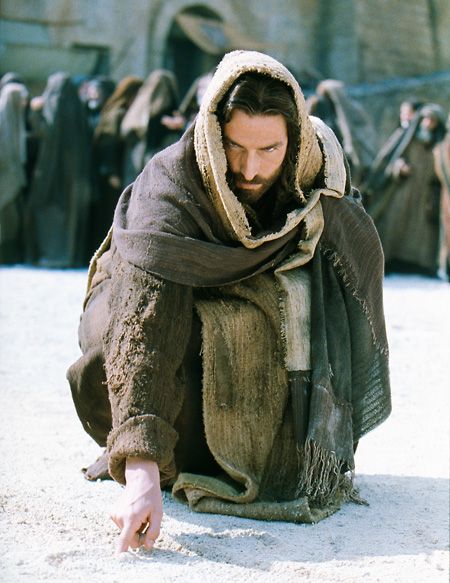

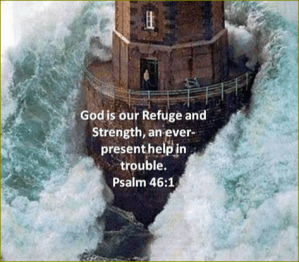


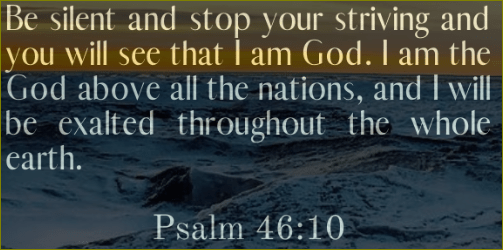













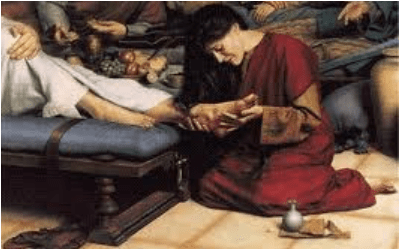


 Considering the Bible