My wife and I are reading through the Psalms in our evening reading and occasionally a nugget of the Psalms jumps out of the page. Don’t you love it when, after years of reading the “Old Book” passages become alive, reinforcing old teachings or simply warming your heart.
This is the book of Psalms, and it is rich.
I pray I can communicate a portion of the blessing we receive from this wonderful book.
Psalm 57:1-3
1 To the choirmaster: according to Do Not Destroy. A Miktam of David, when he fled from Saul, in the cave.
Be merciful to me, O God, be merciful to me, for in you my soul takes refuge; in the shadow of your wings I will take refuge, till the storms of destruction pass by.
2 I cry out to God Most High, to God who fulfills his purpose for me.
3 He will send from heaven and save me; he will put to shame him who tramples on me. Selah God will send out his steadfast love and his faithfulness!
This psalm is in the same general history of David’s life as our previous one, though instead describing his appearance before king Achish of Philistia and acting insane to escape being held by the Philistines, he is speaking of his flight from Saul being hot on his trail.
As the psalm begins, we find him in a cave, hiding from Saul. The future king of Israel had nothing to lay his head upon, no comforts or bounty. He was in survival mode, and I imagine the conditions were as rough as they will ever be for this man of God, running from the earthly powers chasing him.
As his first cry out to God, he is seeking mercy from the Lord. He has not abandoned the promise of God, in that he knows this “storm of destruction” will pass. He is actively requesting mercy, and yet he is resting in the promise God has provided.
This is amazing, for as a young believer, I often looked down on those who struggled with life conditions, and yet they claimed to know the Lord of glory. I confess my silliness as a youth, for I have come to realize that this condition, that is of having the peace of God in combination with a heart requesting mercy, is not an uncommon state for the believer.
As a matter of fact, it is the heart of living a life of faith.
When difficulties, even persecutions are upon you, crushing you, it is the heart of the believer to reach out to our Father, asking Him for protection, relief, direction, wisdom, – any type of mercy that He may provide.
For David, he is looking for refuge in the Lord, and as we have considered this topic in an earlier post (Psalms for Psome – Ps 43.01), his desire to take refuge reinforces the reality of this ever present danger in his life.
He finds true refuge in the Lord, and not in the cave, or in his ability (so far) to escape from his enemies. His refuge is in the One he cannot see, but that he knows.
He knows God has a purpose for him and the nation of Israel. He knows that eventually God will send from heaven the salvation he so desperately needs, for this condition cannot remain if his purpose is to be fulfilled.
David again refers to his enemies trampling on him, and as we saw in our last Psalm, this term speaks of his enemies panting in the chase, expending all their energy in the chase. The enemies were real and determined to get David, to put him to rest, to get him out of the equation. David must die!
Two wills are being described in these verses, that of God’s will and man’s will. God’s will is to rescue David, but man has determined to kill him.
Thankfully, David was rescued, delivered to reign as the second king of Israel, becoming one of the greatest men in the Old Testament and expanding the kingdom to it’s largest borders! He had a destiny and God brought him through the storm.
His Son, the greater David, experienced the same conflict, that of rescue or death. He entered into death without the rescue David experienced. To all appearances, man’s will succeeded in getting Him out of the way.
How must Jesus have had such greater faith in going through death to get His and our deliverance?
David finishes this short passage with the phrase
God will send out his steadfast love and his faithfulness!
How can we not see that God has sent out His steadfast love and faithfulness for us?
My wife and I are reading through the Psalms in our evening reading and occasionally a nugget of the Psalms jumps out of the page. Don’t you love it when, after years of reading the “Old Book” passages become alive, reinforcing old teachings or simply warming your heart.
This is the book of Psalms, and it is rich.
I pray I can communicate a portion of the blessing we receive from this wonderful book.
Psalm 56:12-13
12 I must perform my vows to you, O God; I will render thank offerings to you. 13 For you have delivered my soul from death, yes, my feet from falling, that I may walk before God in the light of life.
Our final two verses in this psalm provides David’s summary of Gods rescue from the danger he is in. The first phrase, speaking of his vows to God is an obligation to God on David’s part. It is a requirement to perform his vows that he has spoke to the Lord.
Vows are a very stigmatized, old fashioned concept in our modern world, and for that we are the worse off. To be one who keeps vows is a rarity in our culture, even to the point that vow breakers are heralded as brave and daring, heralded by other oath-breakers as being hero’s! Does anyone out there hear Romans 1:32 ringing in their ears?
Romans 1:32 Though they know God’s righteous decree that those who practice such things deserve to die, they not only do them but give approval to those who practice them.
To be cheered on by oath-breakers should alarm us!
Although the vow David mentions is surely related to His commitment to provide a thank offering to the Creator, the application for the modern Christian is easy to provide. What vows are you keeping? The most common vow that Christians struggle with is the marriage vow.
A quick story time to depict this condition.
When we first moved to Texas, we landed in a small town in the panhandle, east of Amarillo. It seemed everyone went to church in that town, and two of my boys were in high school at the time. One afternoon, one of my boys came home and began to question if we as a couple would remain married. This came out of left field for my wife and we later found out that our son was the only student in his class that had not suffered through a divorce within the family unit.
This is incredible, and shocked us, since it seemed to be an acceptable way of life in that little town to break vows. Now I realize that it takes two to tango, and the culture feeds on division of relationships, but every family was broken! So sad! Surely we are a broken people in such a terrible need of the healing of our Savior!
When I consider vows, David has written on the topic back in Psalm 15, where he describes a vow in verse 4
Psalm 15:4 in whose eyes a vile person is despised, but who honors those who fear the LORD; who swears to his own hurt and does not change;
It is easy to swear to something that is pleasurable. That is the definition of hedonism. I will only do that which pleases me. I am committed to that which I enjoy. What type of person does this create? One that cannot be trusted, that can not maintain a relationship, either human or divine, and one that ultimately destroys his own soul.
My friends. If things are stressed between you and your spouse, start to fix offences in the relationship, ask for forgiveness for wrongdoings, (perceived or actual) and communicate your heart to your partner. Open your heart and mind to them, be willing to suffer accusations and reproaches that need to be voiced.
Romans 15:3 For Christ did not please himself, but as it is written, “The reproaches of those who reproached you fell on me.”
Keep your vows, even when it hurts and the struggle is real. Find ways to communicate with those who need it most. Trust God and love those who you are committed to!
My wife and I are reading through the Psalms in our evening reading and occasionally a nugget of the Psalms jumps out of the page. Don’t you love it when, after years of reading the “Old Book” passages become alive, reinforcing old teachings or simply warming your heart.
This is the book of Psalms, and it is rich.
I pray I can communicate a portion of the blessing we receive from this wonderful book.
Psalm 56:8-11
8 You have kept count of my tossings; put my tears in your bottle. Are they not in your book? 9 Then my enemies will turn back in the day when I call. This I know, that God is for me. 10 In God, whose word I praise, in the LORD, whose word I praise, 11 in God I trust; I shall not be afraid. What can man do to me?
David speaks of the personal record the Lord is maintaining of his king, though he is but a wreckless fugitive from the current monarch.
The term “tossings” is interesting in that it may also be rendered as wanderings. This seems to fit the situation David is in, for at this point in his escape from Saul, I am not convinced he has a plan, a strategy of getting the upper hand. David is in reaction mode and the Lord is keeping track, noting the history David is making, recording his actions and paths.
Not only is the Lord recording the way David is taking in flight from Saul, but also the emotional burden he is experiencing. David was not a man that shied away from his emotions, for he spoke of his tears numerous times in the Psalms. David speaks of the Lord keeping his tears in a bottle, and recording both his physical and emotional journey in “your book”.
Surely to mention a book is a poetic description of God’s memory. A book, when referring to God’s record of our actions or attitudes, or of our destinies, is not for God’s benefit but for ours. We are the ones with weak memories and incapacity to store knowledge. A book is simply a crutch for us. God needs no such thing, but when David brings this word picture to our mind, we should think of it as the record God has at the time of writing.
A quick question for my reader. Does God blot souls out of His book? Consider Exodus 32:33.
Exodus 32:33 But the LORD said to Moses, “Whoever has sinned against me, I will blot out of my book.
My apologies for veering from the Psalm we are considering, but the question is puzzling.
No matter, for this Psalm admonishes us to trust in God, in fear and in praise, for what can man do unto us? As a matter of fact, Paul took this concept and expanded it to anyone (including spirit beings) as being impotent against us in our victory in Christ.
Romans 8:31 What then shall we say to these things? If God is for us, who can be against us? Romans 8:32 He who did not spare his own Son but gave him up for us all, how will he not also with him graciously give us all things? Romans 8:33 Who shall bring any charge against God’s elect? It is God who justifies. Romans 8:34 Who is to condemn? Christ Jesus is the one who died–more than that, who was raised–who is at the right hand of God, who indeed is interceding for us. Romans 8:35 Who shall separate us from the love of Christ? Shall tribulation, or distress, or persecution, or famine, or nakedness, or danger, or sword?
My wife and I are reading through the Psalms in our evening reading and occasionally a nugget of the Psalms jumps out of the page. Don’t you love it when, after years of reading the “Old Book” passages become alive, reinforcing old teachings or simply warming your heart.
This is the book of Psalms, and it is rich.
I pray I can communicate a portion of the blessing we receive from this wonderful book.
Psalm 56:5-7
5 All day long they injure my cause; all their thoughts are against me for evil. 6 They stir up strife, they lurk; they watch my steps, as they have waited for my life. 7 For their crime will they escape? In wrath cast down the peoples, O God!
Let’s remember where we find David in this psalm. He has been on the run from the king of Israel, lied to a man of God to get food, and then pretended he was crazy in front of his nations enemy. Not a good time for David! As I mentioned, for I can identify with him, that I believe he is in flight mode, running away from his problems, much like Jonah, (and myself).
The reason for being in flight? Is it because he has forgotten God and His promises? I think not, for it is a refrain within this psalm that He trusts God.
The reason He is in flight mode is because of his enemies constant and continual intent to destroy him, not just physically, but to destroy his cause, his purpose. He has the promise of God on his life and the enemies don’t like it one little bit. Both God and his enemies claim to be faithful to their plans for David, and David is in the middle, sometimes listening to the wrong side a bit too much. He speaks of their thoughts being against him, and of their stirring up strife, twisting his words, causing confusion.
He is, at this point in his life a man on the run, with his thoughts colliding with each other in his mind, thoughts of the enemies plans and how to avoid falling into a trap. Thoughts of how God will rescue him. Thoughts of why God hasn’t rescued him yet! Thoughts of when the enemies may catch him.
David gets to the point! Will the enemies of God escape justice?
Isn’t this a question that is shouting out for an answer even today? So many enemies rising up against God and His anointed, twisting and tearing at the social fabric of our nations. Not only are God’s enemies seeking the degradation of the social order, but note that the religious and spiritual desires of modern man continues to plummet to new lows.
Will those nameless enemies, those who are seeking our destruction, escape justice? How long O Lord before your wrath falls upon them?
My prayer is that they do escape justice, that they do escape the wrath of God, for the Messiah has paid for those who have evil thoughts, for those who stir up strife and for those who lurk about, seeking to hurt, steal and kill others. He has paid for my evil thoughts, intents and actions!
He is a forgiving God, full of grace and mercy. To follow Him may result in our seeking to help our very own enemies escape justice!
My wife and I are reading through the Psalms in our evening reading and occasionally a nugget of the Psalms jumps out of the page. Don’t you love it when, after years of reading the “Old Book” passages become alive, reinforcing old teachings or simply warming your heart.
This is the book of Psalms, and it is rich.
I pray I can communicate a portion of the blessing we receive from this wonderful book.
Psalm 56:1-4
1 To the choirmaster: according to The Dove on Far-off Terebinths. A Miktam of David, when the Philistines seized him in Gath. Be gracious to me, O God, for man tramples on me; all day long an attacker oppresses me; 2 my enemies trample on me all day long, for many attack me proudly. 3 When I am afraid, I put my trust in you. 4 In God, whose word I praise, in God I trust; I shall not be afraid. What can flesh do to me?
Considering the background to this psalm in our last post, we saw that David was in flight mode, slipping into greater and greater deceit, first with his own people (the priest’s of Nob) and now with those who were his enemy. Let us remember that David is the one who killed the Philistine giant Goliath, and as he enters the city of Gath to seek asylum, he is in possession of Goliath’s sword. Surely he did not bring it in front of Achish, reminding him of his previous victory over the Philistines.
Nevertheless, as he writes, he is reaching out to God for grace.
He speaks of “man” oppressing him, trampling on him all day long. The term trampling does not only carry the meaning of a crushing, of a beating down, or a stepping on, but also of a “panting after”. This picture is of his enemies chasing after him, panting out their breath, seeking with all their strength to catch him. This is no passive effort on David’s enemies part, but in his mind, and in truth, his enemies are but a step behind him.
He needs God’s help, the God who he has come to know in the fields with his sheep, the God who he has sung songs to and has worshipped under the stars while all alone with his livestock.
3 When I am afraid, I put my trust in you.
Verse 3 is a favorite of mine, for I am one who may experience fear (rightly of wrongly) more than most. It seems to be my achilles heal, and this story of David on the run resonates with me. I can somewhat identify with him, for though my circumstances are no where as dire as they were for the future king, the allowance of fear controlling my actions is just as real. I am thankful that David is a real man, a man of weakness in the midst of his victories and that the Lord of heaven brought him though difficult times
The question in my mind is whether David considered his act of madness in front of Achish to be an act of faith, “helping” God with the circumstance he was in. Or was this statement a statement of a lesson learned, where David is writing of his future decisions to trust God when fear strikes.
This refrain of trust in the midst of fear comes up again later in the psalm and is the theme of this psalm, for in the midst of the circumstances David was in, his primary experience was of fear.
As fear sometimes grips our hearts, even in times of actual danger, do we learn from our actions in the midst of the fear?
Can we determine as David does, to trust God instead of succumbing to fear? Surely we have known God to be the One who rescues, and yet we are but frail men and women, susceptible to fear. Unless we act in faith, knowing our God is on our side.
May His name be lifted up in our lives, even as we trust him in our fears!
My wife and I are reading through the Psalms in our evening reading and occasionally a nugget of the Psalms jumps out of the page. Don’t you love it when, after years of reading the “Old Book” passages become alive, reinforcing old teachings or simply warming your heart.
This is the book of Psalms, and it is rich.
I pray I can communicate a portion of the blessing we receive from this wonderful book.
Introduction to Psalm 56
This psalm deserves an introduction to it. The circumstances of David’s life at the time of his writing this psalm, is such that if known, provides a depth to the statements David’s provides us in this psalm.
To discuss the background, we need to visit 1 Samuel 21:10-15.
1 Samuel 21:10 And David rose and fled that day from Saul and went to Achish the king of Gath.
David is on the run from his father-in-law, the king of Israel, and we pick up in the story right after his visit with the priest’s of Nob, where he retrieved the sword of Goliath. Goliath the Philistine, that is.
Next on the route for David was a visit Achish, the Philistine king of Gath, where he sought sanctuary from Saul. This visit with Achish should not be confused with the time he came with his army, offering an alliance to the Philistine king. At that time, Achish provided the City of Ziklag to David as a base camp for his men.
No – David was alone in this visit. He was being chased by the king of Israel, and David was not in fight mode but flight mode.
1 Samuel 21:1 Then David came to Nob, to Ahimelech the priest. And Ahimelech came to meet David, trembling, and said to him, “Why are you alone, and no one with you?” 1 Samuel 21:2 And David said to Ahimelech the priest, “The king has charged me with a matter and said to me, ‘Let no one know anything of the matter about which I send you, and with which I have charged you.’ I have made an appointment with the young men for such and such a place.
When in flight mode, if you have ever suffered through the stress and confusion associated with that frenzied state of affairs, it is easy to justify a story or two to accomplish the goal of escape. We find David falling into this justification of deceit with his visit of the city of Nob and visiting the priest Ahimilech. He led the priest to believe he was on a secret mission for the king, when in reality he was running from the king. He informed the priest that he was meeting with his band of men at a predetermined place. This most likely was a stretch of the truth, as there is no mention of any men joining with David immediately after his escape from Saul.
David’s descent into deceit continues as he enters the city of Gath, and is brought before the king of Gath. I can only assume he wanted to find refuge from Saul in the neighboring city, hopefully laying low, drawing little to no attention to himself as he sought to formulate a plan for survival. Such was not the case, for as he approached Achish, the king of Gath, his reputation of being “the king of the land” preceded him.
1 Samuel 21:11 And the servants of Achish said to him, “Is not this David the king of the land?
What the servants of the King of Gath understood is difficult to know, and it may be immaterial to our current discussion, but to be considered the “king of the land” is quite a statement. His victories overshadowed Saul’s and these accomplishments dogged David’s life, causing the jealousy of Saul and now the tension with Achish.
Could it be that even Saul’s enemies knew that he was but a paper tiger, a king with no reputation worthy of his position, a king who who is being overshadowed by a young, unknown upstart named David. It was such a common saying in Israel that the neighboring enemy cities had heard the claims. Claims that David was ten times the man Saul was.
‘Saul has struck down his thousands, and David his ten thousands’?”
At the mention of this news to the king of Gath, fear took greater control of David, causing him to slip even further into deceit, changing his behavior.
1 Samuel 21:12 And David took these words to heart and was much afraid of Achish the king of Gath. 1 Samuel 21:13 So he changed his behavior before them and pretended to be insane in their hands and made marks on the doors of the gate and let his spittle run down his beard.
My friends, as we look into this Psalm in our next post, let us remember the situation David is in. Fear is controlling David to the point of acting insane, with spittle running down his beard. He is on the run from his own people. He has no-one with him, and apparently no where to hide. He is not the experienced strategist he is destined to, able to call on God to determine correct moves and decisions with confidence. He is entering a period of life that will consist of preparation for his kingship, through suffering and survival.
Fear tried to latch onto the greater David, for even in the garden, He asked for escape, for the cup of suffering to be taken from Him, but He did not succumb to the fear, He did not choose to take the path of flight, but stood against the massive fears running through his thoughts. He is the Greater David. the True King, rightfully so!
Though David is a great man of faith, this excerpt from his life is a reminder that we are but dust, and that the Creator is the One to look to for our safety and Security.
Hope to see you as we consider the text of the 56th psalm in our next post.
My wife and I are reading through the Psalms in our evening reading and occasionally a nugget of the Psalms jumps out of the page. Don’t you love it when, after years of reading the “Old Book” passages become alive, reinforcing old teachings or simply warming your heart.
This is the book of Psalms, and it is rich.
I pray I can communicate a portion of the blessing we receive from this wonderful book.
Psalm 55
20 – My companion stretched out his hand against his friends; he violated his covenant. 21 – His speech was smooth as butter, yet war was in his heart; his words were softer than oil, yet they were drawn swords. 22 – Cast your burden on the LORD, and he will sustain you; he will never permit the righteous to be moved. 23 – But you, O God, will cast them down into the pit of destruction; men of blood and treachery shall not live out half their days. But I will trust in you.
Let’s remember where David is at in his life for a moment. He is on the run from his son’s treachery, on the brink of “loosing” his kingdom. Yet, as he is in the quiet of the night, reflecting on the circumstances he finds himself in, thoughts must have whirled about in his head.
God – why is this happening? How could my own son, and a fellow companion, a close friend, perform such treachery? Who can I trust now?
Consider when God promised the kingdom to David, in 2 Samuel 7:11, He promised the following to the young king.
2 Samuel 7:11b-13
Moreover, the LORD declares to you that the LORD will make you a house. When your days are fulfilled and you lie down with your fathers, I will raise up your offspring after you, who shall come from your body, and I will establish his kingdom. He shall build a house for my name, and I will establish the throne of his kingdom forever.
Now he is on run from his greatest threat, one of the very offspring David may have expected to establish the Kingdom as God promised. Looking back on this promise, we believers have the luxury of knowing God was speaking of Jesus. The kingdom of God is established by Jesus, and He has built a “house” (dynasty) for the name of God. Yes we see this and rejoice in it.
David did not have this luxury. He is being chased down by his potential successor, and I imagine that when he is in his quiet moments, he is recounting this promise from God. A promise that speaks of his days being fulfilled and his lying down (passing away), ushering in his offspring, his very child, that will establish the Kingdom.
I don’t know about you, but if I was in his place, I could see this promise being fulfilled, even in my/David’s defeat. Absalom would “allow David’s death” and he would become sovereign. Are there arguments against this? Yes of course, but that is because we know the history.
I want us to reside in the moment with David, to try to get in his head. Late at night, David may have considered his understanding of the promise of God differently than previously, and given this possibility, this makes verse 22 all the more potent.
The “burden” David refers to is his “lot in life”, the situation he found himself in. He was in the midst of a time where the promise of God may be coming to fruition in a different manner than he originally expected.
There comes a time for every believer to accept their lot in life as from the hand of God. This does not allow us to simply lie down and become passive in our lives, for the Lord wants us to constantly test His will and seek to perform His pleasure. But admittedly, as the days go by, and our past decisions are set in stone, we may find ourselves is circumstances we did not expect.
David made some bad decisions. I too, have made some bad decisions. David would incur the consequences of these decisions, of which might be his current circumstance!. In all the confusion, conflicts and bewilderment, David gave sage advise in his last message in this psalm, to those of us in similar circumstances.
My wife and I are reading through the Psalms in our evening reading and occasionally a nugget of the Psalms jumps out of the page. Don’t you love it when, after years of reading the “Old Book” passages become alive, reinforcing old teachings or simply warming your heart.
This is the book of Psalms, and it is rich.
I pray I can communicate a portion of the blessing we receive from this wonderful book.
16 – But I call to God, and the LORD will save me. 17 – Evening and morning and at noon I utter my complaint and moan, and he hears my voice. 18 – He redeems my soul in safety from the battle that I wage, for many are arrayed against me. 19 – God will give ear and humble them, he who is enthroned from of old, Selah because they do not change and do not fear God.
In our last post we considered Davids thinking in his prayer for confusion of message in the planning of his son Absolom. David now speaks of his confidence in God’s deliverance in his life. He speaks of God’s delieverance, and yet immediatly speaks of his complaint and moaning in front of God contuinually.
What am I missing here. Are we not to leave our concerns before the Lord, trusting He will take care of our trials. Is not David’s continual returning to God with his complaints and moans an expression of faithlessness? How does my reader understand this apparent conflict in David’s prayer?
God will save David, that is he is confident of God’s deliverance, and yet David keeps begging, complaining, moaning and coming to God.
As I grow in my walk with the Lord, I am sensing this very tension in some areas of my own experience. Granted, David is experiencing this tension with greater clarity, but as I grow older, I also see where my confidence is focusing on God Himself and not the circumstances we are in. That is too easy for me to say, for my situation is no where near the condition David was in the midst of in this psalm. In all that, I am understanding the end of our faith is to love God, and to accept His will for our lives. Is David accepting God’s will when he is moaning day and night before the throne?
I would strongly suggest David was doing exactly that! How can we know the will of God if we do not test it, seek how our wills are to align with God’s will, push the limits to determine God’s direction. I would suggest that David knew that generally speaking, God would save him, deliver him from his foes in battle, and in the end, prove to be the God who saves!
In between, in the specific way this deliverance is provided, David is in prayer. And this is the great blessing our God has given us to not only change us but to change God.
WHAT? Carl – you cannot be suggesting that God will revise His plans and decisions based on the requests of His children! But my friend, the Word gives us this hope and privilege.
Although I could suggest a number of times where a believer’s prayer influences God’s actions, I would love to hear from my readers. Take a few moments to comment on your most recent answered prayer, and how the Lord redirecting an almost certain situation into one that included your plea.
My wife and I are reading through the Psalms in our evening reading and occasionally a nugget of the Psalms jumps out of the page. Don’t you love it when, after years of reading the “Old Book” passages become alive, reinforcing old teachings or simply warming your heart.
This is the book of Psalms, and it is rich.
I pray I can communicate a portion of the blessing we receive from this wonderful book.
12 – For it is not an enemy who taunts me– then I could bear it; it is not an adversary who deals insolently with me– then I could hide from him. 13 – But it is you, a man, my equal, my companion, my familiar friend. 14 – We used to take sweet counsel together; within God’s house we walked in the throng. 15 – Let death steal over them; let them go down to Sheol alive; for evil is in their dwelling place and in their heart.
In our last post we considered David’s prayer for confusion on the counsel to his son Absolom, in the beginning of the rebellion. David, if my understadning of this psalm is correct, addresses Ahithophel. Ahithophel, who was David’s equal, a familiar friend, a companion. David, in using the term companion, is describing Ahithophel as a friend who is gentle, one who is docile towards him. No violence, no treachery, no underhandedness. As David speaks of him as a “familiar friend”, he introduces the concept of knowledge, of understanding each other as friends. Ahithophel was not an aquaintence of David, but had a deep friendship with the king, appearing to be open and honest with each other.
The king speaks of the sweet counsel he shared with Ahithophel, even in the temple of God. While David was in the temple, Ahithophel was with him. David and Ahithophel shared times of being before God together, sharing a faith, and communing with God together. Who could David trust more? To whom would David share his greatest vulnerabilities? Who could hurt David the greatest?
It is obvious in this passage that to be a familiar friend, a companion, a man that has your trust, is to open yourself up to the greatest treachery. But to love and to be loved, this consideration cannot be considered. It will poison the relationship, so if there is a back stabbing, it will not only come as a stunning surprise, but the pain and shock associated with this turn will be deepest! So it is for David, and so is his reaction so understandable.
In our past we had some believers turn on us, believers we trusted, and that we thought were trustworthy. For the period when we experienced abandonment and rejection, shock carried the day. How could this happen? I will not detail it out for it is in the past and the Lord has provided healing for us, and hopefully for them. Nevertheless, to be betrayed by a friend is a very deep cut!
And David wanted blood! He is a warrior, a fighter, a man who enters battle intent on winning, dominating over the enemy, crushing those who oppose him.
Let death steal over them; let them go down to Sheol alive
For David to speak thus is to see his pain come out, to see his sense of justice come to the surface. In no uncertain way was David going to allow this to go unpunished, and he sought justice before the Lord, asking the Lord to let them enter Sheol alive! Whatever that specifically meant for the Old Testament believer is beyond me, but it can’t be good!
During our time of betrayal, when the shock lessened and I had some lucid thoughts, I must confess I had evil thoughts towards my friends who hurt us. The Lord moved us on, and a healiing eventually came, but I can somewhat identify with David’s heart.
There is One who did not seek death over His enemies, but entered into death for His enemies. He is altogether different than David in this regard, and exercised grace greater than any I entertained within my own life.
He is the One who did not seek justice over his enemies, but showered grace and mercy upto those who spit on Him, cursed Him, whipped Him, and nailed Him to a cross, eventually killing Him through a slow agonizing death. He is so much greater in His acts of love, grace and mercy, than we can imagine, little llone to compare with His weak and fragile creation.
He is the Lord, and He has experieinced the treachery of His creation, reacting to it in grace and love towards us. He is so different!
My wife and I are reading through the Psalms in our evening reading and occasionally a nugget of the Psalms jumps out of the page. Don’t you love it when, after years of reading the “Old Book” passages become alive, reinforcing old teachings or simply warming your heart.
This is the book of Psalms, and it is rich.
I pray I can communicate a portion of the blessing we receive from this wonderful book.
Psalm 55.03
9 – Destroy, O Lord, divide their tongues; for I see violence and strife in the city. 10 – Day and night they go around it on its walls, and iniquity and trouble are within it; 11 – ruin is in its midst; oppression and fraud do not depart from its marketplace.
As suggested in our first installment on this Psalm, I am of the opinion this psalm is cry out to God in relation to the rebellion of David’s son Absolom, and his trusted advisor, Ahithophel, Bathsheba’s grandfather. David understood that success for the rebels depended on good planning, and wisdom in the fight. David resorted to a two pronged approach. Seeking the Lord for his safety, and strategic use of available resources.
First off, this prayer is David’s cry for help to the Lord in a very specific way, as he seeks to defeat those who rose up against him. Secondly, to divide (or confuse) the message Absolom hears will bring the greatest oppotunity for David to survive this threat.
David’s strategic use of available resource becomes available when he flees the city of Jerusalem, at such a low point in his life. As he is ascending the Mount of Olives, weeping as he went, barefoot and with his head covered, he was informed that Ahithophel, his counsellor joined with his son Absolom in the rebellion. With Ahithophel, success (humanly speaking) was guaranteed for Absolom.
Yet in this lowest of low points for the king, a man comes to his service. Hushai the Achite arrived before the king with his coat torn and dirt on his head. He was in deep sorrow for the king and faithful in his friendship to David. As he presents himself to David in his sorrow, David – the warrior that he is – is not shy is seeing Hushai as a resource to defeat the rebellion. He surely is a bright star in David’s dark night.
Also note that Ahithophel and Hushai had history in David’s inner circle, and I assume they knew each other well. For Hushai to take on the espionage that David requests is very dangerous, for Ahithophel must surely know of Hushai’s prinicpal station in life as David’s friend.
1 Chronicles 27:33 Ahithophel was the king’s counselor, and Hushai the Archite was the king’s friend.
Having laid the background to my understanding of this time in David’s life, and having Hushai go into the enemy camp with the goal of frustrating Ahithophel’s wisdom for Absolom is genius. But it is only the plans of a man, of a king on the run. Hence the cry out to God in verse 9 of our psalm.
Destroy, O Lord, divide their tongues; for I see violence and strife in the city.
David saw the opportunity with Hushai, but realized the only success he truly had was in God providing the confusion needed for Absolom to make a critical mistake. Without Hushai, Ahithophel would have singular influence over Absolom. David may have seen this this as the critical point of success or failure in returning the the throne.
David’s prayer of confusion, of dividing thier tongues, of have two conflicting messages provided to Absolom, was only a plan, good as it was, but the execution and direction of Absolom’s decisions were dependent only on God. And David knew it!
Proverbs 21:1 The king’s heart is a stream of water in the hand of the LORD; he turns it wherever he will.
The Lord indeed turns the heart of a king (and serf) wherever He wills, and David, in his prayer, was not shy about seeking God’s favor in the current crisis. David used the offer of Hushai’s service to set up a situation that God could turn Absolom’s decision into foolishness.
I believe David’s specific cry for help had this background in his mind. He sent a spy into the midst of the enemy, and provided an alternate message to Ahithphels counsel. Now it was up to God to steer Absolom’s decision. For further reading, see 2 Samuel 17:1- 23 for Hushai’s success with Absolom. Note how Hushai catered to Absolom’s pride with his counsel!
Considering the situation, that is Hushai’s sudden turn from his friend David and Ahithophel’s suicide based on Absolom’s decision to follow Hushai’s counsel, for Absolom to continue with Hushai’s counsel seems most unwise for Absolom. Why did he continue with his decision? Do I hear that pride motivator Hushai introduced into the argument ringing in the air?
Proverbs 16:9 The heart of man plans his way, but the LORD establishes his steps.
God is good, and God can use even the pride of man to bring glory to his name. May his name be praised.
My wife and I are reading through the Psalms in our evening reading and occasionally a nugget of the Psalms jumps out of the page. Don’t you love it when, after years of reading the “Old Book” passages become alive, reinforcing old teachings or simply warming your heart.
This is the book of Psalms, and it is rich.
I pray I can communicate a portion of the blessing we receive from this wonderful book.
Psalm 55
4 – My heart is in anguish within me; the terrors of death have fallen upon me. 5 – Fear and trembling come upon me, and horror overwhelms me. 6 – And I say, “Oh, that I had wings like a dove! I would fly away and be at rest; 7 – yes, I would wander far away; I would lodge in the wilderness; Selah 8 – I would hurry to find a shelter from the raging wind and tempest.”
Oh my goodness, do I resonate with this passage.
How often have I been under some type of stress, and my first reaction is to flee. Run away. Some nights my stomach is in knots, fearing the day’s events. As I take my time in the morning on my walk, I often want to succumb to the temptation to simply walk away from the days events. Don’t get me wrong, for these events are not life and death situations as we know David is impacted by, but though the depth of my fears may be far less than David’s, the reality of wanting to escape is just as real.
At times, the only thing that pulls me back from the brink of escaping a pressure situation is that there is no advancing in the faith if the wind is always at your back. An old Scottish preacher, by the name of Alexander Maclaren, made a statement that rings true for all believers.
“So the psalmist’s wish was but a wish; and he, like the rest of us, had to stand to his post, or be tied to his stake, and let enemies and storms do their worst.”
Remember that David is facing near death on a daily basis within this psalm, and to make matters even worse, the threat is from a close friend. The wind in his face was tornado-like, and his daily experience was one of anguish, terrors of death, fear, trembling and horror.
Horror! This term is rarely used in the Old Testament, and David is admitting to being overwhelmed by this horror. What he was experiencing I cannot tell, and cannot relate to. Yet this passage smacks of the suffering the Messiah experienced on His way to the cross. He did not turn back, nor fly away on the wings of a dove, but fully embraced God’s will. And out of that obedience, He sent the Holy Spirit to comfort us in our times of anguish and fear.
My wife and I are reading through the Psalms in our evening reading and occasionally a nugget of the Psalms jumps out of the page. Don’t you love it when, after years of reading the “Old Book” passages become alive, reinforcing old teachings or simply warming your heart.
This is the book of Psalms, and it is rich.
I pray I can communicate a portion of the blessing we receive from this wonderful book.
Psalm 55.01
1 – To the choirmaster: with stringed instruments. A Maskil of David.
Give ear to my prayer, O God, and hide not yourself from my plea for mercy! 2 – Attend to me, and answer me; I am restless in my complaint and I moan, 3 – because of the noise of the enemy, because of the oppression of the wicked. For they drop trouble upon me, and in anger they bear a grudge against me.
The history of this psalm is unknown, but we can deduce a few items from the psalm to give us David’s situation. First off, it appears David is speaking primarily of a good friend who has turned on him, a betrayer, even called out as a covenant breaker!
Secondly, this is no idle threat, for David describes his condition including the “terrors of death”, and of horror overwhelming him.
David was in deep trouble, with his life on the line, not knowing how close he was to being destroyed. A constant stress, a continual pain and agony of mind and soul. A period of time when the Lord did not answer his prayers, for his repetition of seeking God to give ear, to not hide, and to attend to David, smacks of disappointment in previous efforts of prayer to God. The stress builds, and the heart is failing, and the LORD seems to be quiet.
Note that the basis of his prayer is depending on the mercy of God, that he realizes he has no other claim at this time. He is an experienced man of God, realizing his failings in front of God and depending on God’s mercy for his rescue. As the Lord had promised his kingdom to be forever, it was not promised to David that he would live a long and extended life and as such, David understood that his life could be cut short without any blemish on the Lord’s promises to him. Yet he calls on the mercy of God for deliverance in this time of terror.
What was the source of this terror you may ask? David gives us the reason in verse 3.
Noise of the enemy/Oppression of the wicked
As we have mentioned in earlier posts, the Old Testament prophets, when writing in poetry, would use a method of “rhyming” thoughts as opposed to our method of rhyming the last words in a couplet of phrases. In two verses, the author would say the same thing with a slight expansion or clarification of the previous phrase. I think this is happening here.
The oppression of the wicked is equivalent to the noise of the enemy. Threats, verbal attacks, intimidation causing a sense of imminent danger produced the stress residing in David’s heart. Words are powerful, and our words, whether intention or not, may cause tremendous stress in other’s lives. David’s enemies were certainly taking advantage of this type of warfare. Our enemy also does this!
An interesting connection, that will undoubtedly increase the readers understanding of David’s stress level is the two following phrases he uses in describing the type of stress he is undergoing. This is conjecture, but I find the connection interesting, and plausible.
When David speaks of the enemy “dropping trouble on him” this has a similar sound as when he was escaping from the City of David, from his own son Absalom’s treachery.
1 Samuel 15:14 And David said unto all his servants that were with him at Jerusalem, Arise, and let us flee; for else none of us shall escape from Absalom: make speed to depart, lest he overtake us quickly, and bring down evil upon us, and smite the city with the edge of the sword.
David continues with the description of the enemies motives, calling it a grudge. Both Absalom and his chief counsellor Ahithophel may be described in this manner.
We know the background to Absalom’s grudge, and his ability to hold a grudge for extended periods. When Amnon rapes his sister, he holds a grudge for two years before acting on it! But then his grudge comes to fruition (as unforgiven grudges always do) in his planning and executing the premeditated murder of his brother. Absalom’s next grudge is exercised when he spends 4 years after returning to Jerusalem, grooming the populace for his rebellion against the king. Grooming the populace to accept him in order to take the kingdom from his father. Right in the City of David, right under the nose of his father!
As for Ahithophel, David’s actions in having Uriah murdered in battle may be coming back to bite him. Consider Ahithophel’s relation to Bathsheba.
2 Samuel 23:34 – Eliphelet the son of Ahasbai of Maacah, Eliam the son of Ahithophel the Gilonite,
2 Samuel 11:3 – And David sent and inquired about the woman. And one said, “Is not this Bathsheba, the daughter of Eliam, the wife of Uriah the Hittite?”
Catch it? Bathsheba, it appears, was the granddaughter of Ahithophel. Consider the ramifications of that.
This psalm may be speaking of David’s condition in the potential loss of his kingdom, and if the kingdom was lost, surely his life was forfeit! At the hands of his son and/or his friend.
Treachery, mirroring the very treachery of an apostle who turned on the Messiah. David was spared from experiencing the results of the enemies threats, but for the Messiah, the threats were realized, for He was crucified, He was put to death by His enemies.
He experienced so much more than we can imagine, and His cause was to rescue us from those who hate us. We are to walk in the same manner as He did, loving His enemies and proving it through His sacrificial life and death.
But let it be known that our deliverance may not be as David’s deliverance, but nevertheless, we can and should trust Him in the times when the noise of the enemy is loudest.
My wife and I are reading through the Psalms in our evening reading and occasionally a nugget of the Psalms jumps out of the page. Don’t you love it when, after years of reading the “Old Book” passages become alive, reinforcing old teachings or simply warming your heart.
This is the book of Psalms, and it is rich.
I pray I can communicate a portion of the blessing we receive from this wonderful book. Our last portion of Psalm 54 is David’s response to the rescue of God from the betrayal of the Ziphites.
Psalm 54
6 With a freewill offering I will sacrifice to you; I will give thanks to your name, O LORD, for it is good. 7 For he has delivered me from every trouble, and my eye has looked in triumph on my enemies.
A short review may be in order.
God has provided the nation of Israel a king, one who is in effect a replacement for God. This replacement has now become a rogue king, in rebellion against God disobeying direct commands from the prophet, and has been formally rejected by God as being the king. Ever the faithful one, Saul does not step down, but forges ahead, seeking to maintain his position in front of the people. A true politician, instead of finding his authority in God, seeking approval from the people.
Enter David, a youth obviously destined for the throne, being chased down by the rogue king, under persecution by his own father in law! Yes, Saul was David’s father in law when he married Saul’s daughter Michal! Death was David’s future if he was caught by Saul, for Saul’s intentions were made clear when he threw the javelin at him in his home, in front of Jonathon.
1 Samuel 20:33 But Saul hurled his spear at him (David) to strike him. So Jonathan knew that his father was determined to put David to death.
Beyond the hatred of a father in law, consider David’s clansmen, the Ziphites. Seemingly, David hid in the hills of the Ziphites land, due at least in part to a level of trust he had in his fellow clansmen of Judah. A man on the run doesn’t hide amongst his enemies – at least not yet! Out of this trust in his fellow Judahites, betrayal reared its ugly head, and his very clansmen give him up to a politician!
In summary, put yourself in David’s shoes (sandals?) Your father in law wants to kill you, The nation is under the rogue king, recognizing you as his greatest threat, and as the ultimate authority in the nation, has resources everywhere within the land of Israel. The citizens of Israel are seemingly following the current authority, at least passively. Brothers in your tribe actively inform this king, who is hunting you down, of your whereabouts, even going so far as telling king Saul they will give him up. Finally, your continual condition of being on the run, in hiding, away from your family, on the edge of death, must be taking a toll on you. Darkness and despair is an option for David at this point, and certainly a very real temptation for David to fall into at this time in his life.
As David writes this psalm, I want to think he is writing it as the pressure is on. Writing the psalm prior to the deliverance of God from the clutches of that king. If my assumption is correct, when David speaks next, his desire to offer a freewill offering is quite shocking.
Now a freewill offering is a offering of thanksgiving, an offering that is not required. It is simply an offering to God because of a thankful spirit, understanding the goodness of God and his provision and protection. Note also that his first reason for this freewill offering is the goodness of God’s name. Yes, David also speaks of the deliverance to be provided in the next verse, but the first thing on David’s mind is the name of God, the character of the God he worships. At this particular time of betrayal by the Ziphites – remember they tried twice to give up David to Saul, – God gave David respit from his enemy by pulling Saul away from the chase in order to fight against the Philistines.
So close to being caught by the enemy! I like the sentiment Spurgeon provides when he speaks of David’s life. “David lived a life of dangers and hair-breadth ‘scapes, yet was he always safe.”
Not so for the greater King, the Lord Jesus, for though He was persecuted by the politicians of His day, and was betrayed by His friend, as David was, He was overtaken by death. Yet the deliverance of God that was to be provided, was not protection from death, but the provision of life through death.
He was delivered from this enemy through the resurrection. God has truly delivered Jesus out of all trouble, and in this deliverance, secured provision and protection for those who follow after Him.
My wife and I are reading through the Psalms in our evening reading and occasionally a nugget of the Psalms jumps out of the page. Don’t you love it when, after years of reading the “Old Book” passages become alive, reinforcing old teachings or simply warming your heart.
This is the book of Psalms, and it is rich.
I pray I can communicate a portion of the blessing we receive from this wonderful book.
Psalm 54
4 Behold, God is my helper; the Lord is the upholder of my life. 5 He will return the evil to my enemies; in your faithfulness put an end to them.
We discussed the Ziphites, and the type of character these clans men of David had in these men in our last post. In this current writing, we will consider how David understands God.
God our Helper
He begins with a description of God as his helper. This particular word provides the image of the helper surrounding the helpless one, of protecting the one in need. Our God is One who is a helper, One who protects those who fear Him. I can not help but think of Psalm 91:4 as a similar sentiment in this description of our God as our protector, helper.
Psalm 91
4 He will cover you with his pinions, and under his wings you will find refuge; his faithfulness is a shield and buckler.
As a mother eagle covers her helpless chicks, so our God covers his people with his love. Consider that the mighty eagle has far greater abilities (as does our God) than to simply provide a defensive cover for her chicks, but the protection described here is an act that gives security, a sense of safety, a nearness of strength and an experiential comfort for the chicks.
Also, this position of covering by the mother eagle is a stance of self sacrifice. Any intruder or attacker will have to go through the mother before they get to the helpless chicks!
God our Upholder
Not only is God David’s protector, but God is the upholder of his life. A term that is synonymous with upholding is sustainer. God is not simply protecting his children that have no other needs. He is not simply a protector, but He sustains us. We can claim nothing in us as independent of God, for He is the source of life. Not only is He the source of life, but the continual provider of life, for He is as a river of life providing a continual source of life for his children. He is not One who provides life to His child and then says “Good luck with that”, or “Hope everything turns out while I look the other way”. He sustains us, upholding our heart, soul and body for His pleasure.
Regarding verse 5, David declares, based on the faithfulness and righteousness of God, that evil will return on these foreigners, these men who claim to be of the nation of God. There is little said in the future passages of King David’s reign regarding the Ziphites. One passage recounts these treacherous, ruthless men trying a second time to betray David – yes they betray him a second time – (See 1 Samuel 26:1-4) but after that disgraceful act, Scripture seems silent on this family of the tribe of Judah.
History though, speaks of the land of the Ziphites becoming a royal estate/vineyard. The true King redeemed the land from these treacherous men, just as our King will redeem this earth from the clutches of betrayers, becoming a fruitful vineyard and a place for royalty, as it should be, for the King has the right to rule over His Kingdom!
My wife and I are reading through the Psalms in our evening reading and occasionally a nugget of the Psalms jumps out of the page. Don’t you love it when, after years of reading the “Old Book” passages become alive, reinforcing old teachings or simply warming your heart.
This is the book of Psalms, and it is rich.
I pray I can communicate a portion of the blessing we receive from this wonderful book.
In our introduction to this psalm, we considered the Ziphites, those treacherous, man pleasing Israelites who sought to rat out David to king Saul. Since then, I have found that the Ziphites were a clan of one specific tribe of Israel. The tribe they belonged to was of the tribe of Judah, David’s own tribe!
This betrayal reminds me of the betrayal of Judas, in that David surely expected to have confidence in his own tribal family, and yet we find David once more reflecting the future greater King Jesus in his betrayal by a confidant. Truly the Ziphites are a picture of Judas, in that both were in close association with David/Jesus, and both the Ziphites/Judas used sensitive information for their own act of betrayal. They gave up their “friend” to a godless authority, who was a replacement for God in their lives.
But alas, I need to focus on the Psalm, for that is the purpose of our time together. Let’s consider David’s thoughts.
Psalm 54
1 To the choirmaster: with stringed instruments. A Maskil of David, when the Ziphites went and told Saul, “Is not David hiding among us?” O God, save me by your name, and vindicate me by your might. 2 O God, hear my prayer; give ear to the words of my mouth. 3 For strangers have risen against me; ruthless men seek my life; they do not set God before themselves. Selah
David calls out to God in prayer, seeking salvation from the treachery of his clansmen. From those who were his very family! How this must have added to the emotional pressure to drive David into despair! Yet, he seeks salvation by the name of God, which is in my mind, a fantastic turn of phrase for David to record.
Save me by your name.
I am currently enjoying, by the providence of God, a study in the Names of God as revealed in the Scriptures, and when the term “name of God” comes up, multiple characteristics of our Savior are brought to mind. David, in looking to God for his rescue in this betrayal, depends on the character of God, the God he has understood, the God he has experienced. A saving God, not only from a bear and lion when he was in the fields, but from a giant named Goliath. He experienced God as a saving God, and to that “type” of God he called out to. It was no theoretical deity he was calling out to!
He also looks for vindication by the might of God. Vindication is an interesting term, for when I think vindication, I think revenge. Earlier in the Psalms, David has requested vindication (See Psalms for Psome – Ps 43.01). Based on these earlier studies, I am not convinced David is simply looking for a one sided judgement against the Ziphites, for though he states “vindivcate me”, using the term vindicate is a request to judge, or to execute judgement. David is allowing God to make a judgement on who is the guilty party, and though David may have a clear conscience in the circumstance, yet he is allowing God to teach. He is not simply pointing a finger to the Ziphites and seeking God to condemn them, to pass some sentence on them. He is asking for God’s judgment on both parties!
Centuries later another man seeking God’s will, provides this humble attitude for our instruction, reminding us that God is the ultimate Judge, and that we all shall be judged by Him, and not by our own feelings, confidence or reasonings!
1 Corinthians 4
3 But with me it is a very small thing that I should be judged by you or by any human court. In fact, I do not even judge myself. 4 For I am not aware of anything against myself, but I am not thereby acquitted. It is the Lord who judges me.
But who were those whom David sought salvation from? How did David describe his fellow clansmen?
Strangers
Those Ziphites were strangers. David, how can you say that? They are men of Israel, even of your own clan of Judah! Yet even in this description, we are given a chance to remember that bloodlines mean nothing in the family of God. True, they came from the same father, from Israel’s fourth son Judah, many years ago, but that did not guarantee their standing before God. Numerous passages in the Old Testament contain this Hebrew word, and the word is translated sometimes as “foreigners” with some ominous implications. Two passages, from the prophet Isaiah, may provide this understanding.
Isaiah 1:4, 7
Ah, sinful nation, a people laden with iniquity, offspring of evildoers, children who deal corruptly! They have forsaken the LORD, they have despised the Holy One of Israel, they are utterly estranged.
Your country lies desolate; your cities are burned with fire; in your very presence foreigners devour your land; it is desolate, as overthrown by foreigners.
Note in the first verse, the very nation of Israel is called out a utterly estranged. They have become as foreigners the the very covenant of God they belonged to. Not three verse later, the same term describes the foreigners/strangers are those who devour the land. The Ziphites are described in the same manner as the Babylonians who destroyed the nation of Israel, taking them into captivity.
Ruthless
David continues to describe the Ziphites as ruthless men. These men had sensitive information for the king of Israel, and calling them ruthless describes their intent and actions. They we influential, and had the information to destroy the future king of Israel. As we often hear nowadays, “Information is power”! So true for the Ziphites and they used this information ruthlessly.
David’s last description in verse 3 simply states the source of this decision by the Ziphites to betray their own brother. They do not set God before themselves! Selah, or take a moment to consider this statement!
Those who seek favor from a God replacement must not be setting the True God before themselves. How could someone seek a man’s favor when they know God actively in their lives? David is giving us the source of the Ziphites core condition in this short phrase. They have decided (whether actively or passively) to not set God before their eyes!
Conversely, the believer will set God before their eyes in a purposeful, intentional way. Without this core action on the part of the believer, we will fall into justifying socially acceptable deeds, such as informing on an enemy of the state, or simply gossiping about a work mate, instead of understanding God’s ways and seeking to follow His will.
As believers, we need to know the will of God and be willing to reject the attraction of socially acceptable behavior. What think ye?Shall we not, as believers, seek to avoid looking like strangers to the covenant God has provided, and acting as ruthless men?
My wife and I are reading through the Psalms in our evening reading and occasionally a nugget of the Psalms jumps out of the page. Don’t you love it when, after years of reading the “Old Book” passages become alive, reinforcing old teachings or simply warming your heart.
This is the book of Psalms, and it is rich.
I pray I can communicate a portion of the blessing we receive from this wonderful book.
Psalm 54
1 To the choirmaster: with stringed instruments. A Maskil of David, when the Ziphites went and told Saul, “Is not David hiding among us?” O God, save me by your name, and vindicate me by your might. 2 O God, hear my prayer; give ear to the words of my mouth. 3 For strangers have risen against me; ruthless men seek my life; they do not set God before themselves. Selah
As we begin in Psalm 54, some background information is critical to consider. Even David, at the time of his writing this psalm, provided the reason for this psalm of thanksgiving, and it will do us well to understand his situation.
David was on the run from king Saul. He had been anointed king of Israel, and Saul was having none of it. As the king of Israel, Saul had the resources of the government, and of those who seek his allegiance as the authority in the nation.
As an aside, this is one of the fallouts when we replace God in our lives with a human leader. The transferred allegiance to a mortal leader can divert from God’s will, even becoming a tool to persecute those who seek to follow God. So treacherous and yet such an appearance of godliness!
Let’s take a moment to review the passage in 1 Samuel 23, where the treacherous Ziphites approach king Saul to inform him of David’s whereabouts.
1 Samuel 23
19 Then the Ziphites went up to Saul at Gibeah, saying, “Is not David hiding among us in the strongholds at Horesh, on the hill of Hachilah, which is south of Jeshimon? 20 Now come down, O king, according to all your heart’s desire to come down, and our part shall be to surrender him into the king’s hand.” 21 And Saul said, “May you be blessed by the LORD, for you have had compassion on me. 22 Go, make yet more sure. Know and see the place where his foot is, and who has seen him there, for it is told me that he is very cunning. 23 See therefore and take note of all the lurking places where he hides, and come back to me with sure information. Then I will go with you. And if he is in the land, I will search him out among all the thousands of Judah.”
I am curious if the king required his subjects to “rat” on David. Had an edict, or law been passed that required citizens of the nation of Israel to report on David’s whereabouts? I haven’t found anywhere in the text where Saul formally distributed an edict amongst the citizens of Israel, requiring the citizens to inform on David’s whereabouts. Yet it must have been common knowledge that Saul was after the future King. Hearing of the King’s desires can be as powerful as a formal law for those who seek the Kings favor. And of course, as we read in this background passage, the Ziphites were definitely seeking the king’s favor.
The Ziphites were from the area defined in the map to the right, which also provides the location of Horesh, where David was in hiding, and where the Ziphites were able to locate him. Yet notice the distance to Gibeah, where the Ziphites had to travel to inform Saul of this development. It is close to 25 miles as the crow flies, approximately a days journey for the Ziphites to get to Saul. A days journey there and a days journey back! These folk were determined to get on Saul’s good side!
They bring him good news, and then he, as king of Israel, sends them back for verification. Never enough eh? Give me more information says Saul. This is the spirit of a bossman, a man who is never satisfied, a proud man that uses people.
Notice also that king Saul blessed these folk, but as we well know, these men were treacherous men, seeking to find favor with a king that has had the kingdom taken from him. Did the Ziphites know of Saul’s loss of the kingdom? That is uncertain, but Saul’s vengeful character, his selfish manner and his desire for power should have given the Ziphites guidance on the wisdom of sharing this information.
They should have considered who they were telling secrets too, for I was once told that if a man complains about someone to me, he will complain about me to someone. It is a rare man (or woman) who considers the person’s character he reveals info to, instead of simply looking for instant gratification, as the Ziphites seem to be seeking. Certainly, the Ziphites were ignoring Saul’s character, being deceived by his godly platitudes and were not recognizing the type of man they were revealing sensitive information to.
It is our wisdom to understand those we share sensitive data with, as the Lord himself has informed us in the gospel of Matthew.
Matthew 7:6 “Do not give dogs what is holy, and do not throw your pearls before pigs, lest they trample them underfoot and turn to attack you.
Definitely the need for wisdom is paramount for us as believers in today’s treacherous world, and yet we can have confidence in sharing the love of God with those we come in contact with. He is good, and provides direction in our lives as we look to Him. In all our discussions with those we come in contact with, let us not seek the favor of anyone other than the Lord Himself.
I have spent a bit of time reviewing the context of David’s condition as he writes this Psalm. We shall return to our Psalm in our next post, where David pours out his heart concerning the impact these Ziphites were causing in his attempt to stay alive.
May God bless you as you seek his way this wonderful day.
My wife and I are reading through the Psalms in our evening reading and occasionally a nugget of the Psalms jumps out of the page. Don’t you love it when, after years of reading the “Old Book” passages become alive, reinforcing old teachings or simply warming your heart.
This is the book of Psalms, and it is rich.
I pray I can communicate a portion of the blessing we receive from this wonderful book.
We are visiting Psalm 53, which upon even a cursory review, sounds very familiar. So it should, for it is almost identical to Psalm 14, and with that similarity, I would like to consider the similarities and differences each Psalm is communicating. This post will consider verse 3 of the two Psalms.
Psalm 14
Psalm 53
3 – They have all turned aside; together they have become corrupt; there is none who does good, not even one.
3 – They have all fallen away; together they have become corrupt; there is none who does good, not even one.
Psalm 14:3and Psalm 53:3 are identical in all aspects but for one. Is there a difference between turning aside and falling away? Let’s consider this difference in today’s post.
Psalm 14
Psalm 53
turned aside
fallen away
Strongs H5493, סוּר çûwr, soor
Strongs H5472, סוּג çûwg, soog
Genesius’ Hebrew Lexicon defines this term as – to turn aside, to go away, to depart.
Genesius’ Hebrew Lexicon defines this term as – to go away from, to draw back. This term is sometimes associated with backsliding, or moving away
TWOT #1480a
TWOT #1469
I gotta admit something. I am trying to find a difference between Psalm 14:3 and Psalm 53:3, but I can’t!
Though the action taken by the fool is defined by two different Hebrew words in the verses, the Hebrew words are very closely associated (synonyms?). The translation given also provides similar, if not identical actions. The fool turns away from God. The fool falls away from God. Granted, as I took my preliminary read of the two verses, I started thinking falling away is less of an intentional act than turning back, but again the Hebrew words do not allow me to follow that seeming difference.
All that to say, the message is the same. The fool departs from God! This is simply a logical outworking of the contemplation of the heart – no God! No restrictions, and no responsibilities to behave properly with our neighbor! I gotta admit that I sometimes pull a magnifying glass out and try to study little differences in words, when I really just need to pull back and look at the big picture.
Note that David is returning to the concept of corruption. Remember in verse 1, David stated that “They are corrupt”. In this verse, David is describing the group of fools as having “become corrupt”. Which is it David?. They are corrupt or they are becoming corrupt?
Individual or Social?
Although I have no authority in backing up this suggestion, I would like to offer a thought for your consideration. In verse one, might David be referring to an individual fool, and that as an individual, the corruption is a fact. The internal heart condition is in a state of corruption, the degree of which may be different for each fool. Is the corruption evident? Possibly, even probably to a degree, but as the fool continues in his heart contemplation of rejecting God, the evidence of corruption becomes clear.
In verse 3, David includes the descriptive term “together” which I think may hint at the corruption of a group, in contrast to the individual. Is it not true that as an individuals inner corruption becomes evident, it emboldens others to reveal, even boast in their their corruption, allowing for the social fabric to show forth its total corruption. Notice that the verse starts out with this group inclusion thought, by stating “They have all fallen away”.
The last phrase may also support this idea of a group of fools being addressed, in that David emphasizes a singular fool in the midst of the group when he states… “there is none who do good, not even one.” Let me know your thoughts in the comment box below.
With all this analysis, let us remember that the departure from God, corruption that follows and eventual evil acts produced, flows from a heart that rejects God. Every day that we ignore God and His will, we slip towards corruption, to falling away, and to evil acts. This ought not to be, for as the people of God, He has called us to life (not death & corruption), to walking uprightly (not falling away), and to being fruitful believers instead of workers of iniquity.
Spend some time with the One who gives life, righteousness and the fruit of love. He is the fountainhead of all blessing!
My wife and I are reading through the Psalms in our evening reading and occasionally a nugget of the Psalms jumps out of the page. Don’t you love it when, after years of reading the “Old Book” passages become alive, reinforcing old teachings or simply warming your heart.
This is the book of Psalms, and it is rich.
I pray I can communicate a portion of the blessing we receive from this wonderful book.
We are visiting Psalm 53, which upon even a cursory review, sounds very familiar. So it should, for it is almost identical to Psalm 14, and with that similarity, I would like to consider the similarities and differences each Psalm is communicating. This post will consider verse 2 of both Psalms.
Psalm 14
Psalm 53
2 – The LORD looks down from heaven on the children of man, to see if there are any who understand, who seek after God.
2 – God looks down from heaven on the children of man to see if there are any who understand, who seek after God.
Verse 2 provides a striking difference between the two Psalms. Who is looking down from heaven on the children of men? Psalm 14 speaks of the LORD looking down, whereas Psalm 53 speaks of God looking down on the children of men. What shall we make of this difference?
I have coincidentally just begun a series on the names of God and of course these two primary names of God are considered.
At this time, let us consider if the difference in using two names for God in these psalms may indicate different intended audiences. When we see that God is addressed in Psalm 53, we may understand the audience to be of the more general audience, those not only in the Siniatic covenant (Israel) but of all who have consciousness, alive within this created world. In contrast, when Psalm 14 addresses God with the revealed covenantal name of LORD (Jehovah/Yahweh), David may be targeting the covenantal people of God
Given that in Psalm 53:1, David described the works of the fool as abominable iniquity, and not simply abominable deeds in Psalm 14, may also support this difference in who is looking down on the children of men. Psalm 53, in being directed to a general audience, and may reflect the authors desire to make a point with those outside of the community of faith. Their deeds are incredibly offensive to God. Those outside the community of faith need to understand their plight, for they may not have access to the law of God that provides guidance for their lives, (and conviction of sin).
Are you in a covenant with God, and do you know Him? To avoid the stigma and condemnation / judgement of doing abominable deeds, we must find life in the Son and hold fast to His leadership in our lives.
As we have been venturing through the Psalms, getting lost in the volume of the book, and the many nuggets of truth laid out for believers, I have come to realize (again and again) the beauty of the book, the depth of the book, the expanse of the human experience the book describes and allows us to join into.
We started with a quick dip into one of the most amazing chapters in the Word, one that has impacted my life in various stages of my Christian faith. It is a psalm that spoke to my wife and I as we were reading that night, but it began a journey through the psalms that has continued for over a year, and I suspect may continue to hold me.
With that said, I would like to offer those who read my bumbling efforts to understand one of the great books of the greatest book ever delivered to the human race, an ongoing summary of the findings and blessings I have enjoyed discovering.
My wife and I are reading through the Psalms in our evening reading and occasionally a nugget of the Psalms jumps out of the page. Don’t you love it when, after years of reading the “Old Book” passages become alive, reinforcing old teachings or simply warming your heart.
This is the book of Psalms, and it is rich.
I pray I can communicate a portion of the blessing we receive from this wonderful book.
We are visiting Psalm 53, which upon even a cursory review, sounds very familiar. So it should, for it is almost identical to Psalm 14, and with that similarity, I would like to consider the similarities and differences each Psalm is communicating.
The first item to review is the topic of a fool. Both psalms speak of the “fool” and in our modern way of understanding, to call someone a fool implies one who is deficient in understanding, judgemnt or sense. One who is easily tricked, or made to look foolish/stupid. This is not the primary meaning of when the Hebrew mind read this word.
The term found in both psalms is nāḇāl, and if you think back in David’s life, you will recognize this noun as a proper name of one of David’s enemies.
1 Samuel 25:3 Now the name of the man was Nabal, and the name of his wife Abigail. The woman was discerning and beautiful, but the man was harsh and badly behaved; he was a Calebite.
Note that the Scripture gives us a character description of the man named “fool” as being harsh and badly behaved. Nothing to do with intelligence directly, but a commentary on his lifestyle and behavior. To be a fool (nāḇāl) in the Hebrew mind was to reject God’s authority and influence, being controlled by the baser elements of the earthly life.
David is not making a commentary on the intelligence of the one rejecting God, but on the moral standing of that one. With that short introduction, lets consider our first verse.
Psalm 14
Psalm 53
1 – To the choirmaster. Of David. The fool says in his heart, “There is no God.” They are corrupt, they do abominable deeds; there is none who does good.
1 – To the choirmaster according to Mahalath. A Maskil of David. The fool says in his heart, “There is no God.” They are corrupt, doing abominable iniquity; there is none who does good.
Note that Psalm 53 has the additional instruction of “according to Mahalath. A Maskil of David”. Mahalath, from what I have found, refers to an instrument, possible a harp, along with the description of David the psalm as a maskil. This is another mysterious word, but many scholars lean to the idea that this word describes a contemplation or an instructive message.
For Psalm 53 to include this addition may emphasize the seriousness of the message, since Mahalath also may have a sense of mournfulness, sadness or entreaty.
The fool contemplates the existence of God in his heart. During this contemplation, he concludes that there is either no God, (as the translation records – “There is no God”) or that the fool rejects God’s authority over him, by saying “No God”. For you see, the Old Testament text does not include specific words that may be translated as “There is” – see snippet from the Blue Letter Bible to the right.
Either an athiest or a rebel – Which my friend do you consider to be the worst fate?
This is the beginning of becoming the fool, for without God, there are no lasting standards defining right from wrong, and therefore all things are relativistic, according to multiple authorities, with inevitable conflicts. Truly a foolish way to live!
Corrupt
David continues in the first verse of both Psalm 14 and 53 to describe the outcome of this contemplation. Both Psalms speaks of corruption, of a spoiling or rotting, even of a perverting of their very nature. Their very nature or character is being destroyed by this thinking, falling to baser and baser levels of existence. They are literally rotting on the inside. After David’s description of the fool’s character, he goes on to to describe the works produced by this fool.
Abominable Deeds/Iniquity
This is where we find a difference in the Psalms we are looking at. You see, Psalm 14 speaks of deeds, whereas Psalm 53 brings the darker concept of iniquity into the equation.
Psalm 14
Psalm 53
they do abominable deeds
doing abominable iniquity
Psalm 53 raises the stakes in speaking of abominable iniquity. Both describe the activities as abominable, that which is abhorrent, but with the added concept of iniquity, Psalm 53 becomes an even darker description of the fools works. Iniquity speaks of injustice, including violence, which if considered, will always become the end result of a life with no standards. This is the end result of saying “No God”
Uniform in not Doing Good
A final description within both Psalms speaks of this group of fool as being homogeneous, pure and without any deviation in their work of doing good. That is, no-one that contemplates the non existence of God, or that refuses to bow before Him, performs any good. To say that no one does good, for some, implies that the fool cannot even understand goodness or righteousness. Yet, let’s remember that David is speaking of actions when he speaks on no one doing good, based on the contemplation of the heart.
Yes, the heart, if hardened beyond reach, this condition sets the fools actions into inevitable evil and injustice. Yet, I am not convinced the contemplation of the heart is necessarily complete in any fool, for I too (as you may be) lived a fools life and contemplated a life of the rebel, saying no to God. In His mercy, He invited me into a living relationship with Him, and by His grace, He is pulling me out of a life of injustice and violence.
Are you contemplating saying no to God? My friend, consider you ways, for a life of rejecting God will lead to a life of injustice. A life of walking with Him will produce love and peace, both internally and as an outworking of the heart into the lives of others.
My wife and I are reading through the Psalms in our evening reading and occasionally a nugget of the Psalms jumps out of the page. Don’t you love it when, after years of reading the “Old Book” passages become alive, reinforcing old teachings or simply warming your heart.
This is the book of Psalms, and it is rich.
I pray I can communicate a portion of the blessing we receive from this wonderful book.
Psalm 52:8 But I am like a green olive tree in the house of God. I trust in the steadfast love of God forever and ever. Psalm 52:9 I will thank you forever, because you have done it. I will wait for your name, for it is good, in the presence of the godly.
David has just described the doom of the mighty man, along with the reaction of the humble man to the “breaking” of the mighty man. We considered what it meant to be broken and what seeking refuge in his own destruction may be describing. (Who in their right mind would seek refuge in their own destruction).
David, in our portion this time, describes his own experience in relation to God. He is like a green olive tree, and when I hear the term olive tree I think of God’s covenant relationship with His people. See Jeremiah 11:16 for an example.
Jeremiah 11:16 – The LORD once called you ‘a green olive tree, beautiful with good fruit.’ But with the roar of a great tempest he will set fire to it, and its branches will be consumed.
Not only does the green olive tree remind me of the relationship God had with His nation Israel, it also reminds me of the new covenant we enjoy under the Lord’s authority today.
But beyond all that, I think of the wonderful oil that is produced from the fruit of this tree. The olive oil that is produced by the crushing of the olive fruit. A crushing of the fruit that hearkens to the crushing of the Savior, the crushing of His body to bring about the spiritual oil that anoints those who seek the Master. But we must not forget that it was a crushing that was required to produce this blessing, and as he hung on the cross, taking the punishment we – I – deserved, He was also undergoing a crushing that would produce the fruit of life to those who sought Him.
How often Jesus may have recounted the second portion of verse 8 while suffering.
I trust in the steadfast love of God forever and ever.
No one in the history of all of creation has experienced the depth of the truth of that verse but for him. At the very time of His suffering, He only had His trust in the steadfast love of God, in the faithfulness of His Father, even as He was abandoned for the first (and only) time of His existence.
Upon His resurrection, may I suggest that Jesus entered the truth of verse 9.
I will thank you forever, because you have done it.
Consider how Jesus is thanking His Father. God the Father rescued Him from death, for He could not behold it. Is it any less incumbent for us who know nothing of His depth of suffering to be any less thankful for His tremendous grace towards us?
Let us have a thankful spirit and give thanks unto the Lord for His mighty acts of rescue!
As we have been venturing through the Psalms, getting lost in the volume of the book, and the many nuggets of truth laid out for believers, I have come to realize (again and again) the beauty of the book, the depth of the book, the expanse of the human experience the book describes and allows us to join into.
We started with a quick dip into one of the most amazing chapters in the Word, one that has impacted my life in various stages of my Christian faith. It is a psalm that spoke to my wife and I as we were reading that night, but it began a journey through the psalms that has continued for over a year, and I suspect may continue to hold me.
With that said, I would like to offer those who read my bumbling efforts to understand one of the great books of the greatest book ever delivered to the human race, an ongoing summary of the findings and blessings I have enjoyed discovering.
As you can tell from the expanding list of posts, the Psalms have got a hold on me!
My wife and I are reading through the Psalms in our evening reading and occasionally a nugget of the Psalms jumps out of the page. Don’t you love it when, after years of reading the “Old Book” passages become alive, reinforcing old teachings or simply warming your heart.
This is the book of Psalms, and it is rich.
I pray I can communicate a portion of the blessing we receive from this wonderful book.
Psalm 52:5 But God will break you down forever; he will snatch and tear you from your tent; he will uproot you from the land of the living. Selah Psalm 52:6 The righteous shall see and fear, and shall laugh at him, saying, Psalm 52:7 “See the man who would not make God his refuge, but trusted in the abundance of his riches and sought refuge in his own destruction!”
David just completed the introductory verses of Ps 52, describing the boasting of the mighty man, referring to Doeg the Edomite, as he ratted on David to Saul.
We noticed in our last study that Doeg and David had some similarities, in that they were both men associated with a deceitful tongue. Remember that David was lying to Ahimelech when he spoke of his circumstances. Granted we may readily admit that Doeg was a man who sought to deceive, destroy and devour, whereas David fell into deception at a weak point in his life. All that may be true, but as we spoke last time, David will speak of the outcome of a deceitful, destructive devouring tongue, even though David fell into that very condition for a short time. Yet, David did not shy away from the holiness and righteousness of God, even if it condemned him. That, in my mind, is a wonderful testimony of the truth and inspiration of the Word. Sin isn’t covered up, even by the author who performed a sin.
Nevertheless, our passage today speaks of God’s judgement on the mighty man who devours, destroys and deceives, and the reaction of the righteous when the mighty man is broken.
Verse 5 begins with the statement that God will break the mighty man down forever. Reading it for the first time, I assumed David was speaking of Doeg’s destruction, his death and eternal judgement. Even as I say that, I am not sure that is what David intended me to understand, for as we read the following verse, David speaks of the mighty man torn from his home (tent) and uprooted from the land of the living. Yes, seeing land of the living may refer to the death of the mighty man. That may be the intent of David’s message.
But, consider what it means to be broken. God will break the mighty man down forever. May this expression be synonymous to a humbling of the mighty man? God is able to humble the mighty man, we know that. And I think you may agree with me that being taken into captivity (or at least from his home and land) is a most humbling event.
Still though Carl, when David refers to the land of the living, he must be speaking of Doegs death. Well might that be, but consider that the land of the living may also reference a land full of vibrant life, much vegetation, wildlife, plenty of water and resources for a population. The land of the living may be our present condition, pre-death.
Consider Psalm 27:13
I believe that I shall look upon the goodness of the LORD in the land of the living!
This makes some sense to this feeble mind, even as David continues in verse 6, stating that the righteous will see and fear the outcome of the mighty man. And laugh at him!
If David is describing what we consider to be eternal conscious torment, how would laughing be appropriate for the righteous man? I am not convinced that David, or any OT prophet had the understanding of the afterlife – especially for the unrighteous – that we say we have today!
David finished this three verse middle portion of Psalm 52 with a statement from the righteous man’s lips, speaking of the mighty man’s own destruction, how the life of the mighty man showed that he was in reality seeking refuge in his own destruction!
What a difficult truth to grapple with! To seek refuge in our own destruction. What is it for us to seek our own hurt, our own pain, to avoid life and turn from it? I believe if my reader has walked with the Lord for any period of time, they will admit to the pull of the old man, dragging us away from life, away from real blessing, away from the fountainhead of all goodness.
He rescues us from the guilt of sin in our initial salvation, but our walk with Him is our rescue from a life of sin, a life of rebellion, a life of seeking death. Sanctification during our time on earth is the battle to say no to seeking our own hurt, and to pursue the blessing of knowing the One True God.
Let us admit that our daily lives are not simply a time for us to wait for the end to be delivered to heaven, but that even today, He is actively working in us to do His good will, to conform us to His dear Son, to imitate God, walking in the way of love.
My friends, this condition is somewhat common amongst both the mighty and the humble. The difference is that only the humble understand how treacherous and strong the old man is, for the mighty man never challenges the old man, but simply follows his whims.
Follow after Him and say no to your old man. It is the path He walked.
My wife and I are reading through the Psalms in our evening reading and occasionally a nugget of the Psalms jumps out of the page. Don’t you love it when, after years of reading the “Old Book” passages become alive, reinforcing old teachings or simply warming your heart.
This is the book of Psalms, and it is rich.
I pray I can communicate a portion of the blessing we receive from this wonderful book.
Why do you boast of evil, O mighty man? The steadfast love of God endures all the day. Psalm 52:2 Your tongue plots destruction, like a sharp razor, you worker of deceit. Psalm 52:3 You love evil more than good, and lying more than speaking what is right. Selah Psalm 52:4 You love all words that devour, O deceitful tongue.
The background to this story is found in1 Samuel 21:1-2, where David is fleeing Saul. Jonathon had just challenged his father regarding David and realized Saul’s desire to kill David. Jonathon, a faithful friend, informed David and he took to running. His suspicions of Saul’s murderous intent had been verified, and now David, who once was celebrated in Israel, is now an enemy of the state!
Ahimilech
Twelve miles from Jerusalem was the priestly city of Nob, where many priests lived. One of those priests was Ahimelech, a descendant of Eli the High Priest. It appears the news feed of Saul’s intent hadn’t been updated when David approaches Ahimelech, and surely the priest assumed David was in good graces with the King. After all, David was the son in law to the King!
First thing out of Ahimelech’s mouth was David’s condition – that is, What da heck are you alone for? His general demeanor was that of fear, for the passage speaks of Ahimelech trembling. Something wasn’t right!
David used this situation to spin a yarn (tell a lie). The secrecy of the throne was a useful tool to take advantage of, and David used it to settle Ahimelech’s concern. I’m on a secret mission, with men that I need to meet up with. Don’t say anything Ahimelech. Very top secret. By the way, do you have any food?
Ahimelech eventually provides David (and his non-existent men) bread to eat. Notice that David has misled Ahimelech as to his reason for being alone, and the reason was his need of bread. There were no men that he was joining with – He was on the run all alone! David then requests a weapon, and eventually receives the sword of Goliath.
Doeg
All of this discussion happens in front of Doeg the Edomite. The name Doeg actually is the Hebrew term for “fearful”, and may give us a look into his inner demons. He was an anxious man, that was controlled by suspicions and fear. We shall see it was the wrong type of fear to be controlled by.
Doeg was a man in charge of Saul’s herdsmen, a chief of the herdsmen, and he happened to be at Nob “detained before the Lord”. An Edomite detained before the Lord? He wasn’t of the chosen people, and as we will see in the Psalm, he was not a man seeking after God’s heart. Many think he was simply at the tabernacle to fulfil some ceremonial requirement to keep his position under Saul. No matter why he was there, he heard David and Ahimelech, saw the food and weapon transfer and couldn’t wait to get back to Saul. What great information to share with the King. How advantageous to be at the right place and at the right time! How providential!
David
With that background, let’s consider Davids opening to this psalm
Psalm 52:1 To the choirmaster. A Maskil of David, when Doeg, the Edomite, came and told Saul, “David has come to the house of Ahimelech.”
Why do you boast of evil, O mighty man? The steadfast love of God endures all the day.
David is referring to Doeg when he speaks of the “mighty man” in this opening verse and describes him as one who boast’s of evil. He sets the tone of Doegs character by associating him with evil.
Let’s stand back here for a moment.
Given that David is on the run, and Doeg is an employee of Saul, is it not Doeg’s responsibility to report back to the King? Is this not the right thing for Doeg to do? King Saul is the God appointed leader of the nation of Israel. Although this will provide an opportunity for Doeg to advance in Saul’s eyes, it is also an opportunity provided to Doeg, seemingly providentially. Surely this is the will of God for Doeg to provide security to the King in informing him of his enemies whereabouts.
Is this not a plausible argument for Doeg? I suggest that many in our culture would side with Doeg, in finding an opportunity to “rat” on someone to gain favor of a government official. Of course, in Doeg’s case, this information led to the slaughter of 85 priests in the city of Nob. Sometimes an advantageous situation simply leads to death and destruction, and we need to recognize that. Such is the nature of the kingdom of this world.
Doeg’s decision is typical for those who side against the kingdom of God, in that they seek power over others, to gain self advantage in any way possible, and to find opportunities of self advancement, even as being provided by God Himself. God provides opportunities for each of us in our daily lives, but we are to be wise in determining the use of the opportunity. Consider David a bit later in his life. He was providentially provided an opportunity to kill King Saul, his enemy, yet did not for He was not seeking self advantage, but God’s honor.
Doeg was seeking his own self advantage, and David calls him out on this. This psalm contrasts the man of destruction against the man who takes refuge in God, and in our first portion of this psalm, David describes this man of destruction.
Psalm 52:2 Your tongue plots destruction, like a sharp razor, you worker of deceit. Psalm 52:3 You love evil more than good, and lying more than speaking what is right. Selah Psalm 52:4 You love all words that devour, O deceitful tongue.
He boasts of evil
His tongue plots destruction, as a razor cuts
He loves evil more than good
He loves lying more than speaking truth
His words devour
He is a liar
David doesn’t mince words here. And yet I can’t help but think David, during his time of flight from Saul, also entered into this life of deceit and lies when he spoke to Elimelech.
This Psalm doesn’t protect David from some personal incrementation, and the fact that David is bold in proclaiming God’s truth even in an instance where it condemns himself – I find that to be refreshing. How often do we see some believers padding the truth to protect their own image, decisions or habits. To honor God means that we are not honored. He is the only One who is honorable, when it comes to being a truthful witness. We have that pull in us to defend ourselves, to blame someone else, to claim it wasn’t my fault, or it was an accident. May I suggest to my gentle reader that we must admit we have that pull in us, that self desire that seeks to take advantage, to pursue our own agenda.
To realize this weakness, to agree with this truth, to live in this fact, is a much needed characteristic in the modern church nowadays. We are so often taught that we deserve God’s love, deserve God’s blessing, deserve God’s attention, because we do some act of charity or attend church once a week. Yet we turn away from the mirror when we see a bit of Doeg in us, and decide that we would rather have the affirmation of the world.
My friends, consider your base nature, as how active it is in your life. Do you find yourself speaking lies to avoid uncomfortable times, boasting of your accomplishments out of insecurity, cutting others down with your tongue in gossip and slander? Jesus spoke of taking up his cross daily. We know the cross is an instrument of death, and the death we have to face is not pleasant, affirming or enjoyable. We are to decide against ourselves, and seek to honor God, even to our own detriment. Jesus is the ultimate model of self sacrifice to honor God, and He is truly the One to follow after.
1 Peter 2:21 For to this you have been called, because Christ also suffered for you, leaving you an example, so that you might follow in his steps.
Doeg was a man committed to evil and it led to the murder of 85 of God’s priests, and the continued persecution of God’s newly chosen king.
David was a man after God’s heart, and yet had periods in his life where he was dominated by that pull of self, the desire to trust in his own thoughts, to succumb to his fears. I identify with David in these times where his humanity sneaks out and reveals itself. A man that sought God’s honor beyond his own self interests.




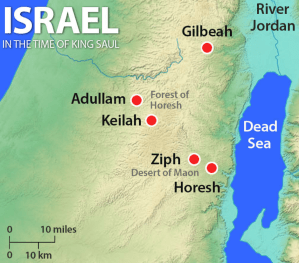


 Considering the Bible