My wife and I are reading through the Psalms in our evening reading and occasionally a nugget of the Psalms jumps out of the page. Don’t you love it when, after years of reading the “Old Book” passages become alive, reinforcing old teachings or simply warming your heart.
This is the book of Psalms, and it is rich.
I pray I can communicate a portion of the blessing we receive from this wonderful book.
Psalm 67:4-5
4 Let the nations be glad and sing for joy, for you judge the peoples with equity and guide the nations upon earth. Selah 5 Let the peoples praise you, O God; let all the peoples praise you!
Can you hear the Psalmist? If only the nations understood the judgement and guidance the Lord provides. The psalmist rightly speaks of the nations being glad and singing for joy if they understood His judgement and guidance!
But, alas, the nations are blinded, and the people are deceived. Out of this deception comes misunderstanding, confusion and bickering. No joy, but jealousy of His power. No gladness, but grievances of His ways. No praise but only put downs and complaints of His Person!
Now I do not want to forget that this deception is accepted by a fallen people, a people who seek to find fault with God, who want to turn away from God and to follow their own way. But these are two different topics. The truth of God’s judgements and guidance, as compared to our ability/desire to accept this truth. I do not think the Psalmist is communicating the ability/desire of the nations/peoples, but simply that if they understood, the outcome would be praise, joy and gladness!
Before we follow God (and if we are honest with ourselves after we commit to Him), we are a people that tends to look the other way, to avoid the truth, to seek our own ways. We have an old man’s heart that surely likes to say no to God and His truth.
The psalmist is speaking of the judgement and guidance of God, and not necessarily how it is accepted by those of us below. It is as if the psalmist moans that the peoples/nations would open their eyes to the truth, to see how righteous and good God is in His judgements, in His guidance of the nations. Patience and mercy exude from the Father in all His ways, and a correct understanding of God’s judgements and guidance, to those who correctly understand it, perceive it, receive it and take it in, will produce a response of gladness, praise, and joy, even singing.
A correct understanding of God’s judgements and guidance will produce a response of gladness, praise and joy, even singing.
On a personal note, it must be understood that even in church, as I try to sing, my voice is such that it perturbs me. I can’t image the poor folks who may hear me! An exercise of mercy towards me for them!
I mess up, muddle through and am off tune, out of tune and without any talent. Yet as I grow into the Lord, and understand His holiness towards us, His mercy and patience, His many gifts of blessing to us, I find I cannot help but sing, even to the detriment of those around me.
Occasionally a tear will fall down my cheek, simply because He loves me, and somehow, in song, that reality hits me harder than during the day to day grind we all experience. And yet He loves us each and every day, whether we feel it or not. It is a truth we can settle into, lean upon and run to in times of trial.
He loves the nations. He loves people. He loves me, and for the life of me I don’t understand why – but He does and it simply pulls me in!
If only the deceptions could be pulled away from our minds, and if only our souls would seek the truth. May God have mercy on us, and reveal the Son of God in all His grace, in His resurrection, and in His patience to us, a people that are very slow to learn.
Praise Him for His judgements and guidance toward each of us each day. May we seek to understand Him and His ways more everyday!
As many who have followed me for a bit, I have fallen into the Psalms, and I can’t get up! (As if I would want to.) The Psalms are a majestic collection of poetry, of heart felt human experiences that constantly challenge me in my own frail attempt to follow the true King. As many of the Psalms are written by David, my study on the Psalms has spurred me on to looking at the life of David, is the main contributor to this book, and to follow the victories and tragedies of the shepherd King of Israel.
Many times in the narrative, we will see the Lord Jesus, imperfectly, yet a reflection of His spirit in a man with weaknesses.
1 Samuel 23
19 Then the Ziphites went up to Saul at Gibeah, saying, “Is not David hiding among us in the strongholds at Horesh, on the hill of Hachilah, which is south of Jeshimon? 20 Now come down, O king, according to all your heart’s desire to come down, and our part shall be to surrender him into the king’s hand.” 21 And Saul said, “May you be blessed by the LORD, for you have had compassion on me. 22 Go, make yet more sure. Know and see the place where his foot is, and who has seen him there, for it is told me that he is very cunning. 23 See therefore and take note of all the lurking places where he hides, and come back to me with sure information. Then I will go with you. And if he is in the land, I will search him out among all the thousands of Judah.”
David was not everyone’s favorite rebel.
Recently he vanquished the Philistines as they were battling the city of Keilah. Finding victory, David and his men were then subjected to a faithless city, having to run before the Keilahites offered him up to Saul.
To be fair, this account of the Keilahites may have a slightly different interpretation than I have offered, since it seems that once the Lord revealed to David the Keilahites intentions to save themselves from Saul’s fighting machine, David willingly ran. Possibly to save the Keilahites of the suffering their king would being on them.
The Ziphites are not so guiltless. They seem to have a desire to assist King Saul, unlike the Keilahites, who may have only given up David in self preservation, if David hadn’t left.
No, the Ziphites sought out Saul at Gibeah, a town approximately 25 miles to the north of Jerusalem. They left their homes, and travelled to see the king with information of David’s whereabouts. Not simply a general location, but a very specific camp David was residing at, in the strongholds at Horesh, on the hill of Hachilah, which is south of Jeshimon.
David was on a specific hill. At first I imagined this “hill” to be mountainous, but it seems the Hebrew word for hill in this instance means hill, somewhat lower than a mountain. This information Saul was provided was very specific!
What good spy’s Saul has here! And they were willingly offering to Saul their full cooperation! What good citizens!
Saul provides the blessing of God on these good and faithful Ziphites. What? He doesn’t understand the blessing of God, nor is he in a position spiritually to pass a blessing on. And for the Ziphites – being blessed for being a traitor to God’s appointed King? Something is terribly wrong with this picture!
And though Saul “blesses” the Ziphites, he will not venture out until the information is verified. It is like he was saying – I don’t quite trust you Ziphites – Go make sure and then come back. Get more specific data.
Is Saul moving from a reactionary attack, based on shear hatred of David, to a more strategic, fact based plan to kill David at this time? Or is it that the Ziphites were known to be untrustworthy?
It seems the Ziphites were not necessarily untrustworthy, but merely seeking to gain the king’s favor. Seeking an earthly king’s pleasure against the Word of God leads to terrible betrayals, and huge treachery.
No- the Ziphites used their political faithfulness to a madman, to work against a movement of God. And we shall see in future passages that this behavior is confirmed in the Ziphites, for this is not the only time they offer up David to the king. We find that they show up on Saul’s doorstep again in chapter 26.
It also turns out that Saul was not as “strategic” as I may have suggested, for, in our next passage, it turns out that Saul couldn’t resist heading south to the region the Ziphites described, before gaining confirmation of David’s whereabouts.
It seemed Saul was about to capture David. Saul’s network of spies was about to deliver David into his hands, and Saul would finally have the peace he sought!
This passage reminds me of times when I seek to accomplish something, in order to find some sense of worth, or to justify a decision I had made, or to have a sense of completion. I may, in a sense be seeking a type of peace in these decisions. I tend to drive people, (as a hangover from work) and need to adjust my focus to people and not tasks.
An alternate view of this passage is that Saul sought to hurt someone. The Ziphites sought to hurt someone. They found a type of fellowship in this desire. They may have felt a bond of some type. Hard as it may be to believe, this may also become a trap for a believer, letting a group dynamic influence a just decision.
Consider your associations and test to see if the goals of the organization are just and right. If there is some uncertainty, or if those you associate with are working against God, it may be time to consider if you should remain? Is it simply a bond that started out right, in pursuit of God, but is now actively working against God?
This takes wisdom from God and clear spiritual discernment, but the Lord is able to teach each of us as we seek Him.
Thanks again for coming to visit. I hope you found something of interest in this post and would appreciate a comment, to begin a discussion. If you know someone this blog may bless (or challenge), send them a link, so they may join us in our discussion.
My wife and I are reading through the Psalms in our evening reading and occasionally a nugget of the Psalms jumps out of the page. Don’t you love it when, after years of reading the “Old Book” passages become alive, reinforcing old teachings or simply warming your heart.
This is the book of Psalms, and it is rich.
I pray I can communicate a portion of the blessing we receive from this wonderful book.
Psalm 67:1-3
1 To the choirmaster: with stringed instruments. A Psalm. A Song. May God be gracious to us and bless us and make his face to shine upon us, Selah 2 that your way may be known on earth, your saving power among all nations. 3 Let the peoples praise you, O God; let all the peoples praise you!
One of my grandbabies came over to visit us for few moments a couple days back. He is a little two year old that, along with his brother, my wife watches a couple times a month. He is an energetic youngin’ and we always, with all our children and grandchildren, need a hug when the come and when they leave. I am tending to become a huggy guy!
Nevertheless, this little buckaroo gave us our hugs, but while in Gramma’s arms, turned his head and started having an attitude. He turned his face away from Gramma. He was expressing a natural reaction to some issue he was upset with Gramma about. I think it was candy related! It didn’t last long for my wife let him know it wasn’t acceptable to act like that. No candy was wrestled out of my wife’s pantry by that behavior!
But I digress. When we see a phrase in our first verse about making God’s face shine upon us, this indicates His face is not shining upon the author. There was anger being expressed, and the author knew it.
He is requesting that God turn His face to him. Now I am not in any way trying to portray God as a demanding little child, that wants something we have, but I seek only to communicate that the act of having a face turned away speaks of loss of relationship. My wifey and Theo have a great relationship, but at this time, he had his eyes on something else.
God is not turning away for some selfish desire, but because of our sin against Him. We have offended Him.
Yet notice the Psalmist speaks of God making His face turn to us. With Theo, Gramma had to explain the situation, and require Theo to “face” her. For the Psalmist, all of this action is passive, the only active participant is God Himself.
God makes His face turn to us. Does this not scream of the crucifixion, of the free will offering of the Savior, of His work to satisfy the Father and to make the wall of partition fall down between us, of His making peace between us?
Even the purpose of this “making God’s face shine upon us” is not simply for our benefit but consistent with the Great commission, that God’s ways would be practiced by all on the earth.
Matthew 28:19-20
Go therefore and make disciples of all nations, baptizing them in the name of the Father and of the Son and of the Holy Spirit, teaching them to observe all that I have commanded you. And behold, I am with you always, to the end of the age.”
And what is the natural response to this observing of God’s ways? Praise. All the people to praise the goodness of God, in that He made His face to turn to us. He did not wait for us to be good enough, or to bring more and more sacrifices, but He took action, and is waiting for the natural response of His people to praise Him and thank Him.
Take a few minutes this morning to praise Him for His many acts of mercy, for His face to shine upon us in the person of Jesus Christ.
2 Corinthians 4:6 For God, who said, “Let light shine out of darkness,” has shone in our hearts to give the light of the knowledge of the glory of God in the face of Jesus Christ.
Truly it is impossible to not be thankful, and to praise Him when we sit before Him and think on His love and mercy towards us in Christ Jesus!
As many who have followed me for a bit, I have fallen into the Psalms, and I can’t get up! (As if I would want to.) The Psalms are a majestic collection of poetry, of heart felt human experiences that constantly challenge me in my own frail attempt to follow the true King. As many of the Psalms are written by David, my study on the Psalms has spurred me on to looking at the life of David, is the main contributor to this book, and to follow the victories and tragedies of the shepherd King of Israel.
Many times in the narrative, we will see the Lord Jesus, imperfectly, yet a reflection of His spirit in a man with weaknesses.
1 Samuel 23:15-29 15 David saw that Saul had come out to seek his life. David was in the wilderness of Ziph at Horesh. 16 And Jonathan, Saul’s son, rose and went to David at Horesh, and strengthened his hand in God. 17 And he said to him, “Do not fear, for the hand of Saul my father shall not find you. You shall be king over Israel, and I shall be next to you. Saul my father also knows this.” 18 And the two of them made a covenant before the LORD. David remained at Horesh, and Jonathan went home.
In the verse previous to 15, the author tells us that David was in the strongholds and mountains of the wilderness, due to Saul seeking him everyday. David was the subject of constant harassment, constant stress, constant pressure, from a king he had served faithfully. Yet the die had been set and Saul was determined in his actions. Saulnwas settled in his mind that David had to die, and in the past passages we have seen Saul abuse his wife, his daughters and his son in the pursuit of killing David. No one was safe until David was dead
Now the circumstances of how Jonathon, the son of David’s mortal enemy came to visit him is a mystery. David may have made the appointment with Jonathon, providing Jonathon his exact whereabouts. Yet this was an opportunity for this information to be leaked to Saul, for the transmission of this data to somehow find it’s way to the King.
And the danger was not only on David’s part, for if Saul, in his murderous tirade, knew Jonathon visited with David, it might be the end of Jonathon.
But the meeting was set and the two men were able to discuss David’s circumstances. For some unknown reason, only Jonathon’s message has been preserved for us. Three messages come to David from the lips of Jonathon.
Do not fear
Jonathon spoke words of peace on David, ensuring David that Saul shall not find him. Was this simply words of hope, words that were meant to encourage. Surely. But were these words of surety, or an absolute promise, as if a Word from God?
I don’t understand that Jonathon was a prophet, but at the very least, he may have uttered these words as a repetition of the promise of God to David years earlier. Jonathon made this conclusion of escaping Saul’s hand due to the promise of David ascending to the throne of Israel, which Jonathon rightly reminds David of his future.
You shall be king
David shall be king, and to be king over all Israel. This was the promise of God that ensured both men that David would escape the hand of Saul. And then Jonathon says “I shall be next to you”.
I don’t recall any portion of the promise of God stating this, nor of David providing this promise. So what was Jonathon talking about? Was he thinking of a co-regency, where he would be equal to David in the kingdom?
When Jonathon speaks of being “next” to David, Jonathon may be implying a rank of second in the kingdom, for the Hebrew word מִשְׁנֶה mishneh, sometimes speaks of being second in rank. Might Jonathon be suggesting his desire of a position of power to David? Possibly, yet I want to think that Jonathon was of a purer heart, and simply be referring to his informal, personal support for, and friendship to David in his future reign.
Saul knows this
This is such a sad statement! Saul knew David would ascend to the throne, and yet he toiled against the will of God, against his own benefit, against the good of his own nation, and against his own families existence!
Consider Saul waking up to the realization of David’s supremacy, and humbly coming to him in front of the nation of Israel, bowing the knee and giving up his position of power to David. What would be Saul’s legacy? How many benefits would shower down on Saul for this act of humility?
Knowing the truth and fighting against it is foolish. Yet to agree with the truth takes humility, a washing away of pride and arrogance, the giving up of advantage and power, of losing reputation and starting over.
Truly there are many forms of loss when we are agreeing with the truth. Confession of sin and repentance may cost us much, even our very way of life.
And what do we get out of it?
The foundation of agreeing with the truth is that we are conforming to reality. We are no longer living in a fantasy world, a would of smoke and mirrors, of deceit, cheating, backstabbing and conspiracy. We are no longer looking over our shoulder, but have joy, purpose and a life to live, not a death to fear.
Saul may have been too far gone by this time in his life. I have no idea, nor do I suppose any but God knew of Saul’s opportunity to repent at that time. Sadly we know he did not repent, that his last years were spent fighting against the truth.
If you have been fighting against a truth the Lord has spoke to you about, quit fighting.
Don’t be a Saul.
Thanks again for coming to visit. I hope you found something of interest in this post and would appreciate a comment, to begin a discussion. If you know someone this blog may bless (or challenge), send them a link, so they may join us in our discussion.
My wife and I are reading through the Psalms in our evening reading and occasionally a nugget of the Psalms jumps out of the page. Don’t you love it when, after years of reading the “Old Book” passages become alive, reinforcing old teachings or simply warming your heart.
This is the book of Psalms, and it is rich.
I pray I can communicate a portion of the blessing we receive from this wonderful book.
Psalm 66:16 Come and hear, all you who fear God, and I will tell what he has done for my soul. Psalm 66:17 I cried to him with my mouth, and high praise was on my tongue. Psalm 66:18 If I had cherished iniquity in my heart, the Lord would not have listened. Psalm 66:19 But truly God has listened; he has attended to the voice of my prayer. Psalm 66:20 Blessed be God, because he has not rejected my prayer or removed his steadfast love from me!
In our last post, we looked at the vow the psalmist was to keep and of the commitment he had towards God. In this final portion of Psalm 66, the psalmist speaks of his inner condition, of his prayer to God., and of God’s work in the psalmist’s soul.
It appears the psalmist was in the midst of a trial, for he cried out to God, and as he has encouraged us, spoke high praise to the Lord. Immediately after declaring his prayer, he spoke of cherishing iniquity in his heart, and that if he did God would not listen. This is a common teaching that we believers understand.
But notice the “but”.
The psalmist was teaching a truth on the heart condition requirements of the believer, and immediately made an exception for the fact. A believers heart is to be clean, but in my circumstance, God listened. God truly had listened.
Verse 20 is far richer than I initially considered as I glibly read through it. Consider the psalmist, having a “not pure” heart, crying to God in the midst of a trial, and yet God listened, He noticed, He gave heed to the prayer, not rejecting the prayer, as the psalmist surely may have expected.
The psalmist can not explain this reaction from God but for one reason.
God had not removed His steadfast love from him. Dwell on this blessing today, as you venture out for Him.
He is a merciful God!
Blessed be God, which hath not turned away my prayer, nor his mercy from me. KJV
Praise God, who did not ignore my prayer or withdraw his unfailing love from me. NLT
Blessed be God! He has not turned away my prayer or turned his faithful love from me. CSB
Blessed be God, Who has not turned away my prayer Nor His lovingkindness from me. LSB
Blessed be God, Who has not turned away my prayer Nor His favor from me. NASB
As many who have followed me for a bit, I have fallen into the Psalms, and I can’t get up! (As if I would want to.) The Psalms are a majestic collection of poetry, of heart felt human experiences that constantly challenge me in my own frail attempt to follow the true King. As many of the Psalms are written by David, my study on the Psalms has spurred me on to looking at the life of David, is the main contributor to this book, and to follow the victories and tragedies of the shepherd King of Israel.
Many times in the narrative, we will see the Lord Jesus, imperfectly, yet a reflection of His spirit in a man with weaknesses.
1 Samuel 23:6-14
6 When Abiathar the son of Ahimelech had fled to David to Keilah, he had come down with an ephod in his hand. 7 Now it was told Saul that David had come to Keilah. And Saul said, “God has given him into my hand, for he has shut himself in by entering a town that has gates and bars.” 8 And Saul summoned all the people to war, to go down to Keilah, to besiege David and his men. 9 David knew that Saul was plotting harm against him. And he said to Abiathar the priest, “Bring the ephod here.” 10 Then David said, “O LORD, the God of Israel, your servant has surely heard that Saul seeks to come to Keilah, to destroy the city on my account. 11 Will the men of Keilah surrender me into his hand? Will Saul come down, as your servant has heard? O LORD, the God of Israel, please tell your servant.” And the LORD said, “He will come down.” 12 Then David said, “Will the men of Keilah surrender me and my men into the hand of Saul?” And the LORD said, “They will surrender you.” 13 Then David and his men, who were about six hundred, arose and departed from Keilah, and they went wherever they could go. When Saul was told that David had escaped from Keilah, he gave up the expedition. 14 And David remained in the strongholds in the wilderness, in the hill country of the wilderness of Ziph. And Saul sought him every day, but God did not give him into his hand.
Let’s remember the immediate context of this story. David had just travelled to Keilah and delivered the people of the city of Keilah from the Philistines. David, the rebel, the enemy of the state, the one whom Saul wants to kill, entered deeper into Saul’s territory in order to save some of Saul’s people.
Where was Saul in all of this internal strife?
He was amassing the people of Israel to go to war, to go down to Keilah and capture David. Nothing in this passage speaks of Saul’s desire to rescue the city from the Philistine threat. No – Saul was obsessed with David and the apparent threat David was to the throne of Israel.
Who cares about the people of Israel? Surely not Saul, for he had to protect his own position within the country, to protect his own power over the people. I could imagine Saul justifying his actions by stating it was for the greater good, or some such malarky that we hear by our leaders even today. Simply a selfish act by a selfish man, thinking only of himself.
Yet, Saul, when word got out that David was in Keilah, assumed that the Lord had delivered David into his hands. There was some truth, at least in appearance, for the Lord had told David to go fight the Philistines in Keilah.
Saul was interpreting the actions of God to favor his own circumstances. This is a very common trap that we all do.
We see God doing something with someone, and we tend to interpret it in relation to our situation, to favor our circumstance, to supply a justification for some action we want to take, or to simply align the action with something we are doing at the time.
We all do it.
It is so easy to interpret an action of God and come to some conclusion that is incorrect. God called David to Keilah, into the territory of Saul. Saul interpreted this action as revealing God’s will to Saul to support his sinful actions. In reality, God calling David to Keilah was a judgement on Saul, showing the current king as being ineffective, and unconcerned for his own people God had called him to protect.
Saul thought God was smiling on him. Not so.
So often as I read through these passages, I get a sense that Saul is completely blind to the work of God, rejecting the big picture and only having one focus. Himself.
But that is not the only selfish actor in this passage.
David and his 400 men travelled to Keilah, fought the Philistines, won a mighty victory and rescued the city from devastation. But news gets around, and Saul hears that David is in Keilah. Hot diggity dog – Saul starts rounding up an army to come get him.
What a perfect opportunity to allow this newly minted army of David to continue fighting against Saul! David’s band of men are probably high on the victory and full of adrenaline, peaking on the team work that has begun to develop under David’s leadership. Surely God is calling Saul into this trap!
Well – not surely, for David did not jump to a selfish conclusion, one that might conceivable stop this constant hunt of Saul for his head. David decided to pray and get the bigger picture.
Consider the situation. Keilah was about to be destroyed by the Philistines. David came to the rescue. Keilah was again about to be destroyed, this time by their own king, unless they gave up David.
It was a common tactic to force the surrender of a person in the city to avoid a battle. David knew this was a tactic that might be used, but he again didn’t jump to conclusions, only asking the Lord if the people he just saved would abandon him.
Amazing picture of the gospel here, in that the savior of the people would be turned against by the people he came to save. David’s life is full of situations where the Savior can be clearly seen.
Nevertheless, the Lord informed David of the intent of the people, and prior to the eruption of a conflict at the gates of Keilah, David again saved the city and its population.
He ran.
He swallowed his pride and ran into the wilderness of Zin. Consider the mighty warrior David, turning tail after a victory provided by the hand of the Lord. How utterly confusing (in appearance) is the man of God who listens to God!
Yet if you read the passage carefully, you will notice that his army had not only experienced some real time fighting on the battle field, but that the army actually increased in size! A 50% increase, from 400 men to 600 men.
David is accruing men, a movement of God is happening and David goes deeper into the wilderness, deeper south to Ziph, a rugged place that afforded no comforts or ease of life. But the training of a young shepherd boy was continuing in developing a man of God, a man who would be king, yet through much suffering. Did I mention that Jesus can be seen in the shepherd boy if we take the time to look?
Surely David looked to Jesus for guidance and leadership, and from this looking, became more like Him every day.
2 Corinthians 3:18 And we all, with unveiled face, beholding the glory of the Lord, are being transformed into the same image from one degree of glory to another. For this comes from the Lord who is the Spirit.
Look to the Savior. Take your time and look!
Thanks again for coming to visit. I hope you found something of interest in this post and would appreciate a comment, to begin a discussion. If you know someone this blog may bless (or challenge), send them a link, so they may join us in our discussion.
My wife and I are reading through the Psalms in our evening reading and occasionally a nugget of the Psalms jumps out of the page. Don’t you love it when, after years of reading the “Old Book” passages become alive, reinforcing old teachings or simply warming your heart.
This is the book of Psalms, and it is rich.
I pray I can communicate a portion of the blessing we receive from this wonderful book.
Psalm 66:13 I will come into your house with burnt offerings; I will perform my vows to you, Psalm 66:14 that which my lips uttered and my mouth promised when I was in trouble. Psalm 66:15 I will offer to you burnt offerings of fattened animals, with the smoke of the sacrifice of rams; I will make an offering of bulls and goats. Selah
In our last post, we spoke of the reality of God testing the believer, and of God bringing us through some trouble or trial. The psalmist experienced his own personal trial, and spoke a vow before the Lord. The next few verses speak of him completing his vow.
Vows are serious. A vow is a verbal contract. A promise, usually a bilateral type of agreement that the offerer makes to get something out of the other party.
Now there are vows that are unilateral, that is, the offerer makes the vow without expecting any type of action on the part of the recipient, but that doesn’t happen often, and I can’t think of a time when it wasn’t God making the offer. He is like that, in that He makes a vow for our good, and that costs Him, for our sake. Doesn’t seen fair, but that isn’t the way God works. He is full of mercy, and grace. Fairness doesn’t factor into His dealings with us! (Righteousness does of course, but I fear I am getting a bit off track!)
Nevertheless, the psalmist made a vow. A promise to God for His intervention in a trial he was going through. Obviously, God pulled him though to an abundant place, and he was mow focused on performing the vow.
Did God need the sacrifice? Was God hungry, in that He needed the sacrificed meat? This idea speaks of our seeking to understand God in our terms. God did not require a sacrifice, but the psalmist needed to provide the sacrifice. He needed to complete the vow, FOR HIS OWN SAKE. .
For one to make a vow and to break it (not perform it) remains in a persons conscience. When all is quiet and there are no distractions, the truth is still there of a broken promise, of a vow incomplete, made to the One who is faithful.
For a psalm that speaks of all the earth to praise God, this particular last portion of the psalm becomes very personal, focused on the psalmist himself. Its as if the psalmist couldn’t help but to take his own counsel and to speak of the awesome deeds God had performed in his own life, and the resultant obedience that grows out of this awesome deed. I assume it was an awesome deed for the vow is quite extensive. Not only are there multiple types of sacrifice (bull and goat) but there seems to be multiple animals for each sacrifice.
Not only is the quantity high, but the quality is high also. These animals are fattened (vs 15), speaking of the health and worth of each sacrifice.
The psalmist offered burnt offerings, which were a voluntary sacrifice, a sacrifice that spoke of devotion to God. Although his vow may have been given in the heat of the moment, his devotion was long term, deep and according the the instructions provided by God.
Yet in all of this vow keeping, the psalmist does not forget that it is God that is the greater One in the relationship. In our next post, the psalmist will speak of some of the deeper, internal actions the psalmist went through, and the work of God related to his heart.
As many who have followed me for a bit, I have fallen into the Psalms, and I can’t get up! (As if I would want to.) The Psalms are a majestic collection of poetry, of heart felt human experiences that constantly challenge me in my own frail attempt to follow the true King. As many of the Psalms are written by David, my study on the Psalms has spurred me on to looking at the life of David, is the main contributor to this book, and to follow the victories and tragedies of the shepherd King of Israel.
Many times in the narrative, we will see the Lord Jesus, imperfectly, yet a reflection of His spirit in a man with weaknesses.
Let’s recap David’s history for a moment.
He is on the run from King Saul, having fled to the city of Gath in the country of the Philistines. On his way to Gath, he stops and visits with Ahimelech at Nob, the city of priests. David speaks a story to Ahimelech to get some food and weapons due to being on a “secret” mission from the King. When he gets to Gath, he feigns madness in front of the Philistine King, and is rejected. Without a place to hide from King Saul. he heads back towards Israel, to a cave near Adullam where David seemed to find a sense of security.
It was at this cave that David accrued a ragtag army of men, totaling approx. 400, and where Abiathar, a priest from the city of Nob informed David of the massacre of the priests and the inhabitants of the city of Nob. David commits to protecting the one priest that escaped Nob.
At this point in David’s story, he is starting to look more like a leader and not a runaway. David’s character is challenged again in our passage today. Let’s take a moment to read it.
1 Samuel 23:1-14 1 Now they told David, “Behold, the Philistines are fighting against Keilah and are robbing the threshing floors.” 2 Therefore David inquired of the LORD, “Shall I go and attack these Philistines?” And the LORD said to David, “Go and attack the Philistines and save Keilah.” 3 But David’s men said to him, “Behold, we are afraid here in Judah; how much more then if we go to Keilah against the armies of the Philistines?” 4 Then David inquired of the LORD again. And the LORD answered him, “Arise, go down to Keilah, for I will give the Philistines into your hand.” 5 And David and his men went to Keilah and fought with the Philistines and brought away their livestock and struck them with a great blow. So David saved the inhabitants of Keilah.
Directly south, approximately 2-3 miles of the cave of Adullum, is a small city named Keilah. I have provided a small map below to give my reader a feel for it’s location in relation to Adullam, and of Gath, in the upper left.
Our passage speaks of Keilah being attacked by the Philistines, and most likely Philistines of the city of Gath, where David had recently showed up, would be the aggressors.
And some unknown group told David of a fight in Keilah, of the Philistines attacking a city of Israel.
Did David sit by and think it was King Saul’s responsibility? Saul was the king. Surely Saul would take care of the city of Keilah. Surely leaving the relative safety of Adullam would be foolish for David. Why leave a safe fortress, only to potentially meet up with King Saul. who wanted to kill him, and King Achish, of Gath, who considers him mad!
What to do? Whatever to do? Hold back. Stay in Adullam to protect those who are with him? Ignore the plight of the city? Assign responsibility to King Saul? Options. Choices. Decisions decision decisions.
Therefore David inquired of the Lord…
David actually approached the Lord twice in this passage, and at first I considered this repetition of request to be an act of disbelief. But after reading the passage a bit more, I am starting to consider the second request to be fueled by the concerns of his men.
David’s first prayer
A simple prayer.
Shall I go down and attach these Philistines?
No mention of Saul in this prayer, no mention of King Saul’s responsibility to the inhabitants of Keilah, and no request for safety from Saul in this prayer. Saul seems to be a non entity in David’s prayer.
David is informed to “Go and attack the Philistines and save Keilah”
Seems to be clear direction from the Lord. Attack and save!
Yet in the preparation for the future battle, his men express their concern, the state of fear they were experiencing, even without entering into any battle. Lets remember these men, who would eventually become some of David’s mighty men, had just come together, had no fighting experience that we know of, and had “fled” to David due to their generally needy circumstances.
1 Samuel 22:2 speaks of David’s men as those who were in distress, in debt, and bitter in soul. Not the valiant men we hear of later in David’s career. These men came to David for escape, for a relief from troubles. Even in Adullam, they knew that being associated with David was not the safest situation. Yet they found solace in being under his leadership.
But it seems their period of relative safety was coming to an end! David realized the circumstance, and I think he approached the Lord a second time for the sake of his men.
David’s second prayer
David’s second prayer is not recorded for us, but the Lord’s answer is.
“Arise, go down to Keilah, for I will give the Philistines into your hand.”
Notice that the Lord’s answer addresses the deliverance of David’s army. God will give the Philistines into your hand. This directly addresses the concerns of David’s men. Nothing about saving Keilah. Nothing about taking any of the spoils of war. Simply that God would deliver them.
These men would become mighty men of valor, and as the last verse of our passage tells us, David and his men struck the Philistines with a great blow. A victory for David with men who were fearful, but had the assurance of God’s presence.
Consider those we are around, those we love and care for, those that we rub shoulders with daily.
Some we know may be fearful to obey God. We need to encourage the fearful with a message tailored to their fear, from the Word of God. Let us not seek to draw believers into walking with God through greed or logic, or lies. Note that God addressed these men’s fear by providing His promise of victory, not of gaining possessions by winning a battle. Collecting booty from war would come later, as these men grew into a faith depending on God.
Some may simply want to rest under the leadership of a godly man. This was a real need for these men as they came under David’s leadership, but it wasn’t to be without action. Rest and action are not diametrically opposed. They needed rest, but true rest came out of an active following of David, of venturing out in spite of fear.
For myself, I have had to swallow much fear this last few years, and found God to be an ever present help. If I were to detail some of these fears, they may seem insignificant to some. That simply speaks to my weakness, and my need of strength.
As I face fears, I have found a simple passage or verse from a current Scripture reading to be invaluable, to lift my spirits, to embolden me in my specific fear of the day. And as I face the fear, He doesn’t seem to remove it as much as provide the strength to overcome it.
These men overcame their fear, vanquished the mighty Philistines, became heroes to the city of Keilah, found reward in gaining some livestock, and started to actively follow after David and His God on an adventure that is remembered by millions three millennium later.
How is fear working out in your life? Is it fueling you to trust or to cower. Remember, true overcoming is based on God’s message to you, and we can receive His message in the Word of God as we read and understand His will for us.
Thanks again for coming to visit. I hope you found something of interest in this post and would appreciate a comment, to begin a discussion. If you know someone this blog may bless (or challenge), send them a link, so they may join us in our discussion.
My wife and I are reading through the Psalms in our evening reading and occasionally a nugget of the Psalms jumps out of the page. Don’t you love it when, after years of reading the “Old Book” passages become alive, reinforcing old teachings or simply warming your heart.
This is the book of Psalms, and it is rich.
I pray I can communicate a portion of the blessing we receive from this wonderful book.
Psalm 66:8 Bless our God, O peoples; let the sound of his praise be heard, Psalm 66:9 who has kept our soul among the living and has not let our feet slip. Psalm 66:10 For you, O God, have tested us; you have tried us as silver is tried. Psalm 66:11 You brought us into the net; you laid a crushing burden on our backs; Psalm 66:12 you let men ride over our heads; we went through fire and through water; yet you have brought us out to a place of abundance.
Up to this point in the psalm, some may think that the believers life is described as all rosey, full of cotton candy, chocolate balls and sweet gummies.
Yet to praise God for His awesome deeds is not to imply that the believer has no problems, no trials, no troubles. His deeds are awesome on their own merits, and His awesome deeds are performed for us in the midst of our pain, our suffering, our self inflicted trials and rebellion.
He rescues us from our own foolishness at times, and sometimes He allows the consequences of our foolishness to work a better life into us. The psalmist states in verse 10 that God tests us. This should not surprise any believer, for it is in the testing that we come to know of His faithfulness and of our weakness, for if we do not trust in His power, we ultimately fail, and continue to suffer through our foolish decisions. If we trust Him in the midst of the trial, in the midst of His test for us, we grow as a believer, we can confidence in His power and love, we leave behind a good witness to others, and eventually, we find ourselves in an abundant place, a place of expansion and wonder, a place of freedom to obey and a desire to follow.
His test for you may be very difficult, may be crushing you, bring tears to your eyes and a pain in your heart. The test may be through the fire or through the water, but the psalmist wants to remind us that
…He brought us out to a place of abundance.
He is a delivering God, One who seeks to bring us to a place of abundance, though through pain, and suffering at times. We must remember He is the One with wisdom, He is the One who has all knowledge.
Notice the psalmist returns to the “we/us”. As the ancients followed and suffered, us moderns are also called to follow, and possibly suffer. But the end is the same for us as it was for them.
We will come to a place of abundance. Or better said, we will come to have life abundantly and with the One who knows us best.
May His name be praised, even in our trials. May we speak out loud of His awesome deeds, even in the midst of hard lessons!
As many who have followed me for a bit, I have fallen into the Psalms, and I can’t get up! (As if I would want to.) The Psalms are a majestic collection of poetry, of heart felt human experiences that constantly challenge me in my own frail attempt to follow the true King. As many of the Psalms are written by David, my study on the Psalms has spurred me on to looking at the life of David, is the main contributor to this book, and to follow the victories and tragedies of the shepherd King of Israel.
Many times in the narrative, we will see the Lord Jesus, imperfectly, yet a reflection of His spirit in a man with weaknesses.
1 Samuel 22:20-23
20 But one of the sons of Ahimelech the son of Ahitub, named Abiathar, escaped and fled after David. 21 And Abiathar told David that Saul had killed the priests of the LORD. 22 And David said to Abiathar, “I knew on that day, when Doeg the Edomite was there, that he would surely tell Saul. I have occasioned the death of all the persons of your father’s house. 23 Stay with me; do not be afraid, for he who seeks my life seeks your life. With me you shall be in safekeeping.”
One priest escaped the slaughter of our earlier passage. If you will remember, Saul had all the priests, their family, those who lived in the city of Nob, along with all the livestock put to the sword.
One priest escaped that we know of. Abiathar, a priest who followed after David in his fleeing from Saul, saw David rise to power and was faithful to David throughout most of his reign. That is until Adonijah swept Abiathar away from David, but that is for a later time to consider.
In this passage, Abiathar is seen delivering the news to David the news of the slaughter of the priests, and of those in Nob.
David admits to this priest that he knew of the danger of Doeg, and that his actions of deception to Ahimelech caused his death. And the death of those in the city.
As a thought experiment, for just a moment, what if David had told Ahimelech the truth?
Possibility #1 Siding with Saul
Ahimelech could have decided to be faithful to Saul, and either reject David’s plea for assistance, or try to capture David for the sake of the king. Surely David was not in fear of physical capture from the priest. That seems unlikely.
Might Ahimelech have informed Saul after David left, helping the king in his quest for David? Possibly, but David would be in no more danger than he was as he entered Nob. Sure, Saul may know of the time and place David was at a certain time, but David would surely find alternate safehavens to venture to.
Saul would have no reason to kill the priest. The city of Nob would have remained a peaceful place for the priests of God and their families.
The strife between Saul and David had not yet reached Ahimelech. He was limited in his ability to make an informed decision. Out of David’s decision to deceive, Ahimelech and the entire city of Nob was sacrificed on the altar of a madman’s dreams.
So what if David had provided the priest the truth of the situation?
Possibility #2 – Siding with David
If David had trusted the priest, sat him down and explained the situation, Ahimelech may have sided with David, providing him the sword, the prayers and the food. Ahimelech would have had the knowledge to decide what to do, especially in view of Doeg being witness to this interaction.
Might Ahimelech joined David at this time? Hard to say, but it would have been Ahimelech’s choice and not David’s.
Might Ahimelech have had some early warning of the danger of Saul’s request for his appearance? Surely this would provide Ahimelech some warning. Might Ahimelech have had the freedom to attach himself to David at this point, and found a new king, a sane king, though not formally in power, but under the blessing of God?
As I said, this is simply a thought experiment, but it does allow us to see that deception has consequences, that the hiding of information can have dire results.
Hundreds had been slain. One man was with David. A priest, whom David took responsibility for.
It may seem that in this passage, David almost flippantly admits his sin and moves on. The psalms speak a far different matter. Psalms 52, 64, 109 and 140 all have reference to our passage in 1 Samuel 22, and the death of those in the city of Nob. I have currently posted on Psalms 52 and 64 as I work my way through the psalms. For your convenience, the following are links to previous related posts of David’s prayers and heart after the massacre of Nob.
David carried this result of his deception for the rest of his life. Out of this catastrophe, David was surely trained unto righteousness through this memory of this tragedy.
Hebrews 12:11 For the moment all discipline seems painful rather than pleasant, but later it yields the peaceful fruit of righteousness to those who have been trained by it.
The Lord has mysterious ways, and in the midst of horrible circumstances, that may have been assisted by ourselves, we can look to the forgiveness of the One who loves us, the Lord Jesus, and of His continuing love and guidance to us for His will and our good.
May His name be praised.
Thanks again for coming to visit. I hope you found something of interest in this post and would appreciate a comment, to begin a discussion. If you know someone this blog may bless (or challenge), send them a link, so they may join us in our discussion.
My wife and I are reading through the Psalms in our evening reading and occasionally a nugget of the Psalms jumps out of the page. Don’t you love it when, after years of reading the “Old Book” passages become alive, reinforcing old teachings or simply warming your heart.
This is the book of Psalms, and it is rich.
I pray I can communicate a portion of the blessing we receive from this wonderful book.
Psalm 66:5 Come and see what God has done: he is awesome in his deeds toward the children of man. Psalm 66:6 He turned the sea into dry land; they passed through the river on foot. There did we rejoice in him, Psalm 66:7 who rules by his might forever, whose eyes keep watch on the nations– let not the rebellious exalt themselves. Selah
How is it that the psalmist invites his current audience to come and see the awesome deeds of God and then refer to actions the Lord performed hundreds of years before they were born? Psalm 66:6 goes so far as to say “There did we rejoice in him”.
Is the psalmist merely speaking in the editorial we, as referring to the entire nation of Israel? If so, this still does not address the time difference from the psalmists audience and the work being referred to.
Is the psalmist describing the ability of the group he is addressing with a past deed of God? He refers to “them” going through the river on foot, and us, his current audience rejoicing.
Why the difference in pronouns?
In my opinion (only my opinion) the psalmist is wanting to connect the existing audience with those who experienced the deed of God, and remind all that though an act of God may be performed at a particular point in time, it’s benefits extend throughout time immemorial. It is for those who follow behind to enter into this benefit, though they may not have seen, heard, felt, touched, sensed or got caught up in the experience.
The psalmist speaks of the deliverance of the children of Israel through both the Red Sean and the Jordan River, immediately changing the topic to how God rules over the nations. God saves and God guides, God delivers and God directs.
Again, the psalmist caps off his short message with a reference to the rebellious, that they do not exalt themselves. Though some may consider this a command, and it may be, and should be obeyed, I sense the psalmist is giving counsel for the sake of helping the rebellious. Not so much as threatening, but for the rebellious to consider the great deed of God and to compare themselves in reality, to live in truth.
Consider the awesome deeds of God, and in doing so, the self exaltation we crave will evaporate before His throne.
May we experience a humility that keeps us from the self appointed exaltation we so often seek. Please God – help your people to know your awesome deeds, to enter into the benefit of your work on our behalf, though we fought you all the way!
As many who have followed me for a bit, I have fallen into the Psalms, and I can’t get up! (As if I would want to.) The Psalms are a majestic collection of poetry, of heart felt human experiences that constantly challenge me in my own frail attempt to follow the true King. As many of the Psalms are written by David, my study on the Psalms has spurred me on to looking at the life of David, is the main contributor to this book, and to follow the victories and tragedies of the shepherd King of Israel.
Many times in the narrative, we will see the Lord Jesus, imperfectly, yet a reflection of His spirit in a man with weaknesses.
1 Samuel 22:11-19
11 Then the king sent to summon Ahimelech the priest, the son of Ahitub, and all his father’s house, the priests who were at Nob, and all of them came to the king. 12 And Saul said, “Hear now, son of Ahitub.” And he answered, “Here I am, my lord.” 13 And Saul said to him, “Why have you conspired against me, you and the son of Jesse, in that you have given him bread and a sword and have inquired of God for him, so that he has risen against me, to lie in wait, as at this day?” 14 Then Ahimelech answered the king, “And who among all your servants is so faithful as David, who is the king’s son-in-law, and captain over your bodyguard, and honored in your house? 15 Is today the first time that I have inquired of God for him? No! Let not the king impute anything to his servant or to all the house of my father, for your servant has known nothing of all this, much or little.” 16 And the king said, “You shall surely die, Ahimelech, you and all your father’s house.” 17 And the king said to the guard who stood about him, “Turn and kill the priests of the LORD, because their hand also is with David, and they knew that he fled and did not disclose it to me.” But the servants of the king would not put out their hand to strike the priests of the LORD. 18 Then the king said to Doeg, “You turn and strike the priests.” And Doeg the Edomite turned and struck down the priests, and he killed on that day eighty-five persons who wore the linen ephod. 19 And Nob, the city of the priests, he put to the sword; both man and woman, child and infant, ox, donkey and sheep, he put to the sword.
Nob was a small, peaceful city of priests, approx. 2 miles northeast of Jerusalem and 3 miles southeast of the capital of Gibeah, where Saul reigned under a tamarisk tree.
In our earlier passage, Doeg had revealed to Saul where David had been, and Saul was like a dog on the hunt. Get Ahimelech! And not just Ahimelech, but all of his house, even all of the priests of the city. Bring them to me!
As Ahimelech, and the priests of Nob arrived in front of Saul, in response to the kings demand, Saul, dwelling in his paranoia, makes ridiculous claims of the priest’s motivations. He exposed his baseless suspicions, claiming the priest of God had intended to subvert the king. Saul claimed that Ahimelech’s assistance was the impetus for David to rise up against the king.
Get a hold of what Saul said to Ahimelech once more.
“Why have you conspired against me, you and the son of Jesse, in that you have given him bread and a sword and have inquired of God for him,so that he has risen against me, to lie in wait, as at this day?”
Ahimelech, in Saul’s twisted thinking was the reason David was in rebellion. Have I mentioned that Saul is full blown nuts yet?
Ahimelech simply answered the king with true words, asking Saul to remember the type of man David was. David was a faithful servant, Saul’s son in law and captain over Saul’s bodyguard. Each of these known facts justified Ahimelech’s assistance to David, in support of King Saul. Ahimelech, based on David’s responses to him, understood that David was on mission for the king.
Saul’s claim that David was the arch enemy of king Saul must have come as a complete shock to Ahimelech. Can you imagine being a man after God’s will, quietly serving the community, seeking to honor the king, and then being confronted with treason?
But there was more.
Ahimelech must die. His crime? Living in Saul’s imagination as an enemy of the state, by giving aid to Saul’s son in law. Incredible!
Even as Saul gave the order to strike down Ahimelech’s household, the servants of Saul refused. This simple act of resistance may have opened the door for later retaliation, making the servants appear to take David’s side. At least in Saul’s mind it may have appeared so. That is what happens to a mind who is consumed with paranoia. Everyone is out to get you. In Saul’s mind, even his servants may have appeared to conspire against him, though in reality, they were only respecting the service of the priests.
Enter Doeg again. In our last post I suggested Doeg may have had a sense of loyalty to his men in providing David’s actions to Saul, that he may have had some positive motive. That may have been a stretch, for Doeg turns out to be a willing accomplice to this crime, a mass murderer, killing 85 priests.
85 priests! This is horrendous. Why 85 priests? Saul commanded Doeg to kill the priests. Not only Ahimelech, as if he had done anything deserving of death, but his family, his peers, all those who wore the linen ephod.
Did I say 85 died that day. Read on, for the blood letting continued on to the city of Nob. This was a blood thirst that was sustained through travelling 3 miles to the south east of Gibeah. To continue the killing only emphasizes the hysterical fever Doeg and his men were experiencing!
I can’t find any record of the number of people in the city of Nob during this time, it must have been in the hundreds. What shock for those left behind, to see wild and crazed men enter the village, bloody and with swords being used on the population. Hundreds were faced with the sword falling on them. Men and women brutally murdered, with the assailants still not satisfied. Children and infants slain, as if they posed a threat, or that they had personally assisted David. Livestock joined in as victims of Doeg and his men. Nob must have been a bloody ghost town when Doeg finished.
In all of this we see what paranoia can lead to, what an insecure and unstable man can cause by suspicious thoughts and wild accusations. Truth had no part in this encounter – Saul was seeing red and would not listen to reason.
It is amazing the unabashed brutality of Saul in this instance. A king, turning on his own people, living in a peaceful city, in service to God. And yet, was it not this same king, earlier in his reign, who was commanded by God to show no mercy to the enemy of his nation? Was he not to strike Amalek and devote to destruction all that they have?
1 Samuel 15:3 Now go and strike Amalek and devote to destruction all that they have. Do not spare them, but kill both man and woman, child and infant, ox and sheep, camel and donkey.’”
Saul showed mercy in this instance with Amalek, in direct disobedience to the Word of God,
1 Samuel 15:9 But Saul and the people spared Agag and the best of the sheep and of the oxen and of the fattened calves and the lambs, and all that was good, and would not utterly destroy them. All that was despised and worthless they devoted to destruction.
How amazing the difference in Saul’s actions here. In our current passage, we see Saul murdering his very own people, men and women who served God. Killing men, women, children and infants, ox and sheep, camel and donkey.
This disobedience in relation to Amalek brought about the loss of Saul’s kingdom and raised up a man after God’s own heart, a man that Saul would commit to hating. David lived “rent free” in Saul’s mind, letting his twisted imagination eat away at any common sense or compassion.
In all of this mass murder, David was on the run, likely with his 400 men. This early decision to visit Nob must have haunted David, for he eventually accepted that his visit to Nob brought Ahimelech, and his family and friends into the target sights of a fanatical king.
A very heavy burden for a man who loved God. A very real message to David. This king Saul was serious as a heart attack. David was being chased by a man fully committed to taking him out. And David trusted God, entering into the very mouth of the lion, looking to God for direction.
David is an incredible example of courage to obey the will of God, and is a wonderful picture of the Lord Jesus, in that even as Jesus knew of His end game, He set his face as a flint to Jerusalem.
Luke 9:51 When the days drew near for him to be taken up, he set his face to go to Jerusalem.
Jesus would not be protected as David was, from the insane leadership that was hunting Him down, but He followed God’s guidance into danger, succumbing to torture and death out of love for His Father.
And love for us.
Thanks again for coming to visit. I hope you found something of interest in this post and would appreciate a comment, to begin a discussion. If you know someone this blog may bless (or challenge), send them a link, so they may join us in our discussion.
My wife and I are reading through the Psalms in our evening reading and occasionally a nugget of the Psalms jumps out of the page. Don’t you love it when, after years of reading the “Old Book” passages become alive, reinforcing old teachings or simply warming your heart.
This is the book of Psalms, and it is rich.
I pray I can communicate a portion of the blessing we receive from this wonderful book.
Psalm 66:3 Say to God, “How awesome are your deeds! So great is your power that your enemies come cringing to you. Psalm 66:4 All the earth worships you and sings praises to you; they sing praises to your name.” Selah
In our previous post we dwelled on the awesome deeds of God, and of our privilege to speak of the deeds of God to God out loud. I got a bit caught up in the theme of praise to God of His awesome deeds, that I missed a small point in the passage that I feel needs to be addressed.
Verse 3 speaks of the enemies coming to God cringing to Him, even as he then says in the very next breathe that all the earth worships God.
How awesome are your deeds! So great is your power that your enemies come cringing to you.
Is this a reluctant approach to God by the enemies? It certainly feels that way when the translators speak of cringing. And rightly so, for those who fight against God must surely find at one point in their existence the utter futility of fighting against the All-powerful God. Upon seeing their mistake, their sin, cringing is a natural response. But is it a continual cringing, reluctant and grudging response to God, to whom all praise belongs?
The Hebrew word used in this verse can speak of cringing or of submitting. Many commentators make a point of stating this term refers to a continual forced subjection, a submission that is against the will of the enemy. That may be true, yet this entire psalm speaks of all the earth giving praise, of joy being experienced throughout the earth.
Have you ever been forced to praise God? Would you consider those times as times you lived in the truth, in real joy and provided heartfelt praise? There may be an effort by some to make the enemies of God continual enemies, that they cringingly crawl to God and never repent, never find joy, never love Him.
I don’t know about you, but there was a time I cringed, I was an enemy, a hater, a lowlife, a fighter against God. Out of His mercy, He rescued me, and because of that I want others to be rescued.
When I come across a passage as above, speaking of those who “have to” praise God, I recall Philippians 2:10-11
Philippians 2:10-11
so that at the name of Jesus every knee should bow, in heaven and on earth and under the earth, and every tongue confess that Jesus Christ is Lord, to the glory of God the Father.
Could the message Paul gives here allow for cringing submission, a submission that is exterior only, and not an internal willing submission? Maybe. Maybe not.
As I have mentioned in an earlier posting, the term in Philippians for confessing doesn’t seem to have the cringing, reluctant and grudging component as suggested in an earlier post. If this is of any interest to my reader I would suggest reading Book Look – Jesus Undefeated – Passage 6.
There may yet be a time when His victory over death is complete, not only in His authority but also in the experience of all the world.
As many who have followed me for a bit, I have fallen into the Psalms, and I can’t get up! (As if I would want to.) The Psalms are a majestic collection of poetry, of heart felt human experiences that constantly challenge me in my own frail attempt to follow the true King. As many of the Psalms are written by David, my study on the Psalms has spurred me on to looking at the life of David, is the main contributor to this book, and to follow the victories and tragedies of the shepherd King of Israel.
Many times in the narrative, we will see the Lord Jesus, imperfectly, yet a reflection of His spirit in a man with weaknesses.
1 Samuel 22:6-10 6 Now Saul heard that David was discovered, and the men who were with him. Saul was sitting at Gibeah under the tamarisk tree on the height with his spear in his hand, and all his servants were standing about him. 7 And Saul said to his servants who stood about him, “Hear now, people of Benjamin; will the son of Jesse give every one of you fields and vineyards, will he make you all commanders of thousands and commanders of hundreds, 8 that all of you have conspired against me? No one discloses to me when my son makes a covenant with the son of Jesse. None of you is sorry for me or discloses to me that my son has stirred up my servant against me, to lie in wait, as at this day.” 9 Then answered Doeg the Edomite, who stood by the servants of Saul, “I saw the son of Jesse coming to Nob, to Ahimelech the son of Ahitub, 10 and he inquired of the LORD for him and gave him provisions and gave him the sword of Goliath the Philistine.”
Remember in our previous passage, David had found a certain security at the cave of Adullum, and though many came to follow him at the cave, it was a place of relative safety and security from Saul. That is, until the Lord spoke to David and told him to go into the lions mouth. To go back to Saul’s kingdom, to go to a place of far less safety. With 400 men following David, it was only a matter of time for Saul to hear that David was “back in town”.
This is instructive for me, in that in David’s obedience, the action appears to favor Saul’s goals. Opportunity opens up for Saul to get his man, and to keep his kingdom. David was a sitting duck, almost appearing to ask to be caught.
Yet in the mysteries of God, this act of obedience only gave David the opportunity to see the faithfulness of God in His protection from Saul. In my imagination, if David had settled in a different land. away from Saul and his minions, he may have rid the time of Saul’s kingdom out, waiting patiently for the promise to come true. But that was not to be, for David was to be exercised in his faith, was to see the goodness of God (in the midst of trial and turmoil), was to experience.
Let’s take a moment to consider Saul. A petulant, self centered man committed to the destruction of David, a young man who had served Saul faithfully. Saul was a man that alienated his children in order to protect his own status, and in this scene we have him whining about his circumstances in front of those he was to lead. (By the way, if you are a leader of any ilk, whining is not a good look on you. Lead, don’t whine!)
First he sought to buy votes. It is a poor politicians method of gaining power, by enticing the populace – his servants in this case, with worldly goods. David wouldn’t be so kind as offering fields and vineyards to the servants, implying that Saul had provided these things! Had Saul provided fields and vineyards to his servants yet? Who knows. Yet he appealed to their baser nature.
v8… No one discloses to me when my son makes a covenant with the son of Jesse. None of you is sorry for me or discloses to me that my son has stirred up my servant against me, to lie in wait, as at this day.”
Then he claims his servants were traitorous. They were unwilling to rat out Jonathon, implying Saul thought they knew of Jonathon’s connection with David. Saul was questioning their loyalty, and assuming the worst. In his paranoia, he claims all his servants had conspired against him. He goes so far as to claim his son is the one who instigated David’s rebellion. This man is nuts!
And as self absorbed men reveal, they rely on pity for support. “None of you is sorry for me…”
When was the last time you looked up to a leader who exhibited this type of treatment towards his people? Saul was not in his right mind!
And as the first verse tells us, Saul had a spear in his hand. Many times we have seen that Saul is not reluctant to use a spear he is holding onto, and at this time of instability. the spear may fly if someone doesn’t do something soon!
Enter Doeg. Not a stellar chap in any stretch of the imagination, but he was the chief of Saul’s herdsmen (1 Samuel 21:7). Might the servants in this passage may be the same? The instability of Saul and the danger it may pose for the servants may have been the impetus to reveal David’s recent appearance in Nob.
Maybe, but most likely, Doeg was one that would take advantage of a situation, and not worry about morality, right over wrong, or the outcome of his actions, other than getting something out of it!
So Doeg spilled his guts!
For Doeg also, it must have seemed like God’s will for him to be at the very same place as David, and then days/weeks later, have an opportunity to gain favor from this king. Opportunity!
Consider our own lives. We sometimes have situations that seem to line up for us, that are obviously the correct way to go, that provide apparent blessings and goodness for our own lives.
Yet I would challenge us to consider the revealed will of God when things are coincidentally lining up for us. Will the next step violate the character of God if we follow through? Will our words, decisions or actions cause harm to others, and go against God’s will for our lives.
For Doeg, he saw opportunity and jumped. As believers, we should be wary of circumstances that are lining up, but always consider the way of the Lord, His will in every decision.
We don’t want to look like a Doeg!
Thanks again for coming to visit. I hope you found something of interest in this post and would appreciate a comment, to begin a discussion. If you know someone this blog may bless (or challenge), send them a link, so they may join us in our discussion.
My wife and I are reading through the Psalms in our evening reading and occasionally a nugget of the Psalms jumps out of the page. Don’t you love it when, after years of reading the “Old Book” passages become alive, reinforcing old teachings or simply warming your heart.
This is the book of Psalms, and it is rich.
I pray I can communicate a portion of the blessing we receive from this wonderful book.
Psalm 66:1 To the choirmaster. A Song. A Psalm. Shout for joy to God, all the earth; Psalm 66:2 sing the glory of his name; give to him glorious praise! Psalm 66:3 Say to God, “How awesome are your deeds! So great is your power that your enemies come cringing to you. Psalm 66:4 All the earth worships you and sings praises to you; they sing praises to your name.” Selah
This psalm is anonymous and no particular time is referenced in the passage. It is a psalm of praise for all the earth to enter into.
Note that right from the very first verse, the message is joy, loud joy, and that it is expected from all the earth. Joy and praise to the God of all creation.
The psalmist even gives us practical guidance on how we are to praise the Lord. Say to God, that is speak out to God the contents of verse 3 & 4.
“How awesome are your deeds! So great is your power that your enemies come cringing to you. All the earth worships you and sings praises to you; they sing praises to your name.”
At the risk of analyzing this expression of joy to the point of dryness and mere facts, let us nevertheless consider the psalmist’s direction.
Awesome Deeds
To speak of the awesomeness of His deeds, means we need to rehearse in our hearts the very deeds He has performed. The many personal acts of rescue He has performed in your life, the many ways He has provided for you and your loved ones, the protection He has provided. In the midst of this exercise, be specific.
Beyond the personal ministry the Lord has performed in you own life, think beyond your own world and consider the many awesome deeds He has performed recently in your church, at your work, amongst your friends.
Let us not forget the many ways God has moved amongst the nations, how He has delivered many from difficult circumstances of national crisis, or weather related catastrophes. His hand is in the mess!
Even greater deeds are worthy to praise Him for, as we remember the history of the church, of the many ways He has brought about growth and continuity through the years, especially through persecution, trials and tribulations. The church is still marching on, in the midst of a rising hatred of the true God.
One awesome deed that I cannot ignore is the Word of God, it’s existence for our guidance and life giving message. Many are the attacks on the Word, yet it stands against all foes!
The awesome deed that takes the cake? For us in the modern era, the resurrection of the Lord Jesus shines forth, is the capstone of all awesome deeds, representing the tremendous love of God for fallen humans, the glory of God hanging on a cross, suffering for lost men and women. A death that is to be remembered, not only due the depth of injustice performed on an innocent – no a righteous man – but also by the willingness of the Savior to take the death, to suffer the torture, to lay His own life down. This mighty deed is most mighty! And yet three days later, He rose from the dead.
When we as believer’s think of the awesome deeds of God, we are not a poverty stricken people. We are rich in the knowledge of the many many mighty and awesome deeds of the Lord.
As the Psalmist teaches us, speak out of the mighty and awesome deeds of God. He is not a God who is far away, distant from His people, and away from the heartbeat of each of us. Say to God, whether we feel like it or not, of the mighty deeds He has performed. Though our inner man may praise God through out the day, we as believers are the only ones who will speak of the mighty awesome deeds of God to God, and those within earshot!
One thing the psalmist does not direct us to do in this passage is to argue for the truth. Simply speak it out. There is power, and great joy in the speaking of the truth. There are times when we are to defend the truth, to exercise an “apologetic” a robust argument for the truth of the gospel! The psalmist is directing us to simply speak it out, to say it to God with our voice, to offer the sacrifice of our lips unto God
In the next passage, the psalmist continues to speaks of the awesome deeds God has done, and refers back to the crossing of the Red Sea, and the Jordan river. He makes much of the deeds that were in the past for the nation.
As many who have followed me for a bit, I have fallen into the Psalms, and I can’t get up! (As if I would want to.) The Psalms are a majestic collection of poetry, of heart felt human experiences that constantly challenge me in my own frail attempt to follow the true King. As many of the Psalms are written by David, my study on the Psalms has spurred me on to looking at the life of David, is the main contributor to this book, and to follow the victories and tragedies of the shepherd King of Israel.
Many times in the narrative, we will see the Lord Jesus, imperfectly, yet a reflection of His spirit in a man with weaknesses.
1 Samuel 22:3-5
3 And David went from there to Mizpeh of Moab. And he said to the king of Moab, “Please let my father and my mother stay with you, till I know what God will do for me.” 4 And he left them with the king of Moab, and they stayed with him all the time that David was in the stronghold. 5 Then the prophet Gad said to David, “Do not remain in the stronghold; depart, and go into the land of Judah.” So David departed and went into the forest of Hereth.
David escaped the hands of King Saul, running to the Philistine country, to the King of Gath for a possible hideout, or place of safety. That didn’t turn out, and he shamed himself in finding escape. Now he is taking his parents to the country of Moab.
Why Moab? And why Mizpah? Why not keep his parents with him, to keep an eye on them and to defend them from any danger?
Jesse and David’s mother are descendants of a woman from Moab. Her name is Ruth and there must have been some strong connections to the country of Moab for David to take his parents into a foreign nation for protection. Not only connections in Moab, but at this point, it may not have been beyond Saul’s effort to get David by way of capturing his parents. Moab was a good location, and in taking them there, he exercised his care for his parents in the midst of his own trials!
Ok Moab has a connection with David’s family, but what about Mizpeh? Why there, and where might it be?
Moab was on the eastern side of the dead sea, far from the hand of Saul.
As for Mizpeh, the likely location is in the hills of Moab, east of the dead sea. It is a place that occurs a number of times in the Scripture and is associated with the concepts of witness and a watchtower. As a matter of fact, the name means a watchtower or a lookout, and by implication would seem to be a good defensive position to be in for any future skirmish or attack. This was to be David’s parents home for the foreseeable future!
The king of Moab was to watch for David’s parents, which surely strengthened this relationship for the future as David rose to prominence in the nation of Israel.
Once David’s parents had been taken care of, the prophet Gad shows up in David’s presence. This is the first time Gad appears in the life of David, but it is not the last. Gad became a personal prophet to David and was used at times to direct or rebuke David in his goings in and out.
We will see him again in future posts, but for now his message is to return to Israel, to the tribe of Judah. What? Did not David just flee from this region of danger? Is he not on the run from the king of Israel? Was it not beginning to look like David was just starting to become established with a small army congregating about him?
Why the sudden change?
Humanly speaking, this advise was ridiculous. Leave an established stronghold and enter the very area that represents danger. Strategically, I would imagine this direction from Gad was not expected by David, nor desired.
But David did it. He ventured into danger based on the message of a prophet, a man of God.
Although it is not certain, the forest of Hereth is likely southeast of the cave of Adullum, approximately 15 miles south of Jerusalem. In the land of Judah, and within the grasp of Saul, David’s stay in this desolate area was most likely brief.
David was open to the direction of God, as he stated to the king of Moab.
1 Samuel 22:4 …till I know what God will do for me
God provided direction, and David would know it from the mouth of the prophet. But surely not the direction he anticipated. The Forest of Hereth was closer to danger, had less physical defensive positions available and provided less available resources for sustenance. Other than the Word of God directing David, I do no see any advantage for David in relocating here!
Have you experienced the direction of God in a totally unexpected way? If so, were you open to God’s loving hand, accept His wisdom and hear enough to step out?
It may take you into apparent danger, (or actual danger) but it is much safer in the will of God than in a cave with hundreds of soldiers protecting you.
Thoughts to think on!
Thanks again for coming to visit. I hope you found something of interest in this post and would appreciate a comment, to begin a discussion. If you know someone this blog may bless (or challenge), send them a link, so they may join us in our discussion.
As many who have followed me for a bit, I have fallen into the Psalms, and I can’t get up! (As if I would want to.) The Psalms are a majestic collection of poetry, of heart felt human experiences that constantly challenge me in my own frail attempt to follow the true King. As many of the Psalms are written by David, my study on the Psalms has spurred me on to looking at the life of David, is the main contributor to this book, and to follow the victories and tragedies of the shepherd King of Israel.
Many times in the narrative, we will see the Lord Jesus, imperfectly, yet a reflection of His spirit in a man with weaknesses.
1 Samuel 22:1-2 1 David departed from there and escaped to the cave of Adullam. And when his brothers and all his father’s house heard it, they went down there to him. 2 And everyone who was in distress, and everyone who was in debt, and everyone who was bitter in soul, gathered to him. And he became commander over them. And there were with him about four hundred men.
David departed from there, from Achish, after having acted mad in front of King Achish and his servants. David had sought refuge from a former enemy, and when push came to shove, he resorted to deception, seemingly in reaction mode, having just begun his flight from the King of Israel.
He was a bandit, an enemy of the state, a rebel and a threat to his nation. He was rejected by his own nation and at this time, without a place of safety granted by his neighbor nation. David would return to Achish later, but without acting out in such a way as he did here.
Yes he ran from King Achish, escaping from his influence and ending up in a cave in Adullam. This cave was near a small settlement called Adullam, approximately 16 miles southwest of Jerusalem, between Israel and Philistia, a sort of no-mans land. It was an isolated location providing some anonymity for David. Or at least he may have thought so.
But it was not to be so. David was a natural born leader and news of his location began to spread. Although the cave, according to my research was large enough to fit 40 men, was clearly not enough once the word got out.
Soon, the cave was the central meeting place for the band of men that would become his fighting men, his militia, his comrades.
And of course, only the finest men came, those of high standing, wealthy, highly trained men with good blood lines. No – this is not so, for those who came to David were of three descriptions.
Those in Distress
These men who came to David were in distress, or in other words, anguish. They were undergoing personal trials, and may have looked to David for solutions, or at the very least to provide an escape from the conditions they wanted out of.
This does not bode well for the “value” these men brought to David, for they may have initially been more of a burden to the future king than a benefit.
Yet David took them in, accepting them and became their commander, their leader, their master. I may be overextending the message here, but I have noticed that those who are under the greater pressure in their lives, if given a place to focus their thoughts and lives, actually shake off the distress they may have experienced.
Those in Debt
Our second group on individuals who congregated around David were those who had no personal resources to bring to the fight. They had a baggage of debt, and though it may have been circumstantial, it may also indicate one who is not a responsible man, one who does not have a disciplined life. These who came with debt may have been born into it, without any connection to the circumstance of the debt. In both these cases, David became their commander. Those who were born into debt, and those who allowed / created their own debt. Both were now with David.
Those bitter in soul
Bitterness. It speaks of anger, of a discontented spirit. A certain hostility towards life.
I find it instructive that when David was on the run from his own son years later, Hushai described the king and his men as enraged like a bear.
2 Samuel 17:8 Hushai said, “You know that your father and his men are mighty men, and that they are enraged, like a bear robbed of her cubs in the field. Besides, your father is expert in war; he will not spend the night with the people.
Enraged. This bitterness spoken of in this passage leads me to see some amongst David’s fighting men as men who are on the edge, furious, ready to lash out, even possibly somewhat out of control.
These that came to David were not of the highest quality of men, but how they came to David and what they became are two different stories. David became their commander, and as they followed David, they found themselves becoming a fighting force, a group of men who coalesced about a leader, on the path to the Kingdom.
Of course, this is such a beautiful picture of the greater David, associating with 12 men who may not have been the most illustrious, powerful and influential of men, but by being with Him, they turned the world upside down!
Acts 4:13 Now when they saw the boldness of Peter and John, and perceived that they were uneducated, common men, they were astonished. And they recognized that they had been with Jesus.
Is it not so for the modern man too, for if we seek to be with Him, our life will change. It matters not where we start in life, what hole we may be in, what moral depth we may have fallen into, what personal hell we are experiencing. He is there to accept us and to lead us into His Kingdom.
1 Corinthians 1:26 For consider your calling, brothers: not many of you were wise according to worldly standards, not many were powerful, not many were of noble birth.
Yes – He is there to accept you, change you and lead you into His Kingdom.
Thanks again for coming to visit. I hope you found something of interest in this post and would appreciate a comment, to begin a discussion. If you know someone this blog may bless (or challenge), send them a link, so they may join us in our discussion.
My wife and I are reading through the Psalms in our evening reading and occasionally a nugget of the Psalms jumps out of the page. Don’t you love it when, after years of reading the “Old Book” passages become alive, reinforcing old teachings or simply warming your heart.
This is the book of Psalms, and it is rich.
I pray I can communicate a portion of the blessing we receive from this wonderful book.
Psalm 65
9 You visit the earth and water it; you greatly enrich it; the river of God is full of water; you provide their grain, for so you have prepared it. 10 You water its furrows abundantly, settling its ridges, softening it with showers, and blessing its growth. 11 You crown the year with your bounty; your wagon tracks overflow with abundance. 12 The pastures of the wilderness overflow, the hills gird themselves with joy, 13 the meadows clothe themselves with flocks, the valleys deck themselves with grain, they shout and sing together for joy.
In our last post we considered the previous 4 verses and arrived at the conclusion Paul provided in Romans 1, where those outside of the covenant with Israel has information in creation regarding the nature of God and of His might. Yet David does not stop with the general revelation, that God is mighty, but ventures into the care and abundance of God in relation to the created world. He did not simply create the world we live in and then abandon it, but visits the earth.
He is the creator and sustainer of the created world, as He is with each of us.
Verse 9 – 11 speak of God’s provision to all, through His overabundant care of the earth. His provision of life giving water throughout the world is not with a grudging attitude, or sparingly, but He makes it overflow, He greatly enriches it, the river is full. David repeatedly describes the abundance provided by the Lord of the life giving supply of water. Out of this supply of water, grain is provided, and the seasons produce much produce, more than enough.
Beyond the picture of the domesticated picture of a harvest, David then proceeds to describe four additional areas that receive the abundance of God, as sheer grace to those occupying the area.
Pastures of Wilderness
The term for pastures speaks of a dwelling place, an abode, a home for the animals who are not domesticated, who are of the wilderness. God cares for them, providing them a place to belong to, an environment to dwell in.
Hills
David speaks of the hills as one that would put on a belt, ready for the day, but not a standard belt but a belt of joy. With the blessing of God provided, the hills are personified and exhibit joy. What a great concept to consider.
Meadows
David returns to the domesticated environment, when he refers to the meadow here, also personifying the area, being clothed with flocks. Given the modest environment David wrote from (and not our 20th century bent to skimpy clothing), to be clothed speaks of being covered, of an abundance of flocks.
Valleys
Of course, as the water is provided, the valleys recieve and with the water, the soils are ready to produce food stuffs, such as grain. But David isn’t through with his descriptions bearing human characteristics. The combination of the valleys and the grain, rejoice and shout, and sing!
The whole “system” of this abundant blessing from God only results in a positive, good and fruitful response from His creation.
As my wife and I are entering a slowing down of our lives, we have recently purchased a little hideaway, a place where we go to get away from the stress and strain of modern life, away from the bustle and hurry of cosmopolitan life.
From the outside, it is a little shack, and has nothing about it that may appeal to some, but when the quiet is available and nature cant be avoided, and you listen real hard to the silence, there is a symphony playing, an orchestrated existence that many, if not most, ignore or are bothered by. The city life is required for many – I understand – yet we look so forward to experiencing the blessing of God’s nature when we can. This morning, with the sun just breaking, I look forward to hearing the symphony of nature once more.
Be blessed my friends, and consider the gift God has provided in the world we inhabit. It is a gift for all, even to those at the ends of the earth, and as I have mentioned in previous posts, (Montana, The Quiet) the quiet of our created world simply screams the glory of God.
As many who have followed me for a bit, I have fallen into the Psalms, and I can’t get up! (As if I would want to.) The Psalms are a majestic collection of poetry, of heart felt human experiences that constantly challenge me in my own frail attempt to follow the true King. As many of the Psalms are written by David, my study on the Psalms has spurred me on to looking at the life of David, is the main contributor to this book, and to follow the victories and tragedies of the shepherd King of Israel.
Many times in the narrative, we will see the Lord Jesus, imperfectly, yet a reflection of His spirit in a man with weaknesses.
Let’s continue in 1 Samuel 21:12-15, where David faces the King of Gath, in the Philistine territory.
12 And David took these words to heart and was much afraid of Achish the king of Gath. 13 So he changed his behavior before them and pretended to be insane in their hands and made marks on the doors of the gate and let his spittle run down his beard. 14 Then Achish said to his servants, “Behold, you see the man is mad. Why then have you brought him to me? 15 Do I lack madmen, that you have brought this fellow to behave as a madman in my presence? Shall this fellow come into my house?”
David heard the servants of Achish speak the very words that caused him to flee from the murderous king Saul. The military success David experienced, that the Israeli women sang of, was becoming a noose tightening around his throat.
How could something that was done in the service of his king become the very reason he was being persecuted, and on the run for his life? We cannot assume that good deeds will produce favorable results for ourselves, and as we may enter this circumstance in our own lives, we need to remember the Lord Jesus in his offering of blessing, and receiving of death. It is not an uncommon experience for the believer!
But let us take a look at our passage this morning with a bit more detail.
David reacted to the words of the servants to Achish, and made the decision to act mad. Notice that the servants of Achish had David “in their hands”, implying they were restricting him from attacking Achish.
Although hindsight is 20/20, if David had taken a chance with Achish to explain the situation, might the outcome have been different? Did David have an opportunity to discuss with Achish during the servants report to Achish? It does seem that as David feigned madness, Achish was present with the servants.
Again, let us remember that David was in flight mode, and may have been less strategic and more reactive at this early period of his running. I get it, for though I have not had the threat of death chasing me, I have experienced a state of fear that greatly influenced my decision making skills. Reacting to a fear based problem is a knee jerk reaction, and if David’s response was out of a reaction to the situation, I get it!
But David really put in on, for his act of madness was awesome. Spittle down the beard! Wow. Achish accepted the appearance of insanity and simply rejected David from his house. It may have went far worse for the future king of Israel, for David was the reason the Philistines lost the battle years back. David could have been considered a national enemy of the Philistines, but for some reason Achish may have provided some protection in the acceptance of David as being mad!
David may have acted mad, but out of this experience poured forth Psalm 34. Take a moment and consider the truths of the Psalm, understanding the background of David’s experience
I began this post with a question. How could doing good produce problems instead of blessings for the doer? In the midst of trials, God’s blessing may be found in our weakness. He is the ever helpful One, working out His will in the middle of our confusion and poor reactions. As we see this truth in our lives, I pray we move from reacting out of fear to trusting Him in the midst of a problem, listening for direction from Him we need to obey.
May it be so!
Thanks again for coming to visit. I hope you found something of interest in this post and would appreciate a comment, to begin a discussion. If you know someone this blog may bless (or challenge), send them a link, so they may join us in our discussion.
My wife and I are reading through the Psalms in our evening reading and occasionally a nugget of the Psalms jumps out of the page. Don’t you love it when, after years of reading the “Old Book” passages become alive, reinforcing old teachings or simply warming your heart.
This is the book of Psalms, and it is rich.
I pray I can communicate a portion of the blessing we receive from this wonderful book.
Psalm 65
5 By awesome deeds you answer us with righteousness, O God of our salvation, the hope of all the ends of the earth and of the farthest seas; 6 the one who by his strength established the mountains, being girded with might; 7 who stills the roaring of the seas, the roaring of their waves, the tumult of the peoples, 8 so that those who dwell at the ends of the earth are in awe at your signs. You make the going out of the morning and the evening to shout for joy.
In our last post, we spoke of the One who was chosen and brought near to dwell in the Father’s courts, and suggested this makes most sense, (from our perspective – knowing what we know) that Jesus Christ is the fulfillment of this verse. We also suggested that this psalm is not restricted to Israel only, but with the development of the first four verses discussing “all flesh”, we suggested it may be to a greater audience.
With this set of verses this morning, this suggestion gains additional traction in my opinion, since David refers to “hope of all the ends of the earth and of the farthest seas” David is making a point, looking beyond Israel’s boundaries, beyond the kingdoms he knows of, and declaring God is speaking – answering us with righteousness.
With the entire creation being referenced, and David bringing in the concept of answering us, my natural response is – What was the question? What question was on all of creations lips, that God is answering in righteousness?
This entire portion speaks of the power of God being exhibited in creation and of God’s ability to manage creations “natural” processes. I say “natural” for I believe God is involved in all the processes of nature, as I understand David speaks also
In David’s writing, he speaks not only of the physical creation and it’s seeming upheaval, but also of the restlessness of the people, of those who are unsettled like the seas. They will be answered with the signs provided.
But again, what was the question?
David speaks of the way (or method) God provides an answer in verse 5-7 (by awesome deeds), and speaks of the anticipated response of awe by those who dwell at the ends of the earth in verse 8. This anticipated response speaks of astonishment, reverence or godly fear.
This entire psalm, referring to the ends of the earth often within its verses, is speaking of the nations who at the time of writing, did not have the special revelation of the Law and the privilege of the prophets. The only communication provided to the creation is of the created world. For those without Israel’s elevated status of special revelation, God provided the display of nature to talk to all. The message is that the power and might of the Lord is clearly revealed. Paul speaks of the message and helps to define the question, in Romans 1
Romans 1:20 – For his invisible attributes, namely, his eternal power and divine nature, have been clearly perceived, ever since the creation of the world, in the things that have been made. So they are without excuse.
Creation shows His power and divine nature, so any questions that those outside of Israel had regarding God in relation to our responsibility to Him is addressed by the very existence of our surroundings. God has provided enough evidence, nay more than enough evidence for all to understand the power and nature of God. He is mighty, yet the psalm continues with additional characteristics beyond shear power and might of God.
Please join me as we venture into the next portion of Psalm 65, seeing further evidence of the God we serve.
As many who have followed me for a bit, I have fallen into the Psalms, and I can’t get up! (As if I would want to.) The Psalms are a majestic collection of poetry, of heart felt human experiences that constantly challenge me in my own frail attempt to follow the true King. As many of the Psalms are written by David, my study on the Psalms has spurred me on to looking at the life of David, is the main contributor to this book, and to follow the victories and tragedies of the shepherd King of Israel.
Many times in the narrative, we will see the Lord Jesus, imperfectly, yet a reflection of His spirit in a man with weaknesses.
Let’s continue with David’s escape from Israel.
1 Samuel 21:10-11 10 And David rose and fled that day from Saul and went to Achish the king of Gath. 11 And the servants of Achish said to him, “Is not this David the king of the land? Did they not sing to one another of him in dances, ‘Saul has struck down his thousands, and David his ten thousands’?”
Let’s remember where we are in the life of David.
He was pulled from his duties as a shepherd, and sent on a errand to his brothers. The next day he is the champion of Israel. Soon he is stretched between family and the king, being offered two princesses of Israel for a bride. Within a brief span of time, he is commanding his own troop of soldiers, taking on deadly challenges the king throws him into, succeeding in every endeavor. Throw into the mix of this heady experience, a prophet of God anoints him as the next king of Israel!
Yet all this fame caused his popularity to become like a noose around his neck. The women of Israel sung a song of David’s exploits, comparing him with the king. This caused a problem, for the king was an unstable man, finding his self worth in the position of king, and this comparison threatened him and his position. Threatened him to the point of placing a death sentence on David!
Now he is on the run. The first place he heads to is a man of God in Nob, where he spins a yarn to get some food and a weapon from the house of the Lord.
This passage has him running from Nob to Gath, which is a major city of the Philistines, to Achish, the king of Gath and away from the Saul, the king of Israel.
David had no where to go that was safe, and his flight to a Philistine city speaks of his judgement of safety in Saul’s domain. Yet, what was he thinking by going into the very city Goliath was from? Ekron was as close, and to all appearances, did not have the history as with the City of Gath. He had humiliated Achish, the local king of Gath when he took down Goliath, and now he is at the kings doorstep.
Although 100% conjecture, let me suppose a couple of scenarios. Nob was located just northeast of Jerusalem (Jebus at the time) and if the Philistine territory was the next best place to find safety, David had two options that were closest. He could travel to Gath or Ekron. They both seem to be approx. 25 miles from Nob, so why choose Gath?
Did David understand that in the killing of Goliath, he performed without knowing, a service to Achish. Had Goliath become a threat to the power of Achish, as David had become in the mind of Saul? Was David now seeing Achish as a possible ally?
It appears that David’s assumption may have not have been accurate, for his reputation had proceeded him. Not only had the song of Israel’s women proceeded him, showing him to be a greater soldier than Israel’s king, it seems common knowledge amongst the Philistines was that David had become the king of Israel. Was this some misunderstanding, some gossip that had got out of control, or did the heathen of the land understand and believe the prophecy of Samuel, the anointing of David for future kingship?
So many unknowns, yet I notice truths popping out of this short passage.
Popularity is a two edged sword. David’s success in battle, above and beyond his kings abilities, produced a murderous king Saul, causing David to run for his life. That same popularity has met him in in another country, causing leadership in that nation to fear him.
If David’s anointing was known in Philistine, were the Philistines more accepting of the truth than the Israeli population? Also, if the Philistines had common (though erroneous) knowledge of David being king, would it not have spread amongst the Israeli population also. If so, David judged the heathen to be safer than the people of God.
This seems to be a common theme through the Word, where a man (or message) of God is rejected by the people of God, only to be accepted by those outside of the community of faith. Did not the Savior spend time in the Decapolis, on the northern shore, and also amongst the Samaritans. Was He not welcomed by those who had been rejected by the religious?
For David, he had nowhere to go, and his hope of finding refuge amongst the Philistines didn’t look good at this time. It is interesting that Achish appears in David’s life later, and actually provides him a city to reside in, but we will get to that passage a bit later.
For now, let David’s life be an encouragement for each of us, as we may be misunderstood by those who we share the faith with, not accepted by those outside of the faith, and at times have no where to go.
But that is not true, for we always have a faithful and merciful high priest.
Hebrews 4:16 Let us then with confidence draw near to the throne of grace, that we may receive mercy and find grace to help in time of need.
Thanks again for coming to visit. I hope you found something of interest in this post and would appreciate a comment, to begin a discussion. If you know someone this blog may bless (or challenge), send them a link, so they may join us in our discussion.
My wife and I are reading through the Psalms in our evening reading and occasionally a nugget of the Psalms jumps out of the page. Don’t you love it when, after years of reading the “Old Book” passages become alive, reinforcing old teachings or simply warming your heart.
This is the book of Psalms, and it is rich.
I pray I can communicate a portion of the blessing we receive from this wonderful book.
Psalm 65
1 To the choirmaster. A Psalm of David. A Song. Praise is due to you, O God, in Zion, and to you shall vows be performed. 2 O you who hear prayer, to you shall all flesh come. 3 When iniquities prevail against me, you atone for our transgressions. 4 Blessed is the one you choose and bring near, to dwell in your courts! We shall be satisfied with the goodness of your house, the holiness of your temple!
Our first verse is hanging me out to dry. I am not sure what the message is, and I hope it isn’t because I am daft!
The passage states that “Praise is due to you”, with a footnote, in the ESV, that suggests it may be understood as “Praise waits for you in silence”. When I first read out passage, I was thinking it was a matter of debt to God, that is praise is due to God, as in a natural reaction to all the blessings He provides. This is certainly true, for we shall never express all the praise owed to Him for His many mercies! Yet this passage seems to communicate the idea of silence, and waiting. Consider a few other translations.
Now I don’t want you to think that all translations use the term “wait” instead of due, but a number do, and with the thought of waiting, an occasional translation will also include the thought of “waiting in silence”.
What to make of this? Is this a none issue, a point that makes no difference in our final understanding? Maybe, but I tend to see these minor tweaks or differences to be of interest, to consider what an alternate thought may be communicated.
Hold the thought of praise waiting in Zion, and lets consider verse 2.
Psalm 65:2 O you who hear prayer, to you shall all flesh come.
To God shall all flesh come. That phrase is huge! How do you understand that phrase? Is it that every man will meet his Maker, and then judgement? Maybe, and we know this general truth is found throughout the Scripture.
Is it that all flesh will come, and that the praise spoken of in verse 1, is waiting for all flesh to come? Is verse 1 speaking of the delay of praise due to the fact that not all flesh has not yet come to God? It is a possible thought that David may be communicating.
Verse 3 continues with David expressing his weight of sin, and that God atones for our transgressions. Is David speaking of our in the singular, that is his transgressions, or is he referring to Israel’s transgressions? Might he be referring to the transgression of all flesh?
Come on Carl, David clears up all ambiguity of who the subject of this psalm is concerning in verse four, where He states that only a few are chosen and brought near to dwell in His courts.
4 Blessed is the one you choose and bring near, to dwell in your courts! We shall be satisfied with the goodness of your house, the holiness of your temple!
Oh – I think I may be reading into the passage the idea of a limited number being chosen. David is expressing the blessedness of one who is chosen and brought near, not the quantity of persons brought near, to dwell in His courts.
As a matter of fact, as I read this passage, it seems to lend itself to understanding the one who is brought near as being the Savior Himself. After all, we can only approach the Father by being in the Son, and the Son certainly is One who was chosen and brought near.
Those in Christ shall certainly be satisfied with His goodness, and He will become, out of shear grace and mercy, the entrance, as it were a narrow gate, a door even, into the holiness of His temple.
In closing I have two questions for my dear reader.
Do you see many or few giving praise unto the Father, the Son and the Holy Spirit?
Is Zion, the City of the Great King waiting in silence (as verse 1 speaks of) for the praise of all flesh?
As many who have followed me for a bit, I have fallen into the Psalms, and I can’t get up! (As if I would want to.) The Psalms are a majestic collection of poetry, of heart felt human experiences that constantly challenge me in my own frail attempt to follow the true King. As many of the Psalms are written by David, my study on the Psalms has spurred me on to looking at the life of David, is the main contributor to this book, and to follow the victories and tragedies of the shepherd King of Israel.
Many times in the narrative, we will see the Lord Jesus, imperfectly, yet a reflection of His spirit in a man with weaknesses.
1 Samuel 21:8-9
8 Then David said to Ahimelech, “Then have you not here a spear or a sword at hand? For I have brought neither my sword nor my weapons with me, because the king’s business required haste.” 9 And the priest said, “The sword of Goliath the Philistine, whom you struck down in the Valley of Elah, behold, it is here wrapped in a cloth behind the ephod. If you will take that, take it, for there is none but that here.” And David said, “There is none like that; give it to me.”
Goliath’s Sword
David has acquired food, and Doeg has acquired information. At this point, David has to dip into his lie once more, of being sent by the king.
Now I don’t know about you, but I don’t suspect the tabernacle was the equivalent of a gun armory, (or a sword armory, if we should think back then). For David to ask about weapons that the priest may have may show a bit of desperation, yet again Ahimelech works with David in his request. It just so happens that the very sword of Goliath was stored at the tabernacle.
This willingness of David to take the sword, this massive sword of Goliath may give us a hint to the growth he experienced as a warrior since his initial encounter with Saul. If you recall, when offered the armor of king Saul, he rejected it, due to it not being tested. I suspect the armor was not to his customary use, being a shepherd boy.
Things are different now. David was an accomplished warrior, strong and able to handle conventional weapons with skill and force.
Psalm 18:34 He trains my hands for war, so that my arms can bend a bow of bronze.
Goliath’s sword was also a symbol of victory, a symbol of David’s ascendency to power, a symbol of a young shepherd boy who took on a giant and with the giant’s own weapon, slew him.
Yes David approved of taking the sword. Did he know all along where the sword had been stored? Whether he knew it was stored there or not is unknown in my understanding, but the fact remains, this was a very opportune situation for a man on the run!
And he was on the run. Tired, hungry, fearful, anxious. The situation was hitting him hard and in his first encounter after realizing he was formally a hunted man, he failed to be honest with a man of God.
Honesty amongst believers
Sometimes a believer is lied to in order to conceal an actual situation, for many reasons. Let us not be offended by a brother’s weakness, doubting them, or judging them in order to avoid the situation, but do what we can with what we have to be a blessing to them. Is this not the attitude of Ahimelech?
The rest of the deal is with God.
Romans 14:11-12
for it is written, “As I live, says the Lord, every knee shall bow to me, and every tongue shall confess to God.” So then each of us will give an account of himself to God.
David was eventually taught by God in this failure, and tragically people died, God fearing men died due to this failure of David.
How can we process this seeming injustice? The innocent died for a guilty man’s lies. How can this be right?
Can you recall when this may have happened for you in your life?
Personally, I have failed much in my Christian life, and I have seen the mercy of God reach out to my family and I, rescue us in my weakness, protecting my family and friends. When I have failed, and sensed no return to blessings for those close to me, I consider a small verse I tripped over by the grace of God.
Joel 2:25
I will restore to you the years that the swarming locust has eaten, the hopper, the destroyer, and the cutter, my great army, which I sent among you.
Joel had seen his nation ravaged due to massive swarms of locusts descending of the fields of Israel, stripping the land of all food. It was a judgement of God on a wayward and rebellious nation, and came after much patience of the Lord, much seeking of the Lord for the nation to repent. But judgement fell. Suffering was experienced. Death was widespread.
For believers, we need to understand we are not beyond the temporal judgement of God, and yet we can trust He restores in His own way.
It is the mercy of God to restore. Out of this restoration, His mercy is to pull us closer, pull us to love Him more, to live for Him.
Be thankful for His mercy and judgements. Speak of His goodness. Let others know of His mercies. He is good and He is good all the time!
Thanks again for coming to visit. I hope you found something of interest in this post and would appreciate a comment, to begin a discussion. If you know someone this blog may bless (or challenge), send them a link, so they may join us in our discussion.
My wife and I are reading through the Psalms in our evening reading and occasionally a nugget of the Psalms jumps out of the page. Don’t you love it when, after years of reading the “Old Book” passages become alive, reinforcing old teachings or simply warming your heart.
This is the book of Psalms, and it is rich.
I pray I can communicate a portion of the blessing we receive from this wonderful book.
Psalm 64:7-10
7 But God shoots his arrow at them; they are wounded suddenly. 8 They are brought to ruin, with their own tongues turned against them; all who see them will wag their heads. 9 Then all mankind fears; they tell what God has brought about and ponder what he has done. 10 Let the righteous one rejoice in the LORD and take refuge in him! Let all the upright in heart exult!
David has just spent the better part of this psalm, describing what he can’t control, the tongue lashing and murderous lips, the evil thoughts and plans of his enemies. He is, in the first few verses, declaring his utter helplessness over controlling his enemies thoughts and plans. We noted earlier that he sought the Lord in finding strength, in seeking relief from the fear of his enemies. He couldn’t control his enemies, but he knows where to find strength to control that which he can control.
In these few remaining verses, David speaks in similar terms regarding God’s protection over him. He refers to the arrows of God wounding the enemies suddenly, and that their evil tongues are turned back on them. How often those who seek evil have the very same evil turned on them!
He speaks of the fear coming upon all mankind, once they see the enemies of David being turned upon. It will be obvious of the judgement of God falling on David’s enemies, as it is obvious of God’s judgement falling on Jesus’ enemies in our current day.
Back in verse 5, the enemies were bold in their endeavors, steadfast in accomplishing their evil plans, since no one could see them!
Psalm 64:5 They hold fast to their evil purpose; they talk of laying snares secretly, thinking, “Who can see them?“
It turns out, the enemies of the upright will not only have their plans folded back onto their lives, but all mankind will see their plans backfire and their lives impacted with judgement. The end of David’s enemies, as with the end of Jesus’ enemies, will become an example of God’s justice for all men to reflect on, to consider, and to take as a warning!
In all of this psalm, as David seeks God’s will, the conclusion is clear. The righteous have a refuge in God, and have every right and privilege to rejoice in their circumstances. Even as the Apostle Paul wrote.
Rejoice in the Lord always; again I will say, rejoice.


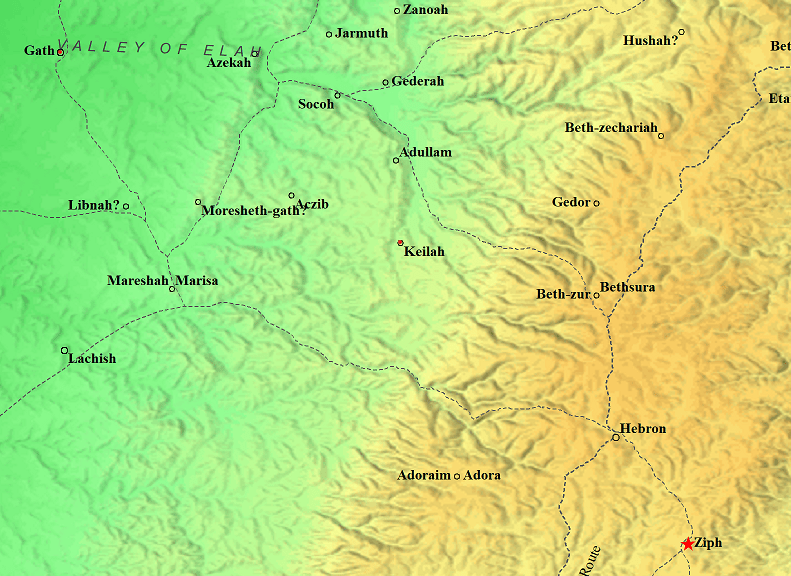
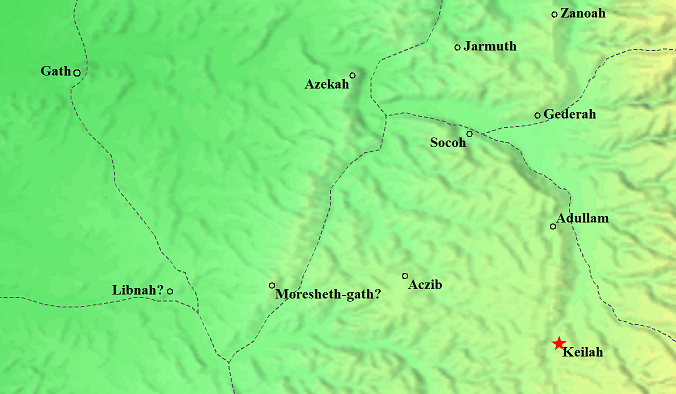


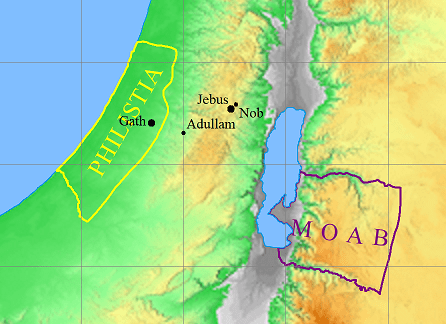
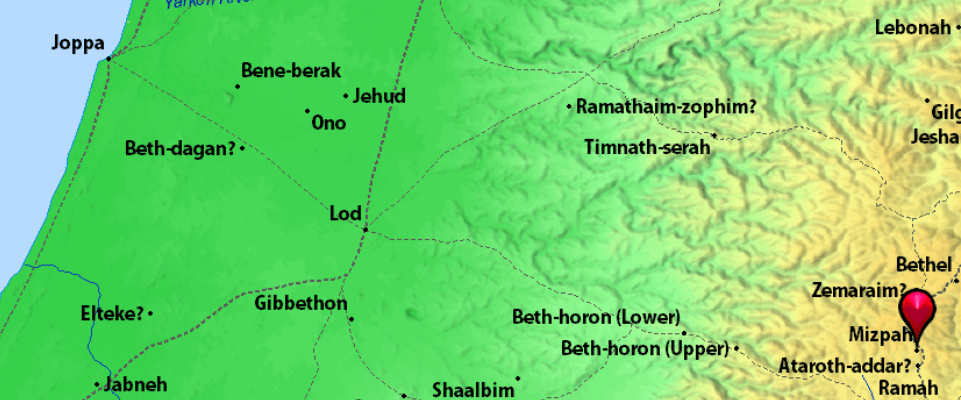


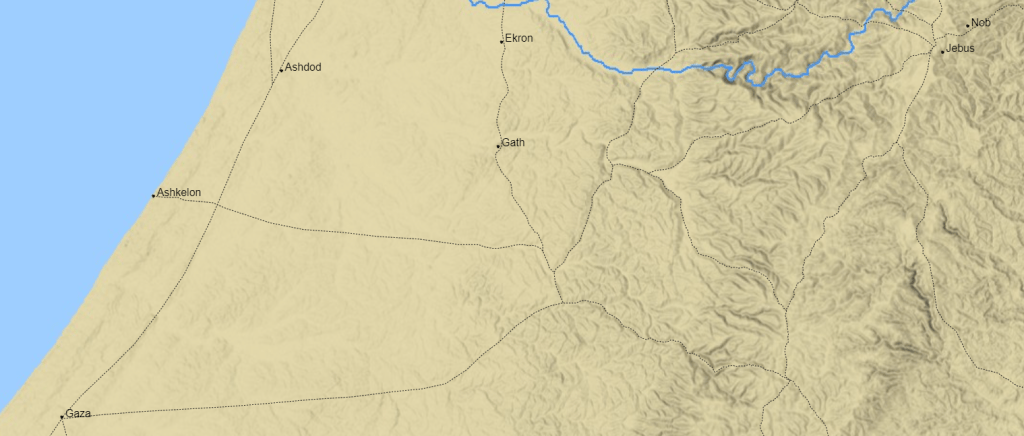
 Considering the Bible