My wife and I are reading through the Psalms in our evening reading and occasionally a nugget of the Psalms jumps out of the page. Don’t you love it when, after years of reading the “Old Book” passages become alive, reinforcing old teachings or simply warming your heart.
This is the book of Psalms, and it is rich.
I pray I can communicate a portion of the blessing we receive from this wonderful book.
Psalm 41:1-3
To the choirmaster. A Psalm of David.
Blessed is the one who considers the poor! In the day of trouble the LORD delivers him; the LORD protects him and keeps him alive; he is called blessed in the land; you do not give him up to the will of his enemies. The LORD sustains him on his sickbed; in his illness you restore him to full health.
Consider the poor.
Note that David did not simply state that the one blessed is the one who gives to the poor. No, it is not simply giving, but “considering the poor” that is “considered” here.
What is David trying to say here? To consider is to give attention to, to understand, to be prudent. I think of it as wisdom in supplying needs in order to help the one suffering, instead of simply sacrificing out of guilt or some external obligation. There is a way we help that hurts those we seek to help.
One of the first times I understood this concept was when a brother and I were out door knocking and evangelizing. We came across a young couple that was willing to listen, and we shared the gospel. Eventually, we were told they needed some diapers, which we were happy to retrieve for them. This gave us an opportunity to return and visit! Eventually they needed more formula, some food, a few more diapers, a bit of gas and a bus ticket. We continued to supply, yet there was something wrong. It just seemed wrong.
This family had funds for what some may consider luxury items (large tv, new stereo, a vehicle…), and our assistance was supplementing a lifestyle of desire, not need. Might I suggest that if I “considered the poor” in this instance today, I may have hesitation to express charity to the extent we did so long ago. Something to consider in each situation. Wisdom is needed!
You may wonder where this family is in relation to the gospel. I don’t remember either the husband or wife coming to church with us, making a decision for Christ or showing any real interest other than getting one more diaper.
To be honest, my brother and I got so caught up in supplying the “need”, in order to show Christian charity, we abandoned the original intent of our first visit. We eventually “considered the poor” in this instance, and moved on to others that might receive a message instead of milk us for money.
Charity can also become a crutch for those receiving, creating a dependence on the charity. This is a common concern amongst some charities that simply exist to maintain the status quo of supplying an immediate need, as opposed to solving a root problem. Don’t get me wrong, thinking I know of a solution, but in the personal interactions we have with the poor, David advises us to consider. To ponder the best solution for each particular case. To exercise wisdom in our efforts to assist the poor.
The one who wisely seeks to help the poor properly, without seeking self gratification, will be helped by the Lord in his day of trouble. Consider the day of trouble the saint falls into, and that the Lord will help, for our good and not to our detriment. The Lord Himself considers the poor.
The term poor refers to weakness, a lowliness, even a neediness. We are definitely poor, weak and needy. As we read these verses, it occurs to me that they could apply to the poor, or to the saint who considers the poor. Either way, to consider the poor, and to mimic the Lord’s mercy is enough for the saint.
As we learn of Him and His grace and mercy toward us, we are to follow His example, exercise a heart toward the poor, and consider ways to assist the poor for their good, and not simply ours.
Don’t you love it when, after years of reading the “Old Book” passages become alive, reinforcing old teachings or simply warming your heart. This is the book of Psalms, and it is rich.
I pray I can communicate a portion of the blessing we receive from this wonderful book.
Psalm 40
16 But may all who seek you rejoice and be glad in you; may those who love your salvation say continually, “Great is the LORD!” 17 As for me, I am poor and needy, but the Lord takes thought for me. You are my help and my deliverer; do not delay, O my God!
The Lord is great, but I am poor and needy.
Let’s recount the historical reason for David writing this psalm. Many believe this psalm was written after the revolution of Absalom, and that David was back on the throne of Israel, nearing the end of his life.
He had experienced the greatest of betrayal in his life, and had been brought to the very edge of defeat and death by his son and a trusted friend. The depth of despair David experienced also brought with it a humility and gratefulness that is expressed in the final verses of this great psalm.
Also, it is instructive to note that the last two verses have two subjects, that is those who seek God and the author himself. The author looks to those who seek God, and desires joy and gladness for them in their chasing after God. He desires the best for them as they seek God.
For himself, he admits to his poverty and need. Please remember that the author is King David, and is near the end of his rule, where he rules over the most prosperous and militarily mighty nation in the area. His expansion of his rule saw few limits and the Lord gave him victory many, many times. He was the king of Israel, and is considered the greatest king that ruled over the nation.
Yet he saw himself as poor and needy. The word poor may be translated as afflicted. To be afflicted is to be in need, subject to oppression or abuse, and admitting to the need for deliverance.
How is it that David could honestly say these things, while sitting on the throne of Israel, and reigning over God’s people?
David was in the enviable position of understanding where he stood in relation to the great God we serve. Although he is considered one of histories greatest kings, he considered himself as poor and needy, a man before God, stripped of his earthly strength, and bowing before Him. David was great because he did not consider himself.
If this was the only one we might consider in the final verses, it would be enough, but I ask you to consider the greater David, the Lord Jesus Christ, for as we have seen though this psalm, the subject turns to the Messiah, and we can see glimpses of His life throughout the passage.
Consider Jesus, in relation to the claim of being poor and needy, One who voluntarily left all power and glory to be brought to a point of poverty and need, to being one who needed deliverance from God, who experienced affliction, poverty, humiliation and ultimately death.
David was rescued from the pit, but Jesus entered the grave, having prayed for deliverance. This exercise of trust in the Father is unexplainable, if He was not continually and always in the presence of the Father, communing with the Father, being One with Him.
His trust in the Father during His experience of poverty and affliction is amazing, and His willingness to enter death, while not deserving the condemnation is beyond any sense of logic or understanding.
The psalmist, at the end of this psalm, prayed for God not to delay. The Lord also prayed for deliverance. God delivered David. All appearance of deliverance for Jesus, in the eyes of the disciples was snuffed out at the point of death. It seemed the Father had delayed, had not delivered the greater David.
We must understand that the deliverance that was expected and the deliverance that was supplied was dependent on our understanding of the goal. Any one of us, being in the sandals of the disciples, would have seen this as the disciples did, as a great failure, a massive disappointment. If only God had not delayed in delivering Jesus from death.
But love is like that.
He truly is the leader of our salvation, the One who loved first, best and always.
Don’t you love it when, after years of reading the “Old Book” passages become alive, reinforcing old teachings or simply warming your heart. This is the book of Psalms, and it is rich.
I pray I can communicate a portion of the blessing we receive from this wonderful book.
Psalm 40
13 Be pleased, O LORD, to deliver me! O LORD, make haste to help me! 14 Let those be put to shame and disappointed altogether who seek to snatch away my life; let those be turned back and brought to dishonor who delight in my hurt! 15 Let those be appalled because of their shame who say to me, “Aha, Aha!”
In our last post, the passage emphasized the trials David experienced, a hopeless that was expressed by outward and inward enemies. Multiple iniquities, more than the hairs of his head, and evils surrounding him.
His heart was failing.
As we consider our passage, verse 13 reflects David’s heartfelt desire to see God active and working, delivering his child from all his enemies. David is not asking for mercy in this request, but that the motivating factor to drive God in delivering his child is God’s own pleasure in saving those who call out to Him. Not only is David appealing to God to take pleasure in delivering the saint, but that the Lord would make haste.
I love doing things that please me. I love writing in this blog, and will get up early in the morning in order to be involved with the text and to ask God for direction. I take pleasure in it! I usually (always?) put off things that I take no pleasure in (weeding the garden for example), in order to do that which pleases me. Of course this is a comparison of earth with heaven, yet that which we are pleased to do, we seek to find time to do.
How about God? Do you see God as a God who takes pleasure in delivering His saints? Is the God you worship a God that is reluctant in delivering the saint? Is He One who is distant and would rather not be bothered?
What is it that God takes no pleasure in? What actions does God prefer not to be involved in (I speak as a man)? A quick search of the Word brings a number of verses for my reader to consider.
For I have no pleasure in the death of anyone, declares the Lord GOD; so turn, and live.” – Ezekiel 18:32 ESV
in burnt offerings and sin offerings you have taken no pleasure. – Hebrews 10:6 ESV
but my righteous one shall live by faith, and if he shrinks back, my soul has no pleasure in him.” – Hebrew 10:38 ESV
After David appeals to God for deliverance, he speaks of the natural outcome of this deliverance as he understood it. Deliverance for David would mean the doom of his enemies.
He speaks of “those” enemies that he was facing, that they be put to shame, disappointed, turned back, brought to dishonor and appalled.
Let’s remember that David is a man of war, that his perspective was that of victory or defeat against his foes. The entire kingdom of Israel existed through military conquest, and for the nation to continue, it’s physical enemies would need to be held back.
Is it so for us as the body of Christ in the church age? Are we dealing with physical enemies, and should we seek their downfall, that they be put to shame?
Consider the contrast of David’s desire for his enemies with the New Testament teaching provided to the saints.
For we do not wrestle against flesh and blood, but against the rulers, against the authorities, against the cosmic powers over this present darkness, against the spiritual forces of evil in the heavenly places. – Ephesians 6:12 ESV
Is it fair to deduce from this passage that since we do not wrestle against the physical, that we are also not to enter into adversarial attitudes with those who may appear to be “against” us?
But I say to you, Love your enemies and pray for those who persecute you, – Matthew 5:44 ESV
In my opinion, (which is worth less than two pennies) this is the most challenging single verse in the Bible to live out. I am a naturally pessimistic, argumentative and judgmental fella, and find that an attitude of grace and mercy towards those I meet with during my day to day life is impossible without the continual help from God in thinking and behaving properly, under His direction.
Our outlook on life is to be per the Messiah’s teaching and though we often feel as David felt in this passage, we have a higher calling, a calling that will prioritize love over revenge, of forgiveness over bitterness, of prayer over argumentation.
We have a high calling brothers. Let us remember the challenge, and seek to follow the One who loved us when we were enemies!
For if while we were enemies we were reconciled to God by the death of his Son, much more, now that we are reconciled, shall we be saved by his life. – Romans 5:10
Don’t you love it when, after years of reading the “Old Book” passages become alive, reinforcing old teachings or simply warming your heart. This is the book of Psalms, and it is rich.
I pray I can communicate a portion of the blessing we receive from this wonderful book.
Psalm 40
11 As for you, O LORD, you will not restrain your mercy from me; your steadfast love and your faithfulness will ever preserve me! 12 For evils have encompassed me beyond number; my iniquities have overtaken me, and I cannot see; they are more than the hairs of my head; my heart fails me.
In our earlier passage, David declared his “nots”. Just as a reminder, let’s review them
I have told the glad news of deliverance in the great congregation; behold, I have not restrained my lips, as you know, O LORD.
I have not hidden your deliverance within my heart; I have spoken of your faithfulness and your salvation; I have not concealed your steadfast love and your faithfulness
David is confident that the Lord will not restrain His mercy from him. I find it somewhat interesting that the prophet used the same negative terminology for both the Lord and his own actions, that is, that restraint was not carried out.
Restraint implies a restriction, an unwillingness, a loss of freedom, inhibition. Both David and the Lord are free to exercise their respective actions. David has freedom to share the goodness of God. The Father is free to exercise mercy in David’s experience.
But that brings up a question for my readers.
Is David linking his freedom to share with the congregation, with God finally able to exercise mercy to him?
In other words, is the Lord free to exercise mercy in every and all circumstances? Or is He restricted upon our actions?
Comment below with your thoughts.
Let’s continue. David proceeds into verse 12 with a litany of overwhelming perils. Let’s look them one at a time.
Wickedness surrounding me
David confessed he had enemies all about. Friends, acquaintances or sworn enemies, he realized wickedness was prevalent outside of his own person. We know of this trial in our own lives, as we realize that many in our lives may would seek to take advantage of us, harm us or at the least sideline us to make us of no effect.
Iniquities within me
David was realizing that external forces were not his only problem.
If he lived in a utopian kingdom, where all was love and kindness, no wickedness or evil intent possible, He would still have an enemy. As Pogo, a cartoon character of 50 years ago quipped, “We have met the enemy and he is us”
David realized his own inner wickedness, selfishness, self deceit and weakness. This I find to be the hardest truth for the average Christian to accept (it is for me!) and the most difficult to discuss. We tend to exaggerate either extreme. Some may state that sin is not resident in their lives, thereby experiencing spiritual perfection. I don’t meet many believers of this doctrinal stance, that is sinless perfection, yet I fear there are many that believe they may have attained to it without verbally expressing it!
The other extreme is complete and utter evil only lurking in the heart of man. This seems to have much Scriptural backing, and my calvinist brothers would claim it is the reason for their gospel message. (Without this key lynch pin holding their theology together, the logical system they have built crashes to the ground).
Although I spent decades in this thinking, I have come to understand that wickedness resides in me alongside a desire to know God, a desire to seek him and know him. As an experiential knowledge of my own heart, I understand that my own witness is not to be trusted. Therefore, I would appreciate my readers to comment on this topic – the heart of man and it’s condition.
It is instructive though, that David states “my iniquities have overtaken me.” He does not say that his entire being is only sinful, iniquitous, evil, hateful and dastardly. Of course I am being extreme here, but I hope you get my point. (I have always wanted to use the word dastardly in my blog – now I have!)
No vision to guide me out
David claims blindness. He cannot see. Of course we are not to take this literally. He is speaking of his trials, his situation. He is looking for a way out, but with external and internal enemies, there is no escape, no where to run for safety. His back is up against a wall, and he is realizing the wall is also a foe.
Nope, As my momma used to say “He is up the crik without a paddle stick!”
Sins uncountable
How many hair reside on your head? Innumerable, uncountable. Why count them when there are so many. This is the sense I get as David describes his sins to God. It is hopeless!
As we have mentioned in our blog earlier, the Hebrew poets would repeat a thought in the next stansa, using this devise to explain or amplify the previous thought. David is dwelling on his internal iniquities when speaking of the innumerable sins he is recounting.
No strength
His heart fails. No hope, no escape, no relief, no release, nothing that would give encouragement for the future. That is, if we did not have the foundation of God’s promise in the verse above.
As for you, O LORD, you will not restrain your mercy from me; your steadfast love and your faithfulness will ever preserve me!
The foundation of God’s mercy, steadfast love and faithfulness is what David finds hope in. He will venture into this great hope in our next blog, dealing with verses 13 – 15.
I hope you can join me as a hopeless situation finds light shone on it! And hopefully, we can see our own situations in like manner, where the Lord Jesus will bring light to our situation and provide deliverance and help in time of need.
Thanks for joining me in this venture through the Psalms. I rarely express my gratitude for your attention to my ruminations. Thanks again, and I look forward to your comments.
Don’t you love it when, after years of reading the “Old Book” passages become alive, reinforcing old teachings or simply warming your heart. This is the book of Psalms, and it is rich.
I pray I can communicate a portion of the blessing we receive from this wonderful book.
Psalm 40
9 I have told the glad news of deliverance in the great congregation; behold, I have not restrained my lips, as you know, O LORD. 10 I have not hidden your deliverance within my heart; I have spoken of your faithfulness and your salvation; I have not concealed your steadfast love and your faithfulness from the great congregation.
In our previous post we found it spoke directly of David’s prophetic ability to delve into the text beyond the surface reading of Old Testament commands. But more importantly, Psalm 40:6-8 speaks of the life purpose of the Messiah, that is the Messiah’s desire, ‘to do thy will”.
The passage also speaks of the desire of God in both the arenas of sacrifice and of obedience, of how the sacrifices were never the end goal, but the complete obedience of the Lord Jesus to the Father’s will as being the great story, the end goal, the purpose of it all.
Our passage before us speaks of the telling, preaching, sharing, and declaring of the message to the great congregation, to those who need to hear of the Messiah and of His heart for God.
David spoke freely to the congregation, to those who assembled together. He did not hide the message within his heart, but freely spoke the good news of the God of creation. David has spoken of hiding the word in his heart in another Psalm, in order to not sin against God, but in this Psalm he is not restrained in voicing the glad news.
Although the Psalm speaks of David proclaiming the God of all creation to the congregation, the passage should be recognized as describing the Lord Jesus (and His followers) as the preachers of the salvation provided.
If we consider the congregation David shared with as His own nation, or possibly to the faithful within his own nation (the remnant of faithful), we should not understand that as applicable to the times of the Lord. His congregation was those He came across, the adulterous Samaritan woman, the legalistic Pharisee, the blind beggar at the well, and a dead man in a cave. He was not restricted as David may have been in preaching or sharing of the great salvation He was to provide, in the good news of the kingdom of God arriving. His congregation was all of creation, and as a believer, I need to be reminded that He is the Lord of all, that all of creation is His congregation, His assembly.
To the Ones who know Him currently, He is to be declared. To the ones who have yet to understand, He is to be declared. To the ones who have never heard of Him, He is to be declared. To those who despitefully hate Him, He is to be declared.
Each declaration of the Lord Jesus is to be from the heart, as the psalmist describes that he had not concealed or hidden His deliverance within his heart. It is to be a life message, based on the Living Word having passed through our lives and into our neighbor. Each person we meet, we must have wisdom to know the best manner of sharing His deliverance, the love to open ourselves up to unwanted responses, and the courage and boldness to share the truth and react in love.
Earlier I spoke of the Living Word passing though our lives and into others. Without experiencing an ongoing active relationship with the God of our salvation through the Word of God and prayer, the message of God’s love may simply become cold, lifeless, factual, exact, documental, even story like.
This is a great challenge to myself as I need to be awakened to the great news of His deliverance, of my heart being opened to the Living truth, of a refreshing, a revival of glimpsing His great love, not only for myself, but for the entire congregation.
No matter how passionate you feel you are in preaching the good news to His congregation, there is currently no restriction for the believer to grow in this privilege. There is always a greater depth to plunge in the knowledge of God, and out of that experiential relationship, a greater desire to share will be the natural outcome. The desire will naturally pour out of our lives, our speech and to the ones we meet. Each of the verses we have looked at above speak of David telling good news, not restraining his lips, not hiding God’s deliverance, speaking of God’s faithfulness, and finally not concealing His steadfast love.
Wherever you may judge yourself in exercising this privilege, dig into the Living Word, (please do not simply look for facts!) look to the Father for boldness, passion and wisdom, and witness a change as you share with those who are in His congregation.
Don’t you love it when, after years of reading the “Old Book” passages become alive, reinforcing old teachings or simply warming your heart. This is the book of Psalms, and it is rich.
I pray I can communicate a portion of the blessing we receive from this wonderful book.
Psalm 40
6 In sacrifice and offering you have not delighted, but you have given me an open ear. Burnt offering and sin offering you have not required. 7 Then I said, “Behold, I have come; in the scroll of the book it is written of me: 8 I delight to do your will, O my God; your law is within my heart.”
As believers, we have come to live in the sacrifice our Lord has provided, and understand the concept (at least intellectually) of self sacrificing love. Try to remember a time when, as a Christian, you did not consider love greater than law, self sacrifice stronger than sanctified image.
Our psalm above starts off with a statement of God not desiring sacrifice and offering. How can David say this, when entire books of the Old Testament, such as Leviticus, spend a majority of time detailing the requirements of sacrifices to and for God?
How is it David is speaking of God not wanting sacrifice?
David, in my opinion, is speaking on two levels.
Level One
The first level, as a prophet, “scratches the surface” of understanding the nature and character of our God, of the core element of the goodness and mercy of God. He is not speaking of a relationship based on animal sacrifices and burnt offering, but reflecting on the nature of God.
I was taught once that the nature of a person (and God is a person), that a persons nature will exude from their inner person to their actions and appearance. Given this, David reflected (I suppose), on the nature of sacrifice described by the God of all creation, and understood that the very nature of the God of the universe was of sacrifice, of giving to others, of supplying needs, of loving those who are unlovely, and of being “otherwise”, when compared with us mere mortals.
To say God has not required burnt offerings and sin offerings, – well that seems to fly in the face of many of the commands of Scripture. And yet, David continues with a seeming “alternative” message.
But let us consider a thought. It may be important to consider that David isn’t providing an “alternative” message, but a deeper message, a fuller message, a message that is as a blooming flower compared to the seedling it once was. Same plant, far different appearance. The standard Old Testament saint, the “ordinary, average” believer in the ancient days may have understood that the physical sacrifices of bulls and goats were what God wanted, and with that understanding, he would be in obedient and in good standing. But David dove deeper!
How about us? Do we understand the shoulders we are standing on? The insight of David, as a prophet of God is light-years ahead of my thoughts and musings. He saw the sacrifices and considered the nature of God. This is instructive to me, as when I read a command or declaration of God in the word, I automatically think of me, how I can do something, how a Scripture statement reflects on mememe.
David was beyond this. As I have been taught previously, David is sometimes described as a New Testament believer in this psalm, one who had grasped the difficult concept of moving from a life depending on the sacrifice of a bull or goat, to a life that understood God’s true nature, and finally to the life of self-sacrifice.
Level Two
The second level is as the Lord Jesus Himself, the Messiah, and of His full understanding of the nature of God, and of a true relationship with His Father.
This second level is clear when we consider the book of Hebrews, and the apostle’s interpretation of the Old Testament passage David provided us. Let’s notice the commentary the apostle has inserted into our text, fleshing out the psalm to provide a full understanding of it – that is the full revelation of David’s text, about the Lord Jesus Christ.
Psalm 40:6-8
In sacrifice and offering you have not delighted, but you have given me an open ear. Burnt offering and sin offering you have not required.
Then I said, “Behold, I have come; in the scroll of the book it is written of me: I delight to do your will, O my God; your law is within my heart.”
Hebrews 10:5-10
Consequently, when Christ came into the world, he said, “Sacrifices and offerings you have not desired, but a body have you prepared for me; in burnt offerings and sin offerings you have taken no pleasure.
Then I said, ‘Behold, I have come to do your will, O God, as it is written of me in the scroll of the book.’”
Notice Hebrews 10, where the apostle adds “a body have you prepared for me”, speaking of the humanity of the God-man Jesus Christ, and check out the “minor edit” the apostle provides in the next verse. He not simply delights to do God’s will, as David expressed in the psalm, but that our Lord Jesus Christ did the will of God!
When we slow down enough to consider who our Great High Priest is, He truly is beyond our wildest imagination. When we speak of Him, although He is still mocked and spit on to this present day, let us remember that He is the Risen King.
Let us keep our eyes on Him for God is good, all the time.
Don’t you love it when, after years of reading the “Old Book” passages become alive, reinforcing old teachings or simply warming your heart. This is the book of Psalms, and it is rich.
I pray I can communicate a portion of the blessing we receive from this wonderful book.
Psalm 40
4 Blessed is the man who makes the LORD his trust, who does not turn to the proud, to those who go astray after a lie! 5 You have multiplied, O LORD my God, your wondrous deeds and your thoughts toward us; none can compare with you! I will proclaim and tell of them, yet they are more than can be told.
Let’s continue with this incredible psalm, remembering that David earlier described the actions of the Lord in rescuing him from the miry pit and setting him on a firm foundation. The natural expected response to this show of grace to the sinner was that we would make the Lord our trust. Those who do make the Lord their trust, they are blessed.
But what does it look like to make the Lord their trust? David gives us some direction in this regard, by providing two descriptions of those who do not trust the Lord.
Trusting the Proud
David speaks of the one who makes the Lord his trust as one who does not turn to the proud.
First off, this implies a difference between the saint and the sinner, since a typical characteristic of those who do not know and trust the Lord in His mercies, these poor souls only have themselves to depend on (or at least another mere man) for their guidance and stability, which naturally breeds a pride and arrogance in their lives. This is an inevitable outcome of trusting our own thoughts and opinions. I cannot depend on my own thoughts and at the same time truly consider myself to be humble, for I have elevated my accumulated bank of wisdom over all others.
Consider a man that has attained a high level of education, excelled in his career, and is confident of his abilities. It is a rare that he will consider others opinions to be equal to his, although for the sake of social graces and professional appearance, this may seem to occur.
Trusting the Lord is a different matter, since many, if not all of the precepts of the Lord go against our natural inclination, and rub against our pride. A believer, trusting in the Lord, will exhibit a willingness to be subdued by the Word as he hears it, and will reject a dependence on those who are confident in their own status.
Trusting the Liar
Many times in the ancient writings, the Hebrews would use a type of poetry that is not familiar to us. Where we tend to look for words that rhyme, or for a certain cadence to the verse, for the Hebrew prophet, much poetry started with a statement, followed by a clarification of the statement.
A prophet using a synonymous poetry style, is seen in the following passages.
Deliver me, O LORD, from lying lips, from a deceitful tongue. – Psalm 120:2
Notice how lying lips are further defined as a deceitful tongue
My son, do not despise the LORD’s discipline or be weary of his reproof, – Proverbs 3:11
Notice that discipline is further refined as reproof.
But he was pierced for our transgressions; he was crushed for our iniquities; upon him was the chastisement that brought us peace, and with his wounds we are healed. – Isaiah 53:5
Multiple parallels in this short passage. Take a moment to identify at least two parallel descriptions in the verse above.
Lets return to our passage in Ps 40 where David speaks of the one who does not make the Lord his trust. Consider that to turn to the proud, is refined in this couplet as going after a lie! Pride and lies are common bedfellows in both the Old and New Testament.
The relation between humility and trust is again brought to my attention, and I ask those who may be reading, to consider the place of humility in trusting the Lord in their experience with the Lord.
Deeds and Thoughts Toward Us
David reverts to considering the One to whom he is praying, the One who has rescued him from the miry pit, and has set his feet on solid ground.
His thoughts and deeds are toward us, toward the hurting and helpless, toward those who suffer and are ignored, toward those who are weak and without guidance. The Lord’s deeds and thoughts are more than can be spoken. More than can be revealed. More than can be communicated.
His character of grace and mercy towards those who trust Him, (and those who don’t) cannot be fully expressed. Of course those who do not know Him, are still the recipients of multitudinous mercies on a daily basis, and yet they have no knowledge. We who claim to know Him, will naturally proclaim Him, even though it is impossible to fully communicate each and every one of His gracious thoughts and deeds toward us.
He is toward us, He is good and He is to be trusted.
Don’t you love it when, after years of reading the “Old Book” passages become alive, reinforcing old teachings or simply warming your heart. This is the book of Psalms, and it is rich.
I pray I can communicate a portion of the blessing we receive from this wonderful book.
Psalm 40
1 To the choirmaster. A Psalm of David. I waited patiently for the LORD; he inclined to me and heard my cry. 2 He drew me up from the pit of destruction, out of the miry bog, and set my feet upon a rock, making my steps secure. 3 He put a new song in my mouth, a song of praise to our God. Many will see and fear, and put their trust in the LORD.
He inclined to me. He bent down to me.
The psalms speak of the Lords bending down to the saint in many passages. I will supply a few verses that use the very same Hebrew word David uses here, but as you read through the psalms, it will become evident the image of the King of Glory “bending down” is quite regular.
Incline your ear to me; rescue me speedily! Be a rock of refuge for me, a strong fortress to save me! – Psalm 31:2
In your righteousness deliver me and rescue me; incline your ear to me, and save me! – Psalm 71:2
A Prayer of David. Incline your ear, O LORD, and answer me, for I am poor and needy. – Psalm 86:1
Let my prayer come before you; incline your ear to my cry! – Psalm 88:2
Do not hide your face from me in the day of my distress! Incline your ear to me; answer me speedily in the day when I call! – Psalm 102:2
Because he inclined his ear to me, therefore I will call on him as long as I live. – Psalm 116:2
As I was gathering these verses, I was simply looking for the Hebrew word that is translated as “incline” in Psalm 40:1. I was hoping to simply display the fact that the Lord of Glory would incline towards the saint through this simple study, but something much more specific has been observed. Can you see it?
The Lord inclined His ear! He listened to the saint. He took time (I speak as a fool again) to consider the saints concerns and troubles. This was a wonder to the Old Testament saint, a blessing from the hand of God, and a privilege the saint experienced.
How so for us in the church? Do we have this privilege, of the Lord inclining His ear to us?
Oh my friends, we have much more than that. He inclined His life to us, taking on the form of a servant, and was born in our likeness.
He “inclined” totally!
who, though he was in the form of God, did not count equality with God a thing to be grasped, but emptied himself, by taking the form of a servant, being born in the likeness of men. And being found in human form, he humbled himself by becoming obedient to the point of death, even death on a cross. – Philippians 2:6-8 ESV
This is a mystery that is beyond me when I seek to understand it, and rightly so. The very fact that He took time to listen in days of old speaks volumes, for the Old Testament saint did not have a God who was indifferent or standoffish.
How much more for us, in that He not simply listened to the ones he heard, but rubbed shoulders with us, ate with us, walked with us and died for us.
Verse 2 speaks of His deliverance of our lives and a phrase caught my attention as I was a ruminating! He drew me up, “out of the miry bog”
When I first believed, I was so excited about escaping the fires of hell, but not so with the Psalmist. David has a different emphasis in this verse. He does not say He drew me up out of the fiery flames. No no no
The miry bog. A pit of clay. A hole without escape. Not to get too technical, but clay, when wet, has no bearing capacity, in not confined. It is a condition that the more you struggle and fight, the more the clay grabs you, holds you, even consumes you. No hope of escape on your own. A condition of distress, confusion and helplessness.
How often have you been in this condition? All is dark, with no seeming hope and nothing positive on the horizon? This is the condition David recounts as he begins this psalm and speaks of the unilateral help of the only true God in giving us deliverance.
He is the only One active in this set of verses, with the saint being the benefactor, the recipient of the goodness of God.
He is good. Think on these things and praise Him for His many mercies to us!
Don’t you love it when, after years of reading the “Old Book” passages become alive, reinforcing old teachings or simply warming your heart. This is the book of Psalms, and it is rich.
I pray I can communicate a portion of the blessing we receive from this wonderful book.
Psalm 39
12 “Hear my prayer, O LORD, and give ear to my cry; hold not your peace at my tears! For I am a sojourner with you, a guest, like all my fathers. 13 Look away from me, that I may smile again, before I depart and am no more!”
In our last post on this psalm, we saw that God had given David a stroke or blow that sent David reeling. He begged for this blow to be removed from his life. The reason for this blow upon his life? It appears to have something to do with his tongue, and had incurred the attention of the Lord.
Our passage today is short, but note how David’s prayers are full of gut wrenching emotion. He is pleading for an audience before the King, and is claiming no rights, as a guest, one who is invited and not necessarily earned his right to an audience.
He has confessed that the Lord has muted him, that he is not opening his mouth. This is necessary for discussion! I know this seems obvious but please let me explain my thinking.
I often spend time on conference calls at work and find that much of my time is spent asking to repeat what someone said. Why you ask? Because someone else (sometimes myself) was speaking over him. When two people speak at the same time, no-one gets a clear message out. Both speakers are showing a level of disrespect to the other, and revealing an attitude of superiority. Granted, time crunches and experience of the topic need to be considered in each conversation, but that doesn’t apply to our passage.
The two people interacting in this passage are the Lord of creation, the true King of Israel and His servant David. David has had his mouth closed by the King, and is currently willing to hear the “other side”. We do not hear of the Lord’s response in this Psalm, for this is not the intent of the Psalm.
David is in His proper place for healing at this time. He requests that the Lord look away from him, that is in relation to the blow that he is experiencing, that he may “smile again”. I love this translation, that he may “smile again”, to be cheerful!
It is good to be a believer, for the regular, common experience of the believer is to be cheerful. A thought that is primarily directed to myself, but as my momma used to say, “If the shoe fits, wear it!”
Psalm 39 is a psalm of confession, including an appeal to God’s eternality in considering our existence, our time on this earth as being nothing.
In our last post on Psalm 39, I sought to understand David’s poetical language describing his existence in relation to God’s existence.
When comparing any time unit, whether 10 seconds or 50,000,000 millennium, the result is the same. Time is insignificant since the comparison is somewhat ridiculous. Be that as it may, David compared and walked away beat up.
As I thought on it, trying to understand David’s thoughts, I also came away feeling a bit hopeless, somewhat out of sync. As you many remember, I brought a New Testament passage into the study to try to find some balance, and thankfully it was helpful.
But as I consider these portions of the Psalms, I need to read the psalm as a whole, for David’s reaction to his previous writing had produced in him the same hopelessness I expressed above, and yet he continues with the following.
7 “And now, O Lord, for what do I wait? My hope is in you. 8 Deliver me from all my transgressions. Do not make me the scorn of the fool! 9 I am mute; I do not open my mouth, for it is you who have done it. 10 Remove your stroke from me; I am spent by the hostility of your hand. 11 When you discipline a man with rebukes for sin, you consume like a moth what is dear to him; surely all mankind is a mere breath! Selah
For what do I wait? Waiting speaks of a time element, and David does not condemn this action of waiting. It is not wasted effort as we may assume from the previous passage, where he talks of the futility of our efforts and the fruit of our work passing to those we know not.
This waiting is for a specific action, and the waiting is required due to David’s hope being in God. His hope is not in his own efforts, that is in restraining his heart from expressing his thoughts, his tongue from wagging and flopping in front of his enemies!
Our first few verses in this psalm spoke of David’s effort to “shut up” in front of his enemies. God has accomplished this fruit in David’s life. It seems this “muteness” God accomplished in David’s life may be associated with a stroke from God, a hostility of God’s hand.
This stroke, or blow from God is sometimes associated in the Old Testament with leprosy, although in this instance, I believe David is using the term metaphorically. David is expressing God’s solution to his “yapping” problem as an affliction or a wound, what we may consider as a trial or testing.
This stroke is also described as a “hostility” of God’s hand. This term hostility is used only once in the Word and it also describes a “blow”, and includes a thought of contention or conflict.
David begs for this stroke to be removed, he is under a trial that is teaching, no accomplishing its intended effects, yet David is begging for it’s removal.
How often have we been under a trial and sought to be out of it? Of course as we request prayers for release from God’s stroke, we are often counselled to rejoice in the trial, and James does exhort us in this manner.
Count it all joy, my brothers, when you meet trials of various kinds, for you know that the testing of your faith produces steadfastness. – James 1:2-3
But note that the passage is training us to rejoice when we meet trials of various kinds, for the sake of the resulting patience that will be produced. To joy for the end result. Is this not similar to the outlook the One who took the ultimate stroke for us? He despised the shame, but since He considered the end result, He took joy.
looking to Jesus, the founder and perfecter of our faith, who for the joy that was set before him endured the cross, despising the shame, and is seated at the right hand of the throne of God. – Hebrews 12:2
David summarizes the stroke of God on his life by speaking of how God disciplines a man with rebukes. It is good to know that we have a God who cares for us to the point of rebuking us, of disciplining us, of providing a “stroke” upon us to direct us, and to train us.
David again goes poetic, describing the sin that was so dear to him, as a moth consumed. A moth consumed? Some verses translate this phrase as the moth consuming, others as the moth being consumed. I have no idea which is the correct grammatical translation, but the picture of a moth consuming something is clear in my mind.
You see, growing up in our country home, my mother had a cedar closet. Dad built it so she could store her very best blankets and comforters. Remember, that as a Canadian, blankets and comforters were critical possessions in the depth of the January cold!
I remember only once that she opened it while I was with her, and the smell was awesome. All the walls of the closet had unstained, unvarnished cedar lining, and when it opened, the fragrance was almost overpowering.
I occasionally would return to the closet and take a secret woof of the cedar, but my mom wouldn’t have approved. You see, the cedar was installed to keep moths from attacking those precious blankets. If the cedar smell was exhausted, moths would inevitably eat the blankets, slowly destroying it, and given enough time, the blanket would be consumed.
In this passage, David equates God to the moth. God consumes (like a moth) that which is dear to the saint, that which is sin. Slowly, imperceptibly, God is at work, destroying the sin in your life, sometimes through a stroke or blow, as in this passage for David, and sometimes through other means.
Consider this poetic picture the next time you are under a disciplinary action from the Father, for He is seeking to direct our hearts to the only One we should hope in!
“O LORD, make me know my end and what is the measure of my days; let me know how fleeting I am! Behold, you have made my days a few handbreadths, and my lifetime is as nothing before you. Surely all mankind stands as a mere breath! Selah Surely a man goes about as a shadow! Surely for nothing they are in turmoil; man heaps up wealth and does not know who will gather!
David confessed to his failing effort to control his tongue in our last passage, and like David, I too am guilty of a “speaking” when I shouldn’t. Or better yet, of not trusting God for control of my heart, of my thoughts and therefore of my tongue, especially when in the presence of the wicked.
David immediately follows up his confession with a description of the futility of life, the sheer brevity of our existence.
David speaks of his days as a mere “handbreadth”. This is an uncommon word in my world, and I had to look it up, for my initial understanding was that of a measurement of physical distance, most commonly used in defining the height of a horse.
Low and behold, the modern definition justifies my thinking, in that a handbreadth is a linear measurement approximating the width of a hand, somewhere between 2.5 and 4 inches.
But that is so technical, so soulless. David is speaking of his existence, of my existence and your existence. Is he using handbreadth because he could think of nothing smaller, nothing less significant? His next definition of our lives is that of “nothing before Him, that is in relation to the everlasting nature of God, and our temporal existence actually as nothing, for it is measured in units of time, and time does not impact the Triune God, who inhabits eternity.
Although the Son did enter into His creation (of time!) at one point, in order to partake of flesh and blood. It is good to remember that the time units we swim in, the seconds, minutes, hours days, weeks, months, years, decades, centuries and millennium are, in relation to God’s existence “as nothing”.
But as fallen men and women, we dwell in this creation called time, just as we exist in the created atmosphere or on the surface of the created earth. Time, as a created “thing”, is of God, and one of the conditions upon which we exist.
David has established time as being immaterial to God and then speaks of three “surely’s”.
Surely #1 – All mankind stands as a mere breath.
David speaks of all mankind, the entirety of mankind, from the creation to the completion of all, as being a mere breath, a vapor that is transitory, empty and a vanity.
Mankind is a contradiction of terms, in that as David provides his description of it’s nothingness, each man in the sight of God has been sought, loved, served, guided and died for. What contradiction is this. How can we resolve this tension?
I do not have an answer to this – it is above me, and the only suggestion I may have is that David speaks of the duration of mankind’s existence, whereas the death of the Son speaks of the inherent worth of the creation. David is speaking of all of mankind’s existence, whereas Jesus, although having sought all men, is personal, and relates to each of those within mankind.
of his lifetime, let’s say his 70 years during a specific culture and time, with all the limitations and conditions of the time he exists in, is as nothing before God. Nothing, in relation to the conditions the man
Surely #2 – A man goes about as a shadow
At this point, I think David is leaving the group description, that is of all mankind, and focusing, or describing a single man, and in the relation to the previous description, this single man is only a shadow, a negation of light as a result of some body in the path of light.
Previously, all of mankind is described as nothing, or in my engineers mind, a zero, a non value. A single man as described in this verse, is a negation of light due to some blockage of light, the result of some barrier restricting light. This single man doesn’t even warrant being described as that which causes the shadow! A negative effect. Again, for those who understand my thinking as defaulting to numbers much of the time, this single man may be considered less than nothing. A negative value, in relation to comparing time with eternity.
Now, please don’t get me wrong and think of David giving some arithmetical formulation of men and all mankind. It is my non-balanced literal, numerical thinking that produces this discussion.
David is a poet and is expressing poetically the utter emptiness of his duration of existence without God. His heart is beating correctly, for he realizes his strength can only come from the One who is eternal, outside of the realms of time.
Surely #3 – A man experiences turmoil for nothing
This single man, this one who’s timely existence is equated with a negation, a less than zero value, suffers for nothing. Can you sense the futility David is seeking to express?
This single individual, like all others before and after, keeps themselves busy, works to produce the desires of their heart, spends this duration of time, which has been described as less than nothing in relation to eternity, this single individual spends this time pursuing wealth, wealth that will be taken by some other.
Consider – an individual using an insignificant allotment of time, struggling to acquire wealth that will end up as someone else’s possession, someone who is unknown.
David is speaking hard things to my heart now. Effort expended for nothing, a life spent chasing vapors, years of sweat and toil all to end up in a strangers wallet. How to understand this truth from the Psalmist? What is to be my understanding in order to respond properly? For I hear myself say that I need to be a good steward, to care and seek to provide for the ones I love, and for those God directs me too. And many passages come to mind that speak to caring for our loved ones, of seeking the protection and provision of others.
How can I reconcile this seeming problem in my thinking? Am I to consider all my efforts to be futile? All the time I have spent on this earth as “wasted” and that will be provided to me as a vapor?
Can we take a moment to consider a passage that I think gives some additional light on this psalm? Jesus spoke a hard parable in Luke 12. Let’s visit it for a moment.
Luke 12:13-21
Someone in the crowd said to him, “Teacher, tell my brother to divide the inheritance with me.” But he said to him, “Man, who made me a judge or arbitrator over you?” And he said to them, “Take care, and be on your guard against all covetousness, for one’s life does not consist in the abundance of his possessions.” And he told them a parable, saying, “The land of a rich man produced plentifully, and he thought to himself, ‘What shall I do, for I have nowhere to store my crops?’ And he said, ‘I will do this: I will tear down my barns and build larger ones, and there I will store all my grain and my goods. And I will say to my soul, “Soul, you have ample goods laid up for many years; relax, eat, drink, be merry.”‘ But God said to him, ‘Fool! This night your soul is required of you, and the things you have prepared, whose will they be?’ So is the one who lays up treasure for himself and is not rich toward God.”
At the risk of oversimplifying the passages we are considering, I understand the Lukan passage, the parable of the rich fool, to be a response to a question from a covetous man, one who wanted more of an inheritance. Old Testament law provided the first born double the amount of inheritance than any other sibling. As an example, if two sons in a family were to receive and inheritance, the first born would receive 66% of the inheritance while the younger son would receive 33%. I understand this one asking the question was looking to find a way around this law, and to get an equal share of the inheritance.
Jesus told a parable of a covetous rich fool to address this mans desire, and to expose him as the fool. Jesus was awesome at nailing a problem with a simple story!
Notice the reason I picked this parable when considering Psalm 39:6. In the 20th verse Jesus places these words in God’s mouth.
…the things you have prepared, whose will they be?
This is very similar to David’s message in the 6th verse of Psalm 39.
So, what of it Carl? Jesus is speaking of covetousness. David is speaking of the brevity of our time in relation to eternity. Both men are directing our attention to the importance of God’s perspective in everything we do and think.
Jesus’ parable seems to drive home the point for me. Covetousness. Accumulating things for the wrong purpose is the issue. A covetous man seeks to provide for himself (only?), to acquire and own things for the sake of his own comfort or ease, even his own pride.
And I will say to my soul, “Soul, you have ample goods laid up for many years; relax, eat, drink, be merry.”‘
David speaks of the turmoil of our acquiring, and the futility of losing it to others, even strangers.
In a perfect world, ownership would not provide the option of covetousness, but as fallen creatures, it is the condition we find ourselves in. It is a battle we must fight in order to maintain a purity of heart towards God. A battle to find a life of stewarding God’s good gifts and realizing we own nothing.
My friends, we are to steward things and love people in the wisp of time we have, for soon enough our opportunities will be gone.
Don’t you love it when, after years of reading the “Old Book” passages become alive, reinforcing old teachings or simply warming your heart. This is the book of Psalms, and it is rich.
I pray I can communicate a portion of the blessing we receive from this wonderful book.
Psalm 39
1 To the choirmaster: to Jeduthun. A Psalm of David. I said, “I will guard my ways, that I may not sin with my tongue; I will guard my mouth with a muzzle, so long as the wicked are in my presence.” 2 I was mute and silent; I held my peace to no avail, and my distress grew worse. 3 My heart became hot within me. As I mused, the fire burned; then I spoke with my tongue:
David, how dare you reveal my sin! My “tendency” to open mouth and insert foot. My desire to have everyone know my thoughts, my concerns, my complaints, my solutions, blah blah blaaaaah.
Wasn’t it simply two psalms back, in Psalm 37, where David counselled his own heart, (and own lives), to “be still and wait on the Lord”? Obviously David sought to guard his mouth, hold his peace, and yet out comes the verbal diarehha. So Carl-like! So human.
Let us put some chronology into this accusation, and give David the benefit of our findings. Psalm 37 came near the end of David’s life, after he had experienced all of his trials, opened his mouth at all the wrong times, found his will to be far too weak to control his heart. Psalm 39 is a psalm that comes out of the times David was anointed King, early in his adult life.
You see, even in my blogging, I jump to conclusions, and did not give David the benefit of the doubt, and consider the context of David’s experience and situation when he blew his top! I suppose I may be in need of reading (and living) Psalm 37 – what a great psalm!
Nevertheless, this psalm is an open confession of David’s weakness, and it is interesting that in the first three verses, David does not refer to God as his strength, but as his own will not being able to contain his heart. I will, I will, I will.
How often have you made resolutions, determining with all your heart to perform some duty or habit for the Lord, or even for your spouse, a child, boss, co-worker, friend. The spirit is willing, but the flesh is weak. The trouble in my mind is that occasionally I do keep a promise on my own strength and therefore maintain the illusion that I am caption of my own destiny. What malarky.
Jesus, when speaking with His disciples, made the audacious claim, that without Him, they could do nothing.
I am the vine; you are the branches. Whoever abides in me and I in him, he it is that bears much fruit, for apart from me you can do nothing. – John 15:5
My assumption, due to previous errors and limitations in my thinking, is that the fruit is souls, and this verse is restricted to evangelism. After reading it for the 272nd time, I think I may have limited the message of the Lord to His disciples. The fruit may just happen to be the character/image of our Lord, which includes evangelism, but certainly does not restrict itself to only evangelism.
Back to the psalm, where David admits to loosing control of his tongue, and of his confession of the inner rolling and toiling in his heart, of the need to speak up. He just has to correct the issue, interject, insert his all knowing wisdom, inform the audience of every thought and consideration he ruminates over.
In Psalm 37, David knows where his strength is.
May I be brutally honest. As I have tried to understand and follow Him, I have found some truths, though they may not be surprising to you, have rocked my world. Consider.
A Good Question is a Good Teacher
Did not Jesus constantly ask questions. Was not one of the first things men heard from God (that is recorded) a question? (Genesis 3:9)
The power of a good question!
Early on in my walk, I spent hours and hours trying to convince some of the truth of my thinking. Not so now. Some of my best friends are frustrated with me due to my reluctance to define my belief to the 100th point. To what end will this accomplish? To discuss, argue and go away divided? I have found that a good question, if received by the hearer, may reveal a person who wants to know the answer.
Jesus did this often, in providing short stories of fishermen, and farmers, widows and judges. Some wanted to figger it out. They became followers, even apostles!
I am reluctant at times to give definitive answers, and prefer to suggest passages, or various perspectives to consider. The Word of God is available for all, and if you are thirsty for answers, I direct you to the Word of God. Will you go to the Word of God?
Water is Appreciated by Thirsty Folks
Drowning people don’t want water. In a nation full of Christian/religious radio stations, television shows of preachers preaching, churches on every corner (although that is changing in many nations), many people are drowning in the “good news” I find that many are numb to it, and many may feel it is overbearing and oppressive.
Am I saying to not share the gospel? Of course not. But before you open your mouth and speak great swelling words, show humility in service to others, sacrifice of self for the one who even hates you. Drowning people need a life jacket thrown to them, not exhorted to swim better, or to be told they shouldn’t have fallen out of the boat!
A Quiet Spirit is Influential
Many decades ago, I was in a church when during a business meeting, a decision was required that caused much debate. Debate is good, as long as love is in the midst of it. (Hint – Maybe not so in this instance!) An older widowed man, lets call him Bob, who was an elder (leader) in the church was completely quiet, listening to the concerns. At one point, the head elder spoke up and requested (demanded) Bob’s thoughts.
Bob took time to answer, he answered slowing and deliberately, and he answered in response to the spirit of the meeting and not the topic at hand. At the time, in my youth, and along with the head elder, I felt frustration over Bob’s seeming obfuscation of the issue. Looking back, his wisdom should have been treasured, for whether the roof shingles were to be dark or light was of no matter. Imagine this – division in a church over the color of roof shingles! Let it not be! Bob message sounded like an apostle I read, who wrote – “Love one another”
Did the church continue in a heated discussion? Yes, sadly so.
Well then Carl, how can you say a quiet spirit is influential? It sure didn’t seem to make a difference for that meeting!
Well, decades later this old man thinks of Bob’s quiet spirit, and seeks to emulate the quiet influence he had on me. By the way, the shingle decision wasn’t made that night, but folks went home feeling rejected and hurt. So wasteful!
Oh, to be more like Jesus, who knew when to speak and when to not speak. He is the One David confessed as the One who could control his heart/mouth/tongue.
8 Refrain from anger, and forsake wrath! Fret not yourself; it tends only to evil. 9 For the evildoers shall be cut off, but those who wait for the LORD shall inherit the land.
Refrain from anger! But I can’t help myself. I loose my temper so easily!
Earlier in this psalm, David spoke to the believers heart in stating “fret not”, and as I sought to try to understand that term, I have come to realize it is not primarily a term that describes worry, as I previously thought, but “to fret” relates closer to anger and wrath. (See Psalms for Psome – Ps 37 – A)
In this set of verses, David speaks of this weakness in his own heart, of his need to refrain from anger, wrath and fretting.
It tends only to evil. What? Is David saying that anger, wrath and fretting is not evil but only brings the believer close to evil? What am I to understand by “it only tends to evil”?
Lets consider some additional translations to hopefully get some clarity.
Refrain from anger, and forsake wrath! Fret not yourself; it tends only to evil. RSV
Cease from anger, and forsake wrath: fret not thyself in any wise to do evil. KJV
Cease from anger, and forsake wrath; Do not fret—it only causes harm. NKJV
Refrain from anger and turn from wrath; do not fret—it leads only to evil. NIV
Desist from anger, and forsake fury, Fret not thyself only to do evil. YLT
I think a pattern is emerging that may help me with this passage. Most of the passages above speak of anger, wrath and fretting as a gateway for the believer to perform a sinful act. “To tend only to evil” may be a way of describing the pathway of the believer to abandon God’s way and enter into a sinful act, that is through anger, wrath or fretting. This phrase may define the obvious end result of the anger if anger isn’t checked, and abandoned by the believer.
Note that David is commanding the believer to “cease from anger”, not claiming that he is a victim of anger, hopelessly “addicted” to wrath, and without any defense against fretting. The saint is to control their anger, anger is not to control the saint!
So is anger a sinful act? For even the youngest believer out there, a passage in Ephesians must be ringing loud and clear to answer that question. Paul instructs the believer to be angry, but to not sin in the following verse.
Be angry and do not sin; do not let the sun go down on your anger, – Eph 4:26 ESV
For every believer, anger is a very real companion, an attitude and emotion that flares up when we feel our rights are trampled on, when we are unjustly treated, or when we are simply selfish and acting out.
I have what many may call a “brooding anger”, You know the type. The type that covers (or hides) the anger until it blows up at some insignificant happening, some occasion that I react to with an overabundance of “fretting”. It is my hypocritical way of appearing spiritual until I just can’t take it anymore. But once it breaks, then my true self appears, all angry and sweaty, raging over something that shouldn’t matter at all.
In my personal struggles with anger, I have found it is directly related to my perceived rights. I heard a teacher once speak of the believer as having no personal rights, nothing he can demand of, and nothing that can be claimed as his own, either spiritually, emotionally, physically. He went on to say that as the believer enters into this attitude, this faith, anger will become less and less a reality in the saints life.
What a heretic, eh? Didn’t we just read that Paul allowed, no he commanded believers to “Be angry”.
So what gives? Are we to be angry or not? The solution I have come to is that both teachings are correct. We are to be angry and yet to cease from anger!
Come on Carl – now you are just speaking riddles. (I hope I am not making anyone angry!)
You see, the teacher was speaking of anger as it related to my rights, my life, my needs, my wants, my thinking, me me me.
Paul is speaking of anger which includes others. Check the previous verse out. He is directly speaking of our dealings with others.
Therefore, having put away falsehood, let each one of you speak the truth with his neighbor, for we are members one of another. – Eph 4:25 ESV
So, let me try to explain what I understand is going on. Two types of anger that I will try to differentiate below.
ANGER (in relation to me)
Anger, when it comes to my own circumstances is wrong. It may be sin, and as David teaches us, acts as an entry way into a sinful action. Acting upon anger that is related to perceived rights only draws us down into an never ending spiral of victimization, killing an attitude of gratitude and seeing God as One who delights in taking our happiness away from us.
Isn’t this so typical! Even from the beginning we blamed God for our problems!
As an example, weak as it may be, consider the act of a mugging, and the working out of anger in this action.
If I am being mugged, should I not simply give of what I have to the thief?
ANGER (in relation to others)
For a Neighbor
Paul, when he addresses anger in Ephesians 4:26, speaks of relational anger, anger that is exercised for a neighbor. I often think of this as anger for my neighbor when he is being treated wrongly! When his rights are being violated.
Let’s pick up the mugging incident as an example.
If my neighbor is being mugged, should I not rage inside over the injustice, seek to defend him, seek to protect him?
But you may say this is too simplistic! I would agree, so let’s think a bit further into this topic, and bring another passage into the mix.
With a Neighbor
What does the Lord Himself say when he addresses the topic of anger?
You have heard that it was said to those of old, ‘You shall not murder; and whoever murders will be liable to judgment.’ 22 But I say to you that everyone who is angry with his brother will be liable to judgment; whoever insults his brother will be liable to the council; and whoever says, ‘You fool!’ will be liable to the hell of fire. Matthew 5:21-22
Again, this passage speaks of a believer, a follower of the One, a disciple of the Savior on how to respond to anger, specifically in the arena of relating to a neighbor, a brother. To be angry with a brother is different I would suggest, than to be angry for a brother as above.
One more time to communicate my message via the mugging example
If my neighbor is being mugged, it dang well better not be me doing the mugging!
Nevertheless, however you understand anger, it is a dangerous emotion and attitude to live in or under. And as David speaks to the end result of anger leading or tending towards evil, he also provides the final condition of one ruled by anger, and therefore becoming an evil doer, in our second verse.
Evildoers will be cut off!
Don’t become an evildoer, and if you struggle with anger, realize the dangerous friend you are allowing to live in your heart and mind. Fight against it, ask for mercy from the Lord Himself, for grace lose the demanding attitude, to die to your perceived rights. And you may find the greatest joy imaginable, for
“those who wait for the LORD shall inherit the land.”
As you can tell, this is a topic I struggle with, and the nuances of anger are multitudinous. I would appreciate any comments regarding this topic. Let me know of your success in living free of an angry life.
As always, thanks so much for taking a few minutes of your busy day to spend with me, and my efforts in Considering the Bible.
Thanks again for coming to visit. I hope you found something of interest in this post and would appreciate a comment, to begin a discussion. If you would like to receive daily posts from Considering the Bible, click on the “Follow” link below
10 In just a little while, the wicked will be no more; though you look carefully at his place, he will not be there. 11 But the meek shall inherit the land and delight themselves in abundant peace.
Thanks again for coming to visit. I hope you found something of interest in this post and would appreciate a comment, to begin a discussion. If you would like to receive daily posts from Considering the Bible, click on the “Follow” link below
12 The wicked plots against the righteous and gnashes his teeth at him, 13 but the Lord laughs at the wicked, for he sees that his day is coming.
Thanks again for coming to visit. I hope you found something of interest in this post and would appreciate a comment, to begin a discussion. If you would like to receive daily posts from Considering the Bible, click on the “Follow” link below
14 The wicked draw the sword and bend their bows to bring down the poor and needy, to slay those whose way is upright; 15 their sword shall enter their own heart, and their bows shall be broken.
Thanks again for coming to visit. I hope you found something of interest in this post and would appreciate a comment, to begin a discussion. If you would like to receive daily posts from Considering the Bible, click on the “Follow” link below
16 Better is the little that the righteous has than the abundance of many wicked. 17 For the arms of the wicked shall be broken, but the LORD upholds the righteous.
Psalm 37
18 The LORD knows the days of the blameless, and their heritage will remain forever; 19 they are not put to shame in evil times; in the days of famine they have abundance.
Psalm 37
20 But the wicked will perish; the enemies of the LORD are like the glory of the pastures; they vanish–like smoke they vanish away.
Psalm 37
21 The wicked borrows but does not pay back, but the righteous is generous and gives; 22 for those blessed by the LORD shall inherit the land, but those cursed by him shall be cut off.
Psalm 37
23 The steps of a man are established by the LORD, when he delights in his way; 24 though he fall, he shall not be cast headlong, for the LORD upholds his hand.
Psalm 37
25 I have been young, and now am old, yet I have not seen the righteous forsaken or his children begging for bread. 26 He is ever lending generously, and his children become a blessing.
27 Turn away from evil and do good; so shall you dwell forever. 28 For the LORD loves justice; he will not forsake his saints. They are preserved forever, but the children of the wicked shall be cut off. 29 The righteous shall inherit the land and dwell upon it forever.
30 The mouth of the righteous utters wisdom, and his tongue speaks justice. 31 The law of his God is in his heart; his steps do not slip.
32 The wicked watches for the righteous and seeks to put him to death. 33 The LORD will not abandon him to his power or let him be condemned when he is brought to trial.
34 Wait for the LORD and keep his way, and he will exalt you to inherit the land; you will look on when the wicked are cut off.
35 I have seen a wicked, ruthless man, spreading himself like a green laurel tree. 36 But he passed away, and behold, he was no more; though I sought him, he could not be found.
37 Mark the blameless and behold the upright, for there is a future for the man of peace. 38 But transgressors shall be altogether destroyed; the future of the wicked shall be cut off.
39 The salvation of the righteous is from the LORD; he is their stronghold in the time of trouble. 40 The LORD helps them and delivers them; he delivers them from the wicked and saves them, because they take refuge in him.
7 Be still before the LORD and wait patiently for him; fret not yourself over the one who prospers in his way, over the man who carries out evil devices!
Be still. Rest. Do nothing. Grow dumb, in that no voice may erupt from the mouth. This term actually may be translated as be astounded, or stupefied. Keep silent.
Be still before the Lord. No demands or defense. How often do you enter into prayer, whether on your knees or walking into work and you are either defending some action you may be ashamed of (sometimes called confession) or boasting of your latest good deed – don’t deny you do it!
This passage speaks of time again. The lost one has little time. The saint may expect much time. And the Lord isn’t bound by time. Wait patiently for the Lord, for He isn’t on my schedule.
And yet I gotta get the widget sent off, and a dozen doohickies need to be greased, along with the thingamajig and whatchmacallit, both of them are calling to me for answers! Oh the tyranny of the time piece! Oh I am so burdened with the cares of this life and David is telling us to Be still before the Lord and wait. Wait patiently.
If I were to admit to any failure in my Christian life ( and there are many!) this particular blessing of a “timelessness before the Lord” a period of not thinking schedule or duty, of not defending past decisions or worrying about future reactions, of ignoring “possible” outcomes in the coming days.
Be still. A constant attitude of doing, running, moving, thinking, writing, working, hurrying and “being about our Master’s work” may be a trap many of us have fallen into.
Martha was there right with me, getting food ready for the crowd. Doing, scheduling, working and eventually whining to the Lord about some one else.
Mary was before the Lord, being still, waiting on the Lord for His instruction. I imagine she was in a very comfortable mind set, open to His teaching and looking up to Him, seeking to understand and not defend a previous belief. I wanna think this is the condition Mary was in.
Martha seemed to be fretting, and remember this fretting had the component of anger associated with it.
Let’s listen in to Martha’s request as read in a free translation called “The Voice”. I think it expresses Martha’s anxiety
Luke 10:40 – 41 Meanwhile Martha was anxious about all the hospitality arrangements.
Martha(interrupting Jesus): Lord, why don’t You care that my sister is leaving me to do all the work by myself? Tell her to get over here and help me.
Luke 10:40 – 41 The Voice
Be still Martha. You seem to be exhibiting a bit of rage here with your lazy sister! Your schedule is eating you up, and you are coming off as a whiny nag. As believers, we must remember that those we venerate as saints were humans with the same frailties we experience each day. Martha was struggling, appreciating the situation of having the Messiah in her presence!
David is speaking of fretting not over the success of the evil man, and this doesn’t directly relate to Martha and Mary, yet there are similarities, there are attitudes that seem to parallel David’s concerns.
Be still and fret not.
For me, this is a herculean effort, and even in this closing, I am thinking of doing, working, performing this injunction, of disciplining my life to conform – Oh blasted thoughts.
But wait – It is not about you and I. We are to look to our Savior, and be still before Him, and wait patiently. It is good to look to Him and see how he deals with Martha
Jesus is the Savior and He loves Martha.
Now Jesus loved Martha and her sister and Lazarus. – John 11:5
Jesus is the Savior. Martha was a “woman of action” and went to the Savior – He was approachable, even though He had upbraided her in her little fit above. Yet she expressed a faith in the Savior
Martha said to Jesus, “Lord, if you had been here, my brother would not have died. But even now I know that whatever you ask from God, God will give you.” Jesus said to her, “Your brother will rise again.” – John 11:21-23
Did Martha become Mary? No – She still served.
So they gave a dinner for him there. Martha served, and Lazarus was one of those reclining with him at table. – John 12:2 ESV
It was her nature, even as it may be our nature to be about, working and scheduling, thinking and doing. But this doesn’t negate the need to be still and wait patiently on the Lord.
It is a respite for the soul to be still and to wait.
Do not refuse this great blessing Carl!
Thanks again for coming to visit. I hope you found something of interest in this post and would appreciate a comment, to begin a discussion. If you would like to receive daily posts from Considering the Bible, click on the “Follow” link below
In our previous post, we visited verses 3 and 4, and found keys descriptors of the saints life. Trusting in the Lord and delighting in the Lord. I suggested that this is somewhat of a progression in the saints life, and have found it to be true for myself. But before we get into this post, let’s remember why we are here. Let’s consider the Bible and read the passage for this post
Psalm 37
5 Commit your way to the LORD; trust in him, and he will act. 6 He will bring forth your righteousness as the light, and your justice as the noonday.
As mentioned above, in the previous verses, David spoke of trust and delight. In this couplet, he introduces the third, overall characteristic of the saint, and that is to commit to the Lord.
I will try to explain my understanding of these two characteristics of the saint, that is of trust and delight, as it relates to my relationship with my wife. I find this last admonition, of committing that is, to easily and naturally continue this storyline.
Referring to my trust in my wife, and my first understanding of her character, I easily believed her words. I found it to be an enjoyable experience to be around her, to try to understand her and to love her, to grow together and to enjoy each others company. Both of these characteristics (that is trusting in and delighting in) have continued through the years, and generally increased consistently. (Hey we are human we have a had a few bumps along the way – Mostly on me!)
But to commit. This is the topic for this blog, for David instructs the saint to
Commit your way to the LORD;….
To commit. To throw your lot in with, to pledge allegiance to, to do, perform or perpetuate. This is an action word of course, and speaks of our orthopraxy, the way we live.
Let me give a bit of an example.
I am over 60 yrs old and I shall be passing from this sphere soon. My mind tells me that to plant an oak tree would be a task that I would not likely benefit from, and yet my faith tells me that planting trees is a good thing. Now of course this thought must be carried over into every aspect of life, not simply restricted to horticulture. But I hope you see my point.
Why live a life of faith? Why continue to commit to a principal, a friend, a mate or the living God, if we seemingly have diminishing returns as we edge closer to our earthly cessation. We need to be reminded that to commit is not a bet with the odds in our favor, or to be dependent on some future occurrence, that if not fulfilled, allows an escape clause to be exercised.
We may never see many of the benefits of a life of faith, of a commitment to a living God, during this 70 odd years on this planet, but that is not the point.
No – Commitment is based on relationship, or better stated (since David said it not I), on trust, for he follows his encouragement to commit with a synonym, that is to
….trust in him…
I left the semi colon in the previous portion of the verse as a reminder to myself that the purpose of a semi colon (;) is to be placed in between a list or series of ideas that are closely related. To commit is closely related to trust, and in my experience, is a fruit of trust.
I will gladly commit to a cause that I trust, that I believe in. I will gladly commit to my wife because she is one I delight in. I will with joy commit to the ever faithful One, the One who fully committed to me in my lostness.
But in all of this discussion, I have accentuated the aspect of trust, delight and commitment, without a corresponding reaction, and yet this is not the God we serve. We can not demand from the King, but we can know his heart and that He is the ever faithful One, One we have learned to trust, that we delight in as we learn His ways and His care for His people.
David continues with the following statement, as God’s response to the saint.
and he will act.
David stated “He will act”. Remember dear friend, that David was pre-cross, a thousand years from that cruel day. And yet the ultimate “act” of God was completed, performed for us. He “acted” by hanging on that cruel cross.
Of course, as we seek to walk with Him during our sojourn down here, He blesses our feeble efforts with acts of mercy, and we surely need the encouragement as we troddle along. But never let the current blessings we may be experiencing (or the burdens either) cloud our view of that day when He acted.
Commit to the Faithful One. Ask Him for the strength to cling to Him, for in ourselves, we surely do not have the ability to.
Praise His name, and be thankful for all His goodness. His mercies extend every day.
Thanks again for coming to visit. I hope you found something of interest in this post and would appreciate a comment, to begin a discussion. If you would like to receive daily posts from Considering the Bible, click on the “Follow” link below
7 Be still before the LORD and wait patiently for him; fret not yourself over the one who prospers in his way, over the man who carries out evil devices!
Be still. Rest. Do nothing. Grow dumb, in that no voice may erupt from the mouth. This term actually may be translated as be astounded, or stupified. Keep silent.
Be still before the Lord. No demands or defense. How often do you enter into prayer, whether on your knees or walking into work and you are either defending some action you may be ashamed of (sometimes called confession) or boasting of your latest good deed – don’t deny you do it!
This passage speaks of time again. The lost one has little time. The saint may expect much time. And the Lord isn’t bound by time. Wait patiently for the Lord, for He isn’t on my schedule.
And yet I gotta get the widget sent off, and a dozen doohickies need to be greased, along with the thingamajig and whatchmacallit, both of them are calling to me for answers! Oh the tyranny of the time piece! Oh I am so burdened with the cares of this life and David is telling us to Be still before the Lord and wait. Wait patiently.
If I were to admit to any failure in my Christian life ( and there are many!) this particular blessing of a “timelessness before the Lord” a period of not thinking schedule or duty, of not defending past decisions or worrying about future reactions, of ignoring “possible” outcomes in the coming days.
Be still. A constant attitude of doing, running, moving, thinking, writing, working, hurrying and “being about our Master’s work” may be a trap many of us have fallen into.
Martha was there right with me, getting food ready for the crowd. Doing, scheduling, working and eventually whining to the Lord about some one else.
Mary was before the Lord, being still, waiting on the Lord for His instruction. I imagine she was in a very comfortable mind set, open to His teaching and looking up to Him, seeking to understand and not defend a previous belief. I wanna think this is the condition Mary was in.
Martha seemed to be fretting, and remember this fretting had the component of anger associated with it.
Let’s listen in to Martha’s request as read in a free translation called “The Voice”. I think it expresses Martha’s anxiety
Luke 10:40 – 41 Meanwhile Martha was anxious about all the hospitality arrangements.
Martha(interrupting Jesus): Lord, why don’t You care that my sister is leaving me to do all the work by myself? Tell her to get over here and help me.
Luke 10:40 – 41 The Voice
Be still Martha. You seem to be exhibiting a bit of rage here with your lazy sister! Your schedule is eating you up, and you are coming off as a whiny nag. As believers, we must remember that those we venerate as saints were humans with the same frailties we experience each day. Martha was struggling, appreciating the situation of having the Messiah in her presence!
David is speaking of fretting not over the success of the evil man, and this doesn’t directly relate to Martha and Mary, yet there are similarities, there are attitudes that seem to parallel David’s concerns.
Be still and fret not.
For me, this is a herculean effort, and even in this closing, I am thinking of doing, working, performing this injunction, of disciplining my life to conform – Oh blasted thoughts.
But wait – It is not about you and I. We are to look to our Savior, and be still before Him, and wait patiently. It is good to look to Him and see how he deals with Martha
Jesus is the Savior and He loves Martha.
Now Jesus loved Martha and her sister and Lazarus. – John 11:5
Jesus is the Savior. Martha was a “woman of action” and went to the Savior – He was approachable, even though He had upbraided her in her little fit above. Yet she expressed a faith in the Savior
Martha said to Jesus, “Lord, if you had been here, my brother would not have died. But even now I know that whatever you ask from God, God will give you.” Jesus said to her, “Your brother will rise again.” – John 11:21-23
Did Martha become Mary? No – She still served.
So they gave a dinner for him there. Martha served, and Lazarus was one of those reclining with him at table. – John 12:2 ESV
It was her nature, even as it may be our nature to be about, working and scheduling, thinking and doing. But this doesn’t negate the need to be still and wait patiently on the Lord.
It is a respite for the soul to be still and to wait.
Do not refuse this great blessing Carl!
Thanks again for coming to visit. I hope you found something of interest in this post and would appreciate a comment, to begin a discussion. If you would like to receive daily posts from Considering the Bible, click on the “Follow” link below
8 Refrain from anger, and forsake wrath! Fret not yourself; it tends only to evil. 9 For the evildoers shall be cut off, but those who wait for the LORD shall inherit the land.
Thanks again for coming to visit. I hope you found something of interest in this post and would appreciate a comment, to begin a discussion. If you would like to receive daily posts from Considering the Bible, click on the “Follow” link below
10 In just a little while, the wicked will be no more; though you look carefully at his place, he will not be there. 11 But the meek shall inherit the land and delight themselves in abundant peace.
Thanks again for coming to visit. I hope you found something of interest in this post and would appreciate a comment, to begin a discussion. If you would like to receive daily posts from Considering the Bible, click on the “Follow” link below
12 The wicked plots against the righteous and gnashes his teeth at him, 13 but the Lord laughs at the wicked, for he sees that his day is coming.
Thanks again for coming to visit. I hope you found something of interest in this post and would appreciate a comment, to begin a discussion. If you would like to receive daily posts from Considering the Bible, click on the “Follow” link below
14 The wicked draw the sword and bend their bows to bring down the poor and needy, to slay those whose way is upright; 15 their sword shall enter their own heart, and their bows shall be broken.
Thanks again for coming to visit. I hope you found something of interest in this post and would appreciate a comment, to begin a discussion. If you would like to receive daily posts from Considering the Bible, click on the “Follow” link below
16 Better is the little that the righteous has than the abundance of many wicked. 17 For the arms of the wicked shall be broken, but the LORD upholds the righteous.
Psalm 37
18 The LORD knows the days of the blameless, and their heritage will remain forever; 19 they are not put to shame in evil times; in the days of famine they have abundance.
Psalm 37
20 But the wicked will perish; the enemies of the LORD are like the glory of the pastures; they vanish–like smoke they vanish away.
Psalm 37
21 The wicked borrows but does not pay back, but the righteous is generous and gives; 22 for those blessed by the LORD shall inherit the land, but those cursed by him shall be cut off.
Psalm 37
23 The steps of a man are established by the LORD, when he delights in his way; 24 though he fall, he shall not be cast headlong, for the LORD upholds his hand.
Psalm 37
25 I have been young, and now am old, yet I have not seen the righteous forsaken or his children begging for bread. 26 He is ever lending generously, and his children become a blessing.
27 Turn away from evil and do good; so shall you dwell forever. 28 For the LORD loves justice; he will not forsake his saints. They are preserved forever, but the children of the wicked shall be cut off. 29 The righteous shall inherit the land and dwell upon it forever.
30 The mouth of the righteous utters wisdom, and his tongue speaks justice. 31 The law of his God is in his heart; his steps do not slip.
32 The wicked watches for the righteous and seeks to put him to death. 33 The LORD will not abandon him to his power or let him be condemned when he is brought to trial.
34 Wait for the LORD and keep his way, and he will exalt you to inherit the land; you will look on when the wicked are cut off.
35 I have seen a wicked, ruthless man, spreading himself like a green laurel tree. 36 But he passed away, and behold, he was no more; though I sought him, he could not be found.
37 Mark the blameless and behold the upright, for there is a future for the man of peace. 38 But transgressors shall be altogether destroyed; the future of the wicked shall be cut off.
39 The salvation of the righteous is from the LORD; he is their stronghold in the time of trouble. 40 The LORD helps them and delivers them; he delivers them from the wicked and saves them, because they take refuge in him.
In our last post, we discovered that David was speaking to us of anger and envy in the believers life, or to be clearer, of the rejection of anger and envy in the saints life. It is to be replaced with a realization that the evil doer, the one who does wrong to succeed, has a short time left. Shortness of time. No longevity, no duration, no constancy. A soon coming end of their success.
Let’s consider our next couplet of verses.
Psalm 37
3 Trust in the LORD, and do good; dwell in the land and befriend faithfulness. 4 Delight yourself in the LORD, and he will give you the desires of your heart.
David begins this couplet with the penultimate desire of the saint – to trust in the Lord. Trust in the Lord, and out of this trust, do good in the land, as opposed to those evil doers, those who do wrong. Do not base your life on the apparent results of the evil doers, those who find success by abandoning truth. No, focus on the type of God we have. One who is all wise, ever powerful, and yet meek, willing to bend down to our condition, to our failures and feebleness. One who is trustworthy, who exhibits His trustworthiness as we trust Him. Each time we cling to His principles, each time we believe His Word, each time we stand against the wind of public opinion or the evil doer who mocks and persecutes, He shows Himself to be trustworthy. But we must stand. We must trust in the Lord.
A brother years back tried to explain trust to me and it was when the popular slogan “If God said it I believe it’ was influencing the church. It is the very definition of trust, is it not? Sorry to say, I do not believe (trust) that it is a helpful definition.
This brother added one critical term to the saying that I have never forgotten. Trust is hearing God’s Word, understanding God’s Word and then obeying God’s Word.
We need to understand God’s word, in order to have faith. With a faith that includes understanding, or better yet, because of a faith that includes understanding, we are to do good in the land. We can have an understanding that evil doers have a limited time of enjoying their success.
What is it that David speaks of as the expectation, or reward of the saint who trusts in the Lord and does good?
He describes the saint as “dwelling” in the land. To “dwell” in the land implies an expectation of long duration, of a settled condition. Synonyms such as to settle down, to abide, to continue or to remain are found in the Hebrew dictionaries. David is not giving the impression that the saint is to expect a short lived experience, like the evil doer!
He then goes on to emphasize the duration of the saints expectations by describing the dwelling with living securely (CSB), enjoy safe pasture (NIV), prosper (NLT), enjoy security (RSV), be fed (KJV). Each of these translations give us added encouragement to expect not only a long duration, but a fruitful duration.
Delight yourself in the LORD. With verse 4, it appears David is building upon the former action of trust. Consider my earthly condition with my favorite wife.
I met my lady years ago on a bus, and her character was one of truth and conviction. I found her word to be trustworthy. I could easily trust her, understanding that what she said she meant, and what she promised she would do. Trusting her was a first step in my relationship with my wife. It is the bedrock of our marriage and as we grew together as a couple, our unfamiliarity with each of others foibles fell away and we entered into an existence of simple enjoyment. This enjoyment, as last night when she came in the door, I found myself smiling. You know, I have found myself smiling much these last years when I think of her, look to her, hear her voice on the phone. I believe this is the condition of the saint David is describing. Not something we are to work up, sweat over to create a feeling of enjoyment. Be faithful, be thankful, know the Lord and His goodness. Constancy in knowing the true God will create this feeling of enjoyment, this phase of delighting in Him. I do have to admit, this delighting, as describing in the Old Testament, has an intimate connotation. To delight is to enjoy.
In our next post, we will consider the third admonition David gives in the saints experience. For now, consider how you trust Him.
Remember that trusting is to hear a message, understand it, and to comply. Trust is a response to a faithful person, a natural response to someone who has proven Himself over and over again. Consider the many times the Father has given you direction, guidance, encouragement, strength, and deliverance. He has provided a Savior that not only humbled Himself to shame, but suffered an unjust torture and death for your salvation and deliverance. He is easy to trust if the message is not silenced with the raging voices of the world, if it isn’t garbled with the religious raucous we live in, and is not nullified by that self hating voice we sometimes hear.
Delighting is an enjoyable experience, an experience that is not a drudgery or a “grinding of the teeth” to endure. simply , and I have found that the trust has grown into a delight, into a sense of inner happiness, for I know she is always on the lookout for me. The
Try to listen to Him today. and tomorrow. And the next day. And find the delight David speaks of
Thanks again for coming to visit. I hope you found something of interest in this post and would appreciate a comment, to begin a discussion. If you would like to receive daily posts from Considering the Bible, click on the “Follow” link below
In our previous post, we visited verses 3 and 4, and found keys descriptors of the saints life. Trusting in the Lord and delighting in the Lord. I suggested that this is somewhat of a progression in the saints life, and have found it to be true for myself. But before we get into this post, let’s remember why we are here. Let’s consider the Bible and read the passage for this post
Psalm 37
5 Commit your way to the LORD; trust in him, and he will act. 6 He will bring forth your righteousness as the light, and your justice as the noonday.
As mentioned above, in the previous verses, David spoke of trust and delight. In this couplet, he introduces the third, overall characteristic of the saint, and that is to commit to the Lord.
I tried to explain my understanding of these two characteristics of the saint, that is of trust and delight, as it relates to my relationship with my wife. I find this last admonition, of committing, to easily and naturally continue this storyline.
Referring to my trust in my wife, and my first understanding of her character, I easily believed her words. I found it to be an enjoyable experience to be around her, to try to understand her and to please her, to grow together and to enjoy each others company. Both of these characteristics (that is trusting in and delighting in) have continued through the years, and generally increased consistently. (Hey we are human we have a had a few bumps along the way – Mostly on me!)
But to commit. This is the topic for this blog, for David instructs the saint to
Commit your way to the LORD;….
To commit. To throw your lot in with, to pledge allegiance to, to do, perform or perpetuate. This is an action word of course, and speaks of our orthopraxy, the way we live.
Let me give a bit of an example.
I am over 60 yrs old and I shall be passing from this sphere soon. My mind tells me that to plant an oak tree would be a task that I would not likely benefit from, and yet my faith tells me that planting trees is a good thing. Now of course this thought must be carried over into every aspect of life, not simply restricted to horticulture. But I hope you see my point.
Why life a life of faith? Why continue to commit to a principle, a friend, a mate or the living God, if we have seemingly have diminishing returns as we edge closer to our earthly cessation. We need to be reminded that to commit is not a bet with the odds in our favor, or is it to be dependent on some future occurrence, that if not fulfilled, allows an escape clause to be exercised.
We may never see many of the benefits of a life of faith, of a commitment to a living God, during this 70 odd years on this planet, but that is not the point.
No – Commitment is based on relationship, or better stated (since David said it not I), on trust, for he follows his encouragement to commit with a synonym, that is to
….trust in him…
I left the semi colon in the previous portion of the verse as a reminder to myself that the purpose of a semi colon (;) is to be placed in between a list or series of ideas that are closely related. To commit is closely related to trust, and in my experience, is a fruit of trust.
I will gladly commit to a cause that I trust, that I believe in. I will gladly commit to my wife because she is one I delight in. I will with joy commit to the ever faithful One, the One who fully committed to me in my lostness.
But in all of this discussion, I have accentuated the aspect of trust, delight and commitment, without a corresponding reaction, and yet this is not the God we serve. We can not demand from the King, but we can know his heart and that He is the ever faithful One, One we have learned to trust, that we delight in as we learn His ways and His care for His people.
David continues with the following statement, as God’s response to the saint.
and he will act.
David stated “He will act”. Remember dear friend, that David was pre-cross, a thousand years away from that cruel day. And yet the ultimate “act” of God was completed, performed for us. He “acted” by hanging on that cruel cross.
Of course, as we seek to walk with Him during our sojourn down here, He blesses our feeble efforts with acts of mercy, and we surely need the encouragement as we troddle along. But never let the current blessings we may be experiencing (or the burdens either) cloud our view of that day when He acted.
Commit to the Faithful One. Ask Him for the strength to cling to Him, for in ourselves, we surely do not have the ability to.
Praise His name, and be thankful for all His goodness. His mercies extend every day.
Thanks again for coming to visit. I hope you found something of interest in this post and would appreciate a comment, to begin a discussion. If you would like to receive daily posts from Considering the Bible, click on the “Follow” link below
7 Be still before the LORD and wait patiently for him; fret not yourself over the one who prospers in his way, over the man who carries out evil devices!
Be still. Rest. Do nothing. Grow dumb, in that no voice may erupt from the mouth. This term actually may be translated as be astounded, or stupified. Keep silent.
Be still before the Lord. No demands or defense. How often do you enter into prayer, whether on your knees or walking into work and you are either defending some action you may be ashamed of (sometimes called confession) or boasting of your latest good deed – don’t deny you do it!
This passage speaks of time again. The lost one has little time. The saint may expect much time. And the Lord isn’t bound by time. Wait patiently for the Lord, for He isn’t on my schedule.
And yet I gotta get the widget sent off, and a dozen doohickies need to be greased, along with the thingamajig and whatchmacallit, both of them are calling to me for answers! Oh the tyranny of the time piece! Oh I am so burdened with the cares of this life and David is telling us to Be still before the Lord and wait. Wait patiently.
If I were to admit to any failure in my Christian life ( and there are many!) this particular blessing of a “timelessness before the Lord” a period of not thinking schedule or duty, of not defending past decisions or worrying about future reactions, of ignoring “possible” outcomes in the coming days.
Be still. A constant attitude of doing, running, moving, thinking, writing, working, hurrying and “being about our Master’s work” may be a trap many of us have fallen into.
Martha was there right with me, getting food ready for the crowd. Doing, scheduling, working and eventually whining to the Lord about some one else.
Mary was before the Lord, being still, waiting on the Lord for His instruction. I imagine she was in a very comfortable mind set, open to His teaching and looking up to Him, seeking to understand and not defend a previous belief. I wanna think this is the condition Mary was in.
Martha seemed to be fretting, and remember this fretting had the component of anger associated with it.
Let’s listen in to Martha’s request as read in a free translation called “The Voice”. I think it expresses Martha’s anxiety
Luke 10:40 – 41 Meanwhile Martha was anxious about all the hospitality arrangements.
Martha(interrupting Jesus): Lord, why don’t You care that my sister is leaving me to do all the work by myself? Tell her to get over here and help me.
Luke 10:40 – 41 The Voice
Be still Martha. You seem to be exhibiting a bit of rage here with your lazy sister! Your schedule is eating you up, and you are coming off as a whiny nag. As believers, we must remember that those we venerate as saints were humans with the same frailties we experience each day. Martha was struggling, appreciating the situation of having the Messiah in her presence!
David is speaking of fretting not over the success of the evil man, and this doesn’t directly relate to Martha and Mary, yet there are similarities, there are attitudes that seem to parallel David’s concerns.
Be still and fret not.
For me, this is a herculean effort, and even in this closing, I am thinking of doing, working, performing this injunction, of disciplining my life to conform – Oh blasted thoughts.
But wait – It is not about you and I. We are to look to our Savior, and be still before Him, and wait patiently. It is good to look to Him and see how he deals with Martha
Jesus is the Savior and He loves Martha.
Now Jesus loved Martha and her sister and Lazarus. – John 11:5
Jesus is the Savior. Martha was a “woman of action” and went to the Savior – He was approachable, even though He had upbraided her in her little fit above. Yet she expressed a faith in the Savior
Martha said to Jesus, “Lord, if you had been here, my brother would not have died. But even now I know that whatever you ask from God, God will give you.” Jesus said to her, “Your brother will rise again.” – John 11:21-23
Did Martha become Mary? No – She still served.
So they gave a dinner for him there. Martha served, and Lazarus was one of those reclining with him at table. – John 12:2 ESV
It was her nature, even as it may be our nature to be about, working and scheduling, thinking and doing. But this doesn’t negate the need to be still and wait patiently on the Lord.
It is a respite for the soul to be still and to wait.
Do not refuse this great blessing Carl!
Thanks again for coming to visit. I hope you found something of interest in this post and would appreciate a comment, to begin a discussion. If you would like to receive daily posts from Considering the Bible, click on the “Follow” link below
8 Refrain from anger, and forsake wrath! Fret not yourself; it tends only to evil. 9 For the evildoers shall be cut off, but those who wait for the LORD shall inherit the land.
Thanks again for coming to visit. I hope you found something of interest in this post and would appreciate a comment, to begin a discussion. If you would like to receive daily posts from Considering the Bible, click on the “Follow” link below
10 In just a little while, the wicked will be no more; though you look carefully at his place, he will not be there. 11 But the meek shall inherit the land and delight themselves in abundant peace.
Thanks again for coming to visit. I hope you found something of interest in this post and would appreciate a comment, to begin a discussion. If you would like to receive daily posts from Considering the Bible, click on the “Follow” link below
12 The wicked plots against the righteous and gnashes his teeth at him, 13 but the Lord laughs at the wicked, for he sees that his day is coming.
Thanks again for coming to visit. I hope you found something of interest in this post and would appreciate a comment, to begin a discussion. If you would like to receive daily posts from Considering the Bible, click on the “Follow” link below
14 The wicked draw the sword and bend their bows to bring down the poor and needy, to slay those whose way is upright; 15 their sword shall enter their own heart, and their bows shall be broken.
Thanks again for coming to visit. I hope you found something of interest in this post and would appreciate a comment, to begin a discussion. If you would like to receive daily posts from Considering the Bible, click on the “Follow” link below
16 Better is the little that the righteous has than the abundance of many wicked. 17 For the arms of the wicked shall be broken, but the LORD upholds the righteous.
Psalm 37
18 The LORD knows the days of the blameless, and their heritage will remain forever; 19 they are not put to shame in evil times; in the days of famine they have abundance.
Psalm 37
20 But the wicked will perish; the enemies of the LORD are like the glory of the pastures; they vanish–like smoke they vanish away.
Psalm 37
21 The wicked borrows but does not pay back, but the righteous is generous and gives; 22 for those blessed by the LORD shall inherit the land, but those cursed by him shall be cut off.
Psalm 37
23 The steps of a man are established by the LORD, when he delights in his way; 24 though he fall, he shall not be cast headlong, for the LORD upholds his hand.
Psalm 37
25 I have been young, and now am old, yet I have not seen the righteous forsaken or his children begging for bread. 26 He is ever lending generously, and his children become a blessing.
27 Turn away from evil and do good; so shall you dwell forever. 28 For the LORD loves justice; he will not forsake his saints. They are preserved forever, but the children of the wicked shall be cut off. 29 The righteous shall inherit the land and dwell upon it forever.
30 The mouth of the righteous utters wisdom, and his tongue speaks justice. 31 The law of his God is in his heart; his steps do not slip.
32 The wicked watches for the righteous and seeks to put him to death. 33 The LORD will not abandon him to his power or let him be condemned when he is brought to trial.
34 Wait for the LORD and keep his way, and he will exalt you to inherit the land; you will look on when the wicked are cut off.
35 I have seen a wicked, ruthless man, spreading himself like a green laurel tree. 36 But he passed away, and behold, he was no more; though I sought him, he could not be found.
37 Mark the blameless and behold the upright, for there is a future for the man of peace. 38 But transgressors shall be altogether destroyed; the future of the wicked shall be cut off.
39 The salvation of the righteous is from the LORD; he is their stronghold in the time of trouble. 40 The LORD helps them and delivers them; he delivers them from the wicked and saves them, because they take refuge in him.
One of my precious grandchildren came to stay the night and I was granted the blessing of rocking this youngin’ to sleep. We got up into “gampa’s” chair, snuggled together, and the first thing that came to mind was the children’s hymn “I have decided to follow Jesus”.
Such a simple hymn, and simply humming it to the little one blessed me so much. (Remember I am not a singer!) Eventually to day caught up to the youngin, and I put him to bed. But I couldn’t put the song to bed. It kept echoing in my head and eventually I searched out it’s history.
Take a few minutes of your day to listen to the story of this fantastic hymn.
There was a time in my Christian walk when I first read Psalm 37 in it’s entirely and was literally amazed at the number of familiar verses I found in the passage. It seemed like I had heard each of these verses in conversations or sermons, study books or devotionals. Bumper stickers, bookmarks, posters, book titles – you get my point. I suppose this statement reveals that the Old Testament did not hold a place of priority for myself in my early Christian walk, and to that truth, I admit it, – I am guilty. But no more.
Our first two verses describe the content of the psalm, and the two parties discussed, that is the believer, and the evildoer. Throughout this psalm, David speaks of the characteristics that are to belong to the believer and the fruit of the life a believer is to live.
David also speaks of the evil doer, the characteristics of the life of an evildoer, and the end he will experience.
An an introduction, lets read the first two verses and consider the message the King of Israel is providing us.
Psalm 37
1 Of David. Fret not yourself because of evildoers; be not envious of wrongdoers! 2 For they will soon fade like the grass and wither like the green herb.
David is directing himself, and by association ourselves, not to fret.
To fret. What is tarnation is it “to fret”. My son is a guitarist and when I hear of fret, I think of the neck of a guitar. A secondary definition, I suppose is that to fret is to worry. That is so applicable to my station in life – I am a chief worrier, I actually worry about worrying too much! (I gotta get a life!)
David instructs his soul not to fret, or as I imagined, not to worry. But dang it all, according to a quick study, worry is not the way some understand this term.
The term “fret” is a translation of the Hebrew word “ḥārâ”, Strongs H2734 The good ol’ KJV translates this term in the following ways.
Worry, or any synonym of worry isn’t popping up in the list now is it? It seems synonyms for fret settle around a word meaning anger, wrath or hot displeasure. Not a description of a man in a corner, sitting quietly and worrying.
Isn’t that interesting. David is telling himself not to be angry, displeased, burn up or grieve out over the actions and seeming success of the evildoer. Not to quit worrying. Remember who we are talking of here, the great King of Israel, the man of action that took on any enemy God pointed at. He wasn’t characterized by worry.
He goes on to describe a second response of the human heart, that is of envy. Envy, the green eyed monster. Envy also has a component of a burning with zeal to it, but envy is strictly not equal to jealously. (A previous post on envy, Love Like Jesus – Without Envy may be of interest to the reader.)
Why David? Why should we reject this seemingly righteous feeling of anger and envy towards this apparent success of those who disobey and reject God’s way? Why David – It just isn’t fair!
The best way to bring justice into this condition of apparent success of the lost is to consider their end. They will burn in hell and suffer for all eternity, with no relief and no hope, writing in pain and hating God.
Wow Carl – Are you sure this is David’s message? Ok Carl – let’s just read the passage without dragging some end time theology into it. David is bringing to our attention the shortness of their time, not the result of their crime. (Wow – a poet and didn’t even know it.) David uses terms like fade and wither, an eventual ending of their success, not writhing and screaming in some afterlife that may not have been very clear to the Old Testament saint.
David is describing the here and now, and of the basis of the saints peace in that the success of the evil man will be short lived. Later on in this fantastic passage, David describes the rewards of a saints confidence in the Lord, of the fruit of a settled trust in Him, of the trophy of God’s blessing on a man or woman who shuns anger and envy, (along with a host of additional attitudes David will teach us).
What a fantastic psalm. I am looking forward to our foray into this psalm, but for now I need to close, since if I continue with the verses 3 & 4, I will surely be found to be long in the tooth. In conclusion, consider David’s admonition for the saint.
Fret not
Don’t be angry over the apparent (and seemingly very real) success of evil doers. Their day will come and we will sorrow when it does, for the very real loss they will experience.
Do not envy
Don’t long for the fruit of wrongdoers, but enjoy the blessings that God has provided. Look to Him for your source of joy. Don’t look to what others have, and envy. (The advertising industry understands the power of what “other’s have” over our desires, and we know the advertising industry is not working for the Lord, now are they?)
God is good and His people have much to be thankful for. May His name be honored in our daily lives, and may we reflect the character of our God, and not of this world.
Thanks again for coming to visit. I hope you found something of interest in this post and would appreciate a comment, to begin a discussion. If you would like to receive daily posts from Considering the Bible, click on the “Follow” link below
In our last post, we discovered that David was speaking to us of anger and envy in the believers life, or to be clearer, of the rejection of anger and envy in the saints life. It is to be replaced with a realization that the evil doer, the one who does wrong to succeed, has a short time left. Shortness of time. No longevity, no duration, no constancy. A soon coming end of their success.
Let’s consider our next couplet of verses.
Psalm 37
3 Trust in the LORD, and do good; dwell in the land and befriend faithfulness. 4 Delight yourself in the LORD, and he will give you the desires of your heart.
David begins this couplet with the penultimate desire of the saint – to trust in the Lord. Trust in the Lord, and out of this trust, do good in the land, as opposed to those evil doers, those who do wrong. Do not base your life on the apparent results of the evil doers, those who find success by abandoning truth. No, focus on the type of God we have. One who is all wise, ever powerful, and yet meek, willing to bend down to our condition, to our failures and feebleness. One who is trustworthy, who exhibits His trustworthiness as we trust Him. Each time we cling to His principles, each time we believe His Word, each time we stand against the wind of public opinion or the evil doer who mocks and persecutes, He shows Himself to be trustworthy. But we must stand. We must trust in the Lord.
A brother years back tried to explain trust to me and it was when the popular slogan “If God said it I believe it’ was influencing the church. It is the very definition of trust, is it not? Sorry to say, I do not believe (trust) that it is a helpful definition.
This brother added one critical term to the saying that I have never forgotten. Trust is hearing God’s Word, understanding God’s Word and then obeying God’s Word.
We need to understand God’s word, in order to have faith. With a faith that includes understanding, or better yet, because of a faith that includes understanding, we are to do good in the land. We can have an understanding that evil doers have a limited time of enjoying their success.
What is it that David speaks of as the expectation, or reward of the saint who trusts in the Lord and does good?
He describes the saint as “dwelling” in the land. To “dwell” in the land implies an expectation of long duration, of a settled condition. Synonyms such as to settle down, to abide, to continue or to remain are found in the Hebrew dictionaries. David is not giving the impression that the saint is to expect a short lived experience, like the evil doer!
He then goes on to emphasize the duration of the saints expectations by describing the dwelling with living securely (CSB), enjoy safe pasture (NIV), prosper (NLT), enjoy security (RSV), be fed (KJV). Each of these translations give us added encouragement to expect not only a long duration, but a fruitful duration.
Delight yourself in the LORD. With verse 4, it appears David is building upon the former action of trust. Consider my earthly condition with my favorite wife.
I met my lady years ago on a bus, and her character was one of truth and conviction. I found her word to be trustworthy. I could easily trust her, understanding that what she said she meant, and what she promised she would do. Trusting her was a first step in my relationship with my wife. It is the bedrock of our marriage and as we grew together as a couple, our unfamiliarity with each of others foibles fell away and we entered into an existence of simple enjoyment. This enjoyment, as last night when she came in the door, I found myself smiling. You know, I have found myself smiling much these last years when I think of her, look to her, hear her voice on the phone. I believe this is the condition of the saint David is describing. Not something we are to work up, sweat over to create a feeling of enjoyment. Be faithful, be thankful, know the Lord and His goodness. Constancy in knowing the true God will create this feeling of enjoyment, this phase of delighting in Him. I do have to admit, this delighting, as describing in the Old Testament, has an intimate connotation. To delight is to enjoy.
In our next post, we will consider the third admonition David gives in the saints experience. For now, consider how you trust Him.
Remember that trusting is to hear a message, understand it, and to comply. Trust is a response to a faithful person, a natural response to someone who has proven Himself over and over again. Consider the many times the Father has given you direction, guidance, encouragement, strength, and deliverance. He has provided a Savior that not only humbled Himself to shame, but suffered an unjust torture and death for your salvation and deliverance. He is easy to trust if the message is not silenced with the raging voices of the world, if it isn’t garbled with the religious raucous we live in, and is not nullified by that self hating voice we sometimes hear.
Delighting is an enjoyable experience, an experience that is not a drudgery or a “grinding of the teeth” to endure. simply , and I have found that the trust has grown into a delight, into a sense of inner happiness, for I know she is always on the lookout for me. The
Try to listen to Him today. and tomorrow. And the next day. And find the delight David speaks of
Thanks again for coming to visit. I hope you found something of interest in this post and would appreciate a comment, to begin a discussion. If you would like to receive daily posts from Considering the Bible, click on the “Follow” link below
In our previous post, we visited verses 3 and 4, and found keys descriptors of the saints life. Trusting in the Lord and delighting in the Lord. I suggested that this is somewhat of a progression in the saints life, and have found it to be true for myself. But before we get into this post, let’s remember why we are here. Let’s consider the Bible and read the passage for this post
Psalm 37
5 Commit your way to the LORD; trust in him, and he will act. 6 He will bring forth your righteousness as the light, and your justice as the noonday.
As mentioned above, in the previous verses, David spoke of trust and delight. In this couplet, he introduces the third, overall characteristic of the saint, and that is to commit to the Lord.
I tried to explain my understanding of these two characteristics of the saint, that is of trust and delight, as it relates to my relationship with my wife. I find this last admonition, of committing, to easily and naturally continue this storyline.
Referring to my trust in my wife, and my first understanding of her character, I easily believed her words. I found it to be an enjoyable experience to be around her, to try to understand her and to please her, to grow together and to enjoy each others company. Both of these characteristics (that is trusting in and delighting in) have continued through the years, and generally increased consistently. (Hey we are human we have a had a few bumps along the way – Mostly on me!)
But to commit. This is the topic for this blog, for David instructs the saint to
Commit your way to the LORD;….
To commit. To throw your lot in with, to pledge allegiance to, to do, perform or perpetuate. This is an action word of course, and speaks of our orthopraxy, the way we live.
Let me give a bit of an example.
I am over 60 yrs old and I shall be passing from this sphere soon. My mind tells me that to plant an oak tree would be a task that I would not likely benefit from, and yet my faith tells me that planting trees is a good thing. Now of course this thought must be carried over into every aspect of life, not simply restricted to horticulture. But I hope you see my point.
Why life a life of faith? Why continue to commit to a principle, a friend, a mate or the living God, if we have seemingly have diminishing returns as we edge closer to our earthly cessation. We need to be reminded that to commit is not a bet with the odds in our favor, or is it to be dependent on some future occurrence, that if not fulfilled, allows an escape clause to be exercised.
We may never see many of the benefits of a life of faith, of a commitment to a living God, during this 70 odd years on this planet, but that is not the point.
No – Commitment is based on relationship, or better stated (since David said it not I), on trust, for he follows his encouragement to commit with a synonym, that is to
….trust in him…
I left the semi colon in the previous portion of the verse as a reminder to myself that the purpose of a semi colon (;) is to be placed in between a list or series of ideas that are closely related. To commit is closely related to trust, and in my experience, is a fruit of trust.
I will gladly commit to a cause that I trust, that I believe in. I will gladly commit to my wife because she is one I delight in. I will with joy commit to the ever faithful One, the One who fully committed to me in my lostness.
But in all of this discussion, I have accentuated the aspect of trust, delight and commitment, without a corresponding reaction, and yet this is not the God we serve. We can not demand from the King, but we can know his heart and that He is the ever faithful One, One we have learned to trust, that we delight in as we learn His ways and His care for His people.
David continues with the following statement, as God’s response to the saint.
and he will act.
David stated “He will act”. Remember dear friend, that David was pre-cross, a thousand years away from that cruel day. And yet the ultimate “act” of God was completed, performed for us. He “acted” by hanging on that cruel cross.
Of course, as we seek to walk with Him during our sojourn down here, He blesses our feeble efforts with acts of mercy, and we surely need the encouragement as we troddle along. But never let the current blessings we may be experiencing (or the burdens either) cloud our view of that day when He acted.
Commit to the Faithful One. Ask Him for the strength to cling to Him, for in ourselves, we surely do not have the ability to.
Praise His name, and be thankful for all His goodness. His mercies extend every day.
Thanks again for coming to visit. I hope you found something of interest in this post and would appreciate a comment, to begin a discussion. If you would like to receive daily posts from Considering the Bible, click on the “Follow” link below
7 Be still before the LORD and wait patiently for him; fret not yourself over the one who prospers in his way, over the man who carries out evil devices!
Be still. Rest. Do nothing. Grow dumb, in that no voice may erupt from the mouth. This term actually may be translated as be astounded, or stupified. Keep silent.
Be still before the Lord. No demands or defense. How often do you enter into prayer, whether on your knees or walking into work and you are either defending some action you may be ashamed of (sometimes called confession) or boasting of your latest good deed – don’t deny you do it!
This passage speaks of time again. The lost one has little time. The saint may expect much time. And the Lord isn’t bound by time. Wait patiently for the Lord, for He isn’t on my schedule.
And yet I gotta get the widget sent off, and a dozen doohickies need to be greased, along with the thingamajig and whatchmacallit, both of them are calling to me for answers! Oh the tyranny of the time piece! Oh I am so burdened with the cares of this life and David is telling us to Be still before the Lord and wait. Wait patiently.
If I were to admit to any failure in my Christian life ( and there are many!) this particular blessing of a “timelessness before the Lord” a period of not thinking schedule or duty, of not defending past decisions or worrying about future reactions, of ignoring “possible” outcomes in the coming days.
Be still. A constant attitude of doing, running, moving, thinking, writing, working, hurrying and “being about our Master’s work” may be a trap many of us have fallen into.
Martha was there right with me, getting food ready for the crowd. Doing, scheduling, working and eventually whining to the Lord about some one else.
Mary was before the Lord, being still, waiting on the Lord for His instruction. I imagine she was in a very comfortable mind set, open to His teaching and looking up to Him, seeking to understand and not defend a previous belief. I wanna think this is the condition Mary was in.
Martha seemed to be fretting, and remember this fretting had the component of anger associated with it.
Let’s listen in to Martha’s request as read in a free translation called “The Voice”. I think it expresses Martha’s anxiety
Luke 10:40 – 41 Meanwhile Martha was anxious about all the hospitality arrangements.
Martha(interrupting Jesus): Lord, why don’t You care that my sister is leaving me to do all the work by myself? Tell her to get over here and help me.
Luke 10:40 – 41 The Voice
Be still Martha. You seem to be exhibiting a bit of rage here with your lazy sister! Your schedule is eating you up, and you are coming off as a whiny nag. As believers, we must remember that those we venerate as saints were humans with the same frailties we experience each day. Martha was struggling, appreciating the situation of having the Messiah in her presence!
David is speaking of fretting not over the success of the evil man, and this doesn’t directly relate to Martha and Mary, yet there are similarities, there are attitudes that seem to parallel David’s concerns.
Be still and fret not.
For me, this is a herculean effort, and even in this closing, I am thinking of doing, working, performing this injunction, of disciplining my life to conform – Oh blasted thoughts.
But wait – It is not about you and I. We are to look to our Savior, and be still before Him, and wait patiently. It is good to look to Him and see how he deals with Martha
Jesus is the Savior and He loves Martha.
Now Jesus loved Martha and her sister and Lazarus. – John 11:5
Jesus is the Savior. Martha was a “woman of action” and went to the Savior – He was approachable, even though He had upbraided her in her little fit above. Yet she expressed a faith in the Savior
Martha said to Jesus, “Lord, if you had been here, my brother would not have died. But even now I know that whatever you ask from God, God will give you.” Jesus said to her, “Your brother will rise again.” – John 11:21-23
Did Martha become Mary? No – She still served.
So they gave a dinner for him there. Martha served, and Lazarus was one of those reclining with him at table. – John 12:2 ESV
It was her nature, even as it may be our nature to be about, working and scheduling, thinking and doing. But this doesn’t negate the need to be still and wait patiently on the Lord.
It is a respite for the soul to be still and to wait.
Do not refuse this great blessing Carl!
Thanks again for coming to visit. I hope you found something of interest in this post and would appreciate a comment, to begin a discussion. If you would like to receive daily posts from Considering the Bible, click on the “Follow” link below
8 Refrain from anger, and forsake wrath! Fret not yourself; it tends only to evil. 9 For the evildoers shall be cut off, but those who wait for the LORD shall inherit the land.
Thanks again for coming to visit. I hope you found something of interest in this post and would appreciate a comment, to begin a discussion. If you would like to receive daily posts from Considering the Bible, click on the “Follow” link below
10 In just a little while, the wicked will be no more; though you look carefully at his place, he will not be there. 11 But the meek shall inherit the land and delight themselves in abundant peace.
Thanks again for coming to visit. I hope you found something of interest in this post and would appreciate a comment, to begin a discussion. If you would like to receive daily posts from Considering the Bible, click on the “Follow” link below
12 The wicked plots against the righteous and gnashes his teeth at him, 13 but the Lord laughs at the wicked, for he sees that his day is coming.
Thanks again for coming to visit. I hope you found something of interest in this post and would appreciate a comment, to begin a discussion. If you would like to receive daily posts from Considering the Bible, click on the “Follow” link below
14 The wicked draw the sword and bend their bows to bring down the poor and needy, to slay those whose way is upright; 15 their sword shall enter their own heart, and their bows shall be broken.
Thanks again for coming to visit. I hope you found something of interest in this post and would appreciate a comment, to begin a discussion. If you would like to receive daily posts from Considering the Bible, click on the “Follow” link below
16 Better is the little that the righteous has than the abundance of many wicked. 17 For the arms of the wicked shall be broken, but the LORD upholds the righteous.
Psalm 37
18 The LORD knows the days of the blameless, and their heritage will remain forever; 19 they are not put to shame in evil times; in the days of famine they have abundance.
Psalm 37
20 But the wicked will perish; the enemies of the LORD are like the glory of the pastures; they vanish–like smoke they vanish away.
Psalm 37
21 The wicked borrows but does not pay back, but the righteous is generous and gives; 22 for those blessed by the LORD shall inherit the land, but those cursed by him shall be cut off.
Psalm 37
23 The steps of a man are established by the LORD, when he delights in his way; 24 though he fall, he shall not be cast headlong, for the LORD upholds his hand.
Psalm 37
25 I have been young, and now am old, yet I have not seen the righteous forsaken or his children begging for bread. 26 He is ever lending generously, and his children become a blessing.
27 Turn away from evil and do good; so shall you dwell forever. 28 For the LORD loves justice; he will not forsake his saints. They are preserved forever, but the children of the wicked shall be cut off. 29 The righteous shall inherit the land and dwell upon it forever.
30 The mouth of the righteous utters wisdom, and his tongue speaks justice. 31 The law of his God is in his heart; his steps do not slip.
32 The wicked watches for the righteous and seeks to put him to death. 33 The LORD will not abandon him to his power or let him be condemned when he is brought to trial.
34 Wait for the LORD and keep his way, and he will exalt you to inherit the land; you will look on when the wicked are cut off.
35 I have seen a wicked, ruthless man, spreading himself like a green laurel tree. 36 But he passed away, and behold, he was no more; though I sought him, he could not be found.
37 Mark the blameless and behold the upright, for there is a future for the man of peace. 38 But transgressors shall be altogether destroyed; the future of the wicked shall be cut off.
39 The salvation of the righteous is from the LORD; he is their stronghold in the time of trouble. 40 The LORD helps them and delivers them; he delivers them from the wicked and saves them, because they take refuge in him.
Don’t you love it when, after years of reading the “Old Book” passages become alive, reinforcing old teachings or simply warming your heart. This is the book of Psalms, and it is rich.
I pray I can communicate a portion of the blessing we receive from this wonderful book.
In our last post, we considered David’s experience under God’s hand, considering verse 1-10, and 17, 18
Todays post will deal with David’s experience with men while in the same condition of sin we considered in the last post. (Psalms for Psome – Ps 38 – A)
May I simply state that there are some differences that are somewhat enlightening. Let’s take a few moments to read through the remaining verses of this wonderful psalm.
Psalm 38
11 My friends and companions stand aloof from my plague, and my nearest kin stand far off. 12 Those who seek my life lay their snares; those who seek my hurt speak of ruin and meditate treachery all day long. 13 But I am like a deaf man; I do not hear, like a mute man who does not open his mouth. 14 I have become like a man who does not hear, and in whose mouth are no rebukes. 15 But for you, O LORD, do I wait; it is you, O Lord my God, who will answer. 16 For I said, “Only let them not rejoice over me, who boast against me when my foot slips!”
In our previous post David refers to the light of his eyes having left him (v 10), but in relation to his distress before God, he mentions nothing of diminished hearing.
When God “remembers” ,
it is synonymous with taking action!
As a matter of fact, his groaning and cries were expected to be answered by the Lord, especially when you consider the psalm is a remembrance psalm (v 1), a psalm that speaks of God “doing” something, of remembering and acting.
David was all ears for a response from God, but not so with men. He has become like a deaf man, he “does not hear”. I am taking this as a choice on his part, not that he had for some reason become physically deaf. David makes a choice to go deaf to men.
Although I cannot say I have been under the intense scrutiny that David is experiencing, the council he provides is invaluable. How often have we heard a comment or statement from a friend or foe, that has intimidated, coerced, or simply discouraged us from the truth of God in our lives. Might it me better to be “deaf” to some of the statements made by our fellow man.
Also, it is revealing that the recounting of God’s dealing with David in verses 3 – 8, there is no mystery, no injustice or duplicity hinted at. God is dealing with his servant and the servant understands God is dealing with him. David knew of God’s actions and was asking for mercy from God, since God is bountiful in mercy.
Not so with men. Mercy isn’t hinted at in the verses David pens in relation to men. No, it is not so withmen. David speaks of men seeking his hurt, even his seeking his death. David describes men laying snares, or spreading lies and treachery to inflict pain.
It appears the only way for men to relate to David is through the poisonous tongue, a lie here, and a deception there. They spend time thinking of ways to cause hurt and pain on the King. Meditate on evil intent. Spread their disinformation, trusting that others will simply accept the gossip, the lies and deception. It costs men nothing to lie (in their minds) and provides the effect they want (they think they want!)
This is instructive for those of us who are living in ‘1984’, as it seems we are slipping/falling into a culture where truth is an image and “facts” can be manipulated to an end. Blatant lies are rampant and pushed as truth, and we cannot afford to simply take every news report or headline as a fact. We must be grounded in the truth of Scripture, the hard information that David reveals to us in this passage, that there are men out there seeking our hurt, our poverty or weakness and our very lives. Simple acceptance of a human authority is a risky thing nowadays. Selective deafness, may have an advantage. Selective deafness and a discerning spirit, based on the written word of God.
19 But my foes are vigorous, they are mighty, and many are those who hate me wrongfully. 20 Those who render me evil for good accuse me because I follow after good.
Our foes are very real, and their strength may seem to be gaining in these days. As believers in the Chief Shepherd, we should expect to be hated wrongfully, and we need to follow after good, no matter the response from those around us.
David’s final prayer is worth dwelling on, for only the Risen One can help us.
21 Do not forsake me, O LORD! O my God, be not far from me! 22 Make haste to help me, O Lord, my salvation!
Don’t you love it when, after years of reading the “Old Book” passages become alive, reinforcing old teachings or simply warming your heart. This is the book of Psalms, and it is rich.
I pray I can communicate a portion of the blessing we receive from this wonderful book.
As mentioned in our introduction Psalm 38 is a psalm of David in sin. The next two posts will consider…
David’s experience under God’s hand
Verses 1-10 with verses 17 & 18 giving a summary.
David’s experience with men
Verses 11-16 with verses 19-20 supplying a summary.
In verses 1-10, David gives us his experience in relation the the Lord, his God. One subject that David does not resort to is excuse making. He does not deny his sin. Denial of sin is not the intent of David’s cries. He is addressing the what, not the why of his experience in this psalm
Lets look to the Psalm
1 A Psalm of David, for the memorial offering. O LORD, rebuke me not in your anger, nor discipline me in your wrath! 2 For your arrows have sunk into me, and your hand has come down on me.
Anger and wrath. David realizes the effect of his sin on his relationship with the God of Israel. He is not denying the anger, or the justification for the wrath, the slow burning wrath that is welling up in God towards His servant. He is asking God, his God, to relent, to find mercy. Discipline is actively working in David, Gods arrows reside in David, a wounded warrior. David expresses his condition as an enemy of God, one who is at war with Him, and who is currently wounded with a God’s weapon of choice.
Both the “arrow of God” and the “hand of God” is pressing into David, a relentless piercing of a dart in David and a terrible pressure is on David, constantly present with the King of Israel. The King of Israel is not privileged in his stand with God. It doesn’t work like that in the Christian life. Sin will be exposed! As a matter of fact, he is more responsible since His ministry and work for God is so public!
Sin will be exposed. Sin may be forgiven. Guilt may be absolved, but the repercussions of acts of sin are deep, painful and may be long lasting. David, in the following portion, describes the deep, painful experience of God’s displeasure in his life. His spiritual life is in shambles and his entire existence has lost purpose. Everything he has desired is now up in smoke, and his greatest confidant has become a most powerful enemy.
His existence is tragic. Take a moment and consider.
3 There is no soundness in my flesh because of your indignation; there is no health in my bones because of my sin. 4 For my iniquities have gone over my head; like a heavy burden, they are too heavy for me. 5 My wounds stink and fester because of my foolishness, 6 I am utterly bowed down and prostrate; all the day I go about mourning. 7 For my sides are filled with burning, and there is no soundness in my flesh. 8 I am feeble and crushed; I groan because of the tumult of my heart.
David, the sweet poet of Israel, is using his skill in describing his pain. Festering wounds (like on a battle field) and no soundness of flesh. Is he describing actual physical wounds on a battle field or describing the battle weary condition of his spirit? You be the judge, but I can’t help but see this as David’s inner life, his connection with God being in tatters!
It is interesting that at this time in his life, David was, to all appearances, peaking! He was the King of Israel, and had consistently led his armies to victory. Saul had been defeated, and the nation was unified. The potential for greater dominion was almost indescribable. He had promises directly given by God for his dynasty.
And yet, he was feeble and crushed, groaning out pleas of mourning and sorrow. How different our inner life may be from our appearances.
Take note of this truth, my friends. As we rub shoulders with our brothers and sisters on a Sunday morning, we get the impression all is well in everyone’s life. Not until we gain trust through relationship do we begin to know what is going on inside a brother! And this relationship is only begun in a church meeting. For trust to grow, we have to walk with a brother, share with a sister, do coffee, have lunch, attend to hospital visits, discuss loss jobs, assist in sickness, and experience disappointments.
If you are like myself, we naturally turn away from the pain of others, from those who are “under judgement”, whatever it may be. This is the recipe for a surficial Christianity, where we convince ourselves everything is good, while we sink into a despair and loneliness, a self deception that will cause us to experience our own inner battle.
David has opened up and given us a chance to view his thoughts, fears and struggles. We are reading the writings of a man looking to God, looking for relief, a ceasefire!
9 O Lord, all my longing is before you; my sighing is not hidden from you. 10 My heart throbs; my strength fails me, and the light of my eyes–it also has gone from me.
How conflicting it must have been that the One David was in battle with, is the very One to which he longed for, that he sighed for. God is the All in All, and His position in our lives is multifaceted. He is not a simple deity that we have constructed in our vain thoughts, but the God of the heavens.
David is on his last legs. He has described his festering wounds, heavy burdens, his mourning and groaning, his failing strength and the light of his eyes – the light is gone!
17 For I am ready to fall, and my pain is ever before me. 18 I confess my iniquity; I am sorry for my sin.
David was ready to fall. Constant pain and sorrow were all he could see in his future. There was no hope in his own efforts, and his longing for God was ever present. What conflict! What a dead end for him.
Until confession was offered, there was no resolution. Confession of sin before his holy and loving Father is the only resolution David had.
It is the same for us my friend. It is the only way we may find our way back from a time of rebellion, back to experiencing His loving kindness.
At the risk of repetition, lets consider the last two verses as a conclusion, reminding us of the Kings plea before the Almighty.
21 Do not forsake me, O LORD! O my God, be not far from me! 22 Make haste to help me, O Lord, my salvation!
Don’t you love it when, after years of reading the “Old Book” passages become alive, reinforcing old teachings or simply warming your heart. This is the book of Psalms, and it is rich.
I pray I can communicate a portion of the blessing we receive from this wonderful book.
Psalm 38 is a psalm of David in sin. He exists in the midst of knowing his own sin before the Lord, of the adultery, the deception, the murder. He has fallen, and is wallowing in a cesspool of condemnation, both in his thoughts, emotions and feelings.
This psalm is a second in a series of psalms that catalogues David’s writings while he is in the throes of his estrangement from God. Psalm 6, our current Psalm, Psalm 51 and Psalm 32 gives us an overview of King David’s struggles in processing through this self inflicted personal and public tragedy. This psalm provides David’s inner doubts and despair, much like Psalm 6, but prior to his full confession and repentance in front of the Living God in Psalm 51.
This psalm may be considered seeing two “persons” impacting David and his sin.
First off, David describes his Experience with God. We will look at verses 1-10 and summary verses 17 & 18 in our next post. A concluding post will look at verses 11-16, recording David’s Experience with men. Verses 19-20 will supply a summary regarding men and their “mercy” (ahem) towards David.
The last two verses caught my attention this morning, and I would like to settle on them for a wee bit. It is a common refrain through the psalms that although many psalms start out in sorrow and in pain, each psalm ultimately ends with hope. This particular psalm describes a saints heart when in despair, a hope the saint may have while under trial, while being abandoned, while alone and under conviction of sin.
Let’s take a moment to read the last two verses and consider.
Psalm 38
21 Do not forsake me, O LORD! O my God, be not far from me! 22 Make haste to help me, O Lord, my salvation!
Take note my friends, that David, in the midst of all the pain and loss he describes in the verse 1-20, knows Who to call out to. He knows the One that can be approached, that will act. He calls out to God, claiming three names in his relationship with him.
He calls out to God as
LORD (Yᵊhōvâ)
The God of the covenant, of the promise. David call’s out to the One who initiated relationship, who pursued and promised.
my God (‘ĕlōhîm)
The name Moses used to describe the all-powerful creator of all things. The One to whom nothing stands in the way, the One to whom David claims as his own, his God, his powerful God
O Lord (‘ăḏōnāy)
A reference to David’s personal Master, his Lord, not just the Lord, but his own Lord. Even in the midst of his pain and distress, he never disowned his Lord. The very pain he went through may have been because he hung on, he persevered with a faith that accepted his sin, that owned his culpability and brought it before his Master.
But let us not stop with the three primary names David refers to in his closing plea. He also tags on “my salvation” and I realize I may be taking license in my next statement, but consider.
Many times in the Old Testament, God is referred to as the salvation of the nation of Israel and of individuals. Two verses as examples.
But Israel is saved by the LORD with everlasting salvation; you shall not be put to shame or confounded to all eternity. – Isa 45:17
It is good that one should wait quietly for the salvation of the LORD. – Lam 3:26
Let’s remember whom God has designated as the One we are to look to for salvation, for His very name is Jesus.
She will bear a son, and you shall call his name Jesus, for he will save his people from their sins.” – Mat 1:21 ESV
When David tagged on “my salvation”, was he looking to the One who would walk amongst us, live a spotless life, speak truth to hearts and experience physical, emotional, spiritual sufferings we know nothing about. I like to think he was.
My salvation is found in no one else, not even my own self effort or supposed obedience to any moral code I may have erected in my mind.
David was in the midst of his deepest failure, and in the middle of this deep valley of despair, he looked to Him who was the salvation of Israel, and did not promise to “do better”, or “act nicer”. No – his trust was in someone outside of himself, in the ever living One.
Jesus is worthy of our trust. He is the only One we can approach in the midst of our sin, whom we can have confidence in that He will not utterly reject us.
He is good. Look to Him in your despair, in your pain, in your disappointment. He has suffered beyond our comprehension, understands deep despair, and disappointment and is waiting there for us.
Truly, He is good!
I do hope you will join me as we begin at the beginning of this psalm in our next posting. (I think I may have gotten a bit ahead of myself!) Hope to hear from you – Thanks for visiting!
My wife and I are reading through the Psalms in our evening reading and occasionally a nugget of the Psalms jumps out of the page. Don’t you love it when, after years of reading the “Old Book” passages become alive, reinforcing old teachings or simply warming your heart.
This is the book of Psalms, and it is rich.
I pray I can communicate a portion of the blessing we receive from this wonderful book.
Psalm 36
10 Oh, continue your steadfast love to those who know you, and your righteousness to the upright of heart! 11 Let not the foot of arrogance come upon me, nor the hand of the wicked drive me away. 12 There the evildoers lie fallen; they are thrust down, unable to rise.
David breaks forth in prayer. He is walking in the steadfast lovingkindness of the Lord, and is asking for a continuance of this love for the ones who know Him.
To ask God to “continue” His steadfast love is to ask God to “stretch it out”, or to lengthen out this steadfast love David experienced. And yet the psalmist, David himself, speaks of the steadfast love of the Lord as being from everlasting to everlasting in Psalm 103:17.
But the steadfast love of the LORD is from everlasting to everlasting on those who fear him, and his righteousness to children’s children, – Psalm 103:17 ESV
Here we see a glimpse of a saint praying for something that is a reality. David is praying for the extension of the Lord’s steadfast love into the future in our verse above, and yet in the 103rd psalm, David teaches us that the same steadfast love is constantly on those who fear Him. Is this some sort of contradiction?
Lets read the two passages side by side and consider the message of both.
Oh, continue your steadfast love to those who know you… Psalm 36:10
But the steadfast love of the LORD is from everlasting to everlasting on those who fear him… Psalm 103:17
This “contradiction” disappears in the careful reading of the two texts, as it often is true of apparent contradictions in the Word. Notice that David is praying in Psalm 36:10 for the experience of the steadfast love of the Lord to be stretched out, to continue with the saint who knows the Lord, who is in relationship with the Alpha and Omega.
In Psalm 103:17, David is stating a fact of the steadfast love of the Lord as being “on” the saint. Experience of the saint is not considered in this verse, simply a statement, awesome as it is, of the constant, continual truth of the love of God towards those who fear Him. The lovingkindness of the Lord is on those who fear Him. A fact we can depend on, believe in, find comfort with, even if may not be experiencing the steadfast love of the Lord.
And yet we sometimes (often?) find that our thinking of the lovingkindness of the Lord is distorted, somewhat stilted or twisted. Sometimes, in our “fear of the Lord”, we see Him as One who “lords it over us”, who is scary, somewhat unapproachable, far far away, and even dangerous.
But if I am reading David’s prayer of the 36th psalm correctly, this experience of the steadfast love of the Lord must be a pleasurable, fulfilling, desirable, enticing experience. Else why would he beg for the continuance? And this continuance of the experience of the steadfast love of the Lord is the subject of his prayer, he is seeking to continue to experience this love in his life.
Fear and love, both combined in our experience with the Lord. Fear of the Lord and the steadfast love of the Lord. The fact of His continual love and the desire for the continuance of experiencing His love.
What is missing in my thinking? We all know that our experience and the truth may be completely at odds with each other. I think this is the issue I am considering. Many of my times of living in fear has taught me that it is often not based in truth. I recently posted a time in my life of learning this relationship of fear and truth in Let Me Tell You a Story – Horsehair. In this experience, a single lie settled in my thinking and controlled my thoughts for weeks!
To experience the steadfast love of the Lord is dependent on truth. Imagination, group think, logic and reasoning on their own may only cripple us regarding God and His ways with us. For us to continue to experience the steadfast love of God requires our fear to drive us to truth, to the Word where we find One who approached us, entered a dangerous condition, suffered through terrors, fears and torture, offered up His very life and finally died a cruel death on a bloody cross.
His is the life that had the steadfast continual love of the Lord on Him. He feared the Lord, and the Lord’s love was on Him. He trusted in this truth, even when the experience was excruciating, dealing a death blow to His life.
As we walk this pilgrim way, we need to remember this double pronged truth. Truth that the steadfast love of the Lord is on those who fear Him, and of our need of prayer to experience His love, to be controlled, filled and rejoicing in His love.
He is good.
Let us remember He is a completely different type of love than we naturally understand.
My wife and I are reading through the Psalms in our evening reading and occasionally a nugget of the Psalms jumps out of the page. Don’t you love it when, after years of reading the “Old Book” passages become alive, reinforcing old teachings or simply warming your heart.
This is the book of Psalms, and it is rich.
I pray I can communicate a portion of the blessing we receive from this wonderful book.
Psalm 36
7 How precious is your steadfast love, O God! The children of mankind take refuge in the shadow of your wings. 8 They feast on the abundance of your house, and you give them drink from the river of your delights. 9 For with you is the fountain of life; in your light do we see light.
God’s Goodness to His Own People
David now breaks forth with the experience of the saint, the one who knows the steadfast love of the Lord, and how precious this love is to the saint. The earlier verses described a state that creation existing in, and yet did not appreciate the love of the Lord, those who did not understand or accept this love.
David now speaks of those who have come into covenant with the Lord, whose steadfast love is a constant in their lives. How precious this love is.
Precious
This particular word David uses (yāqār), refers to something that is rare or costly. Let’s consider what David may be saying.
Rare
The first time this word shows up is in 1 Samuel 3:1, where the word of the Lord is described as rare.
Now the boy Samuel was ministering to the LORD in the presence of Eli. And the word of the LORD was rare in those days; there was no frequent vision. – 1Sa 3:1 ESV
Is David seeking to inform us that the lovingkindness of the Lord is “rare”?
In the time of Eli, the word of the LORD was precious / rare, in that it was uncommon, not a recurring, consistent occurrence. No word of the LORD had been given to man for quite a while, as a matter of fact for decades, and it was precious or rare. To be precious does have a component of rarity, but I see this rarity in that the love of God is of a completely different quality than that of any other love.
God’s lovingkindness is not rare or precious simply because it appears unavailable. This is the result of our blindness and rejection. No, the lovingkindness of the Lord is bountiful. The very next two verses in our psalm speak of the abundance of a feast, and of drinking from a river. These are not descriptions of scarcity!
Costly
This same word that David uses in describing the lovingkindness of God in Psalm 36, is also used of Solomon’s palace foundations. The foundations of the palace were costly stone.
The foundation was of costly stones, huge stones, stones of eight and ten cubits. And above were costly stones, cut according to measurement, and cedar. – 1Kings 7:10-11 ESV
So what is David trying to communicate to us? The steadfast love of the Lord is precious, (of a different quality) and costly.
Costly. To be expensive. The lovingkindness of the Lord is costly, but to whom is the cost associated. During the time of David, for the Lord to provide guidance or protection, cost Him. His honor and glory were often dragged through the mud in being associated with the nation of Israel, and with the occasional actions of His greatest saints. He is a God who stoops down to His creation, who associates with the lowly and poor, who exercises a patience and care for His people that we do not understand or often consider.
Of course the saint, as a beggar looking to the Master, could claim a cost in exercising patience for the Lord’s assistance, but we often forget that any assistance is an act of love toward us. Maybe the saint could claim a cost related to discipleship. This is and always will be a reality. This may be an accurate statement, but I’m not sure this is where David is going.
The cost associated with the lovingkindness of the Lord is the cost that the one who loves pays. For the Lord of glory to humble Himself for a small nation in the middle of three continents, with a young shepherd boy raised to King, and promised an never ending dynasty. This is a costly love committing to a young shepherd boy, whose children would eventually commit acts so vile that the kingdom would be lost, and one of those children would be born in a nation under the thumb of Rome, in a manger, with a cross in His path.
Let us remember the preciousness of the love of God, of the quality of the love He has for us, and the cost He paid to flood our lives with His lovingkindness. Let us not consider our cost to high, for if we do, it may be that we have forgotten of the preciousness of the love of God. His love is of a completely different character than our understanding of love, and the cost of His love was His very life.
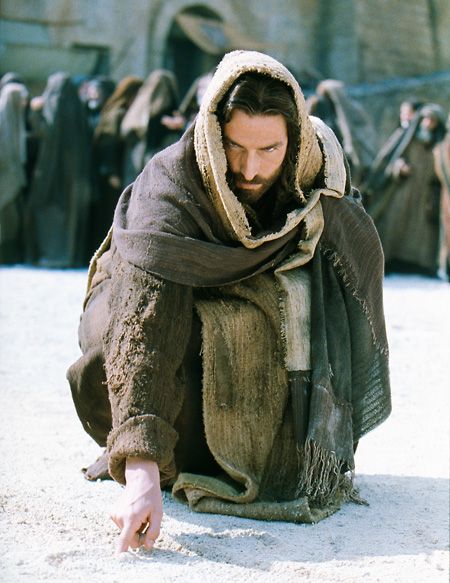





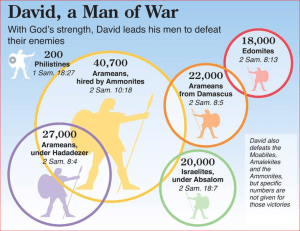






















 Considering the Bible