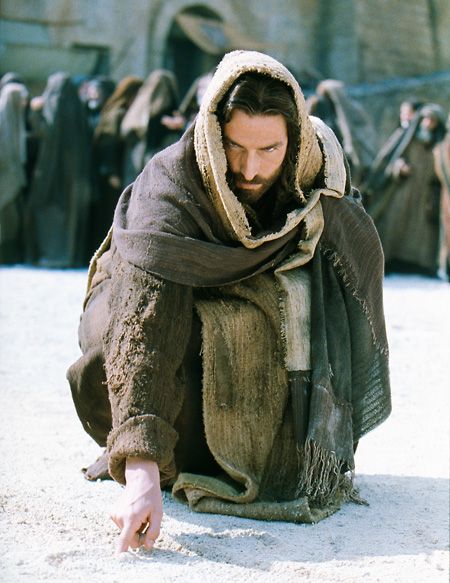

Let’s get to work and jump into this verse immediately. I am looking forward to a mental exercise, a good work out, trying to understand Paul’s command to the believers in Thessalonian 2,000 years ago and to us today.
Let’s hope we can provide something of benefit to those dear readers who spend a few moments with me.
So then, brothers, stand firm and hold to the traditions that you were taught by us, either by our spoken word or by our letter. – 2 Thessalonians 2:15
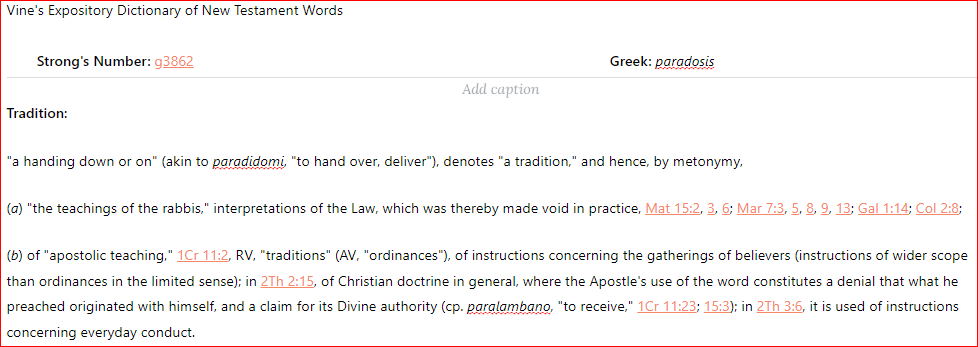
Traditions, we learn from this short passage are taught. Taught by communication, that is through talking or reading/writing. Traditions are not instinctual, or merely a result of some internal thought process. Traditions are handed down, and this is actually one of the defining actions that produces a tradition.
Paul doesn’t directly speak of specific traditions he had handed down to this church in this passage. He does bring up the topic in 3:6. A definite link with 2:5! Ok Paul, thanks for the clarification, but this creates a bit of a confusion. When was the last time you thought of a tradition within the Christian church as a “willingness to work”.
Now we command you, brothers, in the name of our Lord Jesus Christ, that you keep away from any brother who is walking in idleness and not in accord with the tradition that you received from us.
Idleness is against the tradition Paul provided to this church, and a good work ethic, if I am reading this passage correctly, is a Christian tradition/practice. This tradition is seemingly so sensitive to wrong influence, that Paul commands those with a work ethic to keep away from idle brothers. This is truly shocking to my mind, since I don’t usually consider idleness as a reason to avoid a brother.
But let us think on this for a moment. Does not the Word teach us to “not covet”? Idleness produces a spirit of covetousness, for an idle man is usually in need. Now I need to be careful to note that the command does not refer to those who cannot work, but to those who will not work. To those who are incapacitated, truly without the ability to perform some type of task to add to the community, the believer is to come along side and provide encouragement, financial assistance and support. To the one who refuses to work though able, Paul commands – STAY AWAY!
This is not, for the believer, a requirement to determine another persons motivations, intentions or desires, but his or her abilities. A man or woman who wants to produce, though incapacitated in some form, may find many hurdles to be productive, but may produce and find purpose. A man or woman who is able and makes excuses – Paul commands – STAY AWAY.
For even when we were with you, we would give you this command: If anyone is not willing to work, let him not eat.
2 Thessalonians 3:6, 10
But Paul – that is so unloving, so uncompassionate, that is, to let a brother or sister to go hungry. How heartless! Are you actually commanding believers to allow others to go hungry? Are believers to refuse to feed an idle brother?
In my opinion (careful dear reader – this is opinion!) to provide funds or gifts for those who will not work is foolish, since the limited funds we have in order to help truly needful souls is being misdirected. The idle able person receiving the funds could be a positive influence in the community, but is allowed to remain useless. No one wants to be useless, unless they are content with simply being a leach.
My wife and I speak of this compassion as “enabling” a sinful life. We have become somewhat “heartless”, in some peoples thinking, but have found folks that were idle (relatively) to become solid workers, building a work ethic that is positive financially, emotionally and physically.
What brings a person to a level of idleness? For the Thessalonians, it was a misunderstanding of the coming of the Lord. Some thought that since He may appear in a few weeks or months, working at a “9 to 5” was foolish. Why work when you can literally just wait? Bad theology creates wrong living!
What can bring a person out of this condition? Man shall not live by bread alone, but dag nab it, he certainly needs bread to live! Without bread, the motivation to work overcomes the desire to be idle, and the brother may become a positive influence for the community.
My friends, if you see a brother being idle, consider Paul’s command. Others may provide for the idle man or woman, enabling their life of ease and causing unnecessary suffering for those who truly have a need. To the extent you have in exercising your decisions, do not encourage a life of idleness.
It is not traditional!
Thanks for joining me in this short series on traditions. Much more may be spoken of on this topic but hopefully the few thoughts shared have produced some trigger to further read the Word and figger it out. A little work in the word would not cause any complaint from the Father, for He loves one who digs and seeks the truth. But it will require some work, and we know now that work is NOT a dirty word when it comes to the will of God!
Thanks again for coming to visit. I hope you found something of interest in this post and would appreciate a comment, to begin a discussion. If you would like to receive daily posts from Considering the Bible, click on the “Follow” link below






 But John, you just taught of who had life and who didn’t and now you are addressing believers?
 I sought clarification, and eventually found out they considered Jesus to have the “Christ spirit” during His ministry years only, that is from the baptism up to but not including the crucifixion.
 I need humility to truly love a brother, and this humility comes from Him. If I am to love a brother, I need to exercise humility in our discussion, or in my gifting, directing the brother to Him. If my brother finds assistance in knowing Him, I am truly loving my brother. If I am seeking only to make another Carl – golly – that is just a waste of time!
 He came to take away sin, and if we abide in Him, we will not continue in sin.
 No matter.
 A broader understanding of the Word of God will allow for the mystery of the Word to become apart of your life. If you feel you fully understand the Word, repent of this arrogance. Remember that this ancient book is not a cartoon comic that we can pick up for 2 mins and understand. That is way too shallow!
 Discussion with believers of other denominations and understanding of their faith systems within the Christian church may possibly break down some of the “us verses them” attitude in the Body of Christ. I am pretty sure Paul would applaud this. I need to add that this discussion, if it is to be fruitful, has to be based on the shared understanding that the Word is the authority, and not tradition, logic or emotional bias.
 Jesus even predicted Peter’s denial. The Word describes our lives as endless opportunities to deny Him. I am afraid denial is a current and dangerous condition for believers and non-believers.
 In our last post, I settled on the topic of church life through a computer monitor, and how this may be a trap. In the post, I challenged the reader to fulfill the “one another” commands, while attending a virtual church meeting that is becoming so acceptable in this society.

 These three “things” of the world make us seek independence from God (pride of life), drives us to satisfy sexual desires outside the confines of a loving marital relationship (lust of the flesh), and propels us to accumulate possessions, power or people (lust of the eyes).
 The World
 It just so happened (providentially don’t you know) that we were reading through the story of David and Saul, and how David would not retaliate on Saul. Vengeance is mine saith the Lord, was a phrase that kept coming up. Love your enemy.
 Out came a foul word. Don had never heard me swear before and he instantly picked up on it!
 If we confess our sin. This statement provides a condition of reality. John mentions a plurality of sins the believer may become entangled in. It is an act of sin that John transitions to in this verse, as opposed to the state of sinless perfection described above. Given the gracious nature of our God, this willingness to walk in the truth of our fallen condition supplies a remedy to our soul.
 One result comes out of being in this condition. Self deception. How dangerous this condition is. How very dangerous.
 As believers, we have been delivered from the life of sin and self, from our looking away from God. But we all know that we are prone to wander, prone to want those leeks we left behind in Egypt. Prone to return to our prior lives. As we recognize these attitudes and actions in our life, we are to repent, agree with God about our condition to God (confess) and request forgiveness from Him. (See 1 John 1:9)
 Prior to entering Canaan, Joshua met “the captain of the Lord’s army”, and as the military man that he was, Joshua demanded whose side He was on. The Angel simply stated “I am the Captain….”
 Considering the Bible