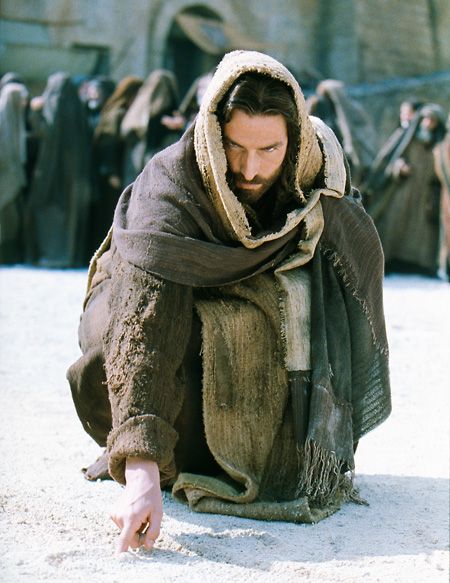

Jesus in the Old Testament is a series of posts that will offer my readers a chance to consider pictures or shadows of Jesus in the Old Testament. As mentioned in the introduction to this series, some may be obvious, some may be not so obvious, and some may simply be a facet of the Lord those reading may not have considered previously.
I hope as we venture through this series, we will see the Lord in many wonderful pictures throughout the Old Testament.
SEEING JESUS IN
Aaron
Behind the veil
Exodus 28:29 So Aaron shall bear the names of the sons of Israel in the breastpiece of judgment on his heart, when he goes into the Holy Place, to bring them to regular remembrance before the LORD.
Hebrews 6:19-20 We have this as a sure and steadfast anchor of the soul, a hope that enters into the inner place behind the curtain, where Jesus has gone as a forerunner on our behalf, having become a high priest forever after the order of Melchizedek.
As Aaron represented the children of Israel for a very short period of time before the LORD into the earthly Holy Place, His actions depicted the Greater Aaron, as our High Priest entering before the Father in reality.
Both entered behind the veil, into the Holy Place.
Aaron, as a type of Christ in his representing the children of Israel, was to remain for a short period behind the veil, performing his priestly duty and then returning to the people he represented. (Jesus too will be returning to His people but that is a separate topic for another day!)
Although Jesus is of a different priesthood, His entrance into the Father’s presence provides our future access, for not only does our author not speak of His leaving the Father’s presence, but that Jesus is described as a forerunner, One who is sent before those who follow.
Yes they both entered behind a veil, but only Jesus went behind the veil to remain behind the veil, and to provide access for those who He represented forever.
Thanks again for coming to visit. I hope you found something of interest in this post and would appreciate a comment, to begin a discussion. If you know someone this blog may bless (or challenge), send them a link, so they may join us in our discussion.
My hope is that this series will offer my readers a chance to consider the names, characteristics and descriptions of our God in the Word.
The remaining Names of God in this series might be considered descriptors, or characteristics of the Lord. We have reviewed the three primary Names of God, along with nineteen compound Names of God in our previous posts. As we venture through these descriptors of our God, I hope we will recognize all the many characteristics of our God that we tend to take for granted.
The Word is truly rich with descriptions of the Living God, and this effort of searching in the Word was quite illuminating. He truly is the ultimate subject of the Word, and His revelation of self-descriptions, or the accolades offered Him by His priests, prophets, kings apostles and faithful truly is a blessing.
May the Name of the Lord be praised, and by thinking on His name, may you have a blessed day.
54
BLESSED AND ONLY SOVEREIGN
2 Timothy 6:15 which he will display at the proper time–he who is the blessed and only Sovereign, the King of kings and Lord of lords,
For this name of God, I would like to concentrate on the concept of Sovereign. It is not a word that is commonly used outside of the Christian culture (or Britain), but the term refers to one who serves as a chief of state, or more applicable in our study, One who exercises supreme authority.
In my past studies, when I read Sovereign in relation to the Lord, the principal image of control rose in my mind. That is, He is in control of all things, from the time we are born, to the time we die. He is the creator and sustainer of all life and has provided a Savior that has redeemed us, rescuing us from damnation and loss.
For a period of time, my ruminations on the concept of control as Sovereign, in my mind, elevated God to the highest plane, to a point where every decision, act and attitude could be attributed to God. For a period of time this became a passion of mine, until I sensed a personal lack of concern for my own responsibility in front of Him. After all, in this scheme of thinking, He is the One who controls everything in His kingdom. And eventually, I felt I was slipping into a void.
Until I heard a man speak of a sovereign in a silly story.
He asked me to imagine a family going to a park, with three or four children tagging along. Prior to getting to the park, the father informed the children they were to stay within eyesight, not climb too high, and to care for each other. Upon arriving, the mother and father sat down, reminded the children of the instructions, and let them have some fun. As the children played, the father and mother were on constant watch, but the children had tremendous freedom to play within the boundaries set.
I ask you. Could this father be considered a sovereign? Did He have control over his “subjects”? If they rebelled, did he have the authority to discipline? If the children did right, exercising the freedom they were provided, did he become less sovereign?
My friends, the Sovereignty of God is a massive truth, and I take no credit for this story, but for the wise man who told it to me, I am thankful. I have come to understand that God is good, He has set limitations for us in the “park” and that He is always watching us, walking with us, and giving us guidance as we look to Him.
He is confident in Himself to allow His creation to work together with Him, to make mistakes (and learn from them) to provide a measure of freedom for His children, and yet still get the glory only He deserves.
He is good and He is good all the time!
I would love to hear of your favorite name, characteristic or description of the Living God. Please leave me a comment, and I will include it in the list!
Thanks again for coming to visit. I hope you found something of interest in this post and would appreciate a comment, to begin a discussion. If you know someone this blog may bless (or challenge), send them a link, so they may join us in our discussion.
My hope is that this series will offer my readers a chance to consider the names, characteristics and descriptions of our God in the Word.
The remaining Names of God in this series might be considered descriptors, or characteristics of the Lord. We have reviewed the three primary Names of God, along with nineteen compound Names of God in our previous posts. As we venture through these descriptors of our God, I hope we will recognize all the many characteristics of our God that we tend to take for granted.
The Word is truly rich with descriptions of the Living God, and this effort of searching in the Word was quite illuminating. He truly is the ultimate subject of the Word, and His revelation of self-descriptions, or the accolades offered Him by His priests, prophets, kings apostles and faithful truly is a blessing.
May the Name of the Lord be praised, and by thinking on His name, may you have a blessed day.
53
BELOVED SON
Colossians 1:13 He has delivered us from the domain of darkness and transferred us to the kingdom of his beloved Son, in whom we have redemption, the forgiveness of sins.
Jesus is called the Father’s beloved Son.
Beloved is the Greek term ἀγάπη agápē.
As many know, there are a number of terms in the Bible that refer to love, but this is the term that was not in use in the Greek language at the time of the first century. It is a term that reflects the character of the One loving and not of the one being loved.
With that said, when God so loved the world, this term seems appropriate, for the One loving is God and the one being loved is those in rebellion. The ones receiving this love were not deserving, they were actually enemies of God. Yet, out of the character of God, He loved them. God expressed His love to them because that is the character of God. The recipients had nothing to do with it other than being contrary to the love, refusing and fighting against the hound of heaven.
When Paul states that the Son is beloved, and uses the same Greek term, we are to understand that the love the Father has for His Son is the same love He has for us, as we are in the Son and He is the Beloved Son.
The Father’s love for the Son came out of His own character, and though there was nothing between the Father and Son (except while the Son was on the cross), the love was pure and unrelenting.
Jesus is the Beloved Son.
I would love to hear of your favorite name, characteristic or description of the Living God. Please leave me a comment, and I will include it in the list!
Thanks again for coming to visit. I hope you found something of interest in this post and would appreciate a comment, to begin a discussion. If you know someone this blog may bless (or challenge), send them a link, so they may join us in our discussion.
Colossians 2:18-19 Let no one disqualify you, insisting on asceticism and worship of angels, going on in detail about visions, puffed up without reason by his sensuous mind, and not holding fast to the Head, from whom the whole body, nourished and knit together through its joints and ligaments, grows with a growth that is from God.
Disqualify Christians?
Who is Paul talking to here? Is he speaking to those on the fringe of the church, those who may not be totally committed to the Savior. Maybe this passage is intended for those on the outside looking in, those who have not made a commitment, that are not believers yet. No – that can’t be since Paul has addressed this letter to the saints and faithful.
Colossians 1:2
To the saints and faithful brothers in Christ at Colossae: Grace to you and peace from God our Father.
No this warning can’t be for those on the fringe of the church. Since we have established this warning to true believers, then we must understand what it means to be disqualified for a believer?
First, what is it to be “disqualified”? What does the Greek word actually mean? Let us refer to Strong’s definition to begin.
It is a compound word in the Greek, made up of kata – “against” and brabeus – “an umpire”, and refers to those false teachers in the church who are acting as judges or umpires regarding the truth, fighting against the teaching Paul has provided.
Disqualified from Christian leadership?
Some may approach this verse in conjunction with Paul’s teaching in other passages where the apostle (or any other Christian leader) would be disqualified from further service due to sin or lapse in faithfulness. This certainly is a truth in the Word, but I struggle finding this theme in this passage. It appears Paul is talking to all the saints and faithful in Colossae
Disqualified from Christian rewards?
To be disqualified in this verse is to loose the opportunity for some (or all) the rewards possible for a believer when he passes from this earth. This is the common fall back position I took when I was invested in OSAS (Once Saved Always Saved). This may have some connection to the previous topic of service, and may be the correct interpretation, if the theme of rewards may be found in the earlier verses. Can you find the theme of rewards in this passage?
Disqualified from Christian life?
Although the grimmest of end results, that is the apostacy of the believer being referred to here in verse 18 , the very next verse may direct me to this conclusion. Paul speaks of being disqualified, and then speaks of the believer “not holding fast to the Head”
Colossians 2:19
and not holding fast to the Head, from whom the whole body, nourished and knit together through its joints and ligaments, grows with a growth that is from God.
When might we think that not holding fast to the Head would be an acceptable condition for salvation?
Although I typically use the ESV throughout my posts on this blog, I do refer to other translations occasionally, and in this instance found two translations that speak of an apostacy.
Colossians 2:19 NIV
They have lost connection with the head, from whom the whole body, supported and held together by its ligaments and sinews, grows as God causes it to grow.
Colossians 2:19 NLT
and they are not connected to Christ, the head of the body. For he holds the whole body together with its joints and ligaments, and it grows as God nourishes it.
Also, though my understanding of the English word disqualified may not be worth much, when I see the term “disqualified” I understand the word to mean that the participant is ejected from the competition, that he or she is no longer allowed to be involved, that upon some decision or act of the participant, a rule was broken (or in my understanding a relationship was rejected).
Rejecting the Head for an alternate method of reaching God. Foolishness yet a very real threat in this age, as we have multitudinous false teachers seeking to pull us away from the truth of the gospel.
Jesus is the only way, and any teacher that distracts you from the simple truth of Jesus the Messiah, crucified for you is a deadly distraction.
Thanks again for coming to visit. I hope you found something of interest in this post and would appreciate a comment, to begin a discussion. If you would like to receive daily posts from Considering the Bible, click on the “Follow” link below
As many who have followed me for a bit, I have fallen into the Psalms, and I can’t get up! (As if I would want to.) The Psalms are a majestic collection of poetry, of heart felt human experiences that constantly challenge me in my own frail attempt to follow the true King. As many of the Psalms are written by David, my study on the Psalms has spurred me on to looking at the life of David, is the main contributor to this book, and to follow the victories and tragedies of the shepherd King of Israel.
Many times in the narrative, we will see the Lord Jesus, imperfectly, yet a reflection of His spirit in a man with weaknesses.
1 Samuel 17:19-23
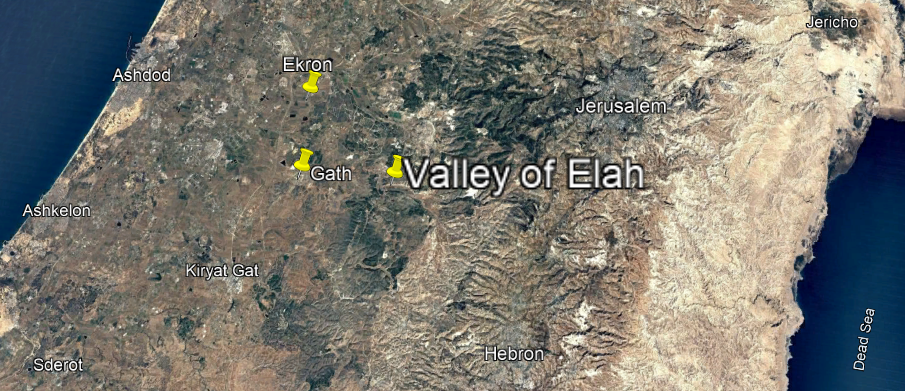
19 Now Saul and they and all the men of Israel were in the Valley of Elah, fighting with the Philistines. 20 And David rose early in the morning and left the sheep with a keeper and took the provisions and went, as Jesse had commanded him. And he came to the encampment as the host was going out to the battle line, shouting the war cry. 21 And Israel and the Philistines drew up for battle, army against army. 22 And David left the things in charge of the keeper of the baggage and ran to the ranks and went and greeted his brothers. 23 As he talked with them, behold, the champion, the Philistine of Gath, Goliath by name, came up out of the ranks of the Philistines and spoke the same words as before. And David heard him.
David was a responsible young man, always ensuring those assignments to which he could not attend to, were taken care of. Note that prior to leaving for the front, he left the sheep with a keeper. As he entered the encampment area, he assigned a keeper to care for the provisions he brought for his brothers.
Note also, that David rose early, indicating a willing spirit, for he didn’t stay in bed, sleep in, act the sluggard, but rose early and performed his assigned tasks. This enthusiasm, it turns out was instrumental for David to arrive at the camp, just in time to hear Goliaths rant. To be with his brothers as they were subjected to psychological warfare.
The soldiers were being worn down, with this assembly of the ranks before the enemy required with a daily formation and approach, only to pull back, to take the mental hit and go back to the camp, licking their wounds.
This time a young man, a teenager, a future king, a shepherd, heard the rant from the enemy. At this point, everything changes! And Goliath might better start measuring his coffin, for he is a dead man!
Thanks again for coming to visit. I hope you found something of interest in this post and would appreciate a comment, to begin a discussion. If you know someone this blog may bless (or challenge), send them a link, so they may join us in our discussion.
Jesus in the Old Testament is a series of posts that will offer my readers a chance to consider pictures or shadows of Jesus in the Old Testament. As mentioned in the introduction to this series, some may be obvious, some may be not so obvious, and some may simply be a facet of the Lord those reading may not have considered previously.
I hope as we venture through this series, we will see the Lord in many wonderful pictures throughout the Old Testament.
SEEING JESUS IN
Aaron
Tempted
Exodus 32:1 When the people saw that Moses delayed to come down from the mountain, the people gathered themselves together to Aaron and said to him, “Up, make us gods who shall go before us. As for this Moses, the man who brought us up out of the land of Egypt, we do not know what has become of him.”
Hebrews 4:15 For we do not have a high priest who is unable to sympathize with our weaknesses, but one who in every respect has been tempted as we are, yet without sin.
We all know of Aaron’s failure before the Lord in succumbing to the pressure of the Israelites. He actually created (or oversaw the creation) of Israel’s first idol, while Moses was speaking with God on the mountain.
Aaron was tempted, and as he fell in this temptation, he produced a situation that spread far beyond his own life. The repercussions of falling into this temptation was the potential wiping out of the entire nation. Yet Aaron, and the nation, due to Moses intercession, escaped judgement.
Obviously Moses is a type of the Lord in this instance, and we shall get to him, but in Aaron, we find a man who was tempted. He felt the pressure of the crowd, the influence of the multitude, and fell to the coercion, rejecting the truth Moses spoke to him.
Jesus also was tempted, not only in the wilderness all alone, for 40 days, in a weakened condition, but also in the multitudes, in large groups and gangs that had death on their minds. He stayed the course, even to death, knowing that the temptation to save His own skin would doom not only the nation, but the created world.
He was tempted, yet without sin!
Thanks again for coming to visit. I hope you found something of interest in this post and would appreciate a comment, to begin a discussion. If you know someone this blog may bless (or challenge), send them a link, so they may join us in our discussion.
My hope is that this series will offer my readers a chance to consider the names, characteristics and descriptions of our God in the Word.
The remaining Names of God in this series might be considered descriptors, or characteristics of the Lord. We have reviewed the three primary Names of God, along with nineteen compound Names of God in our previous posts. As we venture through these descriptors of our God, I hope we will recognize all the many characteristics of our God that we tend to take for granted.
The Word is truly rich with descriptions of the Living God, and this effort of searching in the Word was quite illuminating. He truly is the ultimate subject of the Word, and His revelation of self-descriptions, or the accolades offered Him by His priests, prophets, kings apostles and faithful truly is a blessing.
May the Name of the Lord be praised, and by thinking on His name, may you have a blessed day.
52
BEGINNING OF WISDOM
Psalm 111:10 The fear of the LORD is the beginning of wisdom; all those who practice it have a good understanding. His praise endures forever!
This description of our Savior is the third time He is associated with a beginning.
In the last two posts, we have seen that when “beginning” was referring to the Christ, it was related to the new creation, the church, and to His mission and sacrifice.
Not so here for Psalmist speaks of the beginning of wisdom as the attitude of the fear of the Lord.
We understand the fear of the Lord is the Old Testament motivation for all obedience to the commands of God. Whether it is a holy reverence or a soul quaking fear is not the focus of this post.
The focus of this post is to consider the ultimate “beginning of wisdom” to be best displayed in the Savior Himself.
We know He is the sinless Son of God, obedient in all his actions and attitudes before Hs Father. His fear of the Lord was consummate, for He never looked to the right or to the left. Only on the Father.
The term “beginning”, though often denoting the first in time, may also speak of the first in place, order or rank. Given this, it would be easy to understand that the beginning of wisdom was best exemplified and lived out in the Messiah.
He is the beginning of wisdom.
I would love to hear of your favorite name, characteristic or description of the Living God. Please leave me a comment, and I will include it in the list!
Thanks again for coming to visit. I hope you found something of interest in this post and would appreciate a comment, to begin a discussion. If you know someone this blog may bless (or challenge), send them a link, so they may join us in our discussion.
My hope is that this series will offer my readers a chance to consider the names, characteristics and descriptions of our God in the Word.
The remaining Names of God in this series might be considered descriptors, or characteristics of the Lord. We have reviewed the three primary Names of God, along with nineteen compound Names of God in our previous posts. As we venture through these descriptors of our God, I hope we will recognize all the many characteristics of our God that we tend to take for granted.
The Word is truly rich with descriptions of the Living God, and this effort of searching in the Word was quite illuminating. He truly is the ultimate subject of the Word, and His revelation of self-descriptions, or the accolades offered Him by His priests, prophets, kings apostles and faithful truly is a blessing.
May the Name of the Lord be praised, and by thinking on His name, may you have a blessed day.
51
BEGINNING OF GOD’S CREATION
Revelation 3:14 “And to the angel of the church in Laodicea write: ‘The words of the Amen, the faithful and true witness, the beginning of God’s creation.
In our last post we considered Jesus as the beginning of the church, as Paul was writing to the Colossians.
In this portion of Scripture, John is describing our Savior as the beginning of God’s creation. Again. let us be careful to not assume Jesus had a beginning (other than as a man) and was not One of the eternal persons in the Trinity.
As the audience is the church of the Laodiceans, I have always considered the creation John refers to here as the church, very much of the same vein of truth as Paul expressed in Colossians 1:18
I would love to hear of your favorite name, characteristic or description of the Living God. Please leave me a comment, and I will include it in the list!
Thanks again for coming to visit. I hope you found something of interest in this post and would appreciate a comment, to begin a discussion. If you know someone this blog may bless (or challenge), send them a link, so they may join us in our discussion.
As many who have followed me for a bit, I have fallen into the Psalms, and I can’t get up! (As if I would want to.) The Psalms are a majestic collection of poetry, of heart felt human experiences that constantly challenge me in my own frail attempt to follow the true King. As many of the Psalms are written by David, my study on the Psalms has spurred me on to looking at the life of David, is the main contributor to this book, and to follow the victories and tragedies of the shepherd King of Israel.
Many times in the narrative, we will see the Lord Jesus, imperfectly, yet a reflection of His spirit in a man with weaknesses.
1 Samuel 17:17-18
17 And Jesse said to David his son, “Take for your brothers an ephah of this parched grain, and these ten loaves, and carry them quickly to the camp to your brothers. 18 Also take these ten cheeses to the commander of their thousand. See if your brothers are well, and bring some token from them.”
Jesse sent his youngest son into a war zone. According to my calculations, Jesse still had five sons at home, of whom David is the youngest.
Why send David?
Jesse sent the future king of Israel into a war zone. How long ago had it been that David was anointed to be King of Israel?
Why send David?
Jesse sent the family shepherd into a war zone. Were the other four brothers busy working for the father?
Why send David?
Jesse sent David into a warzone to provide supplies for his brothers and superior, and to “spy” on the conditions of the army of Israel. ”Spy” may be too harsh a word for this errand but the result is the same. Jesse was curious about the conditions his sons were experiencing, and Jesse’s concern for his older boys brought David into an unsafe situation.
So why send David. Did not Jesse have a servant that was trustworthy, but somewhat expendable? It turns out in our next passage, we find that David, prior to leaving on this mission, found a keeper for his sheep. Jesse had servants!
Was Jesse revealing how he saw David, not as the future King, or as his youngest son, but just as another servant, one whom was already busy performing shepherding tasks for him and service to the king. Note that David had just been described as having returned from the king’s service in our previous passage.
In all of this conjecture, I find that David’s anointing made no difference to those about him. Nothing changed in the eyes of the family towards the youngest son of Jesse. The promise of God on David may have only created further friction within the family.
Forgetting motivations and family interactions within David’s family, it is always good to see the Lord Jesus pictured in the Old Testament. In this very passage, we see the Son being sent by the Father into a warzone for the sake of His own. We see the Son providing sustenance for those of His people. We will see that He was rejected by those he came to serve, and entered into a battle all alone, was mocked and ridiculed and faced certain death in front of the enemy. He entered battle without the conventional defensive and offensive battle gear, but that which was simple and effective.
This story of David and Goliath is truly amazing as a historical incident in the nation of Israel, a time that set the nation on a course of great success both politically and militarily. Only more so is this story worth considering if we see Jesus in the midst of it, and consider how these stories of a young shepherd boy pre-shadowed the true King of Israel.
His story is the greater story, for He is the Greater David.
Thanks again for coming to visit. I hope you found something of interest in this post and would appreciate a comment, to begin a discussion. If you know someone this blog may bless (or challenge), send them a link, so they may join us in our discussion.
Jesus in the Old Testament is a series of posts that will offer my readers a chance to consider pictures or shadows of Jesus in the Old Testament. As mentioned in the introduction to this series, some may be obvious, some may be not so obvious, and some may simply be a facet of the Lord those reading may not have considered previously.
I hope as we venture through this series, we will see the Lord in many wonderful pictures throughout the Old Testament.
SEEING JESUS IN
Aaron
A Brother
Exodus 4:14 Then the anger of the LORD was kindled against Moses and he said, “Is there not Aaron, your brother, the Levite? I know that he can speak well. Behold, he is coming out to meet you, and when he sees you, he will be glad in his heart.
Hebrews 2:17 Therefore he had to be made like his brothers in every respect, so that he might become a merciful and faithful high priest in the service of God, to make propitiation for the sins of the people.
It is interesting that Aaron is first called out as a brother of Moses. Earlier we met a priest by the name of Melchizedek, which for reasons beyond our topic today, was not chosen to represent the nation of Israel as high priest. Some may think Melchizedek would have passed on by now, but I tend to think differently!
Aaron was a man that had two descriptions the Lord noted for Moses. One that he could speak well, which addresses Moses claim to limit his ability to represent before Pharoah, and that he was a brother. The fact that he was a Levite comes into the equation later for the priesthood!
Aaron was a brother. One who was of the same “stuff” as Moses, coming from the same family, the same time, the same location, the same history. He knew what it meant to be of the population of an oppressed people. He had heard of the promise of a new land.
Jesus is also of the same “stuff” in that He took on a physical body, experienced hunger, anger, frustration and remaining gamut of emotional impacts a man experienced in the first century, under an oppressive ruler, and yet He knew the promise of a new land.
Note that the apostle speaks of Jesus “made like His brothers in every respect”. We can not claim He did not experience what we go through, both internally and externally, or that we undergo trials beyond His understanding.
He is a Brother.
Thanks again for coming to visit. I hope you found something of interest in this post and would appreciate a comment, to begin a discussion. If you know someone this blog may bless (or challenge), send them a link, so they may join us in our discussion.
My hope is that this series will offer my readers a chance to consider the names, characteristics and descriptions of our God in the Word.
The remaining Names of God in this series might be considered descriptors, or characteristics of the Lord. We have reviewed the three primary Names of God, along with nineteen compound Names of God in our previous posts. As we venture through these descriptors of our God, I hope we will recognize all the many characteristics of our God that we tend to take for granted.
The Word is truly rich with descriptions of the Living God, and this effort of searching in the Word was quite illuminating. He truly is the ultimate subject of the Word, and His revelation of self-descriptions, or the accolades offered Him by His priests, prophets, kings apostles and faithful truly is a blessing.
May the Name of the Lord be praised, and by thinking on His name, may you have a blessed day.
50
BEGINNING
Colossians 1:18 And he is the head of the body, the church. He is the beginning, the firstborn from the dead, that in everything he might be preeminent.
He is the beginning.
Some may think this refers to Jesus as being created, and would assign to Him an existence other than the truth of His eternality.
This thinking does not makes sense, for in the very verse we are looking at, Paul is speaking of Him as He relates to the church, not of His nature. He is the beginning of the church, the trailblazer, the Apostle sent to rescue us.
We cannot think of Paul or Peter as the ones who started the church.
He is the beginning.
As a man, He began His earthly existence in a cradle, for He needed a body to sacrifice for our rebellion. In a body, He related to those around Him, led by example, showed His character, and finally offered up the body created for Him.
He is the beginning.
I would love to hear of your favorite name, characteristic or description of the Living God. Please leave me a comment, and I will include it in the list!
Thanks again for coming to visit. I hope you found something of interest in this post and would appreciate a comment, to begin a discussion. If you know someone this blog may bless (or challenge), send them a link, so they may join us in our discussion.
My hope is that this series will offer my readers a chance to consider the names, characteristics and descriptions of our God in the Word.
The remaining Names of God in this series might be considered descriptors, or characteristics of the Lord. We have reviewed the three primary Names of God, along with nineteen compound Names of God in our previous posts. As we venture through these descriptors of our God, I hope we will recognize all the many characteristics of our God that we tend to take for granted.
The Word is truly rich with descriptions of the Living God, and this effort of searching in the Word was quite illuminating. He truly is the ultimate subject of the Word, and His revelation of self-descriptions, or the accolades offered Him by His priests, prophets, kings apostles and faithful truly is a blessing.
May the Name of the Lord be praised, and by thinking on His name, may you have a blessed day.
49
BEAUTIFUL AND GLORIOUS
Isaiah 4:2 In that day the branch of the LORD shall be beautiful and glorious, and the fruit of the land shall be the pride and honor of the survivors of Israel.
We haven’t spoke of the Branch of the Lord yet, as we are looking at His names in an alphabetical order, but suffice to say, Isaiah is speaking of the Messiah when he speaks of the Branch.
He shall be beautiful and glorious.
Beautiful. This Hebrew term often translated as glorious, or glory in our Old Testament. Using this term, Isaiah is bringing us a varied description of beauty, for this term is very closely associated with the thought of glory.
But what is glory? If I met you on the street, and asked you “What is glory”, could you answer without using the term glory?
Glory. This Hebrew term speaks of glory, honor and abundance, and is used 200 times in the Old Testament.
The term rose from a root meaning of heaviness or weight, and this root meaning may be associated with abundance combined with authority.
In my thoughts, for someone to be glorious in ancient times, meant he had abundance, for he was most likely a ruler of some kind, and he suffered no loss of want. He had weight, not only as a man who had physical abundance, but moral and or authoritarian influence. To be glorious may have had a visual aspect to it, but if we consider the root meaning of the word to have continued in its usage, the term likely meant the weight of authority the owner was able to wield.
In all of this conjecture, it makes sense to this believer that when I hear of glory, I think of authority, and not necessarily beaming rays of light.
Our Savior has all authority; His influence has no limits and He has no competitor in His beauty(glory) and glory(authority).
I would love to hear of your favorite name, characteristic or description of the Living God. Please leave me a comment, and I will include it in the list!
Thanks again for coming to visit. I hope you found something of interest in this post and would appreciate a comment, to begin a discussion. If you know someone this blog may bless (or challenge), send them a link, so they may join us in our discussion.
As many who have followed me for a bit, I have fallen into the Psalms, and I can’t get up! (As if I would want to.) The Psalms are a majestic collection of poetry, of heart felt human experiences that constantly challenge me in my own frail attempt to follow the true King. As many of the Psalms are written by David, my study on the Psalms has spurred me on to looking at the life of David, is the main contributor to this book, and to follow the victories and tragedies of the shepherd King of Israel.
Many times in the narrative, we will see the Lord Jesus, imperfectly, yet a reflection of His spirit in a man with weaknesses.
Let’s continue with the life of David, and his relations to two men who influenced his life greatly.
1 Samuel 17
12 Now David was the son of an Ephrathite of Bethlehem in Judah, named Jesse, who had eight sons. In the days of Saul the man was already old and advanced in years. 13 The three oldest sons of Jesse had followed Saul to the battle. And the names of his three sons who went to the battle were Eliab the firstborn, and next to him Abinadab, and the third Shammah. 14 David was the youngest. The three eldest followed Saul, 15 but David went back and forth from Saul to feed his father’s sheep at Bethlehem. 16 For forty days the Philistine came forward and took his stand, morning and evening.
Consider Jesse the Ephrathite. To be from Ephrath was to come from an historic location. Many who may be reading this may be surprised to find that Ephrath is the same place as Bethlehem.
Let’s go back to the first verse of the first chapter of the first book of Samuel. You see, Samuel’s ancestor came out of Ephrath, and we know that a very famous King was to be born in Ephrathah.
Micah 5:2 But you, O Bethlehem Ephrathah, who are too little to be among the clans of Judah, from you shall come forth for me one who is to be ruler in Israel, whose coming forth is from of old, from ancient days.
Jesse, the father of David, found his place in Israel in the little town of Bethlehem. An old man by the time David shows up on the scene, with numerous children prior to the future kings birth. An old man with a large family, in a small, seemingly insignificant town. With his nation on the brink of yet another war.
It turns out that there were at least 7 son’s of Jesse before David came on the scene. David, at the time of his anointing, was the eighth son of Jesse. As we mentioned earlier, David’s relationship within the family is not as clearly described as we might want it. If you haven’t been following my journey through David’s life, consider reading Life of David – 3.04 for some hints as to the family dynamics David lived within.
The first three sons followed King Saul to battle. These three soldiers had recently experienced the anointing of David to be the future King of Israel, yet they followed after King Saul into battle. A bit of conflict? Might this speak of the brother’s faith, or even of their jealousy? Of course this may have been more a factor of age than political difference, yet it makes me wonder of the relationship David had with his brothers.
I think as we venture a bit further into the story we will find that at least one of the brothers was undergoing a sampling of the green-eyed monster, a wee bit of jealousy. But I am getting ahead of myself.
Consider the heart of David in that when he was requested of King Saul, David did not forget his father. If there was some relational difficulties between David and the family, David’s actions did not reveal this. He could have justifiably stayed with King Saul, but he returned to his father, going back and forth between his father’s needs and the king’s needs.
David went back and forth, from Jesse, a man that may have “ignored” his son at times, possibly favoring his first born, or the elder brothers, to King Saul, a man who could not ignore David, but instead became his lethal enemy.
David served them both.
May I remind you that another King lived as a servant, a King that humbled Himself beyond our imaginations. A Man who gave to His enemies, even as He suffered and died. The Greater David came not to be served but to serve, and to give His life a ransom for all.
Thank Him for His loving kindness today, for His safeguarding of your life, for the blessing of knowing Him and His goodness.
Praise the Lord.
Thanks again for coming to visit. I hope you found something of interest in this post and would appreciate a comment, to begin a discussion. If you know someone this blog may bless (or challenge), send them a link, so they may join us in our discussion.
My hope is that this series will offer my readers a chance to consider the names, characteristics and descriptions of our God in the Word.
The remaining Names of God in this series might be considered descriptors, or characteristics of the Lord. We have reviewed the three primary Names of God, along with nineteen compound Names of God in our previous posts. As we venture through these descriptors of our God, I hope we will recognize all the many characteristics of our God that we tend to take for granted.
The Word is truly rich with descriptions of the Living God, and this effort of searching in the Word was quite illuminating. He truly is the ultimate subject of the Word, and His revelation of self-descriptions, or the accolades offered Him by His priests, prophets, kings apostles and faithful truly is a blessing.
May the Name of the Lord be praised, and by thinking on His name, may you have a blessed day.
48
BAPTIZER
Luke 3:16 John answered them all, saying, “I baptize you with water, but he who is mightier than I is coming, the strap of whose sandals I am not worthy to untie. He will baptize you with the Holy Spirit and fire. John 1:32-34 And John bore witness: “I saw the Spirit descend from heaven like a dove, and it remained on him. I myself did not know him, but he who sent me to baptize with water said to me, ‘He on whom you see the Spirit descend and remain, this is he who baptizes with the Holy Spirit.’ And I have seen and have borne witness that this is the Son of God.” Acts 1:5 for John baptized with water, but you will be baptized with the Holy Spirit not many days from now.”
I imagine John the Baptist was a bit of a fiery preacher, calling the Pharisees a brood of vipers and speaking of wrath to come. So when John described the One coming as the One who would baptize with the Holy Spirit and fire, I was somewhat surprised to hear of what (or Who) He will baptize with.
First, He will baptize with the Holy Spirit. No one but God Almighty has the authority to baptize with the Holy Spirit. It is not as if the Holy Spirit was to come upon someone in order to provide authority or power for a certain task, as in the Old Testament. This is the next level, where God would create a new humanity on the day of Pentecost.
Secondly, He will baptize with fire. Now some think this refers to the tongues of fire in Acts 2, which it might, but the audience at the time had just experienced John’s teaching of wrath. The message those in attendance heard was likely a continuation of wrath-speak. If fire refers to judgement, the audience heard of the One who had the power of judgement over their lives, and of the One who was able to administer wrath.
Both of these modes of baptism speaks of the authority and power of our God, of our Savior who came down to make us a new person and to rescue us from the very fire He’ has the power to administer.
Think on Him today. Listen to Him and as He speaks to you, honor His name by following His lead.
I would love to hear of your favorite name, characteristic or description of the Living God. Please leave me a comment, and I will include it in the list!
Thanks again for coming to visit. I hope you found something of interest in this post and would appreciate a comment, to begin a discussion. If you know someone this blog may bless (or challenge), send them a link, so they may join us in our discussion.
My hope is that this series will offer my readers a chance to consider the names, characteristics and descriptions of our God in the Word.
The remaining Names of God in this series might be considered descriptors, or characteristics of the Lord. We have reviewed the three primary Names of God, along with nineteen compound Names of God in our previous posts. As we venture through these descriptors of our God, I hope we will recognize all the many characteristics of our God that we tend to take for granted.
The Word is truly rich with descriptions of the Living God, and this effort of searching in the Word was quite illuminating. He truly is the ultimate subject of the Word, and His revelation of self-descriptions, or the accolades offered Him by His priests, prophets, kings apostles and faithful truly is a blessing.
May the Name of the Lord be praised, and by thinking on His name, may you have a blessed day.
47
BANNER OF LOVE
Song of Songs 2:4 He brought me to the banqueting house, and his banner over me was love.
In our last post, we saw that a banner was some signal or indicator for rallying about, and was in the context of battles.
As the King is wooing His love in this chapter of the Song of Solomon, we find the author speaking of a banner over her, a banner that is above the young woman, giving out a message to rally about. As mentioned, this rallying point of a banner is not in the context of war, but of love.
This banner was to draw this young woman into His arms, to declare His commitment to her, to entice her to be His.
Is it not the very same for us, who have come to enter His banqueting house, who have come into His church, that we see the Banner as one that provides the message of love?
His banner over us is Love, and He has won us to Himself by His self sacrificial love. Let us remember that as we are in His banqueting Hall, His message hasn’t changed.
His banner over us is Love, and the Lord Jesus Christ is the Banner we are to look to, to rally about, and to understand the message for His Bride, is that He is Love
1 John 4:8 Anyone who does not love does not know God, because God is love.
I would love to hear of your favorite name, characteristic or description of the Living God. Please leave me a comment, and I will include it in the list!
Thanks again for coming to visit. I hope you found something of interest in this post and would appreciate a comment, to begin a discussion. If you know someone this blog may bless (or challenge), send them a link, so they may join us in our discussion.
As many who have followed me for a bit, I have fallen into the Psalms, and I can’t get up! (As if I would want to.) The Psalms are a majestic collection of poetry, of heart felt human experiences that constantly challenge me in my own frail attempt to follow the true King. As many of the Psalms are written by David, my study on the Psalms has spurred me on to looking at the life of David, is the main contributor to this book, and to follow the victories and tragedies of the shepherd King of Israel.
Many times in the narrative, we will see the Lord Jesus, imperfectly, yet a reflection of His spirit in a man with weaknesses.
The passage before us is the set up for the famous chapter telling the story of a young shepherd taking out a giant of an enemy! Even the most unread Christian has heard of the story. It is very familiar to many, but as we venture through, I believe we will see some details and truths that will be a blessing and challenge for us to consider.
1 Samuel 17:8-11 8 He stood and shouted to the ranks of Israel, “Why have you come out to draw up for battle? Am I not a Philistine, and are you not servants of Saul? Choose a man for yourselves, and let him come down to me. 9 If he is able to fight with me and kill me, then we will be your servants. But if I prevail against him and kill him, then you shall be our servants and serve us.” 10 And the Philistine said, “I defy the ranks of Israel this day. Give me a man, that we may fight together.” 11 When Saul and all Israel heard these words of the Philistine, they were dismayed and greatly afraid.
In our last post we spoke of the advantage Goliath had over the nation of Israel, of this dominant stature, his body armor and his multiple offensive weapons, even his assistant who provided additional defensive protection through carrying a shield. It is crazy how this man who had every advantage left nothing to chance! This fella is the proverbial bully, ganging up on his intended victim and having all the protection he can muster for his own security.
And as all bully’s do, he turned to verbal threats and taunts.
At first, he simply began by asking the nation of Israel to send out a single person to fight against him. A man. One man that would fight Goliath, assuming the fight would again be on Goliaths term’s. Hand to hand battle, a fight to prove who was the greatest warrior between the two nations.
It was a simple proposition. Two armies don’t have to enter into a war of attrition. One man need only die to provide the decision of the war. One man to be offered on the battle field to save the entire army from much death. Of course this situation favored the one offering it, but that is beside the point!
One man to represent the nation, that would be sent to certain death for their sake. If Goliath won – and it was obvious he would – Israel, though in bondage to the Philistine’s would experience a form of peace. A period where they would serve the Philistines instead of die in battle.
Tempting?
Surely the King of Israel was considering his options. That is until Goliath stepped in it.
Yes Goliath defied the ranks of Israel. Note that in verse 10, Goliaths taunt was
“I defy the ranks of Israel this day.”
Yet when David heard it, he heard something different. I am reaching ahead in our study a bit, but it speaks volumes to the perception David had, and what Goliath’s intentions were.
vs 26 For who is this uncircumcised Philistine, that he should defy the armies of the living God?”
David understood that to defy the “ranks of Israel” is to defy the “armies of the Living God.”
In David’s mind, to be an approach upon the people of God is to be an approach on the Living God.
Let me try to explain this in a New Testament example. A man was on the hunt for some New Testament believers, those who entered the kingdom of God by belief in the True King, and this man was pulled up short by the King. And what did the King ask him?
Acts 9:4 And falling to the ground, he heard a voice saying to him, “Saul, Saul, why are you persecuting me?”
Saul was hunting down Christians, those of the “ranks of Israel”, and Jesus equated this with attacking the Living God.
The connection between the Father and His people is indistinguishable in the Father’s mind, and as such we would do well to consider that as we interact with those who call on the name of the Lord. We are called to love our brother and sister, and to do no harm. No gossip, no lies, no hurt.
But I digress.
Goliath was entering into dangerous territory when he defied the ranks of Israel, when one who was sensitive to the honor of God heard it, that is. He spoke his taunt for days prior to David’s appearance, but once David showed up, heard the taunt, understood the intent and decided to do something, the curtain began to close on ol’ Goliath.
But until then, all of Israel were dismayed and greatly afraid! Imagine the disbelief David’s faith faced as he entered the camp. A lone believer. A single, young teenager amongst his nation’s greatest warriors
How incredulous!
Thanks again for coming to visit. I hope you found something of interest in this post and would appreciate a comment, to begin a discussion. If you know someone this blog may bless (or challenge), send them a link, so they may join us in our discussion.
Jesus in the Old Testament is a series of posts that will offer my readers a chance to consider pictures or shadows of Jesus in the Old Testament. As mentioned in the introduction to this series, some may be obvious, some may be not so obvious, and some may simply be a facet of the Lord those reading may not have considered previously.
I hope as we venture through this series, we will see the Lord in many wonderful pictures throughout the Old Testament.
SEEING JESUS IN
Aaron
Day of Consecration
Exodus 29:4 You shall bring Aaron and his sons to the entrance of the tent of meeting and wash them with water.
Luke 3:21-22 21 Now when all the people were baptized, and when Jesus also had been baptized and was praying, the heavens were opened, 22 and the Holy Spirit descended on him in bodily form, like a dove; and a voice came from heaven, “You are my beloved Son; with you I am well pleased.”
To enter into God’s presence, Moses was to wash the priest in front of the tent, prior to their entering. Before their ministry before the Lord would start, the priest had to be cleansed.
Now as we know, much of the Old Testament included pictures and themes would be shadows representing the Lord Jesus when He appeared on the earth. I am confident that my readers can see the parallel of how this worked out 2000 years ago in the Lord’s life.
Of course the cleansing was personally unnecessary for the Lord in that He was clean before the Father prior to entering into ministry. His baptism was the public outworking of this Old Testament image for those who were present and for us who read the Word.
Prior to His formal entrance into ministry before His Father, the Lord Jesus associated Himself with us, and with this image of the first priests, undergoing the outward expression of cleansing before the Father.
After this cleansing, Jesus was to embark on a most remarkable ministry as the ultimate High Priest in the presence of the Father, even to the point of offering Himself as the ultimate sacrifice.
He is the Consecrated One and has been formally introduced to His creation as the Priest to be before the Holy One, bring One acceptable sacrifice – Himself – before the throne of God.
He is the Consecrated One.
Thanks again for coming to visit. I hope you found something of interest in this post and would appreciate a comment, to begin a discussion. If you know someone this blog may bless (or challenge), send them a link, so they may join us in our discussion.
My hope is that this series will offer my readers a chance to consider the names, characteristics and descriptions of our God in the Word.
The remaining Names of God in this series might be considered descriptors, or characteristics of the Lord. We have reviewed the three primary Names of God, along with nineteen compound Names of God in our previous posts. As we venture through these descriptors of our God, I hope we will recognize all the many characteristics of our God that we tend to take for granted.
The Word is truly rich with descriptions of the Living God, and this effort of searching in the Word was quite illuminating. He truly is the ultimate subject of the Word, and His revelation of self-descriptions, or the accolades offered Him by His priests, prophets, kings apostles and faithful truly is a blessing.
May the Name of the Lord be praised, and by thinking on His name, may you have a blessed day.
46
BANNER OF ISRAEL
Psalm 60:4 You have set up a banner for those who fear you, that they may flee to it from the bow. Selah
The background to this psalm is the victory over Edom in the wars described in 2 Samuel 8:3-14. It seems that while Israel was fighting to the north and east, they were flanked by three nations (Edom, Philistia and Moab) to the south, coming in from the rear, with Israel suffering serious losses and falling into confusion.
David speaks of a banner being lifted up, for those who fear God – the true Israel – to rally about.
When under fire all around, those who fear God will realize the banner has been lifted up for us also.
The Banner of Israel was lifted up to defeat the enemy, and to show the way for battle.
The Banner of Israel is our rallying point, for when we are overwhelmed, we need to return to the simple message of the One who hung on the cross, for all to see.
The Banner of Israel is naturally the focus of those who fear God, and as we focus on Him, we come to find strength in Him and encouragement from fellow soldiers to continue the battle.
Look to the Banner of Israel as you live your day for Him.
I would love to hear of your favorite name, characteristic or description of the Living God. Please leave me a comment, and I will include it in the list!
Thanks again for coming to visit. I hope you found something of interest in this post and would appreciate a comment, to begin a discussion. If you know someone this blog may bless (or challenge), send them a link, so they may join us in our discussion.
My hope is that this series will offer my readers a chance to consider the names, characteristics and descriptions of our God in the Word.
The remaining Names of God in this series might be considered descriptors, or characteristics of the Lord. We have reviewed the three primary Names of God, along with nineteen compound Names of God in our previous posts. As we venture through these descriptors of our God, I hope we will recognize all the many characteristics of our God that we tend to take for granted.
The Word is truly rich with descriptions of the Living God, and this effort of searching in the Word was quite illuminating. He truly is the ultimate subject of the Word, and His revelation of self-descriptions, or the accolades offered Him by His priests, prophets, kings apostles and faithful truly is a blessing.
May the Name of the Lord be praised, and by thinking on His name, may you have a blessed day.
45
BALM OF GILEAD
Jeremiah 8:22 Is there no balm in Gilead? Is there no physician there? Why then has the health of the daughter of my people not been restored?
What in tarnation is balm? And is there something special about Gilead?
The background to the question Jeremiah asks is the utter upcoming destruction of the nation of Israel. The nation created by God, and sustained by God through many trials and terrors is now on edge of captivity. God’s mercies through the ages have been many, and they have been rescued by the Father many many times.
Yet Jeremiah fears the worst, for he is calling out to the nation to seek out the balm of Gilead, a medicinal oil that was well known for it’s healing properties in the nation of Israel.
Of course Jeremiah was not referring to the literal balm (or oil) of Gilead, for he is speaking of the sickness within the nation of Israel. This sickness, which would bring about the captivity of Israel, was not simply skin deep, but a matter of the heart. The literal balm of Gilead was known to treat surface cuts, heal burns, and relieve pain by soothing the hurt areas on the body. Jeremiah is somewhat sarcastic in this verse, referring to the balm as if that would be the minimum effort for healing on the part of the nation. Yet as we know, no literal balm of Gilead could have healed the nation, but our Balm of Gilead, our Great Physician is able to heal, and He is the One Jeremiah is pointing to in our verse.
A little later in Jeremiahs ministry in chapter 46:11, he calls on the nation to retrieve this balm from Gilead.
Go up to Gilead, and take balm, O virgin daughter of Egypt! In vain you have used many medicines; there is no healing for you.
In our day and age, the balm of gilead may be purchased online. Whether it is the actual balm referred to in our verse, I will leave that to my gentle reader. No matter, for we all need to seek out our Balm of Gilead, the Great Physician, the One who heals hearts and not simply relieves pain on a surface.
I would love to hear of your favorite name, characteristic or description of the Living God. Please leave me a comment, and I will include it in the list!
Thanks again for coming to visit. I hope you found something of interest in this post and would appreciate a comment, to begin a discussion. If you know someone this blog may bless (or challenge), send them a link, so they may join us in our discussion.
17 As for the rich in this present age, charge them not to be haughty, nor to set their hopes on the uncertainty of riches, but on God, who richly provides us with everything to enjoy. 18 They are to do good, to be rich in good works, to be generous and ready to share, 19 thus storing up treasure for themselves as a good foundation for the future, so that they may take hold of that which is truly life.
Paul is amazing in his instruction, for as some of my dear brothers may suggest, to follow after the Christ is to give up all possessions, to sell your stuff and leave it all behind. For some this is the appropriate call on their lives, and to those so called, it is a high calling.
Yet Paul does not leave the rest of us without a responsibility in relation to the riches in this present age. To be rich in this present age – a phrase that speaks of the source or foundation of the riches, as opposed to the time we experience the riches. He is instructing Timothy to admonish those who have accumulated “things of this world”, material wealth, goods and investments with the following instruction . As we consider this passage, we can see that Paul is speaking of two worlds that the believer lives in, the material and the spiritual.
If a believer is not called upon to physically leave behind his goods to follow the Master (which also has a trap of producing a prideful attitude), the saint is then challenged with the requirement to prioritize his goods to a much lower level in the believers life.
Note what it is that Paul focuses on. Two “don’ts” and three “do’s”.
Don’t be haughty
A large (or medium, even a small bank account) is no reason to consider yourself better than a brother in the Lord. As I speak to my brothers in my blog, we tend to measure our success in life with the toys we have.
This is a mindset that needs to be rejected.
Paul is speaking of our current attitude toward others in this verse, based on the riches of this present age.
Don’t hope in material goods
Paul then breaches our faith, or our hope for the future, based on the riches we have accumulated. This is tantamount to opposing our faith in God. Each of us who have material goods needs to wash our minds and hearts of any detrimental hope we may have in our savings.
Wisdom dictates we store up for the future, that we do what we can to prepare for the future, yet our hope is not on the material goods we accumulate, but on the God who gives us the strength each day to work, love and care for others.
Do good
Paul speaks of our actions to enter into as one who may have trusted in his goods. Do good. Simple. He simply speaks of doing good, and leaves it up to the believer to find opportunities to “do” good.
Be generous
The next two “do’s” are better described as who we are to become, and not exactly specific (or even general) actions or works we are to enter into.
It is a state of being, to “be” generous. When an opportunity arises that can be taken care of, a generous man will do what he can to relieve it. It will be an automatic response, not necessarily a calculated response.
Be ready
Not only are we to be generous, but we are to be ready. This speaks of continuing in the attitude of generosity.
In all of this charge to the rich of this world, Paul instructs Timothy to inform the rich that this life will produce a “good foundation” for the future” in order that the rich maytake hold of life.
May take hold of life?
Isn’t he speaking to believers? Do they not have in their possession the life of God by faith in the Messiah? What is all this talk of a foundation for the future, of them leading lives that produce conditions to take hold of life?
Am I suggesting that providing generous gifts to charities and churches will get you to heaven? Not so! There is only one way and we all know it isn’t by our actions.
And yet, it is our actions that prove we have the life.
How are your actions and attitudes lately? Have you considered the life you are living in relation to Paul’s exhortation to Timothy?
Do good – Paul did not put any limits on this command, and be generous as the Lord directs.
Grab the life in this life. Paul gives us the instructions on how to do it!!!
Thanks again for coming to visit. I hope you found something of interest in this post and would appreciate a comment, to begin a discussion. If you would like to receive daily posts from Considering the Bible, click on the “Follow” link below
As many who have followed me for a bit, I have fallen into the Psalms, and I can’t get up! (As if I would want to.) The Psalms are a majestic collection of poetry, of heart felt human experiences that constantly challenge me in my own frail attempt to follow the true King. As many of the Psalms are written by David, my study on the Psalms has spurred me on to looking at the life of David, is the main contributor to this book, and to follow the victories and tragedies of the shepherd King of Israel.
Many times in the narrative, we will see the Lord Jesus, imperfectly, yet a reflection of His spirit in a man with weaknesses.
The passage before us is the set up for the famous chapter telling the story of a young shepherd taking out a giant of an enemy! Even the most unread Christian has heard of the story. It is very familiar to many, but as we venture through, I believe we will see some details and truths that will be a blessing and challenge for us to consider.
In our last post on this upcoming victory of David over the giant, we considered the nation attacking them and the location of the battlefield. The Philistine army was encamped within the boundaries of Israel, choosing the location to their advantage, waiting for Israel to show up.
Until we get to the internal concerns of the Israeli armed forces, lets take a minute to consider the problem they were facing.
Goliath.
1 Samuel 17:4-7 4 And there came out from the camp of the Philistines a champion named Goliath of Gath, whose height was six cubits and a span. 5 He had a helmet of bronze on his head, and he was armed with a coat of mail, and the weight of the coat was five thousand shekels of bronze. 6 And he had bronze armor on his legs, and a javelin of bronze slung between his shoulders. 7 The shaft of his spear was like a weaver’s beam, and his spear’s head weighed six hundred shekels of iron. And his shield-bearer went before him.
It turns out that Goliath, although the most famous of giants, was not the only giant to be roaming the area. There appeared to be multiple giants in the region, a descendant of Rapha. During David’s reign, many of the giants fell, and there may be a lesson in that for us.
One victory spurs on additional victories. One bold move by a young shepherd emboldened other warriors to take on giants. I can hear the apostle Paul speaking of this same concept in Philippians
Philippians 1:14 And most of the brothers, having become confident in the Lord by my imprisonment, are much more bold to speak the word without fear.
There is some debate as to whether Goliath was a Philistine, or hired as a mercenary to fight for them.
His appearance, and his boasting brought about fear and trembling, working the very effect the Philistines were seeking to have.
Consider that Goliath was over 9 feet tall. For the sake of getting a feel for the scale of this man’s height, I would refer you to Robert Wadlow. In the past, I have visited Ripley’s Museum and seen a statue of Robert Wadlow, the tallest man in recorded history. His height reached 8′ 11″.
To be dwarfed by a giant like Wadlow had an impact on me, yet his bearing was that of a thin man, a man that was not of the warrior bearing as Goliath. To see Goliath, a warrior decked out in all the defensive armor as Goliath must have intimidated everyone. Surely this was Goliath’s greatest psychological power over his combatants.
And yet Goliath did not simply depend only on his natural stature, but also on his weapons of warfare, both offensive and defensive.
His defensive protection included a helmet of bronze to protect his head. As we know from the account of the battle, it didn’t help him against David’s stone. He also wore a bronze coat of mail, or body armor weighing over 120 pounds. His final protective equipment was that of armor on his legs. He was suited out for every conventional protection, taking no chances in any battle!
His offensive weapons included a javelin and a spear. It appears the javelin may also be understood to be the sword that David turned on Goliath, chopping his head off! The spear alone is described as massive, with a head equivalent to 16 pounds.
On top of all of this protection, Goliath had an armor bearer, holding a shield before him. This guy was intimidating and protected.
Goliath left nothing to chance! He was larger, stronger, more experienced, more confident, over protected and trained in wielding the sword and spear. For those who heard of his challenge, it must have seemed to be a suicide mission.
Everything was playing out for Goliaths goals. He knew he had the advantage, and everyone around him knew he had the advantage. He had every physical advantage, had the upper hand in psychological warfare, and came against a nation that wasn’t able to equal his challenge.
It was a slam dunk for Goliath. Even if King Saul came out to battle, Goliath still had the advantage. Remember that of all the men of Israel, Saul was the tallest, and as the King, he should have led the country into the fight Goliath demanded!
The only slip Goliath made was to defy the Living God. Up until then, everything was going Goliath’s way.
But a young inexperienced teenager heard the slur against his God, and in his inexperience, in his blind faith, in his trusting self sacrifice, he stepped up.
And Goliath fell down.
But I am getting ahead of myself. Our next passage will look at the slurs that Goliath spread, the defiance that became his downfall.
Oh how the mighty have fallen!
Thanks again for coming to visit. I hope you found something of interest in this post and would appreciate a comment, to begin a discussion. If you know someone this blog may bless (or challenge), send them a link, so they may join us in our discussion.
My hope is that this series will offer my readers a chance to consider the names, characteristics and descriptions of our God in the Word.
The remaining Names of God in this series might be considered descriptors, or characteristics of the Lord. We have reviewed the three primary Names of God, along with nineteen compound Names of God in our previous posts. As we venture through these descriptors of our God, I hope we will recognize all the many characteristics of our God that we tend to take for granted.
The Word is truly rich with descriptions of the Living God, and this effort of searching in the Word was quite illuminating. He truly is the ultimate subject of the Word, and His revelation of self-descriptions, or the accolades offered Him by His priests, prophets, kings apostles and faithful truly is a blessing.
May the Name of the Lord be praised, and by thinking on His name, may you have a blessed day.
44
AWESOME GOD
Nehemiah 1:5 And I said, “O LORD God of heaven, the great and awesome God who keeps covenant and steadfast love with those who love him and keep his commandments,
In our society these days, to hear the term “awesome” brings to mind something that is amazing, that tickles the mind, that entertains or provides a momentary thrill. Sometimes it simply refers to that which is simply eye candy, something that our senses consume but has no lasting beneficial effect.
The term used to carry the meaning of terror, or fear. It would never be associated with light matters such as the taste of a doughnut or the sound of a country song, the appearance of a special effect in a movie or TV show.
For Nehemiah to describe God as an awesome God would illicit thoughts of dread, of reverence in the most holy sense. Nehemiah was not placing our God in the same category as a hamburger, or a new car, something we may consider as awesome today.
A majority of times, this term translated as awesome in our verse is translated as either fear or to be afraid.
To terrify.
A sense of fear that constricts the stomach, weakens the knees, troubles the mind, produces a cold clammy sweat, and encompasses the entire attention of the “victim”. A mind consumed with one source of fear, without any worthy distractions able to wrest it from that source of fear.
This “Awesome” God is the God who Nehemiah describes as the One who keeps covenant and steadfast love with those who love him and keep his commandments.
Steadfast love from the very source of fear inducing numbness. How can we ever understand our God? But alas – it isn’t for us to understand our God – but to simply love Him and keep His commandments.
Selah
I would love to hear of your favorite name, characteristic or description of the Living God. Please leave me a comment, and I will include it in the list!
Thanks again for coming to visit. I hope you found something of interest in this post and would appreciate a comment, to begin a discussion. If you know someone this blog may bless (or challenge), send them a link, so they may join us in our discussion.
My hope is that this series will offer my readers a chance to consider the names, characteristics and descriptions of our God in the Word.
The remaining Names of God in this series might be considered descriptors, or characteristics of the Lord. We have reviewed the three primary Names of God, along with nineteen compound Names of God in our previous posts. As we venture through these descriptors of our God, I hope we will recognize all the many characteristics of our God that we tend to take for granted.
The Word is truly rich with descriptions of the Living God, and this effort of searching in the Word was quite illuminating. He truly is the ultimate subject of the Word, and His revelation of self-descriptions, or the accolades offered Him by His priests, prophets, kings apostles and faithful truly is a blessing.
May the Name of the Lord be praised, and by thinking on His name, may you have a blessed day.
43
AUTHOR OF LIFE
Acts 3:15 and you killed the Author of life, whom God raised from the dead. To this we are witnesses.
The Spirit has fallen on the church, and Peter has preached his first sermon with thousands coming to faith. In chapter 3, Peter takes part in the healing of a crippled man, similar to the good works Jesus had performed as He walked amongst them. This miracle continues the wake up call to the people of Israel, grabbing their attention in the very heart of their religious life at the temple.
Peter had their attention, and he had an opportunity to preach, and preach he did.
Can you imagine Peter’s opportunity here to threaten or coerce those who did not believe in the previous sermon. But let us not consider Peter’s motivation to be such, for although he spoke harsh truth, his message was cushioned with an admission of ignorance on the part of those hearing.
As I mentioned, Peter spoke harsh words to those who were present, revealing the contradiction of actions they were committed to just a few months back when they killed the Author of Life. Some translations speak of the Lord’s name as Prince of Life and there may be justification for this, yet to hear Peter describe Jesus as the Author of Life rings true for me.
He had just described the audiences earlier desire to have one who ended life, a murderer, to be released, and now Peter describes Jesus as the One who is the Author of Life, speaking of Him as the originator of Life, the One who created life. As if He created life only to be denied life by those He “authored”.
The Greek term for author (ἀρχηγός archēgós) in this verse speaks of One who goes ahead, is a chief leader, One who leads by example.
In all this contradiction, the Author of Life can’t help but to continue to offer life to those who are ignorant, to those who seek death and reject life.
He is the Author of Life, no matter what we think or do. He is seeking you and will not give up, for He not only has life to share, but is the very Author of Life.
I would love to hear of your favorite name, characteristic or description of the Living God. Please leave me a comment, and I will include it in the list!
Thanks again for coming to visit. I hope you found something of interest in this post and would appreciate a comment, to begin a discussion. If you know someone this blog may bless (or challenge), send them a link, so they may join us in our discussion.
4 For everyone who has been born of God overcomes the world. And this is the victory that has overcome the world–our faith. 5 Who is it that overcomes the world except the one who believes that Jesus is the Son of God?
The faith we live is the victory we are granted to walk in and I understand the victory to be a daily occurrence, a battle with the influences of this old world.
A personal story may help me explain my thoughts.
My wife and I were recently out for a meal with some folks and a lady requested if I had seed a recent movie. I understood this movie had an agenda, and I mentioned this to her. Now before we go any further, let me confess this lady is a believer, she attends a conservative church, does many charitable works and confesses the Lord. Yet she found my understanding of the movie to be offensive.
I made a comment to the effect that the movie appealed to her since it fit her worldview. It did not “fit” my worldview as it was peddling what I considered a radically progressive worldview, seeking to normalize an offensive lifestyle unto the populace.
We are both believers, but I would suggest that if my estimation of “the world” is correct, she may not be overcoming “the world” in this area. Now before someone think I am judging harshly, I readily admit my own worldview, or how I perceive truth, is not any better, for I have blind spots and opinions that are in opposition to the faith I confess.
With this being said, I would suggest the faith we have is to be in opposition to the world, that as believers we are to be a counterculture, a people that tests the thoughts being offered to us, filter those thoughts through the Word, and reject all that do not line up with the general teaching of the Word.
But let us not reject out of a position of pride, but handle the position we take out of humble spirit, always seeking to provide a loving answer, a solid response and to act in grace with mercy to those who oppose.
In my study of this verse, I tripped over a Matthew Henry quote that seems to capture many of my suspected thoughts on this verse.
Self-denial is required, but true Christians have a principle which carries them above all hindrances. Though the conflict often is sharp, and the regenerate may be cast down, yet he will rise up and renew his combat with resolution. But all, except believers in Christ, are enslaved in some respect or other, to the customs, opinions, or interests of the world. Faith is the cause of victory, the means, the instrument, the spiritual armor by which we overcome. In and by faith we cleave to Christ, in contempt of, and in opposition to the world. Faith sanctifies the heart, and purifies it from those sensual lusts by which the world obtains sway and dominion over souls. It has the indwelling Spirit of grace, which is greater than he who dwells in the world. The real Christian overcomes the world by faith; he sees, in and by the life and conduct of the Lord Jesus on earth, that this world is to be renounced and overcome. He cannot be satisfied with this world, but looks beyond it, and is still tending, striving, and pressing toward heaven. We must all, after Christ’s example, overcome the world, or it will overcome us to our ruin.
Are you overcoming the world, or is it overcoming you?
Thanks again for coming to visit. I hope you found something of interest in this post and would appreciate a comment, to begin a discussion. If you would like to receive daily posts from Considering the Bible, click on the “Follow” link below