
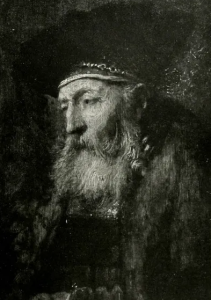
Abner Joins David
As many who have followed me for a bit, I have fallen into the Psalms, and I can’t get up! (As if I would want to.) The Psalms are a majestic collection of poetry, of heart felt human experiences that constantly challenge me in my own frail attempt to follow the true King. As many of the Psalms are written by David, my study on the Psalms has spurred me on to looking at the life of David, is the main contributor to this book, and to follow the victories and tragedies of the shepherd King of Israel.
Many times in the narrative, we will see the Lord Jesus, imperfectly, yet a reflection of His spirit in a man with weaknesses.
2 Samuel 3:20-25
20 When Abner came with twenty men to David at Hebron, David made a feast for Abner and the men who were with him.
21 And Abner said to David, “I will arise and go and will gather all Israel to my lord the king, that they may make a covenant with you, and that you may reign over all that your heart desires.” So David sent Abner away, and he went in peace.
22 Just then the servants of David arrived with Joab from a raid, bringing much spoil with them. But Abner was not with David at Hebron, for he had sent him away, and he had gone in peace.
23 When Joab and all the army that was with him came, it was told Joab, “Abner the son of Ner came to the king, and he has let him go, and he has gone in peace.”
24 Then Joab went to the king and said, “What have you done? Behold, Abner came to you. Why is it that you have sent him away, so that he is gone?
25 You know that Abner the son of Ner came to deceive you and to know your going out and your coming in, and to know all that you are doing.”
Three powerful men converge on a day that ends with a reckoning for Abner.
But I am getting ahead of myself. Let’s consider these three men on that monumental day.
David
David received King Ish-Bosheth’s head general, General Abner in peace. He not only received him in peace, but he also made a feast for Abner and his men.
Now remember, this is the same general that hunted David while under King Saul’s leadership. He is the same general that set up Ish-Bosheth as a king over the northern tribes, in direct rebellion against the will of God for a united kingdom under God. Abner is the same general that led an army against Joab, David’s general only a short while back.
Would it not be best – humanly speaking – for David to take Abner, imprison him and make a showing of how David would rule so that al the nation might fear? It would be my first instinct, but let’s recall two points to consider.
First, in our previous study, remember that Abner has previously communicated with David in this effort of unifying the nation, that he was seeking to restore the kingdom under one king and that king was to be David! In our last study, Abner was working with the northern tribes elders to consolidate them under David, and as we may suspect, word of this activity may have gotten back to David.
Secondly, David was not the type of king I relate to commonly. He made decisions that seemed to be counterproductive. Such is the case here as he had the perfect opportunity to treat Abner according to his “sins”, to pass judgement upon him and to exact a vengeance on Abner for all the pain David may have experienced.
But David was not the kind of leader that I am accustomed to. Surely David had his spies in the nation and I assume David realized that it was to Abner’s advantage to allow him to lead a delegation for peace with the northern tribes. This effort on the part of his former enemy Abner, though selfish and somewhat exposing him as a trustless leader in relation to Ish-bosheths, would prove to be fruitful towards David total reign over Israel.
So David received Abner, made a feast for Abner, heard Abner’s plan of reconciling the nation to the true king, and then sent Abner away “in peace”
Abner
If you have been following this series, you know that I have a certain attitude with this fellow Abner. A man of convenience, one who looks for advantage over faithfulness, and soldier of fortune that will jump ship when necessary. I realize this may be harsh, but to understand that upon Saul’s death, Abner elevated Ish-bosheth onto the throne of Saul, attempting to thwart the known plan of God to unite Israel under David. I suppose that may have looked like allegiance to his former employer, and that may be true, but shortly after, he turned on his master, abandoning Ish-bosheth in favor of David. Fickle, advantageous and unlikable.
In this encounter with David, Abner spoke of his efforts to join all Israel under David. He was working his diplomatic skills, positioning himself as a king maker, a nation healer and potentially a leader within the new kingdom.
Joab
We haven’t spent as much time on Joab as Abner, but for a bit of history on David’s general, he was David’s nephew, and was David’s general throughout most of his reign. He won some amazing victories over the Philistines, Ammonites and Edomites. A skilled warrior and an asset to David’s war machine.
But with this skill set of military leadership came a treachery that seemed to define this man. Lets remember earlier on when Abner fled from the battlefield of Gibeah, and as he fled, he turned on Joab’s brother Asahel, killing him. Joab broke pursuit, but he didn’t forget the death of his brother.
We shall see in the next post that Joab took matters into his own hands in relation to executing justice upon Abner. For now, and relating to this text, let us consider Joab’s possible mindset.
He sees that Abner has been with David, that Abner is an accomplished warrior, and that David’s kingdom will suddenly expand greatly due to Abner’s influence. David must certainly be considering a place for Abner in his administration. A perfect place might be as general of the united armed forces of Israel.
On top of that concern of a possible demotion, or even job loss, Joab still has the matter of his brother’s death to contend with. This additional threat of Abner sliding into Joab’s position may have set in stone the decision to take care of the problem immediately.
Joab was certainly a man of action, a man of military might, but also, as with most men of power, self willed, even to the point of being treacherous. As we venture into David’s reign, we shall encounter Joab many times.
These three men played important parts in the life of the nation. Each had their weaknesses and strengths, and with some honest introspection, we may possess some of these very qualities within ourselves.
Thankfully, the Lord Jesus is the One who can save us from ourselves, transforming even the worst of men, (even I), into saints before the Lord, as we stare intently at His glory!
2 Corinthians 3:18 And we all, with unveiled face, beholding the glory of the Lord, are being transformed into the same image from one degree of glory to another. For this comes from the Lord who is the Spirit.
May we all look to Him, gaze upon Him and in the gazing become a bit like Him!
What a promise! What a Savior!
Thanks again for coming to visit. I hope you found something of interest in this post and would appreciate a comment, to begin a discussion. If you know someone this blog may bless (or challenge), send them a link, so they may join us in our discussion.
Come join us at Considering the Bible


 Considering the Bible