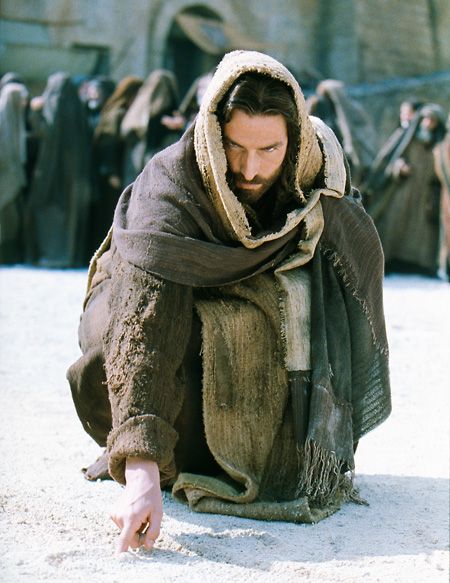

The Death of Saul
As many who have followed me for a bit, I have fallen into the Psalms, and I can’t get up! (As if I would want to.) The Psalms are a majestic collection of poetry, of heart felt human experiences that constantly challenge me in my own frail attempt to follow the true King. As many of the Psalms are written by David, my study on the Psalms has spurred me on to looking at the life of David, is the main contributor to this book, and to follow the victories and tragedies of the shepherd King of Israel.
Many times in the narrative, we will see the Lord Jesus, imperfectly, yet a reflection of His spirit in a man with weaknesses.
For our next couple of posts, we will not see David directly, but will consider his father-in-law, his king, and his arch enemy. The following recounting of Saul’s last days describes a turning point in David’s life, and his future as the king.
Lets consider Saul’s last day.
1 Samuel 31:1 Now the Philistines were fighting against Israel, and the men of Israel fled before the Philistines and fell slain on Mount Gilboa.
1 Samuel 31:2 And the Philistines overtook Saul and his sons, and the Philistines struck down Jonathan and Abinadab and Malchi-shua, the sons of Saul.
1 Samuel 31:3 The battle pressed hard against Saul, and the archers found him, and he was badly wounded by the archers.
1 Samuel 31:4 Then Saul said to his armor-bearer, “Draw your sword, and thrust me through with it, lest these uncircumcised come and thrust me through, and mistreat me.” But his armor-bearer would not, for he feared greatly. Therefore Saul took his own sword and fell upon it.
1 Samuel 31:5 And when his armor-bearer saw that Saul was dead, he also fell upon his sword and died with him.
1 Samuel 31:6 Thus Saul died, and his three sons, and his armor-bearer, and all his men, on the same day together.
1 Samuel 31:7 And when the men of Israel who were on the other side of the valley and those beyond the Jordan saw that the men of Israel had fled and that Saul and his sons were dead, they abandoned their cities and fled. And the Philistines came and lived in them.
We have the death of Saul in this passage, along with the complete collapse of the Israeli army.

First, let’s consider the general situation prior to thinking about Saul. His army, as noted previously was far outnumbered and his reaction when he realized the size of the Philistine encampment was that of utter fear.
1 Samuel 28:4 The Philistines assembled and came and encamped at Shunem. And Saul gathered all Israel, and they encamped at Gilboa.
In this fear, Saul ventured off to a medium, who only reinforced every fear he had and informed Saul of his death the next day. That day came quickly, and the Philistines were brutal, in that the Philistines entered into the base camp of Israeli army at Gilboa, decimating their forces and killing Saul’s three sons. Although Abinadab and Malchi-shua were possible hires to the throne, it would have been Jonathon that would most likely have reigned in Saul’s place in the event of Saul’s passing.
This possibility would have caused a testing of the friendship between David and Jonathon, for who should reign if Jonathon would ascend to the throne. Not only a testing their freindship, but a testing of the very covenant Jonathon made with David.
1 Samuel 20:16 And Jonathan made a covenant with the house of David, saying, “May the LORD take vengeance on David’s enemies.”
Would he abide by his word of being faithful to David? Could Jonathon justify his ascension in light of this curse? Might he seek the throne as David’s “friend”, and thus avert the very curse he uttered?
My friends, I want to think the best of Jonathon, yet we all know that power can corrupt. Even if there was such a situation that Jonathon could reign without incurring this curse, the nation would not be blessed, for God had determined David to reign.
In a very harsh way, Jonathon’s death was necessary, and in his death, he found honor in staying beside his king, defending his nation and fighting for God till the very end.
This potential competitor for the throne fell to one of Saul’s other son’s, but we will consider the wisdom of God’s plan in allowing that in future installments. For now, a complicated situation has been removed from David’s future.
Let us not forget that this solution brought great pain to David. Some of the Lord’s best plans allow for great pain in our lives. Jonathon and David were the closest of allies and the best of friends, exhibiting a loyalty that continued beyond Jonathon’s life. Yet Jonathon passed on the battlefield.
Saul also passed on the battlefield. But let me ask my reader – Did he die due to the battle? He was certainly wounded by the archers of the Philistines, but the fatal blow did not come from the Philistines. Saul sought his own armor bearer to kill him, in order to avoid the humiliation of capture and mistreatment by the Philistines.
Now consider the armor bearer’s conundrum. He was to protect the king, as this honor was not passed to one lightly, for it was a great responsibility, and carried with it great status. Not only was Saul asking this armor bearer to sacrifice the very person he lived to protect, but also to bring shame upon his own name and family, in killing the very anointed king of Israel.
Saul was fully consumed with his own needs at this time, and I get it, that he is on the very precipice of his grave, looking down into the pit. What else was the king to do? He had lost all honor and status, his kingdom was being run over and he knew he was to die that day. His only choice was how he would fall in battle, and he would not wait for God’s will in even that!
As we know, the armor bearer refused, and Saul fell on his own sword, capping off the self destructive behavior of a man seeking his own will throughout his life.
How sad. A day of tremendous loss for the nation. They lost much of the western territory to the enemy. They lost their army on the hills of Mount Gilboa. They lost their king. They lost the best hope of a successor king in Jonathon’s death. They lost cities to the Philistines due to abandonment. They lost national reputation in the sight of their neighboring countries.
What a terrible defeat. Israel was in tatters. But the shame of the defeat was to be worse as we will find in the next portion of the Word.
For now, let us be thankful for the opportunity to give up our own self will for the Lord’s will, to accept pain and sorrow as it comes from the hand of the Lord, and know that in everything that occurs in our lives, the Lord is in control, the Lord is a merciful God, and that God is good.
Yes, cling to the fact that God is good, even when things might seem very bad. He is on the throne, and He will never be removed from it, for His reign is is forever and ever.
Hebrews 1:8 But of the Son he says, “Your throne, O God, is forever and ever, the scepter of uprightness is the scepter of your kingdom.
Thanks again for coming to visit. I hope you found something of interest in this post and would appreciate a comment, to begin a discussion. If you know someone this blog may bless (or challenge), send them a link, so they may join us in our discussion.
Come join us at Considering the Bible


 Considering the Bible