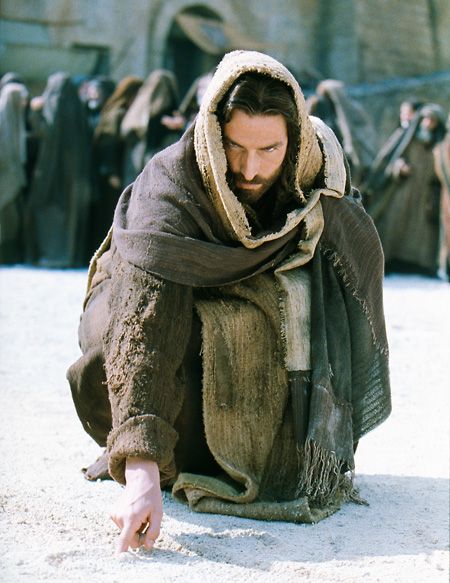

David Flees to the Philistines
As many who have followed me for a bit, I have fallen into the Psalms, and I can’t get up! (As if I would want to.) The Psalms are a majestic collection of poetry, of heart felt human experiences that constantly challenge me in my own frail attempt to follow the true King. As many of the Psalms are written by David, my study on the Psalms has spurred me on to looking at the life of David, is the main contributor to this book, and to follow the victories and tragedies of the shepherd King of Israel.
Many times in the narrative, we will see the Lord Jesus, imperfectly, yet a reflection of His spirit in a man with weaknesses.
1 Samuel 27:
10 When Achish asked, “Where have you made a raid today?” David would say, “Against the Negeb of Judah,” or, “Against the Negeb of the Jerahmeelites,” or, “Against the Negeb of the Kenites.”
11 And David would leave neither man nor woman alive to bring news to Gath, thinking, “lest they should tell about us and say, ‘So David has done.’” Such was his custom all the while he lived in the country of the Philistines.
12 And Achish trusted David, thinking, “He has made himself an utter stench to his people Israel; therefore he shall always be my servant.”
In our last post, we found that David may have slipped into a bit of senseless murdering and thieving, a bit of abuse and treachery on a people to the south of the land of Philistia.
There may have been a justified reason David unleashed such seemingly harsh, murderous treatment on those of the Geshurites, the Girzites, and the Amalekites. There may have been motivation that could be found in the Word of God. David may have been basing his actions on God’s written commands. (Come on Carl – that is too much!) For those not following this series, consider Life of David – 21.03.
I naturally want to see David as an image of the Christ, a man who did all things right and was never struggling with his fallen nature. The previous passage may be describing such a case, that he was a man struggling, or it may be he was acting according to known revelation of God’s will. That is for the reader to consider.
Our passage this time may not provide us that luxury of affording the future King of Israel, the man after God’s heart, the warrior for Yahweh, a pass in regards to following the will of God.
In this passage, David simply deceives the one who was protecting him. Although he actually went into the regions south of Ziklag, killing all and taking booty, he tells Achish, the king of Gath that he had actually killed those of his own nation.
Note that twice this passage speaks of David killing every man and woman.
1 Samuel 27:9 And David would strike the land and would leave neither man nor woman alive…
1 Samuel 27:11 And David would leave neither man nor woman alive to bring news to Gath….
Now in verse 11, we find that David had an ulterior motive for killing every soul in every encampment, town and village he visited. He was ruthless to save his own skin. He would not allow anyone to possibly speak to Achish about his actions.
1 Samuel 27:11 And David would leave neither man nor woman alive to bring news to Gath, thinking, “lest they should tell about us and say, ‘So David has done.’”
He may have been performing the will of God in annihilating the “inhabitants of the land from of old” (vs 8), but it seems he may have also had alternate motives. Mixed motives that seemed to allow him to openly deceive the king he asked refuge from. Deception of the king who provided him and his army an entire city to settle in.
Somehow, I can’t seem to find a good light for David to stand in with this passage. He is looking bad – really bad in this tale. A murderous warrior, completely decimating towns and villages, deceiving his protector, and waiting for his competition to keel over and die.
Some say that the believers life is to be stellar, without blame, and without fault. Surely this is the call of God for each believer, the goal of each believer’s life without exception. Yet we see in David a life that has some very dark spots. At times like this, we see failure, shame and sin in a hero of the Old Testament.
We must remember that David was a sinner, and in this passage he gives ample proof of that state of being. But we also must remember that David was a saint, for he eventually got right, lived properly before God under the known will of God, and died a man who sought the Lord.
For us today we must not let a life of sin keep us from the Father of Jesus. We all need to face our sinful heart we live with, confess this before the Lord, and ask for strength to resist our evil desires.
But before I close, I would like to stress that our motivation is critical though. We can not simply resist. We can not resist those evil desires without the Lord’s strength and Word. We are completely without strength in resisting our own dark heart. The emphasis of our lives is that we are to actively seek the Lord, begging for His mercy and strength, wholly relying on His ability to protect us in the midst of our trial.
After all, it is all about Him, and not us.
Thanks again for coming to visit. I hope you found something of interest in this post and would appreciate a comment, to begin a discussion. If you know someone this blog may bless (or challenge), send them a link, so they may join us in our discussion.
Come join us at Considering the Bible


 Considering the Bible