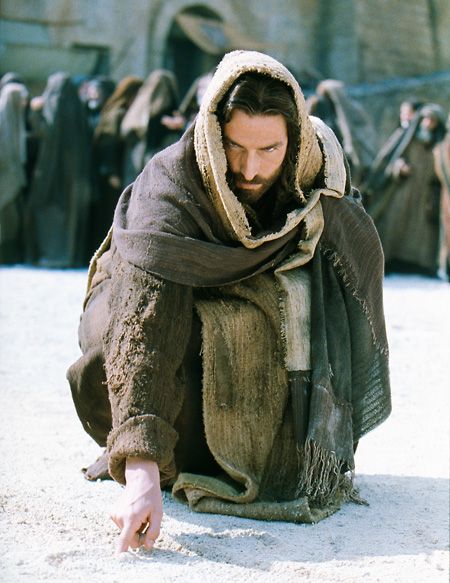

David Spares Saul’s Life
As many who have followed me for a bit, I have fallen into the Psalms, and I can’t get up! (As if I would want to.) The Psalms are a majestic collection of poetry, of heart felt human experiences that constantly challenge me in my own frail attempt to follow the true King. As many of the Psalms are written by David, my study on the Psalms has spurred me on to looking at the life of David, is the main contributor to this book, and to follow the victories and tragedies of the shepherd King of Israel.
Many times in the narrative, we will see the Lord Jesus, imperfectly, yet a reflection of His spirit in a man with weaknesses.
1 Samuel 24:16-22
16 As soon as David had finished speaking these words to Saul, Saul said, “Is this your voice, my son David?” And Saul lifted up his voice and wept.
17 He said to David, “You are more righteous than I, for you have repaid me good, whereas I have repaid you evil.
18 And you have declared this day how you have dealt well with me, in that you did not kill me when the LORD put me into your hands.
19 For if a man finds his enemy, will he let him go away safe? So may the LORD reward you with good for what you have done to me this day.
20 And now, behold, I know that you shall surely be king, and that the kingdom of Israel shall be established in your hand.
21 Swear to me therefore by the LORD that you will not cut off my offspring after me, and that you will not destroy my name out of my father’s house.”
22 And David swore this to Saul. Then Saul went home, but David and his men went up to the stronghold.
Saul is on stage in this passage. Good wordsmithing. Sounds convincing. Logical. Hopeful. And yet David went back to the stronghold!
Saul put on a performance full of tears, recounting David’s righteous acts and his own wickedness. He took time to speak of David’s righteousness and his own sin.
Saul admits that the Lord’s hand was in his choice of cave to enter, and that the Lord placed him in David’s hands to kill him. Saul even openly admits, to those who were within ear shot, that David will be king, and that Israel shall prosper under David’s rule. This is quite surprising since David must have heard it, David’ men most likely heard it, and Saul’s men may have heard it. After all, this wasn’t a private call on a secure phone line! This was a public discussion.
Ok – so Saul seems to be admitting David to be the better man, a future king of Israel and a good leader. After setting David up, he goes in for the kill. He asks David to swear not to harm his offspring once he takes the kingdom.
From Saul’s perspective this is a huge request, for he is looking to do the very opposite to David. Is not Saul seeking to remove competition for the throne by seeking to kill David, even though he hasn’t attempted to take the throne?
Saul wanted more than he was able to provide David. How could Saul ask for something so beyond normal expectations? It was common that when a king ascended a throne, the prior kings descendants would be killed in order to remove any future claim to the throne. Monarchies work this way. And Saul definitely considered Israel a monarchy, where his family were of the royal blood!
But as an aside, do we see evidence of David considering Israel to be a monarchy? I would suggest that David is acting in ways that conform to a theocracy, a nation ruled over by God. Actions of the human leader were to be directed by the God of the nation, and were not to fall to the level of a simple monarchy, where a man had authority. God provided the laws of the nation at Sinai, and the people entered into covenant with God as their ruler. God was the One who led them from captivity, led them to a covenant at Sinai, and then led them to the land, eventually abdicating to the wishes of the people in their seeking a human leader.
To be the king was to be a replacement for God. Though this was an accepted condition of state by the time David came on the scene, his rule typifies that of a godly king, one who loved the law of God. Sinner that he was in many of his decisions, he listened for God’s voice more than any other at the time.
But lets discuss the request of Saul the monarch. A request for David to not harm his offspring! This request shows Saul to be hedging his bets, to get David, the one more righteous than he, to promise no harm upon his offspring.
This sounds mildly familiar. Let’s go back a few chapters, when David first fled from Saul. Jonathon, Saul’s son provided military intelligence to David concerning his father, initiating David’s flight from Saul. Jonathon, who was loyal to David, sought protection. Let’s read about it below.
1 Samuel 20:14 If I am still alive, show me the steadfast love of the LORD, that I may not die;
1 Samuel 20:15 and do not cut off your steadfast love from my house forever, when the LORD cuts off every one of the enemies of David from the face of the earth.”
1 Samuel 20:16 And Jonathan made a covenant with the house of David, saying, “May the LORD take vengeance on David’s enemies.”
1 Samuel 20:17 And Jonathan made David swear again by his love for him, for he loved him as he loved his own soul.
Jonathon sought David to swear protection for him and his house (vs 15). Saul is seeking the same promise. Coincidence? Likely, for Saul is seeking protection from his enemy, whereas Jonathon was seeking protection by his friend.
Nevertheless, David agreed to the request from Saul. He swore to not cut off Saul’s offspring after him, and not destroy Saul’s name out of his father’s house. This promise becomes a snare for David later. We shall return to this promise in later posts.
A couple of lessons to consider out of this passage.
- Tears do not equal truth!
- Saul cried out a confession, tearing up, and within two chapters, Saul is on the hunt for David again. His emotional repentance was a show and were without any fruits fit for this repentance.
- David correctly did not trust him, as we see him going back to the cave.
- Beware the boasting!
- The more applicable lesson for myself is that when someone begins to boast about you, beware! Saul spoke in glowing terms of David’s righteousness, of his rising to the throne, and when David was softened up, Saul went in for the kill. Promise me the world David. Promise me you won’t hurt my family, even though this is unheard of for a new king to promise, and leaves him open to challenges constantly.
- Be careful what you give your word to when things look so promising!
May we have the wisdom to understand when these traps are presented before us.
Thanks again for coming to visit. I hope you found something of interest in this post and would appreciate a comment, to begin a discussion. If you know someone this blog may bless (or challenge), send them a link, so they may join us in our discussion.
Come join us at Considering the Bible


 Considering the Bible